Bootstrap
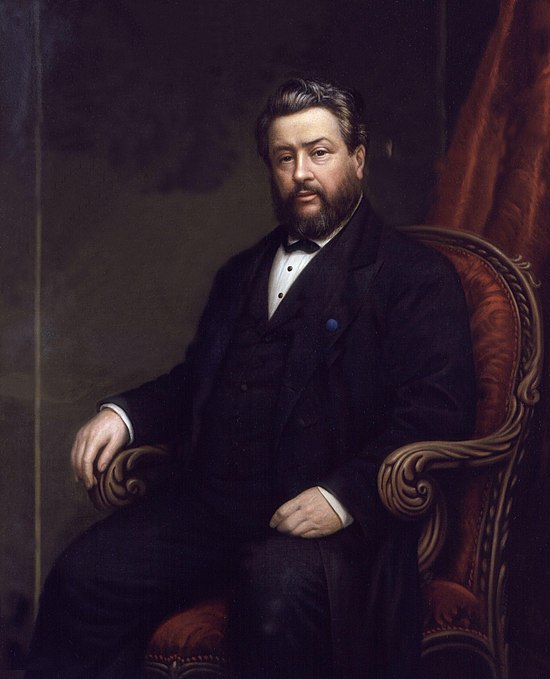
Charles Spurgeon

Providence!

Ezekiel 1:15-19; Matthew 10:30
Charles Spurgeon March, 10 2017 Audio
0 Comments
Choice Puritan Devotional

Sermon Transcript

Auto-generated transcript • May contain errors

100%
Providence by Charles Haddon Spurgeon. This sermon was first preached on April 11, 1858. The text today comes from the book of Matthew, chapter 10, verse 30. The very hairs of your head are all numbered.

During this week, my mind has been focused mainly on the subject of Providence. And you will understand when I relate a portion of a story that occurred one day. I was engaged to preach last Wednesday at Halifax, where there was a heavy snowstorm. Preparations had been made for a congregation of 8,000 persons, and a huge wooden structure had been erected. I consider that due to the severe weather that was occurring, few persons could possibly assemble, and I look forward to the dreary task of addressing an insignificant handful of people in a vast place. However, when I arrived, I found that 5,000 to 6,000 people had gathered together to hear the word, and I had never seen a more substantial-looking building. It certainly was a huge, ugly building, but nevertheless, it seemed well-adapted to fulfill the purpose.

We met together in the afternoon in Worship God, and again in the evening. Then we departed to our homes, or rather, we were about to leave. And all this while, the kind providence of God was watching over us. Immediately in front of me, there was a huge gallery, which looked like a very massive structure, capable of holding 2,000 persons. In the afternoon, this gallery was crowded, and it seemed to stand as firm as a rock. Again in the evening, there it stood, and it neither moved nor shook.

But note the provident hand of God. In the evening, when the people were about to leave, and when there were scarcely more than a hundred persons there, a huge beam gave way, and down came a portion of the flooring of the gallery with a fearful crash. Several persons were hurled downward with the planks, but still the good hand of God watched over us, and only two persons were severely injured with broken legs. Now, had this happened any earlier, not only would many more have been injured, but there are a thousand chances to one, as we say, that panic would have ensued similar to that which we still remember and deplore as having occurred in this place. Had such a thing occurred, And had I been the unhappy preacher on the occasion, I feel certain that I would never have been able to occupy the pulpit again. Such was the effect of the first calamity that I marvel that I ever survived. No human tongue can possibly tell what I experienced. The Lord, however, graciously preserved us. The fewness of the people in the gallery prevented any such catastrophe, and thus the most fearful accident was averted.

But we have a more marvelous providence still to record. Overloaded by the immense weight of snow which fell upon it, and beaten by a heavy wind, the entire building fell with an enormous crash three hours after we had left it. splitting the huge timbers into splinters, and rendering nearly all of the material useless for any future building. Now mark this. Had the snow begun three hours earlier, the building would have most certainly fallen on us, and we can only guess how few of us would have escaped. But mark another thing. All day long it thawed so fast, The snow as it fell seemed to leave a mass, not of white snow, but of snow and water together. This ran through the roof, causing considerable annoyance, and I was almost ready to complain that God's providence was harsh. But if it had been a frost instead of a thaw, you could easily perceive that the place would have fallen several hours earlier. And then your minister and the greater part of his congregation would probably have been in the other world.

There may be some who deny providence altogether. I cannot conceive that anyone at the scene would have done so. This I know. If I had been at that time an unbeliever in the doctrine of the control and wise care of God, I would have become a believer in it at that hour.

Oh magnify the Lord with me and let us exalt his name together. He has been very gracious to us and remembered us for good.

Now when we look around the world, we see such abundant proofs that there is a God. We are apt to treat a man who denies the existence of a God with very little respect or patience. We believe him to be willfully blind. For we see God's name so legible upon the very surface of creation that we cannot have patience with anyone who dares to deny the existence of a creator. And in the matter of salvation, each of us has seen in our own salvation such positive marks of the Lord's dealings with us that we are apt to be somewhat critical and harsh towards anyone who propounds a doctrine which would teach salvation apart from God.

And I think that we shall be very apt this morning to think harshly of the man who, having seen and heard of such a providence as that which I just related, could fail to see God's hand. It seems to me that the hand of God in providence is as clear as in creation. And while I am sure that if I am saved at all, I must be saved by God, I feel equally certain that every matter which concerns all of us in daily life bears upon itself the evident trace of being the handiwork of Jehovah, our God.

We must, if we would be true believers in God and would avoid all atheism, give to Him the kingship in the three kingdoms of creation, grace, and providence. It is in providence, however, that I think we are the most apt to forget Him. We may easily see God in creation if we are at all enlightened, and if saved, we cannot avoid confessing that salvation is of the Lord alone. The very way in which we are saved, and the effect of grace in our hearts, always compels us to feel that God is just. But providence is such a variable thing. And you and I are so prone to misjudge God and to come to a rash conclusion concerning his dealings with us, that perhaps this is the greatest stronghold of our natural atheism, a doubt of God's dealings with us in the arrangements of outward affairs.

This morning, I shall not be able to go deeply into the subject, but I can vigorously enter into it after being so great a partaker of his wonder-working power. From the text I shall draw two points. First of all, the text says, the very hairs of your head are all numbered. From this I shall infer the minuteness of providence. Again, inasmuch as it is said of believers that the hairs of their head are all numbered, I shall infer the kind consideration, the generous care which God exercises over Christians. And then, from the text and from our Savior's reason for uttering these words, I shall draw a practical conclusion of what should be the spirit and temper of the men and women who believe this truth, that the very hairs of their head are all numbered.

Our text clearly teaches us the minuteness of providence. The minuteness of providence. Everyone can see providence in the great things. It is very seldom that you find any person denying that when an avalanche falls from the summit of the Alps. The hand, the terrible hand of God is there. There are very few men who do not feel that God is present in the tornado and in the storm. Most men will acknowledge that the earthquake, the hurricane, the devastation of war, and the ravages of deadly disease come from the hand of God. We find most men very willing to confess that God is the God of the hills, but they forget that he is also the Lord of the valleys. They will grant that he deals with great masses of people, but not with individuals. with rivers and oceans, but not with drops of water. Most men forget, however, that the facts which they believe about providence occurring in the great things involves a providence in the little things as well. For it would be an inconsistent belief that the big things were in God's hand while the little Adam was left to chance. It is indeed a belief that contradicts itself. We must believe everything is of chance or else everything is of God. We must believe that everything is ordained and arranged or else we must believe that everything is left to the wild whirlwind of chance and accident. But I believe that it is in the little things that we fail to see God. Therefore, it is to the little things that I call your attention this morning. I believe my text literally means what it says. The very hairs of your head are all numbered. God's wisdom and knowledge are so great that he even knows the number of the hairs on our head. His providence extends to the minute particles of dust in the summer wind. He numbers the gnats in the sunshine and the fish in the sea. While the providence of God certainly does control the massive planets and the stars that shine in heaven, that providence is not embarrassed to deal with the teardrop that trickles from the eye. Now I want you to notice how the little circumstances of daily life, when we put them all together, clearly reveal their origin. I will take you through the historical events of scripture and show how the little events must have been of God as well as the great results. When Joseph was sold as a slave to Egypt by his brothers, which eventually resulted in him being able to provide for them in the time of famine, we all agree with Joseph's declaration to his brothers, it was not you who sent me here, but God. But now, if we notice each of the little ways through which this great result was brought to pass, we shall see God in each of them. One day, Joseph's brothers had gone out with the sheep, and Jacob their father wanted to check up on them. Why does he send Joseph? Joseph was his beloved son. He loved him better than all the rest of his brothers. Why does he send him to them? Why did he have to send him at that particular time? Why did Jacob desire to check up on the status of his son's welfare and on that of the flock? However, he did want to check up on them, and so he sent Joseph. A mere accident, you will say, but quite a necessary foundation of the whole plan of God. Joseph goes, His brothers are in need of good pasture, and therefore they leave Shechem, where Joseph expected to find them, and they journey on to Dotham. Why go to Dotham? Wasn't the whole land available to them? However, Joseph goes there. He arrives at Dotham just when they were thinking of him and his dreams, and they decided to put him in a cistern, throw him down in a pit. As they were about to eat their meal, some descendants from Ishmael came by.

Why did they come by there at all? Why did they come at that particular time? Why were they going to Egypt? Why couldn't they have been going on in another direction? Why was it that they wanted to buy slaves instead of some other commodity?

However, Joseph is sold as a slave. but he is not disposed of on the road to Egypt. He is taken to the land. Why is it that Potiphar decides to buy him? Why is it that Potiphar has a wife and one that would be so full of lust? Why should Joseph be thrown into prison? How is it that the baker and the cupbearer should offend their master?

All by chance, as the world sees it, But every link is necessary to make the chain. The baker and the cupbearer offend their master, and they are both put into prison. How is it that both of them have a dream? How is it that Joseph interprets the dreams? How is it that the cupbearer forgets to mention Joseph to Pharaoh when he's released?

Why? Because if he had remembered to mention him, he would have spoiled it all. Why is it that Pharaoh dreams? How can dreams be under the arrangement of God's providence? However, Pharaoh does dream. The cupbearer then thinks of Joseph. Joseph is brought out of prison and taken before Pharaoh.

But take away any of those simple circumstances, break any one of the links of the chain, and the whole of the design is scattered to the winds. You cannot get the machine to work if any of the minute cogs of the wheels are taken away. Everything is disarranged.

I think it seems very clear to any man who will dissect, not only that, but any other history he likes to fix upon, that there must be a God in the little accidents and dealings of daily life, just as well as in the great results that tell upon the pages of history. God is to be seen in little things.

We will now notice in the minutia of providence how punctual providence always is. How punctual providence always is. You will never wonder more at providence than when you consider how well God keeps time with himself.

To return to our history, how is it that the Ishmaelites should come by at just the right moment? How many thousand chances there were that their journey might have taken place hours before? It all could not have happened better. You know, Reuben intended to come back later and rescue Joseph out of the cistern. And when he did come back, the boy wasn't there. God had these Ishmaelites ready. You don't know how he may have sped them on their way. or delayed them so as to bring them to the exact spot at exactly the right moment.

To give another example, there was a poor woman whose son had been raised from the dead by Elisha. She, however, had left her country at the time of the famine and had lost her estate. She wanted to get it back. God determined that she should have it. How was it to be done? The king sends for Gehazi, the servant of Elisha, and Gehazi talks to the king. He tells him one instance about a woman who had a child raised from the dead. How strange. At that very moment, in comes the woman herself. The Bible tells us just as Gehazi was telling the king how Elisha had restored the dead to life, The woman whose son Elisha had brought back to life came to beg the king for her house and land. Gehazi said, my lord, the king, this is the woman. She comes to obtain justice. Her desire is granted only because at the very moment the king's mind is interested concerning her. Was it not simply all by chance? Nothing but chance? Fools would say so. But those who read their Bibles and those who have judgment say there is something more than chance in such a combination of circumstances. It could not be a mere coincidence, as men sometimes say. There must be God here, for it is harder to think that there is not God than that there is. And while belief in God may be said by some to involve a great stretch of faith, the refusal to accept him in such things as this would involve an infinitely greater amount of belief. No, God was there. There is another instance that I remember in the New Testament history. Paul goes into the temple and the Jews rush upon him in a moment to kill him. They drag him out of the temple, and the doors are shut against him. They are just in the very act of killing him, and what is to become of poor Paul's life? Five more minutes, and Paul will be dead, when up comes the commander of the Roman troops and delivers him. How was it that the commander knew of it? Most likely, some young man of the crowd who knew Paul and loved him ran to tell him. But why was it that the commander was at home? How was it that the commander was able to come on a moment's notice? How was it that he came at all? It was only just a Hebrew being killed, a man that was good for nothing. How was it that he came when the streets were full of people? There was a mob all around Jerusalem. How did he come to the right street? How did he come in the exact nick of time? You say it is all chance? I laugh at you. It is providence. If there is anything in the world that is plain to any man that thinks, it is plain that God overrules all mortal things and manages all of our affairs. But mark this. that the running of the youth and his arrival at the precise time and the coming of the commander at the exact time just prove the punctuality of divine providence. And if God has designed that a certain thing will happen at 12 o'clock, if you have appointed it for 11 o'clock, it shall not happen until 12. And if he means for it to be delayed till one, it is in vain that you propose any earlier or any later. God's punctuality in providence is always sure and very often apparent. Nor is it only in the minutes of time that we get an idea of the minuteness of providence, but it is in the use of the little things. A sparrow has turned the fate of an empire. You remember the old story of Muhammad fleeing from his pursuers? He enters into a cave. and a sparrow chirps at the entrance and flies away as the pursuers pass. Oh, they say, there is no fear that Muhammad is there, otherwise the bird would have long ago fled away. And the imposter's life is saved by a sparrow. We think perhaps that God directs the motions of the leviathan, the great sea creature, and guides him in the sea. Will we please remember that the guidance of a minnow in a tiny pool of water is as much in the hand of Providence as the motion of the great serpent in the depths? You see how the birds congregate in the autumn, ready for their flight south across the Purple Sea? They fly from here to there in apparent strange confusion. The believer in Providence trusts that the wing of every bird has stamped upon it the place where it shall fly. It cannot diverge so much as one millionth part of an inch from its predestined track. It may whirl about above and beneath, east, west, north and south, wherever it pleases. Still, it is all according to the providential hand of God. And although we do not see it, it may be that if the swallow did not take the precise track which it does take, something a little greater might be affected because of it. And again, something a little greater still might be affected, until in the end, a great thing would be involved because of the little deviation from the providence of God, if that were possible. Blessed is the man who sees God in the little things. It is there that it is the hardest to see him. But he who believes that God is there may go from the little Providence up to the God of Providence. Rest assured, my friends, when the fish in the sea start their migration, they have a captain and a leader, just like the stars. For he who marshals the stars in their courses and guides the planets in their march is the master of the fly and leads the bat and guides the minnow and does not despise the tiniest of his creatures. You say there is predestination in the path of the earth? You believe that in the shining of the sun there is the decree of God? Well, there is as much of His decree in the creeping of an insect or in the glimmering of a glowworm in the darkness. In nothing is there chance, but in everything there is God. All things live and move in Him and have their being, nor could they live or move otherwise. for God has so ordained them. I hear one of you say, well, sir, you seem to be a fatalist. No, far from it. There's a big difference between fate and providence. Fate is blind. Providence has eyes. Fate is blind, a thing that must be. It is just an arrow shot from a bow that must fly onward but has no target. Not so Providence. Providence is full of eyes. There is a design in everything and an end to be answered. All things are working together and working together for good. They are not done because they must be done, but they are done because there is some reason for it. It is not only that the thing is because it must be, but the thing is because it is right that it should be. God has not arbitrarily marked out the world's history. He had a great plan and the great architecture of perfection when he marked out all the hallways of history and placed all the pillars of events in the building of time. There is another thing that we have to remember also. which will strike us perhaps even more than the smallness of things. The minuteness of providence may be seen in the fact that even the thoughts of men are under God's control. Even the thoughts of men are under God's control. Now, thoughts are things which generally escape our attention when we speak of providence. But how much may depend upon a thought? Oftentimes a king has had a thought which has cost a nation many a bloody battle. Sometimes a good man has had a thought which has been the means of rescuing multitudes from hell and guiding thousands safely to heaven. Beyond a doubt, every imagination, every passing thought, every conception that is only born to die is under the hand of God. And in turning over the pages of history, you will often be struck when you see how great a thing has been brought about by an idle word. Depend on it. Depend on it then that the will of man, the thought of man, the desire of man, that every purpose of man is immediately under the hand of God. For instance, Jesus Christ was prophesied to be born in Bethlehem. However, his mother is living in Nazareth. It is a dead certainty that he will be born in Nazareth.

No, not so. Caesar gets a notion in his head. All the world shall be taxed, and he will have all of them go to the city of their birth. Why was it necessary to do that? Stupid idea of Caesar's. If he had had a parliament, they would have voted against him. They would have said, why make all the people go to their own hometown for the census? Take the census where they live. That will be abundantly sufficient. No, he says, it is my will and Caesar cannot be opposed. Some think that Caesar is mad. God knows what he means to do with Caesar.

Mary, well along in her pregnancy, must take a very difficult journey to Bethlehem, and there her child is born in a manger. If it had not been for the whim of Caesar, we would not have had the prophecy fulfilled, the prophecy that said that Christ would be born at Bethlehem, and our very faith in the Messiah might have been shaken. So we can see that even the will of man, the tyranny, The wickedness of the tyrant is in the hand of God, and he turns it wherever he pleases to accomplish his own will.

Summing it all up into one short statement, it is our firm belief that he who dispatches and commands angels also guides a sparrow. We believe that he who supports the dignity of his throne amidst the splendors of heaven also maintains it in the depths of the dark sea. We believe that there is nothing above, beneath, around which is not in accordance with the determination of His own counsel and will. And while we are not fatalists, we do most truly and sternly hold, hold to the doctrine that God has decreed all things whatsoever that come to pass, and that He overrules all things for His own glory and good.

The second point is, The kind consideration of God in taking care of his people. The kind consideration of God in taking care of his people. In reading the text, I thought to myself, there is better care taken of me than I can take care of myself. You all take care of yourselves to some extent, but which of you ever took so much care of yourself as to count the hairs of his head? But God will not only protect our bodies, but even the outgrowth of hair is looked after. And how much this excels all the care of our tenderest friends.

Look at the mother, how careful she is. If her child has a little cough, she notices it. The slightest weakness is sure to be observed. She has watched all its motions anxiously to see whether it walked right, whether all of its limbs were sound, and whether it had the use of all of its powers in perfection. But she has never thought of numbering the hairs of her child's head, and the absence of one or two of them would give her no great concern. But our God is more careful of us, even than a mother with her own child, so careful that he numbers the hairs of our head How safe we are then beneath the hand of God.

However, as we leave this picture, let us again notice the kind guardian care which God exerts over his people in the way of providence. I have often been struck with the providence of God in keeping his people alive before they were converted. How many are there here who would have been in hell at this very hour if some special providence had not kept them alive until the time of their conversion? I remember mentioning this to a company of people, and almost every person in the room had some half miracle to tell concerning his own deliverance before conversion.

One gentleman I remember was a sportsman who later became an eminent Christian. He told me that a little time before his conversion, he was out shooting one day, and his gun exploded into four pieces, with each piece being driven nearly a foot into the ground while he stood there unharmed and quite safe, having scarcely felt the shock.

I was reading one day another clear illustration of this subject. It said two persons who had been hunting together in the day slept together the following night. One of them had a dream, and in that dream, he was reliving the pursuit of the day. And having run the whole circle of the chase, he finally came to the point where he shot the stag, wounding him and causing him to fall. At this point, he cries out with a determined passion, I'll kill him. I'll kill him. and he immediately feels for the knife which he carries in his pocket.

His companion happened to awake, and observing what was going on, he leaped from the bed. Being secure from danger, and the moon shining into the room, he stood to watch the event, when, to his inexpressible surprise, The infatuated sportsman gave several deadly stabs in the very place where a moment before the throat and the life of his friend lay.

This I mention as a proof that nothing hinders us. Nothing hinders us even from being assassins of others or murderers of ourselves amid the uncontrolled dreams of sleep. The only thing that hinders us is the preventing care of our Heavenly Father.

How wonderful is the providence of God with regard to Christian people, in keeping them out of temptation, in keeping them out of temptation. I have often noticed this fact, and I believe you are able to confirm it, that there are times when if a temptation should come, you would be overtaken by it. But the temptation does not come. And at other times, when the temptation does come, you have supernatural strength to resist it.

Yes, the best Christian in the world will tell you that the strength of his lust is still such that there are moments when, if the object were presented to him, he would certainly fall into the commission of a foul sin. But then the object is not there, and there is no opportunity of committing the sin.

At another time, when we are called to go through a burning fiery furnace of temptation, we have no desire towards that particular sin. In fact, we feel an aversion towards it or are even incapable of it. It is strange, but many a man's character has been saved by providence. The best man that ever lived knows little how much he owes for preservation to providence. as well as to the grace of God.

How wonderfully, too, has providence arranged all of our places. I cannot but return to my own personal history. For after all, we are obliged to speak more of what we know of ourselves as matters of fact than of others. I shall always regard the fact of my being here today as a remarkable instance of providence. I probably would not have occupied this hall and had been blessed by God in preaching to multitudes if it had not been for what I considered an annoying accident. I should have been at this time studying in college instead of preaching here, except for a single circumstance which happened to me. You see, I had agreed to go to college. The tutor wanted to see me, and so I went to see him at the house of a mutual friend. I was shown by the servant into one drawing room in the house, and the tutor was shown into another drawing room. He sat and waited for me for two hours. I sat and waited for him for two hours. He could wait no longer and went away thinking that I had not treated him very well. I also went away and thought that he had not treated me very well. As I went away, this text came to my mind. Should you seek great things for yourself, seek them not. So I wrote to say that I must positively decline. I was happy enough among my own country people and did very well in preaching, and I did not care to go to college. I've now had four years of labor in the ministry. But speaking from man's perspective, those who have been saved during that time would not have been saved. at least by my instrumentality, at any rate, if it had not been for the remarkable providence turning the whole intention of my thoughts and putting things into a new track. You have often had strange accidents like that. When you have resolved to do one thing, you found that there was no way to do it. It was quite impossible. God turned you another way. and prove that providence is indeed the master of all human events. And how good, too, has God been in providence to some of you in providing your daily bread. It is remarkable how little poverty makes a person believe in providence, especially if he has helped through it. If a person has to live from hand to mouth, when day by day the manna falls, he begins to think there is a providence. The gentleman who sows his broad acres, reaps his wheat and puts it into his barn, or takes his regular income, gets on so nicely that he can do without providence. He does not care a bit about it. The rents of his houses all come in and his money in the bank is quite safe. What does he need with providence? But the poor man who has to work at day labor and sometimes runs very short, and just then happens to meet with somebody who gives him precisely what he needs, he exclaims, Well, I know there is providence. I cannot help believing it. These things could not have happened by chance. And now, in conclusion, brothers and sisters, if these things are true, If the hairs of our head are all numbered, and if providence provides for his people all things that are necessary for this life, and godliness, and arranges everything with infinite and unerring wisdom, what manner of persons should we be then? What manner of persons should we be? In the first place, we ought to be a bold race of people, a bold race of people. What have we to fear? Another man looks up, and if he sees a lightning flash, he trembles at its mysterious power. We believe it has a predestined path. We may stand and contemplate it, although we would not presumptuously expose ourselves to it, yet we can confide in our God in the midst of the storm. We are out at sea. The waves are beating against the ship. She reels to and fro. Other men shake because they think this is all chance. We, however, see an order in the waves and hear a music in the winds. It is for us to be peaceful and calm. To other men, the storm is a fearful thing, but we believe that the storm is in the hand of God. Why should we shake? Why should we quiver? In all the convulsions of the world, In all earthly distress and danger, it is for us to stand calm and collected, looking boldly onward. Our confidence should be very much the same in comparison with the man who is not a believer in providence, has the confidence of some highly educated surgeon, who when he is going through an operation, sees something very marvelous, but yet never shudders at it. while the ignorant peasant, who has never seen anything so wonderful, is alarmed and fearful, and even thinks that evil spirits are at work.

We are to say, let others say what they please. I know God is here, and I am his child, and this is all working for my good. Therefore, I will not fear, though the earth give way and the mountains fall into the heart of the sea.

May I especially address this remark to timid people? There are some of you who are frightened at every little thing. Oh, if you could only believe that God manages everything. Why, you would not be screaming because your husband is not home when there is a little thunder and lightning, or because there is a mouse in the parlor, or because there is a great tree blown down in the garden. There is no necessity that you should believe that your brother-in-law who has gone to Australia was shipwrecked because there was a storm when he was at sea. There is no need for you to imagine that your son in the army was necessarily killed because he happened to be on the front lines. Or if you do think it is necessary, still as a believer in God's providence, you should just stand and say that God has done it. and it is yours to resign all things into his hands.

I say to those of you who have been bereaved in the death of a loved one, if you believe in providence, you may grieve, but your grief must not be excessive. I remember being at a funeral of a friend, hearing a beautiful parable, which I have told before and will tell again. There was much weeping on account of the loss of a loved one, and the minister put it this way. He said, suppose you are a gardener employed by another. It is not your garden, but you are called upon to tend it, and you have your wages paid you. You have taken great care with a certain number of roses. You have trained them up, and there they are, blooming in their beauty. You pride yourself on them. You come one morning into the garden and you find that the best rose has been taken away. You are angry. You go to your fellow servants and charge them with having taken the rose. They will declare that they had nothing at all to do with it. And one of them says, I saw the master walking here this morning. I think he took it.

Is the gardener angry then? No. At once he says, I am happy that my rose should have been so fair as to attract the attention of the master. It belongs to him. He has taken it. Let him do what seems good to him. It is even so with your friends. They do not die by chance. The grave is not filled by accident. Men die according to God's will. Your child is gone, but the master took him. Your husband is gone. Your wife is buried. The master took them. Thank him that he lets you have the pleasure of caring for them and tending them while they were here. And thank him that as he gave, he himself is taken away. If others had done it, you would have a reason to be angry. But the Lord has done it. Can you then murmur? Will you not say, thee at all times will I bless, having thee I all possess? How can I be bereaved since I cannot part with thee? And pardon me when I say, finally, that I think this doctrine, if fully believed, ought to keep us always in a composed frame of mind. One of the things we most want is to have our equilibrium always kept up. Sometimes we are elated. If I ever find myself elated, I know what is coming. I know that I shall be depressed in a very few hours. If the balance goes too much up, it is sure to come down again. The happiest state of mind is to be always on the equilibrium.

If good things come, thank God for them. but do not set your heart upon them. If good things go, thank God that he has taken them himself and still blessed his name. Bear everything. He who feels that everything comes to pass according to God's will has a great foundation to his soul. He need not be tossed to and fro by every wind that blows, for he is securely anchored so that he need not move. This is an anchor cast into the sea. While other ships are drifting far away, he can ride calmly through. Strive, dear friends, to believe this, and maintain as the consequence of it that continual calm and peace which makes life so happy.

Do not fear the sicknesses that may come tomorrow. Either they will not come, or else they will bring good with them. If you have evils today, do not multiply them by fearing those of tomorrow. Each day has enough trouble of its own. Oh, I pray to God that some of you who are so full of anxiety could be delivered from it by a belief in providence. And once you get into that quiet frame of mind which this doctrine produces, you will be prepared for those higher exercises of communion and fellowship with Christ.

But as for you who do not fear God, you who do not fear God, remember the stones in the field are against you. The heavens cry to the earth and the earth answers to the heavens for vengeance upon you on account of your sins. For you, there is nothing good. Everything is in rebellion against you. Oh, that God might bring you into peace with him. And then you would be at rest with all things.

Seek first His kingdom and His righteousness, and all these things will be given to you as well. The Lord bless you in all of this, for Jesus' sake, amen.
Charles Spurgeon
About Charles Spurgeon
Charles Haddon Spurgeon (19 June 1834 — 31 January 1892) was an English Particular Baptist preacher. His nickname is the "Prince of Preachers."
Broadcaster:

Comments

0 / 2000 characters
Comments are moderated before appearing.

Be the first to comment!

Joshua

Joshua

Shall we play a game? Ask me about articles, sermons, or theology from our library. I can also help you navigate the site.