Bootstrap
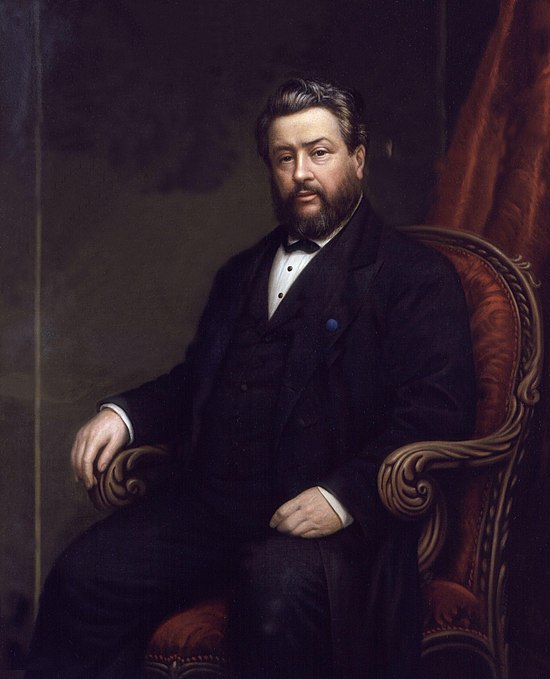
Charles Spurgeon

Preach the Gospel!

1 Corinthians 9:16; Matthew 28
Charles Spurgeon March, 10 2017 Audio
0 Comments
Choice Puritan Devotional!

Sermon Transcript

Auto-generated transcript • May contain errors

100%
Preach the Gospel. This sermon was originally preached on August 5th in the year 1855 by Charles Haddon Spurgeon. The text for this morning comes out of the book of 1 Corinthians, chapter 9, verse 16.

When I preach the gospel, I cannot boast, for I am compelled to preach Woe to me if I do not preach the gospel.

The greatest man of apostolic times was the Apostle Paul. He was always great in everything. If you consider him as a sinner, he was the greatest sinner that ever lived. If you regard him as a persecutor, he was the greatest persecutor the church has ever known. persecuting the Christians from city to city. If you look at him as a convert, his conversion was the most notable one which we have ever read. Worked by miraculous power and by the direct voice of Jesus speaking from heaven. Saul, Saul, why do you persecute me? If we take him simply as a Christian, he was an extraordinary one. loving his master more than others, and seeking more than others to exemplify the grace of God in his life.

But if you take him as an apostle and as a preacher of the word, he stands out preeminent as the prince of preachers and a preacher to kings, for he preached before Agrippa, he preached before Caesar. He stood before emperors and kings for the sake of the name of Jesus Christ. It was the characteristic of Paul that whatever he did, he did with all of his heart. He was one of those men who, when he set to work, that all his energies, every nerve, every muscle were strained in the work to be done, be it evil work before salvation or good work after becoming a Christian.

Paul, therefore, could speak from experience concerning his ministry, because he was the chief of ministers. There is no nonsense in what he says. It is all from the depth of his soul. And we can be sure that when he wrote this, he wrote it with a strong hand.

When I preach the gospel, I cannot boast, for I am compelled to preach Woe to me if I do not preach the gospel."

These words of Paul, I trust, are applicable to many ministers today, to all those who are uniquely called, who are directed by the inward impulse of the Holy Spirit to occupy the position of gospel ministers.

In trying to consider this verse, we will answer three questions this morning. What is it to preach the gospel? Secondly, why is it that a minister has nothing to boast of? And thirdly, what is that compelling and that woe of which it is written, I am compelled to preach. Woe to me if I do not preach the gospel.

The first question is, what is it to preach the gospel? What is it to preach the gospel? There are a variety of opinions concerning this question, and possibly among my own audience. Though I believe we are very uniform in our doctrinal sentiments, there might be found two or three very quick answers to this question.

What is it to preach the gospel? I will attempt to answer it myself according to my own judgment, if God will help me. And if it does not happen to be the correct answer, you are at liberty to supply a better one yourselves at home.

The first answer I will give to the question is this.

To preach the gospel is to state every doctrine contained in God's word and to give every truth its proper prominence. To preach the gospel is to state every doctrine contained in God's Word and to give every truth its proper prominence. Men may preach a part of the gospel. They may preach only one single doctrine of it. And I would not say that a man did not preach the gospel at all if he only preached the doctrine of justification by faith. By grace you have been saved through faith. I would put him down for a gospel minister. but not for one who preached the whole gospel.

No man can be said to preach the whole gospel of God if he knowingly and intentionally leaves out one single truth of the blessed God. This remark of mine must be a very cutting one and ought to strike into the consciences of many who make it almost a matter of principle to keep back certain truths from the people. because they are afraid of them.

In a conversation a week or two ago with an eminent Christian, he said to me, Sir, we know that we ought not to preach the doctrine of election because it is not intended to convert sinners. But I said to him, who is the man that dares to find fault with the truth of God? You admit with me that it is a truth, and yet you say it must not be preached? I would never dare to say such a thing. I would consider it supreme arrogance to have dared to say that a doctrine ought not to be preached when the all-wise God has seen fit to reveal it.

Besides, is the whole gospel intended to convert sinners? There are some truths which God blesses to the conversion of sinners, but are there not other portions which were intended for the comfort of the saint? And ought not these to be a subject of the gospel ministry as well as the others? And will I look at one and disregard the other? No. God has told us in his word, in the book of Isaiah chapter 40, verse one, God said, comfort. comfort my people. Now, if the doctrine of election comforts God's people, then I must preach it.

But I am not quite so sure that, after all, that doctrine of election is not designed to convert sinners. For the great Jonathan Edwards tells us that in the greatest excitement of one of his revivals, he preached on the sovereignty of God and the salvation and the condemnation of men. And he showed that God was infinitely just if he sent men to hell, that he was infinitely merciful if he saved any, and that it was all of his own free grace. And he said this, I found that no doctrine calls more thought, nothing entered more deeply into the heart than the proclamation of the doctrine of election.

The same might be said of other doctrines. There are certain truths in the word of God, which men condemned to silence. Indeed, they will not utter them, because according to the theories of certain persons, when looking at these doctrines, they are not intended to promote certain ends. But is it for me to judge God's truth? Am I to put God's words in a scale and say, this is good and this is evil? Am I to take God's Bible and separate it and say, this is husk and this is wheat? Am I to throw away one truth and say, I dare not preach it? No, God forbid.

Whatever is written in God's Word is written for our instruction, and all of it is useful for teaching, rebuking, correcting, and training in righteousness. No truth of God's Word ought to be withheld, but every portion of it preached in its own proper order. Now some men purposely confine themselves to four or five topics continually. Should you happen to step into their church, you would naturally expect to hear them preaching, either from this, children born not of natural descent, nor of human decision, or of a husband's will, but born of God. Or else you might hear, chosen according to the foreknowledge of God the Father. you know that the moment you stepped in, you are sure to hear nothing but election and deep doctrine that day. Such men also make a mistake, quite as much as others, if they give too great a prominence to one truth to the neglect of the others.

Whatever is here in the Bible is to be preached. The Bible The whole Bible, and nothing but the Bible, is the standard of the true Christian. Sadly, sadly, many make an iron ring of their doctrines, and he who dares to step beyond that narrow circle is not considered orthodox. Well then, God bless heretics. God send us more of them.

Many make theology into a kind of a treadmill. consisting of five doctrines, which are eternally rotated, for they never go on to anything else. Every truth of the scriptures ought to be preached. And if God has written in his word that whoever does not believe stands condemned already, that is as much to be preached as the truth that there is now no condemnation for those who are in Christ Jesus.

We ought, each one of us who are entrusted with the ministry, to seek to preach every truth. I know it may be impossible to tell you all of it. That high hill of truth has mist on its summit. No mortal eye can see its pinnacle, nor has the foot of man ever walked on it. But yet, let us paint the mist if we cannot paint the summit. Let us depict the difficulty itself if we cannot unravel it. Let us not hide anything. And if the mountain of truth is cloudy at the top, let us say clouds and darkness are around him. Let us not deny it. And let us not think of cutting down the mountain to our own standard because we cannot see its summit or cannot reach its pinnacle.

He who would preach the gospel must preach all the gospel. He who would have it said of him that he is a faithful minister must not keep back any part of God's revelation.

Again, when I am asked what it is to preach the gospel, I answer, to preach the gospel is to exalt Jesus Christ. To preach the gospel is to exalt Jesus Christ. Perhaps this is the best answer that I could give. I am very sorry to often see how little the gospel is understood, even by some of the best Christians.

Some time ago, there was a young woman under great distress of soul. She came to a very pious Christian man who said to her, my dear girl, you must go home and pray. Well, I thought within myself, that is not the Bible way at all. It never says, go home and pray. The poor girl went home. She did pray. And she still continued in distress. Then the Christian man said to her, you must wait. You must read the scriptures and study them. That is not the Bible way. That is not exalting Christ.

We find that a great many preachers are preaching that kind of doctrine. They tell a poor convicted sinner, you must go home and pray, and read the scriptures, you must attend church, and so on. Works, works, works. Instead of, by grace you are saved through faith. If a repentant sinner should come and ask me, what must I do to be saved? I would say, Christ must save you. Believe on the name of the Lord Jesus Christ. I would neither direct them to prayer, nor to the reading of the scriptures, nor to attend church, but simply direct them to faith, naked faith in God's gospel.

Not that I despise prayer. That must come after faith. Not that I would speak a word against the searching of the scriptures. That is an infallible mark of God's children. Not that I find fault with attendance at church. God forbid. I love to see people there. But none of those things are the way of salvation. It is nowhere written. He that attends church will be saved, or that he who reads the Bible will be saved. Nor do I read, he that prays and is baptized will be saved, but rather, he that believes, he that has a sincere faith in the man Christ Jesus, in his Godhead, in his manhood, is delivered from sin.

To preach that faith and faith alone saves is to preach God's truth. Nor will I for one moment grant to any man the name of a gospel minister if he preaches anything as the plan of salvation except faith in Jesus Christ. Faith, faith, nothing but faith in His name.

But we are, most of us, very much muddled in our ideas. We get the concept of works stored in our brain. The idea of merit and of doing something begins to form in our hearts. That it is almost impossible for us to preach clearly and fully justification by faith. And when we do, our people often won't receive it. We tell them, Believe in the name of the Lord Jesus Christ and you will be saved. But they have a notion that faith is something so wonderful, so mysterious, that it is quite impossible to attain it without doing something else. Therefore, they believe that they can never get it.

Now, that faith which unites a sinner to the Lamb is an instantaneous gift of God. And he who believes in the Lord Jesus is in that very moment saved without anything else whatever.

Ah, my friends, don't we need more exalting of Christ in our preaching and more exalting of Christ in our living? Poor Mary said, they have taken away my Lord and I do not know where they have laid him. And she might say the very same thing nowadays if she could rise from the grave. Oh, to have a Christ-exalting ministry. Oh, to have a ministry that magnifies Christ in his person, that exalts his divinity, that loves his humanity. To have preaching that shows him as a prophet, priest, and king to his people. To have preaching where the Spirit manifests the Son of God to His children. To have preaching that says, turn to me and be saved, all you ends of the earth.

Calvary preaching, Calvary theology, Calvary books, Calvary sermons. These are the things we need. And in proportion as we have Calvary exalted and Christ magnified, the gospel is preached in our midst.

The third answer to the question is, to preach the gospel is to give every group of people their due. To preach the gospel is to give every group of people their due. A deacon once said to a minister, you must only preach to God's dear people if you go into that pulpit. The minister replied, have you placed a mark on all of them so I may know who they are? What is the good of having this large church, my friends, if I am only to preach to God's dear people? Often they are few in number. God's dear people might be grouped together in one of our classrooms. We have many more people here besides God's dear people. And how am I to be sure if I am told to preach only to God's dear people that somebody else won't take it to himself?

At another time, someone might say, now be sure you preach to sinners. If you do not preach to sinners this morning, you won't be preaching the gospel. We will only hear you once, and we will be sure you are not right if you do not happen to preach to sinners this particular morning. in this particular sermon. What nonsense, my friends, what nonsense. There are times when the children must be fed and there are times when the sinner must be warned. There are different times for different objectives. If a man is preaching to God's saints and if it so happens that he has little to say to sinners, is he to be blamed for it? Provided that at some other time, when he is not comforting the saints, he directs his attention especially to the ungodly. I heard a good remark from an intelligent friend of mine the other day. A person was finding fault with Dr. Hawker's morning and evening portions because they were not intended to convert sinners. He said to the gentleman, Did you ever read Grote's History of Greece? Yes. Well, that is a shocking book, is it not? For it is not intended to convert sinners. Yes, but, said the other, Grote's History of Greece was never meant to convert sinners. No, said my friend, and if you have ever read the preface to Dr. Hawker's Morning and Evening Portions, you would have seen that it also was never meant to convert sinners. but to feed God's people. And if it achieves that end, then the author has been wise, though he has not aimed at some other end. Every group of people is to have their due. He who preaches exclusively to saints all the time does not preach the gospel. He who preaches exclusively and only to the sinner and never to the saint does not preach the complete gospel either. Among churchgoers we have a mixture. We have the saint who is strong and full of assurance. We have the saint who is weak and has little faith. We have the young convert. We have the man who is undecided between two opinions. We have the moral man. We have the sinner. We have the reprobate. We have the outcast. Let each one have a word in their own time. Let each one have a portion of meat at the proper time, not all the time, but at the right time. He who omits one group of persons does not know how to preach the entire gospel. What? Am I to be sent to the pulpit and then told that I am to confine myself only to certain truths to comfort God's saints? I will not accept that. God gives men hearts to love others. Are they not to develop that heart? If I love the ungodly, am I to have no means of speaking to them? Can I not tell them of the judgment to come, of righteousness, and of their sin. God forbid I would so deaden my nature and so brutalize myself as to not to shed a tear when I consider the loss of my fellow creatures. And to stand and say, you are dead and I have nothing to say to you. And in effect to preach, if not in words, that most damnable heresy, that if men are to be saved, they will be saved. that if they are not to be saved, they will not be saved, and that essentially, all they need to do is to sit still and do absolutely nothing, and that it does not matter whether they live in sin or in righteousness, for some strong fate has tied them down with iron chains, and their destiny is so certain that they may live on in their sin. I believe their destiny is certain, that if they are elect they will be saved and if they are not elect then they are forever damned. But I do not believe the heresy that follows as an inference that therefore men are irresponsible and may sit still and do nothing. That is a heresy against which I have always protested as being a doctrine of the devil and not from God at all. We believe in destiny. We believe in predestination. We believe in election and non-election. But in spite of that, we believe that we must preach to men and women the great truth. Believe in the Lord Jesus and you will be saved. But if you do not believe in him, then you will be forever damned.

I had thought of giving one more answer to this question, but time fails me. The answer would have been something like this, that to preach the gospel is not to preach certain truths about the gospel, not to preach about the people, but to preach to the people.

To preach the gospel is not to preach certain truths about the gospel, not to preach about the people, but to preach to the people. To preach the gospel is not to talk about what the gospel is. but to preach it into the heart, not by your own strength, but by the influence of the Holy Spirit, not to stand and talk as if we were speaking to the angel Gabriel and telling him certain things, but to speak as a man to men and women and to pour our heart into their hearts. This, I take it, is to preach the gospel. and not to mumble over some dry manuscript on Sunday morning and Sunday evening.

To preach the gospel is not to send an assistant to do your duty for you. It is not to put on your fine gown and then stand and give out some lofty speculation. To preach the gospel is not to do as a bishop does, which is to read some beautiful specimen of a prayer and then to sit down and leave it to some humbler person to speak. No, to preach the gospel is to proclaim with trumpet tongue and flaming zeal the unsearchable riches of Christ Jesus, so that men and women may hear, and understanding, they may turn to God with a sincere heart. This is to preach the gospel.

The second question this morning is, why is it that ministers have nothing to boast of? When I preach the gospel, I cannot boast. Why is it that ministers have nothing to boast of?

There are some weeds that will grow anywhere. And one of them is the weed of pride. Pride will grow on a rock as well as in a garden. Pride will grow in the heart of a shoeshine boy, as well as in the heart of a member of parliament. Pride will grow in the heart of a servant girl, and equally as well in the heart of her mistress. And pride will grow in the pulpit. It is a we that is dreadfully rampant. It needs to be cut down every week, or else we would be standing up to our knees in it.

The pulpit is a terrible soil for pride. It does not grow well and yet I scarcely know whether you will ever find a preacher of the gospel who will not confess that he has the greatest temptation to pride. I suppose that even those little known ministers who are very good people and who have a little tiny city church with some six people attending it have a temptation to pride. But whether that is true or not, I am quite sure whenever there is a large assembly and whenever there is a great deal of excitement and admiration concerning any preacher, then surely there is a great danger of pride. And you can count on it that the more proud a man is, the greater will be his fall in the end.

If people will hold up a minister in their hands and do not keep a firm hold on him, but let him go, what a great fall he will have when it is all over. It has been true with many. Many men have been held up by the arms of men. They have been held up by the arms of praise and not of prayer. These arms have become weak and down they have fallen. I believe that there is temptation to pride in the pulpit. but there is no ground for it in the pulpit. There is no soil for pride to grow on, but it will grow without any. Even though I know that I cannot boast, yet in spite of that, there often comes in some reason why we feel we should boast, not real, but apparent to our own selves. Now, how is it that a true minister feels he has nothing to boast of? First, because he is very conscious of his own imperfections. I think no man will ever form a more correct opinion of himself than he who is called constantly and incessantly to preach. One man once thought he could preach. And on being allowed to enter the pulpit, he found his words did not come quite so freely as he expected. And with the utmost anxiety and fear, he leaned over the front of the pulpit and said, my friends, if you would come up here, it would remove the conceit out of all of you. I truly believe it would remove conceit out of a great many men. If they could once be given the opportunity to preach, it would remove all their critical conceit from them and make them think that after all, it was not such easy work. He who preaches the best feels that he preaches the worst. He who has set up some lofty model in his own mind of what eloquence should be and what earnest appeal ought to be will know how much he falls below it. He best of all can reprove himself when he knows his own deficiency. I do not believe when a man does a thing well that therefore he will glory in it. On the other hand, I think he will be the best judge of his own imperfections and will see them most clearly. He knows what he ought to be, other men do not. They stare and gaze and think it is wonderful. when he thinks it is wonderfully absurd and leaves wondering why he has not done better than he has. Every true minister will feel that he is deficient. He will compare himself with such men like Whitefield and the Puritan preachers and he will say, what am I? I am like a dwarf beside a giant, an anthill by the side of the mountain. When he goes to his bed on Sunday night, he will toss from side to side because he feels that he has missed the mark, that he has not had that earnestness, that solemnity, that death-like intenseness of purpose, which a gospel minister must have. He will accuse himself of not having spent enough on this point or for having shunned the other. or not having been explicit enough on some certain subject or expanded another too much. He will see his own faults, for God always chastises his own children at nighttime when they have done something wrong. We do not need others to reprove us. God himself takes us in hand. the most highly honored before God will often feel himself dishonored in his own esteem. Again, another means of causing us to cease from boasting is the fact that God reminds us that our gifts are borrowed, that God reminds us that our gifts are borrowed. And I have even this morning been clearly reminded of that great truth. that all our gifts are borrowed after reading in the newspaper the following, and I quote, last week, the quiet neighborhood of Newtown was greatly disturbed by an occurrence which has thrown a gloom over the entire neighborhood. A gentleman of considerable attainment who has won an honorable degree at the university has for some months been deranged. He had been the dean of an academy for young gentlemen, but his insanity had obliged him to cease from his occupation, and he has for some time lived alone in a house in the neighborhood. The landlord finally obtained a warrant to evict him, and it became necessary to handcuff him, and he was, by a sad set of circumstances, compelled to remain on the steps of his house exposed to the gaze of a great crowd until finally a vehicle arrived which carried him to the asylum. One of his students, says the paper, was Mr. Spurgeon," end quote.

The man from whom I learned whatever human learning I have has now become a raving lunatic in the asylum. When I saw that, I felt that I should bend my knee with humble gratitude and thank my God that my reasoning powers had not yet departed. Oh, how thankful we ought to be that our talents are preserved in us and that our mind is not gone. Nothing came nearer and closer to me than that.

This man had taken many pains with me, a man of genius and of ability. And yet there he is, how fallen, how fallen. How speedily does human nature come from its highest state and sink below the level of the brutes. Bless God, my friends, blessing for your talents, thanking for your reason, thanking for your intellect. Simple as it may be, it is enough for you. And if you lost it, you would soon note the difference.

Be careful, lest you would be so foolish as to say, this is Babylon that I have built. For remember, both trowel and mortar must come from him. The life, the voice, the talent, the imagination, the eloquence, all are the gift of God. And he who has the greatest gifts must feel that to God alone belongs the shield of the mighty, for he has given might to his people and strength to his servants.

One more answer to this question. Another way how God preserves his ministers from boasting is this. He makes them feel their constant dependence on the Holy Spirit. He makes them feel their constant dependence on the Holy Spirit. I confess, some do not feel it. Some will venture to preach without the Spirit of God or without entreating Him. But I think that no man who is really commissioned from on high will ever dare to do so, for he will feel that he needs the Spirit.

Once, while preaching in Scotland, the Spirit of God was pleased to desert me. I could not speak as I usually did. I was obliged to tell the people that the chariot wheels were taken off and that the chariot dragged heavily along. I have felt the benefit of that ever since. It humbled me. It humbled me bitterly, for I could have crept inside a nutshell. and I would have hidden myself in any obscure corner of the earth. I felt as if I would never speak in the name of the Lord again.

And then the thought came, oh, you are an ungrateful creature. Hasn't God spoken through you hundreds of times before? And this one time when he would not do so, will you scold him for it? No. Rather, thank him for the hundreds of times he has stood by you. And if once he has forsaken you, admire his goodness, that in this way he would keep you humble.

" Some may imagine that lack of study brought me into that condition, but I can honestly affirm that it was not so. I am determined to give myself to reading and to preparation. and not to tempt the spirit by sermons that are not thought out beforehand. Usually I consider it a duty to seek a sermon from my master and implore him to impress it on my mind, but on that occasion I think I had prepared even more carefully than I ordinarily do. So that lack of preparation was not the reason.

The simple fact was this. The wind blows wherever it pleases. and winds do not always blow hurricanes. Sometimes the winds themselves are still. And therefore, if I rest on the Holy Spirit, I cannot expect that I will always feel His power in the same way.

What could I do without the celestial influence? For to Him I owe everything. By this thought, God humbles His servants. God will teach us how much we need it. He will not let us think we are doing anything ourselves. No, he says, you will not have any of the glory. I will humble you. Are you thinking to yourself, I am doing this. I will show you what you are without me.

Samson goes out and attacks the Philistines. He believes that he can kill them himself. but they overpower him, they put his eyes out. His glory is gone because he did not trust in his God, but rested in himself. Every minister will be made to feel his dependence upon the Spirit, and then he will, with emphasis, say as Paul did, when I preach the gospel, I cannot boast.

Now the third and final question is, what is that compelling and that woe of which it is written, I am compelled to preach, woe to me if I do not preach the gospel. What is that compelling and that woe?

First, a very great part of that compelling springs from the call itself. Springs from the call itself. If a man is truly called by God to the ministry, I will defy him to withhold himself from it. A man who truly has within him the inspiration of the Holy Spirit, calling him to preach cannot help it. He must preach. Like fire within the bones, so will that influence be until it blazes forth.

Friends may restrain him. Foes criticize him, despisers sneer at him, yet the man is resolute. He must preach if he has the call from heaven. If all the people on earth forsake him, yet he would preach to the barren mountaintops. If he has the call from heaven, yet has no congregation, he would preach to the rippling waterfalls and let the brooks hear his voice. He could not be silent. He would be a voice crying in the wilderness, prepare the way for the Lord.

I do not believe that it is possible to stop ministers who have the call, any more than to stop the stars of heaven from shining. I think it is no more possible to make a man cease from preaching if he is really called, than to stop some mighty waterfall by seeking with a baby's cup to drink its waters. The man has been moved by heaven, who will stop him? He has been touched by God, who will obstruct him? With an eagle's wing he must fly, who will chain him to the earth? With the voice of the seraphim he must speak, who will stop his lips? Is not his word like a fire within me? Must I not speak if God has placed it there?

And when a man does speak, as the Spirit gives him utterance, he will feel the holy joy of heaven. And when it is over, he desires to prepare another sermon and longs to preach again. I do not think young men are called of God to any great work who only preach once a week and think they have done their duty. I think if God is called a man, he will impel him to be more or less constantly at it and he will feel that he must preach among the nations the unsearchable riches of Christ.

But another thing that will make us preach, we will feel that woe is to us if we do not preach the gospel. Woe is to us if we do not preach the gospel. O Minister of the Gospel, stand for one moment and think of your poor fellow creatures. See them like a stream rushing to eternity, millions flying to their endless home. See the termination of that stream, that tremendous waterfall which dashes streams of souls into the pit of hell. O minister, remember that thousands of men and women are being damned each hour, and that each time your pulse beats, another soul lifts up its eyes in hell, being in torment. Think how men and women are speeding on their way to destruction, how the love of many grows cold, and how iniquity abounds. I say to you, Don't you feel compelled to preach? Is it not woe to you if you do not preach the gospel?

Take a walk one evening through the streets of London when the night has fallen and darkness veils the people. Do you not see the prostitute hurrying on her way to her wicked work? Do you not see thousands and tens of thousands annually ruined? Up from the hospital and the asylum there comes a voice. Woe to you if you do not preach the gospel.

Go to the prisons with their massive walls. Enter the cells and see the thieves who have for years spent their lives in sin. Make your way to that sad place of execution and see the murderer hanged. A voice will come from each house of correction, from each prison, from each gallows, saying to you, woe is to you if you do not preach the gospel.

Go to the thousand deathbeds and note how men and women are perishing in ignorance, not knowing the ways of God. See their terror as they approach their judge. never having known what it is to be saved, not even knowing the way. And as you see them quivering before their maker, hear a voice, minister, woe is to you if you do not preach the gospel.

Or take another course, travel around this great city and stop at the door of someplace for there is heard the ringing of bells, chanting and music. But where the whore of Babylon has her sway, and lies are preached for truth. And when you reflect on this false religion of Roman Catholicism, let a voice come to you. Minister, woe is to you if you do not preach the gospel. or step into the conference hall of the infidel where he blasphemes your maker's name, or sit in the theater where lustful and immoral plays are acted out. And from all these haunts of vice, there comes a voice. Minister, woe is to you if you do not preach the gospel.

And take your last solemn walk down to the rooms of the lost. Let the abyss of hell be visited and stand and listen to the sullen groans, the hollow moans and shrieks of tortured spirits. Put your ear at hell's gate and for a little while, listen to the mixed screams and shrieks of agony and complete despair. And as you come from that sad place with that mournful music still ringing in your ears, you will hear the voice, minister, minister, woe is to you if you do not preach the gospel.

Only let us keep these things before our eyes and we must preach. Stop preaching, stop preaching. Let the sun stop shining and we will preach in darkness. Let the waves stop their ebb and flow and still our voice will preach the gospel. Let the world stop its revolutions. Let the planets halt their motion. We will still preach the gospel.

Until the fiery center of this earth will burst through the thick ribs of her brazen mountains, we will still preach the gospel. Till the universal fire will dissolve the earth and matter will be swept away, these lips or the lips of some others called of God will still thunder out the voice of Jehovah. We cannot help it, for we are compelled to preach. Woe to us if we do not preach the gospel. Now, my dear listeners, one word with you. There are some persons in this audience who are truly guilty in the sight of God because they do not preach the gospel. I cannot believe that out of the 1,500 or 2,000 persons now present within the reach of my voice, there are none who are qualified to preach the gospel besides myself. I do not have such a bad opinion of you as to conceive myself to be superior in intellect to one half of you, or even in the power of preaching God's word, and even supposing I should be. I cannot believe that I have such a congregation that there are not among you many who have gifts and talents that qualify you to preach the word.

I believe that there are some here this morning who are flowers wasting their sweetness in the desert air, or pure gems lying in the dark caverns of the ocean's depths. This is a very serious question. If there is any talent in our church, then let it be developed. If there are any preachers in my congregation, let them preach. Many ministers make it a point to check out young men in this respect. Here is my hand, such as it is, to help any one of you, if you think you can tell sinners what a dear Savior you have found. I would like to find hundreds of preachers among you. Oh, that all the Lord's servants were prophets. There are some here who ought to be prophets, only they are half afraid. Well, we must devise some scheme of getting rid of their bashfulness.

I cannot bear to think that while the devil sets all his servants to work, there should be one servant of Jesus Christ who is asleep. Young men, go home and examine yourself. See what your abilities are. And if you find that you have ability, then try in some poor humble room to tell to a dozen poor people what they must do to be saved. You need not aspire to become absolutely and solely dependent on the ministry, but if it should please God, then that desire may be. He that desires to be a preacher desires a good thing. At any rate, seek in some way to be preaching the gospel of God.

I have preached this sermon especially because I want to begin a movement from this place which will reach others. I want to find some in my church, if it is possible, who will preach the gospel. And remember this, if you have talent and power, Woe to you if you do not preach the gospel. But oh, my friends, if it is woe to us if we do not preach the gospel, what is the woe to you if you will not listen and receive that gospel? May God allow both of us to escape from that woe. May the gospel of God be to us the saver of life to life and not of death to death. Amen.
Charles Spurgeon
About Charles Spurgeon
Charles Haddon Spurgeon (19 June 1834 — 31 January 1892) was an English Particular Baptist preacher. His nickname is the "Prince of Preachers."
Broadcaster:

Comments

0 / 2000 characters
Comments are moderated before appearing.

Be the first to comment!

Joshua

Joshua

Shall we play a game? Ask me about articles, sermons, or theology from our library. I can also help you navigate the site.