Bootstrap
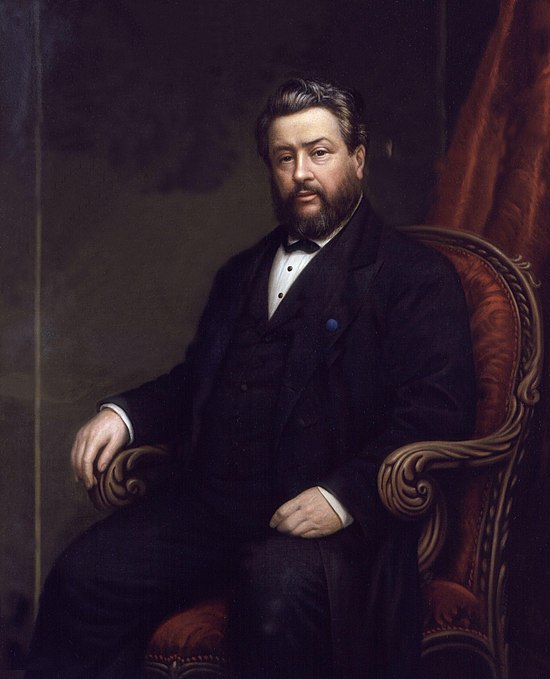
Charles Spurgeon

Good News for the Elderly

Hebrews 12; Matthew 20:6
Charles Spurgeon March, 10 2017 Audio
0 Comments
Choice Puritan Devotional!

Sermon Transcript

Auto-generated transcript • May contain errors

100%
Good news for the elderly. This sermon was originally preached on December 30th in the year 1855 by Charles Haddon Spurgeon. Our text for this evening comes from the book of Matthew, Matthew chapter 20, verse 6. About the 11th hour, he went out and found still others standing around.

We have come to the end of another year. The ending of a year is better than the beginning of that year. A year has begun with fear and trembling. It closes with joy and thankfulness. In the beginning of the year, we are like the sailor when he leaves port. He hoists his sails and goes out on the wide sea towards a distant land. At the end of the year, We are sometimes like that mariner when he throws his anchor overboard and lies still in the haven. We have come into the harbor now. It's the end of the year. And now we rest and gratefully review our voyage.

But in coming to the end of another year, we have some solemn things to talk about, as well as some on which to congratulate ourselves. This is to be our subject and may God make it both solemn and profitable for the wrapping up of the old year.

At about the 11th hour, he went out and found still others standing around. These words are taken from the parable of the workers in the vineyard. In this parable, the landowner went out early in the morning and he hired laborers to work in his vineyard. And later, he went out again about 9 o'clock and also around noontime. And then at 3 p.m. and finally, he went out lastly at 5 o'clock in the afternoon. And he did the same. And when the workers came to be paid, he gave to those who were hired at 5 o'clock in the afternoon the very same wages as those whom he had hired at the beginning of the day.

We shall note in our text, first of all, the sovereignty of divine grace, secondly, the mercy of God, and afterwards we will endeavor to make a solemn application of the passage to both the old and to the young.

First, in our text we see the sovereignty of divine grace, the sovereignty of divine grace. When we say divine sovereignty, we mean that God has the same rights which an absolute monarch has. That just as a sovereign under the old Jewish law or under the Medes and Persians, just as that sovereign had a right to do entirely as he willed with his subjects and there was no one who could stop his hand or to say to him, what are you doing? So it is exactly the same with God. only in an infinitely higher and much more righteous sense. God is the absolute monarch in this world and he has the unquestionable right to do with every one of us just whatever he pleases.

The Apostle Paul wisely asked, doesn't the potter have the right to make out of the same lump of clay some pottery for noble purposes and some for common use. The doctrine of divine sovereignty is sadly often discarded, yet it must be proclaimed, even though men may bite their lips, and regardless of how angry they may be to hear themselves humbled in the dust, and Jehovah, Jehovah God, exalted as their Master.

This parable this evening shows the sovereignty of God with regard to the calling of certain persons. It shows the sovereignty of God with regard to the calling of certain persons. The landowner went out early in the morning and called so many. He went out again at nine o'clock in the morning and called more. He went out at noon. at 3 p.m. and at 5 p.m., and still he found more persons unemployed. Did he find them expecting or seeking work? No. He found them, quote, standing in the marketplace doing nothing, end quote. They were not working nor doing anything. He found them standing idle, and so just as he pleased, He said to some of them, go and work in my vineyard.

There is such a thing as divine sovereignty with regard to the choice of persons who are to be saved. If one man is saved and another is not, God has made the difference and God has the right to make that difference. If my brother shall enter heaven and I shall be sent to hell, God has a right to save my brother, and he would be righteous in my damnation, for I deserve it. And if my brother does not deserve to be saved, as he does not, yet God has a right to give salvation to him and to withhold it from me, if it so pleases him.

My soul falls down in absolute submission at his feet. I have no rights when I come before the Almighty. I have no claims on him. I have sinned so much that, if he had sent my soul to hell, I would have richly deserved it. God has a right to do as he wills with his creatures, and he exhibits this right in his choice of those whom he calls to work in his vineyard.

Divine sovereignty is exhibited in the time when the landowner called his people. Some were called early in the morning, some at 9 a.m., some at noon, some at 3 p.m., and some at 5 p.m. The man who was called at five o'clock in the afternoon didn't complain. He didn't say, why didn't you call me in the morning? The man who was called in the morning, though it is said that he afterwards murmured because he didn't receive more pay than the last two were hired, yet if he had been in his right mind, he would have been thankful to the landowner that he had given him the honor of working in his vineyard and had called him so early into it.

It is a mercy to be effectually called by grace at any time, and we must not dictate to God when He will give us His grace. God exercises His sovereignty in calling and converting sinners just when He pleases. God exercises His sovereignty in calling and converting sinners just when He pleases. We have some people in our churches who have been Christians ever since they were four or five years of age and others who were not converted until they were 60 or 70. God calls his people out of the world and from the service of sin and Satan at all periods of life and thus he exhibits his divine sovereignty in saving men and women just when he pleases.

How often I have heard legalist preachers assert that, if a man is not saved before he is thirty, it is not likely that he will be saved at all, and that if a man has attended church for thirty years and is not saved, there is a possibility, but hardly a probability, that he will ever be saved. That is all nonsense, or something worse, because God is God. He saves whom He will. and he saves them when he will.

Our Lord said to Nicodemus, the wind blows wherever it pleases. You hear it sound, but you cannot tell where it comes from or where it is going. So it is with everyone born of the spirit. God is just as able to convert a man with gray hairs on his head as he is to convert a man of 30. There is no difference. We all stand before God as sinners, and if he pleases to save a gray-headed man, he can do so.

Men talk in the way I just mentioned in order to stir up the young to seek Christ, But little do they know that, while such language has little or no effect upon the young, on the other hand, it often depresses the spirits of the old and makes them think, surely then, our hour of mercy has passed and we cannot be saved. And yet these same legalist preachers who say that the elderly have very little chance of being saved, they often quote Dr. Watson, say this, Life is the time to serve the Lord, the time to ensure the great reward. And while the lamp holds out to burn, the vilest sinner may return. Life is the hour that God has given to escape from hell and fly to heaven. The day of grace and mortals may secure the blessings of the day.

Yes, beloved, As long as a man or woman is living in this world, and I am also living, I will preach the gospel to them. And if I could find that, quote, wandering Jew, if ever such a being existed, and he were nearly 2,000 years old, I would still preach the gospel even to him. And if he trusted Christ as his Savior, he would find mercy and salvation.

So divine sovereignty shows itself first in the calling of certain persons and next in the time when those persons are called. And once again, there will be divine sovereignty in the ultimate reward of those who are called. There will be divine sovereignty in the ultimate reward of those who are called.

The landowner gave to every man the exact same wage. The one who was hired at five in the evening came in fresh to do his work and only did a little bit of hoeing or digging or pruning or something of that sort. And there was a set wage for him. In comes another man who wipes the sweat from his brow and says, ah, I have been hard at work these past 12 hours. And there was the exact same wage for him, neither more nor less for one or the other, the same wage for each one who came to work in the vineyard. Thus God shows his sovereignty in his distribution of rewards.

When some of the laborers murmured against the landowner, he answered one of them and said, friend, I am not being unfair to you. Didn't you agree to work for Denarius? Take your pay and go. I want to give the man who was hired last the same as I gave you. Don't I have the right to do what I want with my own money? Or are you envious because I am so generous? So the last will be first and the first will be last. Those who came last received just as much as those who came first.

I am not quite sure whether that doctrine is true, which is often called the doctrine of degrees of glory. I have heard it frequently preached, but I have never seen any scripture passages to back it up. The text that the advocates of this doctrine usually bring forward is the passage And star differs from star in splendor. But anyone who can read English and who turns to that passage, that's 1 Corinthians 15.21, they will see that the apostle is not speaking of degrees of glory in heaven, but of different kinds of glories in the literal heavens of outer space.

And besides, stars may differ without varying in degree of splendor. For one star may be red, another green, a third yellow, and yet all may be of the same brightness. Even so, though all the saints will differ in some respects, I do not see why there should necessarily be degrees of splendor. There may be degrees of splendor, but so far as I can judge by reading the scriptures, I cannot see the slightest evidence to prove that the doctrine is true.

What is the glory of a saint? Is it not Christ's righteousness? And shall I, the least of all saints, have less of Christ's righteousness than the greatest? Is not the glory of the saint the love of his master? And will my master love a poor old woman who lived up three flights of stairs and died without ever being heard of? Will he love her less than he loves the most popular minister? Ah, beloved, there are degrees of grace here, but we do not know if there will be any degrees of glory in heaven. Why should a poor creature lying on a sickbed, who for years have trusted in her Savior, have less glory than another, another who has been allowed to work hard in his service? Why, it is an honor for us to be busy in good works here, and God has given us a little more honor here. But we don't want to be honored for honor. We don't want to have an eternal difference made between us and others of his people. No, beloved, every man who worked in the vineyard received the same wage, and every saint will, in God's own time, be in heaven. They will be with Christ, and they will be like Christ. How can he be more one with Christ than another is? All believers are blood washed, all are equally justified, all will be equally sanctified, and all will be equally pure. So we do believe that their heaven will be equal, or if not, scripture certainly gives no evidence to the idea of degrees of glory. In this matter of eternal rewards, God will display his sovereignty. There will be some old man who has lived to be 90 and who was saved only in the last year of his life. And when he enters heaven, he will sit just as close to Christ as one like Timothy, who was called in his early youth, who preached the gospel during a long life of usefulness and died with honors. There will be a poor, wretched sinner, like the thief who was saved when he hung on the cross, and he will sing as sweet and as loud and as strong as the Apostle Paul or the Apostle Peter, for there is no difference between Jew and Gentile, between one man and another, for the same Lord is Lord of all and richly blesses all who call upon Him. Thus, God displays His sovereignty in choosing the persons who will be saved, in selecting the time when they will be saved, and in their ultimate reward. This brings us to consider our second major point, the great mercy of God exhibited in His sovereignty. The great mercy of God exhibited in His sovereignty. This landowner went out to hire men for his vineyard because he needed them, did he not? Yes, but God does not go to hire men and bring them into his vineyard because he needs them. There is not a man or a woman in this world that God could not do without. Oh, you hear a person say sometimes, suppose Mr. So-and-so were to die, what would the church do? Why, it would do as it did before, live on its God. For when all created streams are dry, His fullness is the same. And when God calls any of His servants away, He can work out His eternal purposes quite as well without us as He does with us. The landowner in the parable needed men, but God is totally independent of them. And herein is the mercy of God manifested, in that he goes out to find men to come into his vineyard when he positively can do without them. Does God need any of us? What, he who guides the stars and keeps them revolving in their orbits by the motions of his fingers? Does he need an insignificant atom like one of us to serve him? What, he whom all the host of angels worship, and before whose throne the cherubim hide their faces with their wings? Does he need a tiny creature like man to give him homage and reverence? If God did need men, he could immediately create as many mighty kings and princes as he pleased to wait on him, and he could have crowned heads to bow before his footstool. and emperors to conduct him through the world in triumph. But God does not need men nor women. He can do without them if He pleases. O you stars, you are bright, but you are not the lamps which light the way of God. He does not need you. O sun, you are bright, but your heat does not warm Jehovah. O earth, you are beautiful, but your beauty is not needed to gladden his heart. God is glad enough without you. O you lightnings, though you write his name in fire on the midnight darkness, he does not need your brightness. And you, you wild ocean, you are mighty. But though you sing his deep praise in your solemn chorus, your storms do not add to his glory. You winds, though you accompany the march of God across the pathless ocean, you thunders, though you utter God's voice in terrible majesty and track the onward progress of the God of armies, he does not need you. He is great without you, great beyond you. great above you, and He does not need you. God does not need us. Then, let us look at the mercy of God, the mercy of God to come after any of us, to come after me, to come after you, my sister, my brother. Admire His grace. Look at the mercy of God to come after us. to come after me, to come after you." Look at the landowner in this parable. He comes early in the morning, he comes late in the evening, and he comes many times in between. In like manner, God is untiring in his mercy. The landowner rose up early to go out and find some men to work in his vineyard. So does God. how early he goes to some. Blessed be his dear name, there were some of us who were awakened from our sleep while we were still young, while we were sitting by the lamps of the sanctuary. We can remember when, in our midnight watches, like young Samuel of old, the Lord called out, Samuel, Samuel, and we answered, here I am, Lord, Oh, we can remember when our grandmother Lois and our mother Eunice taught us out of the scriptures, when we were bounced on the lap of holiness, when the breath of sacred song was breathed by us, and an atmosphere filled with the perfume of heaven was always around us. We inhaled it even from our infancy. Ah, hear this, you sons of grace. God came to some of you very early, but beloved, he does not get tired. He came for some early in the morning and they would not go. He came after them in the preaching of the gospel and they spurned all that the minister said. But when God is determined to save, he does not tire, but continues seeking even to the 11th hour. And now, you gray-headed men, God has come after some of you. All your attendance at church from your earliest days have been of little or no avail up until now. Yet now I beg you, consider that He comes to you even at this eleventh hour. For the Lord's mercy is untiring, His grace is unchallengeable. Having set his heart on a man, if he does not come at the first hour, he will come, sometime or other. Divine mercy will sweetly arrange, arrange him to come. Oh, blessed be the name of our God. There have been some who have come into our churches who would not have been taken into any army in the whole world, for they were made by old age too feeble to fight. Their eyes had started to dim, Father Time had written his name on their brows, their hair had become faded and white, and they came leaning on their staff to tell us what they knew of the Lord's redeeming love. Some of the sweetest tales I've ever heard have been told to me by gray-headed sinners, saved in their latter days, just when they were trembling on the borders of the grave. Do you think you see such a scene? The poor old sinner is tottering along. Another minute and he will be in hell. Listen to the voice of God. Gabriel, stop that man. One more step and he will be in the pit. Down flies Gabriel, catches him in his arms and stops him for a moment while the Holy Spirit whispers in his ear, flee, flee from the wrath to come. And starting backward, he looks at the pit where he'd almost had fallen into, and he hears time sinking down into eternity. Yet he is saved. Surely there will not be any man or woman in heaven who will bless God more than the gray-headed ones, those who are called at the 11th hour. Blessed be the name of God that such sinners are brought in. Poor decrepit old creatures, past the time of useful labor and good for nothing, yet they are saved. Yes, even those who have worn themselves out in the service of Satan, God is willing to receive. Christ will not cast away the devil's worn out servants. They who have nothing left that is of any use in the world, He says to them, as the landowner said to the men in the marketplace, Why have you been standing here all day, all day long and doing nothing? O beloved, don't you admire the stupendous, amazing, astonishing grace of God, the grace of God which can reclaim men and women at the eleventh hour? There is a young man in a very poor position in life. You come to him and you say, come to my house and be my son. I will wash you clean. I will give you warm clothing. I will make you rich. But he turns away and ignores your invitations. He insults you to the face, mocks you in front of your friends. ignores your special days of feasts and festivities and thoroughly despises you. When you look at him again, he is beginning to enter middle age. You go to him and say, will you come to me now and be my son? No, he says, I will not. Do you think that by the time he was 40 or 50 years old, you would be quite tired of him? And suppose it was possible that when he was 70 or 80 years of age, he should come to you and knock at your door and ask to be adopted as your son. Well, most likely, most likely you would say to him, what? You have the impudence to come now while for these 40, 50, 60 years you have refused to accept my invitation? You vile, ungrateful person! I will have nothing to do with you now. Do you think I am going to have you now, when there is nothing left of you that is worth having? Go back to where you have been all these years. Those you served when you were young, you may serve now that you are old. You had the pleasures of sin when you were young. Go and have them now. It is a fine thing to make a sham of your religion. coming to me to take care of you when you are so old that you cannot take care of yourself. Get out of here." Now, you and I might act like that, but the Lord does not. Not only does he not turn a gray-headed old sinner away, but he goes after him himself, or else the sinner would not come. Though he has sent his servants and the man has rejected them time after time, yet God says, he will not come unless I go after him myself. So he goes to the poor crippled man, the man who could be of no service to him. And he says to him, come to me, come to me. I loved even you with an everlasting love and I will save you even now. You will be delivered from going down into the pit. Your eyes will be saved from tears and your feet from falling. My friends, there is divine sovereignty. There is unparalleled mercy. Thirdly, may God help us while we endeavor to make a solemn application of this subject. to the elderly. It would be presumption in a young man to speak to the elderly if he spoke to them simply as a young man. But as a preacher, I am God's ambassador, and if God has sent me, no man can despise my youth, nor is it to be considered in the least degree nor do I consider it myself. I speak with the self-same authority that the most elderly minister can command, for I have the same commission that he has, and he has no better message than mine. Old man and old woman, come here, and let me give you a solemn warning, to warn you of the wrath to come. Gray-headed man and gray-headed woman, I beg you, first of all, to remember how many years you have wasted. To remember how many years you have wasted. Look back upon your misspent life and recount your years over and over again. What do you have to say of your 60, 70, or perhaps 80 years? Your harvest is past. Your summer has ended and you are not saved. In your youth, oh, how much you might have done then. In your middle age, oh, how your vigor might have been spent in doing good to your fellow men. Oh, how your old age has been misspent and misused. Weep, weep, I beg you, weep bitterly. Let your cheeks, cheeks that are wrinkled with the ravages of time, feel for a moment the solemn scalding tears of regret because you have wasted all those years. Remember also that you can never get those wasted years back again. You can never get those wasted years back again. As long as you may live, You can never get one of them back. They have winged their way behind you. They are with the years beyond the flood. And though you work hard now, you can never recover the time you have lost. It is gone beyond the hope of rescue. Even if you could pay the price of a kingly ransom, you could not even have one hour back again. Consider then, my aged friend, How much of your time has already been wasted and how many years have rolled away and you are still unsaved? Consider next, suppose you are saved now, what very little you can do for God? Suppose you are saved now, what very little you can do for God? At the most, you can have but a few short years in which to serve the Lord. Death is at your gates. Those gates are tottering beneath the battering ram of age. Death is already encircling you. The walls around your soul are shaking beneath the devastating engines of decay. In all probability, you only have a few more years to live. and perhaps not more than a few months or weeks or even days. And then you must go the way of all flesh. Consider too old aged man and aged woman. If you are put into the vineyard at this 11th hour, how little you can do for others. If you are put into the vineyard at this 11th hour, how little you can do for others. You cannot preach the gospel now. Your eyes are perhaps too dim even to read God's word to others. Your voice has lost its melody. The windows out of which lust once looked have become darkened, and you have no hope that the fire of life will light them up again. Consider how little you can do, even if you are saved now. How much less if your salvation is still postponed and you are not delivered from sin for years to come. Consider what is gone, you gray-headed ones, and turn to the Lord even today. Oh, aged sinner, consider how much trouble has been wasted on you. Consider how much trouble has been wasted on you. The man who took care of the vineyard said of the barren fig tree, I'll dig around it and fertilize it. Oh, how they have dug around you and fertilized you. Another 104 sermons you have heard during the past year, and yet you are still unsaved. For 50 years, for 60 years, you have attended church every Sunday. Yet as oil runs off a slab of marble, The Word of God has run off of you. Thousands of sermons have left you as dead as ever, and myriads of warnings have all sunk as it were into the sea like a pebble hurled into it, which is lost and gone. In all your Sundays, you have not secured anything for heaven. You have worked hard enough for this world, and now where is everything that you have gained? You have put your treasures into a bag full of holes. You have sown the wind and you will reap the whirlwind unless you quickly repent and seek the Lord. Consider once more, old man and old woman, how long and how much you have provoked your God. Consider how long and how much you have provoked your God. Remember the sins of your youth. How often has that hand of yours, which is now quivering with death's touch, held the wine glass of the drunkard in your youth? Look back upon your years of youthful passion. Has it not been devoted to Satan and blackened with enormities of guilt? And now, up to this time, you have still provoked your God to destroy you. His patient arm has not crushed you, and His mercy has kept back the sword of justice. But can you expect such gracious treatment as that much longer? Will God be merciful forever? Will He be kind throughout eternity? And if His mercy should fail, won't His justice make short work of your soul? And yet, my friend, If that thought does not stir you to repentance, consider once more, if you are unsaved, how horrible, how horrible is the place appointed for you. How fearful must the doom be which you will receive. You are not a young sinner. He would be damned. You are an old sinner. How increasingly awful must be your doom. You are not one who has sinned because of mere youthful passion, but you have sinned when passion has died away and when prudence has taken possession of your soul. You have sinned when the heat and emotion of youth have died. You have sinned, therefore, worse than a young man can have done. Old man, old woman, may a child warn you I am sure I love you with all my heart, and even now my young eyes weep for you. Have you never seen an old man led by a little child when he was blind? It may be that, though you are blind, a little child will lead you to the Savior. It is a child who now speaks to you. O gray-headed man and gray-headed woman, Wouldn't it be to you an eternal source of misery if I, if I, a youth, were saved and you, who are elderly, were lost? Oh, when you see a young Christian, doesn't a tear run down your cheek? When you see a child in grace, doesn't a sigh of repentance ever come from your heart? I think if I were old like you and saw some young child saved, I would wring my hands in misery and say, O Lord, He is such a child, a Christian, and yet I am unsaved, I am unforgiven, I am still unpardoned. Tremble, tremble, tremble, O aged sinner! Be afraid, be afraid, be afraid, O unregenerate old man and old woman. Let your knees knock together. Let your blood curdle in your veins. Let your heart quiver. Let your flesh be ready to creep at the thought that you will be lost, and that as the Lord God lives, there is but a step between you and death, between you and hell. But there are the young, and they are perhaps smiling and saying, Ah, all that is good advice for old people. It is good that old people should be religious, but why should we think about such things yet? We have not come to our eleventh hour yet. What did you say, young man? I said, I had not come to my eleventh hour yet. What did you say? Will you repeat that sentence? No, you dare not, for you don't know when your eleventh hour may be. Does any man know which will be his eleventh hour? Does any of you know how many more days you have to live? I don't, nor do you. Does any one of my friends conceive that the time of his death is a long way off? No, beloved. There is such a thing as death in the church pew. The angel of death may at this very moment be coming in that door and flapping his black wings across this place, looking for someone who is marked for destruction. And before you will return home this evening, your soul may have departed and you may have gone from this stage of existence. Consider then, I say to each one of you, if you are not called by grace, you are like the man in the 11th hour, standing idle in the marketplace. Consider you who are very young. Have you not given too much time to Satan and to the world already? I don't like the devil well enough to think that he ought to have the first 20 years of a man's life. Consider young man. Hasn't Satan had more than enough service from you? Do you think it will give you any comfort on your deathbed to reflect that you were for many years living in sin and not saved early? And don't you know that true Christianity is so sweet that we should seek it for its sweetness even if it were not necessary for our soul's security? Ah, you men and women of the 11th hour, For that is what each one of you are. May our Master come to you even at this moment. And if he finds you idle, may he say to you, you also go and work in my vineyard. I will now conclude with just a few words of encouragement. Words of encouragement to the oldest man and the oldest woman among us. Don't think that you are beyond hope because you are aged. Don't believe Satan when he says to you, oh, you are too old a sinner to be saved. Tell him he is a liar and that he does not know anything about it. For there are none that are too old to be saved. God will have mercy on all those that come to him. God has no objection to youth. He has no objection to old age. Listen, you aged sinners, listen. If you are now under a sense of sin, if you are desirous of being saved, there is mercy in the Lord Jesus Christ even for you. And oh, beloved friends, each and every one of you, are you this night crying out for mercy? Are you desirous of a pardon? Do you feel that life is short and death is sure? Don't you know that in a few short days or months or years that a casket will hold your body and your soul will have gone from it into eternity? Do you wish for a guide across the trackless desert which leads to heaven or to hell? Do you want a conductor to lead you into paradise? Do you desire angelic wings to lift you up to the celestial city? Do you seek for Christ's blood to cleanse you? For God's grace to sanctify you? Then my friends, there is mercy for you. There is mercy for everyone who feel their need of it and ask the Lord for it. The worse your character, the more reason you should go to the Lord Jesus Christ. It is free grace that we preach and the vilest, most guilty, oldest, youngest sinner, anybody who feels their need of a Savior is welcome to that Savior now. The Lord give you grace, grace to seek Him. Remember that the least prayer will be heard, the weakest desire, the feeblest groan will be acknowledged in heaven. and doubtful as you are that you will ever find mercy, you most assuredly will if you seek it through Christ. Farewell, old man. Farewell, old woman. I don't know who you are, but it was laid on my heart to seek you, and I have sought you. Oh, poor old man and old woman. You are like one who once lost himself in a pine forest The snow fell thickly around him. It was dark, damp, and cold. The howling of the wolf could be heard by him in the distance, and he feared that during the darkness of the night he would be consumed. There remained only one protection for him, and that was that he would light a fire by which he might warm himself and frighten away the wild beast. He gathered together the pine wood and the dry leaves, wherever he could find them, and he took out his matches. He tried to strike one match, but it was good for nothing. He tried another, and another, and another. And once he thought he had a light, and carefully held it in his fingers, seeking to bring it to the little kindling he had laid beneath his pile of wood. But it died out to his bitter disappointment. For some time, he kept on striking his matches. He did so carelessly at first, but as the number of matches diminished, he struck each one more carefully, till he came to the last two. He struck one of the last two matches very carefully. He put it under his pine wood. It flamed for a moment, and then a gust of wind blew it out. And now he came to his last match. The wolf was howling. The wild wind was whistling. The snow was falling. The night was darkening. He feared that he must be there all night without a fire. Already his stiff joints began to freeze. His fingers were already numb. You may guess how that man crouched down on the earth to strike within the circle his body might make his last match. You may imagine how earnestly he put up his prayer to God that he might succeed the last time. Oh Lord, he said, let this last match succeed. And filled with fear, he looked at the match for a while. Fearful that it too might fail, he strikes that match. On it depends his life. It is his all, yet he strikes it. Ah, glorious! The flame is caught. It blazes. He sits down and cheers himself. He is saved. He is saved. Saved from the cold, from the devouring wolf. Now in the same way, there is the gray-headed old man. He has his last match in the box. He has struck 69 of them, all to no effect. And now he has got to the very last match. Oh God, if you don't cause that last match to strike for him, he is lost forever. If you don't give him the light from heaven, fire from above, he must perish forever. God grant that his last match may succeed with you. Old man and old woman, God bless you dear friends. A happy new year to every one of you, many new years to those of you who are bound for heaven, and a new year in heaven to those whom God may take away before another year comes around. Amen.
Charles Spurgeon
About Charles Spurgeon
Charles Haddon Spurgeon (19 June 1834 — 31 January 1892) was an English Particular Baptist preacher. His nickname is the "Prince of Preachers."
Broadcaster:

Comments

0 / 2000 characters
Comments are moderated before appearing.

Be the first to comment!

Joshua

Joshua

Shall we play a game? Ask me about articles, sermons, or theology from our library. I can also help you navigate the site.