Bootstrap
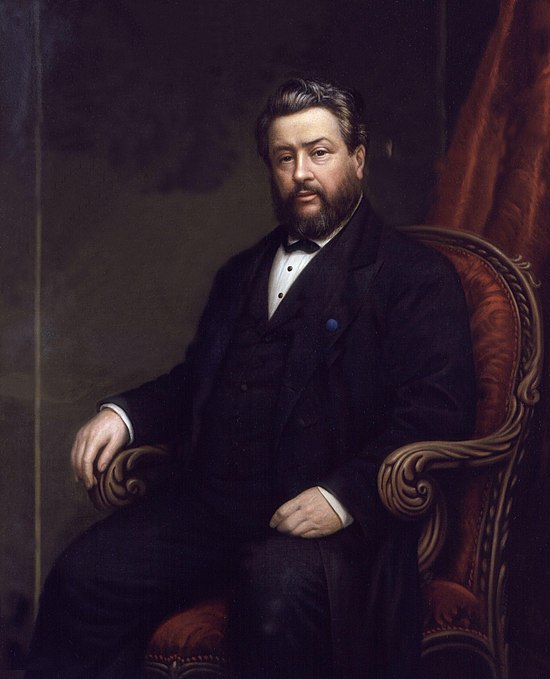
Charles Spurgeon

What the Lord's Supper Sees and Says

1 Corinthians 11:26
Charles Spurgeon March, 10 2017 Audio
0 Comments
Choice Puritan Devotional!

Sermon Transcript

Auto-generated transcript • May contain errors

100%
what the Lord's Supper sees and says. This sermon was originally preached on July 1st in the year 1883 by Charles Haddon Spurgeon. Our text for today comes from the book of 1 Corinthians chapter 11 verse 26. Whenever you eat this bread and drink this cup, you proclaim the Lord's death until he comes. There is something very tender about the supper which Christ has instituted, for it specifically concerns himself. Other things set forth the truths which he taught, or the blessings which he purchased, or the duties which he commanded, but this supper has mainly to do with our Lord Jesus Christ himself. True, as we think and speak of it, we shall learn precious doctrine, and we shall be encouraged by the gracious practice. But the central thought at this table is concerning our Lord Himself and that part of Himself which is most easy for us to realize, His flesh, with which He touches us so tenderly, making Himself bone of our bone and flesh of our flesh, His blood, which makes Him so similar to us one with sinners by His blood. It is very blessed not only to be reminded of Christ, but of that part of Christ to which we can most readily come to. His Godhead is beyond us, but His manhood is near us. And I think that the tenderness of this supper is greatly increased by the fact that it celebrates our Lord's death. If anything concerning our departed friends and relatives so particularly touches our heart, it is their death. How lovingly we remember their last moments. Their final utterance sounds to us like the language of prophets. Words that were commonplace before become golden when spoken to us by loved ones as they leave us. The tear willingly comes to the eye and the heart beats faster than normal when we begin to remember our dearly beloved friends and to remember them in the solemn moment of their death. At this supper, we shall not forget that our blessed Master is exalted and sits at the right hand of God. And we shall also be powerfully reminded that he is coming a second time in the clouds of heaven with all the splendor and glory of his father's court. Yet the main intent of our gathering around this table is to proclaim his death. That is the principal point. Therefore, beloved, collect all your thoughts into one thought and all your contemplations into one contemplation. and lay it all at the foot of the cross as you eat this bread and drink this cup. To me, it is a very tender thought that you and I would be called upon to keep up this memorial since our Lord gave us this supper with the commission that each one of us should see to it that the memory of Christ was always fresh. I was about to say, to keep his grave in order, That is not true. He is not here, for he is risen. But at least we are to keep the letters on this monument always deeply carved and legible, proclaiming his death so that everyone who passes by, who rambles into the cemetery where men have slept and pauses at this open tomb and asks, who once slept here, so that they may know from us that it was Jesus of Nazareth, the Son of God and the Son of Man, our clear and ever-to-be-adored Savior, who died and was buried and rose again the third day, according to the Scriptures. You see, then, that this supper concerns our Lord Jesus, and it especially concerns his death and you have to focus on this ordinance so that you can freshen up the memorials of the departed one. Don't you think that it will help you to do it if you remember that he has not gone far away? Before I stood up to speak to you this morning, I thought within myself that I could hear his footsteps on this platform. and I opened my eyes after my brother's prayer, almost expecting to see the Master here. He is not here in that sense. He has gone away in such a way that he could still be present. Make what you can of that riddle. Many of you understand the Blessed Paradox. We have not lost our Lord's spiritual presence, but we are looking for His bodily presence. And I think he is already so near to us, if he were to suddenly appear in our midst, it would be no surprise to us. And we would all clap our hands and say, welcome, you long expected one. We knew that you would come, and we felt the influence of your presence. We knew that you were on the way, for our hearts burned within us, and we felt your coming nearer in the days of your glory dawning. Bearing all this in mind, we must now consider what the Apostle said about this supper. And first, I shall ask you now to look backwards from this ordinance. We proclaim the Lord's death. Secondly, I shall ask you to listen to the present voice of this ordinance, to try to hear what it now whispers in our ear. And then thirdly, I shall speak of the prophetic glimpse of this ordinance. since the text tells us that in it we proclaim the Lord's death until he comes. So there is in the ordinance a peek at Christ's coming glory, a gleam of that long expected light. First, then let us look backwards from this ordinance. Let us look backwards from this ordinance. It was intended to be the memorial of the great event of Christ's life, And I think you will all agree with me that it is a very effective memorial. It has been said by men well competent to judge that there is no better memorial of an event than the celebration of a festival such as this. If you write the record of a great event in a book, that book may be placed on a shelf and perhaps remain unread. or it may be completely destroyed so that not even a copy of it remains. If you set up a stone or pillar and engrave on it some words by way of memorial, that pillar may, in time, be used for something else, and the original intention of its erection may be completely forgotten. I have seen marble columns recording Roman triumphs, built into the houses of Italian peasants, and you may have seen the same. Stained glass windows of honor are broken, and even solid brass wears away. How can you keep a thing engraved on man's memory? Here is the record of nine days of triumph and battle. Will it last for nine centuries in old, worm-eaten books or imprinted on parchment? Won't the archives be invaded by the rats? Hasn't it often happened that the best preserved documents have perished? But institute a supper like this so that wherever the followers of Christ meet together, a piece of bread and a little wine will be sufficient for them to immediately proclaim Christ's death. And you have instituted a memorial which will outlast your granite and laugh at your memorials of brass. Speak of imperishable marble. Here you have something far more enduring. And now, for nearly 19 centuries, the Church of the Living God has kept alive the memory of Christ's death by this sacred feast. In the wisdom of Christ, it was given to us. Let us not grow so wise, or rather so foolish, as to neglect it. In looking back from this ordinance, we see that it is not only a very effective memorial, but also a most instructive symbol. Not only is it a very effective memorial, but also a most instructive symbol. What does this supper consist of? Simply of bread and wine. The bread must be broken, and what better emblem of suffering can you have than that? The bread itself, if rightly viewed, appears to be a mass of suffering. The seed is thrown into the ground, which has been cut up by the sharp plow. It lies buried for a while in the cold clay. When it grows and breaks through the surface, it has to endure, first the frost, and then all the trials of wintry weather, and then the heat of summer. And when it ripens, it is cut down with a sharp sickle. The sheaves press upon one another. They are thrown on the barn floor, and the precious grain is threshed out by severe beating. Next, it must be taken to the mill to be crushed between great stones. And when it is utterly bruised into fine flour, it must be kneaded and made into dough. then it must be baked in the oven, and still it has not finished the long process of suffering, for finally it is laid on the table and broken into pieces, and then further broken with the teeth in order to enter into men and become their nourishment. So the broken bread is an excellent emblem of that precious body of the Lord Jesus Christ into which all sorts of griefs were condensed until the man of sorrows was utterly consumed by them. And look too, look at the wine in the cup. Doesn't that also indicate pain and suffering? Have you ever seen the vine, especially in the wine producing countries, how it is cut down until in the winter it seems to be nothing but an old dead stump How sharply do they prune it and cut it back if it is a good vine? And when it finally bears its clusters, the grapes are gathered and thrown into the wine press and crushed beneath the trampling feet of the laborers, and the freely flowing juice of the grape is the picture of Christ's sacrifice. The yielding up of His life, the pouring out of the precious blood of Jesus, Now take the two emblems separately. You cannot have the Lord's Supper with the two joined together. You must have them both, but you must take them separately. For when the blood is separated from the flesh, then death ensues. So on the table, you have not only two tokens of intense suffering, but you have in the two, separate from each other, a most remarkable and instructive symbol of death. This is just what the Lord intended that it should be, and when we come to the Lord's table, we cannot help but remember his death, for it is so clearly set before us. I don't know what the Roman Catholic Mass sets forth, with all its pretentious ceremony and mockery, I cannot tell you what that has to do with Christ, but here you have, as Christ instituted the ordinance, an excellent symbol of his broken body and of his shed blood, and therefore of his death. You also have in this supper something more than this, and that is a most pleasing and happy display of the result of that death. a most pleasing and happy display of the result of that death. Our Divine Master died. Woe, woe, we cry, that heaven's dearest one should lie dead in the tomb. Yes, but see what comes out of this death. Men are now called to feast with God. Our Lord Jesus by His death has provided this sacred food that hungry souls may feed on it until full. And they are invited to come and take of that which is provided, the joy of heaven, the bread that strengthens man's heart, and that wine which safely makes his spirit glad. Yes, man is no longer an outcast. No longer does he wish to eat the food that is fed the pigs in order to fill his stomach, but he now sits at the table, and a feast of choice food is prepared for him, essential and delicious foods, bread and wine provided for him in Christ, and that is plainly set forth to all who care to see it in this supper. Nor is this all. There is in this supper a personal and yet united confession and testimony to Christ. A personal and yet united confession and testimony to Christ. It might have seemed difficult to blend these two, for religion is a personal matter. If Christ is to save me, I must personally feed on him. and yet religion is also a social matter. If Christ is to save me, it must be in connection with the whole of his church, which he has redeemed with his most precious blood. Now here at the Lord's table, eating is an individual act. No man can eat or drink for his fellow men. And thus each man proclaims that he does from his own heart of His own accord, by His own faith, receive Christ to be His Savior. Yet inasmuch as no one man alone can celebrate the Lord's Supper, but there must be two or three at the least, so the great fact is set forth that we are not saved alone, but saved as members of one body, the Church of the Living God, which He has redeemed at so great a cost. See, then, how the individual is lost in the mass of people. No, not lost, he is still there, and yet he is no longer separate, and this supper proclaims all that. Come, therefore, beloved, come to this ordinance which has such richness of meaning in that the few words I have spoken only touch the surface of the subject. Come and think of your beloved, He has died, he has died for you. That dear body of his, black and blue from the cruel beatings and scourging, and red with its own blood. That life poured out, though it was for all his people, yet it was especially for you, my brother, for you, my sister. You did not see Christ die. But if your faith is in the right condition, you may see him die, as it were symbolically. You may see his death vividly proclaimed, in a striking fashion, in those emblems on the table. God give you the grace to see it and in response to love him more who died on Calvary for you. Oh, if you had seen him die, the horror of that scene would have overcome you. And instead of sweet thoughts of devotion, as you imagined might be the case, you probably would have been overwhelmed with terror. But now, like looking through tinted glass at the emblems of the body in the blood of Christ, you may see him under a softer light. The horror of death will not oppress you, for you can sit in that pew and see him who died for you. See him with a holy joy that he should have loved you and given himself for you. It is you who are to think of him. It is you who are to discern the Lord's body. It is you who are to eat and drink worthily with all your heart proclaiming Christ's death. It is you who are to represent him. You with all your brothers and sisters but you nonetheless as truly as if you were alone. Whenever you eat this bread and drink this cup, you proclaim the Lord's death until he comes. That is the backward look of this ordinance. May God's Spirit enable you to see it at this moment. And now, dear friends, secondly and briefly, bow your ear a little and listen to the present voice of this ordinance as it speaks to you. What does it say at this very hour? It says to me, and my heart shall hear it, that Christ's death must always be kept before me. That Christ's death must always be kept before me. I am to proclaim the Lord's death until he comes. Whatever I forget, I am to remember that, and this supper was instituted specifically that I may do so. O my heart, you must keep a dying Christ always before you, Christ to the forefront in my life, Christ to the forefront in my teaching, Christ to the forefront in all my prayers, Christ to the forefront everywhere. O memory, Leave no other name but his recorded on my heart. Listen to me, my heart. Whatever else may come or go, you must remember his death and keep it right in the forefront of everything. But over the table, I hear a whisper come. You still need this memorial. You still need this memorial. We are not only to remember Christ, We are to do this in remembrance of Him. This ordinance is intended to help our memory. Is it possible that we can forget our Lord's death? If it had not been possible and probable that we could forget His death, there would have been no need of this supper. But it is ordained because we are naturally forgetful. We are ungracious enough to let even the best things slip We don't forget our earthly beloved ones who have been taken from us. That dear infant child who died has its name inscribed on its mother's heart. The husband has not forgotten his spouse, but yet we grow unmindful of our Lord, and therefore he has left us this sweet forget-me-not. He says to us, as it were, know my beloved, I will not let you forget me. I will give you something that shall frequently remind you of me. Come often to my table and there constantly think of me afresh and anew." What else does this ordinance say? It says, in this supper I have fellowship with the centuries that have gone before and with those which will follow. I have fellowship with the centuries that have gone before and with those which will follow." When our Lord said to His first disciples, do this in remembrance of Me, He really gave that command to each one of us who believe in Him. But He also gave it to all the saints who have gone before us and to all who will come after us. Doesn't it fascinate you to think that you are eating as Paul did? And as James and John did, that you are in the fellowship of the martyrs and the confessors, the fathers and the reformers, and that we, in this ordinance, enter into the great cloud of witnesses and take our part with them. Some, some seem to regard this supper as an unimportant ceremony. But I look on this supper as something very majestic and sacred. seeing how many hands have combined to break this bread and how many lips have partaken of this cup. So will it be in the future when you and I sleep with our fathers. If Christ shall not come for a long, long while, this ordinance will still be observed by the faithful. If his coming should be delayed for 10,000 years, which God forbid, yet still this supper table would be spread. and loving hearts would gather around it to keep this memorial alive in the earth until he comes. Do you see what this communion really is? It is a bridge of diamonds. It springs from our Lord's death with one grand arch and it spans the intervening space until he comes. Blessed are they that are walking across that glorious bridge and marching on washed in the blood of His death, till they shall wear the white robes of His victory in the day of His appearing." I think I hear another voice coming out of the depth of the cup. It says, He will come, He will come. And oh, blessed assurance, He must keep His rendezvous. This supper is His pledge. And it would be a cruel mockery of us if he never came. He must come. My brothers and sisters, it has been nearly 19 centuries since Jesus said to his disciples, in my Father's house are many rooms. If it were not so, I would have told you. I am going there to prepare a place for you. And if I go and prepare a place for you, I will come back and take you to be with me that you also may be where I am, and he will come. Do not grow weary of it, or if you do, if you do faint with the long watching and waiting, don't grow doubtful, he will come. Your fathers thought that he would come in their time. Some of them thought themselves to be very wise. and tried to interpret the prophecies which never will be explained until they are fulfilled. And they lost themselves in the endless mazes of conjecture. Do not do the same, but still do not throw away your faith because you cast aside your speculation. Believe and hope and patiently wait and look each day for the returning Christ For he may come before noon tomorrow. He may come before the midnight hour falls upon the hush of this great city. Before the very words that I am speaking this second have time to reach your ears, he may appear. For no one knows about that day or hour, not even the angels in heaven, nor the sun, but only the Father. But it is ours to stand watching and waiting and hoping For this supper tells us that He will surely come again. One more message comes to me from this broken bread and that is that it is His first coming that makes us ready for the second. That it is His first coming that makes us ready for the second. Is it not true? You proclaim the Lord's death until He comes? You keep before your mind's eye the fact that he came once to die, in order that you may feel joy in the fact that he is coming again, not to die, but to reign forever and ever. I think I hear the countless trumpets, and see the dead rising, and behold the king is attended by millions and millions of kings. Kings, did I call them? They seem to me like stars. No, like suns, for the righteous will shine like the sun in the kingdom of their Father. Their Lord has come, and His saints are gathered to Him, caught up in the clouds. The living ones are with Him, and the dead have risen and joined them. Oh, the splendor of that tremendous day! Though we don't know when that day shall be, We know that he will come. The angels gave the promise to the men of Galilee and it shall be fulfilled. This same Jesus who has been taken from you into heaven will come back in the same way, the same way you have seen him go into heaven. In the clouds of heaven with great splendor he will appear. And as we come to this communion table, we must think of that glorious appearing of our Lord. Now, last of all, I must speak about our prophetic glimpse of this ordinance. Our prophetic glimpse of this ordinance. I have partly referred to that already, for one thought in our text blends with another. The prophetic glimpse reveals to us the fact that Christ will come again. We are to celebrate this supper until he comes. Then he will come. Do not fall asleep. Do not fall asleep, you virgins, for at midnight the cry shall be heard, Here's the bridegroom! O you who serve him, do not begin to beat your fellow servants, and do not become drunk, for he will come and may soon be here. Because of this supper, we are assured that he will come. But perhaps you say, his saints have waited for him nearly 2,000 years. What is that? 2,000 years? Think of those who waited 4,000 years before Christ came here to die. Now I believe that to wait 2,000 years for our Lord's second coming is nothing. It is nothing compared with waiting 4,000 years for his first coming. For you see, that first coming was to bring salvation of all his people. The Old Testament saints might well have asked, will he come to die? Oh my brothers and sisters, If Abraham and the patriarchs and the prophets had been dubious about his coming, his coming to bleed and die, I would not have been too surprised. Four thousand years passed and yet he had not come. Might not each man been fearful that he would not come? That there would be no redemption? No pouring out of the great price by which men would be set free? Four thousand years to wait for that? Why now, if we have to wait 40,000 years for His Second Coming, it needn't be such an anxious time of waiting. Because we can expect Him to come in glory. We can expect Him to come to be admired by all them that believe. We can expect Him to come to reign forever and ever. We can be sure that He who killed the dragon will come to divide and spoil. He that routed death and hell will come to lead away the captives and to reign forever and ever. King of kings and Lord of lords. You are not waiting in the night, for the morning star has risen. You are not waiting in the thick darkness. The dawn has broken upon you. Christ has appeared once. You are redeemed by his blood. You are children of the living God. Wait patiently. For He will most surely come, and every hour brings Him nearer. What does this ordinance further say to me? Why, surely that Christ's coming will be better than ordinances, that Christ's coming will be better than ordinances. If when He comes, there will be no more Lord's Suppers as we now observe them, and if it is as it certainly is, A rule of the kingdom always to go from good to better, and from better to best. For God never brings out the best wine first, and afterwards that which is worse. But it is always something better, and better, and better. Then what must Christ's coming be? Brethren, communion with Christ in the Lord's Supper is very, very sweet. Oh, sometimes we have had such pleasure, such delight, such rapture at the table of our Lord that we could hardly have endured any more. At such times I have sympathized a little with Peter when he wished to build three tabernacles and to remain on the Mount of Transfiguration. It is very easy to go up to a great height, but sadly we must soon come down again. I wish that we could always do in spiritual things what I have done today in temporal things. As many of you know, I am so disabled in my walking and the pain was so great for me to climb up here this morning that I said, God willing, once I climb up to my platform and preach, I will not go down again until I have preached the evening sermon. So I've remained upstairs all day. Once I was up, I stayed up. Now you need to do that in spiritual things. You know if you go down, you lame folks, you may not be able to get up again. So stop when you are up and try to continue enjoying the presence of your Lord and Master. But if Lord's suppers and communions with Christ and outward ordinances are so sweet, and we are to go on to something even better when the Lord Himself comes, then what excessive delight it will be! Oh, to catch a glimpse of Him! If the feet of His servants on the mountains are so beautiful, what must His own dear face be when He is down in the valleys among us? Oh, if the sound of His gospel is like silver bells, what shall the utterances of His own dear lips be like? when his words shall be like lilies dropping sweet-smelling myrrh. Oh, there is something coming for you, believer, something coming of which you know very little about. No eye has seen, no ear has heard, no mind has conceived what God has prepared for those who love him. But God has revealed it to us by his Spirit. You know them to some extent, but not completely as yet. For now we know in part, then we shall know fully, even as we are fully known." Cheer up, brothers and sisters. Get all the sweetness you can out of this supper while it lasts. But do not forget that there is something better, something better than this yet to be revealed. This ordinance is only like a candle or a little star. When Christ comes, you will not need it, for He is the brilliant Son. Further, doesn't this supper, as it looks into the future, tell us that the time is coming when we shall be set free from all our weaknesses? That the time is coming when we will be set free from all our weaknesses? A good reason why we have this supper is because we have such weak, frail memories. When the supper is taken away, it will be a sign that we have good memories, memories that will never miss anything, but will always remember that which is good and blessed forever and ever. When this communion is no longer required, it will be a happy sign that we have come to our perfection. Here I will close, but it seems in closing as if I said to you, this is a kind of preface. In my old Puritan books, I often find a preface written by some other hand to introduce the author's writing. Well, this is my preface to introduce you to this marvelous book, The Communion, The Feast of Love, The Lord's Supper. There is no teaching like it anywhere. I have been in the habit of coming to the Lord's table every Sunday for many years. I have never missed it except when I have been too sick to move. Has it lost its freshness? Oh no, a thousand times no. It is always a standing sermon containing more teaching than volumes of men's sermons. I don't know how they get by. those who have the communion only once a quarter or once a year. Paul said, whenever you eat this bread and drink this cup, he should have said, as seldom as you drink it, according to the habit of some. There is no law about the frequency of its observance, except the sweet law of love, which seems to say, if this is a window where Christ looks out, then let me often approach it. If this is a door through which he comes into my heart, then let me often stand at this door. Often. Frequently. I think that at least once per week it is good for us to come to the Lord's table. Let me say that again. I think that at least once per week it is good for us to come to the table of the Lord. But still, There are some of you who have never come to this table yet. If you are not God's people, do not come. It would do you no good. It would rather do you harm to partake of these emblems. If you are not believers in the Lord Jesus Christ, do not come to this table. You would be hypocrites or intruders.

But if you are sincere believers in Christ, how can you stay away? Do this, he says, in remembrance of me. Suppose your Lord were to come and you had never done as he commanded you, what would you say to him?

It is such a simple matter, you say. Yes, in some senses it is. Therefore, attend to it. If it were a matter in which your soul was concerned so that you could not be saved without it, you would say that you would attend it, would you? What wretched selfishness that would be.

Is this all that you are to live for, that you may be saved? Are you really worth saving, such a miserable creature as you are? You seem to me to be too poor a thing to be worth redeeming. If you are what you should be, you are believing in Christ and you are saved. And now you can say, What can I do to show my gratitude to Him who has redeemed me?

Your heart expands, your spirit is enlarged, and if there is anything, little or great, which Christ commands as a proof of love to Him, you are delighted to do it. Don't you sometimes wish that He would give you something very hard to do, some difficult enterprise? Have you never envied the men that died for Him burning at the stake? Oh, it must have been a great way to have proved one's love to him.

But he says to you, if you love me, obey my commandments. And this is one of his commandments. Do this in remembrance of me. Now come, my dear friends, come to this table of communion, seeking your Lord and master. And may you find him and may your hearts be made glad. Amen.
Charles Spurgeon
About Charles Spurgeon
Charles Haddon Spurgeon (19 June 1834 — 31 January 1892) was an English Particular Baptist preacher. His nickname is the "Prince of Preachers."
Broadcaster:

Comments

0 / 2000 characters
Comments are moderated before appearing.

Be the first to comment!

Joshua

Joshua

Shall we play a game? Ask me about articles, sermons, or theology from our library. I can also help you navigate the site.