Bootstrap
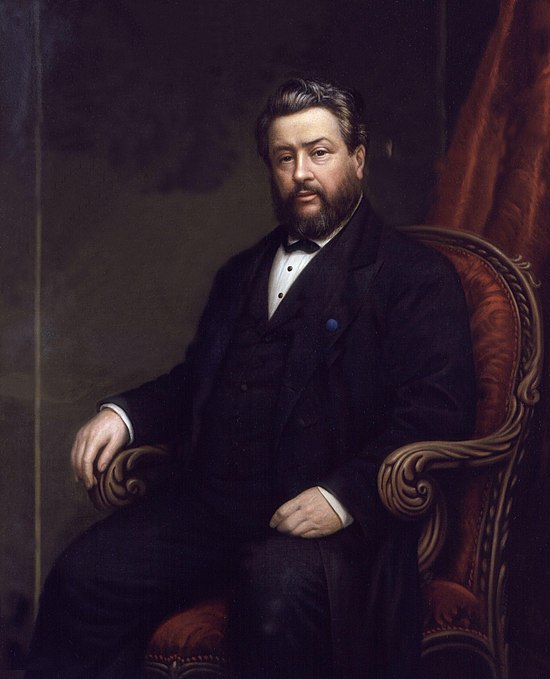
Charles Spurgeon

Jacob and Esau!

Romans 9; Romans 9:15
Charles Spurgeon March, 10 2017 Audio
0 Comments
Choice Puritan Devotional!

Sermon Transcript

Auto-generated transcript • May contain errors

100%
Jacob and Esau. This sermon was originally preached on January 16, 1859 by Charles Haddon Spurgeon. The text for tonight is taken from the book of Romans chapter 9 verse 13. Jacob I loved, but Esau I hated. Do not for an instant Imagine that I pretend to be able to thoroughly explain the great mysteries of predestination. There are some men who claim to know all about the matter. They twist it around their fingers as easily as if it were an everyday thing, but depend on it. He who thinks he knows all about this mystery knows but very little. It is but the shallowness of his mind that permits him to see the bottom of his knowledge. He who dives deep finds that there is in the lowest depth to which he can attain a deeper depth still. The fact is that the great questions about man's responsibility, free will, and predestination have been fought over and over and over again and have been answered in 10,000 different ways. The combatants have thrown dust in each other's eyes and have hindered each other from seeing. And then they have concluded that because they put out other people's eyes, they could therefore see. Now it is one thing to refute another man's doctrine, but a very different matter to establish my own views. It is very easy to knock over one man's hypotheses concerning these truths. not quite so easy to make my own stand on a firm footing. I shall try tonight, if I can, to go safely, if I do not go very fast. For I shall endeavor to simply keep to the letter of God's word. I think that if we kept more simply to the teachings of the Bible, we would be wiser than we are. For by turning from the heavenly light of revelation, and trusting to the deceitful will of the wisp of our own imagination, we thrust ourselves into quagmires and bogs where there is no sure footing, and we begin to sink, and instead of making progress, we find ourselves firmly stuck. The truth is, neither you nor I have any right to want to know more about predestination than what God tells us. That is enough for us. If it were worthwhile for us to know more, God would have revealed more. What God has told us, we are to believe. But to the knowledge thus gained, we are too apt to add our own vague notions, and then we are sure to go wrong. It would be better if in all controversies men had simply stood firm by saying, thus says the Lord, instead of having said, I think thus and thus. I shall now endeavor, by the help of the Holy Spirit, to throw the light of God's word upon this great doctrine of divine sovereignty and give you what I think to be a scriptural statement of the fact that some men are chosen Other men are left. The great fact that is declared in this text, Jacob I loved, but Esau I hated. It is a dreadful text, and I will be honest with it if I can. One man says the word hate does not mean hate. It means loved less. Jacob I loved, but Esau I loved less. It may be so, but I don't believe it is. At any rate, it says hate here, and until you give me another version of the Bible, I shall keep to this one. I believe that the term is correctly and properly translated, that the word hate is not stronger than the original. But even if it was a little stronger, it is nearer the mark than any other translation which is offered to us in those meaningless words, loved less. I like to take it and let it stand just as it is. The fact is God loved Jacob and he did not love Esau. He chose Jacob, but he did not choose Esau. He blessed Jacob, but he never blessed Esau. His mercy followed Jacob all through his life, even to the end, but his mercy never followed Esau. He permitted Esau to continue on in his sins and to prove that dreadful truth, Esau I hated. Others, in order to get rid of this ugly text, say it does not mean Esau and Jacob It means the nation. It means Jacob's children and Esau's children. It means the children of Israel and Edom. I would like to know where the difference lies. Is the difficulty removed by extending it? Some of the Wesleyan brethren say that there is a national election. God has chosen one nation and not the other. They turn around and tell us it is unjust in God to choose one man and not another. Now we ask them by everything reasonable, is it not equally unjust of God to choose one nation and leave another? The argument which they imagine overthrows us, overthrows them also. There never was a more foolish trick than that of trying to bring out national election. What is the election of a nation but the election of so many units, of so many people? And it is tantamount to the same thing as the particular election of individuals. In thinking, men cannot see clearly that if, which we do not for a moment believe, that if there is any injustice in God choosing one man and not another, how much more injustice must there be in his choosing one nation and not another. No, the difficulty cannot be gotten rid of this way. But it is greatly increased by this foolish wrestling of God's word. Besides, here is the proof that it is not correct. Read the verse preceding it. It does not say anything at all about nations. It says, listen, before the twins were born or had done anything good or bad, in order that God's purpose in election might stand, not by works, but by him who calls, she was told, the older will serve the younger, referring to the children, not to the nations. Of course, the warning was afterwards fulfilled in the position of the two nations, Edom was made to serve Israel, but this text means just what it says. It does not mean nations, but it means the persons mentioned. Jacob, that is the man whose name was Jacob. Jacob I loved, but Esau I hated. Be careful, my dear friends. Be careful how you meddle with God's word. I have heard of folks altering passages they did not like. It will not do. You know you cannot alter them. They are really just the same. Our only power with the Word of God is simply to let it stand as it is and to endeavor by God's grace to accommodate ourselves to that. We must never try to make the Bible bow to us. In fact, we cannot. For the truths of divine revelation are as sure and firm as the throne of God. If a man wants to enjoy a delightful prospect and a mighty mountain lies in his path, does he commence cutting away at its base in the vain hope that ultimately it will become a level plain before him? No. On the contrary, he diligently uses it for the accomplishment of his purpose by ascending it, well knowing this to be the only means of obtaining the end in view. We must do likewise. We cannot bring down the truths of God to our own poor, finite understandings. The mountain will never fall before us, but we can seek strength to rise higher and higher in our perception of divine things. And in this way only may we hope to obtain the blessing. Now I want us to notice two things tonight. I have explained this text to mean just what it says, and I do not want it to be altered. Jacob I loved, but Esau I hated. To take the edge off of this dreadful doctrine that makes some people bite their lips, I want us to notice that this is a fact, and after that I shall try to answer the question, why was it that God loved Jacob and hated Esau? First, then this is fact. God has elected some. God has elected some. Men say they do not like the doctrine of election. Truly, I do not want them to. But is it not a fact that God has elected some? Ask an Arminian brother about election, and at once his eye turns fiercely upon you. and he begins to get angry. He cannot bear it. It is a horrible thing, like a war cry to him. And at once he begins to sharpen the knife of controversy, but say to him, ah, brother, was it not divine grace that made you to differ? Was it not the Lord who called you out of your natural state and made you what you are? Oh yes, he says, I quite agree with you there. Now put this question to him. What do you think is the reason why one man has been converted and not another? Oh, he says, the Spirit of God has been at work in this man. Well then my brother, the fact is that God does treat one man better than another. And is there anything wonderful in this fact? It is a fact we recognize every day. There is a man up in the balcony there that work as hard as he likes. He cannot earn more than 15 shillings a week. And here's another man that gets a thousand a week. What is the reason for this? One is born in a king's palace. while another draws his first breath in a shack. What is the reason for this? God's providence. God puts one man in one position and another man in another. Here is a man whose mind cannot keep two thoughts together. Do what you will with him. Here is another man who can sit down and write a book and dive into the deepest of questions. What is the reason for it? God has done it. Do you not see the fact that God does not treat every man alike? He has made some to be eagles and some to be worms. Some he has made lions and some creeping lizards. He has made some men kings and some are born as beggars. Some are born with gigantic minds and some verge on being an idiot. Why is this? Do you murmur at God for it? No, you say it is a fact, and there is no good in murmuring. What is the use of fighting against the facts? It is only kicking against the pricks with naked feet, and you hurt yourself and not them. Well then, my friends, election is a positive fact. It is as clear as daylight that God does in matters of religion, give to one man more than to another. He gives to me opportunities of hearing the word of God, which he does not give to an African native. He gives to me parents who from infancy trained me in the fear of the Lord. He does not give that to many of you. He places me afterwards in situations where I am restrained from sin. Other men are cast into places where their sinful passions are developed. He gives to one man a temper and disposition which keeps him back from some lust. And to another man he gives such impulsiveness of spirit and then depravity turns that impulsiveness into action that the man runs headlong into sin. Again, he brings one man under the sound of a powerful ministry while another sits and listens to a preacher whose drowsiness is only exceeded by that of his listeners. And even when they are hearing the gospel, the fact is God works in one heart when he does not work in another. Though I believe to a degree the Spirit works in the hearts of all who hear the word, so that they are all without excuse Yet I am sure he works in some so powerfully that they can no longer resist him, but are constrained by his grace to throw themselves at his feet and confess him as Lord of all, while others resist the grace that comes into their hearts, and it does not act with the same irresistible force that it does in the other case, and they perish in their sins, deservedly and justly condemned. Are not these things facts? Does any man deny them? Can any man deny them? What is the use of kicking against facts? I always like to know when there is a discussion, what are the facts? You have heard the story of King Charles II and the philosophers. King Charles asked one of them, What is the reason why, if you had a pail full to the brim with water, and you weighed it, and then you put a fish into it, that the weight would be the same? They gave a great many elaborate reasons for this, and all of them were wrong. Finally, one of them said, it is a simple fact. You see, they discovered that the water weighed just as much as the fish that was put into it. So all their educated arguments fell to the ground. So when we are talking about election, the best thing is to say, put aside the doctrine for a moment, let us see what the facts are. We walk around, we open our eyes, we see that there are the facts. What then is the use of our discussing it any longer? We had better believe it. since it is an undeniable truth. You may alter an opinion, but you cannot alter a fact. You may change a mere doctrine, but you cannot possibly change a thing which actually exists. There it is. God does in fact certainly deal with some men better than he does with others. I will not offer an apology for God. He can explain his own dealings. He needs no defense from me. God is his own interpreter and he will make it plain. But there stands the fact. Before you begin to argue about doctrine, just remember that whatever you may think about it, you cannot alter it. And however much you may object to it, it is actually true that God loved Jacob and he did not love Esau. For now, look at Jacob's life and read his history. You are compelled to say that, from the first hour that he left his father's house, even to the last hour, God loved him. Why, he has not gone far from his father's house before he is weary, and he lies down with a stone for his pillow, and the hedges are his curtain, and the sky is his canopy, and he goes to sleep. and God comes and talks to him in his sleep. He sees a ladder, and the top of the ladder reaches to heaven, and a company of angels ascending and descending upon it, and he goes on his journey to Laban. Laban tries to cheat him, and as often as Laban tries to wrong him, God will not allow it, but multiplies the different cattle that Laban gives him. Afterwards, you remember, when he secretly fled from Laban and was pursued, that God appears to Laban in a dream and commands him not to speak to Jacob either good or bad. And more memorable still, when Jacob's sons, Levi and Simeon, had committed murder in Shechem, and Jacob is afraid that he will be overtaken and destroyed by the inhabitants who were rising up against him, God puts a fear upon the people and says to them, do not touch my anointed ones, do my prophets no harm. And when a famine comes over the land, God has already sent Joseph into Egypt to provide corn and Goshen for his brethren that they should live and not die. And see the happy end of Jacob. when he says, I shall see my son Joseph before I die. Look at the tears streaming down his aged cheeks as he holds his son Joseph to his bosom. See how magnificently he goes into the presence of Pharaoh and blesses him. It is said Jacob blessed Pharaoh. He had God's love so much in him that he was free to bless the mightiest monarch of his times. Finally he died and it was said at once, this was a man that God loved. There is the fact that God loved Jacob. On the other hand, there is the fact that God did not love Esau. He permitted Esau to become the father of princes, but he has not blessed his generation. Where is the house of Esau now? Edom has perished. She built her chambers in the rock and cut out her cities in the flinty rock. But God has abandoned the inhabitants of those places and Edom is not to be found. They became the bond slaves of Israel and the kings of Edom had to furnish a yearly tribute of wool to Solomon and his successors. And now the name of Esau is erased from the book of history. Now then, I must say again, this ought to remove at least some of the bitterness of controversy. When we remember that it is the fact, let men say what they will, that God loved Jacob and He did not love Esau. But now the second point of my subject is, why is this? Why did God love Jacob? Why did He hate Esau? Now I am not going to undertake too much at once. You say to me, why did God love Jacob? And why did he hate Esau? We will take one question at a time. The reason why some people get confused in their theology is because they try to give an answer to two questions. I shall not do that. I will tell you one thing at a time. I will tell you why God loved Jacob. And then I will tell you why he hated Esau. But I cannot give you the same reason for two contradictory things. That is why a great many have failed. They have sat down and seen these facts. That God loved Jacob and hated Esau. That God has an elect people and that there are others who are not elect. If then they try to give the same reason for election and non-election, they fall into trouble. If they will pause and take one thing at a time and look to God's word, they will not go wrong. The first question is, why did God love Jacob? Why did God love Jacob? I am not at all puzzled to answer this. Because when I turn to the word of God, I read this text. Listen. I want you to know that I am not doing this for your sake, declares the sovereign Lord. Be ashamed and disgraced for your conduct, O house of Israel. I am not at a loss to tell you that it could not be for anything good in Jacob that God loved him. Because I am told that Yet, before the twins were born, or had done anything good or bad, in order that God's purpose and election might stand, not by works, but by Him who calls, I can tell you the reason why God loved Jacob. It is sovereign grace. Sovereign grace. There was nothing in Jacob that could make God love him. There was everything about him that might have made God hate him as much as he did Esau and a great deal more. But it was because God was infinitely gracious that he loved Jacob and because he was sovereign in his dispensation of this grace that he chose Jacob as the object of that love. Now I am not going to deal with Esau until I've answered the question on the side of Jacob. I just want you to notice this, that Jacob was loved of God simply because of free grace. Come now, let us look at Jacob's character. I have already said in the exposition what I think of him. I do not think much of Jacob's character. As a natural man, he was always a bargain maker. I was struck the other day with that vision that Jacob had at Bethel. It seemed to me a most extraordinary development of Jacob's bargain-making spirit. You know, when he lay down and God was pleased to open the doors of heaven to him, so that he saw God sitting at the top of the ladder and the angels ascending and descending upon it, what do you suppose he said as soon as he awoke? Well, he said, When Jacob awoke from his sleep, he thought, Surely the Lord is in this place, and I was not aware of it. He was afraid and said, How awesome is this place! This is none other than the house of God. This is the gate of heaven. Why, if Jacob had had faith, He would not have been afraid of God. On the contrary, he would have rejoiced that God had thus permitted him to hold fellowship with him. Now hear Jacob's bargain. God had simply said to Jacob, I am the Lord, the God of your father Abraham, and the God of Isaac. I will give you and your descendants the land on which you are lying. God did not say anything about what Jacob was to do. God only said, I will do it. I am with you and will watch over you wherever you go. And I will bring you back to this land. I will not leave you until I have done what I have promised you. Now, can you believe that after God had spoken face to face with Jacob, that he would have had the impudence to try and make a bargain with God? But he did. Jacob begins and says, If… There now, the man has had a vision and an absolute promise from God, and yet he begins with a if. That is bargain-making with a vengeance. If God will be with me, and will watch over me on this journey I am taking and will give me food to eat and clothes to wear so that I can return safely to my father's house. Then, note this, he is going to hold God to his bargain. Then the Lord will be my God. And this stone that I have set up as a pillar will be God's house. And of all that you give me, I will give you a 10th. I marvel at this. If I did not know something about my own nature, I should be utterly unable to understand it. What? A man that has talked with God then begins to make a bargain with Him? A man that has seen the only way of access between heaven and earth, the latter Christ Jesus, and has had a covenant made between himself and God, A covenant that is all on God's part, all a promise, and yet once after that, to hold God to the bargain? As if he were afraid God would break his promise? Oh, this was indeed vile. Then notice his whole life. While he lived with Laban, what miserable work it was. He had fallen into the hands of a man of the world, and whenever a greedy Christian gets into such company, a terrible scene ensues. There are the two together, greedy and grasping. If an angel could look down upon them, how he would have weeped to see the man of God fallen from his high place and become as bad as the other. Then the device that Jacob used when he endeavored to get his wages was most extraordinary. Why did he not leave it to God instead of adopting such systems as that? The whole way through we are ashamed of Jacob. We cannot help it. And then there is that grand period in his life, the turning point, when we are told that Jacob wrestled with God and prevailed. We will look at that. I have carefully studied this subject, and I do not think so much of him as I once did. I thought Jacob wrestled with God, but I find it is the contrary. He did not wrestle with God. God wrestled with him. I have always set Jacob up in my mind as the very model of a man wrestling in prayer. I do not think so now. He divided his family and put a person in front to appease Esau. He did not go to the front himself, with the holy trust that a patriarch should have felt, guarded with all the omnipotence of heaven. He might boldly have gone to meet his brother, but no, he did not feel certain that his brother would bow at his feet, although the promise said, the elder shall serve the younger. He did not rest on that promise, It was not big enough for him. Then he went at night to the brook Jabbok. I do not know what for, unless he went to pray, but I am afraid it was not so." The text says, Jacob was left alone and a man wrestled with him till daybreak. There is a great deal of difference between a man wrestling with me and my wrestling with him. When I strive with anyone, I want to gain something from him. And when a man wrestles with me, he wants to get something out of me. Therefore, I take it, when the man wrestled with Jacob, he wanted to get his cunning and deceit out of him and prove what a poor, sinful creature he was. But he could not do it. Jacob's craft was so strong that he could not be overcome. Finally, the angel touched his thigh and showed him his own hollowness. And Jacob turned around and said, you have taken away my strength, now I will wrestle with you. And then when his hip was out of joint, when he fully felt his own weakness, then and not till then is he brought to say, I will not let you go except you bless me. He had had full confidence in his own strength But God finally humbled him, and when all his boasted power was gone, then it was that Jacob became a prevailing prince. But even after that, his life is not clear. Then you find him an unbelieving creature, and we have all been as bad. Though we are blaming Jacob, brethren, we blame ourselves. We are hard on him, but we shall be harder with ourselves. Do you not remember the memorable speech of the patriarch when he said, Joseph is not, and Simeon is not, and you will take Benjamin away. All these things are against me. Ah, Jacob, why can't you believe the promise? All other promises have been fulfilled. But no, he could not think of the promise. He was always wanting to live by sight. Now, I say that it's the character of Jacob, be as I have described it, and I'm sure it is, we have got it in God's own word, that there could have been nothing in Jacob that made God love him. And the only reason why God loved him must have been because of his own grace. Because he will have mercy on whom he will have mercy. And rest assured, The only reason why any of us can hope to be saved is this, the sovereign grace of God. There is no reason why I should be saved or why you should be saved, but God's own merciful heart and God's own omnipotent will. Now that is the doctrine. It is taught not only in this passage, but in multitudes of other passages of God's word. Dear friends, receive it, hold it tight, and never let it go. Now, the next question is a different one. Why did God hate Esau? Why did God hate Esau? I am not going to mix this question up with the other one. They are entirely distinct, and I intend to keep them so. One answer will not do for two questions. They must be taken separately and then they can be answered satisfactorily. Why does God hate any man? I defy anyone to give any answer but this, because that man deserves it. No reply but that can ever be true. There are some who answer, divine sovereignty, but I challenge them to look that doctrine in the face. Do you believe that God created man and arbitrarily, sovereignly, it is the same thing, created that man with no other intention than that of damning him, made him and yet for no other reason than that of destroying him forever? Well, if you can believe it, I pity you, that is all I can say. You deserve pity that you should think so meanly of God whose mercy endures forever. You are quite right when you say the reason why God loves a man is because God chooses to do so. There is no reason in the man. But do not give the same answer as to why God hates a man. If God deals with any man severely, it is because that man deserves all he gets. In hell there will not be a solitary soul that will say to God, oh Lord, you have treated me worse than I deserve. But every lost spirit in hell will be made to feel that he is receiving what he deserves, that his destruction lies at his own door and not at the door of God, that God had nothing to do with his condemnation. except as the judge condemns the criminal, but that he himself brought damnation upon his own head as the result of his own evil works. Justice is that which damns a man. It is mercy, it is free grace that saves. Sovereignty holds the scale of love. It is justice that holds the other scale. Who can put that into the hand of sovereignty that would slander God and dishonor Him? Now, let us look at Esau's character. One might ask, did he really deserve that God should reject him? I answer, he did. What we know of Esau's character clearly proves it. Esau lost his birthright. Do not sit down and weep about that and blame God. Esau sold it himself. He sold it for a bowl of stew. Oh, Esau, it is vain for you to say, I lost my birthright by decree. No, no, Jacob got it by decree, but you lost it because you sold it yourself, didn't you? Was it not because of your own agreement? Didn't you take the bowl of red stew of your own voluntary will in lieu of the birthright? Your destruction lies at your own door because you sold your own soul at your own negotiated price and you did it all yourself. Did God influence Esau to do that? God forbid. God is not the author of sin. Esau voluntarily gave up his own birthright, and the doctrine is that every man who loses heaven gives it up himself. Every man who loses everlasting life rejects it himself. God does not deny it to him. The wicked man will not come that he may have life. Why is it that a man remains ungodly and does not fear God? It is because he says, I like this drink. I like this pleasure. I like to do what I want to do on Sundays better than I do the things of God. No man is saved by his own free will, but every man is damned by it that is damned. He does it of his own will. No one constrains him. You know, sinner, that when you leave here tonight and ignore the cries of conscience, that you do it yourself. You know that when after a sermon you say, I do not care about believing in Christ. You say it yourself. You are quite conscious of it. And if you are not conscious of it, it is clearly a dreadful fact that the reason why you are what you are is because you will to be what you are. It is your own will that keeps you where you are. The blame lies at your own door. Your remaining in a state of sin is voluntary. You are a captive, but you are a voluntary captive. You will never be willing to get free until God makes you willing, but you are willing to be a bond slave. There is no disguising the fact that men and women love sin, love evil, and do not love God. You know, though heaven is preached to you through the blood of Christ, and though hell is threatened to you as the result of your sins, that still you cleave to your iniquities. You will not leave them and you will not fly to Christ. And when you are cast away, at last it will be said of you, you have lost your birthright, but you sold it yourself. You know that being at a lively party suits you better than being in church with God's people. You know that the pub suits you better than the prayer meeting. You know you trust yourself rather than trust Christ. You know you prefer the joys of the present to the joys of the future. It is your own choice, admit it. Your damnation is your own election, not God's. You richly deserve it. But someone says, he's all repented. He's all repented. Yes, he did. But what sort of repentance was it? Did you ever notice his repentance? Every man who repents and believes will be saved. But what sort of repentance was his? As soon as he found out that his brother had got the birthright, he sought it again with repentance. He sought it with tears. but he did not get it back. You know he sold his birthright for a bowl of stew, and he thought he would buy it back by giving his father another bowl of stew. There he says, I will go and hunt venison for my father. I will win him over with my tasty meat, and he will readily give me my birthright again. That is what sinners say. I have lost heaven by my evil deeds, I will easily get it back by reforming. Did I not lose it by sin? I will get it back by giving up my sins. I have been a drunkard, says one. I will give up drinking, and now I will be a teetotaler. Another says, I have been an awful swearer. I am very sorry for it indeed. I will not swear anymore. So all he gives to his father is a bowl of stew. the same as that for which he sold it. No, sinner, you may sell heaven for a few carnal pleasures, but you cannot buy heaven by merely giving them up. You can get heaven only by the gift of free grace. You lose your soul justly, but you cannot get it back by good works or by the renunciation of your sins. Do you think that Esau was a sincere penitent? Just let me tell you another thing. This blessed penitent, when he failed to get the blessing, what did he say? What did he say? Here's what he said. The days of mourning for my father are near. Then I will kill my brother Jacob. There is a penitent for you. That is not the repentance that comes from God the Holy Spirit. But there are some men like that. They say they are very sorry that they have been such sinners as that. Very sorry that they should have been brought into such a sad condition as that. And then they go and do the same that they did before. Their penitence does not bring them out of their sin, but it leaves them in it and perhaps plunges them still deeper into guilt. Now look at the character of Esau. The only redeeming trait in it was that he did begin with repentance, but that repentance was even an aggravation of his sin because it was without the effects of evangelical repentance. And I say this, if Esau sold his birthright, then he did in fact deserve to lose it. And therefore, am I not right in saying that if God hated Esau, it was because he deserved to be hated? Do you observe how Scripture always guards this conclusion? Turn to the ninth chapter of Romans where we have selected our text. See how careful the Holy Spirit is here in the 22nd verse. Listen. What if God, choosing to show His wrath and make His power known, bore with great patience the objects of wrath prepared for destruction? What if he did this to make the riches of his glory known to the objects of his mercy, whom he had prepared in advance for glory? Note, it does not say anything about God preparing men for destruction. They prepared themselves. They did that. God had nothing to do with it. But when men are saved, the Bible tells us, God prepares them for that. all the glory to God in salvation, all the blame to men in damnation. If any of you want to know what I preach every day, and any stranger should say, give me a summary of this man's doctrine, say this, he preaches that salvation is attained only through the grace of God, and that damnation is caused only by man's sin. He gives God all the glory for every soul that is saved, but he won't have it that God is to blame for any man that is damned. My soul revolts at the idea of a doctrine that lays the blood of man's soul at God's door. I cannot conceive how any human mind, at least any Christian mind, can hold any such blasphemy as that. I delight to preach this blessed truth, Salvation of God from first to last, the Alpha and the Omega. But when I come to preach damnation, I say, damnation of man, not of God. And if you perish at your own hands, must your blood be required. There's another passage. At the last great day, when all the world shall come before Jesus to be judged, have you noticed when the righteous go on the right side, Jesus says to them, Come, you who are blessed by my Father, take your inheritance, the kingdom prepared for you since the creation of the world. What does he say to those on his left? He says, Depart from me, you who are cursed. He does not say, you who are cursed by my Father, but you who are cursed. And what else does he say? Into the eternal fire prepared, not for you, but for the devil and his angels. Do you see how it is guarded? Here is the salvation side of the question. It is all of God. Come, you who are blessed by my Father. It is a kingdom prepared for them. There you have election, free grace in all its length and breadth. But on the other hand, you have nothing said about the Father, nothing about that at all. Depart from me, you who are cursed. Even the flames are said not to be prepared for sinners, but for the devil and his angels. There is no language that I can possibly conceive that could more forcibly express this idea. that the glory of salvation should be to God, and that the blame of being condemned should be laid at man's door. Now, have I not answered these two questions honestly? I have endeavored to give a scriptural reason for the dealings of God with man. He saves man by grace, and if men perish, they perish justly by their own fault. How, says someone, how do you reconcile these two doctrines? My dear brethren, I never reconcile two friends, never. These two doctrines are friends with one another, for they are both in God's word, and I shall not attempt to reconcile them. If you show me that they are enemies, then I will reconcile them. But, says one, there is a great deal of difficulty about them, Will you tell me what truth there is that has not difficulty about it? But he says, I do not see it. Well, I do not ask you to see it. I ask you to believe it. There are many things in God's word that are difficult and that I cannot see, but they are there and I believe them. I cannot see how God can be omnipotent and man be free, but it is so and I believe it. Well, says one, I cannot understand it. My answer is, I am bound to make it as plain as I can. But if you do not have any understanding, I cannot give you any. There I must leave it. But then again, it is not a matter of understanding, it is a matter of faith. These two things are true. I do not see that they at all differ. However, if they did, I should say, if they appear to contradict one another, they do not really do so, because God never contradicts himself. I should think in this I exhibited the power of my faith in God, that I could believe him even when his word seemed to be contradictory. That is faith. Did not Abraham believe in God even when God's promise seemed to contradict his providence? Abraham was old, and Sarah was old, but God said Sarah should have a child. How can that be, said Abraham, for Sarah is old? And yet Abraham believed the promise, and Sarah had a son. There was a reconciliation between providence and promise, and if God can bring providence and promise together, he can bring doctrine and promise together. If I cannot do it, God can, even in the world to come. Now, let me just practically preach for one minute. O sinners, if you perish, your doom is on your own head. Conscious tells you this, and the word of God confirms it. You shall not be able to lay your condemnation at any man's door but your own. If you perish, you perish by suicide. You are your own destroyers because you reject Christ, because you despise the birthright and sell it for that miserable bowl of stew. The pleasures of the world. It is a doctrine that thrills through me. Like a two-edged sword, I would make it pierce through the dividing asunder of the joints and marrow. If you are damned, it shall be your own fault. If you are found in hell, your blood shall be on your own head. You shall bring the maggots to your own burning in hell. You will produce the iron for your own chains, and on your own head will be your doom. But if you are saved, it cannot be by your own merits. It must be by grace, free, sovereign grace. The gospel is preached to you. It is this. Believe in the Lord Jesus and you will be saved. May grace now be given to you to bring you to yield to this glorious command. May you now believe in him who came into the world to save sinners of whom I am the chief. Free grace, who shall tell your glories? Who shall narrate your achievements, or write of your victories? You have carried the cunning Jacob into glory, and dressed him in white like the angels of heaven. And you shall carry many a wicked sinner there also, and make them as glorious as the glorified." May God prove this doctrine to be true in your own experience. If there still remains any difficulty upon your minds about any of these points, search the Word of God and seek the illumination of His Spirit to teach you. But remember, after all, these are not the most important points in Scripture. That which concerns you most is to know whether you have an interest in the blood of Christ, whether you really believe in the Lord Jesus, I have only touched upon these because they cause a great many people a world of trouble, and I thought I might be to the means of helping some of you to tread upon the neck of the dragon. May God grant that it may be so, for Christ's sake. Amen.
Charles Spurgeon
About Charles Spurgeon
Charles Haddon Spurgeon (19 June 1834 — 31 January 1892) was an English Particular Baptist preacher. His nickname is the "Prince of Preachers."
Broadcaster:

Comments

0 / 2000 characters
Comments are moderated before appearing.

Be the first to comment!

Joshua

Joshua

Shall we play a game? Ask me about articles, sermons, or theology from our library. I can also help you navigate the site.