Bootstrap
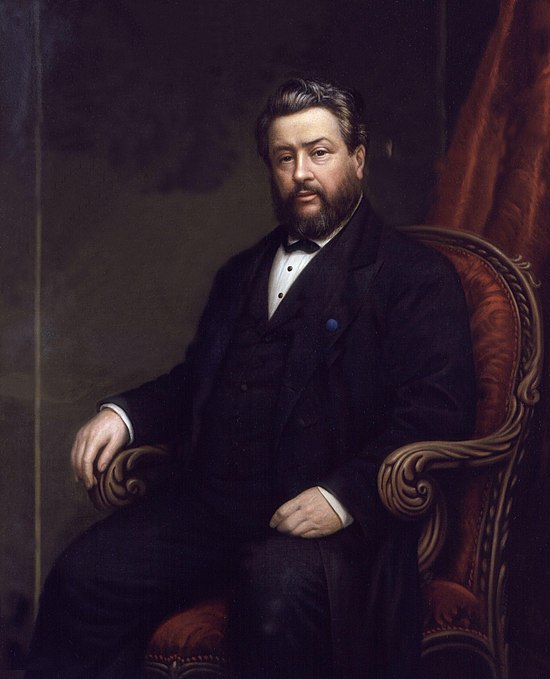
Charles Spurgeon

The Sin of Unbelief!

2 Kings 7:19; John 6
Charles Spurgeon March, 10 2017 Audio
0 Comments
Choice Puritan Devotional!

Sermon Transcript

Auto-generated transcript • May contain errors

100%
The Sin of Unbelief. This sermon was originally preached on January 14th in the year 1855 by Charles Haddon Spurgeon. The text for this morning comes from the book of Second Kings, Second Kings chapter seven, verse 19. The officer had said to the man of God, look, Even if the Lord should open up the floodgates of the heavens, could this happen? The man of God replied, You will see it with your own eyes, but you will not eat any of it. One wise man may deliver a whole city. One good man may be the means of safety to a thousand others. The holy ones are the salt of the earth, the means of the preservation of the wicked. Without the godly as a safeguard, the human race would be utterly destroyed. In the city of Samaria, there was one righteous man, Elisha, the servant of the Lord. Godliness and holiness was completely extinct in the court. The king was a sinner of the worst kind. His iniquity was glaring and notorious. Jehoram walked in the ways of his father Ahab and worshipped false gods. The people of Samaria were wicked like their king. They had gone astray from Jehovah. They had forsaken the God of Israel. They did not remember the words of Jacob. the Lord your God is one God." And in wicked idolatry they bowed before the idols of the heathens. And therefore the Lord of Hosts allowed their enemies to oppress them until the curse of evil was fulfilled in the streets of Samaria. This curse declared that the most gentle and sensitive woman who would not venture to touch the ground with the sole of her foot, will begrudge the husband she loves and her own son or daughter. Why? Because of her intense hunger. In this awful situation, the one holy man was the means of salvation. The one grain of salt preserved the entire city. The one warrior for God was the means of the deliverance of the whole struggling multitude. For Elisha's sake, the Lord sent the promise, the promise that the next day food which could not be obtained at any price would be available at the cheapest possible price, at the very gates of Samaria. We may picture the joy of the multitude when the prophet first uttered this prediction. They knew him to be a prophet of the Lord. He had divine credentials. All his past prophecies had been fulfilled. They knew that he was a man sent from God and was speaking Jehovah's message. Surely the king's eyes would glisten with delight. and the starving multitude would leap for joy at the prospects of so speedy a release from the famine. Tomorrow, they would shout, tomorrow our hunger will be over and we will feast until we are full. However, we are told that the officer on whom the king leaned expressed his disbelief. We don't hear that any of the common people ever doubted, but one of the noble position did. It is strange that God has seldom chosen the great men of this world. Elevated positions in life and faith in Jesus Christ seldom agree. This great man said, impossible. And with an insult to the prophet, he added, look, Even if the Lord should open up the floodgates of the heavens, could this happen? His sin lay in the fact that after repeated evidences of Elisha's ministry, yet he disbelieved the assurances uttered by the prophet on God's behalf. He had doubtless seen the marvelous defeat of Moab. He had been startled at the testimony of the resurrection of the Shunammite son. He knew that Elisha had revealed Benadad's secrets and struck his marauding host with blindness. He had seen the army of Syria decoyed into the heart of Samaria, and he probably knew the story of the widow whose oil filled all the vessels and redeemed her sons. And the cure of Naaman was common conversation at all events in the court, and yet, In the face of all this accumulated evidence, in the teeth of all these credentials of the prophet's mission, he still doubted and scornfully told the prophet that heaven must become an open floodgate before the promise could be performed. Whereupon God pronounced his doom by the mouth of the man who had just proclaimed the promise. You will see it with your own eyes. but you will not eat any of it." And Providence, which always fulfills prophecy, destroyed the man. Trampled down in the streets of Samaria, he perished at its gates, seeing the bounty of food but tasting none of it. Perhaps he was arrogant in the way that he carried himself and insulting to the people Or maybe he tried to restrain their eager rush towards the food. Or as we would say, it might have been by mere accident that he was crushed to death, so that he saw the prophecy fulfilled, but never lived to enjoy it. In his case, seeing was believing, but it was not enjoying. I will this morning invite your attention to two things, the man's sin and the man's punishment. I will only say a little about this man since I've already detailed the circumstances, but I will discuss the sin of unbelief and the punishment for that sin. First, the sin. His sin was unbelief. He doubted the promise of God. His sin was unbelief. He doubted the promise of God. In this particular case, unbelief took the form of a doubt of the divine reality or a mistrust of God's power. Either he doubted whether God really meant what he said or whether it was within the range of possibility that God would fulfill his promise. Unbelief has more phases than the moon and more colors than the chameleon. Common people, when speaking of the devil, say that he is sometimes seen in one shape and sometimes in another. I am sure this is true of Satan's firstborn child, the child of unbelief, for it has a multitude of forms. At one time I see unbelief dressed up as an angel of light. It calls itself humility and it says, I would not be presumptuous. I dare not believe that God would pardon me. I am too great a sinner. We call that humility and thank God that our friend is in such a good condition. I don't thank God for any such delusion.
It is the devil dressed as an angel of light It is unbelief after all. At other times, we detect unbelief in the shape of a doubt of God's immutability. The Lord has loved me, but perhaps he will cast me away tomorrow. He helped me yesterday, and under the shadow of his wings I trust, but perhaps I will receive no help in the next affliction. He may have thrown me away. He may not remember his covenant and forget to be gracious. Sometimes this infidelity is embodied in a doubt of God's power. Every day we see new problems. We are involved in a net of difficulties and we think, surely the Lord cannot deliver us. We strive to get rid of our burden, and finding that we can't do it, we think God's arm is as short as ours and His power as little as human might. A fearful form of unbelief is that doubt which keeps men from coming to Christ, which leads the sinner to distrust the ability of Christ to save him. to doubt the willingness of Jesus to accept such a great transgressor. But the most hideous of all is the traitor, in his true colors, blaspheming God and madly denying his existence. Infidelity, deism and atheism are the ripe fruits of this deadly tree. They are the most massive eruptions of the volcano of unbelief. Unbelief has become fully mature. When removing the mask and laying aside the disguise, it profanely stalks the earth, uttering the rebellious cry, there is no God, there is no God, striving in vain to shake the throne of the divinity. by lifting up its arm against Jehovah, and in its arrogance would, snatch from his hand the balance and the rod, re-judge his justice, be the God of God. Then truly unbelief has come to its full perfection. And then you see what it really is. For the least unbelief is of the same nature as the greatest. I am astonished, and I am sure you will be too, when I tell you that there are some strange people, some strange people in the world who do not believe that unbelief is a sin. They do not believe that unbelief is a sin. I must call them strange people because they are sound in their faith in every other respect, but they imagine and they deny that unbelief is sinful. I remember once when a young man joined a circle of friends and ministers, and these friends and ministers were disputing whether it was a sin for men and women not to believe the gospel. While they were discussing it, the young man said, Gentlemen, am I in the presence of Christians? Are you believers in the Bible or are you not? They said, Of course we are Christians. Then he said, doesn't the scripture record Jesus as saying, when the Holy Spirit comes, he will convict the world of guilt in regard to sin because men do not believe in me? And isn't the damning sin of sinners that they do not believe on Christ? I could not have thought that person should be so foolhardy has to venture to assert that it is not a sin for a sinner not to believe in Christ. I thought that, however far they might wish to push their sentiments, they would not tell a lie to uphold the truth. And in my opinion, this is what such men are really doing. Truth is a strong tower and never requires to be reinforced with error. God's word will stand against all man's schemes. I would never invent such an illogical argument to try to prove that it is not a sin on the part of the ungodly not to believe. For I am sure it is. For I am taught in the scriptures that this is the verdict. Light has come into the world, but men love darkness instead of the light. And when I read, whoever does not believe stands condemned already because he has not believed in the name of God's one, one and holy son. I affirm and the word of God declares it. Unbelief is a sin. Surely with rational and unbiased persons, it cannot require any reasoning to prove it. Is it not a sin for a creature to doubt the word of its maker? Is it not a crime and an insult to the divinity for me, a mere atom, a particle of dust, to dare to deny his words? Is it not the very summit of arrogance and extremity of pride for a son of Adam to say, even in his heart, God, I doubt your grace? God, I doubt your love. God, I doubt your power. Oh, dear friends, believe me. If you could roll all sins into one mass, if you could take murder and blasphemy and lust and adultery and fornication and everything that is vile and unite them all into one vast ball of filthy corruption, They would not, even then, equal the sin of unbelief. Unbelief is the king of all sins, the epitome of guilt, the mixture of the venom of all crimes, the dregs of the wine of Gomorrah. It is the number one sin, the masterpiece of Satan, the chief work of the devil. I will attempt this morning, for a little while, to show the extremely evil nature of the sin of unbelief. First, the sin of unbelief will appear to be extremely wicked when we remember that it is the parent of every other iniquity. The sin of unbelief will appear to be extremely wicked when we remember that it is the parent of every other iniquity. There is no crime which unbelief will not produce. I think that the fall of man was surely a result of the sin of unbelief. It was at this point that the devil tempted Eve. He said to her, did God really say you must not eat from any tree in the garden? He whispered and insinuated a doubt. Did God really say? As much as to say, are you quite sure he said that? It was by means of unbelief, that thin part of the wedge that the other sin entered, curiosity, and the rest followed. She touched the fruit and destruction came into this world. Since that time, unbelief has been the prolific parent of all guilt. An unbeliever is capable of the vilest crime that ever was committed. Unbelief, friends, unbelief. Why, it hardened the heart of Pharaoh. It has given liberty to many blaspheming tongues. Yes, it even became a disciple and murdered Jesus. Unbelief, it has sharpened the knife of the suicide. It has mixed many a cup of poison and sent many to a shameful grave who have murdered themselves and rushed with bloody hands before their creator's tribunal. Why? Because of unbelief. Give me an unbeliever. Let me know that he doubts God's word. Let me know that he does not believe his promise and his threats, and with that for a premise, I will conclude that the man will, in time, unless there is an amazing restraining power exerted on him, be guilty of the foulest and blackest crimes. Ah, this is Beelzebub's sin. Like Beelzebub, it is the leader of all evil spirits. It is said of Jeroboam that he sinned and caused Israel to sin. And it may be said of unbelief that it not only sins itself, but makes others sin. It is the egg of all crime, the seed of every offense. In fact, everything that is evil and everything that is vile lies couched in that one word, unbelief. And let me say here that unbelief in the Christian is of the identical nature as unbelief in the sinner. Unbelief in the Christian is of the identical nature as unbelief in the sinner. It is not the same in its final effect, for it will be pardoned in the Christian. Yes, it is pardoned. It was laid on the scapegoat's head. It was blotted out and atoned for, but it is of the same sinful nature. In fact, if there can be one sin more monstrous than the unbelief of a sinner, it is the unbelief of a saint. Let me say that again. If there can be one sin more monstrous than the unbelief of a sinner, it is the unbelief of a saint. for a saint to doubt God's word, for a saint to distrust God after innumerable instances of his love, after 10,000 proofs of his mercy, well, that exceeds everything. Furthermore, in a saint, unbelief is the root of other sins. Unbelief in a saint is the root of other sins. When I am perfect in faith, I will be perfect in everything else. I would always fulfill the principle if I always believed the promise. But it is because my faith is weak that I sin. Put me in trouble, and if I can fold my arms and say, Jehovah Jireh, the Lord will provide, you will not find me using wrong means to escape from it. But let me be in earthly distress and difficulty. If I distrust God, what then? Perhaps I will steal or do a dishonest act to get out of the hands of my creditors. Or if kept from such a transgression, I may plunge into excess and drinking to drown my anxieties. Once faith is taken away, the reins are broken. And who can ride a wild horse without rein or bridle? Such would be our case if we are without faith. Unbelief is the mother of vice. It is the parent of sin. And therefore I say it is a deadly evil, a master sin. But secondly, unbelief not only gives birth to sin, but it also fosters sin. Unbelief not only gives birth to sin, but it also fosters sin. How is it that men can continue in their sin under the thunders of the Sinai preacher? How is it that when a thundering preacher stands in the pulpit and by the grace of God cries aloud, cursed is every man that does not keep all the commands of the law, How is it that when the sinner hears of the coming day of God's justice, he is still hardened and continues on in his evil ways? I will tell you, it is because unbelief of the coming judgment of God prevents it from having any effect on him. As you know, there is a firing range nearby. where soldiers practice firing their weapons. Now when workers walk by there, they are always careful to stay behind the raised mounds of dirt to ensure that they are not hit by the shots. So behind mounds of dirt, they can do what they please. So it is with the ungodly man. The devil gives him unbelief. He thus puts up a great mound of dirt the dirt of unbelief and finds refuge behind it. Ah, sinners, when the Holy Spirit comes and knocks down your hill of unbelief, when he brings home the truth in a display of power, how the law will work upon your soul. If man would truly believe that the law is holy, that the commandments are holy, just and good, how he would be shaken over hell's mouth There would be no more sitting or sleeping in church, no more careless listeners, no going away and immediately forgetting what type of men you are. Oh, once you get rid of unbelief, then every shot from the cannon of the law would fall upon the sinner and the slain of the Lord would be many. Again, I ask you, How is it that men can hear the wooing of the cross of Calvary and yet not come to Christ? How is it that when we preach about the sufferings of Jesus and conclude by saying, yet there is room, how is it that when we dwell upon the cross and the passion of the cross, men are not broken in their hearts? It is said, laws and terrors only harden. All the while they work alone, but a sense of blood-bought pardon will dissolve a heart of stone. I think the story of Calvary is enough to break a rock. Rocks did split open when they saw Jesus die. I think the tragedy of Golgotha is enough to make a rock gush with tears and to make the most hardened wretch weep with tears of repentant love. But even though we often repeat the story of Calvary, yet who weeps over it? Who cares about it? Friends, you sit there as unconcerned as if it did not mean anything to you. Oh, stop and look. All you that walk by Calvary, stop and look. Is it nothing to you that Jesus died? You seem to say it really is nothing. What is the reason for such an attitude? Because there is unbelief between you and the cross. If there were not that thick veil between you and the Savior's eyes, his looks of love would melt you. But unbelief is the sin which keeps the power of the gospel from working in the sinner. And it is not until the Holy Spirit strikes that unbelief down. It is not until the Holy Spirit rips away that infidelity and takes it completely out. It is not until then that we can find the sinner coming to put his trust in Jesus Christ. But there is a third point. Unbelief hinders a man from performing any good works. Unbelief hinders a man from performing any good works. The Bible says, everything that does not come from faith is sin, and it is a great truth in more ways than one. Without faith, it is impossible to please God. You will never hear me say a word against morality. You will never hear me say that honesty is not a good thing, or that sobriety is not a good thing. On the contrary, I would say they are commendable things. But I will tell you this, what I will say afterwards, I will tell you that they are just like the primitive currency of India. It may pass for money among the Indians, but it will never do in England. These virtues may have worth here below, but not above. If you don't have something better than your own goodness, you will never get to heaven. Some of the tribes of India use little strips of cloth instead of money, and I would not find fault with them if I lived there. But when I come to England, strips of cloth will not suffice. So honesty, sobriety, and such things like that may be very good among men, and the more you have of them, the better. I exhort you, whatever is pure, whatever is lovely, if anything is excellent or praiseworthy, have them, but they will not do up in heaven. All these things put together without faith do not please God. Virtues without faith are whitewashed sins. Obedience without faith, if it is possible, is simply gold-plated disobedience. Not to believe nullifies everything. It is the fly in the ointment. It is the poison in the pot. Without faith, with all the virtues of purity, with all the benevolence of charity, with all the kindness of disinterested sympathy, with all the talents of genius, with all the bravery of patriotism, and with all the decision of principle, without faith, it is impossible to please God. Don't you see then? Don't you see then how bad unbelief is? Because it prevents men from performing good works? Yes, even in Christians themselves, unbelief disables them. Let me just tell you a tale, a story of Christ's life. A certain man had an afflicted son, possessed with an evil spirit. Christ was up on the Mount of Transfiguration. So the father brought his demon-possessed son to the disciples. And what did the disciples do? They said, oh, we will cast him out. They put their hands on him. and they tried to do it, but they whispered among themselves and said, we are afraid. We are afraid that we will not be able to do this. In time, the possessed boy began to foam at the mouth. He foamed and scratched the earth, grabbing at it in his seizures. The demonic spirit within him was alive. The devil was still there. In vain, they repeated their exorcism, Yet the evil spirit remained like a lion in his den, and all their efforts could not dislodge him. Go away, they said, but he would not leave. Go to the pit, they cried, but he remained immovable. The lips of unbelief cannot frighten the evil one, who might well have said, faith I know, Jesus I know, but who are you? You have no faith. If they had faith, as small as a grain of mustard seed, they might have been able to cast out the devil. But their faith was gone, and therefore they could do nothing. Look at poor Peter's case too. While he had faith, Peter walked on the waves of the sea. That was a splendid walk. I almost envy him walking on the water. Why, if Peter's faith had continued, he might have walked across the Atlantic all the way to America. But suddenly there came a large wave up behind him. And he said to himself, that will sweep me away. And then another in front of him. And he cried out, that will overwhelm me. And he thought, how could I be so presumptuous as to be walking on top of these waves? Down goes Peter. Faith was Peter's life preserver. Faith was Peter's charm. It kept him up, but unbelief sent him down. Do you know that you and I, all our lifetime, will have to walk on the water? A Christian's life is always walking on water. Mine is. and every wave could swallow and devour us, but faith makes us stand. The moment you cease to believe, that moment distress comes in and down you go. Oh, why do you doubt? Why do you doubt then? Faith encourages every virtue. Unbelief murders everyone. Thousands of prayers have been strangled in their infancy by unbelief. Unbelief has been guilty of infanticide. It has murdered many an infant prayer. Many songs of praise that would have swelled the chorus of the skies have been stifled by an unbelieving murmur. Many a noble enterprise conceived in the heart has been destroyed before it could come forth by unbelief. Many men would have been missionaries and would have stood and preached their master's gospel boldly, but they were filled with unbelief. Once a giant stops believing, he then becomes a dwarf. Faith is like Samson's hair, but on the Christian. Cut it off and you may put out his eyes and he can do nothing. Our next remark is, unbelief has been severely punished. Unbelief has been severely punished. Turn to the scriptures. I see a world all fair and beautiful. It's mountains laughing in the sun and the fields rejoicing in the golden light. I see maidens dancing and young men singing. How beautiful the vision. But look, a solemn and holy man lifts up his hand and cries out, a flood is coming to drown the earth. The fountains of the great deep will be opened and everything will be covered. Look at the ark. I have toiled 120 years with these hands to build it. Flee to it and you will be safe. No, they say, you old man, away with your empty predictions. No, let us be happy while we can. When the floods come, then we will build an ark. But there is no flood coming. Tell that to the fools. We don't believe any such things. See the unbelievers pursue their merry dance. Listen, unbeliever, don't you hear that rumbling noise? The heart of the earth has begun to move. Her rocky ribs are strained by dire convulsions from within. Look, they have broke open with the enormous strain, and from the openings torrents of water rush out, water that has been hidden ever since God concealed them in the heart of our world. Heaven is split apart. It rains, oh, not drops. But clouds descend. A waterfall, just like the Niagara Falls, rolls from heaven with mighty noise. Both deeps, the deep below and the deep above, both join their hands. Now, unbelievers, where are you now? There, there are the last two unbelievers left. A man, his wife holding on to him around the waist. He stands on the last summit that is above the water. See him there? The water is up to his hips even now. Hear his last shriek. He is floating. He is drowned. And as Noah looks from the ark, he sees nothing. Nothing. It is a profound emptiness. Everything is overthrown, covered, and drowned. What did it? What brought the flood on the earth? Unbelief! Unbelief! By faith, Noah escaped from the flood. By unbelief, the rest were drowned. And oh, don't you know that unbelief kept Moses and Aaron out of Canaan? They did not honor God. They struck the rock when they ought to have spoken to it. They disbelieved, and therefore the punishment came upon them, that they would not inherit the good land for which they had toiled and labored. Let me take you where Moses and Aaron lived, to the vast and howling wilderness We will walk around it for a while. We will become like the wandering Bedouins. We will walk through the desert for a while. There, over there lies a carcass whitened by the sun. There is another, and there is another. What do these bleached bones mean? What are these bodies? They're a man and they're a woman. What are all these? How did these corpses get here? Surely some great military camp must have been cut off by a single night of a blast or by bloodshed. Ah, no, no. These bones are the bones of Israel. These skeletons are the old tribes of Jacob. They could not enter the promised land because of unbelief. They did not trust in God. Spies said they could not conquer the land. Unbelief was the cause of their death. It was not the Anakites that destroyed Israel. It was not the howling wilderness which devoured them. It was not the Jordan which proved a barrier to Canaan. Neither Hivite nor Jebusite killed them. It was unbelief alone which kept them out of Canaan. What a doom to be pronounced on Israel. After forty years of journeying, they could not enter because of unbelief. Just remember Zechariah. He doubted and the angel struck him that he was silent and unable to speak. His mouth was closed because of unbelief. But, oh, if you want to have a worse picture of the effects of unbelief, If you want to see how God has punished it, I must take you to the siege of Jerusalem, a worst massacre which time has never seen, when the Romans leveled the walls to the ground and put all the inhabitants to the sword or sold them as slaves in the marketplace. Have you ever read of the destruction of Jerusalem by Titus? Did you ever turn to the tragedy of Masada? when the Jews stabbed each other rather than fall into the hands of the Romans? Don't you know that to this day the Jew walks through the earth a wanderer without a home and without a land? He is cut off as a branch is cut off from a vine. And why? Because of unbelief. Each time you see a Jew with a sad and somber face, Each time you see him as a citizen of another land, treading as an exile in our country, each time you see him, pause and say, ah, it was unbelief which caused you to murder Christ, and now it has driven you to be a wanderer. And faith alone, faith in the crucified Nazarene can bring you back to your country. Unbelief, you see, has the mark of Cain on its forehead. God hates it. God has dealt hard blows on it, and God will ultimately crush it. Unbelief dishonors God. Every other crime touches God's territory, but unbelief aims a blow at his divinity. It impeaches his truth, denies his goodness, blasphemes his attributes, maligns his character. Therefore, God of all things hates, first and foremost, unbelief wherever it is found. And now to close this point, for I have already been speaking too long this morning, let me say that you will observe the atrocious nature of unbelief in this, that it is the damning sin You will observe the atrocious nature of unbelief in this, that it is the damning sin. There is one sin for which Christ never died. It is the sin against the Holy Spirit. There is one other sin for which Christ never made atonement. Mention every crime in the book of evil, and I will show you persons who have found forgiveness for it. But ask me, just ask me whether the man who died in unbelief can be saved." And I reply, there is no atonement for that man. There is atonement made for the unbelief of a Christian because it is a temporary unbelief. But the final unbelief, the unbelief with which men die, never was atoned for. You may look throughout the entire Bible and you will find that there is no atonement for the man or woman who died in unbelief. There is no mercy for them. Had they been guilty of every other sin, if they had only believed, they would have been pardoned. But this is the damning exception. They had no faith. Devils, seize them. Oh, fiends of the pit, drag them downward to their doom. They are faithless and unbelieving, and such are the persons for whom hell was built. It is their place, their prison. They are the chief prisoners. The chains are engraved with their names, and they will forever know that he who does not believe will be damned. This brings us now to conclude with the punishment. You will see it with your own eyes, but you will not eat any of it. You will see it with your own eyes, but you will not eat any of it. Listen, unbelievers. You have heard this morning about your sin. Now listen to your doom. You will see it with your own eyes, but you will not eat any of it. It is so often true with God's saints. When they are unbelieving, they see the mercy with their eyes, but do not eat it. Now, here is food in this land of Egypt. But there are some of God's saints who come here Sunday after Sunday and say, I don't know whether the Lord will be with me or not. Some of them say, well, the gospel is preached, but I don't know whether it will be successful. They are always doubting and fearing. Listen to them when they leave the church. Well, did you get a good meal this morning? Nothing for me. Of course not. You could see it with your eyes, but you did not eat it because you had no faith. If you had come here with faith, you would have a real meal. I have found Christians who have grown so very critical that if the whole portion of the meat they are to have in due season is not cut up exactly into square pieces and put on some special porcelain plate, they cannot eat it. Then they ought to go without, and they will have to go without until they are brought to their appetites. They will have some affliction, which will act like quinine on them. They will be made to eat by means of bitters in their mouths. They will be put in prison for a day or two until their appetite returns. And then they will be glad to eat the most ordinary food off of the most common platter or no platter at all. But the real reason why God's people don't feed under a gospel ministry is because they don't have faith. If you believed, if you only listened to one promise, that would be enough. If you only heard one good thing from the pulpit here, it would be food for your soul. For it is not the quantity we hear, but the quantity we believe that does us any good. It is that which we receive into our hearts with true and lively faith that is to our profit.

But now let me apply this chiefly to the unconverted. The unconverted often see great works of God done with their eyes, but they don't eat of it. A crowd of people have come here this morning to see with their eyes, but I doubt whether all of them will eat. Men cannot eat with their eyes, for if they could, most would be well fed. And spiritually, persons cannot feed simply with their ears. nor simply with looking at the preacher. And so we find the majority of our congregations come just to see and they say, ah, let us hear what this babbler would say. But they have no faith. They come and they see and see and see and never eat.

There is someone down in the front here who gets converted. and someone else over there who is called by sovereign grace. Some poor sinner is weeping under a sense of his blood guiltiness. Another is crying for mercy to God. And another is saying, have mercy on me a sinner. A great work is going on in this church, but some of you do not know anything about it. You have no work going on in your hearts. And why? Because you think it is impossible. You think God is not at work. He has not promised to work for you who do not honor him. Unbelief makes you sit here in times of revival, in times of the outpouring of God's grace. Sit here unmoved, uncalled, unsaved. but the worst fulfillment of this doom is yet to come.

That great and godly preacher of the past, George Whitefield, used to sometimes lift up both his hands and shout, as I wish I could shout, but my voice fails me. He would shout, the wrath to come, the wrath to come. My friends, it is not the wrath now that you have to fear, but the wrath to come. And there will be a doom to come, when you will see it with your own eyes, but you will not eat any of it.

I think I see that last great day. The last hour of time is struck. I heard the funeral bell toll its mournful summon of death. Time was, eternity is ushered in, The sea is boiling. The waves are lit up with supernatural splendor. I see a rainbow, a flying cloud, and on it there is a throne. And on that throne sits one like the son of man. I know him. In his hand he holds a pair of scales. Before him are the books, the book of life, the book of death, the book of remembrance. I see his splendor, and I rejoice at it. I behold his magnificent appearance, and I smile with gladness that he has come to be admired by all his saints.

But there, there stands a throng of miserable wretches, crouching in horror to conceal themselves, and yet looking, for their eyes must look on him, look on him whom they have pierced. When they look at him, they cry, hide me from the face. What face? Rocks, hide me from the face. What face? The face of Jesus, the man who died, but now has come in judgment.

But you cannot be hidden from his face. You must see it with your eyes, but you will not sit on the right hand. You will not be dressed in robes of splendor. And when the victorious procession of Jesus in the clouds come, you will not march in it. You will see it, but you will not be there.

Oh, I think I see it now. The mighty Savior in His chariot riding on the rainbow to heaven. See how His mighty horses make the sky rattle while He drives them up Heaven's hill. A procession dressed in white follows behind Him. and dragging from his chariot is the devil, death, and hell. Listen, listen how they clap their hands in heaven. Listen how they shout. You have ascended up on high. You have led captives in your procession. Listen how they chant the solemn song. Hallelujah, the Lord God omnipotent reigns. See the splendor of their appearance. Note the crown upon their heads. See their pure white robes. Note the look of rapture on their faces. Listen how their song rises up to heaven while the eternal God joins in with them saying, I will rejoice over them with joy. I will rejoice over them with singing for I have taken them to be mine. and everlasting loving kindness.

But where are you all the while? You can see them up there, but where are you? You see it with your eyes, but you cannot eat of it. The marriage banquet is spread. The good old wines of eternity are brought out. They sit down to the feast of the king, but there you are. miserable and starving, and you cannot eat of it. Oh, how you wring your hands. Oh, that you might have just one morsel from the table. Oh, that you would be like a dog under the table. You will be a dog, a dog in hell, but not a dog in heaven.

But to conclude, I think I see you in some part of hell, tied to a rock. The vulture of remorse is gnawing at your heart. And up there, up there in heaven is the former beggar Lazarus, sitting next to Abraham. You lift up your eyes and you see who it is. And you say, well, that is the poor man who used to sit by my gate and beg. And the dogs used to lick his sores. There he is in heaven, while I am cast down into hell. Lazarus, yes it is Lazarus, and I who was rich in the world of time, am here in hell. Father Abraham, send Lazarus, that he may dip the tip of his finger in water to cool my tongue. But no, it cannot be, and while you lie there, If there is one thing in hell worse than another, it will be seeing the saints in heaven.

Oh, to think of seeing your mother in heaven while you are cast out. Oh, sinner, only think to see your brother in heaven, he who was rocked in the same cradle as you were and played in the same house, yet you are cast down into hell. And husband, There is your wife in heaven, and here you are among the damned. And Father, look there, see your child standing before the throne, and you, accursed of God and accursed of man, are in hell. Oh, the hell of hells will be to see our friends in heaven and ourselves lost.

I beg you, my listeners, by the death of Christ, by his agony and bloody sweat, by his cross and passion, by all that is holy, by all that is sacred in heaven and earth, by all that is solemn in time or eternity, by all that is horrible in hell or glorious in heaven, by that awful thought forever, I beg you to take these words to heart And remember that if you are damned, it will be unbelief that damns you. If you are lost, it will be because you did not believe in Jesus Christ. And if you perish, this will be the bitterest part of it, the bitterest part of it all, that you did not trust in the Savior. Amen.
Charles Spurgeon
About Charles Spurgeon
Charles Haddon Spurgeon (19 June 1834 — 31 January 1892) was an English Particular Baptist preacher. His nickname is the "Prince of Preachers."
Broadcaster:

Comments

0 / 2000 characters
Comments are moderated before appearing.

Be the first to comment!

Joshua

Joshua

Shall we play a game? Ask me about articles, sermons, or theology from our library. I can also help you navigate the site.