Bootstrap
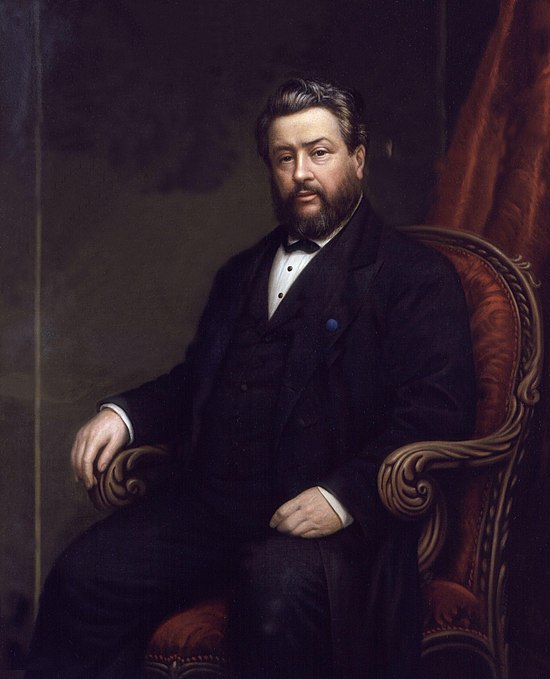
Charles Spurgeon

A Definite Challenge for Definite Prayer!

Mark 10:51; Romans 12
Charles Spurgeon March, 10 2017 Audio
0 Comments
Choice Puritan Devotional!

Sermon Transcript

Auto-generated transcript • May contain errors

100%
A definite challenge for definite prayer. This sermon was first preached by Charles Haddon Spurgeon somewhere in the mid to late 1800s. The text for today comes from the book of Mark, Mark chapter 10, verse 51. What do you want me to do for you? Jesus asked him.

No doubt our Lord's disciples imagined that he was going up to Jerusalem to establish his kingdom. They hoped that they would be partakers of that earthly grandeur which they had fondly pictured would glitter around the person of the Son of David. Therefore, when the blind man ventured to vehemently cry out to Jesus, whom they esteemed to be a great king, they thought it was a daring intrusion. Who was this son of Timaeus that he should say to Jesus, Jesus, son of David, have mercy on me? They were all anxious to quiet the voice of misery in the presence of so much majesty.

But our Lord Jesus Christ did not spurn the blind man's prayer as intrusive or impertinent. Jesus was not angry with him. He did not pass by without taking any notice. What He did was to stand still and command that the man be brought to Him.

May we not draw some comfort from the thought that our prayers are never intrusions? Whenever we go before God in deep distress, He is always ready to listen to our cry. Whatever grand purpose or important project engages the mind of Christ, he will surely be attentive to the longings of his needy petitioners.

Though our Lord Jesus Christ is at this moment King of Kings and Lord of Lords, and inconceivably glorious, though hosts of angels count it their highest delight to do his bidding, Yet he bears in heaven the same heart toward sinners which he had on earth. Amidst the thunders of the everlasting hallelujahs, Jesus can detect the sighs of the prisoners, the cries of the sorrow from the sufferers, and the groans of the contrite. Jesus will pause to pay attention to the request of blind beggars and in his pity he will relieve their distress.

Shouldn't this encourage those of you who are seeking him? Whatever Satan may suggest to the contrary, take this passage of God's word as an encouragement. Jesus did hear the blind man's cry when he was on earth, and he will hear you now that he is in heaven.

And you, backsliding child of God, difficult as it may be for you to pray, if unable to clearly express your griefs, your sighs will be heard, your tears will be seen, and you will certainly have an audience from him who delights in mercy. There are times, even with those who live nearest to God, when they fall into despondencies, and imagine that their voice is shut out from heaven's gate, but it is not true.

When I cannot come to God as a saint, what a mercy it is that I may come to him as a sinner. And if I have lost all my evidences of salvation, what a blessing it is that I need not stop to find them, that I may go to the mercy seat without any evidences. just as I am without one plea, but that his blood was shed for me.

When I am reduced to being a beggar of eternal grace and I find myself naked and poor and miserable, I can still hear God saying to me, I counsel you to buy from me gold refined in the fire so you can become rich and white clothes to wear so you can cover your shameful nakedness, and salve to put on your eyes so you can see.

In our worst condition, prayer is still effective. As long as we live, let us pray. Until you hear the gates of hell closing and you are locked up in eternal darkness, don't doubt the right of petition. or the effectiveness of your earnest plea. There is an ear to hear in heaven, so long as there is a heart to plead on the earth. Let this first thought be riveted on your minds, and you will, I trust, be prepared for three further reflections, which I now wish to introduce to you.

Our Lord, before He healed the blind man, said to him, What do you want me to do for you?" Therefore, I infer that first, it is important that a seeking sinner should know what it is that he really wants, and sometimes Christ delays to give salvation until men and women are brought more clearly to understand what is comprehended in that immeasurable blessing.

It is important that a seeking sinner should know what it is that he really wants. And sometimes Christ delays to give salvation until men and women are brought more clearly to understand what is comprehended in that immeasurable blessing of salvation.

A large proportion of those persons who express a certain desire to be saved have no scriptural idea of what it means to be saved. I am afraid that many who profess to have found salvation are really just the victims of religious excitement, greatly moved by the exhortations they have heard, yet they have little or no real understanding as to the fundamental truths on which their hope is based.

The most current idea, of course, is that to be saved means to be delivered from going down into the pit, from enduring the sentence of everlasting torment. We grant that it does comprise this, though that is far from being its sole intent. This is a result of salvation, though it is not the essence of salvation as it is discovered in the souls of the redeemed.

Men and women are saved, blessed be God, many years before the time of their death, and are conscious of being saved too. In some respects, they are as thoroughly and perfectly saved as they will be when they get to heaven. Salvation is not postponed until the day of judgment, when you will have deliverance from hell. It may be enjoyed here on earth when your sins are forgiven. and you are redeemed from the present evil world.

Or it may be true that you have a vague impression that salvation consists in the pardon of your sins, that salvation consists simply in the pardon of your sins. This is true, but it does not include all the truth. When you say, I want to have my sins forgiven, do you know what sin is? Have you ever had any clear view of what it really means? We often use certain terms and common words, I fear, without a corresponding thought in our minds.

Be aware, then, that you have broken God's law, both by omitting to do what you should have done and by doing that which you should not have done. Those Ten Commandments which you will find in the 20th chapter of Exodus are like many mirrors in which you can see what you have done and what you have not done.

What crimes cry out against you before the judgment throne of God which will certainly drag you down to hell unless you are delivered from the fearful penalty. Consider too the heavy weight as well as the grievous guilt of sin.

Consider the heavy weight as well as the grievous guilt of sin. Have you ever felt the load and burden of sin? Stone is heavy and sand a burden, said Solomon. But oh, what is the weight of a stone or sand as compared to the weight of sin? David said it well as he groaned beneath the load of his own sin. My guilt has overwhelmed me like a burden too heavy to bear.

All the burdens that may come your way in life, the calamities of the world, or the visitations of providence, cannot equal the load of sin, for this is a burden that oppresses the conscience, crushes the heart, and paralyzes every faculty of the soul. A man's spirit sustains him in sickness, but a crushed spirit, who can bear? A conscious stricken with the sense of sin will readily understand that crushed spirit which is not bearable for a man.

Were that terrible nightmare to stay with him for a long time, then his spirit would utterly fail before the Lord. If mercy did not quickly come to their rescue, men and women might soon lose their minds and become frantic, despondent, leading them to despair and then despair to insanity. Oh, how lethal is the poison of sin when it enters our lives and festers.

Have you known what sin is? If not, I am afraid your prayer will be meaningless, just like that prayer of James and John to whom it was said, you do not know what you are asking. Have you any idea, when asking for the forgiveness of sin, what sin really deserves? What kind of payment it justly demands? Let us always remember that every sin we have committed exposes us to the wrath of God, a wrath that is represented by terrible pictures in God's Word, such as a flame that is never extinguished, a fire that never ceases to burn,

In order to deliver us from this penalty, it was absolutely necessary that someone else should bear this punishment on our behalf. I do not think that we intelligently ask for the pardon of sin unless we have some view of the crucified Savior, the slaughtered Lamb, who stood in our place and paid for our sins by His own sacrifice. O seeking soul, if you knew the weight of sin and if you would know that Christ carried it, then you can say, Lord, I want to have my sins forgiven in answer to the question, what do you want me to do for you?

And yet salvation includes more than deliverance from hell and a free pardon. for it liberates the soul from the dominant power of sin. Salvation includes more than just deliverance from hell and a free pardon, for it liberates the soul from the dominant power of sin. Those among us who are saved from the guilt of sin are abundantly conscious that we are not fully released from the power of sin in our own hearts. Loved ones who have died and gone to heaven and now see God's unveiled face are saved, completely saved from indwelling sin. But none of us here, none of us here on earth enjoy that blessed liberation.

Though there are some who boast a perfection that is hard to prove, but sadly they slightly prejudice their profession by their pride. Still, salvation from the dictatorial power of sin must be achieved. And all believers must experience it or they will never see God's face of approval.

Brothers and sisters, we must have our controlling sins subdued. We must have our controlling sins subdued. Do you not know that the wicked will not inherit the kingdom of God? Do not be deceived. Neither the sexually immoral, nor idolaters, nor adulterers, nor male prostitutes, nor homosexual offenders, nor thieves, nor the greedy, nor drunkards, nor slanderers, nor swindlers will inherit the kingdom of God. We must turn away from these sins. They must be eliminated and overcome. And so far as any other sins are concerned, they must no longer be residents of our heart. You must look on them as intruders and aliens that are to be driven out like the Canaanites out of the land of promise. Discipline your body, subdue your lust, overcome your wickedness.

But a man replies, how can I do this? A most fitting question. You can't do it. But Christ says, what do you want me to do for you? Christ's power is equal to every urgent situation. There is no sin too strong for Christ. During his life on earth, there was no devil that he could not cast out. So there is no sin which he cannot eject and eradicate. A legion of devils fled at the command of our Lord. Do not doubt that legions of raging lusts and fiery tempers can be overcome by the faith that pleads the pure and precious name of Christ.

Brothers and sisters, let us never be content with small degrees of sanctification. Do not reason with yourselves that you can never grow beyond your present dwarfed spiritual state. Others have outgrown it. There have been men and women far more distinguished for holiness and humility and every grace than we are. The attainments to which Jesus had led them are accessible to all saints under the same guidance, through the same divine power. Let us seek holiness. Let us follow after it with fresh passion. Do not be satisfied merely to live, but seek to grow. Do not be content to remain babes, taking your portion of milk, but seek to be strong men and women who will enjoy the strong meat of the word of God.

I believe there are hundreds of persons who have no desire to be saved and would rather not be saved if this is what salvation means. There are hundreds and thousands of people who have no desire to be saved and would rather not be saved if this is what salvation means. Why, dear man and dear woman, if you are saved, you will be saved from those pleasurable sins in which you now love to experience, some of which, when you have free time, following the inclinations of a corrupt heart, lead you off to places where birds of your own feather congregate. Should you be saved, you will seek far different company. The company you now love, you will then hate, and the pleasures you enjoy so much now will become as detestable as they were delightful to you.

When you say, Lord, save me, Do you mean, Lord, save me from being what I am? Lord, I have been a drunkard, make me sober. I have been immoral, make me pure. I have been dishonest, make me upright. I have been deceitful, make me speak truth to my neighbor. I have been violating your commands, make me mindful of your word. I have been your enemy, Lord, make me your friend. I have made my stomach my God, now please you be my God. I desire to be reconciled to you so that your will will be my will, your service my delight, and your path that which I choose. Do you mean that? If any man or woman honestly says, I desire to be saved from sin. I don't think you will have to wait long to have such a desire gratified, for the Lord Jesus will say to you, your faith has made you whole. He can and He will save you if that is what you mean.

As for you good Christian people who are seeking the conversions of sinners, Try to go about it in Christ's own way. It is right for you to exhort them to believe in Christ, but just remember that a man or woman must have some understanding both of what sin is and who the Savior is before they can believe. For faith comes from hearing the message, and the message is heard through the word of Christ. Endeavor, therefore, to instruct persons in the gospel merely to exhort them to believe, simply to cry out, Believe! Believe! Believe! is of little worth. For no matter how serious and intense you are in commanding the unbeliever to believe, the sinner will naturally ask the question, What is it that I have to believe? On whom am I to believe? Why do I need to believe? So go about your work of soul winning in the power of the Holy Spirit. Go about it intelligently, understanding that just as Jesus Christ would not open the blind man's eyes until he first made him state, not for the benefit of Christ, but for the man's own recognition, what it was that he wanted and made him say, Rabbi, I want to see. In the same way, You also must endeavor, when you share the gospel, to let men and women know what the gospel commands of them, that is, what they have to believe, who they have to believe in, and why they have to believe. Do not merely give them the warnings and the urgings of the gospel, but tell them what it means and exactly what they are to do. Therefore, understand clearly that it is your responsibility to instruct sinners in the way of the Lord. As David says, I will teach transgressors your ways, and sinners will turn back to you. We will now leave this first point and proceed to our second. Our text clearly indicates to us all the great necessity of praying specifically." This poor man was not allowed to pray in general. Son of David, have mercy on me. A very proper prayer and a very blessed prayer, but certainly it was a very broad prayer. So he was encouraged to be more specific in his request. What do you want me to do for you? Do you ask for mercy? What form of mercy do you need? In what particular shape will the bountiful hand dispense this mercy to you? The blind man immediately replies, Rabbi, I want to see. He hits the mark with precision. It is sight he wants, and so for sight he asks. This is the right way for believers to pray. I wish we had more of it in our prayer meetings. I do not find fault, for we have had blessed times of prayer here. But rest assured that the best prayers in all respects are those which are intense, sincere, and directly to the point. You know, there is a way of praying in the closet. and praying with the family, in which you do not ask for anything. You say a great many good things, introduce much of your own experience, review the doctrines of grace very thoughtfully, but you do not ask for anything in particular. Such prayer is always uninteresting to listen to, and I think it must be rather tedious to those who offer it. A black man who was noted for his great earnestness in prayer was once asked, how was it that whenever he prayed he seemed to be so earnest? And he said, because I always have a specific purpose when I go to the king. I always have a specific purpose. I go to him knowing that I want something and I ask him for it. and I don't stop until he gives it to me. And if he does not give it to me, I ask him again and again, for I know what I need." What use would it be to keep going in and out of a door at the bank all day if you have no business to transact and nothing to get? But it is quite different when you go to the bank teller with your withdrawal request and receive cash in return. It would be very uninteresting to have an audience with a king every morning and evening only to state, your majesty's most loyal subject, your majesty's most loyal subject, if you never ask for anything. Yet how much prayer of that kind is addressed to heaven? A bright flash of diffused light, not the distinct lightning bolt that does the work We need to imitate David when he said, in the morning, I will direct my prayer to you. David looked at the target, marked the bull's eye, then drew the bow. And after he shot the arrow, he adds, and we'll look up as if to see whether the arrow really went to the mark, whether the prayer had sped its way to God so that a gracious answer would be given. Shouldn't we sometimes, when alone and about to pray, sit down for a little while to consider what we are about to ask for? Wouldn't we often pray better if we remembered that the preparation of the heart in man, as well as the answer of the tongue, is from the Lord, and that the preparation of the heart precedes the answer of the tongue? In offering our petitions to God, a helter-skelter approach does not become us. We must never rush into his presence without thinking about what we are going to say to him. The decorum which is due a king's court should cautiously remind us of the reverence due to the king of kings. Although we enjoy the privileged familiarity which permits us to say, Our Father, as dear children of the Lord of heaven and earth, let us never forget to be humble and to honor to bow as subjects of the great King. Tenderly, he asked, and devoutly we may answer his question, what do you want me to do for you? Now, dear friends, let me dare to give a plain answer to a plain question. As you are sitting here in this church, what is your desire before the Lord? Let your conscience make such a reply that, when you get home, you may intelligently, in the closing prayer of the day, approach the Lord for what you want. What is the uppermost desire of your soul? Perhaps, with some of you, it is that you may overcome the sin that so easily entangles you. Oh, you say, what I would give if I could get rid of that bad temper of mine. It is my daily cross, and I do not want to have it in my life any longer. Oh, says another, I am so unbelieving, a little trouble soon cast me down. Oh, that I could get rid of my unbelief. Well, now, very likely, dear friends, The sin you ought to pray against is the one that you are not striving against. Let me say that again. The sin you ought to pray against is not the one that you are now striving against. Were I to come to you in the aisle and walk right up to you and look directly at you and tell you what your principal sin is, you would feel very annoyed at me. For we are apt to resent the faithfulness of those who tell us our faults. To touch the tender place makes the nerves tingle, and it seems like deliberate torture. When somebody complains of something which our conscience does not support, we take it kindly and accept their good intentions, thinking that if they had known us better, they would have esteemed us more highly. But if they really touch the most tender sores, then we do not appreciate their treatment. We feel the embarrassment and seek to hide the blush on our face. Yet don't hide the evil which the omniscient God discerns. Let this be a time of heart searching. Say, Lord, is my sin greed or materialism? These are sins which I have never yet heard a man or woman confess. People will confess dreadful iniquities of every kind, even murder and adultery, but almost never will a man or woman confess the sin of greed or materialism. These are crimes they christen and call by another name. A greedy man thinks he is prudent. He is just laying aside a little money for a rainy day. His greed, he tells you, is not to gratify himself, but a generous impulse to provide for his family. They would have us believe that they waste their strength and wither their souls only for the good of their wives and their children. Nevertheless, their fortune is their God. To grab and to gain, to have and to hold is their desire so long as they live. And very often they manage to lose it all before they pass it on to their loved ones. Sadly, we are often wicked enough to try to make our love for our family an excuse for our greediness. Let us honestly come to the point. When we are dealing with our sin, let us confess it with all its iniquity and its evilness. Do not evade the truth of it by accepting only a small part of the guilt. David, when he wanted complete forgiveness, said, Save me from blood guilt. He acknowledged the atrocity when he sought the atonement. Save me from blood guilt. As one who saw his crime in the light of its consequence, not as one who attempted to gloss it over with vain excuses. Jesus says to us, what do you want me to do for you? If you have no particular sin to confess, if that is not your uppermost concern at this time, what then is your petition? What need do you want to be met? Is it some great need? Have you numerous little needs? They all may be told to God. Get a clear idea of what it is that you really do need, what you want him to do for you, knowing that, whatever your needs may be, there is the promise, my God will meet all your needs. Not some of it, but all your needs. Not that he may do it, but that he will do it. Not that you will have to meet it yourselves, but that he will meet it. My God will meet all your needs. Think, therefore, what your needs are and then go to God. Is there any special blessing that you desire? Get a clear idea of the blessing before you pray for it. What form of blessing do you wish to have? Oh, if I could have my choice, it would be heavenly mindedness. Oh, if a man could only get that, he need not be too concerned about where he lived, nor what he had to eat, nor how much he slept, nor how much he suffered, for a heavenly mind is heaven. The mind makes its own heaven here below and up above. Though doubtless heaven does have a locality, yet it is much more a state than a place. Oh, for more heavenly mindedness What is it that you would have? Communion with Christ? Love for souls? A broken heart? True humility? I may say all of these things. The whole country lies before you. Go wherever you please. Ask whatever you will and it will be done for you. What promise is there that you would wish to have fulfilled for you today? It is a good habit to sit down before your time of private prayer and look up the promises that seem most suitable, or to ask the Lord to look it up for you and apply it to your soul. If there is a plague or severe disease in your neighborhood, even right next door, then take this promise, Lord, you have said, Thousands will fall at your side and 10,000 at your right hand, but it will not come near to you. Lord, fulfill that promise now. Are you startled by a noise in the middle of the night? Then quote this promise. You will not fear the terror of the night. Perhaps it is your dwindling food supply that troubles you. There is another promise. Your bread will be supplied, and water will not fail you. When you lost a key the other day and could not open the drawer, what did you do? You sent out for the locksmith, and in he came with a whole bundle of old rusty keys. What for? Why, he looked for the one that fit the lock on your drawer, and opened it for you at once. Now many people's Bibles are just like that bundle of rusty keys. There is always a key in the Bible that will fit the lock of your necessities if you will but seek until you find it. But sometimes we are in distress, as Christian and hopeful were in Doubting Castle, and we have to say, as Christian did, what a fool I am to lie rotting in this stinking dungeon when I have a key in my pocket that I am persuaded would open every lock in Doubting Castle. Search out the promises then, and go before God with a distinct answer to the question, what do you want me to do for you? Lord, I want to have that promise fulfilled, or that grace bestowed, or that need supplied, or that sin forgiven. So dear friends, when praying for others, I think it is very necessary, in order to keep up our own interest in it, that we should have distinct things to pray about. We should have distinct things to pray about. I don't find that I can pray fervently for all of mankind, but I can pray fervently for my own children. I don't find that I can pray for the nation as well as I can for London. When I pray for London, I seek to do it earnestly. It behooves us to pray for all men and women according to Scripture. All sorts of men and women are to be included in our supplications. I must, however, confess that I am most fervent in prayer when I pray for this congregation. That is because I have the most vivid thought of this people and the clearest idea of their present requirements. If you want to pray for any particular person or any special matter, the better you understand the case you have in hand, the warmer and livelier your pleading will be. There are people in this church who have asked me to pray for them. I have tried to do so, and I hope the Lord heard my prayer. But since I have known more of them and found out where they lived, and who they were, I can pray for them with more freedom than I could before. Once they were sort of an abstraction to me, but now I have a definite acquaintance with them. How easily you remember anything that is tied to something else or linked by association with a place. For example, you remember an event that occurred to you in the City of London. Every time you go by the bank, just at one particular spot, you say to yourself, I met so and so here just the day before he died. You will never forget it. And you will think of it every time you go by that spot. Or perhaps, at an intersection of two roads in the country, such and such a thing happened to you. And the very sight of that place brings back the circumstances. In the same way, we remember our friends in prayer when we get to know them, when we can bring them to mind and know, as it were, the private matter of their lives as we have seen them and talked with them and been interested in their trials. Some good people have prayed for others by name. Well, you cannot do that if you have a long list and happen to be a busy man. Still, it is good to pray for others by name, if you can. I like those prayers, even in public, in which we pray for others with some distinctness. Oh, what time we waste when we go beating around the bush. We know individuals who pray for their minister with roundabout expressions that distract the listener. They travel round and round a circle instead of going directly to the point. A man often avoids saying, Lord, save my wife. Rather, he prefers to say, please save those who are dear to us and our families, and she who is the partner of my life. Yes, that sounds pretty, very pretty indeed. But wouldn't it be better if you just said, Lord, convert my wife? There is one brother here who does pray in that manner at prayer meetings and who uses those very words. When pleading with God, do let us come straight to the point, stating our case clearly in answer to the question, what do you want me to do for you? May the Lord teach us to pray in this distinct manner. Time fails us now, therefore we will only briefly mention the third point. Our Lord Jesus Christ, in asking this question of the blind man, makes no reservation, but throws open the abundance of his heart and the infiniteness of his power. Jesus, in answering the question of the blind man, makes no reservation, but throws open the abundance of his heart and the infiniteness of his power. What do you want me to do for you is the same as saying, whatever it is that you want, I will do it. I can do it. Only tell me what you want. There is no limit to the Savior's ability, nor does he put a limit on the petitioner's freedom to command the favor he desires. It would not have been appropriate for the blind man to say to Jesus, Lord, if you can, No, he has the opportunity of procuring any help he seeks. I want you to note, brothers and sisters, it is never a question of can with regard to Christ. The question always is, what do you desire? Now sinner, observe that the Lord Jesus Christ did not stop to ask the man about his blindness. Whether he had been blind from his birth or whether he had been affected with a cataract or by a disease of the optic nerve or retina or brain, he just said to him, what do you want me to do for you? No type of eye problem could baffle Jesus. In any form or at any stage, it was possible for Jesus to cure it. The Lord Jesus Christ speaks to you today. He says to you, whoever wishes, let him take the free gift of the water of life. He does not say anything as to whether you have been immoral or moral, whether you have been wicked or religious, but simply, what do you want me to do for you? Your blackest sins will disappear the moment the scarlet of the blood touches them. Your foulest crimes will melt like snow as soon as the fall begins. You cannot have sinned yourself beyond the reach of the long arm of Christ, nor can the weight of your sin be too heavy for the back of Christ, the great sin bearer to bear. Though your sins are like scarlet, they will be white as snow. Though they are as red as crimson, they shall be like wool. Some of us would have no hope if we did not know that Christ will save the chief of sinners. We would have sunk long ago into remorse and despair if we had not seen it written in letters of gold, whoever comes to me, I will never drive away. You know what John Bunyan's thoughts about that were. He says, who is this man? Who is this whoever comes? Why, whoever comes in all the world, no matter who he or she is, they will never, under no circumstances, for no reasons, and in no way, ever be driven away from Christ. If you come to Christ, he will keep his word. He cannot be a liar. He must be as good as his own declaration. If you come to Christ, he will not drive you away. What do you want him to do for you? Oh believer, do you have a desire in your soul? Do you have a longing in your heart? Then Christ does not say that he will give you this mercy if it is possible, but that he is able to do immeasurably more than all we ask or imagine.

I hear that text still quoted by some of my brethren, more than all we can ask or imagine. I beg their pardon, that is not a faithful quotation of scripture. It says more than all we ask or imagine. More than all we ask. God can open a person's mouth as wide as his mercies and he can make us ask for anything. but He generally does for us more than all we ask or imagine.

Never keep your mouth closed because you think the mercy you want would be too great. He who did not spare His own Son, but gave Him up for us all, how will He not also, along with Him, graciously give us all things? Do not restrict yourself Enlarge your desire. Open your mouth wide and he will fill it. He gives you carte blanche. Ask for whatever you want. He puts it before you.

Delight yourself in the Lord and he will give you the desires of your heart. So may it be to us according to our faith and his will be the glory. Amen.
Charles Spurgeon
About Charles Spurgeon
Charles Haddon Spurgeon (19 June 1834 — 31 January 1892) was an English Particular Baptist preacher. His nickname is the "Prince of Preachers."
Broadcaster:

Comments

0 / 2000 characters
Comments are moderated before appearing.

Be the first to comment!

Joshua

Joshua

Shall we play a game? Ask me about articles, sermons, or theology from our library. I can also help you navigate the site.