Bootstrap
Charles Spurgeon

The Holy Spirit's Intercession

Hebrews 4; Romans 8:26; Romans 8:27
Charles Spurgeon March, 10 2017 Audio
0 Comments
Choice Puritan Devotional!

Sermon Transcript

Auto-generated transcript • May contain errors

100%
The Holy Spirit's Intercession by Charles Haddon Spurgeon This sermon was originally preached on April 11, 1880. Our text today comes from the Book of Romans, chapter 8, verses 26 and 27. In the same way, the Spirit helps us in our weakness. We do not know what we ought to pray for But the Spirit himself intercedes for us with groans that words cannot express. And he who searches our hearts knows the mind of the Spirit, because the Spirit intercedes for the saints in accordance with God's will. The Apostle Paul was writing to a tried and afflicted people. One of his purposes was to remind them of the rivers of comfort which were flowing nearby. He first of all stirred up their pure minds by causing them to remember their sonship. For he says, those who are led by the Spirit of God are sons of God. They were therefore encouraged to take part with Christ, the elder brother with whom they had become joint heirs. And they were exhorted to suffer with him, that they might afterwards be glorified with him. All that they endured came from the Father's hand, and this should comfort them. A thousand sources of joy are opened in that one blessing of adoption. Blessed be the God and Father of our Lord Jesus Christ, by whom we have been born into the family of grace. When Paul had alluded to that consoling subject, he turned to the next ground of comfort, namely that we are to be sustained under the present trial by hope. There is an amazing glory in reserve for us, and though as yet we cannot enter upon it, but in harmony with the whole creation must continue to groan and travail, yet the hope itself should minister strength to us and enable us patiently to bear our light and momentary troubles. This also is a truth full of sacred refreshment. Hope sees a crown in reserve, mansions in readiness, and Jesus himself preparing a place for us. And by the rapturous sight, she sustains the soul under the sorrows of the hour. Hope is the grand anchor by whose means we ride out the present storm. The apostle then turns to a third source of comfort namely the abiding of the Holy Spirit in and with the Lord's people. He uses the phrase in the same way to suggest that in the same manner as hope sustains the soul, so does the Holy Spirit strengthen us under trial. Hope operated spiritually upon our spiritual senses and so does the Holy Spirit in some mysterious way divinely operate upon the newborn senses of the believer so that he is sustained in his weakness. In his light shall we see light. I pray, therefore, that we may be helped of the Spirit while we consider his mysterious operations, that we may not fall into error or miss precious truth through blindness of heart. The text today speaks of our weaknesses. or as many translators put it in the singular, our weakness. This refers to our affliction and the weakness which trouble discovers in us. The Holy Spirit helps us to bear the weakness of our body and of our mind. He helps us to bear our cross, whether it is physical pain or mental depression or spiritual conflict or slander or poverty or persecution. He helps us in our weakness, and with a helper so divinely strong, we need not fear for the result. God's grace will be sufficient for us. His strength will be made perfect in weakness. I think, dear friends, you will all admit that if a man can pray, his trouble is at once lightened. When we feel that we have power with God and can obtain anything we ask for at His hands, then our difficulties cease to oppress us. We take our burden to our Heavenly Father and speak like a child with our childlike confidence, and we come away quite content to bear whatever His holy will may lay upon us. Prayer is a great outlet for grief and stops the swelling flood which might have been too strong for us. We bathe our wound in the lotion of prayer. The pain is lessened. The fever is removed. We may be brought into such anxiety of mind and perplexity of heart that we do not know how to pray. We see the mercy seat and we perceive that God will hear us. We have no doubt about that. For we know that we are his own favored children, and yet we hardly know what to ask for. We fall into such heaviness of spirit and confusion of thought that the one remedy of prayer, which we have always found to never fail, appears to be taken from us. Here then, in the nick of time, an ever-present help in time of trouble comes in the Holy Spirit. He draws near to teach us how to pray, and in this way he helps our weakness, relieves our suffering, and enables us to bear the heavy burden without fainting under the load. At this time our subjects for consideration shall be, first, the help which the Holy Spirit gives, secondly, the prayers which he inspires, and thirdly, the success which such prayers are certain to obtain. First, let us consider the help which the Holy Spirit gives. The help which the Holy Spirit provides us meets the weakness which we deplore. As I have already said, if in time of trouble a man can pray, his burden loses its weight. If the believer can take anything and everything to God, then he learns to glory in his weakness and to rejoice in tribulation. But sometimes we are in such confusion of mind that we do not know what we should pray for. In a sense, through our ignorance, we never know what we should pray for until we are taught by the Spirit of God. But there are times when this obscurity of the soul is indeed dense. and we do not even know what would help us out of our trouble if we could obtain it. We see the disease, but we do not know what kind of medicine to take. We look over many things which we might ask for from the Lord, and we feel that each of them would be helpful, but that none of them would precisely meet our particular case. For spiritual blessings, which we know to be according to the divine will, we could ask for with confidence. But perhaps these would not meet our particular circumstances. There are other things for which we are allowed to ask for, but we scarcely know whether, if we had them, they would really serve our needs. And we also feel a shyness about praying for them. In praying for worldly things, we plead with precise prayers, always referring our petition for the ultimate will of the Lord. Moses prayed that he might enter Canaan, but God denied him. And the man that was healed asked our Lord that he might be with him, but the answer was received, go home to your friends. We always pray about such matters with this caveat, yet Lord, not as I will, but as you will. At times, this very spirit of resignation appears to increase our spiritual difficulty. For we do not wish to ask for anything that would be contrary to the mind of God, and yet we must ask for something. We know that we must pray, but what shall be the particular subject of prayer we cannot determine for a while. Even when ignorance and perplexity are removed, we still do not know what we ought to pray for. Even when we know what to pray for, we yet fail to pray in the right manner. We ask, but we are afraid that we shall not have because we do not exercise the thought or the faith which we judge to be essential to prayer. We cannot at times command the sincerity which is the life of supplication. A sluggishness comes over us. Our heart is chilled, our hand is numbed, and we cannot wrestle with the angel. We know what objects to pray for, But we don't know how. We don't know how we ought to pray. It is the manner of the prayer which perplexes us, even when the matter is decided upon. How can I pray? My mind wanders. I chatter like a long-neck crane. I roar like a beast in pain. I moan in the brokenness of my heart. But, O my Father, I do not know what my inmost spirit needs. Or if I know it, I do not know how to frame my petition rightly before you. I do not know how to open my lips in your majestic presence. I am so troubled that I cannot speak. My spiritual distress robs me of the power to pour out my heart before my God. Now beloved, it is in such a dilemma as this that the Holy Spirit aids us with his divine help. And therefore he is an ever-present help when we are in trouble. Coming to our aid in our bewilderment, the Holy Spirit instructs us. The Holy Spirit instructs us. This is one of his frequent operations upon the mind of the believer. He will teach you all things. He instructs us as to our need and as to the promises of God which refer to that need. He shows us where our deficiencies are, what our sins are, and what our needs are. He sheds a light upon our condition and makes us deeply feel our helplessness, sinfulness, and dire poverty, and then He casts the same light upon the promises of the word, and brings to the heart that very text which was intended to meet the occasion, the precise promise which was made with the foresight of our present distress. In that light he makes the promise shine in all its truthfulness, certainty, sweetness, and suitability, so that we poor trembling sons of men Dare take that word into our mouth, which first came out of God's mouth, and then we come before God using that very promise as an argument and plead it before the throne of heavenly grace. Our prevalence in prayer lies in the plea, Lord, do as you have said. We must greatly value the Holy Spirit because when we are in the dark, he gives us light. And when our perplexed spirit is so confused and puzzled that it cannot see its own need and cannot discover the appropriate promise in the scriptures, the Spirit of God comes in and teaches us all things and reminds us of everything whatsoever our Lord has told us. He guides us in prayer and thus he helps us in our weakness. But the Blessed Spirit does more than this. He will often direct the mind to the special subject of prayer. He dwells within us as a counselor and points out to us what it is we should seek at the hands of God. We do not know why it is so, but we sometimes find our minds carried along by a strong current into a particular line of prayer for some definite object. It is not merely that our judgment leads us in that direction, though usually the Spirit of God acts upon us by enlightening our judgment. But we often feel an unaccountable and irresistible desire rising again and again within our heart. And this presses on us so much that we not only express the desire before God at our ordinary times of prayer, but we feel it crying in our hearts all day long, almost to the point where it replaces all other thoughts. At such times, we should thank God for direction and giving us such a clear road. The Holy Spirit is granting us inward direction so we can have confidence in the success of our pleadings. Such guidance will the Holy Spirit give to each of you if you will ask Him to illuminate you. He will guide you both negatively and positively. Negatively, He will forbid you to pray for such and such a thing. Even as the Apostle Paul had tried to go into Bithynia, but the Spirit would not allow him. And on the other hand, He will cause you to hear a cry within your soul which shall guide your petitions. Even as he made Paul hear the cry from Macedonia saying, come over and help us. The spirit wisely teaches as no other teacher can. Those who obey his promptings shall not walk in darkness. He leads the spiritual eye to take good and steady aim at the very center of the target, and thus we hit the mark in all of our pleadings. Nor is this all, for the Spirit of God is not sent merely to guide and help our devotion, but He Himself intercedes for us according to the will of God. intercedes for us according to the will of God. By this expression it does not mean that the Holy Spirit himself ever groans or personally prays, but rather that he excites intense desire and creates unutterable groanings in us, and these are ascribed to him. even as Solomon built the temple because he superintended and ordained everything. And yet, I doubt that he ever fashioned a timber or prepared a stone. Likewise, the Holy Spirit prays and pleads within us by leading us to pray and plead. This he does by arousing our desires. The Holy Spirit has a wonderful power over renewed hearts, as much power as the minstrel has over the strings of the instrument on which he lays his hand. The influences of the Holy Spirit at times pass through the soul like winds through an eloquent harp, creating and inspiring sweet notes of gratitude and tones of desire to which we would have been strangers if it had not been for his divine visitation. He can arouse us from our laziness. He can warm us out of our lukewarmness. He can enable us, when we are on our knees, to rise above the ordinary routine of prayer into that victorious insistence against which nothing can stand. He can plant certain desires so urgently in our hearts that we can never rest until they are fulfilled. He can make the zeal for God's house to eat us up and the passion for God's glory to be like a fire within our bones. And this is one part of that process by which, in inspiring our prayers, He helps our weakness. He is a true advocate and a most effective comforter. Blessed be His name. The Holy Spirit also divinely operates in the strengthening of the faith of believers. Our faith was first created by Him, and afterwards He is the One who sustained and increased it. And, O brothers and sisters, have you not often felt your faith rise in proportion to your trials? Have you not, like Noah's ark, ascended towards heaven as the flood deepened around you? You have felt as sure about the promise as you felt about the trial. The affliction was, as it were, in your very bones, but the promise was also in your very heart. You could not doubt the affliction, for you smarted under it. but you could also not doubt the divine help for your confidence was firm and unmoved. The greatest faith is only what God has a right to expect from us, yet we can never exhibit it except as the Holy Spirit strengthens our confidence and opens up before us the covenant with all of its seals and securities. He is the one that leads our soul to cry, is not my house right with God? Has He not made with me an everlasting covenant, arranged and secured in every part? Blessed be the Divine Spirit then, that since faith is essential to prevailing prayer, He helps us in supplication by increasing our faith. Without faith, prayer is ineffective, because He who doubts is like a wave of the sea, blown and tossed by the wind. That person should not think he will receive anything from the Lord. We are happiest when the Holy Spirit removes our doubting and enables us, like Abraham, to believe without staggering, knowing full well that He who has promised is also able to perform. By three examples I will endeavor to describe the work of the Spirit of God in this matter. Though they all fall short, and indeed all that I can say must fall infinitely short of the glory of his work. We cannot even attempt to explain the actual mode of his working upon the mind. It remains a mystery, and it would be an unholy intrusion to attempt to remove the veil. There is no difficulty in our believing that as one human mind operates upon another mind, So does the Holy Spirit influence our spirits. We are forced to use words if we would influence our fellow men. But the Spirit of God can operate on the human mind more directly and communicate with it in silence. Into that matter, however, we will not dive lest we intrude where our knowledge would be drowned by our presumption. My illustrations do not touch the mystery. but set forth the grace. The Holy Spirit acts to his people somewhat as a prompter to a reciter. He acts somewhat like a prompter to a reciter. A man has to deliver a speech which he has learned, but his memory is treacherous, and therefore somewhere out of sight is a prompter. so that when the speaker is at a loss and might use a wrong word, a whisper is heard, which suggests the right word. When the speaker has almost lost the thread of his discourse, he turns his ear and the prompter gives him the key word or the key phrase and aids his memory. If I may be allowed to make an allegory, I would say that this represents in part the work of the Holy Spirit of God within us. suggesting to us the right desire, and reminding us of everything Christ has said to us in his word. In prayer we often come to an obstacle, but he incites, suggests, and inspires, and so we go onward. In prayer we might grow weary, but the Comforter encourages and refreshes us with cheering thoughts. When indeed we are in our confusion almost driven to give up prayer, the whisper of His love drops alive coal off the altar into our soul, and our hearts glow with a greater passion than before. Regard the Holy Spirit as your prompter, and let your ear be open to His voice. But He is much more than this. Let me attempt a second allegory. The Holy Spirit is an advocate to one in peril at law. The Holy Spirit is an advocate to one in peril at law. Suppose that a poor man had a great lawsuit against him, affecting his whole estate, and he was personally forced to go to court and plead his own case and speak up for his rights. If he were an uneducated man, he would be in a great dilemma. An adversary in the court might plead against him and overthrow him, for he could not answer him. The poor man knows very little about law and is quite unable to meet his cunning opponent. Suppose one comes along who is perfect in the knowledge of the law and should eagerly take up his cause and come and live with him. and use all of his knowledge so as to prepare his case for him, draw up his petitions for him, and fill his mouth with arguments. Wouldn't that be a great relief? The counselor would suggest the line of pleading, arrange the arguments, and put them into the proper legal language. When the poor man was baffled by a question asked in court, he would simply run home and ask his advisor. and he would tell him exactly how to meet the objector. Suppose, too, that when he had to plead with the judge himself, this advocate at home should teach him how to behave and what to ask, and encourage him to hope that he would prevail. Wouldn't this be a great benefit? Who would the pleader be in such a case? The poor client would plead, but still, when he won the suit, He would trace it all to the advocate who lived at home and gave him the counsel. Indeed, it would be the advocate pleading for him even while he pleaded himself. This is an instructive picture of a great fact. Within this narrow house of my body, this residence of clay, if I am a true believer, there dwells the Holy Spirit. And when I desire to pray, I may ask Him how I ought to pray and what to ask, and He will help me. He will write the prayers which I ought to offer upon the tablets of my heart, and I shall see them there. And so shall I be taught how to plead. It will be the Spirit Himself pleading in me and by me and through me before the throne of grace. What a happy man in his lawsuit would such a poor man be? And how happy are you and I that we have the Holy Spirit to be our counselor? Yet one more illustration is that of a father aiding his son, a father aiding his son. Suppose it was a time of war centuries ago. Old English warfare was then conducted by bowmen to a great extent. Here is a youth who is to be initiated in the art of archery, and therefore he carries a bow. It is a strong bow, and therefore very hard to draw. Indeed, it requires more strength than the young boy can summon to bend it. See how his father teaches him. Put your right hand here, my boy, and place your left hand so. Now pull, and as the youth pulls, his father's hands are on his hands, and the bow is drawn. The lad draws the bow, yes, but it is quite as much his father too. We cannot draw the bow of prayer alone. Sometimes the bow of steel is not broken by our hands, but we cannot even bend it. Then the Holy Spirit puts his mighty hand over ours and covers our weakness so that we draw, and then what splendid drawing of the bow it is. The bow bends so easily we wonder how it could be. Away flies the arrow and it pierces the very center of the target, for he who gives has won the day. but it was his secret strength that made us strong, and to him be the glory for it. Thus have I tried to set forth the reassuring fact that the Spirit helps the people of God. Our second subject is the prayer which the Holy Spirit inspires, or that part of the prayer which is especially and particularly the work of the Spirit of God. Our text says, The Spirit himself intercedes for us with groans that words cannot express. It is not the Spirit that groans, but we that groan. But as I have shown you, the Spirit excited the emotion which causes us to groan. It is clear that the prayers which are incited in us by the Spirit of God are those which arise from our inmost soul. Are those which arise from our inmost soul. A man's heart is moved when he groans. A groan is a matter about which there is no hypocrisy. A groan does not come from the lips, but from the heart. A groan then is a part of prayer which we owe to the Holy Spirit. And the same is true of all prayer which wells up from the deep fountains of our inner life. The prophet cried, O my anguish, my anguish, I writhe in pain, O the agony of my heart, my heart pounds within me, I cannot keep silent. This deep groundswell of desire, this tidal motion of the life floods is caused by the Holy Spirit. His work is never superficial, but always deep and inward. Such prayers will arise within us when the mind is far too troubled to let us speak. When the mind is far too troubled to let us speak. We do not know what we ought to pray for. And then it is that we groan, or utter some other inarticulate sound. Hezekiah said, I moan like a dove in mourning. The psalmist said, I am feeble and utterly crushed. I groan in anguish of heart. But he added, all my longings lie open before you, O Lord. My sighing is not hidden from you. The groans of the prisoner are surely heard by the ears of the Lord. There is real prayer in these groans that words cannot express. It is the power of the Holy Spirit in us which creates all real prayer, even that which takes the form of a groan because the mind is incapable, by reason of its confusion and grief, of clothing its emotion in words. I pray that you never think lightly of the supplications of your anguish. Rather, judge that such prayers are like Jabez, of whom it is written that he was more honorable than his brothers because his mother bore him with sorrow. That which is brought up from the depth of the soul, when it is stirred with a terrible storm, is more precious than pearls, for it is the intercession of the Holy Spirit. These prayers are sometimes groans that words cannot express because they concern such great things that they cannot be spoken. Because they concern such great things that they cannot be spoken. I want my Lord, I want, I want. I cannot tell you what I want, but I seem to want all things. If it were some little thing, my limited ability could comprehend and describe it. but I need all covenant blessings. You know what I need before I ask you, and though I cannot go into each item of my need, I know it is very great, beyond what I can estimate. I groan, for I can do no more. Prayers, which are the offspring of great desires, sublime aspirations, are surely the work of the Holy Spirit. And their power within a man is frequently so great that he cannot find expression for them. Words fail and even the groans which try to symbolize them cannot be expressed. But it may be, beloved, that we groan because we are conscious of the littleness of our desire and the narrowness of our faith. Because we are conscious of the littleness of our desire and the narrowness of our faith. The trial may seem too lowly to pray about. I have known what it is to feel as if I could not pray about a certain matter, and yet I have been obliged to groan about it. A thorn in the flesh may be as painful a thing as a sword in the bones, and yet we may go and ask the Lord three times about it, and getting no answer, we may feel that we do not know what we ought to pray for. And yet it makes us groan. Yes, and with that natural groan, there may go up an inexpressible groaning of the Holy Spirit. Beloved, what a different view of prayer God has from that which men think to be the correct one. You may have seen very beautiful prayers in print, and you may have heard very charming compositions from the pulpit, but I trust you have not fallen in love with them. Judge these things rightly. I pray you never think much of fine prayers. For before the Most Holy God it does not become a sinful petitioner to play the orator. We heard of a certain clergyman who was said to have spoken the finest prayer ever offered to a Boston audience. If that is true, then the Boston audience received the prayer and there it ended. We want the mind of the spirit in prayer and not the mind of the flesh. The tail feathers of pride should be pulled out of all of our prayers, for they need only the wing feathers of faith. The peacock feathers of poetical expression are out of place before the throne of God. Listen to me. No matter how remarkably beautiful his language was in his prayer, No matter how intellectually satisfied his prayer was, God looks at the heart. To God, fine language is the same as a resounding gong or a clanging cymbal, but a groan has music in it. We do not like groans. Our ears are much too delicate to tolerate such dreary sounds, but not so the great Father of Spirits. A brother cries out, Amen, and you say, I cannot bear such noise. No, but if it comes from the man's heart, God can bear it. When you go into your bedroom this evening to pray and you find that you cannot pray, but have to moan out, Lord, I am too full of anguish and too perplexed to pray. Please hear my groans. Though you say nothing else, you will really be praying. When, like David, we can say, I open my mouth and pant, then we are in the proper state of mind. All fine language and prayer, and especially all chanting and performing of prayers, must be abhorrent to God. It is a little short of profanity to offer solemn supplication to God in the form of chanting. The groaning of a true heart is infinitely more acceptable, for it is the work of the Spirit of God. We may say that the prayers which the Holy Spirit works in us are prayers of knowledge. Notice our difficulty is that we do not know what we should pray for. But the Holy Spirit does know, and therefore he helps us by enabling us to pray intelligently, knowing what we are asking for, for this knowledge is needful for our prayers to be valid. The text speaks of the mind of the Spirit, what a mind that must be! The mind of that Spirit who arranged all the order which now pervades the earth. There once was chaos and confusion, but the Holy Spirit hovered over it all, and His mind is the originator of that beautiful arrangement which we so admire in the visible creation. What a mind His must be! The Holy Spirit's mind is seen in our intercessions when, under His sacred influence, we order our case before the Lord and plead with holy wisdom for things fitting and necessary. What wise and admirable desires must those be which the Spirit of Wisdom himself works in us? Moreover, my friends, the Holy Spirit's intercession creates prayers offered in a proper manner. I showed you that the difficulty is that we do not know what we ought to pray for. And the Spirit meets that difficulty by making intercession for us in a right manner. The Holy Spirit works in us humility, seriousness, intensity, persistence, faith, resignation, and everything else that is acceptable to God in our supplications. We do not know how to mingle these sacred spices in the incense of prayer. We, if left to ourselves at our very best, get too much of one ingredient or another and spoil the sacred compound. But the Holy Spirit's intercessions have in them such a blessed blending of all that is good that they come up as a sweet perfume before the Lord. Spirit-taught prayers are offered as they ought to be. They are His own intercession in some respects, For we read that the Holy Spirit not only helps us, but Himself intercedes. It is twice declared in our text that He makes intercession for us. And the meaning of this I tried to show when I described a father as putting his hands upon his child's hands. This is something more than helping us to pray, something more than encouraging us or directing us, but I venture no further except to say that he puts such force of his own mind into our poor weak thoughts and desires and hopes that he himself makes intercession for us, working in us to will and to pray according to his good pleasure. I want you to notice, however, that these intercessions of the Spirit are only in the saints. He intercedes for us and he intercedes for the saints. These intercessions of the Spirit are only in the saints. Does he do anything for unsaved sinners? Yes, he quickens sinners into spiritual life. And he strives with them to overcome their sinfulness and turn them into the right way. But in the saints he works with us and enables us to pray after his mind and according to the will of God. His intercession is not in or for the unregenerate. O unbelievers, you must first be made saints or you cannot feel the Spirit's intercession within you. Why would unbelievers need to go to Christ for the blessing of the Holy Spirit, which is distinct to the children of God, and can only be ours by faith in Christ Jesus? To all who received Him, To those who believed in His name, He gave the right to become children of God. And to the children of God alone comes the spirit of adoption and all His helping grace. Unless we are the children of God, the Holy Spirit's indwelling shall not be ours. We are shut out from the intercession of the Holy Spirit, yes, and from the intercession of Jesus too. For He has said, I do not pray for the world, but for those which the Father has given me. Thus I have tried to show you the kind of prayer which the Spirit inspires. Our third and last point is the sure success of all such prayers. The sure success of all such prayers. All the prayers which the Spirit of God inspires in us must succeed. Because first, there is a meaning in them which God reads and approves. There is a meaning in them which God reads and approves. When the Spirit of God writes a prayer upon a man's heart, the man himself may be in such a state, such a state of mind that he does not altogether know what it is. His interpretation of it is a groan, and that is all. Perhaps he does not even get so far as that in expressing the mind of the Spirit, but he feels groanings which he cannot express. He cannot find a means of expressing his inward grief. Yet our Heavenly Father, who looks immediately upon the heart, reads what the Spirit of God has composed there, and does not need even our groans to explain the meaning. He reads the heart itself. He knows the mind of the Spirit. The Spirit is one with the Father and the Father knows what the Spirit means. The desires which the Spirit prompts may be too spiritual for such babes in grace to describe or to express. And yet the Spirit writes the desire on the renewed mind and the Father sees it. Now that which God reads in the heart and approves of, for the word knows in this case, includes approval as well as the mere act of omniscience. What God sees and approves of in the heart must succeed. Didn't Jesus say, Your Heavenly Father knows that you need all these things before you ask them? Didn't He tell us this as an encouragement to believe that we shall receive all the blessings we need? So it is with those prayers which are all broken up, wet with tears and sighs and inarticulate expressions and heavings of the chest and sobbings of the heart and anguish and bitterness of spirit. Our gracious Lord reads them as a man reads a book. and they are written in a way which he fully understands. To give a simple illustration, if I were to come into your house, I might find there a little child that cannot yet speak clearly. It cries for something and it makes very odd and objectionable noises combined with signs and movements, which are almost meaningless to strangers. But his mother understands him. and attends to his little pleadings. A mother can translate baby talk. She comprehends incomprehensible noises. Likewise, our Father in Heaven knows all about our poor baby talk, for our prayer is not much better. He knows and comprehends the crying and meaning and sighing and chattering of his bewildered children. Yes, a tender mother knows her child's needs before the child knows what it wants. Perhaps the little one stutters, stammers, and cannot get its words out, but the mother sees what he would say and takes the meaning. Even so, we know that our great father knows the thoughts we need to speak before we even open our lips. My brethren, rejoice in this, that because the prayers of the Spirit are known and understood by God, therefore they will be sure to be heard and answered. The next argument for making us sure that our prayers will be heard is this, that they are the mind of the Spirit. That they are the mind of the Spirit. The ever-blessed God is one. and there could be no division between the Father, the Son, and the Holy Spirit. These divine persons always work together, and there is a common desire for the glory of each blessed person of the divine unity. And therefore it cannot be conceived without profanity that anything could be the mind of the Holy Spirit and not be the mind of the Father and the mind of the Son. The mind of God is one and harmonious. If, therefore, the Holy Spirit dwells in you, and He moves you to any desire, then His mind is in your prayer, and it is not possible that the Eternal Father should reject your petitions. That prayer which came from heaven will certainly go back to heaven. If the Holy Spirit prompts it, the Father must and will accept it. For it is not possible that he would ever ignore the ever-blessed and adorable Spirit. But one more word and that completes the argument. Namely, that the work of the Spirit in the heart is not only the mind of the Spirit which God knows, but it is also according to the will or mind of God. For he never makes intercession in us other than what is consistent with the divine will. He never makes intercession in us other than what is consistent with the divine will.

Now the divine will or mind may be viewed two ways. First, there is the will declared in the Proclamations of Holiness by the Ten Commandments. The Spirit of God never prompts us to ask for anything that is unholy or inconsistent with the precepts of the Lord. Then secondly, there is the secret mind of God, the will of His eternal predestination and decree, of which we know nothing.

But we do know this, that the Spirit of God never prompts us to ask anything which is contrary to the eternal purpose of God. Reflect on this for a moment. The Holy Spirit knows all the purposes of God. And when they are about to be fulfilled, he moves the children of God to pray about them. And so their prayers keep touch and tally with the divine decrees.

Oh, would you not pray confidently if you knew that your prayer corresponded with the sealed book of destiny? We may safely ask the Lord to do what he has ordained to do. A carnal man draws the inference that if God has ordained an event, we need not pray about it. But faith obediently draws the inference that the God who is secretly ordained to give the blessing has openly commanded that we should pray for it, and therefore faith obediently prays.

Coming events cast their shadows before them, and when God is about to bless His people His coming favor casts the shadow of prayer over the church. When he is about to favor an individual, he casts the shadow of hopeful expectation over his soul. Our prayers let men laugh at them as they will, and say there is no power in them. Our prayers are the indicators of the movements of the wheels of providence. Believing supplications are forecasts of the future. He who prays in faith is like the prophet of old, sees that which is to be. His holy expectancy, like a telescope, brings distant objects near to him. He is bold to declare that he has the petition which he has asked of God. And he therefore begins to rejoice and to praise God, even before the blessing has actually arrived.

So it is. Prayer prompted by the Holy Spirit is the footstep of the divine decree. I conclude by saying, See, my dear listeners, the absolute necessity of the Holy Spirit. For if the saints do not know what they ought to pray for, if consecrated men and women with Christ's suffering in them still feel their need of instruction of the Holy Spirit, How much more do you, who are not saints, and have never given yourselves up to God, require divine teaching?

Oh, that you would know and feel your dependence upon the Holy Spirit, that He may prompt the once crucified, but now ascended Redeemer, that this gift of the Spirit, this promise of the Father, is shed abroad upon men. May He who comes from Jesus lead you to Jesus. And then you, the people of God, let this last thought remain with you. What condescension is this that the divine person should live in you forever and that he should be with you to help you with your prayers?

Listen to me for a moment. If I read in the scriptures that in the most heroic acts of faith, God, the Holy Spirit helps his people, I can understand it. If I read that in the sweetest music of their songs when they worship best and sing their loftiest strains before the Most High God, the Spirit helps them, I can understand it. And even if I hear that in their wrestling prayers and prevalent intercession, God the Holy Spirit helps them, I can understand it.

But I bow with reverent amazement. my heart sinking into the dust with adoration, when I reflect that God, the Holy Spirit, helps us when we cannot speak but only groan. Yes, and when we cannot even express our groanings, He then not only helps us, but He claims as His own particular creation the very groanings that cannot be expressed. This is indeed condescension. In lowering himself to help us in the grief that cannot even bend itself in groaning, he proves himself to be the true Comforter.

O God, my God, you have not forsaken me. You are not far from me, nor from the voice of my groaning. You did for a while leave the firstborn when he was made a curse for us, so that he cried in agony Why have you forsaken me? But you will not leave one of the many brethren for whom he died. The Spirit will be with them, and when they cannot so much as groan, he will make intercession for them with groanings that cannot be expressed.

God bless you, my beloved brethren, and may you feel the Spirit of the Lord thus working in you and with you. Amen and amen.
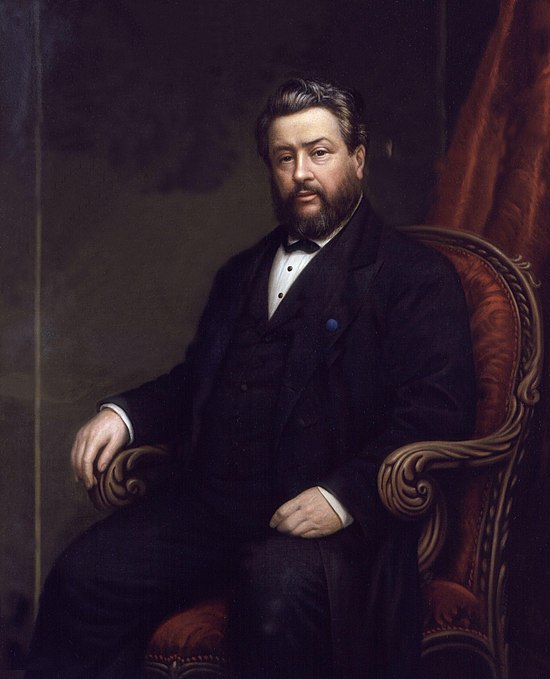
Charles Spurgeon
About Charles Spurgeon
Charles Haddon Spurgeon (19 June 1834 — 31 January 1892) was an English Particular Baptist preacher. His nickname is the "Prince of Preachers."
Broadcaster:

Comments

0 / 2000 characters
Comments are moderated before appearing.

Be the first to comment!

Joshua

Joshua

Shall we play a game? Ask me about articles, sermons, or theology from our library. I can also help you navigate the site.