Bootstrap
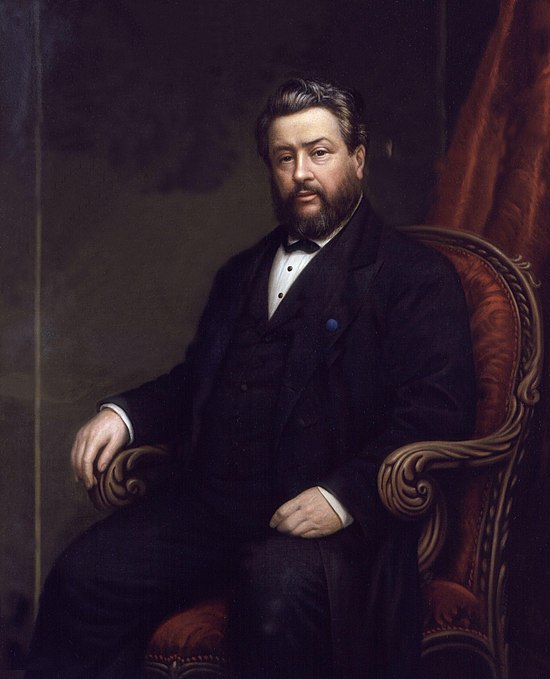
Charles Spurgeon

Characteristics of Christ's Disciples!

John 13:35; Luke 14:26
Charles Spurgeon March, 10 2017 Audio
0 Comments
Choice Puritan Devotional!

Sermon Transcript

Auto-generated transcript • May contain errors

100%
Characteristics of Christ's Disciples

This sermon was first preached on July 16, 1882 by Charles Haddon Spurgeon. Our text for this morning comes from four different verses. Listen as I read.

In Luke 14.26, Jesus said, If anyone comes to me and does not hate his father and mother, his wife and children, his brothers and sisters, yes, even his own life, he cannot be my disciple." John 8 verse 31 To the Jews who had believed him, Jesus said, If you hold to my teaching, you are really my disciples. And in John chapter 13 verse 35, Jesus said, By this all men will know that you are my disciples, if you love one another. And in John chapter 15 verse 8, Jesus said, This is to my Father's glory, that you bear much fruit, showing yourselves to be my disciples.

What does it mean to be Christ's disciple? Am I one of his disciples? It is very important for us who are preachers to know what a disciple is, for we are commanded to go and make disciples of all nations, baptizing them in the name of the Father and of the Son and of the Holy Spirit? What is involved in the making of a disciple? We cannot fully answer that question until we know what a disciple is.

In order to help you, dear friends, I am going to call your attention to four texts. Four texts in which the Lord Jesus mentions some of the things which are essential to true discipleship. and without which a man or woman cannot be His disciple. I pray that the Holy Spirit will make those who are Christ's disciples to rejoice in their discipleship and to count it the highest honor of their lives to have the Son of God for their teacher and leader. And I also pray that those who fear that they are not His disciples may be brought to him even while I am speaking. May they, by his grace, resolve that they also will be his disciples, and may the divine Spirit lead them into the school of Christ, that they may sit at his feet and receive his word from this time forward.

The first mark of discipleship to which I am going to call your attention is mentioned in the Gospel according to Luke, the 14th chapter and the 26th verse. If anyone comes to me and does not hate his father and mother, his wife and children, his brothers and sisters, yes, even his own life, he cannot be my disciple.

These words prove that the first prerequisite of being Christ's disciple is wholeheartedness. The meaning of this passage is that Christ's disciple must so love his Lord that in comparison with the love he bears to Christ, all other love will burn dimly.

This verse has puzzled a great many people because they have supposed that Christ really wished men to hate father and mother and wife and so on. The slightest possible thought ought to have convinced them that he could never have wished them to do anything of the kind. If you take Christ's words without seeking to find their meaning, you can cause a great deal of harm. For sometimes he speaks very boldly in order to make his point clear. He speaks in a manner that in others would be considered vulnerable. He goes beyond what he means us to understand literally. because he knows that this is the only way in which he can bring his teaching home to some minds.

There really was no reason why anybody should have made such a mistake and understood these words just as they stand in our version. It is not possible for a man to be Christ's disciple if he hates anybody. For the religion of Christ is a religion of love, and hatred must be expelled from the heart of those who receive it. It is utterly inconceivable that anybody who hated his father could be Christ's disciple. That would be a violation of the first commandment with promise, which commands us to honor our father and mother. Certainly Jesus never taught anything contrary to the commandments of his Father. He who hated his own mother would be a monster and not a disciple of the meek and lowly Jesus who cared for his mother amid his agony on the cross.

Does not nature itself teach us that our love should certainly flow out to those who brought us into the world? and who so kindly cared for us when we were unable to take care of ourselves? I am not afraid that any of you, dear friends, would err in that respect and believe that you have the permission of Christ for hating your father and mother.

Likewise, shouldn't a man love his wife? Yes, he should, for the apostle says, Husbands, love your wives just as Christ loved the church. I have heard of one who said that he loved his wife too much, but I did not believe it, because the model for a husband's love is just as Christ loved the church. And who could go beyond that? There may be a devotion which, in some cases, may have been carried to such excess as to become foolish and idolatry. Hopefully we have all escaped from such an evil. But a man could not be Christ's disciple if he literally hated his wife. He would be unworthy to be called either moral or gracious if he acted in such a way.

Neither can we imagine Christ commanding anybody to hate his own children. Nature itself dictates that we should love them, and we do, and we cannot help it, nor do we wish to help it. We would be traitors to Christ if we tried to drive out an affection which he himself has implanted within us. No man can hate his children and yet be a Christian. It would be a clear proof that he was not a Christian. Just as the Apostle says of another matter, if anyone does not provide for his relatives, and especially for his immediate family, he has denied the faith and is worse than an unbeliever.

So we are not to hate our children, nor are we to hate our brothers and sisters. It is only in a comparative sense, and not literally, that the term can possibly be used. And to make this very clear, Christ said that we are to hate our own life. The next step to that would be suicide. And the Savior could never have meant that any of his followers were to commit that terrible sin. What he did mean was that He wants to have the first place in our hearts and all who are dear to us are to be second. Let me say that again. What Christ meant was that He wants to have the first place in our hearts and all who are dear to us are to be second.

Yes, and we ourselves are to be second too and are to be prepared to break every earthly tie rather than the tie which binds us to Christ Jesus our Lord. The teaching of the text is that Christ is to be loved better than all our relatives. The simple teaching of the text is that Christ is to be loved better than all our relatives.

It may be that we will never have to endure the test of choosing between Christ and our loved ones, but some have had to do that. You have perhaps heard the story of the martyr who was going out to be burned for Christ, and since his enemies had failed to get him to renounce his faith, they made one more attempt to do so as the good man was on his way to the stake. They brought out his wife and his 11 children to meet him. And they were all weeping and kneeling down before him and begging him to recant. His wife pleaded, my husband, do not be so stubborn. Do not go to the stake. And each of the 11 children had been taught to grab onto their father and say to him, father, live for my sake and for mine, Father."

This was a trial, a trial which the good man had not expected. And as he stood there, surrounded by his loved ones, he said, God knows how dearly I love all of you and how willingly for your sakes I would do anything with a clear conscience to make you happy. But compared to Christ and his gospel, which I love with all my heart and soul, I must give you all up and treat you as if I had no love for you, and I must go and yield up my body to be burned for the truth of Christ. Therefore, do not weep and break my heart."

You can probably get a better idea of the meaning of my text from that incident. than I could possibly convey to you by any words that I might use. Well, dear friends, though your faith may never be subjected to that supreme test, a matter of life or death, yet you may have to be tested to see whether you do love Christ more than you love your relatives.

There was a certain godly bishop who had a brother. who came and asked him to ordain him and to give him a church, for his business did not prosper as he wished. The good bishop loved his brother and would have done anything that was right to help him. But he said to him, My dear brother, you are not called of God to undertake such work, so I cannot ordain you or give you a pulpit. I will gladly give you money to help you out in your business, but I cannot make use of my position in the Church to put you into a place for which you are not qualified. Had you been a fit and proper person for this holy service, I would have been delighted to carry out your wish, but since you are not, I cannot use my influence on your behalf in this way. I wish that every bishop would act in the same way. They have not always done so.

Yet this was the crucial point in which the good man felt that he must regard the welfare of the church rather than the benefit of his relative, and he must treat him just as though he had been a stranger. This is how we should deal with anyone who comes to us for a similar purpose. If he is a qualified person, let him be encouraged to enter upon the work for which he is qualified. But if he is not, let him go back to his shop, or to his plow, or to his hammer, or to his desk, and let him engage in some business in which he will be earning a livelihood and not bringing any harm to his fellow men. as he would do if he were put to work for that which he was not fitted.

Haven't some of you, dear friends, met with cases in which the same difficulty has arisen? You must either do a wrong to Christ and to his people, or else you must appear to be hard and unkind toward some relative or friend. Well, you cannot be Christ's disciple if you hesitate a minute about what course you will adopt. Brothers, sisters, wife, children, father, mother must never be allowed for a single moment to be put in comparison with Christ.

I remember one who, when quite young, felt that he must be baptized on profession of his faith in Christ. But those who were nearest and dearest to him did not agree with him on that matter. He had not one relative who thought as he did concerning it. He laid his case before them, and being so young, he asked that he might have permission to carry out the convictions of his conscience. But at the same time, he said, If the permission does not come, I will obey my Lord's command. For in this case, I have no father or mother, but simply do as my Savior commands me.

In matters of religion, dear friends, Christ alone is our leader and our conscience can never acknowledge any supremacy but that of our Lord Jesus Christ. This decision is to be announced very gently, without any bitterness of spirit and with much humility and prayer for wisdom and guidance, but there must be no question about your action. You are to put your foot down and say, in everything which concerns Christ and my soul, I call no man father on earth, but at all costs, I must follow my Lord wherever he leads me."

I think you can now see the drift of the Savior's words. The rule for you who are his disciples must be Christ first and everybody else as far down as you like. Everybody treated with kindness and due consideration but nobody. nobody permitted to usurp the throne of the Great King.

So, in the first place, we must love Christ better than all our relatives. And next, we must love Christ better than life itself. We must love Christ better than life itself. You know that there have been many, many who have not loved their lives as much as they have loved their Lord. For they have freely yielded them up for the sake of Him who laid down His life for them."

Christians in ages past have known what was involved in being faithful to Christ. You may have read that letter which Pliny wrote concerning the early Christians. in which he said that he did not know what to do with them, for they were men of good character, but they had this one peculiarity that they must follow Christ in everything. They actually came with calm confidence, even to the Roman Catholic judgment seat, knowing well that if they were convicted of being Christians, they would be put to death, and they seemed as if they were eager to die. So anxious were they to put their love to Christ before any thought of freedom from pain or escape from death.

I scarcely dare to tell you what the torments were to which they were put under their many persecutors. Think of one of them who was forced to sit in a red-hot iron chair. and of the others that were dragged at the heels of wild horses, or tossed to and fro by bulls, or torn into pieces by savage beasts. Everything that could add disgrace and pain to death was invented in those times. But did the martyrs flinch or turn back? No, they stood firm for Christ's sake and threw their lives away. as if they were nothing at all, rather than be found traitors to Jesus Christ, their Lord and Savior.

We are to be prepared to do the same as they did, if necessary. Only in our case, it probably will never come to that point in this country where, thank God, we have so much civil and religious liberty. Yet often a similar test may be applied to us in a modified way. There may be, for instance, some loss of business through doing what we know to be right. There are some persons who have been in the habit of carrying on their trade on Sunday. When they have become Christ's disciples, they have closed up their shop on that day, and people have said to them, You will be ruined. You will never make a living. You know we must live. I have often heard that last little sentence, but I do not believe it. I do not see any necessity for us to live. There is a necessity for us to be true to Christ, but not for us to continue to live. It is a great deal better that we should die than that we should do a wrong thing. And we should be prepared at any time to say, if need be, we will let our business go and we will be poor, but we will keep a clear conscience.

And he who has that little bird in his heart will never lack for music, and though he scarcely has a penny in his pocket, yet if he wears the flower called heart sense in his buttonhole, He need never envy the richest man in the world.

It may happen to you in your business that there is an opportunity of making money by being thieves in a respectable kind of way. There are plenty of such thieves around, but if you are a Christian, you will say no. Money gained by dishonesty will carry a curse with it. I cannot touch it any more than I would handle blood money. If it comes by any wrong method, I must leave it alone, for money and wealth earned by me must be earned honestly. I must and will serve the Lord Jesus Christ first and foremost.

Sometimes you know that for Christ's sake, our brothers and sisters go as missionaries to India or China. And some go to the Congo or to other places in Africa, where it is almost certain that in a short time, they will be cut down by the fever. But how brave it is on their part, how truly a disciple of Christ is such a man or such a woman, who knowing everything that may be expected, nevertheless says, My Lord calls me to serve Him in Africa, and if He sends me to a mangrove swamp and to a fever, I will as readily go for Him there as if He summoned me to sit on a throne.

To sum up the teaching of this first text, it means that Christ is to be loved better than everything. Christ is to be loved better than everything. If this were the choice set before us, the whole world or Christ, thank God there are many of us who would not wait a minute for the decision. And if this were the choice, shame in the eyes of men or else the far greater shame of deserting the Savior, oh, I hope we would not hesitate even for an instant. No, says the Christian, Christ is my everything. If I have all things, I will try to find Him in them, and if I have nothing, I will find all things in Him.

So the meaning of this text is that Christ must have wholehearted servants, and if you come to Him to be His disciples, you must bring your whole heart with you, your whole being. Christ will never be a king over a divided manhood. There was a time when this country, England, consisted of seven distinct states and seven little kings ruled over it. But now we have but one sovereign, and in this united realm we never will have but one supreme ruler. So should it be in a man's heart

The devil is quite willing to share the kingdom with Christ. Oh, the devil says, let Christ reign and let me reign too. We will make an excellent pair to rule over men. But Christ will not have it like that. If we are to be his subjects, he will rule over us from the top of our head to the soles of our feet. and he will not permit Satan to have a single stronghold within us that he can call his own. Out you must go, you vile usurper, for he has come who is King of kings and Lord of lords. The crown sits on his brow, nor will he tolerate a rival even for an hour.

Come then, beloved, what do you say? Are you wholehearted for Christ? If not, you are not his disciples. Listen while I read our first text again, and as I do so, I want you to read into it the true and full meaning of the words and feel their force.

If anyone comes to me and does not hate his father and mother, his wife and children, his brothers and sisters, yes, even his own life, he cannot be my disciple."

The second requirement for being a disciple of Christ is found in the eighth chapter of the Gospel according to John in the 31st verse. To the Jews who had believed on him, Jesus said, If you hold to my teaching, you are really my disciples."

Continuance is the next trait in the character of a true disciple of Christ. There are a great many persons who, like those Jews, profess to believe in Jesus Christ for a time. When opposition and persecution came, they deserted him and so proved that they were not really his disciples.

I do not know much about the merits of the question, which is often discussed in the newspapers, with regard to enlistment for a short or long time of service in our army. But I know that my Lord and Master will not accept any one of you unless you enter his army for life No, even more, for all eternity.

In Christ's true Church, there is no profession of faith merely for a time. Once you have made it, you have made it forever. The very way of confessing Christ, which is by baptism, signifies this. For the man or woman who is immersed into the name of the Sacred Trinity is first buried and then rises again. and that burial having once taken place can never be canceled. Whatever happens, this is an accomplished fact.

Then again, the act of immersion can never cease to be a fact. Marks made in the flesh may be removed, but when the watermark has been put upon the whole body, it never can be removed. He who has been buried with Christ may have been a hypocrite and a deceiver, but notwithstanding his hypocrisy and deception, he has passed through the outward form of the ordinance and he can never clear himself from the responsibility of it. It will be to his everlasting disgrace if he is a baptized reprobate. At the Day of Judgment it will be conclusive evidence of his guilt that he either tried to deceive himself or deceive God's people and made a mockery of the ordinances of Christ.

But in the case of a true believer in Christ, continuance in the right road proves him to be a Christian. First, we are to continue believing Christ's words. We are to continue believing Christ's words. Whatever new doctrinal errors may spring up, we are not to pay attention to them, but just continue in the faith of Christ. Then we will indeed be his disciples.

In these evil days some new heresy appears nearly every week. There are some people who seem to spend all their time in inventing lies. And these new lies, joined to the old errors that are continually being revamped, confuse those who are not well established in the faith so that they scarcely know what is orthodox doctrine and what is heresy. But he who keeps close to his master, sits at his feet, and learns all about him, when he is taught by the Spirit, holds firm to that which he has received.

George Whitefield used to say that, in his day, there were some persons for whom it was impossible to establish a creed. He said, you might as well try to make a suit of clothes for the moon, for they change their doctrine as frequently as the moon changes. And we have many people like that today. They seem to believe everything at first, but in time it is as if they believe nothing that is solid. But that is not a characteristic of Christian discipleship. A man is not Christ's disciple if he is tossed back and forth and blown here and there by every wind of doctrine. Allowing anybody to put an oar in his boat and turn and twist him wherever the intruder pleases.

No, the Master's message to his followers is this, if you hold to my teaching, you are really my disciples. But we must also continue in obedience. We must also continue in obedience. It is the part of a true disciple of Christ to do his Lord's will in the face of every temptation that may attack him. You will not be obedient to him very long without being pulled first this way and then that. But the true disciple of Christ says, if all the kingdoms of this world were to be given to me on the condition that I would fall down and worship the God of this world, I would not for an instant think of doing so. For I have enlisted in the Army of the Cross. I serve the Lord Christ and Him alone.

We are also to continue in Christ's word when we are in affliction. We are to continue in Christ's word when we are in affliction. Some, if God seems to treat them roughly, become greatly offended with Him. A dear child is taken away from their family circle, and they say they will never forgive God. They have trouble on top of trouble, and right away they complain that God is treating them cruelly, and they are ready to turn back at the first crossroad that they come to in their pilgrimage. But this will not do for those who are to be true disciples. We must hold on, come fair weather or come storm. And this must be our motto, one that I have often quoted to you and one that I love to think of myself. Though he slay me, yet will I hope in him. We have committed ourselves to him as our faithful creator.

Dear friends, you who have just recently been converted to Christ, let me exhort you to be unwavering and immovable. You cannot be Christ's disciple unless you are firm and decided.

There once was a soldier who was a Christian and he had to sleep in a tent with some ungodly comrades. He knelt down to pray, and every time he did so, he was assailed by all sorts of missiles. He consulted the chaplain as to what he should do, and that liberal individual said he thought perhaps it was not necessary for the soldier to kneel down publicly before he went to bed.

The soldier tried the cowardly plan for one night, but he was very unhappy. and his conscience was troubled about it. He had failed to bear testimony for Christ. So the next night he knelt down as he had done before, and it pleased God that little by little the opposition ceased, and more than that, the influence of this brave example and the words he spoke at different times brought all the other men in the tent to kneel down to before they went to sleep.

I don't know whether they were all converted or not, but at any rate, there was at least a form of prayer. When the soldier saw the chaplain again and told him what had happened, the chaplain commended him, and then the soldier asked him, Don't you think it is better for us always to keep our colors flying?

That is a good motto for you, beloved. Always keep your colors flying. There are some who profess to be Christians who say, we can carry our flag wrapped up in a waterproof case, and when there is a favorable opportunity, we can let it fly in the breeze. No. No. It is always best to keep our colors flying. There may be danger and difficulty by flying the flag, but a hundred times worse danger comes from rolling it up and putting it away out of sight.

Never be ashamed, never be ashamed of what there is no reason to be ashamed of. If any man is ashamed of being a Christian, then surely Christ will then be ashamed of him. Let it not be so with you, dear friend, but rather let each one say, Ashamed of Jesus, that dear friend, on whom my hopes of heaven depend? When I stand up for Christ, claiming that I am his servant, may there never be a blush of shame upon my face.

So stand firm in the faith, beloved, For thus you will prove that you are truly Christ's disciples.

I must now pass on to a third mark of a genuine disciple of Christ and that is brotherly love. The third mark of a genuine disciple of Christ is brotherly love. Kindly look at the 13th chapter of John's Gospel in the 35th verse. By this all men will know that you are my disciples, if you love one another." This is to be a mark of discipleship, which everyone can see. Whenever there is genuine love among Christian people, everybody knows at once that they are Christ's disciples. Good people and bad people, the most ignorant and the most foolish person, cannot help but seem that love is, as it were, a sign hung out as an indication of the business done within.

That disciple whom Jesus loved wrote, Dear friends, let us love one another, for love comes from God. Everyone who loves has been born of God and knows God. Whoever does not love does not know God. because God is love.

Brothers and sisters, how are we to love one another so as to let everyone know that we are Christ's disciples? One way is by considering their needs and doing the best that we can to help them out of their difficulties. One way is by considering their needs and doing the best that we can to help them out of their difficulties. If we say to those who are cold and hungry, keep warm and well fed, and yet do nothing in a practical way to help them, then how can the love of God be in us? What kind of Christianity is that which is generous only in words?

Dear friends, There are many poor people among us who are struggling to make a living and sadly there are many others who cannot find any employment at all. And it is incumbent on any who are being prospered by God to help their poor brothers and sisters as much as they can. Very often a man can truly help his brother even though he has no money to spare.

I read a story of a miner who is getting rather old, and the owner of the mine said, John, I think that I can put you into an easier position than the one you now hold. You will get a raise, for you will be the supervisor of others rather than to do any hard work yourself. I know that I can trust you, and I will make the move effective next month. The miner said in reply, sir, Do you know the miner here by the name of Tregany?" Yes, answered the owner. You know that he is older than I am, said the miner. He cannot do a day's work now, and I am afraid that he will soon have to quit the business because of his weakness. I wish that you would let him have that position, because though I am getting old, I think that I can keep on for another year or two. So let old Treganee be the supervisor." The owner did so.

And that is true Christian love when a man is willing to make a sacrifice because he feels that he is not quite so much in need as another. I remember saying to a poor widow who came one morning to our orphanage with her child, I said, There is another woman outside. You have been talking to her, have you not, while you were waiting to come in? Yes, sir, she answered. I said, she has got nine children, and we can only take in one. How many do you have? Three, replied the woman. Well now, I asked, which of those three will we take? Oh, sir, she said. There is no need for any deliberation about it. You take one of that other poor woman's children. I will try to do the best I can, though it is a hard pinch for me. That woman has a heavier burden to carry than I have, poor thing." I was pleased to see such a spirit of self-sacrifice, and I am always glad when Christian people feel that kind of sympathy and love for one another.

How often might rough roads be made smoother if everyone acted like that? This is just what we must be constantly doing. For we cannot be Christ's disciples unless we have love for one another. We can show our love to our brothers and sisters by being patient with their faults. We can show our love to our brothers and sisters by being patient with their faults. It is a great thing to be able to put up with a lot. Yet there are some people who seem to think that they have come into the world that other people may put up with them. And they certainly do play their part. For they give other people plenty to put up with. And if anybody should in the least resent it, they say, so-and-so is unfriendly to me. I wish that these people would remember the provocations they often give, as well as the angry replies they sometimes get.

Oh, says one, I do not believe that there is any love now among Christians. Brother, you are measuring our love with your scale. You see, you do not have any love in your heart, for if you had, there would be some love in your eye, and you would perceive some also in others. When there is no love in your soul, you presume that others don't have any either. Of course, you don't admit that you lack love, and you imagine that you see outside of you what is really inside. So when you say that there is no love anywhere, it is because you are looking at yourself in the mirror, that is all. But we who love the Lord can, I trust, put up with one another. I sometimes try to think which is a greater wonder, that you, dear friends, have put up with me for so long or that I have put up with you. There are some of you who are the best people in the whole world And there are others of you who are not the best, but rather the reverse. And some of you do cause us trouble sometimes. Well, may God give all of us great patience and may we believe in one another. That is half the battle and all the difficulties that arise among Christians. That we should not impute wrong motives to each other and not be ready to bring accusations against one another. But just believe that each of our fellow members is a child of God. And if there is something which he has done and which looks wrong, say, it must have been misrepresented or misreported. I am sure it must. He cannot have done such a thing. I will stand up for him. He is my brother, so I will defend him. There is one other way in which some of you may exercise love to one another and that is in rejoicing in each other's happiness. We may exercise love to one another by rejoicing in each other's happiness. This is a point which is far too often forgotten. You know the tendency among men. Here is a man who is advancing in the world. So there are many who say, ahem. They do not say anything more, but they simply shrug their shoulders and look unhappy about it. Or there is a brother who has done well in the church and he is admired and esteemed. Then immediately someone begins to try to pull him down and says, I could have done what he has done. Then why didn't you do it? Oh, but he had such great advantages. Yes, perhaps he had, and you also have had opportunities of doing something or other, but you have not made the best use of them. Now, instead of being jealous of our brother's success, shouldn't we rather be rejoicing in one another? If a man is poor, let him rejoice that everybody is not as poor as he is. If he is troubled about his worldly circumstances and meets with a brother who has no cause for such sorrow, let him say, I am glad he is better off than I am. I do not want him to have to worry about the kind of troubles that perplex me. I praise God for his prosperity. I bless the Lord for his happiness. So when we see an especially gracious and gifted man coming into the church and serving God, let us welcome him heartily and say to one another, here is a true friend for us and we are glad that God has sent such a man to help us in his work.

I wish that we were all of the same mind of that noble Spartan who wanted to be a magistrate, but another man opposed him. and gained twice as many votes as he did. What did the Spartan say? He said, I am grateful that the country has better men than myself, and I am glad to see that it knows where to find them when it wants them. So, dear friends, be glad when God provides better men than you are to do his work. Let the preacher rejoice when another preacher excels him. That is the point to which we must bring ourselves. Let the Sunday school teacher praise the Lord when she finds another teacher who completely surpasses her. What a blessed thing it is for the Bible study teacher who has a large group around him to find another brother raised up who gets a better group than his has ever been. Bless God when it is so, dear friend. This is one of those points that is often hard, but it ought to be easy. And it would be easy if we had love for one another. And if we don't have such love, we cannot be Christ's disciples.

I must close now with just a few remarks about the last characteristic of a disciple of Christ. It is mentioned in the 15th chapter of John's Gospel at the 8th verse. This is to my Father's glory that you bear much fruit, showing yourselves to be my disciples. So the last mark of a disciple is that of fruit bearing. What is bearing fruit in this sense? First, it is doing service for Christ. Jesus said to his disciples, If a man remains in me and I in him, he will bear much fruit. Apart from me you can do nothing, plainly implying that the fruit which is to come from remaining in him will be seen by our doing something for him. Christian men and women, the Lord Jesus Christ does not want to have any followers who never fight for him. He does not wish to have with him shepherds who never feed his flock, merely nominal Christians who never do anything for him. Does this touch any of you? Some of you come in here Sunday after Sunday and you sit and enjoy my ministry. But you do not help in the Sunday school. You do not distribute tracts. You do not preach. You do not do anything. How can you be Christ's disciples? I suppose you are like some military officers of whom I have read about, who draw large salaries because they are such distinguished ornaments to the service. It is a great thing to have these people in the army. though they never saw a sword drawn except on review days. So, no doubt, it is a very fine thing to have a number of church members who are simply ornamental persons. They swell our numbers when they are counted with us. And people say they are so very respectable that they help to make us all respectable. Well, now to tell you the truth, we do not care a speck about your respectability. We think that the most respectable person in the world, that is, the person who most deserves to be respected, is the one who is doing something. He who does nothing deserves to starve, just as the Apostle Paul said, If a man will not work, he shall not eat, which is much the same thing as letting him starve. Let us try to be fruit-bearing disciples by doing all that we can for Christ because if we do not bear fruit, we cannot be his disciples.

Next, fruit-bearing will be proved by our prayers. Fruit-bearing will be proved by our prayers. Notice the words of our Lord. If you remain in me, and my words remain in you, ask whatever you wish and it will be given you. This is to my Father's glory that you bear much fruit." Prayer, then, is a blessed fruit of grace. Prayer for others, prayer for Christ's Church, the prayer that brings down countless blessings from above. Many a sick, bedridden saint who cannot speak and who can scarcely lift her hands can lie there and do great things in prayer. Joan of Arc was not half as mighty as that poor invalid. She is the king's true warrior. Why she lies there apparently helpless. She is commanding the legions of heaven by her invincible petitions. Then, dear friends, Bear much fruit in earnest, prevailing prayer.

Another method of fruit bearing is by a holy character. Another method of fruit bearing is by a holy character. O Beloved, I implore you to be holy men and women. Seek after close conformity to the likeness of Christ. Nothing does more good for a church than for its members to live the gospel in all their affairs at home and in the world. But I think that we will not bear fruit as we should unless we endeavor to bring converts to Jesus. Dear woman of the house, seek to win the soul of your little maid. Good Master, employing so many men, get them together sometimes and talk to them about your Savior. and pray that he may be their Savior too. Can't you do it? There ought not to be one barren member of this church. Everyone ought to be able to feel that when he comes before God in the end, he will be able to say, here I am and the children you have given me. For this let us live. For this let us labor. If we do not, we cannot be Christ's disciples. I remember a person who never did anything for Christ. And when somebody asked him about his lack of bearing fruit, he said that he bore inside fruit. I never heard of that idea before, so I turned it over in my mind. And the next time I met him, I said to him, Are you still bearing inside fruit? He answered, Yes. Well, I said, will we never get at it until someone cuts you open? Fruit is intended to be an outside thing that is born for the benefits of others. So in this respect, brothers and sisters, see that you are faithful by rendering all possible service to our Lord and Master. The real application of my four texts is this. Are we all, dear friends, Christ's disciples, Let that question be passed around and let these four marks help us to judge ourselves. Are we distinguished from those who are not Christ's disciples by our wholeheartedness, continuance, brotherly love and fruit bearing? May all these things be in us and abound. And if we have none of them, may we ask Christ for them. Lie at his feet. Confess your sin and then look up. Believe in Him and live forevermore. The Lord bless you. The Lord bless you, dear friends. For Jesus' sake, Amen.
Charles Spurgeon
About Charles Spurgeon
Charles Haddon Spurgeon (19 June 1834 — 31 January 1892) was an English Particular Baptist preacher. His nickname is the "Prince of Preachers."
Broadcaster:

Comments

0 / 2000 characters
Comments are moderated before appearing.

Be the first to comment!

Joshua

Joshua

Shall we play a game? Ask me about articles, sermons, or theology from our library. I can also help you navigate the site.