Bootstrap
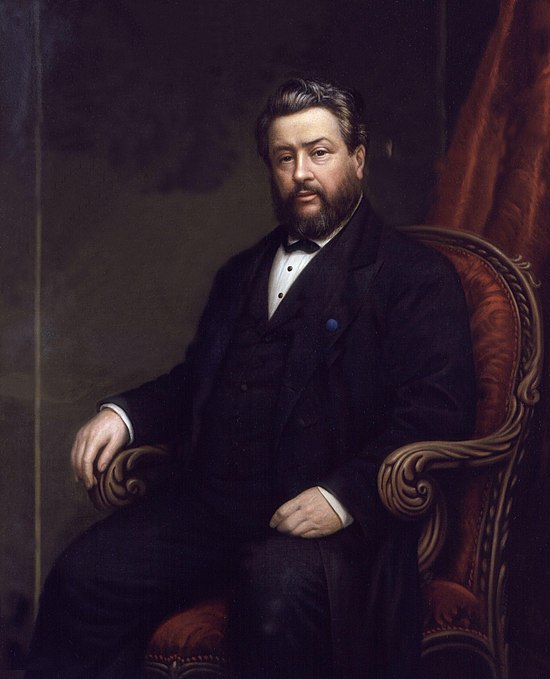
Charles Spurgeon

Election and Holiness!

Deuteronomy 10:14-16; Ephesians 1
Charles Spurgeon March, 10 2017 Audio
0 Comments
Choice Puritan Devotional!

Sermon Transcript

Auto-generated transcript • May contain errors

100%
Election and Holiness

This sermon was first preached on March 11, 1860 by Charles Haddon Spurgeon. Our text for this morning comes from the book of Deuteronomy, Deuteronomy 10, verses 14-16. Listen as I read.

To the Lord your God belongs the heavens, even the highest heavens. the earth and everything in it. Yet the Lord set his affection on your forefathers and loved them. And he chose you, their descendants, above all the nations as it is today. Circumcise your hearts, therefore, and do not be stiff-necked any longer."

He who preaches the whole truth as it is in Jesus will labor under continual disadvantages, although the great advantage of having the presence and blessing of God will more than compensate for the many difficulties. It has been my sincere endeavor, ever since I began preaching the Word, never to keep back a single doctrine which I believe is taught in the Word of God.

It is time that we turn away from the old and the rusty systems that have so long restricted the freeness of religious speech. The Arminian trembles to go an inch beyond Arminius or Wesley, and many a Calvinist refers to John Gill or John Calvin as the ultimate authority. It is time that the systems were broken up and that there was sufficient grace in all of our hearts to believe everything taught in God's word, whether it was taught by either of these men or not.

I have frequently found when I have preached what is often called high doctrine, because I found it in my text, that some people have been offended. They could not enjoy it. They could not endure it. and they left the church. In general, they were people that it was best for the church to have them leave. I have never regretted their absence.

On the other hand, when I have taken from my text some sweet call of the gospel and have preached the freeness of Christ's love to man, when I have warned sinners that they are responsible when they hear the gospel, and that if they reject Christ, their blood will be on their own hearts, I find another class of individuals who cannot see how these two things agree, and therefore they also turn aside and wade into the deceptive miry swamps of antinomianism. I can only say with regard to them that I would also rather that they would go to others who think like themselves. than that they should remain with my congregation.

We seek to hold the truth. We know no difference between high doctrine and low doctrine. If God teaches it, it is enough. If it is not in the Word, away with it. But if it is in the Word, agreeable or disagreeable, systematic or disorderly, I believe it. It may seem to us as if one truth stood in opposition to another, but we are fully convinced that it cannot be so, that it is a mistake in our judgment.

That the two doctrines, election and free will, do agree is quite clear. though where they meet we do not know as yet. However, we do believe the doctrine of election to be a doctrine clearly taught in the word of God to every man and every woman who cares to read that book with an honest and an open heart. That at the same time Christ is freely presented to every man, woman, and child under heaven and that the invitations and exhortations of the Gospel are honest and true invitations. And we sincerely believe they are not fictions or myths, nor mockers, but realities and facts.

We accept both truths. We accept both the doctrine of election and the doctrine of free will, giving them our enthusiastic approval and endorsement. Now this morning it may be that some of you will not approve of what I have to say. You will remember, however, that I do not seek your approval, that it will be sufficient for me if I have cleared my conscience concerning this great truth and have faithfully preached the gospel. I am not accountable to you nor you to me. You are accountable to God if you reject any of his truths. I am accountable to him if I preach any error. I am not afraid to stand before his judgment seat with regard to the great doctrines which I will preach to you this day.

Two things this morning. First, I will attempt to describe God's election. Secondly, to show its practical application. You have both in the text which I read to you this morning.

To the Lord your God belong the heavens, even the highest heavens, the earth and everything in it. Yet the Lord set his affection on your forefathers and loved them. And he chose you, their descendants, above all the nations as it is today. And then in the second place, it's practical application. Circumcise your hearts, therefore, and do not be stiff-necked any longer.

First, election has a special and particular people in view. Election has a special and particular people in view. In describing election, I must have you see, first of all, its extraordinary uniqueness. God has chosen for himself a people which no man can count, out of the children of Adam, out of the fallen and apostate race which descended from a rebellious man. I have given you then some reasons right at first why we should regard God's election as being unique. But I have to offer you other reasons.

Observe the text not only says, to the Lord your God belongs the heavens, even the highest heavens, but it adds, and the earth and everything in it. Now, when we think that God has chosen us, when you, my brothers and sisters, who by grace have put your trust in Christ, read of your share in the inheritance of the saints in the kingdom of light, you may well pause and say in the language of that hymn, pause, O my soul, adore and wonder, ask, O why such love to me? Kings passed by and beggars chosen. Wise men left, but fools made to know the wonders of His redeeming love. Vile sinners and prostitutes sweetly compelled to come to the Feast of Mercy, while the proud Pharisees, the religious elite, are left to trust in their own righteousness and perish in their vain boastings.

God's choice will always seem in the eyes of unsaved men to be a very strange one. God has passed over those whom he should have selected and he has chosen just the odds and ends of the universe, the men and women who thought themselves the least likely ever to taste his grace. Why were we chosen as a people to have the privilege of the gospel? Why again I say, in the case of each individual, why is the person chosen that is chosen? Can any answer be given except the answer of our Savior? Yes, Father, for this was your good pleasure.

Still one other thought to show that God's election is indeed marvelous. God had unlimited power of creation. Now, if it was his will to make a people who would be his favorites, who would be united to the person of his Son, and who would reign with him, why didn't he create a new race? When Adam sinned, it would have been very easy to destroy the entire world. All he had to do was to speak and this earth would have been dissolved in an instant. There would have been no trace of Adam's sin left. The whole creation of man would have died away and have been forgotten forever.

But no, instead of making a new people, a pure people who could not sin, instead of taking to himself creatures that were pure, unblemished, without spot, he takes a depraved and fallen people and lifts these people up and that by very costly means, by the death of his own son, by the work of his own spirit, that these fallen, redeemed people would become the jewels in the crown to reflect his glory forever. Oh, what a remarkable choice! Oh, strange election! My soul is lost in your depths, and I can only pause and cry out, O the goodness, O the mercy, O the sovereignty of God's grace.

Secondly, election is unconditional. Election is unconditional. Having thus spoken about its uniqueness, I turn to another subject. Observe the unconstrained freeness of electing love. In our text, this is hinted at by the word yet. Why did God love their fathers? Why only because He did so? There is no other reason. The Word says, Yet the Lord set His affection on your forefathers and loved them, and He chose you, their descendants, above all the nations as it is today.

There was, without question, some wise reason for the Lord's acts. For He works out everything in conformity with the purpose of His will. but there certainly could not be any reason in the excellence or virtue of the person whom he chose." Now I want you just to dwell upon that for a moment. Let us remember that there is no original goodness in those whom God selects. There is no original goodness in those whom God selects.

What was there in Abraham that caused God to choose him? He came out of an idolatrous people. As if God was showing that it was not the goodness of Abraham, he says, Look to the rock from which you were cut, and to the quarry from which you were hewn. Look to Abraham, your father, and to Sarah who gave you birth. When I called him, he was but one. and I blessed him and made him many." There was nothing more in Abraham than in any one of us why God would have selected him. For whatever good was in Abraham, God put there.

Let me say that again. For whatever good was in Abraham, God put there. Now if God put it there, The motive for his putting it there could not be the fact of his putting it there. You cannot find a motive for a fact in itself. There must be some motive lying higher than anything which can be found in the mere act of God. If God chose a man to make that man holy, righteous, and good, He cannot have chosen him because he was to make him someday good and righteous. It would be absurd to reason this way. It would be drawing a cause for an effect and making an effect a cause. If I were to argue that the rosebud was the origin of the root, well, I would indeed be laughed at. But were I to urge that any goodness in man is the basis of God's choice, when I remember that goodness is the effect of God's choice, I would be very foolish. That which is the effect cannot be the cause. But what original good is there in any man or woman? If God chose us for anything good in ourselves, none of us would have been chosen. Doesn't each one of us have an evil heart of unbelief? Haven't we all departed from His ways? Aren't we all by nature corrupt, enemies of God by our wicked works? If He chooses us, it cannot be because of any original goodness in us. But, one says, perhaps it may be because of the goodness foreseen God has chosen his people because he foresees they will believe and be saved. Indeed, this is a remarkable idea. Here are a certain number of poor persons and a prince comes to that place. To some ninety out of the hundred he distributes gold. Someone asks the question, why did the prince give this gold to those ninety? A madman over in the corner whose face ought never to be seen replies, he gave it to them because he foresaw that they would have it. But how could he foresee that they would have it apart from the fact that he gave it to them? Now you say that God gives faith, repentance and salvation because he foresaw that men would have it. He did not foresee it apart from the fact that he intended to give it to them. He foresaw that he would give them grace. But what was the reason that he gave it to them? Certainly not his foresight. That would indeed be absurd. And no one but a madman would reason this way.

O Father, if you have given me life and light and joy and peace, The reason is known only to yourself, for I can never find any reasons in myself, for I am still a wanderer from you, and oftentimes my faith flickers and my love grows dim. There is nothing in me to merit esteem or to give you delight. It is all by your grace, your grace alone, that I am what I am. This is what every Christian must say, what every Christian must surely confess.

But isn't it all idle talk, even to challenge for a single moment with the absurd idea that man can restrict his Creator? Will the purpose of the Eternal God be left contingent upon the will of man? Will man really be his Creator's master? Will free will take the place of divine purpose and power? Will man take the throne of God and set aside as he pleases all the purposes of Jehovah, compelling God by His goodness to choose him? Will there be something that man can do that will control the motions of Jehovah?

It is said by someone, that men give free will to everyone but God, and speak as if God must be the slave of men. Yes, we believe that God has given to man a free will. That we do not deny. But we also believe that God has a free will, and that, moreover, he has a right to exercise it and does exercise it, and that no goodness of man can ever force the Creator to do anything. Goodness on the one hand is impossible, and even if we did possess it, it could not be possible that we could possess it in such a degree as to merit the gift of Christ. Remember, if we deserve salvation, then man must have enough virtue to merit heaven, to merit union with Jesus, to merit everlasting glory. The moment you talk about anything in man that could have moved the mercy of God, you go back to the old Roman Catholic ideas.

Well, another one says, this is nothing but evil Calvinism. So be it. If you choose to call it so, so be it. Calvin found his doctrine in the scriptures. No doubt he may have also received some instruction from the work of Augustine, but that mighty doctor of grace learned it from the writings of Paul. And Paul, the apostle of grace, received it by inspiration from Jesus the Lord. We can trace our pedigree directly to Christ himself. Therefore, we are not ashamed of any title that may be added to Christ himself. Therefore, we are not ashamed of any title that may be added to a glorious truth of God. Election is free. It has nothing to do with any original goodness in man, or any goodness foreseen, or any merit that man can possibly bring before God. 3. The Justice of Election I come to the hardest part of my task this morning, election and its justice. Now, I will defend this great fact that God has chosen men and women for himself, and I will regard it from rather a different point of view from that which is usually taken. My defense is simply this. You tell me that if God has chosen some people to eternal life that he has been unjust. I ask you to prove it. The burden of proof lies with you. For I would have you remember that no one deserved this election at all. Is there one man in the whole world who would have the impertinence to say that he deserves anything from his creator? If so, let it be known to you that he will receive all he deserves and his reward will be the flames of hell forever. For that is the utmost that any man ever deserves from God. God is in debt to no man or woman. And at the last great day, every man and woman will receive as much love as much pity and as much goodness as they deserve. Even the lost in hell will have all they deserve. Yes, an anguish upon anguish will be given to them when they receive the wrath of God, which will be the peak of what they deserve. If God gives to every man and woman as much as they deserve, Is he therefore to be accused of injustice because he gives to some infinitely more than they deserve? Where is the injustice of a man doing what he wants with his own? Hasn't he a right to give what he pleases? If God is in debt to anyone, then there would be injustice. But He is indebted to no one. And if he gives his favors according to his sovereign will, who is he that will find fault? You have not been injured. God has not wronged you. Bring up your claims and he will answer every one of them. If you are righteous and can claim something of your creator, stand up and plead your virtues and he will answer you. Though you stand up like a man and stand before Him and plead your own righteousness, He will make you tremble and detest yourself and roll in dust and ashes. For your righteousness is a lie and your best performance is nothing but filthy rags. God injures no man in blessing some. It is strange that there should be any accusation brought against God as though He were unjust. I defend it again on another ground. To which of you has God ever refused His mercy and love when you have sought His forgiveness? Has He not freely proclaimed the Gospel to all of you? Doesn't His word invite you to come to Jesus? And does it not solemnly say, Come, whoever is thirsty, let him come, and whoever wishes, let him take the free gift of the water of life? Aren't you every Sunday invited to come and put your trust in Christ? If you will not do it, but will destroy your own souls, who is to blame? If you put your trust in Christ, you will be saved. God will not run back from His promise. Prove Him. Try Him. The moment you renounce sin and trust in Christ, that moment you may know yourself to be one of His chosen ones. But if you will wickedly ignore the gospel, which is continually preached, then your blood will be on your own head The only reason why you can be lost is because you, with your free will, continue in sin and do not try to be saved from them. You have rejected Christ, you have ignored Him, and left to yourselves, you will not receive Him. Someone says, but I cannot come to God. Your powerlessness to come lies in the fact that you have no will to come, no desire to come. If you were only willing to come, then you would not lack the power. You cannot come because you are so devoted to your lust, so fond of your sin. That is why you cannot come. The very inability of yours is your crime, your guilt, You could come if your love for evil and love for self were broken. The inability does not lie in your physical nature, but in your depraved moral nature. Oh, if you were willing to be saved. This is the point. This is the point. You are not willing, nor will you ever be, till grace makes you willing. But who is to blame because you are not willing to be saved? No one but yourself. You must bear the entire blame. If you refuse eternal life, if you will not look to Christ, if you will not trust Him, remember your own will damns you. Was there ever a man who had a sincere will to be saved in God's way who was denied salvation? No, no, a thousand times no. He who gives the will will not deny the power. Inability lies mainly in the will. When a man is once made willing in the day of God's power, he is also made able. Therefore, your destruction lies at your own door. Then let me ask another question. You say it is unjust that some should be lost while others are saved. Who makes those to be lost that are lost? Did God cause you to sin? Has the Spirit of God ever persuaded you to do a wrong thing? Has the Word of God ever encouraged you to be self-righteous? No. God has never exercised any influence on you to make you go the wrong way. The whole tendency of His Word, the whole tendency of the preaching of the Gospel, is to persuade you to turn from sin to righteousness, from your wicked ways to Jesus. I say again, God is just. If you reject the Savior proclaimed to you, If you refuse to trust Him, if you will not come to Him and be saved, if you are lost, God is supremely just in your being condemned for being lost. But if He chooses to exert the supernatural influence of the Holy Spirit on some of you, He is surely just in giving the mercy which no man can claim, and so just that through eternal ages there will never be found a flaw in his acts. But the Holy, Holy, Holy God will be praised by the redeemed, and by the cherubim and seraphim, and even the lost in hell will be compelled to utter an involuntary chorus to that dreaded song, Holy, Holy, Holy, Lord God Almighty. Next, we look at the truth of election, the truth of election. Having thus tried to defend the justice of election, I now turn to explain the truth of it. We may possibly have here this morning some godly men and women who cannot accept this doctrine. Well, my friends, I am not angry with you for not being able to accept it. because no man can accept it unless it is given to him from God. No Christian will ever rejoice in it unless he has been taught it by the Spirit. But after all, my brothers and sisters, if you are a renewed person, you believe it. Some of you want to come and argue with me. Come and I will allow you to argue with yourself and within five minutes You will out of your own mouth prove my point. Come, my dear brother, you do not believe that God can justly give to some men more grace than to others. Very well, let us kneel down and pray together, and you pray first. You no sooner begin to pray than you will say, O Lord, be pleased in your infinite mercy to send your Holy Spirit to save this congregation and be pleased to bless my relatives with salvation." Stop! Stop! You are asking God to do something which according to your theory is not right. You are asking God to give them more grace than they already have. You are asking him to do something special You are positively pleading with God that he would give grace to your relatives and friends and to this congregation. How do you justify that according to your theory? If it would be unjust for God to give more grace to one man than to another, how very unjust of you to ask him to do it. If it is all left to man's free will, why do you beg the Lord to interfere? You cry out, Lord, draw them, Lord, break their hearts and renew their spirits. Now I want you to know that is a prayer I earnestly pray, but how can you do it since you think it is unrighteous in the Lord to endow this people with more grace than he does the rest of the human race? Oh, but you say, I feel that it is right, and I will ask him. Very well, then if it is right for you to ask, it must be right for him to give. It must be right for him to give mercy to men, and to some men such mercy that they may be constrained to be saved. You have thus proved my point, and I do not need a better proof. And now, my brother, we will sing together. Open your hymn book and you sing the hymn, Oh, yes, I do love Jesus because He first loved me. There, my brother, that is Calvinism. You have let it out again. You love Jesus because He first loved you. Well, how is it you come to love him while others are left not loving him? Is that to your honor or to his honor? You say, it is to the praise of grace. Let grace have the praise. Very well, brother, we will get along very well after all. For although we may not agree in preaching, yet we do agree, you see, in praying and praising. Preaching a few months ago in the midst of a very large congregation of Methodists, the brethren were all alive, giving all kinds of answers to my sermon, nodding their heads and crying out, Amen, Hallelujah, Glory be to the Father and the Light. They completely woke me up. My spirit was stirred, and I preached away with an unusual force and vigor, And the more I preached, the more they cried out, Amen! Hallelujah! Glory be to God! Finally, I came to a part of the text which led me to what is called high doctrine. So I said, this brings me to the doctrine of election. There was a deep drawing of breath. Now, my friends, do you believe it? They seem to say, no we don't. But you do, and I will make you sing hallelujah over it. I will so preach it to you that you will acknowledge it and believe it. So I put it this way, is there no difference between you and other men? Yes, yes, glory be to God, glory yes. There is sitting right next to you a man who has been to the same church you have, heard the same gospel, yet he is unconverted and you are converted. Who has made the difference, yourself or God? The Lord, they say, the Lord, glory, hallelujah. Yes, I cried, and that is the doctrine of election. That is all I contend for. that if there is a difference, the Lord made the difference. Some good man came up to me and said, You're right. Yes, you're right. I believe your doctrine of election. I do not believe it as it is preached by some people, but I believe that we must give the glory to God. We must put the crown on the right head. Now, after all, There is an instinct in every Christian heart that makes him receive the substance of this doctrine, even if they will not receive it in the distinctive form in which we put it. That is enough for me. I don't care about the words or the phraseology or the form in which I may be in the habit of stating the doctrine. I don't want you to subscribe to my statement of belief. But I do want you to subscribe to the statement of belief that gives God the glory of His salvation. Every saint in heaven sings, Grace has done it, and I want every saint on earth to sing the same song. To Him that loved us and washed us from our sins in His blood, to Him be the glory forever and ever. The prayers, the praises, the experience of those who do not believe this doctrine prove the doctrine better than anything I can say. I have no desire to prove it better and I leave it as it is. Lastly, we come to the result of election. The result of election. The election leads to holy living. Election leads to holy living. We now turn to election to see its practical effect. You will see that the precept is annexed to the doctrine. God has loved you above all people that are on the face of the earth. Therefore, circumcise your hearts and do not be stiff-necked any longer. It is alleged that election is a wicked doctrine. Say it out loud and then I will answer you. Election is a wicked doctrine. How do you prove it? It is my business to prove to you that it is the very opposite. One says, but I know a man that believes in election and yet lives in sin. Yes, and I suppose that disproves it. So if I can go through London and find any ragged drunken fellow who believes the doctrine and lives in sin, the fact of his believing it disproves the doctrine. That is a very odd logic. I will undertake to disprove any truth in the world if you only give this to be my rule. why I can find some filthy, rotten creature who doubts the universal blessing of God, then I suppose that will disprove it. I might bring to you some wretch that is living in sin, who yet believes that if he were to cry out, Lord, have mercy on me, a sinner, from his heart he would be saved, even though he was on his dying bed. I suppose that his believing that disproves it, wouldn't it? No, you know very well, though you use such logic as that against us, you would not use it against yourself. The fact is that the bad lives or the good lives of some individuals cannot be taken as a proof either for or against any set of doctrines. There are holy men that are mistaken. There are unholy men who receive truth. That may be seen any day by any man who will honestly make the observation. If, however, any one group is obviously full of ungodly people who profess to be Christians and are in reality hypocrites, then I would admit the power of your argument. But I defy you to prove the argument you are making today. The men and women who have believed the doctrine of election are spread all over the world. Perhaps it is not my place to say it, except that I will glory in it as Paul did. These people have been the most zealous, the most earnest, and the most holy men and women. Remember, you that scoff at this doctrine, that you owe your liberty to men who held to it, who carved out for England its liberties. But what made them rush to battle? What made them rush to battle as they did, but a firm belief that they were God's chosen ones, and could sweep away everything before them, because the Lord their God was with them? It was said in Charles II's time that if you wanted to find believers in Arminianism, you could find them in every pub. But if you wanted to find those who believed the doctrine of grace, the doctrine of election, you must go into the dungeons where the saints of God were shut up because of the holiness of their lives and the wholesomeness of their conversation. Never were men more heavenly minded than the Puritans. And what Puritan can you find that holds to any other doctrine than that which I preached today? You may find some modern theologian who teaches the opposite. But march through the centuries, and with few exceptions, where are the saints who denied the election of God? The banner has been passed from one hand to the other. Martyrs died for it. They sealed the truth with their blood. And this truth will stand when the ages of time stop advancing. This truth will be believed when every error and false notion will crumble into dust from which they sprang. But I come back to my proof. It is laid down as a matter of theory that this doctrine is wicked. We oppose that theory. The fitness of things proves that it is not true. The fitness of things proves that it is not true. Election teaches that God has chosen some to be kings and priests to God. When a man believes that he has chosen to be a king, would it be a legitimate inference to draw from it, I am chosen to be a king Therefore I will be a beggar." Why, you would say, there would be no argument, no sense in it. But there is quite as much sense in that as in your supposition, that God has chosen his people to be holy and yet that a knowledge of this fact will make them unholy. No, the man, knowing that a special dignity has been given to him by God, feels, working in his heart, a desire to live up to his dignity. God has loved me more than others, he says. Then I will love him more than others. He has put me above the rest of mankind by his sovereign grace. Let me live above them. Let me be more holy, more eminent in grace than any of them. If there is a man that can misuse the dignity of grace which Christ has given him and pervert that into an argument for wickedness, he is not to be found among us. He must be something less than man, fallen though man is. Who would infer? from the fact that he has become a son of God, by God's free grace, that therefore he ought to live like a son of the devil, or who would say, because God has ordained me to be holy, therefore I will be unholy. That would be the strangest, oddest, most perverted, most abominable reasoning that ever could be used. I don't believe there is a creature living today that could be capable of using such reasoning. Again, not only the fitness of things, but the thing itself proves it is not so. The thing itself proves it is not so. Election is a separation. God has set apart a people for himself. He has separated a people out of the mass of mankind. Does that separation allow us to draw the inference that God has set me apart, therefore I will live as other men live? If I believe that God has distinguished me by His discriminating love and separated me, then I will respond to the command Come out from them and be separate. Touch no unclean thing and I will receive you." It would be very strange if the decree of separation would produce an unholy union. It cannot be. I deny once for all, in the name of all who would hold the truth, I solemnly deny in the presence of God that we have any thought that because God has separated us Therefore, we ought to go and live as others live. No, God forbid! Our separation is the basis and motive for our completely separating ourselves from sinners. I heard a man once say, If I believed the doctrine of election, then I would live in sin. My reply to him was this. I expect you would, I expect you would. And why, he said, why would you expect me to live in sin more than you? Simply because you are a man and I trust I am a new man in Christ Jesus. To a person who is renewed by grace, there is no doctrine that could make them love sin If you take a man who by nature is like a swine that wallows in the mire, turn him into a sheep. Then there is no doctrine that you can teach that make him go and wallow in the mire again. His nature has changed. There is a raven that has been transformed into a dove. I will give the dove to you and you may teach it whatever you like. But that dove will not eat dead or decaying flesh anymore. He is no longer a raven, but a dove. It cannot endure it. Its nature is entirely changed. Here is a lion roaring for its prey. I will change it into a lamb. And I defy you to make that lamb, by any doctrine, go and make its lips red with blood. It cannot do it. Its nature has changed. A friend of mine on board a ship when we were coming across from Ireland asked one of the sailors who had become a Christian, Would you sing to me a drunken sailor's song? No, he said. I do not like such things. Would you like to show me a drunken sailor's dance? No, he said. I have a religion that allows me to swear and be drunk as often as I ever please, and that is never, for I hate all such things with perfect hatred. Christian men and women keep from sin because their nature cannot bear it, not because of threats of damnation. We have no fear. except the fear of offending our loving God, our loving Father. But we do not want to sin. Our thirst is for holiness and not for wickedness. But if you have a kind of religion that always keeps you in restraint, so that you say, I would like to go to the pub tonight if I dare, if that is what you say, depend on it. Your religion is not worth much. You must have a religion that makes you hate the things you once loved and love the things you once hated. A religion that draws you out of your old life and puts you into a new life. Now, if a man has a new nature, what doctrine can make that new nature act contrary to its instincts? Teach the man what you will. That man will never turn back to a foolish and wicked life. The election of God gives a new nature. So even if the doctrine of election were dangerous, the new nature would keep it in check. But once more, bring here to me the man, will I call him a man? Bring to me the beast or the devil that would say, God has set his love on me before the creation of the universe. My name is written on Jesus' heart. He bought me with His blood. My sins are all forgiven. I will see God's face with joy and acceptance. Therefore, I hate God. Therefore, I will live in sin. Bring me that monster. Bring him to me. And when you have brought such a person to me, Even then I will not admit that there is any sense in that vile lie, that damnable slur which you have cast on this doctrine, that it makes men live in wickedness. There is no truth that can so induce a man to holiness as the fact that he was chosen by God before time began. Loved by God with an unlimited love that never changes and that endures throughout all of eternity. Oh my God, I desire to spend myself in your service. Love so amazing, so divine, demands my life, my soul, my all, and gratitude to God. For this rich mercy constrains us, compels us to walk in the fear of God and to love and serve Him all of our lives. We will now conclude with two lessons of application. First, election is to be clearly and boldly taught. The first lesson is this, Christian men and women chosen by God and ordained for salvation, remember that this is a doctrine that is spoken against everywhere. Do not hide it. Do not conceal it. For remember Christ has said, if anyone is ashamed of me and my words, then I will be ashamed of him. So be careful that you do not dishonor it. Be holy, even as He is holy. He has called you. Therefore, be all the more eager to make your calling and election sure. As the elect of God, show compassion, show holiness and love, and let the world see that God's chosen ones are made by grace. The choices of men who live nearer to Christ and are more like Christ than any other people on the face of the earth. And let me add, if the world sneers at you, you can look your enemy in the face and never tremble. For this is a degree of nobility, a pattern of divine dignity which you never need to feel ashamed about, but which will keep you from ever being a coward. This doctrine of election has never been liked because it is a hammer against tyrants. Men have chosen their own elect ones, their kings, dukes, and earls, and God's election interferes with them. There are some that will not bow the knee to Baal, who believe themselves to be God's true nobility, who will not allow their consciences to be dictated to by another, Men criticize and rave and rage because this doctrine makes a good man strong in his heart and will not let him bend his knee or turn back and be a coward. Those iron sides were made mighty because they considered themselves to be average men. They bowed before God, but before men they could not and would not bow. Stand firm, therefore, in this your liberty, and do not be moved from the hope of your calling. Secondly, the doctrine of election is no excuse for unbelief. The doctrine of election is no excuse for unbelief. There are some of you who are making an excuse out of the doctrine of election, an excuse an apology for your own unbelieving and wicked hearts. Now remember, the doctrine of election exercises no constraint whatever upon you. If you are wicked, it is because you will to be so. If you reject the Savior, it is because you will to do so. This doctrine does not make you reject Him. You may make it an excuse, but it is an idle one. It is a garment made of cobwebs that will be torn away at the last day. I beg you to lay it aside and remember that the truth with which you have to hold is this. Believe on the Lord Jesus Christ and you will be saved. If you believe, you are saved. If you trust Christ, whoever you are and whatever you are in the world, you are a saved person. Do not say, I will not believe because I do not know whether I am elected. You cannot know that until you have believed. Your business is concerned with believing. Everyone, there is no limitation in it. Everyone who believes in Christ will be saved. You as well as any other person. If you trust Christ, your sins will be forgiven. Your sins will be blotted out. Oh, may the Holy Spirit breathe the new life into you. Bow your knee, I beg you. Kiss the Son, lest he be angry. Receive his mercy now. Do not harden your hearts against the gracious influence of his love, but yield to him. And you will then find that you yielded because he made you yield. that you came to him because he drew you, and that he drew you because he had loved you with an everlasting love. May God command his blessing for Jesus' sake. Amen.
Charles Spurgeon
About Charles Spurgeon
Charles Haddon Spurgeon (19 June 1834 — 31 January 1892) was an English Particular Baptist preacher. His nickname is the "Prince of Preachers."
Broadcaster:

Comments

0 / 2000 characters
Comments are moderated before appearing.

Be the first to comment!

Joshua

Joshua

Shall we play a game? Ask me about articles, sermons, or theology from our library. I can also help you navigate the site.