Bootstrap
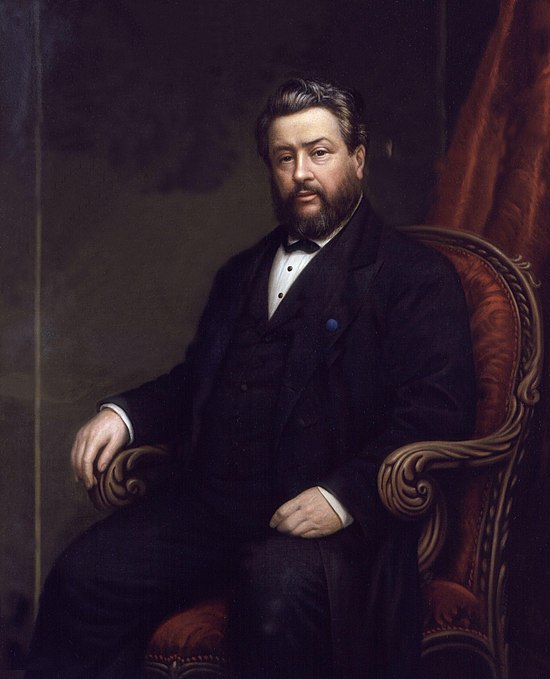
Charles Spurgeon

God's Will About the Future!

James 4:13-17; Romans 12
Charles Spurgeon March, 10 2017 Audio
0 Comments
Choice Puritan Devotional!

Sermon Transcript

Auto-generated transcript • May contain errors

100%
God's will about the future. This sermon was originally preached on October 16th in the year 1890 by Charles Haddon Spurgeon. The text for tonight comes from the book of James, James chapter 4, verses 13 through 17. James chapter 4, verses 13 through 17.

Now listen, you who say, today or tomorrow we will go to this or that city, spend a year there, carry on business and make money. Why, you don't even know what will happen tomorrow. What is your life? You are a mist that appears for a little while and then vanishes. Instead, you ought to say, if it is the Lord's will, we will live and do this or that. As it is, you boast and brag. All such boasting is evil. Anyone then who knows the good he ought to do and doesn't do it, sins.

" Men today are just the same as when these words were first written. We still find people saying what they are going to do today, tomorrow, in the next six months, at the end of another year and perhaps still further. I have no doubt there are persons here who have every detail of their own career mapped out before them, and they feel very certain that they will make it all happen. We are just like the men and women of the past, and this Bible, though it was written long ago, might just have been written yesterday, for it so completely describes human nature as it is in this century.

The text has special application and force as we see our friends and co-workers dying all around us. Sickness and death have been very busy in our midst. Perhaps even in our busy church ministry we have been planning out exactly what this brother would do this week and what that sister would be doing next week and so on. Even for God's work we have had our plans, dependent in great measure on the presence and labors of some beloved helpers. They have appeared to us to be very cheerful and in such excellent health that we have scarcely thought it possible that they would die so suddenly. Yet it has often been the case.

The uncertainty of life comes home to us when such things occur, and we begin to wonder that we have thought anything could be safe. or even probable in such a shifting, changing world as this. With this in full view, I am going to talk about how we ought to act with regard to the future and attempt to draw some lessons for our own correction and instruction from the verses before us.

Following the flow of the text and keeping to it as close as we can, We will notice first that counting on the future is foolishness. Then we will observe what is clear enough to all of us that ignorance of the future is a matter of fact. In the third place, I will set before you the central truth of this passage, that it is true wisdom to recognize that God controls the future. Our fourth point will be that boasting of the future is sin. And our final thought will be that it is the duty of all Christians to make wise use of the present.

To begin with, it will only take a few words to convince you that counting on the future is foolishness. Counting on the future is foolishness. The Apostle says, now listen, as if he meant to say, you are acting like a fool. See how ridiculous your conduct is? Now listen, you who say, today or tomorrow we will do this or that. There is almost a touch of sarcasm in the words. The fact of frail feeble man so proudly ordering his own life And forgetting God seems to the Apostle James so ridiculous that he scarcely deems it worthwhile to argue the point. He only says, now listen.

Let us first look at the form of this foolishness and notice what these people said when they were counting on the future. We will first look at the form of this foolishness. And notice what these people said when they were counting on the future. They obviously thought everything was at their own disposal. They thought everything was at their own disposal. They said, we will go. We will spend time there. We will buy. We will carry on business. We will make money. But isn't it foolish for a man to feel that he can do whatever he wants and that everything will work out just as he desires? That he can make plans and arrangements and does not have to ask for God's consent at all? He makes up his mind and he is determined to do just what his mind suggests. Is this true? Do you govern your own life? Is there not, after all, one greater than yourself? Is there not a higher power that can help you or stop you? If you don't know this, you have not yet learned the first letter of the alphabet of wisdom. May God teach you that everything is not at your disposal, but that the Lord reigns. The Lord sits on his throne as king forever and ever.

" Notice that these people, while they thought everything was at their own disposal, used everything for worldly objectives. While they thought everything was at their own disposal, they used everything for worldly objectives. What did they say? Did they say, today or tomorrow we will do this or that for the glory of God and for the expansion of his kingdom? Oh no, there was not a word about God in it from beginning to end. Sadly, they are very typical of the majority of men today in their thinking. They said, we will buy, then we will transfer our merchandise to another market, we will sell it at a profit, and so we will make money. Their first and last thoughts were of this earthly life, and their one idea seemed to be that they might make enough money so that they could be rich and live in luxury. that was the highest ambition in their minds. Are there many who are living exactly like that now? They think they can map out their own life and the one object of their effort seems to be to buy and sell and to make money, or else to obtain honor or to enjoy pleasure. Their hearts do not rise into the serene air of heaven, rather they are still crawling along here below.

All that these men spoke of doing was to be done entirely in their own strength. All that these men spoke of doing was to be done entirely in their own strength. They said, We will. We will. They had no thought of asking the divine blessing nor of petitioning the help of the Most High. They didn't care for that. They were self-contained. They called themselves self-made men and they intended to make money. Who can't make money who has made himself? Who can't succeed in business who owes his character and his present standing entirely to his own exertions and to his own wisdom? They were full of self-confidence and began planning for a successful future that they would create. without a shadow of doubt because of their own ability. What is sad is that men still do this today for without seeking counsel from God they move forward in proud contempt or in complete forgetfulness of the arrow that flies by day and the pestilence that stalks in the darkness until they are suddenly overwhelmed in eternal ruin.

It is evident that to those men everything seemed certain. It is evident that to those men everything seemed certain. We will go to this or that city. How did they know that they would ever get there? We will carry on business and make money. Did they regulate the markets? Might there be no fall in the prices? Oh no. They looked on the future as a sure thing and on themselves as people who were sure to win, regardless of what others might do. They also had the foolish idea that they were immortal. If they had been asked whether men will die, they would have said, Yes, of course, all men must die sooner or later, for all men understand that all men are mortal, but in their hearts they would make an exception in their own case. Without the slightest hesitancy, they said, we will spend a year there. How did they know that they would live even three months of that year? But you must not press such men too hard with such uncomfortable questions. If you had done so, they would have said, do not talk about death, it makes us sad.

Now having looked at the form of this foolishness of counting on the future, let us speak a little on the foolishness itself. Having looked at the form of this foolishness of counting on the future, let us speak a little on the foolishness itself.

It is absolutely foolish to build hope on that which may never happen. It is not wise to count your chickens before they are hatched. It is pure madness to risk everything on an uncertain future. How do we know what tomorrow will be like? It has grown into a proverb that we ought to expect the unexpected, for often the very thing happens which we thought would not happen. We are constantly surprised by the events which occur around us. In God's great voice of providence, there are episodes of wondrous eloquence because of the power of surprise that is in them. They come on us suddenly and overwhelm us. How can we count on anything in a world like this, where nothing is certain but uncertainty?

It is absolute foolishness to count on the future when we remember the frailty and the brevity of our lives. It is absolute foolishness to count on the future when we remember the frailty and the brevity of our lives.

What is your life? You are a mist that appears for a little while and then vanishes. That cloud on the mountain, you see it when you awake in the morning. You have scarcely dressed yourself before all trace of it is gone. Here in our streets the other night, we came to worship through a thick fog. But while we worshiped, a wind came up. And on our way home, a stranger would not have thought that London had been, just a few hours before, so cloaked in the thick mist, for it had all completely disappeared. Life is just like a mist. Sometimes these mists form into clouds, especially at the time of sunset, and are very brilliant. They appear to be magnificence itself when the sun paints them with heavenly colors. But in a little while, they were all gone, and the whole panorama of the sunset has disappeared. Such is our life. It may sometimes be very bright and glorious, but still it is only like a painted cloud, and very soon the cloud and the color on it are both gone. We cannot count on the clouds. Their laws are so variable, and their condition so obscure. So also is our life.

Why is it that we are always counting on what we are going to do? How is it that instead of living in the eternal future where we might deal with certainties, we continue to live in the more immediate future where there can be nothing but uncertainties? Why do we choose to build on clouds and pile our palaces on mist to see them melt away instead of by faith going where there is no failure, where God is everything and His absolute promises make up the foundations of the Eternal City. Oh, I would say with the strongest emphasis, do not count on the future. Do not count on the future. Young people, I would whisper this in your ears. Do not count on the days to come. Old men, whispering is not enough for you. I would say with a voice of thunder, do not count on coming years. In the course of nature, your days must be few. Live in the present, live for God. Trust him now and serve him now. For very soon, your life on earth will be over. We thus see that counting on the future is foolishness. Secondly, ignorance of the future is a matter of fact. Ignorance of the future is a matter of fact. Whatever we may say about what we plan to do, we don't know anything about the future. The Apostle by the Holy Spirit speaks the truth when he says, You do not even know what will happen tomorrow. Whether it will come to us weighed down with sickness or health, prosperity or adversity, we don't know. Tomorrow may mark the end of our life, possibly even the end of the age. Our ignorance of the future is certainly a fact. Only God knows the future. Only God knows the future. All things are present to God. There is no past and no future to his all-seeing eyes. He always lives in the present tense, as the Great I Am. God knows what will happen tomorrow, and only he knows. The whole course of the universe lies before him, like an open map. Men and women don't know what a day may bring forth, but Jehovah knows the end from the beginning. There are two great certainties about things that will come to pass. One is that God knows and the other is that we don't know. Since the knowledge of the future is hidden from us, we must not pry into it. Since the knowledge of the future is hidden from us, we must not pry into it. It is perilous. It is wicked to attempt to lift even a corner of the veil that hides us from things to come. Search into those things that are revealed in Holy Scripture and know them as far as you can. But do not be so foolish as to think that any man or woman can tell you what will happen tomorrow. And don't think much of your own judgment and foresight as to say That is clear. I can predict that. Never prophesy until after the event and then, of course, you cannot prophesy. Therefore, never attempt to prophesy at all. You don't know what will happen tomorrow and you shouldn't make any attempt to obtain the knowledge. Let the doom of King Saul on Mount Geboa be a warning to you against such a terrible course. Further, we are helped by our ignorance of the future. We are actually helped by our ignorance of the future. The future is hidden from us for our good. Suppose a certain man is to be extremely blessed in the future. If he knows it, he will be discontented until the blessed hour arrives. Suppose another man is soon to have great sorrow. It is good that he doesn't know it, for now he can enjoy the present time of peace. If we could have our entire lives written in a book, with everything that was to happen to us recorded there, and if the hand of destiny should give us the book, we would be wise not to read it, but to put it aside and say, my God, I would not long to see my fate with curious eyes, what gloomy lines are written for me, or what bright lines arise. It is enough that our Heavenly Father knows, and this should cause us to be content. Knowledge is not wisdom. The wisest person does not wish to know what God has not revealed. Here, surely, ignorance is bliss. It would be foolishness to be wise in knowing the future.

Because we don't know what's going to happen tomorrow, we should be greatly humbled by our ignorance. Because we don't know what's going to happen tomorrow, we should be greatly humbled by our ignorance. We think we are so wise, and we develop a plan that we are sure is correct. We arrange that this is going to be done and the other thing. But God puts forth his hand and removes some friend or changes some circumstance and all of our plans fall to the ground. It is better for us when we are humble before the throne of God than when we stand up and flatter ourselves because we think we can say, oh, I knew it would be this way. See how well I forecasted. What wonderful foresight I have about many things. Had God blown on our plans, they would have come to nothing. We know nothing for sure. Let that thought greatly humble us.

Seeing that these things are true, we should remember the brevity, the frailty, and the end of our life. Knowing that these things are true, we should remember the brevity, the frailty, and the end of our life. We won't be here long. If we live to the extreme age of men, how short our time will be. But most of us will never reach that time when we could say to one another, my lease has finally run out. I have lived out all my days. How frail is our hold on this world. In a moment we are gone, gone like the moth you just crushed. Man is not great. Man is rather trivial. He is like nothing. He is only a dream. Before he can scarcely say that he is here, we are compelled to say that he is gone.

We are glad that we don't know when our friends are going to die, and we feel thankful that we can't predict when we will depart out of this life. What good would it do us? Some who are slaves to the fear of death might become even more fearful, while those who are now careless about it would probably feel more content in their carelessness. If they knew that they had twenty more years to live, they would say, we might as well have a good time for at least 19 of those years. As for those of us for whom this world is a wilderness, and who consider ourselves as pilgrims hurrying through it, we know enough when we know that this is not our rest, because it is polluted, and that the day will soon come when we will enter the Canaan of our inheritance and be with the Lord forever. Meanwhile, the presence of the Lord makes a heaven even of the wilderness. Since he is with us, we are content to leave the ordering of our lives to his unerring wisdom. We have every reason to be thankful that we don't know the future and we can clearly see that to count on it is pure foolishness and that ignorance of it is a matter of fact.

Thirdly, that it is true wisdom to recognize the fact that God controls the future. It is true wisdom to recognize the fact that God controls the future. What does our text say? Instead you ought to say, if it is the Lord's will, we will live and do this or that. I don't think that we always need, in every letter and in every conversation, to put, if the Lord wills, yet I wish that we would use those very words more frequently than we do. I like what Fuller says when he describes himself as writing in his letters such phrases as, God willing, or God giving me life. He says, I note that my hand wants to put these words in parenthesis. as if they were not essential to the sentence and may just as well be left out as put in. But what foolishness, for without them all the rest is nothing. Therefore, from this time forward, I will write these words freely and positively, without any parenthesis around them. Let critics criticize it for bad grammar. I am sure it is good theology.

Still, whether you write if the Lord wills or not, always let it be clearly understood and let it be obvious in all your planning that you recognize that God is over all and that you are under his control. When you say, I will do this or that, always add, in thought if not in word, if the Lord wills. No harm can come to you if you bow to God's sovereignty.

We should acknowledge God in the affairs of the future because first there is a divine will which governs all things. We should acknowledge God in the affairs of the future because first there is a divine will which governs all things. I believe that nothing happens apart from divine determination and decree. Even the little things in life are not overlooked by the all-seeing eye. The very hairs of your head are all numbered. The chaff blown by the wind is steered as precisely as the stars in their courses. All things are under control and have an appointed place in God's plan and nothing happens, absolutely nothing, but what God permits or ordains.

knowing that we will not always say, if the Lord wills, yet we will always feel it. Whatever our purposes may be, there is a higher power which we must always acknowledge, and there is an omnipotent purpose before which we must bow in humble reverence, saying, if the Lord wills.

But while many of God's purposes are hidden from us, there is a revealed will which we must not violate. While many of God's purposes are hidden from us, there is a revealed will which we must not violate. It is chiefly in reference to this that the Christian should always say, I will do this or that, provided that, when the time comes, I will see it to be consistent with the law of God and with the teachings of the gospel. I say I will do this or that, but certain other things may occur which will make it improper for me to do so. Therefore, to be completely in accordance with the word that I so deeply reverence, I must always put in the qualifying clause, sometimes actually saying it, but in every case meaning it, whether I put it into words or not. I will do this or that if it is right to do it. I will go or I will stay if it is the will of God."

In addition to this, there is a providential will of God which we should always consult. In addition to this, there is a providential will of God which we should always consult. Believers are familiar with this guidance which comes from the circumstances that surround us. Sometimes a thing may seem to us to be morally right and yet we may not quite know whether we should do it or not. Or perhaps there are two courses equally right when judged by the Word of God and you are uncertain which to follow. The highest wisdom in such a case is to wait for God to make a path clear by some act of providence. When you come where two roads meet, in your perplexity, then stop, kneel down, and lift your hearts to heaven, asking your Father to show you the way. And whenever we are determining what we should do, and we must always have a plan, for God's people are not to be without foresight or prudence, we should always say or mean without saying, all my plans must wait till the Lord sets before me an open door. If God permits, I will do this, but if the Lord says no, then I will stop and do nothing. My strength will be to sit still unless the Master wishes for me to go forward.

Allow me to whisper into the ear of some very quick, impetuous, and hasty people that it would be to their soul's benefit if they knew how to sit still. Many of us seem as if we must always do everything at once and therefore we make quite a mess for ourselves. There is often a blessed discipline in postponement. It is a splendid word, that word wait, especially in this particular connection. Wait for the Lord, be strong and take heart and wait for the Lord. Be patient. Sometimes it will be our highest wisdom and our greatest strength to be passive in the hand of God and to stand still until the cloudy, fiery pillar moves out in front of us.

There is still another meaning I would give to this expression. There is a royal will which we must seek to fulfill. There is a royal will which we must seek to fulfill. That will is that the Lord's people would be saved and come to the knowledge of the truth. So as servants of the Most High, we go out to do this or that, if the Lord wills. That is to say, if by doing so we can fulfill the great will of God in the salvation of men and women. I wish that this was a primary motive of all Christians. that we were each willing to say, I will go and live in such a place if there are souls to be saved there. I will move into a particular house if by living there I can be of service to my Lord and Master. I will go to China or Africa or to the ends of the earth if the Lord wills, that is to say, if by going there I can be helping to answer that prayer, your will be done on earth as it is in heaven.

Dear Christian friends, Do you put yourselves entirely at God's disposal? Are you really His or have you kept back a bit of yourself from the surrender? If you have retained any portion for yourself, that little reserve that you have made will be the channel by which your life will be bled away. You say, We are not our own. We were bought at a price. But do you really mean it? I am afraid that there is a kind of mortgage on some Christians. They believe that they have some part they must give out of obligation to keep up their reputation. They are not completely committed to Christ. May the Lord bring us all to his feet in wholehearted submission when we can say, We will not go to that city unless we can serve God there. We will not buy and we will not sell unless we can glorify God by not buying and not selling. And we will not wish even to make money that comes from trading unless we can be promoting the will of God by getting it.

Our best profit will consist of doing God's will. A man can just as well serve God by measuring cloth or by weighing produce as he can by preaching the gospel if he is called to do it and if he does it in a right spirit. This should always be our aim and we should always put this in the forefront of our life.

I go or stay, I climb or go down if the Lord wills. The Lord's will will be done in my mortal body whether I live or whether I die. May this be your resolve then. Let this phrase, if the Lord wills, be written across your life and let all of us firmly acknowledge God's sovereign will in the future.

It is a splendid thing to be able to say, wherever I go and whatever happens to me, I belong to God. I can say that God will prepare my way as well when I am old and gray-headed as He did when I was a young boy. He will guide me all the way to my everlasting home in glory. He was my guide when I was young and He will be the guide when I am old. I will leave everything to Him, all the way from earth to heaven, and I will be content to live only a day at a time and my happy song will be. So for tomorrow and its need, I do not pray, but keep me, guide me, hold me, Lord, just for today.

And now fourthly, boasting of the future is sin. Boasting of the future is sin. As it is, you boast and brag. All such boasting is evil. I will not say much on this point, but briefly ask you to notice the various ways in which men and women boast about the future.

One man says about a certain matter, I will do it. I have made up my mind. He thinks to himself, you cannot change my mind. I am a man who, when he has put his foot down, becomes immovable. Then he laughs. and prides himself on the strength of his will, but his boasting is sheer arrogance. Still he boasts in it, and the word of God is true about such a person. All such boasting is evil."

Another man says, I will do it, the thing is certain. I will do it, the thing is certain. When a difficulty is suggested, he answers, don't tell me about my planning and that God may change my plans. I will plan, and I will also change my own plans if necessary. I don't see any problems. I will carry it out. I tell you, I will succeed. Then he laughs in his foolish pride and boasts in his proud folly. All such boastings are evil. They are foolish. and what is worse, they are wicked.

Are there any here tonight that have no idea about heaven or the world to come, but who feel that they are perfect masters of this world, and therefore talk in the manner I have indicated, and boast as they think how great they are? To such I say with all seriousness, all such boasting is evil."

I heard a third man say, I can do it. I feel quite competent. I can do it. I feel quite competent." To him, the message is the same. His boasting is evil. Though he says to himself, I am always ready for whatever comes my way, he is greatly mistaken and errs grievously. I have often been in the company of a gentleman of this sort, but only for a little while. for I have generally moved away from him as soon as I could. He knows a thing or two. He has got the great secret that so many are seeking in vain. All of you ordinary people, he just snuffs you out. He thinks, if you only had more sense and could do as he does, well then, you would be as well off as he is. Poor man, he says to himself, nobody needs to be poor. Nobody needs to be poor. I was poor for a time, but I made up my mind that I would not remain poor. I fought my own way and I could begin again and work myself up. You will notice his frequent use of the capital I. But dear sir, God has thunderbolts for these great eyes. They offend him. There are smoke in his nostrils. Pride is one of the things which his soul hates. No man should speak in such a way. All such boasting is evil.

But that young man over there talks in a different tone. He has been planning what he will do when he succeeds. For of course he is going to succeed. Well, I hope that he does. He is going to buy and sell and make money. And he says, I will do this and that when I am rich." He then intends to live high on his attainment of wealth and to enjoy himself. He laughs as he thinks what he will do when his difficult beginnings are over and he can have his own way. I would ask him to pause and consider his life in a more serious vein, for all such boasting is evil.

There is, of course, a future concerning which you may be certain. There is a future of which you may be certain. There is a future in which you may boast. God has prepared for them that serve him a crown of life, and by humble hope you may wear the crown even now. You may, by the thoughts of such amazing bliss, begin to partake of the joy of heaven, and this will do you no harm. On the contrary, it will set your heart at rest concerning your brief stay on earth. For what will it matter to you whether your life is cloudy or bright, short or long, when eternity is secure? But concerning the uncertainties of this fleeting life, if you begin to boast, then remember, all such boasting is evil.

This brings me to my last and most practical point, which is this, that it is the duty of all Christians to make wise use of the present. It is the duty of all Christians to make wise use of the present. Anyone who knows the good he ought to do and doesn't do it, sins. I take this text with its context. It means that he who knows what he ought to do and does not do it immediately, to him it is sin. The text does not refer to men and women who live with the guilty knowledge of duty and neglect it. Its message is to men and women who know what they are to be doing in the present and who think that they will do it some other day.

In the first place, it is sinful to defer obedience to the gospel. It is sinful to defer obedience to the gospel. Anyone who knows the good he ought to do and doesn't do it, sins. Do you say, I am going to repent? Your duty is to repent now. Do you say, I am going to believe? The command of Christ is, believe now. After I have believed, one says, I will wait a long time before I make any public profession. Another says, I am a believer and I will be baptized someday. But since baptism is commanded by the Lord, you have no more right to postpone it than you have to postpone being honest or sober. All the commands of God are given as present demands. Obey them now. And if anyone here, knowing that God commands him to believe, refuses to believe, but says that he hopes to trust Christ one of these days, let me read him this, anyone who knows the good he ought to do and doesn't do it, sins.

In the next place, it is sinful to neglect the common duties of life under the idea that we will do something more in the future. It is sinful to neglect the common duties of life under the idea that we will do something more in the future. You don't obey your parents, young man, and yet you are going to be a minister, are you? A great minister you will make. As an apprentice, you are very lazy and careless, and your boss would be glad to see you leave, and yet you have an idea that you are going to be a missionary? What a great missionary you would make. There is a mother at home and she neglects the needs of her own children while she gossips with her neighbors. But when her children are all raised and gone, she is going to be a true mother in Israel and look after the souls of others. Such conduct is sin. Take care of your children, mend their clothes, and attend to the other duties of the home And when you have done that, talk about doing something in other places. If present duties are neglected, you cannot make up for the omission by some future piece of idealistic endeavor to do what you were never called to do.

If we could all be quiet enough to hear the clock tick, we would hear it say, now, now, now, now. The clock resembles the call of God in the daily duties of the hour. Anyone who knows the good he ought to do and doesn't do it sins, even though he may dream of how he will, in years to come, make up for his present neglect.

Then, dear friends, it is sinful to postpone Christian service. It is sinful to postpone Christian service. If you have some grand project and holy purpose, I would ask you not to delay it. My dear friend, Mr. William Olney, whose absence we all mourn tonight, was a very prompt, energetic man. He was here, he was there, he was everywhere, serving his Lord and Master. And now that he has suddenly died, his life cannot be said to be in any sense unfinished. There is nothing to be done in his business. There is nothing to be done in his relation to this church. There is nothing left undone with regard to anybody. It is all finished, as if he had known that he was going to die when he did.

George Whitefield said that he would not go to bed unless he had put even his gloves in the right place. If he should die in the night, he would not like to have anybody asking Where did he leave his gloves? That is the way for a Christian man always to live. Have everything in order, even to a pair of gloves. Finish up your work every night. No, finish up every minute. I have seen Charles Wesley's journal, though it is not exactly a journal. It does not give an account of what he did in a day, nor even what he did in an hour. No, rather he divided his time into portions of 20 minutes each and I have seen the book in which there is a record of something done for his lord and master every 20 minutes of the day. So exact did he live that no single half minute ever seemed to be wasted. I wish that we all lived in that way. so that we looked not at projects in some distant future that never will be realized, but at something to be done now.

Last Thursday when I was speaking, I said that some Christian people had never shared the story of the cross to others and urged them to begin to do so immediately. A young friend sitting in this place leaned over the front of the pew and touched a friend sitting there. saying to her, I would like to speak to you about that. He had never spoken to her before, he did not even know her, and he thus shared with her while the service was proceeding. A member of the church sitting by her side, who heard what the young man said, was so pleased with his prompt action that she stayed after the service to pray and help while he explained the way of salvation. The young person to whom he spoke came to tell me a few days later that she had found the Savior through that well-timed effort.

Dear friends, that is the way to serve the Lord. If we were to do things at the moment when they occurred to us, we could do them with a clear purpose. But oh, how many worthwhile things you have always meant to do have never even attempted. You have strangled the infant projects that have been born in your mind. You have not allowed them to live and grow into the manhood of real action. First thoughts are best in the service of God and carrying them out would secure great benefit to others and much fruit for ourselves. Anyone who knows the good he ought to do and doesn't do it sins. God help us if we are saved.

to get at this holy business of serving the Lord Christ, which far surpasses buying and selling and the making of money. Let us do something for Christ immediately. You young people that are newly converted, if you don't soon begin to work for Christ, you will grow to be idle Christians, scarcely Christians at all.

But I believe that to attempt something suited to your ability almost immediately, as God will direct you, will put you on the road to a useful career. God will bless you and enable you to do more as the years roll by.

I have this last word to say. Anyone who knows the good he ought to do and doesn't do it, sins. That is, it is sinful in proportion to our knowledge. If we know the good we ought to do and we don't do it, then it is sinful in proportion to our knowledge.

If there is any brother here into whose mind God has put something fresh, something good, I pray for him to translate it into action at once. Oh, but nobody has ever done it before. Well, somebody must be first. Why shouldn't you be the first if you are sure that it is a good thing and has come into your heart through God the Holy Spirit?

For if you know the good you ought to do and don't do it, it will be sin every minute that you leave it undone. Therefore, get at it at once. And you, my sister, who tonight, while sitting here thinking of something you might have done which you have not yet attempted, attempt it at once. Don't let another sun rise, if you can help it, before you have begun the joyful and blessed service.

The time is short. Our opportunities are passing. What is your life? You are a mist that appears for a little while and then vanishes. Get up and get moving. Soon we will be gone. May we never hear the summons to go home while there is anything left undone that we ought to have done for our Lord and Master.

I am aware of having spoken in a very feeble and imperfect manner But you know my heart is heavy because of this painful trial which has come on us through the sudden death of our beloved deacon, William Olney. And when the heart is sad, the brain cannot be very lively. May God bless this word for the sake of Jesus. Amen.
Charles Spurgeon
About Charles Spurgeon
Charles Haddon Spurgeon (19 June 1834 — 31 January 1892) was an English Particular Baptist preacher. His nickname is the "Prince of Preachers."
Broadcaster:

Comments

0 / 2000 characters
Comments are moderated before appearing.

Be the first to comment!

Joshua

Joshua

Shall we play a game? Ask me about articles, sermons, or theology from our library. I can also help you navigate the site.