Bootstrap
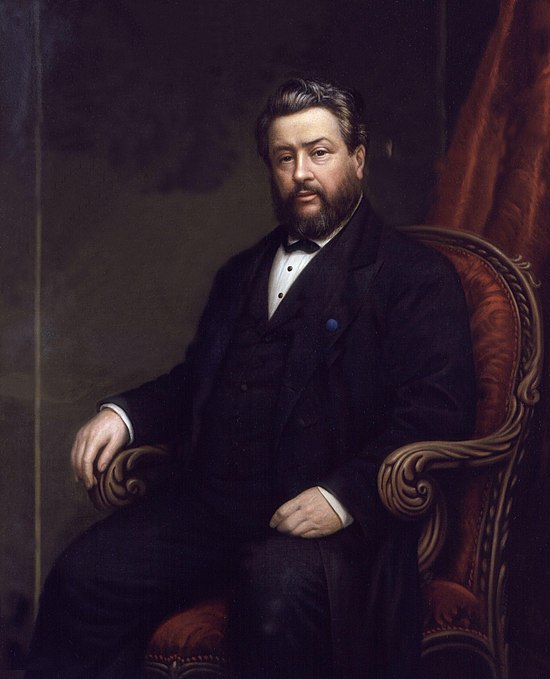
Charles Spurgeon

Withholding the Truth!

John 17:17; Proverbs 11:26
Charles Spurgeon March, 10 2017 Audio
0 Comments
Choice Puritan Devotional!

Sermon Transcript

Auto-generated transcript • May contain errors

100%
withholding the truth. This message was first preached on July 30th in the year 1865 by Charles Haddon Spurgeon. The text for this morning comes from the book of Proverbs, Proverbs 11, verse 26. People cursed the man who hoards grain, but blessing crowns him who is willing to sell. People curse the man who hoards grain, but blessing crowns him who is willing to sell. If I dared, I would always preach on the comfortable promises and gracious doctrines of God's Word. I find it most delightful and easy work to expound on those themes of revelation which abound in sweetness and are full of savor and preciousness to the child of God. I said, if I dared. And you will ask me why I don't dare to do it. The answer is that I have a solemn conviction in my mind that if I would be innocent of the blood of all men, that I must strive to make my range of ministry as wide as the range of Scripture. and I must not hesitate to declare the whole counsel of God. I feel bound to go not where my wishes would lead me, but where Holy Scripture has made a track for my feet. There are certain texts in the Scriptures which are very seldom preached on, because it is thought that there is little gospel in them. and that the people, when they go home, will say to one another, well, I was not fed very well this morning. Those who aim at pleasing men may well shy away from such subjects, but I hold that, since God in his wisdom has placed these passages in the Bible, he intended his servants, the preachers of the word, to expound them. It strikes me that we are not to preach only from select verses of Scripture, but from the entire sacred volume. For all Scripture is God-breathed and is useful for teaching, rebuking, correcting, and training in righteousness, so that the man of God may be thoroughly equipped for every good work. I freely confess to you that I do not know why I have selected this text for this morning, except that it has haunted and hunted me down until I could no longer hold back from preaching it. It seems to force itself on me and to bore its way into my soul like a rifle shot. I thought it over and over and could not make much of it until I yielded myself to it, saying within myself, If the Lord has anything to say to the people out of my mouth, here it is. Let him use it. If there are here this morning any farmers or those who are involved in the selling of grain who feel at all touched by the text, I cannot help it. There is my Master's message to them, and I can only deliver it with the best intentions. hoping that those to whom it comes home to may find profit in it. It will, however, soon be clear to you that the verse before us has, besides its first meaning, a very important spiritual teaching in it, of which we will all do well to pay attention to. The text, as it stands, has to do, as you can clearly see, with owners of grain and dealers in it. Famines were frequent in Solomon's days. Communication between one nation and another was so extremely difficult that the transportation of grain in any large quantities was not attempted. And therefore, if a failure in the crops occurred in one district, The scarcity in that neighborhood was not compensated by abundance in another, and terrible famines prevailed. Certain persons in those days not only stored up all the grain which grew on their own fields, but purchased as much as they could from others, so as to raise the market far above its natural level. This, under the circumstances, was a great affront to God. For instead of bearing their part in his judgments, these men enriched themselves by the poverty of their starving neighbors. There have been such people ever since Solomon's day. And although the present system of free trade has nearly put an end to this kind of thing, there are doubtless some who would again withhold their grain, even at famine prices, if they could raise the price still higher. How does Scripture deal with this particular form of greed in trade? I cannot but admire the wonderful reserve of Holy Scripture. For as Mr. Arnott has observed, in this brief proverb, no arbitrary rule is laid down to the owner of the grain, that he must sell at a certain period and at a certain price. And yet the hungry are not left without the law of protection. The protection of the weak is not entrusted to small police regulations, but to great self-acting providential arrangements. The double fact is recorded in terms of special distinctness, that he who in times of scarcity hoards his grain in order to enrich himself is despised by the people, and he who sells it freely is loved by the people. That is it. There is no further legislation on the subject. Our narrow wisdom might have wished for some definite law on the subject, something like a sliding scale, but the great ruler of heaven and earth falls into no such error. Laws which interfere between buyer and seller, master and workman, by any form of law, are mistakes and nuisances. Governments and rulers have hung on to the antiquated absurdity of regulating prices, but the Holy Scripture does nothing of the kind. All the attempts of man to control the price of bread and wheat is sheer folly. The market functions best when it is left alone. And so in our text, there is no law enacted and no penalty threatened, except that which the nature of things makes inevitable. God knows political economy, whether men do or not, and ignoring the coarse machinery of government regulations, he puts the offender under a form of consequential legislature which is far more efficient. The text seems to say, well, if you don't love your neighbor and choose to hoard your grain, I make no law to break open your granary, but you will most certainly gain the hatred, contempt, and curse of the people that live in your community. You see, dear friends, that a man may do as he pleases about selling or not. but he cannot escape from the curse of the people if he chooses to lock up his grain. And on the other hand, if he will sell it at a reasonable price, or as another translation reads it, break his bread, that is to say, give it to the starving if they cannot afford to buy it, he will receive blessings not only from the people, but from heaven itself. Brothers and sisters, this is a fact that any person with any awareness must have seen, that there is no action that ever brings such judgment on a man, such general condemnation, especially from the poor, as withholding food from those who need it. The people condemn the hoarder, and human nature revolts at his offense. Ask any person you choose to meet. except a person of the same greedy nature, and he will join you in crying out against it. Of course, there are many ways of defending the action, but there is no way of escaping the fact that in their hearts the people curse the one who hoards food. Well, someone says, it is my own grain and I will do with it as I please. That's true. Nobody said you couldn't. Nobody disputed your rights. Rather, only that you are warned that in hoarding it, you are sure to receive the people's curse. You can't alter that. It will follow you wherever you go, and it will make men and women curl their lip at you and sneer if they are your equals, while the working men deep in their hearts will detest you. no matter how kind you may be to the poor and other matters, nor how you may have given your money in other ways, your withholding of the grain will be a scorn among your enemies and an offense to your best friends. It is not always a bad sign when the voice of the people is against the man, but in this case, Scripture endorses it. and he who dares to run the risk is not very wise. Oh, says another, I don't see anything wrong with hoarding. There are laws of supply and demand, and the preacher just doesn't understand political economy. Well, the preacher, however, thinks he does understand it. And even if he doesn't, a child can comprehend the text before him. And we have to deal with that now. Solomon here tells you that if you like to carry out political economy in the hoarding way, you will get cursed for it. And depend upon it, you will. Facts are stubborn things, and this is one. that the hoarding of grain earns the curse of the people, and that is what no Christian man would ever wish to experience. Someone else says, but what business is that of the preacher? The preacher answers that he thanks God that he has no share in it whatever, but he is set in his place to rebuke what God rebukes, and he is doing no more than expounding God's own word on the matter. Whether you listen or not, there is the truth. And may the Lord bless it to you. Well, we ought not to hear such things on Sundays. What? Not read our Bibles on Sundays? Not explain the meaning of a text on Sundays? You would not have heard me on a Monday, and therefore you have it today. Don't be angry with the text, but look at it and read it. and then afterwards choose what you will. People curse. People curse, God says, the man who hoards grain. And if you wish to be cursed and to be hated by thousands of poor people and all the others who sympathize with the poor, then withhold your grain. Thank God the worst monopolizer can't do much harm nowadays. For by the gracious providence of God, which has broken the chains of commerce, we are not likely to feel any great distress over bread in this country. Should our own crops fail, the harvest of other lands supplies the masses with their food. The crime of hoarding is growing scarcer and scarcer. But if any cases still survive, and men choose to follow so disastrous a course, They will get cursed for it and sneered at, and this will be well deserved. I will now take you a step above my text, using it as a ladder to mount to a yet higher truth. If it brings a curse on a man to withhold the bread which perishes, what a weight of curse will fall on that man who withholds the bread of eternal life. If the people will curse the man who keeps back the bread which merely sustains the body, what will be the scornful condemnation which will overwhelm the soul of him who deals deceitfully with the bread of eternal life? That seems to me to be a fair deduction from the text, and at that truth we will aim this morning. First, I will attempt to show the ways in which the bread of life may be withheld from the people and the curse which will follow. Secondly, I will try to depict the blessedness of the man who gives it away to the people. And then thirdly, we will conclude by opening our own granaries and breaking some of this bread among the assembled multitude. First, he that hoards the bread of life will surely get the people's curse on him. He that hoards the bread of life will surely get the people's curse on him. And how can this be done? It may be readily accomplished by locking up the word of God in an unknown language or by delivering and preaching it in such a style that the people cannot understand it. One way to hoard the bread of life and receive the resulting curse would be by locking up the word of God in an unknown language or by delivering and preaching it in such a style that the people cannot understand it. The Roman Catholic Church for many years kept the sacred scriptures in an unknown language. and resisted all attempts to translate the word of God into the language of the people. What a curse Rome has had resting on her head. To those who know the enormity of this wickedness and holding back the word of life, it is scarcely possible to think of Rome without invoking judgment on her. How many millions and millions of souls went down into the pit and perished because of the lack of knowledge during what were called the dark ages? What horrible curses they must be uttering even now on popes and cardinals and priests who had the keys of the kingdom, but would neither enter themselves nor allow others to enter there. They had the light, but they concealed it, and the nations were compelled to sit in the darkness of profound ignorance and superstition because they would not give them the light. Surely the people in hell will curse them forever. But are these the only offenders? Isn't their crime repeated by those ministers who try to deliver their sermons in such an eloquent style, with flowers of rhetoric far too fine to be understood by the common people? We have heard of some, and we are afraid we know some, who are more concerned about perfect pronunciation than they are about winning a soul to Christ. To many of these ministers it is the first and the last object to deliver refined thoughts in elegant and elaborate language. And having done so, having soared upward on eagles' wings far out of sight, they are content to have dazzled the many and put themselves on display. Truly such men withhold the grain. What can the poor people and the uneducated people who are sitting there make out of their eloquence? What can the working people who come to hear something that may do them some good make out of their outlandish fancy sermon? The terms of theology, the phrases of art and definitions of philosophy, the jargon of science are an unknown language to the young godly farmer or to the praying laborers. How sad he says, I don't understand this. I can't get it. Possibly in their ignorance, some people think these eloquent ministers are very educated men, but in reality they are far from it. For simplicity of speech is a better sign of education than using high sounding words and lofty sentences. Oh dear friends, When we preach the gospel plainly, I am sure we have our reward. When preaching in some small church or even out of doors, it is a true delight to watch the faces of the common men and women as they catch or feel the force of an inspired truth. Clear and simple speech wins their blessing. But to stand and talk way over the people's heads What is it but having the grain and keeping it from those who need it? Simplicity is the authorized style of true gospel ministry. The common people in the time of Christ gladly listened to their master, which they would not have done if he had spoken in a grandiose language. George Whitefield, the prince of preachers of the 18th century, was mainly so because of the common, everyday language which he used. Let all of us who have the bread of life try to be very plain and simple in our preaching. You who write tracts or preach in the street, or you that teach children, break the large slices of truth into small pieces and crack the shells of the hard nuts. Remove the crust for the babies and pick out the seeds from the fruit. Beware lest, in seeking an excess of refinement, you withhold the grain and earn the people's curse. But secondly, we may fall into this sin of hoarding by keeping back the most important and vital truths of Scripture and giving a prominence to other things which are only secondary. We may fall into this sin of hoarding by keeping back the most important and vital truths of Scripture and giving a prominence to other things which are only secondary. My brothers and sisters, if I were to stand in this pulpit and for the next few months only preach to you on moral precepts, the excellence of virtue or the wickedness of sin then you would come out of this place and say time after time, we hear nothing about Jesus Christ. We have not even heard that there is a Holy Spirit. If I only preached on these moral themes, no matter how earnestly I preached them, I would be guilty of withholding the grain, the true food of souls. Morality does not bring food to hungry souls. although it is a good thing in its own place. A warning against evil conduct is not the bread of heaven, though it is necessary that we preach it. We need to have the great doctrines of grace brought forward, for the word of God is the sword of the Spirit, and it is by preaching the truth as it is in Jesus that souls are won to Him. I grieve to think how indistinct some preachers are on the doctrines of grace. They dare not say the word election, or if they do, they begin to tremble and guard their words with shields so large that the poor truth is crushed beneath them. As to the eternal security of the believer, the doctrine of election and predestination limited atonement, or any of those grand truths where the richness and savor and core of the gospel is to be found, you may listen to some preachers from the beginning of January to the end of December without ever hearing a word on these critical and foundational doctrines. This will not do. This is taking away the backbone from the spiritual man. It is tearing away the vitals of the gospel. It is giving the people husk for wheat, and straw and chaff instead of grain. Above all, that kind of ministry is an abomination which puts Jesus Christ in the background. My brothers and sisters, we must not only hear something about Jesus Christ, but our preaching must be mainly about Him. Jesus must be its subject and theme. No, let me say, in some sense, Jesus must be all that the preacher has to preach. Christ crucified must be the entire outline of his ministry, and he must be able to say when he retires from it and is called home to heaven, I have preached Christ. Of the things which I have spoken, this is the sum. I have preached my Master and what my Master gave me." Oh, my brothers and sisters, what a guilty ministry is that in which the blood has no place, the ministry which denies or undervalues the atoning sacrifice of the Great Redeemer. God have mercy on us if we have not preached this fundamental truth as seriously as we ought to have done it. May we be able to plead before him and say we have truly desired to do it. What is the use of any ministry in which that is not true? It is withholding grain and in eternity the lost will curse the ones who withheld the truth. But we must not talk about ministers of whom there are not many here. We will come down to you. Many of you are Sunday school teachers, and you can commit this very same sin. Yes, many of you are Sunday school teachers, and you can commit this very same sin. Suppose, as a Sunday school teacher, you are content with making the little ones read through the lesson, satisfied with filling up the hour, and feeling that you have done good in making the little ones sit still, and so on. Oh my brother and sister, it is very serious work. You have undertaken to teach these young children, and if you are satisfied with just making them go through the routine, then be careful, lest when they grow up, they come back to curse you. I am afraid that many Sunday school lessons have no gospel in them at all. Many Sunday school lessons have no gospel in them at all. I don't see why the same gospel should not be preached to children as it is to grown-up people. I think it should. To stand up in Sunday school and say, now be good boys and girls and God will love you, is telling lies. I know that our Sunday school teachers in this church feel the importance of delivering the truth as it is in Jesus to their children, and therefore tell them You are lost and ruined, and your salvation is in Jesus Christ. Look to Him and live. But the teacher whose general teaching is not full of Christ will be called to a sad account in the day when Christ will come for them. Dear Sunday School teachers, whatever you don't know, do know your Lord. And whatever you cannot get into the youngsters' heads, Do make it a matter of prayer that you may get a knowledge of Christ and His atoning blood into their young hearts by the Holy Spirit. The same is also true of those of you who conduct Bible classes or who in any way teach the people. I don't know that I have any necessity to say this to most of you here, but still I will say it for the good of others. You must not get away from your great theme. It is of no use to go to the people empty-handed. We must take them bread. We only mock them by offering them stones if we talk to them about the histories and precepts of Scripture and forget about the cross. Let our teaching be full of grace and truth. Let us deliver to them every doctrine as we find it in the Scripture. and let us be determined that if they do perish, it will not be for not knowing the way of salvation. Thirdly, we may withhold the bread of life, dear friends, by a lack of love in our ministries and witnessing. Because the mere sharing of the plan of salvation is of no great service, God may bless it, but he does not often do that. We may withhold the bread of life, dear friends, by a lack of love in our ministries and in our witnessing. Because the mere sharing of the plan of salvation is of no great service in itself, God may bless it, but He does not often do so. That which God blesses to the saving of sinners is truth accompanied by the seriousness of the speaker, the loving anguish of a heart which stirs to the preacher's soul, What will I say here? For if I speak, I only condemn myself. Think of the preaching of Baxter. He preached for many years, but he said he never went into his pulpit without his knees knocking together. And Martin Luther said the same. Truly, it is enough to make any man tremble when he feels that he is God's mouthpiece to immortal souls. God tells us that if they perish and you don't warn them, then he will hold you accountable for their blood. Surely this ought to melt the heart and bring tears to the eyes of God's ministers. I remember once reading of Baxter's ministry. Oh, what pleading there was in it. The man seemed as if he would never leave the pulpit until the people had received the truth. He wept and sighed and sobbed unless they came to Jesus Christ. You know how he followed them to their houses, watched them walk through the streets of the city, and would give them no rest until they thought about eternal things. And he was thus privileged to give the bread of life to many, many thousands. Although all the while his body was as full of physical pain as much as his heart was, full of holy concern. Oh, for something of Baxter's spirit to make us love the souls of men and women as he did. We are guilty of withholding grain unless we preach with a sympathizing, loving, tender, affectionate, earnest, concerned soul. Brothers and sisters, most of you are doing something for Jesus Christ. Let me therefore put this very plainly to you. If you go through your work for God as a mere matter of form, however true it may be what you say, and however carefully you may deliver it, yet still if the truth you deliver is not delivered with holy concern, with sincerity, with fervor, with love, with care, and above all, if it is not accompanied with prayer, then take heed. lest someday you will receive a curse from those from whom you withheld the bread." How would you like to see a child in your class grow up and live a life of sin? How would you like to meet them someday on their deathbed, when their evil ways had finally brought them to their end? How would you like that they should look you in the face and say, oh, teacher, you were never serious with me. You told me the truth, but you told it to me so coldly that I did not believe it. If I had seen one tear in your eye, I think that there would have been one in mine. If I thought you felt and meant what you were saying, I sometimes think I would have felt it too. but you merely told it all to me as if it were no great deal. And so I doubted the whole thing and from doubt went on to unbelief and ran into sin. And here I am. Oh, that you had wept over me as my brother's Sunday school teacher did with him. How different is my brother from what I am? He was in another Sunday school class and his teacher took him before God in prayer. prayed with him as well as for him, told him the truth, but did more, labored to drive it home to him as with a great hammer, while he pleaded with him to lay hold of eternal life. Teacher, how I wished that you had been more sincere with me. Beloved, seek to rid yourselves of any future regrets in this matter. When you hear of the funeral of someone you taught in Sunday school, you will find no satisfaction in saying to yourself, well, I did all I could for that soul, and whether it is in heaven or hell, my conscience is clear. I know that you cannot save anyone, but still God, who works by means, may make you the instrument of conveying salvation to sinners. Or on the other hand, you may be made instruments of unrighteousness through whom Satan may harden these children's hearts, even to their everlasting ruin. I used the example of a Sunday school teacher, but I intended the remarks for every worker. Oh, let us work for God with all of our hearts. God, make us more sincere. Life is serious. Death is serious. Heaven is serious. Hell is serious. Christ is serious. God is serious. Let us be clothed with zeal as with a coat and go out to serve the Lord with all our soul and strength as His Holy Spirit will enable us. Fourthly, We may be found guilty of withholding grain by refusing to labor passionately for the spread of the kingdom of Christ and the conversion of sinners. I am afraid that the churches of the past were not completely without a curse because of their deficiency in the matter of missions and home evangelization. During the pastorate of my venerated predecessor, Dr. Gill, this church, instead of increasing, gradually decreased. And although the age in which he lived was honored with many great and excellent men, yet the state of our own denomination and the Presbyterian body and the independent body in England was most regrettable. The simple gospel of Jesus Christ was scarcely preached, or where preached, it was without any power whatever. And I take it that the reason was mainly the fact that the churches were content to be edified themselves and had no heart of compassion for the perishing multitudes in this country and overseas. But note this, from the day when Fuller, Carey, Sutcliffe and others met together to send out missionaries to India, the sun began to dawn of a gracious revival, which is not over yet. For as bad as the state of the churches now is, Yet it is a wonderful improvement over what it was before the age of missions. Though not as zealous as we ought to be, the zeal of Christendom is 100 times greater than it was then. And as for what is done for winning souls, the churches now are like a garden of the Lord compared with what they were then. I believe that the neglect of sending the word to the heathen brought a blight and a curse on the churches, which is now happily removed. Yet even today, we find those who profess to be Christians who are always doubting about their salvation. There they get stuck and never know whether they are saved or not. Fool assurance is a tempting morsel which they have not yet tasted. Their eyes do not sparkle with heavenly delight, They do not know what it is to sit together in heavenly places in Christ Jesus. Their raptures are very few. Their joy is very shallow. I will tell you why. In almost every case, these people do nothing for souls. They withhold the grain and therefore they get this curse in their souls that they will not enjoy their own Christianity because they do not want to lead other people into it. If you put your hands into your pockets and say, well, glory to God, I trust I am one of the elect, and whatever becomes of the rest of mankind really is not my concern, every man for himself. I say to you, that is such an unchristian spirit, so opposed to the whole life of Jesus Christ, that if providence deals you a good share of trouble, I can only hope that you may be blessed by it, but I would not pray that the rod may be removed until you are disciplined into a better attitude. Extol the Christian who says, I bless God that I am saved, now what can I do for others? The first thing in the morning he prays, God help me to say a word to some soul this day. During the day, wherever he may be, he is watching for his opportunity and will do good if he can. He is concerned about his children. It sometimes breaks his heart to think that they are not saved. If he happens to have an unsaved wife, it is his daily burden. Oh God, save my wife. When he goes to church, he does not expect the minister to preach sermons always to meet his needs and desires. Rather, he says, I will sit here and pray to God, asking him to bless the word. And if he looks around the church and sees someone that he greatly cares for, he prays for him. God send the word deep into his heart. When the service is over, a man of this kind will stop the unconverted and try to get a personal word with them and see if he can discover some beginnings of grace in their souls. This is how sincere Christians live, and let me tell you, as a rule, though they have the griefs of other men's souls to carry, they do not have much grief about their own. As a rule, their master favors them with the light of his presence. They are watering others as they are watered themselves too. May this be your work and mine. But some of you say nothing for Christ at all. You say that you are too timid, and others of you are too indifferent, too thoughtless about others. Oh, the opportunities many of you have lost. Oh, the many who have died to whom you might have spoken, but you did not. Oh, the people that are now living, that are locked up in the darkness of ignorance, who get no light from you. You have light, but you keep it. They are dying and you have the healing medicine, but you will not tell them about it. May God deliver you from the curse that belongs to those who withhold the grain. We will only mention one more form of this evil. Some are guilty of withholding the grain because while they themselves do not speak for Christ, they do not help those who can. Some are guilty of withholding the grain because while they themselves do not speak for Christ, they do not help those who can. no Christian ought to go to bed with an easy conscience if they have extra money which they don't need, which lies in a bank account unused for God. There must be many Christians in this rich country who have not fully consecrated their wealth to the Lord. When a man can say, I have money which I really don't need, and my children don't require it, and this is money absolutely needed for God's cause, Ought he to keep it from the Lord Jesus? That person must confess that many missionaries might be sent out tomorrow if he would just write a check and hand it over to the proper missionary agency, and that is what he should do. A destitute neighborhood needs a place of worship, and if I have the money to build it and don't, then how am I to answer for it to the Lord? I cannot understand how a man can love God when he only lives to accumulate wealth. It is very difficult for me to imagine such a case, and I fear that such an attitude cannot be real godliness. It seems to me if I have any true religion in my soul, it will make me sing the song. Were the whole realm of nature mine, that would be a present far too small. Love so amazing, so divine, demands my soul, my life, my all. And I think it would make me carry it out. I will not suggest to you that you should act indiscreetly in giving so as to deny your families or deprive yourselves of what is necessary. You know I am not so foolish. But I am speaking to many Christians who not only have enough money to spare, but who will continue to accumulate and accumulate and accumulate. And I cannot think that they can feel that they are doing right in the sight of God. Oh God help us. This great city needs preachers, needs the gospel. Thousands need even bread to keep themselves from starving. And yet people who profess to be your people continue to add to their bank accounts more and more. Why, surely if I do this, I am storing up wrath against myself for the day of God's wrath, and I will find it coming to my heart hot and fierce from the living God, to whom my gold and my silver will cry out against me. Let us not be guilty of this, but each in our own position as far as we can. Let us be aiding others to preach the word if we cannot preach it ourselves. Dozens of young men are desirous to enter into Bible college and seminary, and you can help them to do that, thereby to preach, if you cannot preach yourself. I am pleased now to turn to the other subject of our text. I will speak on the blessedness which those possess who share the bread of life. I will speak on the blessedness which those possess who share the bread of life. To completely describe it is beyond my power. You must know and taste and feel it, beloved. There are many blessings in doing good to others. God is a good paymaster. He pays his servants while they are at work as well as when they have finished it. And one of his payments is this, an easy conscience. If during the day you have faithfully shared the truth only to one person, when you go to bed at night, you feel happy and thinking, I have today settled my conscience of that man's blood. You do not know how delightful a Sunday evening is to some of us when God has helped us to be faithful in preaching and teaching the word that day. How sweet it is to feel I have made many mistakes, shown many weaknesses of the flesh, and so on, but I have preached the gospel and preached it with my whole heart to the best of my ability. One feels a burden is taken off their back, and there is a joy and satisfaction unknown to those who sit at home doing nothing. You and your class at Sunday school I know you feel when Sunday is over, though it is a very hard day's work for some of you after the six days of work during the week, you feel, I thank God I did not spend that time in getting extra rest at home, but rather spent it in speaking a word for Jesus. You will find such a peace of mind that you would not give it up for all the world. There is a great comfort in doing something for Jesus. Look into his face. What would you not do for him? When you were first converted, didn't you think you could do 10,000 things for Jesus? The moment your burden of sin was off your back and your sins forgiven, how you felt you could follow him through floods and flames. Have you lived up to your resolutions, brothers and sisters? Have you fulfilled your own ideas of Christian duties? I don't suppose any of us can say that we have. Still, what little we have done has been an unspeakable delight. When we have felt that we have been crowning His head and laying palm branches in His path, oh, what a happiness to place jewels in His crown. Beloved, there is a very great reward in watching the beginnings of conviction in a young soul. To say of that girl in the Sunday school class, she seems so tender of heart. I do hope the Lord is working in her heart. To go home and pray over that boy who said something in Sunday school class to make you think he must know something more than he seemed to know before. Oh, the joy of hope. But as for the joy of success, it is unspeakable. I remember the first soul that God ever gave me. She is in heaven now. But I remember when one of our deacons said to me, God has set his seal on your ministry in this place, sir. Oh, if anybody had said to me, somebody has left you $20,000, I would not have given it a second thought when compared with that joy which I felt when I was told that God had set his seal on my ministry. Who is it, I ask? Why, it is the poor working man's wife. She went home broken in her heart by the sermon two or three Sundays ago, and she has been in great anguish of soul, but she has found peace, and she said she would like to speak with you. I felt like the boy who had earned his first dollar, like a diver who had been down to the depths of the sea and brought up a rare pearl. I prize each one whom God has given me, but I prize that woman most. Since then my God has given me many thousands of souls who profess to have found the Savior by hearing or reading words which have come from my lips. Well, this joy, overwhelming as it is, is a hungry sort of joy. You want more of it? For the more you have of spiritual children, the more your soul desires to see them multiplied. Let me tell you that to be a soul winner is the happiest thing in the world. And with every soul you bring to Jesus Christ, you seem to get a new heaven here on earth. And oh, what joy there will be for the soul winner when he gets to heaven. What happiness there will be to the Christian minister to be saluted on his entrance into heaven by many spiritual children. They will call him father, for though they are not married nor given in marriage, though natural relations are all over, yet spiritual relations last forever. Oh, how sweet is that sentence, come and share your master's happiness. Do you know what the joy of Christ is over a saved sinner? You cannot even guess. You would need to know the sorrow he suffered to save that sinner. Oh, the joys he must feel when he sees that sinner saved as the result of his suffering and sorrow. This is the very joy which you and I are to possess in heaven. Come and share your master's happiness. Yes, when He mounts the throne, you will mount with Him. When the heaven rings with, well done, well done, you will partake in the reward. You have toiled with Him. You have suffered with Him. You will now reign with Him. You have sown with Him. You will reap with Him. You were despised with Him. You now will be honored with Him. Your face was covered with sweat like his, and your soul was grieved over the sins of men as his soul was. Now will your face be bright with heaven's splendor as is his face, and now will your soul be filled with pure joy even as his soul is. He that shares the bread of life, blessings will be on his head. Now I have to open the granary for a minute myself. Now I have to open up the granary for a minute myself. Hungry sinners, needing a Savior, we cannot withhold the bread from you. You may never come to hear the gospel again. We therefore will open the granary very wide.

Christ Jesus, the Son of God, became man to save men. And inasmuch as God's wrath was due to be poured out on sin, Christ took the sin of all who have ever believed or ever will believe on him, and taking all their sins, he was punished in their place. So that God can now justly forgive sin because Christ was punished in the place of sinners and suffered divine wrath for them.

Now this is the way of salvation. that you trust the Son of God with your soul. And if you do, then know that your sins are now forgiven and that you are saved.

Now concerning this salvation, listen to these next few paragraphs. Concerning this salvation, listen to these next few paragraphs.

One, it is a satisfying salvation. It is a satisfying salvation. Here is all that you could ever want. Your conscience will be at peace forever if you believe in Jesus. Your biggest sins will no longer trouble you. Your blackest iniquities will no longer haunt you. Believing in Jesus, every sin you have of thought and word and deed will be cast into the depths of the sea and never will be mentioned against you ever again.

Secondly, it is an all-sufficient salvation. However great your sins, Christ's blood can take it all away. However deep your needs, Christ can supply them. You cannot be as big a sinner as He is a Savior. You may be the worst sinner this side of hell, but you are not too wicked for Him to save. He can carry enormous sinners on His shoulders. and bear gigantic mountains of guilt on his head into the wilderness of forgetfulness. He has enough for you, no matter how deep your need is.

Thirdly, it is, moreover, a complete salvation. It is a complete salvation. Sovereign mercy does not stand on the mountain and cry to you, Come up here and I will save you. No, eternal mercy comes down into the valley to where you are and meets your case just as it is and never leaves you till it has made you a partaker of the inheritance that belongs to the saints. Christ does not want you to pay one penny of your debt of sin. Rather, he has promised to discharge all your debts of sin. All that you need to take you up to heaven is provided in Jesus Christ.

Fourthly, this is a present salvation, a salvation which, if it comes to you, will save you now. It is a present salvation, a salvation which, if it comes to you, will save you now. You will be a child of God this very hour, and before that clock over there strikes again, you will rejoice in the peace which the Spirit of God gives you if you believe in Him.

And lastly, it is an available salvation freely presented to you in Christ Jesus. It is an available salvation freely presented to you in Christ Jesus. Remember the text of two or three Sundays ago? Whoever is thirsty, let him come, and whoever wishes, let him take the free gift of the water of life. Jesus cast out none that come to him, Oh, that you may be led to come to him this morning.

Thus have I tried to avoid the sin of withholding grain. And if any in this church this morning have been guilty of it, I pray you avoid the curse of the people and seek the blessing of the Most High God by this very day, endeavoring to scatter everywhere the bread of life. Go and work for God wherever you have an opportunity, and help us in our prayers and efforts to send forth more laborers into the harvest. For the harvest truly is plenteous, but the laborers are few. Amen.
Charles Spurgeon
About Charles Spurgeon
Charles Haddon Spurgeon (19 June 1834 — 31 January 1892) was an English Particular Baptist preacher. His nickname is the "Prince of Preachers."
Broadcaster:

Comments

0 / 2000 characters
Comments are moderated before appearing.

Be the first to comment!

Joshua

Joshua

Shall we play a game? Ask me about articles, sermons, or theology from our library. I can also help you navigate the site.