Bootstrap
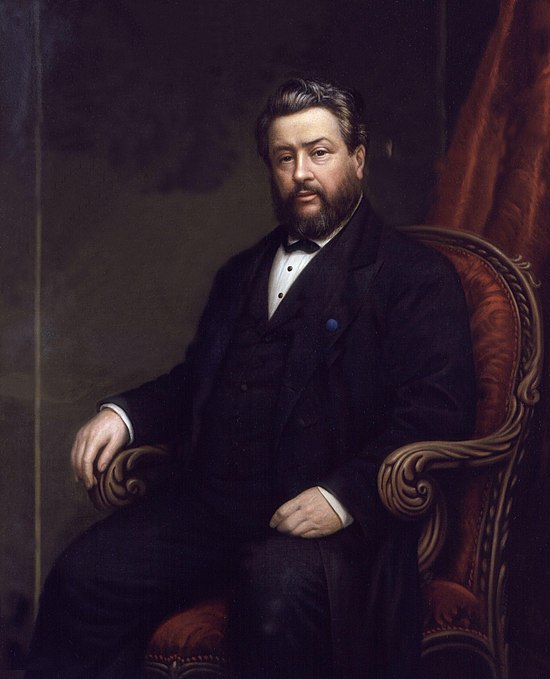
Charles Spurgeon

Our Position and Our Purpose!

2 Corinthians 7:1; Romans 12
Charles Spurgeon March, 10 2017 Audio
0 Comments
Choice Puritan Devotional!

Sermon Transcript

Auto-generated transcript • May contain errors

100%
our position and our purpose. This sermon was first preached sometime in the mid to late 1800s by Charles Haddon Spurgeon. Our text for tonight comes from the book of 2 Corinthians, 2 Corinthians chapter 7, verse 1. Listen as I read. Since we have these promises, dear friends, let us purify ourselves from everything that contaminates body and spirit, perfecting holiness in the fear of God. Stirred up by strong emotion, constrained by the love of Christ, and animated by the fellowship of all spiritual blessing, the Apostle here strikes out an exhortation. in which he appeals to the noblest passions of the children of God, to their sense of divine heritage and a present endowment, as well as of an exalted destiny, for an incentive to purify the character and the holiness of their life. The first thought which he gives to stir up in us the godly ambition is that the Christian man and woman have glorious privileges. The Christian man and woman have glorious privileges. By saying we have these promises, he is not saying we merely have the promises to look forward to as they belong to the Jews, but having them now, having received them, having obtained them, having taken hold of them and being seized by them, as lawyers express it, so that the promises are no longer mere promises, but things which we actually have in our possession. I understand by Paul's language here that believers in the Lord Jesus Christ have a thousand blessed promises, in the enjoyment of which they daily live. The promises he especially refers to are mentioned in the previous chapter. They appear to be these. First, divine indwelling, I will live with them. Divine indwelling, I will live with them. Now this is no small privilege of the Christian Church. God has been pleased to make the bodies of His people to be the temples of the Holy Spirit. At this very moment, in every one of you, you who have put your trust in the Lord Jesus Christ, Deity resides. He does not live in houses made with hands, that is to say, man's buildings, but rather he lives within these houses of clay, living within us. This is a promise which we have actually obtained and are now completely enjoying. The next is divine communion. Divine communion. I will live with them and walk among them. I will live with them and walk among them. As God talked with Abraham, so he does with every believer. God is not far from us. Rather, he is our near and dear friend, our close acquaintance. With Him, I maintain exalted conversation. Bold as He is, I dare to be. If I can tell God my heart, He will also tell me His heart. For the Lord confides in those who fear Him. He makes His covenant known to them. Communion with God is not merely a promise made to you and me, but we enjoy it now. I hope it has become a habit with us to live with Jesus Christ. At morning's first light, we can frequently say, when I awake, I am still with you. And when the sun has gone down and we toss and turn in our bed and cannot sleep, our soul talks with him whose eyes never sleep. Blessed be his name. This walking of Christ with his people is one of the daily privileges of the heirs of heaven. Another promise we have obtained is that of divine covenant. I will be their God and they will be my people. Another promise we have obtained is that of divine covenant. I will be their God and they will be my people. God gives Himself to His people to be theirs, and they, by the purchase of His own Son and by the effectual conquest of the arm of His grace, are His. He has chosen us for His inheritance and granted to us that He would become our inheritance. I will be their God, and they will be My people. Yes, God has entered into a covenant relationship with us, bound himself by promise and yet further by another immutable thing in which it is impossible for him to lie, namely by his oath. There are between us and our God bonds which cannot be snapped, links that can never be severed. Let us thank God tonight and summon every faculty of our souls to praise his name. This is one of the blessings which was communicated to some of the saints from the past, though they did not completely understand and comprehend it. You and I are basking in sunlight while the light that they had was only twilight. So we can say that we have obtained this promise. In addition to all of this, we have divine adoption. I will be a father to you, and you will be my sons and daughters, says the Lord Almighty. In addition to all of this, we have divine adoption. I will be a father to you, and you will be my sons and daughters, says the Lord Almighty. Isn't this our blessed state? He loves us with a father's love, guides us with a father's care, protects us with a father's watchfulness, instructs us with a father's wisdom, bears with us with a father's patience, longs for us with a father's longing. We are his tender children and he is our loving parent. These are not things which are yet to come, like the second coming of our Lord Jesus Christ in millennial splendor. They are promises which we have obtained. These are things common to the worshipers at the altar of which we have a right to eat, and familiar at the table where we daily feed. How unspeakably great is the dignity of a Christian if we look at it in the light of these blessings. before we understood it, how we thirsted after it. We thought, when under conviction of sin, could we dare to be among God's people? It would be enough joy for us if we never received another earthly joy. I am afraid that, since their blessings have become ours, we have not prized them as we should. Perhaps for this reason we are sometimes brought into the prison of doubt and our faith fails us. just as we don't know the value of health until we are sick. So some of these blessed privileges are not valued by us, not valued by us until we have to walk in the dark and sigh and cry after unbroken fellowship amidst intermittent snatches of sweet assurance. Oh, may the Lord allow his people to know, to know the value of these heavenly realities and an abiding sense of their calling and their standing. so they may act in a way that is worthy of such great dignities." Now, it was necessary for us to get a clear view of the possessions of the Christian, because it is from there that Paul makes his argument, saying, since we have these promises, he uses not the logic of the law, nor the logic of fear, but the logic of love. We have these mercies. We are so inexpressibly favored. We are living in the daily enjoyment of divine indwelling, divine communion, the divine covenant, and divine adoption. Therefore, he takes a step forward and says, let us purify ourselves from everything that contaminates body and spirit. It is clear then, clear that the doctrines of grace do not logically and suddenly lead to wild living, as some have profanely said, but they naturally and instinctively, lawfully and reasonably lead to holiness of life. The fact that we are absolutely and unconditionally saved by God's grace, that our standing is secured, that we have become the children of God is not an incentive to careless walking and unholy living. Such an argument is the weak invention of the evil one, of the father of lies. For Satan wants to say that people who claim that they are Christians but live unholy lives are simply doing that because of the free grace they received. But the truth is that because of God's grace, a Christian has gratitude in their heart and obedience in their life. What is obedience to God but holiness? True obedience is holiness in perfection. Now, secondly for tonight, we now proceed to the obvious inference. Christians, having received glorious privileges, are therefore to strive to get rid of the obnoxious evils in their lives. The obvious inference is that Christians, having received the glorious privileges, are therefore to strive to get rid of the obnoxious evils in their lives. Let us purify ourselves, says the apostle. What then? Do they need purified? Are they naturally impure that they must be purified? They are God's blood-bought, redeemed people, and yet they need purifying. Ah, yes, brothers and sisters, every one of them, even the Apostle Paul himself. Where will you find a warmer spirit, a more zealous heart, a more consecrated man than the Apostle Paul? And yet he says, let us purify ourselves. It surely wouldn't be presumptuous on my part if there is in this church some esteemed saint who has for many years kept the faith in an unblemished way and has been engaged in the service of the Master far above others in the winning of souls. It wouldn't be presumptuous if I should say to him, let us purify ourselves. I suppose that the nearer we get to heaven, the more aware we shall be of our imperfections. The more light we obtain, the more we discover our own darkness. That which is scarcely considered sin by some will be a grievous defilement to a tender conscience. It is not that we are greater sinners as we grow older, but that we have a more acute sensitivity to sin and see that to be sin which we winked at in the days of our ignorance. Yes, we may say to those whose gray hairs show that they are getting near home, we may say to them, let us purify ourselves. And if it is this way to the holiest and the most prominent of the people of God, then it should be all the more to us, all the more to us, beloved common saints, who are barely worthy to be called saints at all. Only that we trust we are washed in the precious blood and are saved through the righteousness of Jesus Christ. Oh, let us purify ourselves. Notice how clearly the apostle puts it. I want you to notice his points first. The work is personal. Let us purify ourselves. The work is personal. Let us purify ourselves. It is always easier for us to want to purify other people and attempt a moral reformation among our neighbors. Oh, it is easy to point out other people's faults and to make every effort to protest against them It seems natural for us to expose sin and ridicule the foolishness of this age or to preach virtue. It highly gratifies some people when they can find a fault in some highly respected brother that they just tear him to pieces with about the same zest that might be displayed by an ape. That is their forte, the strength of their genius. Tear into pieces what they could not put together. and attempting to raise themselves by lowering others. But notice the Apostle says, let us purify ourselves. Oh, that we would all look at ourselves. Oh, that we would examine our own hearts more. Yes, certainly it is our business to tell our brother or sister of their faults. But certainly we ought not to have left the other undone, for that is our first business. Let us purify ourselves. It all seems well and good to drag the Church of the Living God up to the altar like some bleeding victim and there to stab her with the sharpest knife of our criticism and to say of the modern Church that she is not this and that she is not that. But the obvious question we need to ask ourselves is, how much have I helped to make her what she is? If she is degenerate, how far is that degeneracy a result of my having fallen from the high standard which I ought to have occupied? We will all have contributed our quota to the reform of the Church when we ourselves are reformed. There can be no better way of promoting holiness in our churches than by increasing in personal holiness. Let us purify ourselves. Secondly, there is activity needed in discharging this personal duty. Let us purify ourselves. There is activity needed in discharging this personal duty. Let us purify ourselves. It seems to imply that the Christian, while they are acted upon by divine influence and are cleansed by the Holy Spirit, is also an active agent of their own sanctification. They are not like the vessels and pots of which the Apostle speaks, that were cleansed under the law. They are a free agent, and the holiness which God works in them is not the pretended holiness of candlesticks and altars. but it is the holiness of a responsible person, a holiness which is not forced upon them, but which their whole soul gives consent to. They purge themselves, depend on it. You and I do not grow holy by going to sleep. People are not made to grow in grace as plants grow, of which it is said, Night and day, whether he sleeps or gets up, the seed sprouts and grows, though he does not know how. The Christian is developed by actively seeking growth, by earnestly striving after holiness, and resolutely endeavoring to obtain it. The utmost of our activity ought to be put forth in purifying ourselves. You will not overcome your bad temper by saying, well, you know I am quick-tempered, I can't help it. But you must help it. You must if you are a Christian. You have no more right to shake hands with a bad temper than you have to fraternize with the devil. You have got to overcome it, and in the name of God you must. Likewise, if you happen to have a lazy disposition, you must not say, Oh, well, you know, I am naturally this way. Yes, you are naturally lazy. We know that. You are naturally as bad as you can be. But surely this is not the point we are concerned with. We are concerned with what you are to become by divine grace. Although sanctification is the work of the Holy Spirit, yet it is equally true, and this we must always bear in mind, that the Holy Spirit makes us active agents in our own sanctification. In the first work of regeneration we know that the soul is passive because it is dead and the dead cannot contribute to their own stimulation and awakening. Being awakened, he works in us to will and to act according to his purpose, his good purpose. God does not work in us to sleep and to slumber. His good purpose is answered by us when we are constrained to will and to do. Therefore, the Apostle's argument, work out your own salvation with fear and trembling, for it is God who works in you. He works it in, you work it out. You have to bring out in. The outward life is what He works in, the inner springs of your spiritual being. You are to work it out because He works it in.

Sin is to be driven out of us as the Canaanites were driven out of Canaan by the edge of the sword. Jericho's walls will come down, but not without walking around it for seven days. You must be weary from marching, but march you must if you would conquer.

"How did the Apostle put it? Our struggle is not against flesh and blood, and so on. But he represented the conquest as being a conquest gained by struggling. He declares that he had to fight with his old nature and that the conflict was severe. Although saved by grace, redeemed souls make remarkable efforts, efforts beyond their natural powers, to overcome sin in their lives.

Thirdly, that we must not stop short of perfection in our purifying. Let us purify ourselves from everything that contaminates. We must not stop short of perfection in our purifying. Let us purify ourselves from everything that contaminates. Your eye must not spare, your heart must not pity one pet sin. Most men and women would gladly be holy if it were not for that one sin that they vainly flatter themselves to be safe and harmless. Let us purify ourselves from everything.

O Christian, You should doubt your right to the name unless all sin is obnoxious to you. You have no right to say, I will give up pride and arrogance, if you excuse yourself for being greedy. If greed is the leak in your boat, it will sink it quite as surely as pride. If neither pride nor greed is there, yet you have an unforgiving heart and cannot forgive those who offend you, You shall just as soon prove yourself to be reprobate that way as by any other.

We must be like the father of a Jewish family, purging out the leaven before the Passover. He lights a candle, you know, and goes to the cupboard under the stairs, or wherever the bread may be kept, and is very careful that every bit is removed. He then has every cupboard unlocked and rummages with a brush in his hand himself personally, and with a candle too, to see if there is even one crumb of leaven, for he cannot keep the Passover if there is a crumb of leaven anywhere in the house.

In the same way, we should be earnestly searching after everything that contaminates, to get it all out. Search as best as we can, I am afraid something will still be left. There will be some beloved idol hidden away somewhere in the recesses of the mind. The heart will cling to its idols in such a way that we cannot find them all at once. There is an absolute need to search again and again and again. They must be searched after and we must, each one of us, be prepared to say, the dearest idol I have known, whatever that idol be, Help me to tear it from Thy throne and worship only Thee.

Fourthly, the Apostle shows the thoroughness of this work by saying, Let us purify ourselves from everything that contaminates body and spirit. The Apostle shows the thoroughness of this work by saying, Let us purify ourselves from everything that contaminates body and spirit. Contamination of the body and spirit. We may think that this includes only the outward sins so well known and so easily distinguishable, those degrading sins which even morality condemns. Possibly Christian, although you may guard yourself against these, yet you will be in danger from the next class, namely, sins of the spirit. These are the mothers of the sins of the flesh. Someone killed a wasp in the early spring, and it was said that he had killed a thousand wasps, for that wasp was full of eggs. Sins of the Spirit are full of that seed which, when matured, issues in shameful wickedness. If you can cleanse yourself from these, you will save yourself from the outward, appalling sins.

The outward life will be right when the inward life is right. I wish we were more concerned about purifying ourselves from everything that contaminates the Spirit. I am inclined to think that some Christians thoughtlessly contaminate their spirits. I mean that they do it willfully. I am not sure that, when we read in the newspaper of a divorce case, that we have any business to read it. Yet a great many good Christian people, who often pray to be delivered from temptation, are very careful to read all the details of the divorce. When there is a bad story in the papers or being spread around by anybody, I know that I shouldn't listen to it. Yet that curiosity of ours often tempts the devil to tempt us. If there is any dirty puddle of water or some polluted water, I know that I am not obliged to drink out of it. True, I may be an officer appointed to taste the water. If I am not, I would rather avoid the harmful sip. it would be better to leave it alone.

We may all do a great deal of that kind of thing, for nowadays when the press exposes everything and it is published all over the world, I am sure that Christians do pollute their spirits a great deal more than they have any occasion to do. And besides that, we can turn over a sin, you know, into our mind. until we become so accustomed to it that we do not think it to be a sin. I know that some Christians have managed to convince their conscience of the idea that what they do is not a sin in them, but would be a sin in other people, that their personality and makeup is such that the particular sin can be tolerated in them, and generally speaking, although it would be very, very wrong for other people to do the same, They have got a sort of spiritual indulgence, such as used to be issued by the Roman Catholic Church, and they never doubt that they can sin with impunity.

Ah, dear friends, this will not do. Let us purify ourselves from everything that contaminates body and spirit. The drift of the argument is this, if God lives in us, Let us make our house clean for such a pure God. What? Indwelling deity and unclean lust? Indwelling Godhead and yet a spirit defiled with evil thoughts? God forbid! Let us cry aloud to the Most High that in this thing we may be purified, that the temple may be fit for the habitation of the Master.

What? Does God walk in us and hold communion with us? And shall we let the devil come in too? What agreement can we have with Christ? Shall we give ourselves up to be servants of money when God has become our friend, our companion? It must not be. Divine indwelling and divine communion both require from us personal holiness. Has the Lord entered into a covenant with us that we shall be His people? Then doesn't this involve a call upon us to live like His people in all godliness? Favored and privileged above other men and women to be a special people, separated to God, shall there be nothing special about our lives? Shall we not be zealous for good works? divinely adopted into the family of the Most High, and made heirs of God and joint heirs with Jesus Christ, what other arguments do we need to compel us to holiness?

You see the word, since, in our text. It simply means this. Because we have attained to such choice and special promises, since, for this reason, let us purify ourselves from everything that contaminates body and spirit.

Thirdly, today, the text goes on to describe the Christian as aiming at a most exalted position, perfecting holiness. The text goes on to describe the Christian as aiming at the most exalted position, perfecting holiness. There was a bitter discussion at one time about the possibility of perfection in the flesh. It was a most unhappy thing that this controversy arose at all. Between Mr. Wesley and Mr. Toplady, fierce altercations were carried on. Now between Mr. Wesley and Mr. Whitfield, I believe the dispute was conducted in a temper honorable to both sides. One admires the Christian love of the two brethren, who both of them stood to advocate what they believed to be the truth, and did maintain, I believe, their own views of truth in a very proper spirit.

But as the dispute was carried on between Mr. Wesley and Mr. Toplady, I don't think it was creditable to the Christianity of either. and that both of them seem to have lost their temper and to have forgotten that man's anger does not bring about the righteous life that God desires. Therefore, this doctrine of Christian perfection never seems to me to have had fair consideration at all. It has been rather made an arena for controversy than a subject for deliberate thought.

Let me ask the question, can a Christian be perfect in this life Can a Christian be perfect in this life? When this question was put to me the other night, I answered no. Well, but is not the Christian perfect when he gets to heaven? I said yes. Well, then he was perfect when he died, was he not? I thought he must be. I do not understand any change taking place in the solemn action of death. between the moment of departure from this world and the moment of entrance into heaven? Very well was the answer, but he was in the flesh then, you know.

" The question thus turned on being in the flesh and the answer was obvious. The flesh is inherently sinful and all of its carnal desires are hostile to God. Presently, perfection does not aim at regenerating the old nature. Such perfection will be affected at the resurrection of the righteous. But those that seek to be perfect in this life must control and keep the flesh and its actions completely under dominion. That is our present duty. If the death of the body looses us from sin, then our continual aim must be to put to death the misdeeds of the body until we are delivered from the bondage of corruption.

An illustration may explain my meaning. I can imagine a room in your house being perfectly clean, but I cannot imagine it being kept perfectly clean unless the process by which it was first cleansed be frequently repeated. Whether that room is in constant use or whether it is closed up, it will require to be swept and dusted every day or it will not be perfectly clean for very long. I remember hearing a man say that he had lived for six years without having sinned in either thought or word or deed. I believe that he committed a sin right then if he had never done so before in uttering such a proud, boastful statement. It seemed to me that if he had known anything about his own heart, he would not have dared to speak that way confidently.

Were it true of me, I think I would be like the man who had diamonds draped around his and dared not tell anybody, for fear the mention of it should prompt someone to rob him of his treasure. I would keep it all to myself. If such a priceless pearl as perfection can belong to any of the saints, and I were in possession of it, I would be very jealous of it, lest anyone should know about it and seek to deprive me of it. No, I cannot believe that the flesh can be perfect, nor, consequently, that a man or a woman can be perfect in their flesh. I cannot believe that we shall ever live to see people living in this world without sin.

But I can believe that it is our duty to be perfect, that this law of God means perfection, and that the law as it is in Christ is binding upon the Christian. It is not, as in the hands of Moses, armed with power to justify or to condemn him, for he is not under the law, but under grace. But it is binding upon him as it is in the hands of Christ. The law, as it is in the hands of Christ, is just as glorious, just as perfect, just as complete as when it was in the hands of Moses. Christ did not come to destroy the law, but to fulfill it. And therefore, notwithstanding every point where I fall short of perfection as a creature, I am complete in Christ Jesus.

That which God requires of me is that I should be perfect. That I can understand. And the next thing I should know is that I ought to pray for such perfection. I ought to pray for such perfection. I would not like to pray for anything short of that. I would not like at the prayer meeting to hear any of you say, Oh Lord, bring us halfway towards perfection. No, no, no. Our prayer must be, Lord, completely deliver me from my sins. And God would not teach you to pray for what he did not mean to give you. Your perfection is God's design, for he has chosen you to be conformed to the image of his son. And what is that? Surely the image of his son, Jesus Christ, is perfection. There were no faults in the Lord Jesus Christ. We are to be made like him.

And as this is the work and design of grace, then perfection is the center of the target at which God's grace is always aiming. All that he works in us is with this great ultimate end and aim, that he may sanctify us completely, body and spirit, and that he may release us from sin and make us perfect, even as our Father who is in heaven is perfect. Oh, when will it be? When will it be? Why, the very thought of it makes me feel as if I could sing. O happy hour, O blessed abode, I shall be near and like my God. What a joy it will be to be just like Him, to have no more corruption of the flesh and no more incitements to sin to destroy the soul's delight and pleasure in her God. May the Lord hurry that day, perfecting holiness.

Although a young artist, when he starts in his work, Dare not hope that he will have the same abilities as the world's most famous sculptors or painters. Yet, were he to set before himself anything short of the highest standard, he would not be likely to attain honor as an artist. When he begins to work, he studies not imperfect pictures, but the most perfect models he can find. He studies Raphael. He wants to see what Michelangelo could do.

Oh, says one, what are you trying to paint? Are you trying to be a Raphael? Will you ever paint like Raphael or Michelangelo? Never. What do you mean by your sneers and jibes? Would you rather have him go and buy some worthless print at a pawn shop and copy that? What sort of an artist would he make then? The only possibility of his being a good artist is in using perfect models.

So it is with you, Christian. Your model is to be the perfect Savior, and this is to be what you are to aim at every day, perfecting holiness. And every one of you may say, I shall never come up to that. My many failures have proved to me that I shall never reach it. Yet you will do better with that as your ambition than you could have done if you had selected some imperfect model and had said, Well, I am as good as that man, that will suit me. Nothing but perfection must satisfy you. Beloved, press forward towards it and God speed you in the race.

Now lastly, follow me one step further and observe how the Christian is prompted by the most sacred of motives, perfecting holiness in the fear of God. The Christian is prompted by the most sacred of motives, perfecting holiness in the fear of God. An abiding sense of God's presence, a perpetual feeling of our obligation to our Creator, produces a reverent fear of God, not the slavish, servile fear which brings torment, but the fear and reverence which causes the archangel to bow in adoration before the throne. The fear which makes the cherub veil his face with his wings while he adores the Lord. Such a constant fear as this is the mainspring of Christian holiness.

Not the fear of man, though many people are kept moral by that. Not the fear of some Christian man whom you respect lest he should reprimand you. That fear may be very helpful in some cases to keep men from certain sins. but it is a better motive for an infant than for a man. No, your great motive is to be the fear of God, not the fear of the public eye.

Haven't you often noticed that the very thing which the world calls bad, shameful, horrible, detestable, if it does not succeed, would be thought clever, credible, to be admired if it does succeed? I believe that there have been scores of enterprising traders who have acquired wealth and gained a reputation for brilliant shrewdness by the very means which we see so much and so properly reprobated in certain other large traders nowadays. The only difference being that one man was fortunate enough to jump over the ditch while the other man jumped into it. Both were equally reckless. The world only appreciates success. That is the measure of the world's morality.

The true Christian has a higher system of ethics. He perfects holiness in the fear of God. And if he should be successful, then the world would say, well done, well done. Yet if he felt he had done a wrong thing or an unholy thing, his conscience would convict him. He would be as uneasy as though everybody pointed a finger of scorn at him. I think he would be as restless as Zacchaeus was until he had made a just disposition of all his unholy gains. I cannot speak to you tonight as I wish, but ah, if this was the hour of my death and I was allowed to utter only one sentence and then must die, I would say to you, members of this church, be holy. Whatever you are, seek to be holy. And if you will not be holy, if you are determined to remain in your sins, then do us a favor, quit claiming to be a Christian. If you will have your sins and go to hell, you can do it so much better outside the church than you can inside.

I cannot see why you must be an enemy of Christ and yet profess to be his friend. Get out of the church, you that are hypocrites. What prophet is there for you to stay? There are no loaves and fishes that I know of to be had here. If you want them, there are some places where you can have them in abundance. There is no particular honor that I know of in being associated with this church. We are generally held in little enough esteem by the world. Why should you come unless you intend to be true followers of the crucified? Why? Why, deacon? Why, if you love the world, why do you pretend to love the church? Judas, Judas, go sell somebody else. Why do you need to sell Christ and to be a man doomed to destruction?

Oh, you who are unholy, you who cheat in business, you who can lie in your daily lives, there are plenty of places for you outside of God's church Why do you come with your filthiness where you are not asked to come nor wanted? The word of God calls his saints to come out and be separate from such as the likes of you. But when they are in the church and people like you come and stay, what shall we say? We feel like the servants who would desire to root up the tares, but that we must not do. They must both grow together until the harvest. Yet we would not sleep, but be watchful to prevent the enemy from sowing more tares among the wheat.

Be holy! Be holy! Be holy! You that are servants, be holy in the family. You that are masters, show holiness among your co-workers. Mothers and fathers, let your children see your holiness. Children, may the Holy Spirit make you the holiest of children, like the holy child Jesus. And may it be a point with one and all of us, that if we live, we will live unto Christ, so that when we die, we may be found in him, made ready to be partakers of the inheritance of the saints in light.

The Lord bless you, dear friends, for Jesus' sake. Amen.
Charles Spurgeon
About Charles Spurgeon
Charles Haddon Spurgeon (19 June 1834 — 31 January 1892) was an English Particular Baptist preacher. His nickname is the "Prince of Preachers."
Broadcaster:

Comments

0 / 2000 characters
Comments are moderated before appearing.

Be the first to comment!

Joshua

Joshua

Shall we play a game? Ask me about articles, sermons, or theology from our library. I can also help you navigate the site.