Bootstrap
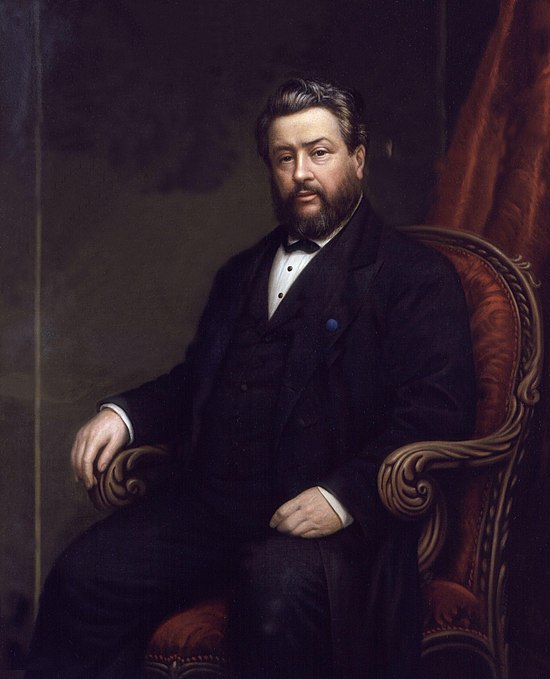
Charles Spurgeon

God's Will and Man's Will

Revelation 22:17; Romans 9:16
Charles Spurgeon March, 10 2017 Audio
0 Comments
Choice Puritan Devotional!

Sermon Transcript

Auto-generated transcript • May contain errors

100%
God's will and man's will. This sermon was originally preached on March 30th in the year 1862 by Charles Haddon Spurgeon. Our text for today comes from the book of Romans, chapter 9, verse 16, and also from the book of Revelation, chapter 22, verse 17. It does not, therefore, depend on man's desire or effort, but on God's mercy. Whoever wishes, let him take the free gift of the water of life.

The great controversy which for many ages has divided the Christian Church has hinged on the difficult question of the will. Without a doubt, that conflict has done much harm to the Christian Church. But I will also say that it has been loaded with immeasurable usefulness, for it has thrust forward before the minds of Christians precious truths which, without it, might have been kept in obscurity.

I believe that the two great doctrines of human responsibility and divine sovereignty have both been brought out more prominently in the Christian Church by the simple fact that there is a class of strong-minded, hard-headed men who magnify sovereignty at the expense of responsibility, and another earnest and useful class who uphold and maintain human responsibility, oftentimes at the expense of divine sovereignty. I believe there is a need for this in the finite character of the human mind, for the natural lethargy of the Church requires a kind of healthy irritation to arouse her powers and to stimulate her to action. The pebbles in the living stream of truth are worn smooth and round by friction. Who among us would wish to suspend a law of nature whose effect on the whole are good?

I glory in that which at the present day is so much spoken against, sectarianism. For sectarianism is the jargon phrase which our enemies use for all firm religious belief. I find it applied to all sorts of Christians, no matter what views he may hold. If a man is earnest, he is quickly labeled a sectarian. Success to sectarianism. let it live and flourish. For the day it ceases, then we can say farewell to the power of godliness. When each of us cease to maintain our own views of truth, when we cease to maintain those views firmly and strenuously, then truth will fly away and only error will reign. This indeed is the objective of our foes. They attacked true religion and would drive it out if they could, drive true religion off the face of the earth.

In the controversy which has raged, a controversy which I will again say, I believe to have been really healthy and which has done us a vast amount of good. In this controversy, mistakes have arisen for two reasons. Some brethren, have completely forgotten one category of truth, and then in the next place, they have gone too far with others. We all have one blind eye, and too often, we are like Admiral Nelson in the battle. We put the telescope to that blind eye, and then we complain that we cannot see.

I have heard of one man who said he had read the Bible through 34 times on his knees, but he could not see a word about election in it. I think it very likely that he couldn't. Kneeling is a very uncomfortable posture for reading, and possibly the superstition which would make the poor man perform this penance would disqualify him for using his reason. Moreover, to go through the Bible 34 times, he probably read it in such a hurry that he did not know what he was reading, and might as well have been dreaming over Robinson Crusoe as the Bible. He put the telescope to the blind eye. Many of us do that. We do not want to see a truth, and therefore we say we cannot see it. On the other hand, there are others who push a truth too far. This is good. Oh, this is precious, they say. And then they think it is good for everything. That in fact, it is the only truth in the world. You know how often things are injured by too much praise? How a good medicine, which really was a good treatment for a certain disease, comes to be utterly despised by the physician because a certain quack has praised it as being a universal cure. So, exaggerated praise in a specific doctrine leads to dishonor.

Truth has thus suffered on all sides. On the one hand, brethren refuse to see the truth. And on the other hand, they magnify what they do see way out of proportion. Have you seen those mirrors, which when you walk up to them, you see your head 10 times as large as your body? Or you walk away and put yourself in another position, and then your feet are monstrous and the rest of your body is small? This is an ingenious toy. But I am sorry to say that many approach God's truth using the model of this toy. They magnify one basic truth until it becomes monstrous. They minimize and speak little of another truth until it becomes completely forgotten.

In what I say this morning, you will probably detect the failing to which I allude. the common fault of humanity, and suspect that I also am magnifying one truth at the expense of another. But I will say this, before I proceed further, that it will not be the case if I can help it. For I will honestly endeavor to bring out the truth as I have learned it, and if you believe that I am teaching you what is contrary to the word of God, reject it. But be aware If it is according to the word of God, then reject it at your peril. For once I have delivered it to you, if you do not receive it, then the responsibility lies with you.

" This morning there are two things that I will have to talk about. The first is that the work of salvation rests on the will of God and not on the will of man. And secondly, the equally sure doctrine that the will of man has its proper position in the work of salvation and is not to be ignored.

First, salvation hinges on the will of God and not on the will of man. Salvation hinges on the will of God and not on the will of man. Our text says, it does not depend on man's desire or effort, but on God's mercy. Which clearly means that the reason why any man is saved is not because he wills it, but because God willed it in accordance to that other passage. Listen, you did not choose me, but I chose you. The whole plan of salvation, from the beginning to the end, hinges and turns and is dependent on the absolute will of God and not on the will of the creature.

This, we think, we can show in two or three ways. First, we think that an analogy furnishes us a rather strong argument. There is a certain likeness between all of God's works. If a painter paints three pictures, there is a certain identity of style about all three, which leads you to know that they are from the same hand. Or if an author writes three books on three different subjects, yet there are qualities running through the whole, which leads you to assert That is the same man's writing, I am certain, in all of the three books. Now what we find in the works of nature, we generally find to be correct with regard to the work of providence. And what is true of nature and of providence is usually true with regard to the greater work of grace.

Turn your thoughts then to the works of creation. There was a time when these works had no existence. The sun was not born. The young moon was not in orbit. The stars did not exist. Not even the apparent endless void of space existed. God lived alone without a creature. I ask you, with whom did he take counsel? Who instructed God? Who had a voice in the council by which the wisdom of God was directed? Didn't it rest with His own will whether He would create or not? Was it creation itself, when it laid as an embryo in His thoughts, in His keeping, totally subjected to what He was pleased to do or not do? And when He willed to create, Didn't He still exercise His own discretion and will as to what and how He would create? If He has made the stars to be spheres, what reason was there for this but that it was His own will? If He had chosen that they would move in a circle rather than in any other orbit, is it not God's own arbitrary will that has made them do so? And when this round world, this green earth on which we live, leaped from His shaping hand into its sunlit track, wasn't this also according to the divine will? Who ordained, except the Lord, the exact location where the Himalayas would lift up their heads and pierce the clouds? and where the deep cavernous recesses of the sea should pierce the earth's heart of rock? Who except God himself ordained that the Sahara desert would be brown and sterile, and that the tropical island should laugh in the midst of the sea with joy over her greenness? Who, I say, ordained this except God?

You see running all through creation from the tiniest molecule up to the tallest archangel who stands before the throne, this working out of God's own will. Milton was right when he represents the eternal one as saying, my goodness is most free to act or not necessity and chance do not approach me and what I will his fate. God created as it pleased him. He made them as he chose. The potter exercised power over his clay to make his vessels as he willed, and to make them for whatever purposes he pleased. Do you think that God has abdicated the throne of grace? Does He reign in creation and not in grace? Is God absolute King over nature and not over the greater works of the new nature? Is God Lord over all the things which His hand has first made and not King over the great regeneration where He makes everything new?

But take the works of providence. I suppose there will be no dispute among us that in providential matters God orders all things according to the wisdom of His own will. If we should, however, be troubled with doubts about the matter, we might hear the striking words of Nebuchadnezzar when, taught by God, he had repented of his pride. He said, All the peoples of the earth are regarded as nothing. God does as he pleases with the powers of heaven and the peoples of the earth. No one can hold back his hand or say to him, what have you done? My friends, from the first moment of human history, even to the end, God's will shall be done. Even though it be a catastrophe or a crime, There may be the second causes and the actions of human evil, but the great first cause is in everything. If we could imagine that one human action has eluded the predestination of God, then we could suppose that everything might have done so, and all things might drift to the sea, anchorless, rudderless, controlled by every wave. the victim of a gale in a hurricane. One leak in this ship of providence and she would sink. One hour in which omnipotence relaxed its grasp and she would break into pieces. But it is the comfortable conviction of all God's people that in all things, in all things, God works for the good of those who love Him, and that God rules and overrules and reigns in all acts of men and in all events that transpire, still producing good from evil, and better still, still ordering all things according to the wisdom of His will.

Has He given up the blood-bought land to be ruled by man? while common providence is left as a lonely providence to be his only heritage? Do you believe that God holds tightly the reins of the great chariot of providence, and yet that when Christ goes forth in the chariot of his grace, it is with unguided horses, or driven only by chance, or by the fickled will of man? Oh no, brethren, As surely as God's will is the axle of the universe, as certainly as God's will is the great heart of providence sending its pulses through even the most distant limbs of human actions, so in grace let us rest assured that He is King, willing to do as He pleases, having mercy on whom He will have mercy. calling whom he chooses to call, opening the heart and soul of whom he wills, and fulfilling, despite man's hardness of heart, despite man's willful rejection of Christ, fulfilling his own purposes, his own decrees, without one of them falling to the ground.

We think, then, That analogy helps to strengthen us in the declaration of the text that salvation is not left to man's will. Secondly, we believe that the difficulties which surround the opposite theory are tremendous. The difficulties which surround the opposite theory are tremendous. In fact, we cannot bear to look them in the face. If there are difficulties about God's sovereign will, there are ten times more about the opposite, man's free will. We think that the difficulties which surround our belief, our belief that salvation depends on the will of God, arise from our ignorance in not understanding enough of God to be able to judge them properly, but that the difficulties in the other case do not arise from that cause, but from certain great truths, clearly revealed, which stand in clear opposition to the fantasy which our opponents have espoused.

According to their theory, that salvation depends on man's own free will You have first of all this difficulty to meet, that you have made the purpose of God and the great plan of salvation entirely contingent on the will of man. You have put an if on everything. Christ may die, but it is not certain, according to their theory, that he will redeem a great multitude. No, it is not certain that He will redeem anyone, since the effectiveness of the redemption according to their plan does not rest in its own intrinsic power, but in the will of man accepting that redemption. Therefore, if man is, as we know he always is, if he is a slave to the will of his own wicked heart, and will not yield to the invitation of God's grace, then in such a case the atonement of Christ would be valueless, useless, and altogether in vain, for not a soul would be saved by it. And even when souls are saved by it, according to that theory, the value, I say, lies not in the blood itself, but in the will of man, which gives it value. Redemption is therefore made contingent, the cross shakes, the blood falls powerless to the ground, and atonement is a matter of perhaps. There is a heaven provided, but it may be that no souls will ever come there if their coming is to be of themselves. There is a fountain filled with blood, but no one will ever wash in it unless divine purpose and power compels them to come.

You may look at any one promise of grace, but you cannot say over it, this is the sure mercy of David, for there is an if and a but, a perhaps and a chance. In fact, the reins are taken out of God's hands The linchpin is taken away from the wheels of creation. You have left the whole economy of grace and mercy to be nothing but the gathering together of chance atoms impelled by man's own will. And nobody can know what will become of it in the end. We cannot tell on that theory whether God will be glorified or sin will triumph.

Oh, how happy we are when we come back to the old-fashioned doctrines and cast our anchor where it can get its grip in the eternal purpose and counsel of God, who works all things to the good pleasure of His will.

Then another difficulty comes in. Not only is everything made contingent but it does seem to us as if man were thus made to be the supreme being in the universe. According to the free will theory, the Lord intends to do good, but he must subject his will to his own creature to know what his intention is. God wills good and would do it, but he cannot. because he has an unwilling man who will not have God's good thing put into effect. What do you do, you who believe in the free will of man, but drag the eternal from his throne and lift up into it that fallen creature, man? For man, according to your theory, nods, and his nod is destiny. You must have a destiny somewhere. It must either be as God wills or as man wills. If it is as God wills, then Jehovah sits as sovereign on his throne of glory and all of creation obeys him and the world is safe. If not God, then you put man there to say, I will or I will not. If I will it, I will enter heaven. If I will it, I will despise the grace of God. If I will it, I will conquer the Holy Spirit, for I am stronger than God and stronger than omnipotence. If I will it, I will make the blood of Christ of no effect, for I am mightier than the blood, mightier than the blood of the Son of God Himself. Though God has His purpose, Yet I will laugh at his purpose. It will be my purpose that will make his purpose stand or make it fall.

Why, you who believe in the absolute free will of man, if this is not atheism, it is idolatry. It is putting man where God should be. And I shrink with solemn awe and horror from that doctrine which makes the grandness of God's works, the salvation of man, to be dependent on the will of his creature, whether it will be accomplished or not.

I can and must glory in my text in its fullest sense. It does not depend on man's desire or effort but on God's mercy. It does not depend on man's desire or effort, but on God's mercy. We think that the known condition of man is a very strong argument against the supposition that salvation depends on his own will, and therefore is a great confirmation of the truth that it depends on the will of God, that it is God that chooses and not man, God who takes the first step and not the creature. It is the known condition of man that is a very strong argument against the supposition that salvation depends on man's will. You who believe in the free will of man, Believing the theory that man comes to Christ of his own free will. What do you do? What do you do with texts of scriptures which say that man is dead? Ephesians chapter two, verse one. As for you, you were dead. You were dead in your transgressions and sins. You will say, that is only a figure of speech. I grant that. But what is the meaning of it? You say the meaning is, he is spiritually dead. Well then I ask you, how can he perform the spiritual act of willing that which is right? He is alive enough to will that which is evil, only evil, and that continually, but he is not alive to will that which is spiritually good.

Don't you know, to turn to another scripture, don't you know that he cannot even discern that which is spiritual? The Bible says in 1 Corinthians, listen, the man without the Spirit does not accept the things that come from the Spirit of God, for they are foolishness to him, and he cannot understand them. because they are spiritually discerned. Why? He does not have a spirit with which to discern them. He only has a soul and a body. But the third principle, implanted in regeneration, which is called in the word of God the spirit, he knows nothing of and is therefore incapable, seeing that he is dead and is without the vitalizing spirit incapable of doing what you say he does.

Then again, what do you make of the words of our Savior where he says to those who had heard him preach, you refuse to come to me to have life? Where is free will after such a text as that? When Christ affirms that they will not Who dares say they will? Ah, but, you say, they could if they would. Dear sir, I am not talking about that. The question is, will they? And we say no, they never will by nature. Man is so depraved, so set on mischief, And the way of salvation is so obnoxious to his pride, so hateful to his lust that he cannot like it and will not like it unless he who ordained the plan will change his nature and subdue his will.

Note this, this stubborn will of man is his sin. He is not to be excused for it. He is guilty because he will not come. He is condemned because he will not come. Because he will not believe in Christ, therefore condemnation is resting on him. But still the fact does not change. Because of all that, that he will not come by nature if left to himself. Then if man will not, how will he be saved unless God will make him willing? Unless in some mysterious way, he who created man's heart will touch its mainspring so that it will move in a direction opposite to that which it naturally follows.

But there is another argument which will come closer home to us. It is consistent with the universal experience of all God's people that salvation is of God's will. You will say, Pastor, you are still young. You have not had a very long life. True, I have not, but I have had a very extensive acquaintance with all sections of the Christian church, and I solemnly protest before you that I have never yet met with a man professing to be a Christian who ever said that his coming to God was the result of his unassisted nature. Universally, I believe, without exception, the people of God will say that it was the Holy Spirit that made them what they are, that they would have refused to come as others do unless God's grace had sweetly influenced their wills. There are some hymns in Mr. Wesley's hymn book which are stronger on this point than I could ever venture to be, for he puts prayer into the lips of the sinner in which God has even asked to force him to be saved by grace. Of course, I can take no objection to a term so strong, but it goes to prove this, that among all sections of Christians, whether Arminian or Calvinistic, whatever their doctrinal sentiments may be, their experimental sentiments are the same.

I do not think any of them would refuse to join in the verse, oh yes, I do love Jesus because he first loved me. Nor would they find fault with our own hymn was the same love that spread the feast, that sweetly forced us in, else we had still refused to taste and perished in our sin.

We bring out the crown and say, on whose head will we put it? Who ruled at the moment of salvation? Who decided that the sinner would be saved? and the universal church of the living God, throwing away their creeds would say, crown him, crown him, put it on his head, for he is worthy. He has made us to believe, he has done it, and to him be the praise forever and ever.

What staggers my mind is that men can believe doctrines contrary to their own experience. that they can bring near to their hearts something they consider precious despite the fact that their own inward convictions reveal it to be a lie.

But lastly, in the way of argument, and to bring out our greatest weapon at the end, it is not, after all, arguments from analogy, nor reasons from the difficulties of the opposite position nor inferences from the known feebleness of human nature, nor even deductions from experience that will settle this question once for all. To the law and to the testimony, they do not speak according to this word, they have no light of dawn.

Do me the pleasure, do me the pleasure then, to use your Bibles for a moment or two, Let us see what Scripture says on this main point.

First, with regard to the matter of God's preparation and His plan with regard to salvation, we turn to the Apostle's words in the Epistle to the Ephesians. We find in the first chapter and the third verse, Praise be to the God and Father of our Lord Jesus Christ, who has blessed us in the heavenly realms with every spiritual blessing in Christ. For He chose us in Him before the creation of the world to be holy and blameless in His sight. In love He predestined us to be adopted as His sons through Jesus Christ in accordance with His pleasure and will."

Now you will notice it is according to His pleasure and His will. No expression could be stronger in the original to show the entire absoluteness of this thing as depending on the will of God. It seems then that in the choice of His people, their adoption is according to His will. So far, We are indeed satisfied with the testimony of the Apostle.

9 Then he made known to us the mystery of his will according to his good pleasure, which he purposed in Christ, to be put into effect when the times will have reached their fulfillment. to bring all things in heaven and on earth together under one head, even Christ. So then it seems that the grand result of the gathering together of all the saved in Christ, as well as the primitive purpose, is according to the counsel of His will. What stronger proof can there be that salvation depends on the will of God? Moreover, it says in the 11th verse, In Him we were also chosen, having been predestined according to the plan of Him who works out everything in conformity with the purpose of His will. His free, unbiased will, His will alone, As for redemption, as well as for the eternal purpose, redemption is according to the will of God.

You remember that verse in Hebrews 10, where Jesus said to the Father, Here I am, I have come to do your will. He sets aside the first to establish the second, and by that will we have been made holy through the sacrifice of the body of Jesus Christ once for all. So that the redemption offered up on Calvary, like the election made before the foundation of the world, is the result of the divine will.

There will be little controversy here. The main point is about our new birth, and here we cannot allow for any diversity of opinion. Turn to the Gospel according to John, the first chapter and the thirteenth verse. It is utterly impossible that human language could have put a stronger negative on the claims of the human will than this passage does. Listen. Born not of natural descent, nor of human decision, but born of God.

A passage equally clear is to be found in the epistle of James in the first chapter and the 18th verse. Listen. He chose, he chose to give us birth through the word of truth that we might be a kind of first fruits of all that he created. In these passages, and they are not the only ones, The new birth puts an end to all debate and in the strongest language is put down as being the fruit and the effect of the will and purpose of God.

As to the sanctification which is the result and outgrowth of the new birth, that also is according to God's holy will. In 1 Thessalonians chapter 4 and verse 3 we read It is God's will that you be sanctified. In one more passage, I must refer you to the sixth chapter and verse 39. Here we find that the preservation, the perseverance, the resurrection, and the eternal glory of God's people rest on His will. Listen. And this is the will of Him who sent me, that I shall lose none of all that he has given me, but raise them up at the last day. For my Father's will is that everyone who looks to the Son and believes in him shall have eternal life, and I will raise him up at the last day."

And to be sure, this is why the saints go to heaven, because in the 17th chapter of John, Christ is recorded as praying Father, I want those you have given me to be with me where I am."

We close then by noticing that according to Scripture, every single blessing in the New Covenant which is conferred on us is according to the will of God. And that, like the picture that hangs on the nail, so every blessing Every blessing we receive hangs on the absolute will and counsel of God, who gives these mercies even as He gives the gifts of the Spirit according to His will.

We will now leave that point and take the second great truth and speak a little while on it. Man's will has its proper place in the matter of salvation. Man's will has its proper place in the matter of salvation. Whoever wishes, let him take the free gift of the water of life. According to this and many other texts in the scripture, where man is addressed as being a creature having a will, It appears clear enough that men are not saved by compulsion. When a man receives the grace of Christ, he does not receive it against his will. No man will be pardoned while he abhors the forgiveness. No man will have the joy in the Lord if he says, I do not wish to rejoice in the Lord. Do not think that anybody will have the angels pushing them from behind into the gates of heaven. They must go there freely or else they will not go there at all.

We are not saved against our will, nor again, mark you, is the will taken away. For God does not come and convert the intelligent free agent into a machine. When he turns the slave into a child, it is not by plucking out of him the will which he possesses. We are as free under grace as ever we were under sin. No, we were slaves when we were under sin, and when the Son makes us free, we are free indeed, and we are never free before.

Erskine, in speaking of his own conversion, says he ran to Christ with full consent against his will, by which he meant it was against his old will, against his will as it was till Christ came. But when Christ came, then he came to Christ with full consent and was willing to be saved. No, that is a cold word. As delighted, as pleased, has transported to receive Christ as if grace had not constrained him.

But we do hold and teach that though the will of man is not ignored, and men are not saved against their wills, that the work of the Spirit, which is the effect of the will of God, is to change the human will, and so make men willing in the day of God's power. working in them to will to do his own good pleasure.

The work of the Spirit is consistent with the original laws and constitution of human nature. Ignorant men talk grossly and carnally about the work of the Spirit in the heart as if the heart were a lump of flesh, and the Holy Spirit turned it around mechanically.

Now brethren, How is your heart and my heart changed in any matter? Why, the instrument generally used is persuasion, persuasion. Our friend sets before us a truth we did not know before. He pleads with us. He puts it in a new light. And then we say, now, I see that. And then our hearts are changed towards the thing.

Now, although no man's heart is changed by moral persuasion in itself, yet the way in which the Spirit works in his heart, as far as we can detect it, is instrumentally by a blessed persuasion of the mind. I do not say that men are saved by moral persuasion or that this is the first cause, but I think it is frequently the visible means.

As to the secret work, who knows how the Spirit works? The wind blows wherever it pleases. You hear its sound, but you cannot tell where it comes from or where it is going. So it is with everyone born of the Spirit.

But yet, as far as we can see, the Spirit makes a revelation of truth to the soul, whereby it sees things in a different light from what it ever did before. And then the will cheerfully bows that neck which once was stiff as iron, and wears the yoke which once it despised, and wears it gladly, cheerfully, and joyfully.

Yet note that the will is not gone. The will is treated as it should be treated. Man is not acted on as a machine. He is not polished like a piece of marble. He is not planed and smoothed like a plank of wood, but his mind is acted on by the Spirit of God in a manner quite consistent with mental laws.

Man is thus made a new creature in Christ Jesus by the will of God, and his own will is blessedly and sweetly made to yield. Then, note this, and this is a point which I want to put into the thoughts of any who are troubled about these things.

This gives the renewed soul a most blessed sign of grace, insomuch that if any man wills to be saved by Christ, if he wills to have his sin forgiven through the precious blood, if he wills to live by a holy life resting on the atonement of Christ, and in the power of the Spirit, that will is one of the most blessed signs of the mysterious working of the Spirit of God in his heart.

If it is real willingness, I will venture to assert that that man is not far from the kingdom of God. I do not say that he is saved, nor that he himself may conclude he is, but there is a work begun which has the germ of salvation in it. If you are willing, depend on it, that God is willing.

Soul, if you are concerned about Christ, He is more concerned about you. If you have only one spark of true desire for Him, that spark is a spark from the fire of His love to you. He has drawn you, or else you would never run after Him, If you are saying, come to me, Jesus, it is because he has come to you, though you do not know it. He has sought you like a lost sheep, and therefore you have sought him like a returning prodigal. He has swept the house to find you as the woman swept for the lost piece of money. And now you seek him as a lost child would seek his father's face.

Let your willingness to come to Christ be a hopeful sign and indicator. But once more, let me have the ear of the true seeker. It appears that when you have a willingness to come to Christ, there is a special promise for you.

You know, my dear listeners, that we are not accustomed in this church to preach one side of truth. but we try, if we can, to preach it all. There are some brethren with small heads who, when they have heard a strong doctrinal sermon, grow into hyper-Calvinist. And then when we preach an inviting sermon to poor sinners, they cannot understand it and say it is a yes and no gospel.

Believe me, it is not yes and no, but yes and yes. We give our yes to all truth and our no we give to no doctrine of God. Can a sinner be saved when he wills to come to Christ? Yes. And if he does come, does he come because God brings him? Yes. We have no nos in our theology for any revealed truth. We do not shut the door on one truth and open it to another. Those are the yes and no people who have a no for the poor sinner when they profess to preach the gospel.

As soon as a man has any willingness given to him, he has a special promise. Before he had the willingness, he had an invitation. Before he had any willingness, it was his duty to believe in Christ. For it is not man's condition that gives him a right to believe. Men are to believe in obedience to God's commands. God commands all men everywhere to repent, and this is His great command. Believe in the Lord Jesus Christ and you will be saved. This is the commandment, that you believe in Jesus Christ whom He has sent. Therefore, it is your right and your duty to believe.

And once you have got the willingness, Then you have a special promise. And that promise is, whoever wishes, let him come. That is a sort of an extraordinary invitation. I think this is the utterance of the special call. You know how John Bunyan describes the special call in words to this effect? He said, the hen goes clucking about the farmyard all day long. That is the general call of the gospel. But she sees a hawk up in the sky and she gives a sharp cry for her little ones to come and hide under her wings. That is the special call. They come and they are safe.

My text is a special call to some of you. Poor soul, are you willing to be saved? Oh, sir, you say, willing, willing indeed. I cannot use that word. I would give all I have if I might but be saved. Do you mean that you would give it all in order to purchase it? Oh, no, sir, I do not mean that. I know I cannot purchase salvation. I know it is God's gift. But still, if I could but be saved, I would ask nothing else. Lord, deny me what you wilt. Only ease me of my guilt. Pleading at your feet I lie. Give me Christ or else I die.

Why, then the Lord speaks to you this morning, to you if not to any other man in the church. He speaks to you and he says, whoever wishes, let him come. You cannot say this does not mean you. When we give the general invitation, you may exempt yourself perhaps in some way or another, but you cannot now. You are willing, then come and take the water of life freely.

You say, shouldn't I pray first? It does not say so. It says take the water of life. But hadn't I better go home and get better first? No, take the water of life, and take the water of life now. You are standing by the fountain, and the water is flowing, and you are willing to drink. You are picked out of a crowd who are standing around, and you are especially invited by the person who built the fountain. He says, here is a special invitation for you. You are willing, come and drink.

Sir, you say, I must go home and wash out my cup. No, he says, come and drink. But sir, you say, I want to go home and write a petition to you. No, he says, come and drink. Drink now, drink now. What would you do if you were dying of thirst? You would just put your lips down and start drinking. Well, soul, do that now. Believe that Jesus Christ is able to save you now. Trust your soul into his hands now. No preparation is needed. Whosoever will, let him come. Let him come at once and take the water of life freely.

To take that water is simply to trust Christ, to rest in him, to take him to be your all in all. Oh, that you would do it now. You are willing. God has made you willing. When the Crusaders heard the voice of Peter, the hermit, as he begged them to go to Jerusalem, to take it from the hands of the invaders, they cried out at once, God wills it. God wills it. God wills it. And every man took his sword from his scabbard and set out to reach the holy city, for God willed it. So come and drink, sinner. God wills it. Trust Jesus. God wills it. If you will it, that is the sign that God wills it.

Father, your will be done on earth, even as it is in heaven. as sinners humbly stoop to drink from the flowing crystal clear water which streams from the sacred fountain which Jesus opened up for his people. Let it be said in heaven, God's will is done, hallelujah, hallelujah. It does not depend on man's desire or effort, but on God's mercy. Yet, whoever wishes, let him take the free gift of the water of life. Amen.
Charles Spurgeon
About Charles Spurgeon
Charles Haddon Spurgeon (19 June 1834 — 31 January 1892) was an English Particular Baptist preacher. His nickname is the "Prince of Preachers."
Broadcaster:

Comments

0 / 2000 characters
Comments are moderated before appearing.

Be the first to comment!

Joshua

Joshua

Shall we play a game? Ask me about articles, sermons, or theology from our library. I can also help you navigate the site.