Bootstrap
J.C. Ryle

Love!

1 Corinthians 13; 1 Corinthians 13:11
J.C. Ryle March, 10 2017 Audio
0 Comments
Choice article by Ryle!

Sermon Transcript

Auto-generated transcript • May contain errors

100%
Love by J.C. Ryle. This message was first preached somewhere in the mid to late 1800s. The text for today comes from the book of 1 Corinthians, 1 Corinthians chapter 13, verse 13. Now these three remain, faith, hope, and love, but the greatest of these is love.

Love is correctly called the queen of Christian graces. The goal of this command, says the apostle Paul, is love. It is a grace which all people profess to admire. It seems a simple, practical thing which everybody can understand. It is not one of those troublesome doctrinal points about which many Christians disagree. Thousands, I suspect, would not be ashamed to tell you that they know nothing about justification or regeneration or about the work of Christ or of the Holy Spirit. But nobody, I believe, would like to say that he knows nothing about love. If men possess nothing else in religion, they always flatter themselves that they possess love.

A few simple thoughts about love will be very useful to us. There are false ideas about love which need to be dispelled. There are mistakes about it which need to be rectified. In my admiration of love, I yield to none. But I am bold to say that in many minds, the whole subject seems completely misunderstood.

Today, let me show you first the place the Bible gives to love. Secondly, I will show you what the love of the Bible really is. Thirdly, where true love comes from. And lastly, I will try to show why love is the greatest of the graces. I ask for your sincere attention to this subject. My heart's desire and prayer to God is that the growth of love may be promoted in this sin-burdened world. In nothing does the fallen condition of man show itself so strongly as in the scarcity of Christian love. There is little faith on earth, little hope, little knowledge of divine things, but nothing, absolutely nothing is as scarce as real love.

Let me show first the place which the Bible gives to love. the place which the Bible gives to love. I begin with this point in order to establish the immense practical importance of my subject. I do not forget that there are many Christians in this present day who almost refuse to look at anything practical in Christianity. They can talk of nothing but two or three favorite doctrines. Now I want you to know that the Bible contains a lot about practice as well as about doctrine and that one thing to which it attaches great weight to is love.

I turn to the New Testament and ask men and women to observe what it says about love. In all religious study there is nothing like letting the scripture speak for itself. There is no better way of finding out truth than the old way of turning to simple Bible texts. Bible texts were our Lord's weapons both in answering Satan and in arguing with the Jews. Bible texts are the guides we must never be ashamed to refer to in the present day. What does the scripture say? What is written? What do you understand about it? Let us hear what Paul says to the Corinthians.

If I speak in the tongues of men and of angels, but have not love, I am only a resounding gong or a clanging cymbal. If I have the gift of prophecy and can understand all mysteries and all knowledge, and if I have a faith that can move mountains, but have not love, I am nothing. If I give everything I possess to the poor and surrender my bodies to the flames, but have not love, I gain nothing. Let us hear what Paul says to the Colossians. And over all these virtues put on love, which binds them all together in perfect unity.

Let us hear what Paul says to Timothy. The goal of this command is love. which comes from a pure heart and a good conscience and a sincere faith.

Let us hear what Peter says. Above all, love each other deeply because love covers over a multitude of sins.

Let us hear what our Lord Jesus Christ himself says about that love. A new command I give you, love one another. As I have loved you, so you must love one another. By this all men will know that you are my disciples if you love one another.

Let us read our Lord's account of the last judgment and note that the lack of love will condemn millions upon millions. Then he will say to those on his left, depart from me, you who are cursed, into the eternal fire prepared for the devil and his angels. For I was hungry, and you gave me nothing to eat. I was thirsty, and you gave me nothing to drink.

Let us hear what Paul says to the Romans. Let no debt remain outstanding except the continuing debt to love one another. For he who loves his fellow man has fulfilled the law.

Let us hear what Paul says to the Ephesians. Live a life of love, just as Christ loved us and gave himself up for us as a fragrant offering and sacrifice to God.

Let us hear what John says. Dear friends, let us love one another, for love comes from God. Everyone who loves has been born of God and knows God. Whoever does not love does not know God because God is love.

I will make no comments on these texts. I think it better to place them before you in their naked simplicity and to let them speak for themselves. If anyone is disposed to think the subject of this message is a matter of insignificance, I will only ask him to look at these texts and to think again. He that would take down love from the high and holy place it occupies in the Bible and treat it as a matter of secondary importance must settle his account with God's word. I certainly will not waste time in arguing with such a person. To my own mind, the evidence of these texts appears clear, simple, and unquestionable. They show the immense importance of love as one of the things that accompany salvation. They prove that it has a right to demand the serious attention of all who call themselves Christians and that those who despise the subject of love are only exposing their own ignorance of scripture.

Let me show secondly today what the love of the Bible really is. What the love of the Bible really is. I think it of great importance to have clear views on this point. It is precisely here that mistakes about love begin. Thousands delude themselves with the idea that they have love when they don't due to a downright ignorance of scripture. Their love is not the love described in the Bible.

The love found in the Bible does not consist in giving to the poor. The love in the Bible does not consist in giving to the poor. It is a common delusion to suppose that it does. Yet Paul tells us plainly that a man may give all he possesses to the poor and not have love. There can be no question that a loving man will remember the poor. I don't for a moment deny that he will do all he can to assist them. relieve them and lighten their burdens. All I am saying is that this does not make up love. It is easy to spend a fortune in giving away money and soup and bread and blankets and clothing and still be utterly destitute of Bible love. The love found in the Bible does not consist in never disapproving anyone's conduct. The love found in the Bible does not consist in never disapproving anyone's conduct. Here is another very common delusion. Thousands pride themselves on never condemning others or saying that they are wrong, whatever they may do. They convert the teaching of our Lord, do not judge, into an excuse for having no unfavorable opinion of anybody. They pervert His prohibition of rash and censorious judgments into a prohibition of all judgment whatsoever.

Your neighbor may be a drunkard, a liar, and a violent man. Never mind. It is not love, they tell you, to pronounce him wrong. You are to believe that deep inside he has a good heart. This idea of love is unhappily a very common one. It is fool of evil to throw a veil over sin and to refuse to call things by their right names, to talk of hearts being good when lives are flatly wrong, To shut our eyes against wickedness and excuse their immorality, this is not scriptural love.

The love you find in the Bible does not consist in never disapproving anyone's religious opinions or convictions. Here is another most serious and growing delusion. There are many who pride themselves on never pronouncing others mistaken, whatever views they may hold. Your neighbor, for example, may be a Roman Catholic or a Mormon, but the love of many says that you have no right to think that he is wrong. If he is sincere, it is unloving to think unfavorably of his spiritual condition. May I always be delivered from such love

At this rate, the apostles were wrong in going out to preach to the Gentiles. At this rate, there is no use in missions. At this rate, we had better close our Bibles and shut up our churches. Everybody is right and nobody is wrong. Everybody is going to heaven and nobody is going to hell. Such love is a monstrous caricature. To say that everyone is equally right in their opinions, though their opinions flatly contradict one another. To say that everyone is equally on their way to heaven, though their doctrinal sentiments are as opposite as black and white. This is not scriptural love. Love like this pours contempt on the Bible and talks as if God had not given it as a written test of truth. Love like this confuses all our notions of heaven.

True love does not think everybody is right in their doctrines. True love cries out, do not believe every spirit, but test the spirits to see whether they are from God, because many false prophets have gone out into the world. If anyone comes to you and does not bring this teaching, do not take him into your house or welcome him. I leave the negative side of the question here. I have dwelt on it at some length because of the days in which we live and the strange ideas which abound. Let me now turn to the positive side. Having shown what love is not, let me now show what it is.

Love is that love which Paul places first among those fruits brought forth in the heart of a believer. The fruit of the Spirit is love. Love to God, such as Adam had before the fall, is its first characteristic. He that has love desires to love God with all his heart and soul and mind and strength. Love to man is its second characteristic. He that has love desires to love his neighbor as himself. This is indeed that view in which the word love in scripture is more especially regarded. When I speak of a believer having love in his heart, I mean that he has love both to God and to man. When I speak of a believer having love, I mean more particularly that he has love to man. The love which is found in the Bible will show itself in a believer's actions. The love which we find in the Bible will show itself in a believer's actions. It will make him ready to do kind acts to everyone within his reach, both to their bodies and souls. It will not let him be content with soft words and kind wishes. It will make him diligent in doing all that lies in his power to lessen the sorrow and increase the happiness of others. Like his master, he will care more for ministering than for being ministered to and will look for nothing in return. Like his master's great apostle, he will very willingly spend and be spent for others, even though they repay him with hatred and not with love. True love does not want rewards. Its work is its reward.

The love found in the Bible will show itself in a believer's readiness to bear evil as well as to do good. The love found in the Bible will show itself in a believer's readiness to bear evil as well as to do good. It will make him patient under provocation. forgiving when injured, meek when unjustly attacked, quiet when slandered. It will make him bear much, put up with much, and look over much, submit often and deny himself often, all for the sake of peace. It will make him control his temper and check his tongue. True love is not always asking, what are my rights? Am I treated as I deserve? But rather, how can I best promote peace? How can I do that which is most edifying to others?

The love found in the Bible will show itself in the general spirit and demeanor of a believer. It will make him kind, unselfish, good-natured, good-tempered, and considerate of others. It makes him gentle, friendly, and courteous in all the daily relations of private life, thoughtful for others' comfort, tender for others' feelings, and more anxious to give pleasure than to receive. True love never envies others when they prosper, nor rejoices in the calamities of others when they are in trouble. At all times, it will believe and hope and try to put to good use the actions of others. And even at the worst, it will be full of pity, mercy, and compassion.

Would we like to know where the true pattern of love like this can be found? We have only to look at the life of our Lord Jesus Christ as described in the Gospels and we will see it perfectly exemplified. Love radiated forth in everything he did. His daily life was an incessant going about doing good.

Love radiated forth in all his manner. Christ was continually hated, persecuted, slandered, and misrepresented, but Christ patiently endured it all. No angry word ever fell from the lips of Jesus. No ill temper ever appeared in his demeanor. When they hurled their insults at Jesus, he did not retaliate. When Jesus suffered, he made no threats.

Love radiated forth in all his spirit and deportment. The law of kindness was always on the lips of Jesus. Among weak and ignorant disciples, among sick and sorrowful petitioners for help and relief, among tax gatherers and sinners, among Pharisees and Sadducees, Jesus was always one and the same, kind and patient to all. And yet, let it be remembered, our blessed master never flattered sinners or cooperated with sin. He never shrunk from exposing wickedness in its true colors or from rebuking those who would cleave to it. Jesus never hesitated to denounce false doctrine, no matter who believed in it. Jesus called things by their right names. Jesus spoke as freely of hell and the fire that is not quenched, as of heaven and the kingdom of glory. Jesus has left on record an everlasting proof that perfect love does not require us to approve everybody's life or opinions, and that it is quite possible to condemn false doctrine and wicked practice and yet to be full of love at the same time.

I have now set before you the true nature of scriptural love. I have given a slight and very brief account of what it is not and what it is. I cannot move on without suggesting two practical thoughts which press home on my mind with weighty force and I hope may press home on others.

You have heard of love. Think for a moment how deplorably little love there is upon earth. You have heard of love. Think for a moment how deplorably little love there is on earth. How conspicuous is the absence of true love among Christians? I do not speak of the heathen. I now speak of Christians. What angry tempers, what passions, what selfishness, what bitter tongues are to be found in the privacy of Christian families? What strifes, what quarrels, what spitefulness, what evil, what revenge, what envy between neighbors and fellow church members, what jealousies and contentions between those of varying doctrines? Where is love? We may well ask, where is love? Where is the mind of Christ when we look at the Spirit which reigns in the world? No wonder that the calls of Christ stand still and sin abounds when men's hearts know so little of love. Surely we can say, when the Son of Man comes, will he find love on the earth?

Think for another thing, what a happy world this would be if there was more love. Think, what a happy world this would be if there was more love. It is the lack of love which causes half the misery there is on earth. Sickness and death and poverty will not account for more than half the sorrows. The rest come from ill temper, ill nature, strifes, quarrels, lawsuits, malice, envy, revenge, frauds, violence, wars, and the like. It would be one great step towards doubling the happiness of mankind and cutting in half their sorrows if all men and women were full of scriptural love.

Let me show thirdly this morning where the love found in the Bible comes from. Where the love found in the Bible comes from.

Love, such as I have described, is certainly not natural to man. Naturally, we are all more or less selfish, envious, ill-tempered, spiteful, ill-natured, and unkind. We have only to observe children when left to themselves to see the proof of this. Let boys and girls grow up without proper training and education and you will not see one of them possessing Christian love. Note how some of them think first of themselves and their own comfort and advantage. Note how others are full of pride, passion, and evil tempers.

How can we account for it? There is only one reply. The natural heart knows nothing of true love. The love found in the Bible will never be found except in a heart prepared by the Holy Spirit. It is a tender plant and will never grow except in one kind of soil. You may just as well expect grapes to grow on thorn bushes or figs on thistles as to look for love when the heart is not right.

The heart in which love grows is a heart that is changed, renewed, and transformed by the Holy Spirit. The image and likeness of God which Adam lost at the fall has been restored to it, however feeble and imperfect the restoration may appear. It is to participate in the divine nature by union with Christ and sonship to God, and one of the first features of that nature is love.

Such a heart is deeply convinced of sin, hates it, flees from it, and fights with it from day to day. And one of the prime elements of sin which it daily labors to overcome is selfishness and lack of love.

Such a heart is deeply aware of its mighty debt to our Lord Jesus Christ. It continually feels that it owes to Him who died for us on the cross all its present comfort, hope, and peace? How can it show forth its gratitude? What can it render to its Redeemer? If it can do nothing else, it strives to be like Him, to walk in His footsteps, and like Him, to be full of love.

The fact that God has poured out His love into our hearts by the Holy Spirit is the surest fountain of Christian love Love will produce love. Oh, I ask for your special attention to this point. It is one of great importance in the present day. There are many who profess to admire love while they care nothing about vital Christianity. They like some of the fruits and the results of the gospel, but not the root from which these fruits alone can grow or the doctrines with which they are inseparably connected.

There are hundreds who will praise love who hate to be told of man's corruption, of the blood of Christ, and of the inward work of the Holy Spirit. Many a parent would like his children to grow up unselfish and good-tempered, who would not be very pleased if someone pressed upon their children the need for conversion and repentance and faith. Now I desire to protest against this idea. that you can have the fruits of Christianity without the roots, that you can produce Christian dispositions without teaching Christian doctrines, that you can have love that will wear and endure without grace in the heart.

Oh, I grant most freely that every now and then one sees a person who seems to be very loving and friendly without any distinctive doctrinal religion. But such cases are so rare and remarkable that like exceptions they only prove the truth of the general rule. And often too often it may be feared in such cases the apparent love is only external and in private completely fails. I firmly believe as a general rule You will not find such love as the Bible describes except in the soil of a heart thoroughly endowed with Bible religion.

Holy practice will not flourish without sound doctrine. It is useless to expect to separate what God has joined together. The delusion which I am trying to fight against is helped in its growth to a most mischievous level by the vast majority of novels, romances, and tales of fiction. Who is not aware that the heroes and the heroines of these works are constantly described as patterns of perfection? They are always doing the right thing, saying the right thing, and showing the right disposition. They are always kind and likable and unselfish and forgiving. And yet you never hear a word about their religion.

In short, to judge by the general nature of the works of fiction, it is possible to have excellent practical religion without doctrine, the fruits of the Spirit without the grace of the Spirit, and the mind of Christ without union with Christ. Here, in short, is the great danger of reading most novels, romances, and the works of fiction. Most of them give a false or incorrect view of human nature. They paint their model men and women as they ought to be and not as they really are. The reader of such writings get their minds filled with wrong conceptions of what the world is. Their notions of mankind become visionary and unreal. They are constantly looking for men and women such as they never meet and expecting what they never find. Let me plead with you once for all to draw your ideas of human nature from the Bible and not from novels. Settle it in your mind that there cannot be true love without a heart renewed by grace.

A certain degree of kindness, courtesy, friendliness, good nature may undoubtedly be seen in many who have no vital religion. But the glorious plant of Bible love, in all its fullness and perfection, will never be found without union with Christ and the work of the Holy Spirit. Teach this to your children if you have any. Teach it in the schools if you are connected with any. Lift up love. Make much of love. Don't let anyone stop you from exalting the grace of kindness, love, good nature, unselfishness, and good temper.

But never, never forget that there is only one school in which these things can be thoroughly learned, and that is in the school of Christ. Real love comes down from above. True love is the fruit of the Spirit. He that would have it must sit at Christ's feet and learn from Him.

Let me show in the last place today why love is called the greatest of the graces. Why love is called the greatest of the graces. The words of Paul on this subject are distinct and unmistakable. He winds up his wonderful chapter on love in the following manner, Now these three remain, faith, hope, and love, but the greatest of these is love. This expression is very remarkable. Of all the writers in the New Testament, none certainly exalts faith as highly as Paul. The epistles to the Romans and Galatians abound with sentences showing the vast importance of faith. By it the sinner lays hold of Christ and is saved. Through faith we are justified and have peace with God.

Yet here the same Paul speaks of something which is even greater than faith. He puts before us the three leading Christian graces and pronounces the following judgment on them. The greatest is love. Such a sentence from such a writer demands special attention. What are we to understand when we hear of love being greater than faith and hope? We are not to suppose for a moment that love can atone for sins or make our peace with God. We are not for a moment to suppose that love can atone for our sins or make our peace with God. Nothing can do that for us but the blood of Christ and nothing can give us an interest in Christ's blood but faith. It is unscriptural ignorance not to know this. The office of justifying and joining the soul to Christ belongs to faith and faith alone. Our love and all our other graces are all more or less imperfect. and could not stand the severity of God's judgment. When we have done everything, we are nothing but unworthy servants.

We are not to suppose that love can exist independently of faith. We are not to suppose that love can exist independently of faith. Paul did not intend to set up one grace in rivalry to the other. He did not mean that one man might have faith, another hope, and another love, and that the best of these was the man who had love. The three graces are inseparably joined together. Where there is faith there will always be love, and where there is love there will be faith. Sun and light, fire and heat, ice and cold, are not more intimately united than is faith and love. The reason why love is called the greatest of the three graces appears to me plain and simple. Let me show you what they are.

Love is called the greatest of graces because it is the one in which there is some likeness between the believer and his God. Love is called the greatest of graces because it is the one in which there is some likeness between the believer and his God. God has no need of faith. He is dependent on no one. There is no one superior to God in whom He must trust. God has no need of hope. To Him all things are certain, whether past, present, or to come. But God is love, and the more love His people have, the more they are like their Father in heaven.

Love for another thing is called the greatest of the graces because it is most useful to others. Love is called the greatest of the graces because it is most useful to others. Faith and hope have special reference to a believer's own private, individual benefit. Faith unites the soul to Christ, brings peace with God, and opens the way to heaven. Hope fills the soul with cheerful expectations of things to come, and amid the many discouragements of things seen, it comforts with visions of the things unseen. But love is preeminently the grace which makes a man useful. It is the spring of good works and acts of kindness. It is the root of missions, schools, and hospitals. Love made apostles spend and be spent for souls. Love raises up workers for Christ and keeps them working. Love smooths quarrels and stops strife, and in this sense, covers over a multitude of sins. Love adorns Christianity and recommends it to the world. A man may have real faith and feel it, and yet his faith may be invisible to others, but a man's love cannot be hidden.

Love in the last place is the greatest of the graces because it is the one which endures the longest. Love is the greatest of the graces because it is the one which endures the longest. In fact, love will never die. Faith will one day be swallowed up in sight and hope in certainty. Their offers will be useless in the morning of the resurrection, and like old almanacs, they will be laid aside. But love will live on through the endless ages of eternity. Heaven will be the home of love. The inhabitants of heaven will be full of love. One common feeling will be in all their hearts and that will be love.

I now leave this part of my subject and pass on to a conclusion. On each of the three points of comparison I have just named between love and the other graces, it would be easy to enlarge upon, but time does not permit me to do so. If I have said enough to guard men and women against mistakes about the right meaning of the greatness of love, I am content. Love, be it ever remembered, cannot justify and put away our sins. It is neither Christ nor faith. But love makes us somewhat like God. Love is of mighty use to the world. Love will live and flourish when faith's work is done. Surely, in these points of view, Love well deserves to wear the crown.

And now let me ask every one of you a simple question. Let me press home on your conscience the whole subject of this message. Do you know anything of the grace of which I have been speaking? Have you love? The strong language of the Apostle Paul must surely convince you that the question is not one that ought to be lightly put aside. The grace without which that holy man could say, I am nothing, the grace which the Lord Jesus says expressly is the great mark of being his disciple, such a grace as this demands a serious consideration of everyone who is serious about the salvation of his soul. It should set him thinking, how does this affect me? Do I have love?

You have some knowledge, it may be, of religion. You know the difference between true and false doctrine. You can, perhaps, even quote Bible texts and defend the opinions you hold. But remember the knowledge which is barren of practical results in life and temperament is a useless possession. The words of the apostle are very plain. If I can understand all mysteries and all knowledge, but have not love, I am nothing.

You think you have faith, perhaps. You trust that you are one of God's elect, and you rest in that. But surely you should remember that there is a faith of devils, which is utterly unprofitable and that the faith of God's elect is a faith expressing itself through love. It was when Paul remembered the love of the Thessalonians as well as their faith and hope that he said, we know that he has chosen you.

Look at your daily life, both at home and away, and consider what place the love found in scripture has in it. What is your temperament? What are your ways of behaving towards all those around you in your own family? What is your manner of speaking, especially in times of irritation and provocation? Where is your good nature, your courtesy, your patience, your meekness, your gentleness, and your toleration? Where are your practical actions of love in your dealing with others? What do you know of the mind of him who went around doing good, who loved everyone, especially his disciples, who returned good for evil and kindness for hatred and had a heart wide enough to feel for everyone?

What would you do in heaven, I wonder, if you got there without love? What comfort could you have in a home where love was the law and selfishness and ill nature completely shut out? Yes, I fear that heaven would be no place for an unloving and ill-tempered man.

Note what a little boy said one day. If grandfather goes to heaven, I hope that I and my brother will not go there. Why do you say that, he was asked. He replied, if grandpa sees us there, I am sure he will say as he does now, what are these boys doing here? Let them get out of the way. He does not like to see us on earth and I suppose he would not like to see us in heaven.

Give yourself no rest till you know something by experience of real Christian love. Go and learn from him who is meek and lowly of heart and ask him to teach you how to love. Ask the Lord Jesus Christ to put his spirit within you, to take away the old heart, to give you a new nature, to make you know something of his mind. Cry to Jesus night and day for grace and give him no rest until you feel something of what I have been describing today. Your life will be happy indeed when you really understand what it means to walk in love.

But I do not forget that I am speaking to some who are not ignorant of the love of the and who long to feel more love every year. I will give you two simple words of exhortation. They are these, practice and teach the grace of love. Practice and teach the grace of love. Practice love diligently. It is one of those graces above all, which grows by constant exercise. Strive more and more to carry it into every little detail of daily life. Watch over your own tongue and temper throughout every hour of the day, and especially in dealing with children and near relatives. Remember the character of the excellent woman. She speaks with wisdom and faithful instruction is on her tongue. Remember the words of Paul, do everything in love. Love should be seen in little things as well as in great ones. Remember not least the words of Peter, love each other deeply. Not a love which just barely is a flame, but a burning, shining fire, which everyone around us can see.

It may cause pains and trouble to keep these things in mind. There may be little encouragement from the examples of others, but persevere. Love like this brings its own reward.

Finally, teach love to others. Teach love to others. Above all, teach it to your children, if you have any. Constantly remind your children that kindness, good nature, and good disposition are among the first evidences which Christ requires in His children. They cannot know much or explain doctrines if they can understand love.

A child's religion is worth very little if it only consists in repeating texts and hymns. Useful as they are, they are often learned without thought, remembered without feeling, said over without consideration of their meaning, and forgotten when childhood is gone. By all means, let children be taught texts and hymns, But do not let such teaching be made everything in their religion.

Teach your children to keep their tempers, to be kind to one another, to be unselfish, good-natured, obliging, patient, gentle, and forgiving. Tell your children never to forget to their dying day, if they live as long as Methuselah, that without love, the Holy Spirit says, we are nothing. tell them over all virtues to put on love, which binds them together in perfect unity. Amen.
J.C. Ryle
About J.C. Ryle
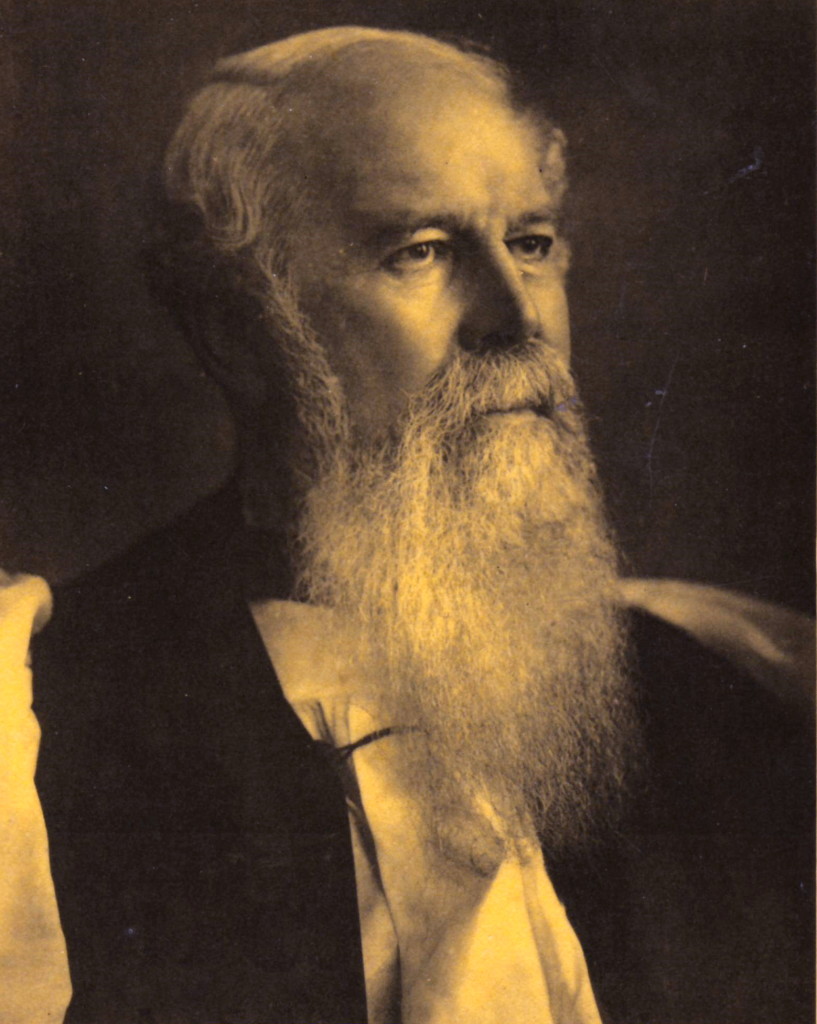
John Charles Ryle (10 May 1816 — 10 June 1900) was an English evangelical Anglican bishop. He was the first Anglican bishop of Liverpool.
Broadcaster:

Comments

0 / 2000 characters
Comments are moderated before appearing.

Be the first to comment!

Joshua

Joshua

Shall we play a game? Ask me about articles, sermons, or theology from our library. I can also help you navigate the site.