Bootstrap
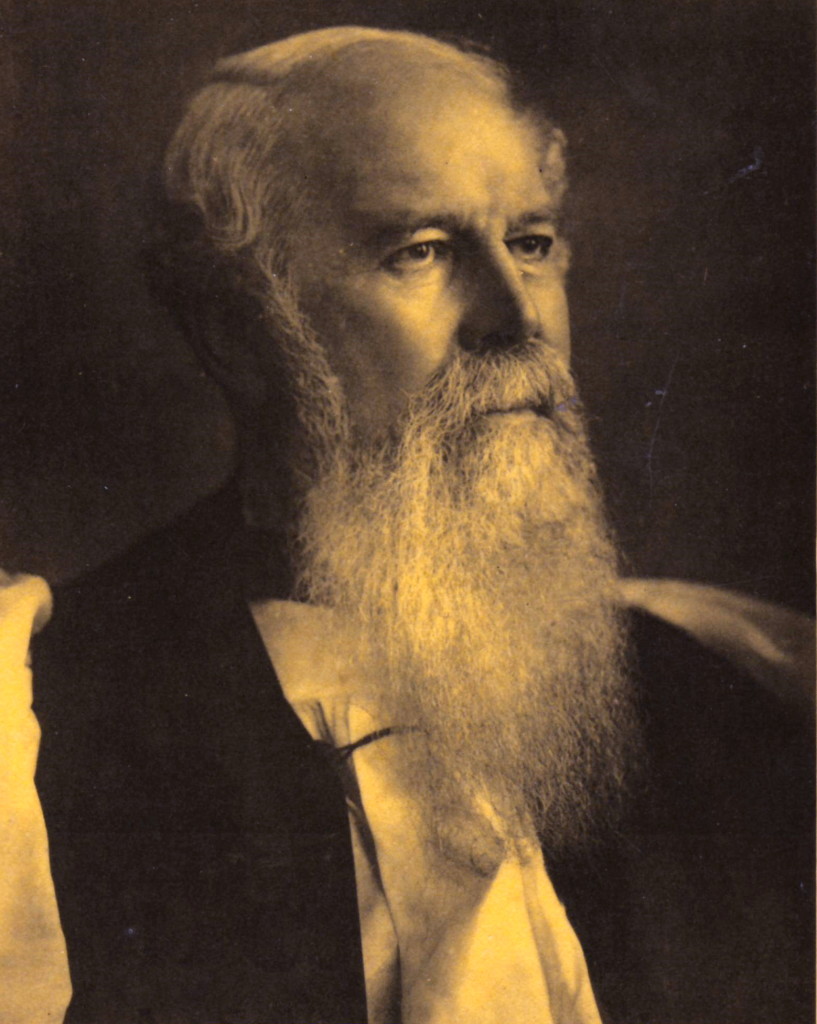
J.C. Ryle

Self-Examination!

2 Corinthians 13:5; Galatians 1
J.C. Ryle March, 10 2017 Audio
0 Comments
Choice Puritan Devotional!

Sermon Transcript

Auto-generated transcript • May contain errors

100%
Self-Examination

This sermon was first preached sometime in the mid to late 1800s by J.C. Ryle.

Our text for this morning comes from the Book of Acts, Acts 15, verse 36. Let us go back and visit the brothers in all the towns where we preached the word of the Lord and see how they are doing. Our text for this morning contains a proposal which the Apostle Paul made to Barnabas after their first missionary journey. He proposed to revisit the churches they had founded and to see how they were getting along. Were their members continuing steadfast in the faith? Were they growing in grace? Were they going forward or standing still? Were they prospering or falling away?

Let us go back and visit the brothers in all the towns where we preached the word of the Lord and see how they are doing. This was a wise and useful proposal. Let us take it to heart and apply it to ourselves today. Let us search our ways and find out how things stand between ourselves and God. Let us see how we are doing.

I ask every one of you who is listening to this sermon this morning to join me in self-examination. If ever self-examination about our Christianity was needed, it is needed today. We live in an age of unusual spiritual privileges. Since the world began there never was such an opportunity for a person's soul to be saved as there is in England at this time. There never were so many signs of Christianity in the land, so many sermons preached So many services held in churches and chapels. So many Bibles sold. So many Christian books and tracts printed. So many missionary societies for evangelizing mankind supported. So much outward respect paid to Christianity.

Things are done everywhere nowadays which a hundred years ago would have been thought impossible. Pastors support the boldest and most aggressive efforts to reach the unconverted. Clergy of the most formal and structured denominations advocate special missions and vie with the evangelical brethren in proclaiming that going to church on Sunday is not enough to take a person to heaven. In short, there is a stir about Christianity today to which there has been nothing like it since England was a nation, and which the cleverest skeptics and agnostics cannot deny.

If Romaine and Venn and Berridge and Rollins and Grimshaw and Hervey had been told that such things would come to pass a century after their deaths, they would have been tempted to say, with the Samaritan nobleman, Look, even if the Lord should open up the floodgates of heaven, could this happen? But the Lord has opened the floodgates of heaven. There is more taught nowadays in England of the real gospel and of the way of salvation by faith in Jesus Christ in one week than there was in a year in Romain's time. Surely I have a right to say that we live in an age of spiritual privileges

But are we any better for it? In an age like this it is good to ask, how is it with our souls? We live in an age of special spiritual danger. Never perhaps since the world began was there such an immense amount of mere outward profession of Christianity as there is in the present day. A painfully large proportion of all the congregations in the land consist of unconverted people. Let me say that again. A painfully large proportion of all the congregations in the land consist of unconverted people. Unconverted people who know nothing of true heart Christianity. They never come to the Lord's table. and they never confess Christ in their daily lives.

Vast numbers of those who are always running after preachers and crowding to hear special sermons are nothing better than empty buckets and tinkling cymbals without a bit of real Christianity. It is curious and instructive to observe how history repeats itself and how much sameness there is in the human heart in every age.

Even in the early church, many persons were found at church for the great Christian ceremonies, and at the theaters and even at the temples of the false gods for heathen spectacles. The ritual of the church was viewed as a theatrical spectacle. The sermons were listened to simply to evaluate the speaker's ability to speak. And eloquent preachers were cheered with clapping of hands, stamping of feet, waving of handkerchiefs, cries of, Orthodox, Orthodox, 13th Apostle, and other similar demonstrations, which such teachers as Christendom and Augustine tried to restrain. that they might persuade their flocks to listen in a more profitable manner.

Some went to the church for only the sermon, alleging that they could pray at home. And when the more attractive parts of the service were over, the great mass of people departed without remaining for the Lord's table.

The parable of the sower is continually receiving most vivid and painful illustrations. The pathway hearers, the stony ground hearers, and the thorny ground hearers abound on every side. The life of many who claim to be Christians, I fear, in this age is nothing better than a continual course of spiritual tasting. They are always morbidly craving fresh excitement and they seem to care little what it is as long as they get it. All preaching seems to be the same to them and they appear unable to see differences so long as they hear what is clever, have their ears tickled, and sit in a crowd.

Worst of all, there are hundreds and hundreds of young believers who are so infected with the same love of excitement that they actually think it is a duty to be always seeking it. Almost insensible to themselves, they take up a kind of hysterical, sensational, sentimental Christianity until they are never content with the old paths and, like the Athenians, are always running after something new.

To see a calm-minded young believer who is not stuck up, self-confident, self-conceited, and more ready to teach than learn, but content with the daily steady effort to grow up in Christlikeness and to do Christ's work quietly at home is really becoming almost a rarity. They show what shallow roots they have, and how little they really know about their hearts by a lot of noise, forwardness, readiness to contradict, and the put-down of old Christians and arrogant trust in their own imaginary soundness and wisdom.

Sadly for many of these young professors of Christianity, they will end up after being tossed about for a while and carried to and fro by every wind of doctrine joining some petty, narrow-minded, censurous sect, or embracing some senseless, unreasoning heresy.

Surely, in times like these, there is a great need for self-examination. When we look around us, we may well ask, how is it with our souls?

In handling this question this morning, I think the shortest plan will be to suggest a list of subjects for self-examination and to take them in order. By doing so, I will hope to meet the need of everyone who is listening to this sermon. I invite every one of you to join me in a calm, searching self-examination for a few minutes. I desire to speak to myself as well as to you. I approach you not as an enemy, but as a friend. My heart's desire and prayer to God is that you may be saved. Bear with me if I say things which at first sight look harsh and severe. Believe me, He is your best friend who tells you the most truth.

Let me ask you in the first place, Do we ever think about our souls at all? Do we ever think about our souls at all? Thousands of people, I fear, cannot answer that question satisfactorily. They never give the subject of Christianity any place in their thoughts. From the beginning of the year to the end, they are absorbed in the pursuit of business, pleasure, politics, money or self-indulgence of some kind or another. Death and judgment and eternity and heaven and hell and a world to come are never calmly looked at or considered. They live on as if they were never going to die or rise again or stand at the judgment throne of God or receive an eternal sentence. They do not openly oppose Christianity, for they do not have sufficient understanding about it to do so. But they eat and drink and sleep and get money and spend money as if Christianity was a mere fiction and not a reality. They are neither Roman Catholics nor atheists nor church people at all. They are just nothing at all. and do not take the time to even have opinions.

A more senseless and unreasonable way of living cannot be conceived, but they do not pretend to reason it out. They simply never think about God unless frightened for a few minutes by sickness, death in their families, or an accident. Barring such interruptions, they appear to completely ignore Christianity. and hold on to their way in a cool and undisturbed manner, as if there were nothing worth thinking about except this world. It is hard to imagine a life more unworthy of an immortal creature than such a life as I have just described, for it reduces a man to the level of an animal. But it is literally and truly the life of multitudes as they pass away and their place is taken over by multitudes like them.

The picture, no doubt, is horrible, distressing, and revolting, but unhappily, it is only too true. In every large city, in every marketplace, on every stock exchange, you may see specimens of this class by the scores, men and women who think of everything under the sun except the one thing that is necessary, the salvation of their souls. Like the Jews of old, they do not understand. They do not give careful thought to their ways. They do not discern what their end will be. They do not know that they do wrong.

In the book of Acts, When the synagogue ruler was beaten in front of the court, the Bible says, Galio showed no concern whatsoever. If they prosper in the world and get rich and succeed in their careers, they are praised and admired by their contemporaries. Nothing succeeds today like success. But despite all of this, they cannot live forever. They will have to die and appear before the judgment seat of God and be judged. And then what will their end be? When a large class of this kind exists in our country, no person need wonder that I ask whether they belong to that group or not. You ought to have a mark made on your door, as there used to be a mark on the plague-stricken house two centuries ago, with the words, Lord, have mercy on us, written on it. Look at the class of people I have been describing, and then look at your own soul. Let me ask in the second place, whether we do anything about our souls whether we do anything about our souls. There are multitudes who occasionally think about Christianity, but unhappily never get beyond thinking. After listening to a stirring sermon, or after a funeral, or under the pressure of illness, or on a Sunday evening, or when things go bad in their families, or when they meet some very godly Christian or when they read some striking Christian book or tract, they will, at the time, think a good deal and even talk a little about Christianity in a vague way.

But they always stop short, as if thinking and talking were enough to save them. They are always meaning and intending and purposing and resolving and wishing and telling us that they know what is right and hope to be found right in the end, but they never really make any progress. There is no actual separation from the world and sin, no real taking up the cross and following Christ, no real fruit in their Christianity. Their life is spent in playing the part of the Son in our Lord's parable, to whom the Father said, Go and work today in the vineyard. And the son answered, I will, sir. But he did not go. They are like those whom Ezekiel describes, who liked his preaching, but never practiced what he preached.

God said to Ezekiel, my people come to you as they usually do. And they sit before you to listen to your words. but they do not put them into practice. Indeed to them, you are nothing more than one who sings love songs with a beautiful voice and plays an instrument well, for they hear your words, but do not put them into practice. It is so common in our day that many men and women hear and think about Christianity, but never do anything about it. It is for this reason that I press the point of the absolute need of self-examination. Once more, then, I ask all of us to consider the question of my text, How is it with our souls?

Let me ask, in the third place, whether we are trying to satisfy our consciences with nothing but a mere formal religion, a superficial Christianity. whether we are trying to satisfy our consciences with nothing but a mere formal religion, a superficial Christianity. Like the Pharisees of old, many make a big show about the outward part of religion, while the inward and spiritual part is totally neglected. They are careful to attend all the services of their place of worship, and are regular at all the church functions. They are never absent from communion when the Lord's Supper is administered. Sometimes they are very strict in observing Lent and attach great importance to church-established feast days. They are often enthusiastic supporters of their own church or denomination or congregation and are ready to contend with anyone who does not agree with them.

Yet all this time there is no heart in their Christianity. Anyone who knows them intimately can easily see that their hearts are set on things below and not on things above, and that they are trying to make up for the lack of inward Christianity by an excessive amount of outward form. And this external Christianity does them no real good. they are not satisfied. Beginning at the wrong end by making the outward things first, they know nothing of inward joy and peace and live their lives in a constant struggle, secretly conscious that there is something wrong and yet not knowing why. They run the danger of going from one stage of formality to another until in despair they take the fatal plunge and fall into Roman Catholicism. When professing Christians of this kind are so painfully numerous, no one need wonder if I press upon them the paramount importance of close self-examination.

If you love life, do not be content with the husk and the shell and the scaffolding of Christianity. Remember the words of our Savior about the Jewish formalists of his day. Jesus said, These people honor me with their lips, but their hearts are far from me. They worship me in vain. Their teachings are but rules taught by men.

We need something more than diligently going to church and receiving the Lord's Supper to take our souls to heaven. These things are useful in their own way, and God seldom does anything for his church without them. But let us beware of wrecking our ship into the very lighthouse which helps to show the channel into the harbor.

Once more I ask, how is it with our souls? Let me ask in the fourth place, whether we have received forgiveness for our sins, whether we have received forgiveness for our sins. Few reasonable persons would think of denying that they are sinners. Many perhaps would say that they are not as bad as others and that they have not really been wicked and so forth. But few, I repeat, few, would pretend to say that they have always lived like angels. and never done or said or thought a wrong thing all their life.

In short, all of us must confess that we are sinners and as sinners are guilty before God and as guilty we must be forgiven or be lost and condemned forever in the day of final judgment. Now it is the glory of the Christian religion that it provides for us the very forgiveness that we need, full, free, perfect, eternal, and complete. It is a fundamental belief of the Christian faith that we are forgiven.

This forgiveness of sins has been purchased for us by the eternal Son of God, our Lord Jesus Christ. He has purchased it for us by coming into the world to be our Savior and by living, dying, and rising again as our substitute on our behalf. He has bought it for us at the price of His own precious blood, by suffering in our place on the cross and making satisfaction to God for our sins.

But this forgiveness great and complete and glorious as it is, does not become the property of every man and woman as a matter of course. It is not a privilege which every member of a church possesses merely because they are a member of a church. It is a thing which each individual must receive for themselves by their own personal faith, grabbed hold of by faith. appropriated by faith and made their own by faith, or else, so far as they are concerned, Christ will have died in vain.

Whoever believes in the Son has eternal life, but whoever rejects the Son will not see life, for God's wrath remains on him. No terms can be imagined more simple and more suitable to man. As good old Latimer said in speaking of the matter of justification, it is but believe and have. It is only faith that is required. And faith is nothing more than the humble heartfelt trust of the soul, which desires to be saved.

Jesus is willing and able to save, but man must come to Jesus and believe. All that believe are immediately justified and forgiven, but without believing there is no forgiveness at all. Now here is exactly the point. I am afraid because multitudes of our people who go to church are unsaved sinners and are in imminent danger of being lost forever. They know that there is no forgiveness of sin except in Christ Jesus. They can tell you that there is no Savior for sinners, no Redeemer, no Mediator excepting Him who was born of the Virgin Mary and was crucified under Pontius Pilate, died and was buried. But here they stop and get no further. They never come to the point of actually laying hold of Christ by faith and becoming one with Christ and Christ in them. They can say, He is a Savior, but not my Savior. A Redeemer, but not my Redeemer. A priest, but not my priest. An advocate, but not my advocate. And so they live and die unforgiven. No wonder that Martin Luther said, many are lost because they cannot use possessive pronouns. When this is the state of many in this day, no one need wonder that I ask men and women whether they have received the forgiveness of sins. An eminent Christian lady once said in her old age, The beginning of eternal life in my soul was a conversation I had with an old gentleman who came to visit my father when I was only a little girl. He took me by the hand one day and said, My dear child, my life is nearly over and you will probably live many years after I am gone. but never forget two things. One is that there is such a thing as having our sins forgiven while we live. The other is that there is such a thing as knowing and feeling that we are forgiven. I thank God I have never forgotten his words. How is it with us? Let us not rest till we know and feel that we are forgiven. Once more, let me ask, in the matter of forgiveness of sins, how is it with our souls? Let me ask in the fifth place, whether we know anything by experience of conversion to God. Whether we know anything by experience of conversion to God. Without conversion, there is no salvation. Unless you change and become like little children, you will never enter the kingdom of heaven. No one can see the kingdom of God unless he is born again. If anyone does not have the Spirit of Christ, he does not belong to Christ. If anyone is in Christ, he is a new creation. We are all by nature so weak, so worldly, so earthly-minded, so inclined to sin, that without a complete change we cannot serve God in life and could not enjoy Him after death. Just like ducks, as soon as they are hatched, naturally take to water, so do children, as soon as they can do anything, naturally take to selfishness, lying, and deceit. and none of them pray or love God unless they are taught. Rich or poor, gentle or harsh, we all need a complete change, a change which the Holy Spirit gives to us. Call it what you please, new birth, regeneration, renewal, new creation, quickening, repentance, It must be possessed if we are to be saved. And if we possess it, then it will be seen. Sense of sin and deep hatred of it. Faith in Christ and love for him. Delight in holiness and longing after more of it. Love for God's people and distaste for the things of the world. These are the signs and evidences which always accompany conversion. I fear that vast numbers around us know nothing about it. They are, in scriptural language, dead and asleep and blind and unfit for the kingdom of God. Year after year, perhaps, they go on repeating the words, I believe in the Holy Spirit, I believe in the Holy Spirit, but they are utterly ignorant of his changing power on the inward man. Sometimes they flatter themselves that they are born again because they have been baptized and go to church and receive the Lord's Supper while they are totally destitute of the evidences of the new birth as described by John in his first epistle.

In all this time the words of the scripture are clear and plain. Unless you change and become like little children, you will never enter the kingdom of heaven.

In times like these no one should wonder that I pressed the subject of conversion on the souls of men and women. No doubt there are plenty of false conversions in such a day of religious excitement as this. But the existence of counterfeit money is no proof that there is no genuine money. No, rather it is evidence that there is some money which is authentic and is worth imitation. Hypocrites and false Christians are indirect evidence that there is such a thing as real grace among men and women.

Let us search our own hearts then and see how it is with ourselves. Once more, let us ask, in the matter of conversion, how is it with our souls?

6. Whether we know anything of practical Christian holiness. It is as certain as anything in the Bible that without holiness no one will see the Lord. It is equally certain that it is the consistent fruit of saving faith, the only real test of regeneration, the only sound evidence of indwelling grace, the certain consequence of vital union with Christ.

Holiness is not absolute perfection and freedom from all faults, nothing of the kind. The wild words of some who talk of enjoying unbroken communion with God for many months are greatly to be condemned, because they raise unscriptural expectations in the minds of young believers and thus do great harm. Absolute perfection is for heaven and not for earth, where we have a weak body, a wicked world, and a busy devil continually near our souls.

Nor is real Christian holiness ever attained or maintained without a constant fight and struggle. The great apostle who said, I beat my body and make it my slave, would have been amazed to hear of sanctification without personal effort, and to be told that believers only need to sit still and everything will be done for them.

yet weak and imperfect as the holiness of the best saints may be, it is a real true thing and has a character about it as unmistakable as light and salt. It is not a thing which begins and ends with noisy profession. It will be seen much more than heard. Genuine scriptural holiness will make a person do their duty at home and adorn their doctrine in the little trials of daily life. It will make them humble, kind, gentle, unselfish, good-tempered, considerate of others, loving, meek, and forgiving. It will not force them to leave the world and shut themselves up in a cave, but it will make them do their duty in that state to which God has called them, on Christian principles and after the pattern of Christ.

Sadly, I know all too well that such holiness is not common. It is a style of practical Christianity which is painfully rare in these days. But I can find no other standard of holiness in the Word of God, no other which comes up through the pictures drawn by our Lord and his apostles.

In an age like this, no one can wonder if I press this subject also on men's attention. Once more let me ask, in the matter of holiness, how is it with our souls? How are we doing?

Let me ask in the seventh place, whether we know anything of enjoying the means of grace? Whether we know anything of enjoying the means of grace? When I speak of the means of grace, I have in my mind five principal things. First, the reading of the Bible. Secondly, private prayer. Thirdly, public worship. Fourthly, the taking of the Lord's Supper. And lastly, the honoring of the Lord's Day.

They are means which God has graciously appointed in order to convey grace to man's heart by the Holy Spirit. or keep up the spiritual life after it has begun. As long as the world stands, the state of a man's soul will always depend greatly on the manner and spirit in which he uses the means of grace. The manner and spirit I say deliberately and with purpose.

Many people use the means of grace regularly and formally, but know nothing of enjoying They attend to them as a matter of duty, but without a lot of feeling, interest, or affection. Yet even common sense might tell us that this formal, mechanical use of holy things is utterly worthless and unprofitable.

Our feeling about them is just one of the many tests of the state of our souls. How can that man be thought to love God who reads about him and his Christ as a mere matter of duty, content and satisfied if he has just moved his bookmark onward over so many chapters? How can that man suppose he is ready to meet Christ who never takes any trouble to pour out his heart to him in private as a friend, and is satisfied with saying over a string of words every morning and evening under the name of prayer, scarcely thinking what he is about.

How could that man be happy in heaven forever, who finds Sunday a dull, gloomy, tiresome day, who knows nothing of hearty prayer and praise and cares nothing whether he hears truth or error from the pulpit or scarcely listens to the sermon? What can be the spiritual condition of that man whose heart never burns within him when he receives that bread and wine which especially reminds us of Christ's death on the cross and the atonement for sin?

These questions are very serious and important. If the means of grace had no other use and were not powerful helps towards heaven, they would be useful in supplying a test of our real state in the sight of God. Tell me what a man does in the matter of Bible reading and praying, in the matter of Sunday, public worship and the Lord's Supper, and I will soon tell you what he is and on which road he is traveling.

How is it with our own souls? Once more let us ask in the matter of means of grace, how are we doing? Let me ask in the eighth place, whether we ever try to do any good in the world, whether we ever try to do any good in the world.

Our Lord Jesus Christ was continually going around doing good while he was on earth. The apostles and all the disciples in Bible times were always striving to walk in his steps. A Christian who was content to go to heaven himself and did not care what became of others, whether they lived happy or died in peace or not, would have been regarded as a kind of monster in the early church, a person who did not have the Spirit of Christ.

Why should fig trees, which bear no fruit, be spared in the present day, when in our Lord's time they were to be cut down? As was questioned, why should they use up the soil? These are serious questions and demand serious answers.

There is a generation of professing Christians today who seem to know nothing of caring for their neighbors. and are completely swallowed up in the concerns of number one, that is, themselves and their families. They eat and drink and sleep and dress and work and earn money and spend money year after year, and whether others are happy or miserable, well or sick, converted or unconverted, traveling towards heaven or traveling towards hell, appear to be questions about which they are supremely indifferent. Can this be right? Can it be reconciled with the religion of Him who spoke the parable of the Good Samaritan and commanded us to go and do likewise? I completely doubt it.

There is much to be done everywhere. There is not a place where there is not a field for work and an open door for being useful if anyone is willing to enter it. There is not a Christian who cannot find some good work to do for others if he only has a heart to do it. The poorest man or woman, without a single penny to give, can always show their deep sympathy to the sick and the sorrowful. And by simple good nature and tender helpfulness can lessen the misery and increase the comfort of somebody in this troubled world.

But no, the vast majority of professing Christians, whether rich or poor, faithful church attendees or not, seem possessed with a devil of detestable selfishness and do not know the luxury of doing good. They can argue by the hour about baptism and the Lord's Supper and the forms of worship and the union of church and state and other dry bone questions, but all this time they seem to care nothing for their neighbors. The simple practical point, whether they love their neighbor as the Samaritan loved the traveler in the parable and can spare any time and trouble to do him good, is a point they never touch with one of their fingers.

In too many places, both in the city and in the country, true love seems almost dead in the church, and wretched denominational spirit and controversy are the only fruits that Christianity appears able to produce. In a day like this, no one should wonder if I pressed this plain old subject on their conscience. Do we know anything of genuine Samaritan love to others? Do we ever try to do any good to anyone besides our own friends and relatives and our own denomination or cause? Are we living like disciples of Him who always went about doing good and commanded His disciples to take Him for their example? If not, with what face shall we meet Him in the Day of Judgment?

In this matter also, how is it with our souls? Once more I ask, how are we doing?

Let me ask in the ninth place whether we know anything of living the life of habitual communion with Christ. Whether we know anything of living the life of habitual communion with Christ.

By communion I mean that habit of abiding in Christ, which our Lord speaks of in the 15th chapter of John's Gospel, as essential to Christian fruitfulness. Let it be distinctly understood that union with Christ is one thing and communion is another. There can be no communion with the Lord Jesus without union first. But sadly, there may be union with the Lord Jesus and afterwards little or no communion at all.

Union is the common privilege of all who feel their sins and truly repent and come to Christ by faith and are accepted, forgiven and justified in Him. Too many believers, it may be feared, never get beyond this stage. partly from ignorance, partly from laziness, partly from the fear of man, partly from secret love of the world, partly from some unashamed besetting sin, they are content with a little faith, and a little hope, and a little peace, and a little measure of holiness, and they live on all their lives in this condition, doubting, weak, hesitant, and bearing a small amount of fruit to the very end of their life.

Communion with Christ is the privilege of those who are continually striving to grow in grace and faith and knowledge and conformity to the mind of Christ in all things, who forget what is behind and do not consider themselves yet to have taken hold of it. Press on towards the goal to win the prize for which God has called them heavenward in Christ Jesus.

Union is but the bud, but communion is the flower. Union is the baby, but communion is the strong man. He that has union with Christ does well, but he that enjoys communion with him does far better. Both have one life, one hope, one heavenly seed in their heart, one Lord, one Savior, one Holy Spirit, one eternal home. But union is not as good as communion.

The great secret of communion with Christ is to be continually living by faith in the Son of God and drawing out of Him every hour the supply that every hour requires. To me, said Paul, to live is Christ. I no longer live, but Christ lives in me. Communion like this is the secret of the abiding joy and peace in believing, which eminent saints like Bradford and Weatherford notoriously possessed. None were ever more humble or more deeply convinced of their own weaknesses and sins. They would have told you that the 7th chapter of Romans precisely described their own experience. They would have said continually, the remembrance of our sins is grievous to us, the burden of them is intolerable. But they were always looking to Jesus, and in Him they were always able to rejoice.

Communion like this is the secret of the splendid victories which such men as these won over sin, the world and the fear of death. They did not idly sit still saying, I leave it all to Christ to do for me. But being strong in the Lord, they used the divine nature he had implanted in them boldly and confidently and were more than conquerors through him who loved them. Like Paul they would have said, I can do everything through him who gives me strength.

Ignorance of this life of communion is one among many reasons why so many in this age fall prey to formal religions and false doctrines. Such errors often spring from imperfect knowledge of Christ and obscure views of the life of faith in a risen living. and interceding Savior.

Is communion with Christ like this a common thing? No, it is very rare indeed. The majority of believers seem content with the barest elementary knowledge of justification by faith and half a dozen other doctrines and go about their lives doubting, limping, groaning along the way to heaven and experience little of the sense of victory or of joy. The churches of these latter days are full of weak and powerless believers, saved in the end, but only as one escaping through the flames, but never shaking the world, and knowing nothing of a rich welcome.

In the book Pilgrim's Progress, despondency and feeble mind and much afraid all reached the celestial city as really and truly, as valiant for the truth and great heart. But they certainly did not reach it with the same comfort and did not do a tenth part of the same good in the world. I fear there are many like them in these days. When things are like this in the churches, no one should wonder that I inquire how it is with our souls. Once more I ask, in the matter of communion with Christ, how are we doing? Let me ask in the tenth and last place, whether we know anything of being ready for Christ's Second Coming. Whether we know anything of being ready for Christ's Second Coming. That He will come again the second time is as certain as anything in the Bible. The world has not yet seen the last of Him. As surely as He went up visibly and in the body on the Mount of Olives before the eyes of His disciples, so surely He will come again in the clouds of heaven with power and great glory.

He will come to raise the dead, to change the living, to reward His saints, to punish the wicked, to renew the earth, and to take the curse away. to purify the world even as He purified the temple, and to establish a kingdom where sin will have no place and holiness will be the universal rule. The doctrines which we repeat and profess to believe continually declare that Christ is coming again. The early Christians made it a part of their Christianity to look for His return. They looked backward to the cross and to the atonement for sin and rejoiced in Christ crucified. They looked upward to Christ at the right hand of God and rejoiced in Christ interceding. They looked forward to the promised return of their Master and rejoiced in the thought that they would see him again.

And we ought to do the same. What have we really got from Christ? What do we know of him? What do we think of Christ? Are we living as if we long to see him again and love his appearing? Readiness for that appearing is nothing more than being a real, consistent Christian. It requires no man to cease from his daily business. The farmer need not give up his farm, nor the doctor his patients. nor the carpenter his hammer and nails, nor the bricklayer his mortar and trowel. Each and every one cannot do better than to be found doing his duty, but doing it as a Christian and with a heart packed up and ready to leave.

In the face of truth like this, no person can feel surprised if I ask, how is it with our souls in the matter of Christ's second coming? The world is growing old and dying. The vast majority of Christians seem like the men and women in the time of Noah and Lot who were eating and drinking, marrying and giving in marriage, planting and building up to the very day when flood and fire came. The words of our Master are very solemn and heart-searching. Remember Lot's wife. Be careful or your hearts will be weighed down with debauchery, drunkenness, and the anxieties of life, and that day will close on you unexpectedly like a trap. Once more I ask, in the matter of readiness for Christ's Second Coming, how are we doing?

I end my questions here. I might easily add to them. But I trust I have said enough to stir up self-inquiry and self-examination in many minds. God is my witness that I have not said anything that I do not feel is of paramount importance to my own soul. I only want to do good to others. Let me now conclude with a few words of practical application. Is any one of you asleep and utterly thoughtless about Christianity? Is anyone of you asleep and utterly thoughtless about Christianity? Oh, wake up and sleep no more. Look at the cemeteries. One by one the people around you are dropping into them, and you yourself must also lie there one day. Look forward to a world to come and lay your hand on your heart and say, if you dare, that you are ready to die and meet your God. You are like one sleeping in a boat, drifting down the stream towards the falls of Niagara. How can you sleep? Get up and call on your God. Wake up, old sleeper. Rise from the dead and Christ will shine on you. Is any one of you feeling self-condemned and afraid that there is no hope for your soul? Is anyone of you feeling self-condemned and afraid that there is no hope for your soul? Cast aside your fears and accept the offer of our Lord Jesus Christ to sinners. Hear Him saying, Come to Me, all you who are weary and burdened, and I will give you rest. If anyone is thirsty, let him come to Me and drink. Whoever comes to me, I will never drive away. Do not doubt that these words are for you as well as for anyone else. Bring all your sins and your unbelief and sense of guilt and unfitness and doubts and weaknesses, bring them all to Christ. This man welcomes sinners and he will welcome you. Do not stand still, wavering between two opinions and waiting for a convenient season. On your feet, he is calling you. Come to Christ this very day. Is any one of you a professing believer in Christ, but a believer without much joy and peace and comfort? Is any one of you a professing believer in Christ, but a believer without much joy and peace and comfort? Listen to my advice this day. Search your own heart and see whether the fault is not entirely your own. Very likely you are sitting at ease, content with a little faith and a little repentance, a little grace and a little holiness, and unconsciously shrinking back from extremes. You will never be a very happy Christian at this rate if you live to the age of Methuselah. Change your plan without delay if you love life and want to see good days. Come out boldly and act decidedly. Be thorough, very thorough in your Christianity and set your face fully towards the sun. Lay aside every weight and the sin that so easily entangles you. Strive to get nearer to Christ, to abide in Him, to cleave to Him, and to sit at His feet like Mary and drink full portions out of the fountain of life. These things, says John, we write to make our joy complete. If we walk in the light as He is in the light, we have fellowship with one another. Is anyone of you a believer? but a believer who is oppressed with doubts and fears on account of your weakness and sense of sin? Is any one of you a believer but a believer who is oppressed with doubts and fears on account of your weakness and sense of sin? Remember the text that says of Jesus, a bruised reed he will not break, and a smoldering wick he will not snuff out. Take comfort in the thought that this text is for you. It doesn't matter if your faith is weak. It is better than no faith at all. The least grain of life is better than death. Perhaps you are expecting too much in this world. Earth is not heaven. You are still in the body. Expect little from yourself, but much from Christ. Look more to Jesus and less to yourself. Finally, is there anyone of you who sometimes are downcast by the trials you meet with on the way to heaven, physical trials, family trials, trials of circumstances, trials from neighbors, and trials from the world? Is there anyone of you who sometimes are downcast by the trials you meet with on the way to heaven â€" physical trials, family trials, trials of circumstances, trials from neighbors, and trials from the world. Look up to a sympathizing Savior at God's right hand and pour out your heart before Him. He can be touched with the feelings of your trials, for He Himself suffered when He was tempted. Are you alone? So was he. Are you misrepresented and slandered? So was he. Are you forsaken by friends? So was he. Are you persecuted? So was he. Are you wearied in body and grieved in spirit? So was he. Yes, he can feel for you, and he can help as well as feel. Then learn to draw nearer to Christ The time is short, yet in a little while, and it will all be over. We shall soon be with the Lord. There is surely a future hope for you, and your hope will not be cut off. You need to persevere so that when you have done the will of God, you will receive what He has promised. For in just a little while, He who is coming will come and will not delay. Amen.
J.C. Ryle
About J.C. Ryle
John Charles Ryle (10 May 1816 — 10 June 1900) was an English evangelical Anglican bishop. He was the first Anglican bishop of Liverpool.
Broadcaster:

Comments

0 / 2000 characters
Comments are moderated before appearing.

Be the first to comment!

Joshua

Joshua

Shall we play a game? Ask me about articles, sermons, or theology from our library. I can also help you navigate the site.