Bootstrap
J.C. Ryle

Counterfeit Christianity!

2 Timothy 3:5; Titus 1
J.C. Ryle March, 10 2017 Audio
0 Comments
Choice Puritan Devotional!

Sermon Transcript

Auto-generated transcript • May contain errors

100%
Counterfeit Christianity. This sermon was first preached sometime in the mid to late 1800s by J.C. Ryle.

Our text for this morning comes from two different books in the Bible. The first one is from 2 Timothy chapter 3 verse 5. Having a form of godliness, but denying its power. Our second text is from the book of Romans, Romans chapter 2, verses 28 and 29. A man is not a Jew if he is only one outwardly, nor is circumcision merely outward and physical. No, a man is a Jew if he is one inwardly, and circumcision is circumcision of the heart, by the Spirit, not by the written code. Such a man's praise is not from men, but from God. Our text for this morning deserves serious attention at any time, but they deserve a special notice in this age of the Church and the world. Never since the Lord Jesus Christ left this earth was there so much formalism and false profession as there is in this present day. Now more than ever we ought to examine ourselves and our Christianity that we may know what sort it really is. Let us try to find out whether our Christianity is a thing of form or a thing of the heart.

I know of no better way of unfolding this subject than by turning to a clear passage of the Word of God. Let us listen to what Paul says about it. He lays down the following great principles in his epistle to the Romans. A man is not a Jew if he is only one outwardly, nor is circumcision merely outward and physical. No, a man is a Jew if he is one inwardly, and circumcision is circumcision of the heart, by the Spirit, not by the written code. Such a man's praise is not from men, but from God.

We will examine three things today, three major points. First, we will learn that formal religion is not true religion and a formal Christian is not a true Christian in God's sight. Secondly, we will learn from our text that the heart is the seat of true religion. and that the true Christian is the Christian in heart. And lastly, we will learn from the text that true religion must never expect to be popular. It will not have the praise of man, but the praise of God.

Let us thoroughly consider these great principles. It was in the 17th century that that mighty Puritan preacher Thomas Hall said, Formalism, formalism, formalism is the great sin of this day under which the whole country groans. There is more light than there was but less life, more profession but less holiness. What would this good man have said if he lived in our times?

We learn first that formal religion is not true religion and a formal Christian is not a Christian in God's sight. Formal religion is not true religion and a formal Christian is not a Christian in God's sight. What do I mean when I speak of formal religion? This is a point that must be made clear. Thousands, I suspect, know nothing about it. Without a distinct understanding of this point, my whole message will be useless. My first step will be to paint, describe, and define.

When a man is a Christian in name only and not in reality, in outward things only and not in his inward feelings, in profession only and not in practice, When his Christianity, in short, is a mere matter of form or fashion or custom, without any influence on his heart or life, in such a case as this the man has what I call a formal religion. He possesses the form or the shell or surface of religion, but he does not possess its substance or its power.

Look, for example, at those thousands of people whose whole religion seems to consist in keeping religious ceremonies and ordinances. They regularly attend public worship. They regularly go to the Lord's table. But they never get any further. They know nothing of true heartfelt Christianity. They are not familiar with the scriptures and take no delight in reading them. They do not separate themselves from the ways of the world. They draw no distinction between godliness and ungodliness in their friendships or marriages. They care little or nothing about the distinctive doctrines of the gospel. They appear utterly indifferent as to what they hear preached. You may be in their presence for weeks. And from what you hear or see on any weekday, you might easily assume they were atheists.

What can be said about these people? They clearly profess to be Christians, and yet there is neither heart nor life in their Christianity. There is only one thing to be said about them. They are formal Christians. Their religion is only a form. Their religion is only a form.

Look in another direction at those hundreds of people whose religion seems to consist of a lot of talk and profession. They know the theory of the gospel with their heads and profess to delight in evangelical doctrine. They can say a lot about the soundness of their own views and the ignorance of all those who disagree with them. but they never get any further. When you examine their inner lives, you find that they know nothing of practical godliness. They are neither truthful, nor loving, nor humble, nor honest, nor kind, nor gentle, nor giving, nor honorable.

What shall we say of these people? They claim to be Christians. And yet there is neither substance nor fruit in their Christianity. There is but one thing to be said. They are formal Christians. Their religion is only an empty form.

Such is the formal religion against which I wish to raise a warning voice this day. Here is the rock on which multitudes of people from every part of the world are making catastrophic shipwreck of their souls. One of the wickedest things that was ever said was this, don't worry about your religion, but only worry about the appearance of it. Such notions are from the earth? No, rather they are from beneath the earth. They smell of the pit. Beware of them and stand on your guard.

There is anything about which the scripture speaks clearly. It is the sin and uselessness of formalism. Listen to what Paul tells the Romans. A man is not a Jew if he is only one outwardly, nor is circumcision merely outward and physical. These are strong words indeed. A man might be a son of Abraham according to the flesh, a member of one of the twelve tribes, circumcised on the eighth day, a keeper of all the feasts, a regular worshiper in the temple, and yet in God's sight not be a Jew. In the same way, a man may be a Christian by outward profession. a member of a Christian church, baptized with Christian baptism, faithful in receiving the Lord's Supper, and yet, in God's sight, not a Christian at all.

Hear what the prophet Isaiah says.

The multitude of your sacrifices, what are they to me? says the Lord. I have more than enough of burnt offerings, of rams and the fat of fattened animals. I have no pleasure in the blood of bulls and lambs and goats. When you come to appear before me, who has asked this of you, this trampling of my courts? Stop bringing meaningless offerings. Your incense is detestable to me. New moons, sabbaths and convocations I cannot bear your evil assemblies, your new moon festivals, and your appointed feasts my soul hates. They have become a burden to me and I am weary of bearing them. When you spread out your hands in prayer, I will hide my eyes from you. Even if you offer many prayers, I will not listen. Your hands are full of blood. These words, when examined, are extraordinary. The sacrifices which here are declared to be useless were appointed by God Himself. The feasts and ordinances which God says He hates have been prescribed by Him. God Himself pronounces His own institutions to be useless when they are used formally and without heart in the worshiper. In fact, they are worse than useless. They are even offensive and hurtful. Words cannot be imagined more distinct and unmistakable. They show that formal religion is worthless in God's sight. It is not worth calling it religion at all. Hear lastly what our Lord Jesus Christ says. We find him saying of the Jews of his day, these people honor me with their lips, but their hearts are far from me. They worship me in vain. Their teachings are but rules taught by men. We see him repeatedly denouncing the formalism and hypocrisy of the scribes and Pharisees and warning his disciples against it. Eight times in one chapter he says to them, Woe to you, teachers of the law and Pharisees, you hypocrites! But for the worst of sinners he always had a word of kindness and held out to them an open door. But he would have us know that formalism is a desperate disease and must be exposed in the severest language. To the eye of an ignorant man, a formalist may seem to have a very decent quantity of religion, though not perhaps of the best quality. In the eye of Christ, however, the case is very different. In his sight, formalism is not a true religion at all. What shall we say to these testimonies of Scripture? It would be easy to add to them They do not stand alone. If words mean anything, they are a clear warning to all who profess and call themselves Christians. They teach us plainly that as we dread sin and avoid sin, so we ought also to dread formalism and avoid formalism. Formalism may take your hand with a smile and look like a brother, while sin comes against us with a drawn sword. and strikes at us like an enemy. But both have one end in view. Both want to ruin our souls, and of the two, formalism is the one most likely to do it. If we love life, let us beware of formalism in religion. Nothing is so common It is one of the great family diseases of the whole race of mankind. It is born with us, grows with us, and is never completely cast out of us until we die. It meets us in church, it meets us among the rich, and it meets us among the poor. It meets us among educated people, and it meets us among the uneducated. It meets us among the Roman Catholics, and it meets us among Protestants. It meets us among the leaders of the church and it meets us among the newest member. It meets us among evangelicals and it meets with us among those who go through many rituals like the liberals do. Go wherever we will and join whatever church we may. We are never beyond the risk of disinfection. The man who thinks that there is no formal religion in his church is a very blind and ignorant person. If you love life, beware of formalism. Beware of counterfeit Christianity. Nothing is so dangerous to a man's soul. Familiarity with the form of religion while we neglect its reality has a fearfully deadening effect on the conscious. It brings up by degrees a thick crust of insensibility over the whole inner man. None seem to become so desperately hard as those who are continually repeating holy words and handling holy things, while their hearts are running after sin and the world. Leaders of our society who go to church just for show, to make everyone think they are religious, fathers who have family prayers formally to keep up the good appearance in the home, unconverted ministers who every week are saying prayers and preaching sermons in which they feel no real interest, unconverted church members who are constantly reading responses and saying amen without feeling what they say, unconverted singers who sing the most spiritual hymns every Sunday merely because they have good voices, while their affections are set entirely on things below. All, all, all are in awful danger. They are gradually hardening their hearts and searing their consciences. If you love your own soul, beware of formalism. Nothing, finally, is so foolish, senseless, and unreasonable. Can a formal Christian really suppose that the mere outward Christianity he professes will comfort him in the day of sickness and at the hour of death? That is impossible. A painting of a fire cannot warm you, and a painted banquet cannot satisfy your hunger. and a formal religion cannot bring peace to your soul. Can he suppose that God does not see the heartlessness and deadness of his Christianity? Though he may deceive neighbors, friends, fellow worshippers, and ministers with a form of godliness, does he think that he can deceive God? The very idea is absurd. Does he who formed the eye not see? He knows the very secrets of the heart. He will judge the secrets of men at the last day. He who said to each of the seven churches, I know your works has not changed. He who said to the man without the wedding garment, friend, how did you get in here? will not be deceived by a little cloak of outward religion. If you don't want to be put to shame at the last day, once more I say, beware of formalism. The heart is the seat of true religion, and the true Christian is the one who is a Christian in their heart. The heart is the seat of true religion and the true Christian is the one who is a Christian in their heart. The heart is the real test of a man's character. It is not what he says or what he does by which the man may always be known. He may say and do things that are right. from false and unworthy motives while his heart is completely wrong. The heart is the man. As he thinks in his heart, so he is. The heart is the best test of a man's religion. The heart is the best test of a man's religion. It is not enough that a man holds to correct doctrine and maintains a proper outward form of godliness. What is in his heart? That is the real question. This is what God looks at. Man looks at the outward appearance, but the Lord looks at the heart. This is what Paul lays down distinctly as the standard measure of the soul. A man is a Jew if he is one inwardly, and circumcision is circumcision of the heart. Who can doubt that this mighty sentence was written for Christians as well as for Jews? He is a Christian, the Apostle would have us know, which is one inwardly, and baptism is that of the heart. The heart is the place where saving religion must begin. The heart is the place where saving religion must begin. The heart is naturally irreligious and must be renewed by the Holy Spirit. God says, I will give you a new heart. Your old heart is naturally hard and must be made tender and be broken. I will remove from you your heart of stone and give you a heart of flesh. The sacrifices of God are a broken spirit, a broken and contrite heart,

Man's heart is a heart naturally closed and shut against God and must be opened. It was the Lord who opened the heart of Lydia.

The heart is the seat of true saving faith. The heart is the seat of true saving faith. For it is with your heart that you believe and are justified. A man may believe that Jesus is the Christ, just as the demons do, and yet remain in his sins. He may believe that he is a sinner and that Christ is the only Savior, and occasionally wish that he was a better man. But no one ever lays hold of Christ and receives pardon and peace until he believes with the heart. It is a heart faith that justifies.

The heart is the origin of true holiness and the source for continued obedience. True Christians are holy because their hearts are committed to Christ. They obey from the heart. They will do the will of God from the heart. Weak and feeble and imperfect as their deeds are, they please God, because they are done from a loving heart. He who commended the widow's offering of a few pennies more than all the offerings of the wealthy Jews regards quality far more than quantity. What God likes to see is a thing done from an honest and good heart,

There is no real holiness without a right heart towards Christ. The things that I am saying may sound strange. Perhaps they run counter to the thinking of some of you. Perhaps you have thought that if a man's religion is correct outwardly, he must be one with whom God is well pleased. You are completely mistaken. You are rejecting the whole tenor of Bible teaching. Outward correctness without a right heart is neither more nor less than living like a Pharisee.

The outward things of Christianity, that is, baptism, the Lord's Supper, church membership, giving, Bible reading, and the like, will never take any man's soul to heaven unless his heart is right There must be inward things as well as outward, and it is on the inward things that God's eyes are chiefly fixed.

Hear how Paul teaches us about this matter in three most striking texts. Circumcision is nothing and uncircumcision is nothing. Keeping God's commands is what counts. Neither circumcision nor uncircumcision means anything. What counts is a new creation. In Christ Jesus neither circumcision nor uncircumcision has any value. The only thing that counts is faith expressing itself through love.

Did the Apostle Paul only mean to say in these texts that circumcision was no longer needed under the gospel? Was that all? No, indeed. I believe that he meant much more. He meant that under Christ Jesus everything depended upon being born again, on having true saving faith, on being holy in life and conduct. He meant that these are the things we ought to primarily look at and not the outward forms.

Am I a new creature? Do I really believe in Christ? Am I a holy person? These are the great questions that we must seek to answer. When the heart is wrong, then everything is wrong in God's sight. Many right things may be done. The forms and ordinances which God himself has appointed may seem to be honored. But so long as the heart is at fault, God is not pleased. He will have man's heart for nothing. The ark was the most sacred thing in the Jewish tabernacle. On it was the mercy seat. Within it were the tablets of the law, written by God's own finger. Only the high priest was allowed to go into the place where it was kept, within the veil, and that only once every year. The presence of the Ark within the camp was thought to bring a special blessing.

And yet this very Ark could do the Israelites no more good than any common wooden box when they trusted in it like an idol, with their hearts full of wickedness. They brought it into the camp on a special occasion, saying, Let us bring the Ark of the Lord's covenant from Shiloh, so that it may go with us and save us from the hand of our enemies." When it came into the camp, they showed it all reverence and honor. The Bible says they shouted with such a great shout that the ground shook. But it was all in vain. They were slaughtered by the Philistines and the Ark of God was captured.

Why was this? It was because their religion was a mere form. They honored the ark but did not give the God of the ark their hearts.

There were some kings of Judah and Israel who did many things that were right in God's sight and yet were never written in the list of godly and righteous men. Rehoboam started off well and for three years it was noted that he was walking in the ways of David and Solomon. But afterwards he did evil because he had not set his heart on seeking the Lord. Abijah, according to the Book of Chronicles, said many things that were right and fought successfully against Jeroboam. Nevertheless, the general verdict is against him. We read in the Book of Kings that his heart was not fully devoted to the Lord his God. Amaziah, we are expressly told, did what was right in the eyes of the Lord, but not wholeheartedly. Jehu, king of Israel, was raised up by God's command to put down idolatry. He was a man of special zeal for doing God's work, but sadly it is written of him Jehu was not careful to keep the law of the Lord, the God of Israel, with all his heart. He did not turn away from the sins of Jeroboam, which he had caused Israel to commit.

In short, one general remark applies to all these kings. They were all wrong inwardly. They were rotten in their hearts.

There are places of worship in our country today where all the outward things of religion are done to perfection. The building is beautiful. The service is beautiful. The singing is beautiful. The forms of devotion are beautiful. There is everything to gratify the senses. Eye and ear and all the natural senses are well pleased. But all this time God is not pleased. One thing is lacking and the lack of that one thing spoils everything. What is that one thing? It is heart. It is heart. God sees under all this outward show the form of religion put in the place of substance and when he sees that he is displeased. God sees nothing with the eye of favor in the building, the service, the minister, or the people. If he does not see converted, renewed, broken, penitent hearts, then he is not pleased. Bowed heads, bended knees, loud amens, eyes lifted to heaven, all are nothing in God's sight without right hearts.

When the heart is right, God can look over many things that are defective. When the heart is right, God can look over many things that are defective. There may be faults in judgment and weakness in practice. There may be many deviations from the best course in the outward things of religion. But if the heart is sound, God is gentle, gentle in pointing out that which is amiss. He is merciful and gracious. and will pardon much that is imperfect, when he sees a true heart and an eye fixed on his glory."

Jehoshaphat and Asa were kings of Judah who were defective in many things. Jehoshaphat was a timid, indecisive man who did not know how to say no and had a special attraction to Ahab. the wickedest king that ever reigned over Israel. Esau was an unstable man who at one time trusted in the king of Syria more than in God, and at another time was angry with God's prophet for rebuking him. Yet both of them had one great redeeming point in their characters. With all their faults they had right hearts.

The Passover kept by Hezekiah was one at which there were many irregularities. The proper forms were not kept by many. They ate the Passover contrary to what was written. But they did it with true and honest hearts. And we read that Hezekiah prayed for them, saying, May the Lord who is good pardon everyone who sets his heart on seeking God. the Lord, the God of his fathers, even if he is not clean according to the rules of the sanctuary.

The Passover kept by Josiah must have been far smaller and worse attended than the numerous Passovers in the days of David and Solomon or even in the reign of Jehoshaphat and Hezekiah. How then can we account for the strong language used in Scripture about it? The scripture when referring to the Passover kept by Josiah says, The Passover had not been observed like this in Israel since the days of Samuel the prophet, and none of the kings of Israel had ever celebrated such a Passover as did Josiah, with the priests, the Levites, and all Judah and Israel who were there with the people of Jerusalem.

There is but one explanation. There never was a Passover at which the hearts of the worshippers were so truly into the feast. The Lord does not look at the quantity of worshippers so much as the quality. The glory of Josiah's Passover was the state of the people's hearts.

There are many assemblies of Christian worshippers on earth this very day. in which there is literally nothing to attract the natural man. They meet in a miserable, dirty so-called chapel or in wretched upper rooms and cellars. They sing off-tune. They have feeble prayers and feeble sermons. And yet the Holy Spirit of God is often in their midst. Sinners are often converted in them, and the kingdom of God prospers far more than in any Roman Catholic cathedral or than in any gorgeous Protestant churches.

How is this? How can it be explained? The cause is simply this, that in these humble assemblies heart religion is taught and held. Heart work is aimed at. Heart work is honored. The consequence is that God is pleased and grants his blessing.

I leave this part of my subject here. I ask you to carefully consider the things I have just been saying. I believe they will bear examination and all are true. Resolve this day, whatever church you belong to, to be a Christian in heart. Do not be content with a mere form of godliness without the power. Settle it firmly in your mind that formal religion is not saving religion and that heart religion is the only religion that leads to heaven.

I only give one word of caution. Do not suppose because formal religion will not save that forms of religion are of no use at all. Beware of any such senseless extreme. The misuse of a thing is no argument against the right use of it. The blind idolatry of forms, which prevails in some quarters, is no reason why you should throw away all forms. The ark, when made an idol by Israel and put in the place of God, was unable to save them from the Philistines. And when irreverently and improperly handled, it brought death upon Ezra. And yet that very same ark when honored and reverenced brought a blessing on the house of Obed-Edom.

The words of one of our pastors are strong but true. He said, he that has only a form of religion is a hypocrite, but he that does not have a form of religion is an atheist. Forms cannot save us, but they are not therefore to be despised. A light is not a man's home, and yet it helps a man find his house when he is traveling home on a dark night. Use the forms of Christianity diligently and you will find them a blessing. Only remember, in all your use of forms, the great principle that the first thing in religion is the state of the heart.

I now come to our last point for this morning which I want you to consider. True religion must never expect to be popular. It will not have the praise of man, but of God. True religion must never expect to be popular. It will not have the praise of man, but of God.

I dare not turn away from this part of my subject. However painful it may be, anxious as I am to commend heart religion to every one of you, I will not try to conceal what heart religion entails. I will not gain a recruit from my master's army under false pretenses. I will not promise anything which the Scripture does not warrant. The words of Paul are clear and unmistakable. Art religion is a religion whose praise is not from men but from God.

God's truth and scriptural Christianity are never really popular. They never have been. They never will be as long as the world stands. No one can calmly consider what human nature is as described in the Bible and reasonably expect anything else. As long as man is what man is, the majority of mankind will always like a religion of form far better than a religion of heart.

Formal religion just suits an unenlightened conscience. Man must have some religion. Atheism and downright unbelief as a general rule are never very popular. But a man must have a religion which does not require very much, trouble his heart very much, interfere with his sins very much. Formal religion satisfies him. It seems to be the very thing he wants.

Formal religion gratifies the secret self-righteousness of man. All of us, more or less, are Pharisees. We all naturally cling to the idea that the way to be saved is to do so many things and go through so many religious observances and that as a result we will get to heaven. Formalism meets us here. It seems to show us a way by which we can make our own peace with God.

Formal religion pleases the natural laziness of man. It teaches an excessive importance to that which is the easiest part of Christianity, the shell and the form. Man likes this. He hates exertion in religion. He wants something which will not interfere with his conscience and inner life. Only leave his conscience alone and it will want to do works or actions. Formalism seems to open a wider gate and a more easy way to heaven.

Facts speak louder than assertions. Facts are stubborn things. Look over the history of religion in every age of the world and observe what has always been popular. Look at the history of Israel from the beginning of Exodus to the end of the Acts of the Apostles and see what has always found favor. Formalism was one main sin against which the Old Testament prophets were continually protesting. Formalism was the great plague which had overcome the Jews when our Lord Jesus Christ came into the world. Look at the history of the Church of Christ after the days of the Apostles. How quickly formalism ate out the life and vitality of the early Christians. Look at the Middle Ages as they are so called. Formalism so completely covered the face of Christendom that the gospel lay there as one does when they are dead. Look lastly at the history of the Protestant churches in the last three centuries. How few are the places where religion is a living thing. How many are the countries where Protestantism is nothing more than a form.

There is no getting past these things. They speak with a voice of thunder. They all show that formal religion is a popular thing. It has the praise of man. But why should we look at the facts in history? Why shouldn't we look at the facts under our own eyes and by our own doors? Can anyone deny that a mere outward religion, a religion of downright formalism, is the religion which is popular today? Is it for nothing that John says of certain false teachers, they are from the world and therefore speak from the viewpoint of the world and the world listens to them? Only say your prayers and go to church regularly and receive the Lord's Supper occasionally, read your Bible occasionally, and the vast majority of our nation will call you a good Christian person. What more would they have you do? They say, if this is not Christianity, what is? To require more of anyone is thought to be unfair, fanaticism, and to be too enthusiastic. To insinuate that such a man as this may not go to heaven is called unloving. It is vain to deny that formal religion is popular. It is popular. It always was popular. It always will be popular until Christ comes again. It always has had and always will have the praise of man.

Turn now to the religion of the heart. You will hear a very different report. As a general rule, the religion of the heart has never been liked by mankind. It has brought upon those who profess to have it laughter, ridicule, scorn, contempt, seclusion, imprisonment, and even death. Its lovers have been faithful and zealous, but they have always been few in number. It has never had, comparatively, the praise of man.

Heart religion is too humbling to be popular. It leaves natural man no room to boast. It tells him that he is guilty, lost, hell-deserving sinner, and that he must flee to Christ for salvation. It tells him that he is dead and must be made alive again and born of the Spirit. The pride of man rebels against such words as these. He hates to be told that he is that bad.

Part religion is too holy to be popular. Part religion is too holy to be popular. It will not leave natural man alone. It interferes with his worldliness and his sins. It requires of him things that he hates and despises, such as conversion, faith, repentance, spiritual mindedness, Bible reading, and prayer. It commands him to give up what he loves and clings to and he refuses to lay aside. It would indeed be strange if he liked it. It crosses his path as a killjoy and a troublemaker and it is absurd to expect that he will be pleased with it.

Was heart religion popular in the Old Testament times? We find David complaining Those who sit at the gate mock me, and I am the song of the drunkards. We find the prophets persecuted and ill-treated because they preached against sin and required men to give their hearts to God. Elijah, Jeremiah, and Amos are all cases in point. To formalism and ceremonialism the Jews never seem to have made objection. What they disliked was serving God with their hearts.

Was heart religion popular in the New Testament times? The whole history of our Lord Jesus Christ's ministry and the lives of his apostles are a sufficient answer. The scribes and Pharisees would have willingly received a Messiah who encouraged formalism and a gospel which exalted ceremonialism. but they could not tolerate a religion of which the first principles were humiliation and sanctification of the heart.

Has heart religion ever been popular in the professing Church of Jesus Christ during the almost 2,000 years of its existence? Hardly ever, except in the very early centuries when the early Church had not left her first love. Soon, very soon, The men who protested against formalism and sacramentalism were fiercely denounced as troublers of Israel. Long before the Reformation, things came to this, that anyone who preached heart holiness and condemned formalism was treated as a common enemy. He was either silenced, excommunicated, imprisoned, or put to death like John Huss. In the time of the Reformation itself, the work of Luther and his companions was carried on under an incessant storm of defamation and slander. What was the reason? It was because they protested against formalism, ceremonialism, the false Roman Catholic priesthood, monks, and taught the necessity of heart religion.

Has heart religion ever been popular in our own country in the past? Never except for a brief time. It was not popular in the days of Queen Mary when Latimer and his fellow martyrs were burned at the stake. It was not popular in the days when to be a Puritan was worse than to be a drunkard or a blasphemer. It was not popular in the middle of the 18th century when Wesley and Whitefield were shut out of the established Church. The calls of our martyred Reformers and the early Puritans was essentially one and the same. They were all hated because they preached the uselessness of formalism and the impossibility of salvation without repentance, faith, regeneration, spiritual mindedness, and holiness of heart.

Is heart religion popular in our country today? I sadly answer that I do not believe it is. Look at the followers of it among the congregations. They are always comparatively few in number. They stand alone in their respective congregations. They have put up with many difficult things, harsh words, censure, harsh treatment, laughter, ridicule, slander, and petty persecution. This is not popularity. Look at the teachers of heart religion in the pulpit. They are loved and liked, no doubt, by the few hearers who agree with them. They are sometimes admired for their talents and eloquence by the many who do not agree with them. They are even called popular preachers because of the crowds who listen to their preaching. But none know so well as the faithful teachers of heart religion that few really like them. Few really help them. Few sympathize with them. Few stand by them in any time of need. They find, like their Divine Master, that they must work almost alone.

I speak these things with sorrow, but I believe they are true. Real heart religion today, no less than in days gone by, does not have the praise of man. But after all, it is not important what man thinks and what man praises. He that judges us is the Lord. Man will not judge us at the last day. Man will not sit on the great white throne, examine our religion, and pronounce our eternal sentence. Only those whom God commends will be commended at the judgment seat of Christ.

Here lies the value and glory of heart religion. It may not have the praise of man, but it has the praise of God. God approves and honors heart religion in this life. He looks down from heaven and reads the hearts of all the children of men. Wherever he sees heart repentance for sin, heart faith in Christ, heart holiness of life, heart love to his Son, his law, his will, and his word, Wherever God sees these things, he is well pleased. He writes a book of remembrance for that man, however poor and uneducated he may be. He gives his angel special charge over him. He maintains in him the work of grace and gives him daily supplies of peace, hope, and strength. He regards him as a member of his own dear son, as one who is witnessing for the truth as his son did. Weak as the man's heart may seem to himself, it is the living sacrifice which God loves, and the heart which he has solemnly declared that he will not despise.

Such praise is worth far more than the praise of man. God will proclaim his approval of heart religion before the assembled world at the last day, He will command his angels to gather together his saints from every part of the globe into one glorious company. He will raise the dead and change the living and place them at the right hand of his beloved Son's throne. Then all that have served Christ with their hearts shall hear him say, Come, you who are blessed by my Father, take your inheritance, the kingdom prepared for you since the creation of the world. You have been faithful with a few things, and I will put you in charge of many things. Come and share your Master's happiness. You acknowledge me before men, and I will also acknowledge you before my Father and his angels. You are those who have stood by me in my trials, and I confer on you a kingdom, just as my Father conferred one on me. These words will be addressed to no one but those who have given Christ their hearts. They will not be addressed to the formalist, the hypocrite, the wicked, or the ungodly. They will indeed see the fruits of heart religion, but they will not eat of them.

We will never know the full value of heart religion until the last day. Then and only then Will we fully understand how much better it is to have the praise of God than the praise of man? If you take up heart religion, I cannot promise you the praise of men. Pardon, peace, hope, guidance, comfort, consolation, grace according to your need, strength according to your day, joy which the world can neither give nor take away, All this I can boldly promise to the man or woman who comes to Christ and serves Him with all their hearts. But I cannot promise them that their religion will be popular with man. I would rather warn them to expect mockery and ridicule, slander and unkindness, opposition and persecution. There is a cross belonging to heart religion and we must be content to carry it. We must go through many hardships to enter the kingdom of God. Everyone, everyone who wants to live a godly life in Christ Jesus will be persecuted. But if the world hates you, God will love you. If the world forsakes you, God has promised that he will never forsake and never fail you. Whatever you may lose by heart religion, be sure that the praise of God will make up for it.

And now I close our message for this morning with three plain words of application. I want it to strike and stick to the conscience of every one of you. May God make it a blessing to many a soul, both in time and in eternity.

In the first place, is your religion a matter of form and not of heart? Answer this question honestly and as in the sight of God. If it is, consider seriously the immense danger in which you stand. Is your religion a matter of form and not of heart? Consider seriously the immense danger in which you stand. You have got nothing to comfort your soul in the day of trial, nothing to give you hope on your deathbed, nothing to save you at the last day. Formal religion never took any man to heaven. Like cheap metal it will not stand the test of the fire. Continuing in your present state, you are in imminent danger of being lost forever. I earnestly beseech you this day to be aware of your danger, to open your eyes and repent. Whether you go to a big fancy city church or to a plain small church in the country, if you are a Christian in name only and possess a form of godliness without the power Awake and repent. Wake up, above all, if you are an evangelical formalist. There is no devil, said the quaint old Puritans, like a white devil. There is no formalism so dangerous as evangelical formalism. I can only warn you. I do so with all affection. God alone can apply the warning to your soul. that you would see the folly as well as the danger of a heartless Christianity.

" It was sound advice which a dying man once gave to his son. Son, he said, whatever religion you have, never be content with wearing a cloak.

In the second place, if your heart condemns you and you wish to know what to do, Consider seriously the only course that you can safely take. If your heart condemns you and you wish to know what to do, consider seriously the only course that you can safely take. Cry out to the Lord Jesus Christ without delay and spread before him the state of your soul. Confess before him your formalism of the past and ask him to forgive it. Seek from him the promised grace of the Holy Spirit and beg him to quicken and renew your inward man. The Lord Jesus is appointed and commissioned to be the physician of our souls. There is no case too hard for him. There is no condition of soul that he cannot cure. There is no devil he cannot cast out. Seared and hardened as the heart of a formless may be, There is medicine which can heal him and a physician who is mighty to save. Go and call on the Lord Jesus Christ this very day. Ask and it will be given to you. Seek and you will find. Knock and the door will be opened to you. In the last place, if your heart does not condemn you and you have real, well-grounded confidence towards God, Consider seriously the many responsibilities of your position. If your heart does not condemn you and you have a real, well-grounded confidence towards God, consider seriously the many responsibilities of your position. Praise Him daily who has called you out of darkness into light and made you to be different. Praise Him daily and ask Him never to forsake the work of His own hands. Watch with a jealous watchfulness every part of your inward man. Formalism is ever ready to come upon us, like the Egyptian plague of frogs which even went into the king's bedroom. Watch and be on your guard. Watch over your Bible reading, your praying, your temper and your tongue, your family life and your Sunday religion. There is nothing so good and spiritual that we may not fall into formal habits about it. There is no one so spiritual that cannot fall into formalism. Watch, therefore, and be on your guard. Look forward, finally, and hope for the coming of the Lord. Your best things are yet to come. The second coming of Christ will soon be here. The time of temptation will soon be past and gone. The judgment and reward of the saints will soon make amends for everything. Rest in the hope of that day. Work, watch, and look forward. One thing, at any rate, that day will make abundantly clear. It will show that there was never an hour in our lives in which we had our hearts too thoroughly focused on Christ. Amen.
J.C. Ryle
About J.C. Ryle
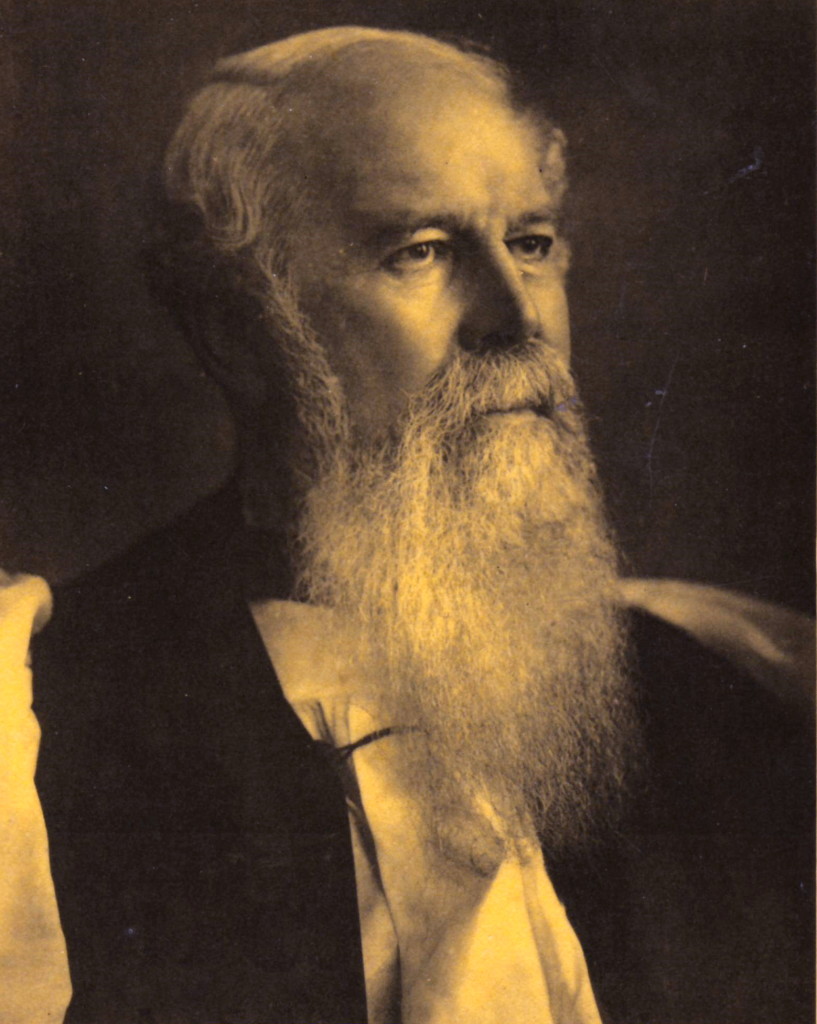
John Charles Ryle (10 May 1816 — 10 June 1900) was an English evangelical Anglican bishop. He was the first Anglican bishop of Liverpool.
Broadcaster:

Comments

0 / 2000 characters
Comments are moderated before appearing.

Be the first to comment!

Joshua

Joshua

Shall we play a game? Ask me about articles, sermons, or theology from our library. I can also help you navigate the site.