Redeeming the Time This message was first preached sometime in the mid-1700s by Jonathan Edwards. Our text for today comes from the book of Ephesians, Ephesians chapter 5 verse 16. Redeeming the Time Christians should not only look for ways to improve the opportunities they have for their own advantage, but also labor to rescue others from their evil ways, so that God might defer his anger and they might be redeemed from that terrible destruction which, when it does come, would put an end to the time of divine patience in their lives. And it may be because of this that the reason is added, because the days are evil. It is as if the apostle had said, the wickedness of the times tends to accelerate the coming judgments of God. But your holy and guarded walk will tend to redeem time from the devouring jaws of those calamities. Our text today commands us to set a high value on our opportunities in life and to be very careful that they are not lost. We are therefore exhorted to exercise wisdom and caution in order that we may make the most of our time. Therefore, it appears that the time allocated for us in our lives is extremely precious. Our first point today, why is time precious? Why is time precious? Time is precious for the following reasons. First, because our eternity will be blissful or miserable depending on whether we used our time on earth wisely or not. Our eternity will be blissful or miserable depending on whether we used our time on earth wisely or not. Things are precious in relationship to their importance or to the degree in which they concern all welfare. Men and women set the highest value on those things which they feel primarily affect them. Thus time is very precious. because our eternal destiny depends on making good use of it while on earth. In addition, our welfare in this world depends on the good use of our time. If we don't use it wisely, then we will be in danger of sinking into poverty and disgrace. But by the good use of it, we may obtain those things which will be useful and comfortable. But above all things, Time is precious because our eternal state depends on it. The importance of redeeming our time in other areas of our life is in subordination to the importance of it in eternal matters. Gold and silver are considered precious by men, but their value comes from what they can be used to obtain, such as using them to avoid or remove some evil. or bringing about some good. And the greater the evil is which a man has the opportunity to escape, or the good which he can obtain by using something that he possesses, then the value of that thing is of greater worth, whatever it is. Thus, if a man, by the use of anything which he has, can save his life, which he would lose without it, He will look on that thing that can be used to escape death as something very precious. Therefore, time is so very precious because by it we have opportunity of escaping everlasting misery and of obtaining everlasting blessedness and glory. The proper use of our time will bring escape from eternal punishment and attainment of eternal life. Time is very short, which is another reason that makes it very precious. The scarcity of any commodity causes men to set a higher value on it, especially if it is necessary for life. For example, when Samaria was besieged by the Syrians and provisions were very scarce, We saw that a donkey's head sold for about two pounds of silver and a small amount of peapods for about two ounces of silver. Therefore, time should be prized more by men and women because all of eternity depends on it, and yet we only have a little time in our lives. Job said, Only a few years will pass before I go on the journey of no return. My days are swifter than a runner. They fly away without a glimpse of joy. They skim past like boats of papyrus, like eagles swooping down on their prey. The Apostle James said, What is your life? You are a mist that appears for a little while and then vanishes. Our lives are nothing but a moment in eternity. Time is so short and the work which we have to do is so great that we have no time to spare. The work which we have to do to prepare for eternity must be done in the time available or it never can be done. This work is found to be very difficult and therefore makes time all the more necessary. We must consider time to be very precious because we are uncertain of its continuation. We must consider time to be very precious because we are uncertain of its continuation. We know that time is very short, but we don't know how short. We do not know how little of it remains, whether a year or several years or only a month a week or a day. Every day we are uncertain whether that day may be the last or whether we are to have another day. This is something that is easily verified by experience. If a man who was planning to take a long voyage only had enough supplies set aside for the journey and also knew that if any of his supplies would be lost or destroyed that he would perish during the voyage, then he would treasure them all the more. How much more would many men and women prize their time if they knew they had only a few months or a few days more to live? Certainly a wise man or woman would prize their time all the more, since they did not know how much time they really had left. This is the way it is with the majority of the people in the world who presently enjoy health and see no signs of approaching death. No doubt, many of them are to die next month, many next week, yes, many probably tomorrow, and some even tonight. Yet these same persons do not know it and perhaps think nothing of it. And neither they nor their neighbors would say that they are more likely to soon be taken out of the world than others. This teaches us how we ought to prize our time and how careful we ought to be that we waste none of it. Time is very precious because when it is passed, it cannot be recovered. Time is very precious because when it is passed, it cannot be recovered. There are many things which men and women possess which, if they part with it, they can obtain again. If a man has parted with something which he had, not knowing the value of it or the need he would have of it, he often can regain it, at least with some pain and cost. If a man has been taken advantage of in a business deal and has sold something and afterwards realized his error, he may often obtain a release from the contract and recover his loss. But this is not true with respect to time. For once it is gone, it is gone forever. No amount of money or effort can ever recover it. Though we are very sorry about the waste of our time and that we did not make the most of every opportunity, it will be to no avail. Every part of each day is continually offered to us, and we may choose whether we will use it effectively or not. But there is no delay. Time will not wait on us to see whether or not we will comply with the offer. If we refuse to make the most of the opportunity, then it is immediately taken away and never offered again. That part of time which is gone, which we have neglected to make the best use of, is gone forever. If we have lived 50 or 60 or 70 years and have not used our time wisely, then we must know that there is nothing we can do about it now. It is eternally gone from us. All that we can do is to make the most of the little time that remains. Yes, if a person has wasted time most of their life, then all that time is lost and only those few remaining moments can possibly be made productive. The majority of the opportunities of their life are gone. It is all lost. It is unrecoverable. Eternity depends on the proper use of our time on earth and once that time is wasted and gone, when death comes, there is no more time left. There is no possibility of regaining any of that lost time or any additional time to prepare for eternity. If a man would lose all of his earthly wealth and become bankrupt, it is possible that his loss could be made up. He could start over and try to build another fortune. But when the time of life on earth is gone, it is impossible that we can ever obtain another earthly life. All opportunity of obtaining eternal life is utterly and eternally gone. Our second point today, reflections on time past. Reflections on time past. You have now heard of the preciousness of time and you are the people to whom God has committed that precious talent. You have an eternity before you. When God created you and gave you a soul, he made you for an endless duration He gave you time here on earth in order to prepare for eternity, and your future eternity depends on the good use of that time. Consider, therefore, what you have done with your time thus far. You are not now just beginning your lifetime, but a great deal of it is already past and gone, and all the intelligence and power and treasure of the universe cannot recover it. Many of you may well conclude that more than half of your time is gone, though you might live a full lifespan. Your hourglass is more than half empty and it may be that there are only a few sands remaining. Your sun is past the meridian or perhaps just setting or going into an eternal eclipse. Consider, therefore, what account you can give of your use of the time given to you in your life. Have you let the precious golden sands of your hourglass run out without making the most of every opportunity? Every day that you have enjoyed has been precious. Yes, your moments have been precious. But haven't you wasted your precious moments, your precious days, yes, your precious years? If you would take the time to remember how many days you have now lived, what a great number that would be! And how precious has every one of those days been? Consider, therefore, what have you done with them? What happened to all of them? What can you show of any improvement made or good done or benefit obtained for all this time which you have lived? When you look back and search, don't you find this past time of your lives was for the most part wasted? Having not been filled up with any eternal good, and if God who has given you your time should now call you to an account What account could you give to him? How much may be done in a year? How much good is there opportunity to do in such a space of time? How much service may persons do for God and how much for their own souls if they make the best use of the time that they can? How much may be done in a day? But what have you done in so many days and years that you have lived? What have you done with the whole time of your youth, you that are past your youth? What has become of all that precious season of life? Hasn't it all been unproductive to you? Wouldn't it have been better for you if all that time you had been asleep or in the state of non-existence? You have had a lot of leisure time and freedom from worldly cares and obligations. Consider what you have spent that time on. You have not only had ordinary time, but you have had a great deal of holy time. What have you done with all the Sundays which you have enjoyed? Consider those things seriously and let your own consciences give an answer. Our third point today, who primarily deserves reproof for the wasting of the preciousness of time? How little is the preciousness of time considered and how little understanding of it does the greater part of mankind seem to have? And how many squander their time? There is nothing more precious and yet nothing which men and women waste more than time. Time is with many like silver was in the days of Solomon, no more important than the stones in the street and nothing worth worrying about. They act as if time were as plentiful as silver was then and as if they had a great deal more than they needed and did not know what to do with it. If men and women were as wasteful with their money as they are of their time, if it were as common a thing for them to throw away their money as it is for them to throw away their time, we would consider them foolish and not in the possession of their right minds. Yet time is a thousand times more precious than money, and when it is gone, it cannot be purchased for any amount of money, silver or gold. There are several kinds of persons who are reproved by this doctrine whom I will particularly mention. First, this doctrine reproves those who spend a great part of their time in idleness. This doctrine reproves those who spend a great part of their time in idleness. Those who do nothing, either for the good of their souls or bodies, nothing for their own benefit or for the benefit of their neighbor or their family. There are some persons on whose hands time seems to lie heavy, as though time, instead of being precious, was rather a burden to them. Their hands refuse to work, and rather than put themselves to it, they will let their families suffer and will suffer themselves. The Bible says, laziness brings on deep sleep, and the shiftless man goes hungry, and drowsiness clothes them in rags. Some spend much of their time at the tavern, over their drinks, and in wandering about from house to house, wasting away their hours in idle and unprofitable talk which only promotes poverty and evil. We read in the Bible, all hard work brings a profit, but mere talk leads only to poverty. The teaching of the apostle in Ephesians 4.28 is this, that we must work doing something useful with our own hands, that we may have something to share with those in need. But lazy men, instead of gaining anything to give to those in need, only waste what they already have, just like the Bible says, one who is slack in his work is brother to one who destroys. This doctrine reproves those who spend their time in wickedness. This doctrine reproves those who spend their time in wickedness. They do not merely spend their time in doing nothing productive but spend it in doing evil things. These people not only waste their time but they do worse. With their time they hurt both themselves and others. Time is precious as we have heard because eternity depends on it. By the right use of our time we have the opportunity of escaping eternal torment. and obtaining eternal blessedness. But those who spend their time in wickedness not only neglect to use their time to obtain eternal happiness or to escape damnation, but they spend it for the exact opposite purpose, to increase their eternal misery or to cause their eternal damnation to be all the more severe and unbearable. Some spend much of their time in partying and in unclean talk and immorality, in company with the wicked, in corrupting and ensnaring the minds of others, setting bad examples and leading others into sin, corrupting not only their own souls but the souls of others. Some spend much of their precious time in slandering and backbiting in talking against others, in conflict, not only arguing themselves, but inciting and stirring up strife and controversy. It would have been better for some men and women, and better for their neighbors, if they had never done anything at all. For then they would have done neither good nor bad. But now they have done a great deal of harm, more than they have done or ever will do good. There are some persons whom it would have been better for the towns where they live to have kept them locked up in prisons in order to keep them from being an evil in their society. Those who have spent much of their time in wickedness will, if they are ever reformed and start living a new life, they will find not only that they have wasted the past, but they have to work very hard in the remaining time to undo what they have done. How many men and women will, when they have only a little time left, look back on their past lives and wish that they had had no time? The time which they spent on earth will be worse to them than if they had spent that same amount of time in hell. For an eternity of more dreadful torment and misery in hell will be the fruit of their wasted time on earth. This doctrine reproves those who only spend their time in worldly pursuits, for they have neglected their souls. This doctrine reproves those who only spend their time in worldly pursuits, for they have neglected their souls. Such men and women truly waste their time. They may always be diligent in their worldly business and very careful not to let any good opportunity pass by so that it will in some way or other produce worldly profit. They that make the most of their time only for earthly benefit in effect really lose it because time was not given for itself but for that eternity which follows it. They, therefore, whose time is taken up in caring and working only for the world, in seeking what they will eat and what they will drink and what they will wear, in planning on how to acquire for themselves treasures on earth, how to enrich themselves, how to make themselves great in the world, or how to live in comfortable and pleasant circumstances, they who while here on earth who busy their minds and employ their strength only in these things and whose affections are directed towards these things, they lose their precious time. Therefore, let those who have been guilty of spending their time in this manner stop and think about it. You have spent a great part of your time and a great part of your strength in getting a little of the world And how little good does it afford you now that you have gotten it? What happiness or satisfaction can you reap from it? Will it give you peace of mind or any true peace or comfort? Is your poor, needy, perishing soul any better for it? And what better prospects does it afford you of your approaching eternity? And what will all that you have acquired do for you when time on earth is over.
Our fourth point today is an exhortation to make the most of time. Our fourth point today is an exhortation to make the most of time. First, consider what has been said about the preciousness of time, how much depends on it, how short and uncertain it is. how unrecoverable it will be when it is gone. If you have a right conception of these things, you will be treasuring more of your time than the finest gold. Every hour and moment will seem precious to you. But besides those considerations which have already been set before you, I would like for you to also consider the following. First, that you are accountable to God for your time that you are accountable to God for your time.
Time is a talent given to us by God. He has allotted us our day, and it is not for nothing. Our day was chosen for some work, therefore God will at the day's end call us to an account.
We must give account to God for the use of all of our time. We are God's servants As a servant is accountable to his master, how he spends his time when he is sent out to work, so are we accountable to God. If men and women would carefully consider this and keep it in mind, wouldn't they make better use of their time than they do? Wouldn't you behave differently than you do if you reflected within yourselves every morning and every evening that you must give an account to God how you have spent that day and evening? Christ has told us that men will have to give account on the Day of Judgment for every careless word they have spoken. From this statement we can easily conclude that we must give an account of all our idle, wasted time. Consider how much time you have already wasted. Consider how much time you have already wasted. Because you have wasted so much time already, you have the greater need of diligently making the most of what still remains. You ought to mourn and grieve over your lost and wasted time, but that is not all. You must apply yourselves even more diligently to improve the remaining part that you may redeem lost time. You who are considerably advanced in age and have up till now spent your time in worthless pursuits and worldly cares, and have lived the majority of your life neglecting the needs of your souls, you should be terrified and shocked when you think how much time you have lost and wasted away. Because you have lost so much time, you have all the more need of diligence for three reasons. First, because your opportunity to do good is less than before. Your opportunity to do good is less than before. The time allocated to you in life is short to begin with. But now set aside all that you have already wasted and then you can see how very little time is left. That part of your life which you had already wasted is lost and wasted opportunities. Secondly, because you have lost so much time, You have all the more need of diligence since you have the same work to do that you had at first, but now with greater difficulties. Because you have lost so much time, you have all the more need of diligence since you have the same work to do that you had at first, but now with greater difficulties. Up till now, you have done nothing at all with your God assigned work. It all remains to be done. And now, with vastly greater difficulties and oppositions in your way than would have been if you had set about it in a timely manner, at the proper time. So that the time in which to do your work has not only grown shorter, but your work has grown greater. You not only have the same work to do, but you have more work. For while you have wasted your time You have not only shortened it, but you have been making more work for yourselves. Hopefully, as you reflect on this, you will be awakened to take better care, not to let things run on in this manner any longer, and that you will be stirred up to immediately apply yourselves to your work with all your might. Lastly, because you have lost so much time, you have all the more need of diligence since the best of your time has been lost. Because you have lost so much time, you have all the more need of diligence since the best of your time has been lost. The first part of a man's life is time. After he comes to the age of reason, and is capable of performing his work is the best. You who have lived in sin until past your youth have lost the best part. Therefore, you must consider your situation, that the total amount of time given to you, your lifetime, is short to begin with, and there is no time to spare. A great part of that time is already gone, so that it has become much shorter. That time which is gone was the best part. Yet all your work remains, and not only so, but with greater difficulties than ever before. For the shorter your time is, the more work you have to do. What will make you aware of the necessity to diligently redeem the remaining time if these things will not? Sometimes a reflection on the things I just mentioned have another effect. They tend to discourage persons and to make them think that since they have lost so much time that it is not worth their while to attempt to do anything now. The devil makes fools of them, for when they are young the devil tells them, there is plenty of time in life, there is no need of being in a hurry, it will be better to seek salvation later. And they believe him. Afterwards, when their youth has passed, the devil says to them that now they have lost so much time, and the best of their time, that it is not worth their while to attempt to do anything. And they still believe him. So that with them, no time is good. Satan's lie is that the season of youth is the best time for pleasure and amusement, and there will be enough time later And when later comes, Satan says that it is not a good time because the best time, the time of youth, is gone. Thus, men and women are deceived and ruined. But what madness it is for persons to give up in discouragement so as to neglect their work because their time is short. What they need is to wake up out of their sleep to stir themselves up and to begin a serious search to obtain eternal life.
God might still give them a repentant heart and an understanding of the truth
so that they may be saved. Though it is late in your life, yet God calls on you to wake up and to apply yourselves to your work. And will you not listen to his counsel in this great matter rather than to the counsel of your mortal enemy? Now, continuing in our exhortation to make the most of our time, our third point was to consider how time is sometimes valued by those who have come near to the end of it. Consider how time is sometimes valued by those who have come near to the end of it. What a sense of the preciousness of time have poor sinners sometimes when they are on their deathbeds. Many of them have cried out, Oh, I would give anything for an inch of time. On their deathbeds, time appears to them to truly be precious. However, an inch of time could do them no more good than before when they were healthy. For a person's time on a deathbed is attended with far greater disadvantage for a good use of the time remaining, especially for the good of their soul. But the approaching hour of death makes men and women aware of the inestimable worth of time. Perhaps when they were healthy, they were insensible of its value as you are and were just as negligent of it. But how different their thoughts are now! It is not because they are deceived that on their deathbeds they think that time is of great value, but because their eyes are opened. And it is because you are deceived and blind that you do not think as they do. 4. Consider what a value we may conclude is set on time by those who are past the end of it. What thoughts do you think they have of time's preciousness, those who have lost all their opportunity for obtaining eternal life and have gone into the fires of hell? Though they were quick to waste their time while they lived and set no great value on it, yet now they have changed their perspectives. How they would value the opportunity which you have if they could only have it granted to them. what they wouldn't give for one of your days under the means of grace. So will you, either now or at the end of your life, be convinced. But if you will not be convinced except in the manner in which they are, it will be too late. There are two ways of making men and women aware of the preciousness of time. One is by showing them the reason why it is precious, by telling them how much depends on it, how short it is, how uncertain, and all that. The other way is by experience, the experience of death and being thrown into hell, where men and women are convinced how much depended on the right use of their time. The latter is the most effective way, for it always convinces, if nothing else does. But if persons are not convinced by the former means, the latter will do them no good. If the former is ineffective, the latter, though it is certain, yet is always too late. Experience never fails to open the eyes of men and women. But if that is what opens them, then it is too late and will not benefit them. Therefore, let everyone be persuaded to make the most of their time while they can. Recommendations on Redeeming Your Time I will conclude this message with advising three things in particular. Redeem the present time without any delay.
If you delay and put off making the most of present opportunities, then still more time will be lost and it will be an evidence that you are not aware of its preciousness. Do not talk of more convenient time later, but make the most of every opportunity while you have it. Follow the example of the psalmist who says, I will hasten and not delay to obey your commands. Secondly, be especially careful to make the most of opportunities which are most precious. Be especially careful to make the most of opportunities which are most precious. Though all opportunities are very precious, Yet some are more precious than others. Particularly, holy opportunities are more precious than common opportunities. Such opportunities are of great benefit for our eternal life. Therefore, above all, make the most of your Sundays and especially the opportunity of public worship,
which is the most precious part.
Do not waste it either in sleep or in carelessness, inattention, or wandering imaginations. How foolish are those who waste not only their common but holy opportunities. Yes, the very time of close corporate communion with God and His Word.
The opportunity of youth is precious for many reasons. Therefore, if you are young, then be careful that you make the most of it. Do not let the precious days and years of youth slip away without making the most of the opportunities available.
The time of the strivings of God's Spirit is more precious than any other time. Then God is near and we are directed in Isaiah 55.6 to seek the Lord while he may be found, call on him while he is near. That time especially is an opportunity. and a day of salvation. For God tells us, in the time of my favor I heard you, and in the day of salvation I helped you. I tell you, friends, now is the time of God's favor. Now is the day of salvation.
Our third point, make the most of every opportunity of free time that you have. Make the most of every opportunity of free time that you have. Many persons have a great amount of such opportunities, and all have some. If men and women are only willing, they can make the most of such opportunities. When we are most free from caring for the body and the business of the world, then we have a wonderful opportunity for the soul.
Therefore, do not spend your free time unprofitably, nor in such a manner that you would not be able to give a good account to God. Do not completely waste that time in meaningless visits or useless recreations or amusements. Recreation should be used only with a specific purpose in mind. So much and no more should be used as is fitting for the mind and body for the work which we are called to do.
You have need to make the most of every talent, advantage, and opportunity to the best of your ability while time lasts. For the day of judgment on this earth and its inhabitants is coming soon. According to the oath of the angel in Revelation 10 verses 5 and 6. Then the angel I had seen standing on the sea and on the land raised his right hand to heaven. And he swore by him who lives forever and ever, who created the heavens and all that is in them, the earth and all that is in it, and the sea and all that is in it, and said, there will be no more delay. Amen.
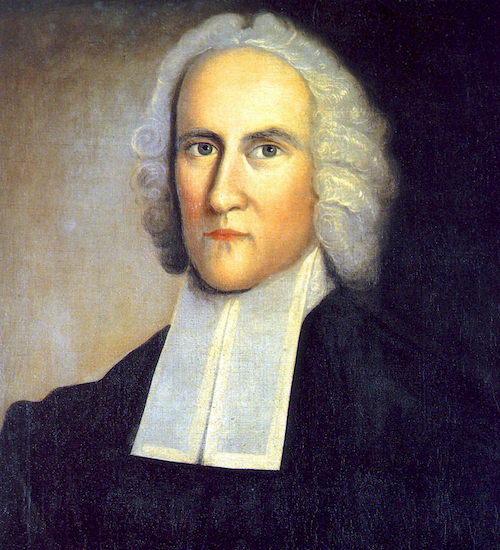
About Jonathan Edwards
Jonathan Edwards (October 5, 1703 — March 22, 1758) was a North American revivalist preacher, philosopher, and Congregationalist Protestant theologian.
Comments
Your comment has been submitted and is awaiting moderation. Once approved, it will appear on this page.
Be the first to comment!