The Resurrection of Lazarus by George Whitefield. This sermon was originally preached in the mid-1700s. The text for this sermon comes from the book of John 11, verses 43-44.
Jesus called out in a loud voice, Lazarus, come out. The dead man came out, his hands and feet wrapped with strips of linen and a cloth around his face. Jesus said to them, take off the grave clothes and let him go.
When Jesus Christ, the eternal word of God, was pleased to create all things by the word of his power, his last works were the best. When he looked back upon and beheld what he had first created by his almighty power, he pronounced them good. But when at the end of his initial creation, When that lovely creature man was formed, he pronounced them very good.
Likewise, this same Jesus, when he came to live among us and began to carry on a new and second creation, though all his works were miracles of wonder and manifested the glory of his eternal Godhead, yet the nearer he came to the end of his public ministry, the greater and more noble were the miracles which he performed. I believe that the resurrection of Lazarus, which is to be the subject of this sermon, is a sufficient proof of this. To a person of understanding, it seems to be one of the greatest, if not the very greatest, miracle of all which our blessed Lord performed.
When our Savior told the disciples of John the Baptist to go and tell their master what things they had seen and heard, he commands them to inform him that by the divine power of Jesus the dead were raised, alluding no doubt to the ruler's daughter, who was raised shortly after her death, and the widow's son, who at the command of Jesus rose up out of his coffin as they were carrying his corpse to the burial. These were significant proofs that Jesus was indeed the Messiah that was to come into the world. But his raising of Lazarus from the dead after he had been in the tomb for four days and whose body was already experiencing decay is still, if possible, a greater miracle and consequently a stronger proof of Jesus being the anointed, the Christ of God.
John the Evangelist is very particular in giving us an account of this miracle, even so particular as to spend a whole chapter in relating the circumstances which preceded, attended, and followed after it. And as he was undoubtedly directed to do so by the all-wise, unerring Spirit of God, does it not point out to us that this miracle with all its respective circumstances calls for our particular and most serious meditation. In light of this, as the Lord shall be pleased to assist, I shall go back to the beginning of this chapter, follow the evangelist step by step, and consider the particulars of this amazing miracle, make some practical observations as I go along, and conclude with some suitable instructions and exhortations which will naturally arise from the body of the sermon. The evangelist in the first verse makes mention of the sickness of Lazarus. Now a man named Lazarus was sick. He was from Bethany, the village of Mary and her sister Martha. Bethany, though a little place, is more famous because it was a town of Martha and Mary than if Alexander the Great had fought in it one of his greatest battles. Both of these women loved Jesus with sincere hearts, and they were as good as they were great. But Mary, though the younger sister, seems to be the most eminent. For the evangelist in the second verse speaks of her in a very distinguishing manner, saying, this Mary was the same one who poured perfume on the Lord and wiped his feet with her own hair after she had washed them with tears of love. Mary's act of love is given special attention. She is given particular honor and high commendation here, and such are the honors of all God's saints. Though all our good works are not recorded as Mary's are, yet God is not unmindful that he should forget our works of faith and labors which were expressions of love. Every tear we shed, every sigh we express, everything we give to the poor, though it may only be a cup of cold water, they are all recorded in the Lamb's Book of Remembrance, and they shall be produced to our eternal honor and rewarded with a reward of grace at the coming of our Lord. I was hungry, and you gave me something to eat. I was thirsty, and you gave me something to drink. I was a stranger and you invited me in. I needed clothes and you clothed me. I was sick and you looked after me. It is for this reason that we need to stand firm and let nothing move us, always giving ourselves fully to the work of the Lord, because we know that our labor in the Lord is not in vain, nor will it ever be forgotten by the Lord. It was that Mary that anointed the Lord with perfume and wiped his feet with her hair. And what follows? Whose brother Lazarus now lay sick. So we see that being related to Christ or his disciples will not exempt persons from sickness. In this life, time and chance happens to everyone. However, with this significant difference, Those afflictions which harden the obstinately impenitent person will soften and purify the heart of a true believer. My son, do not make light of the Lord's discipline, and do not lose heart when He rebukes you, because the Lord disciplines those He loves, and He punishes everyone He accepts as a son. Jesus loved Lazarus, and yet Lazarus was sick. And what do his sisters do for him now that he is sick? No doubt they sought a physician, for it is tempting God to neglect making use of means for the recovery of our health when it is impaired. But then they were not guilty of Asa's crime. Remember, Asa was afflicted with a disease in his feet. And though his disease was severe, even in his illness, he did not seek help from the Lord, but only from the physicians. No, these sisters knew the most skillful prescriptions would be of no effect unless attended with a blessing from Jesus, the great and almighty physician. And therefore his sisters sent to him, probably at the beginning of their brother's illness, How different is their conduct to that of people in general, especially the rich and great. How unfashionable it is nowadays for persons to send for Jesus in behalf of their sick relatives. It is so very uncommon that in some places, if a minister is sent for because of a sick person, it is a sad indicator that the patient is almost past hopes of recovery. Martha and her sister Mary did not wait until her brother was beyond hope. They sent to Jesus. But what kind of message did they send? A very humble and suitable one. Lord, the one you love is sick. They might have said, Lord, he who loves you is sick. But they knew. They knew that our love was not worth mentioning. and that we love Jesus only because he first loved us. Besides, they are very careful not to prescribe what the Lord should do or what means he should use. They do not say to the Lord, we pray that you would come or only speak the word and our sick brother shall be healed. No, they simply tell Jesus the situation. knowing it was sufficient to lay before an infinitely compassionate Redeemer and leave it to Him to act according to His own sovereign goodwill and pleasure. Lord, the one you love is sick. Oh, how sweet it is when the soul is brought to this
And with what a holy confidence may we pray to and intercede with the Holy Jesus when we have reasons to hope that those we pray and intercede for are lovers of and are loved by our Lord Jesus. For his eyes are always on the righteous and his ears are always attentive to their prayers. This was their message and it soon reached Jesus Christ. And how does he receive it? We are told, verse 4, when he heard this, Jesus said, this sickness will not end in death. No, it is for God's glory so that God's son may be glorified through it. We are not certain to whom these words were spoken. In all probability, Jesus spoke them to the persons that delivered Martha and Mary's message. And if so, it was no doubt a comfortable answer for the present, though it must have afterwards puzzled them as well as the disciples how to explain it when they found that Lazarus was actually dead. This sickness will not end in death, not unto an enduring death, because he intended to raise him again soon after his death. It is like that expression of our Lord in the book of Mark, the child is not dead but asleep, which must not be understood in the literal but rather in the metaphorical sense. And this and instances like this ought to teach us carefully to weigh our blessed Lord's words and to wait for a clarification of them by subsequent providences, otherwise we will be in danger of misapplying them. and thereby bring our souls into indescribable bondage. This sickness will not end in death. No, it is for God's glory so that God's Son may be glorified through it. This is the end both of the afflictions and the deaths of God's people. By all that happens to them, He will be glorified one way or another and cause everything to work together for their good. And who would not be content to be sick, or willing to submit to death itself, if by it the Son of God may therefore be glorified? The answer, that this sickness will not end in death, no doubt proceeded from love. For we are told in verse 5 that Jesus loved Martha and her sister and Lazarus. Oh, what a happy family! Three in it were loved by Jesus with a special everlasting love. Very often it so happens that there is but one in a city and two in a country of this character. But here are two sisters and a brother, all lovers of and all loved by the glorious Jesus. What shall we say to these things? Why, that our Savior's grace is free and sovereign He may do what he will with his own. They who are thus so highly favored as to have so many converted in one house ought to be doubly thankful. Not all his saints have such a blessing. No, many, very many, go mourning over their perverse and graceless relatives all their lives. And they find, even to their dying day, that their greatest foes are those of their own household. Surely these three relatives live to heaven on earth. For what can they want? What could make them miserable who are assured of Jesus' love? But surely if Jesus loves this dear little family, then the next news one might expect to hear would be that he immediately went and healed Lazarus, or at least cured him at a distance. But instead of that, we are told, verse 6, Yet when he heard that Lazarus was sick, he stayed where he was two more days. With our natural reason, this would be a rather strange way of expressing love, but not so strange in the eye of faith. For the Lord Jesus very often shows His love by deferring to give an immediate answer to our prayers. Thus He tries our faith and patience and exercises all of our passive graces. We have a proof of this in the Canaanite woman, upon whom the blessed Jesus frowned and spoke roughly to at first, only that he might afterwards turn to her and say, Woman, you have great faith. Then do not let those who believe jump to conclusions or immediately in their hearts complain against the Lord because he may not answer their request in their own time and in their own way. God's time and God's way is best, and we shall find it to be true in the end. Martha and Mary experienced the truth of this, though undoubtedly our Lord's seeming delay to come and heal their brother cost them great searchings of heart. But will the Lord Jesus forget his dear Lazarus, whom his soul loves? Can a mother forget the baby at her breast? Indeed, she may. but the Lord never fails those that fear him, neither is he slow in keeping his promise, as some men count slowness, for his very delays are answers. Though our Lord stayed two more days where he was to try the faith of these sisters, yet after this he said to his disciples, verse seven, let us go back to Judea, with what a holy friendship does Jesus converse with his dear children. Our Savior seems to speak to his disciples as though he was only their brother and even on the same level with them. Let us go back to Judea. Jesus clearly knew the weakness of his disciples and also what a dangerous place Judea was. Therefore, note how gradually he reveals to them his plan of going there. and how he allows his disciples to even protest against him over this plan.
But Rabbi, they said, a short while ago the Jews tried to stone you and yet you are going back there? They were amazed at our Lord's boldness and were ready to call it presumption as we generally are prone to censor and condemn other zealous and enterprising persons as carrying matters too far. The disciples no doubt thought they spoke out of love to their Lord, and assuredly they did, but what an amount of self-love was mixed and blended with it. They seemed very concerned for their Master, but they were more concerned for themselves.
However, Jesus overlooks their weakness and gently replies. Are there not twelve hours of daylight? A man who walks by day will not stumble, for he sees by this world's light. It is when he walks by night that he stumbles, for he has no light. It was as if our Lord had said, My dear disciples, I thank you for your care and concern for me. Judea is a dangerous place, and what you say of the treatment I receive from its inhabitants is just and true. But do not be afraid of going there on my account. For as a man walks safely twelve hours of the day because he walks in the light, so as long as the time appointed by my Father for my public ministry lasts, I shall be as secure from the hands of my enemies as a man that walks in broad daylight is secure from falling. But as a man stumbles if he walks in the night, so when the night of my passion comes, Then, but not till then, shall I be given up into the hands of my spiteful foes.
Oh, what comfort these words have by the blessing of God frequently brought to my soul.
May all of Christ's ministers strengthen themselves with this thought, that so long as God has work for them to do, they are immortal. And if after our work is over, Our Lord should call us to lay down our lives for the brethren and to seal the truth of our doctrine with our blood. It would certainly be the highest honor that can be put upon us. It has been granted to you on behalf of Christ, not only to believe on him, but also to suffer for him, says the apostle to the Philippians.
After Jesus had said this, to satisfy them that he was not going to Judea without a proper call, he went on to tell his disciples, our friend Lazarus has fallen asleep. Our friend, amazing, for what is a friend? Just like one's own soul. How dear then and near are true believers to the most adorable Jesus.
Our friend Lazarus, Still more amazing, here is condescension, here indeed is unparalleled intimacy. And what does he say about Lazarus? He has fallen asleep. A figurative way of expression. For what is death to the lovers of Jesus Christ but a sleep and a refreshing one too? Thus it is said of Stephen when he died that he fell asleep. Christ indeed died, but believers only sleep. And the scriptures declare that God will bring with Jesus those who have fallen asleep in Him.
Our friend Lazarus has fallen asleep. For though he is dead, I will soon raise him up from the grave, so that his dying will be only like a person taking his short nap. Our friend Lazarus has fallen asleep, but I am going there to wake him up."
By this time, one would imagine our Lord's disciples should have understood him. But how unwilling are we to believe anything that we do not like? His disciples replied, Lord, if he sleeps, he will get better. Oh, fearful and slow of heart to believe, How happily would they excuse themselves from going into Judea for fear of a few stones. By this way of talking, they in effect indict their blessed master's conduct. And under a pretense of preserving him, they foster and plead for their own cowardice and unbelief.
That love, which hopes and believes all things for the best, teaches us to therefore judge them favorably. For Jesus had been speaking of Lazarus' death, but his disciples thought he meant natural sleep. The great and compassionate High Priest, knowing and remembering that they are nothing but dust, throws a veil of love over their weakness. And finally, in verse 14, he tells them plainly, Lazarus is dead.
We learn from this that if we wait on Jesus, we will clearly know his will one way or another. And even then, lest they should be swallowed up with too much sorrow, he immediately adds in verse 15, and for your sake, I am glad I was not there so that you may believe or have more faith or have that faith which you already possess increased and confirmed. This is clear proof that all of Jesus' delays to answer prayer are only to strengthen our faith.
Nevertheless, our Lord says, let us go to him. This was a sufficient hint, if they knew how to understand it, that he intended to do something extraordinary, though he would not tell them directly what he intended to do. For the Lord Jesus will keep those whom he loves at his feet and dependent upon him. Let us go to him. He still speaks as though they were his equals. Oh that Christians in general, oh that ministers in particular, would learn from the great example of Christ to condescend to men of low degree. Well, the secret is now out. Jesus has said to them plainly, Lazarus is dead. And with what reception does this sad news meet with? With great condolence, especially from Thomas, for verse 16. Then Thomas, called Didymus, said to the rest of the disciples, Let us also go, that we may die with him. That is, according to some Bible scholars, to die with Lazarus. with whom it may be that Thomas had established an intimate acquaintance. But granting it was so, shall I commend him for this passionate expression? I do not commend him. Surely he spoke without thinking. Let us also go that we may die with him, as though there was no comfort to be expected in the world now that his friend Lazarus was gone. This was a great fault. and yet a fault that many of God's children run into daily, by mourning for their deceased relatives too much, like persons that have no hope. But this weakness ought not to be indulged, for if our friends and dear relatives are dead, Jesus, that friend of sinners, is not dead. But I am more inclined to think the word hymn refers to Jesus, his dear master. And if so, he is surely not to be blamed, because he spoke like a good soldier of Jesus Christ. Let us also go that we may die with him. If our dear master will go to Judea and risk his precious life, let us not any longer make such frivolous excuses, but let us bravely accompany him. And if the Jews are not only permitted to stone him, but also to kill him, then let us also go and die with him. We cannot die for a better cause." This was a speech worthy of a Christian hero, and Thomas here has given us an example that we should follow his steps by exciting and provoking one another closely to adhere to the blessed Jesus, especially when his cause and interest is in immediate danger. This exhortation, it seems, had a proper effect They all went and, as far as we know, cheerfully accompanied their glorious master. What they thought about on the road we are not told, but I am apt to believe they were a little discouraged when they came to Bethany. For on his arrival, Jesus found that Lazarus had already been in the tomb for four days. And what would it benefit them to come so many miles only to see a dead man's tomb? But how wisely were all these things ordered by the blessed Jesus to manifest his glory in the most extraordinary manner, that not only his disciples might have their faiths confirmed, but also that many of the Jews might also believe in him. This Bethany, it seems, verse 18, was less than two miles from Jerusalem, and Martha and Mary were what we may call people of fashion and also devout. Likewise, many of the devout, and we may suppose many of the wealthy Jews, also came from the city, as well as other adjacent places to visit them. They came to visit Martha and Mary, not to pay an idle, trivial call, but a serious, profitable visit. to comfort them in the loss of their brother. This was kind and neighborly, to weep with those that weep and to visit the afflicted in their distresses. This is one essential branch of true and undefiled religion. Oh, how sweet it is to visit surviving friends when we have reason to believe that their departed relatives died in the Lord. And we can therefore give them comfort concerning them For blessed are the dead who die in the Lord from now on. Yes, says the Spirit, they will rest from their labor. This and other arguments like this, no doubt, these visitors made use of to comfort Martha and Mary. And indeed, they needed a lot of comfort.
For we have reason to suppose from our Lord's answer, this sickness will not end in death. No, it is for God's glory. that these sisters had entertained thoughts of the recovery of their brother. But who can tell what these two holy souls must have felt when they found their brother did not recover, but was dead, laid out, and now decaying in the silent grave? What hard thoughts, without judging them, may we suppose they entertained concerning Jesus? Don't you think they were ready to cry out in the language of the prophet, You have deceived us and we are deceived.
But when a man reaches his limits, it is an opportunity for Jesus. In the multitude of the sorrows that they had in their hearts, the news of Christ's coming refreshes their souls. Somebody or another directly and privately informs Martha of it. When Martha heard that Jesus was coming, she went out to meet him. but Mary stayed at home.
But why is this, Mary? I thought you had been the most forward to listen to Jesus, and your sister Martha was more prone to be weighed down with the many things of this life. Why do you sit still, Mary? It may be that the news was brought only privately to Martha, for it is plain from verse 31 that the Jews who were in the house knew nothing of it. And Martha, knowing how the Lord had scolded her once before, was resolved that he would never be given any more reasons to scold her again. Therefore, when the news was brought, she would not even stay to inform her sister, but went out to see whether it was true or not. And if so, as the eldest sister, she would invite the blessed Jesus in. How happy it is when Christ's reproofs for past neglects excite our future zeal to come out and meet him. Such reproofs are an excellent ointment.
Another possibility is that the news reached Mary's ears as well as Martha's, but being overcome with sorrow, she thought the news was too good to be true and therefore sat still in the house. Oh how careful believers ought to be to cherish and maintain, even in the midst of tribulation, a holy confidence and joy in God. For the joy of the Lord is a believer's strength, whereas giving way to sadness and unbelief raises gloom and dullness in the mind, clouds the understanding, clogs us in the way of duty, and gives the enemy, who loves to fish in troubled waters, a very great advantage over us.
Mary, perhaps as a result of this, and being also naturally of an inactive disposition, stayed at home while her sister Martha got up quickly and went out to meet Jesus. And how does she approach him? Why, in a language indicating a distress of a burdened and disordered mind, For she said to Jesus, verse 21, Lord, if you had been here, my brother would not have died. Here is a mixture of faith and unbelief. Faith made her say, Lord, if you had been here, my brother would not have died. But unbelief made her confine Christ's power to his bodily presence. Besides, here was an implied accusation of the blessed Jesus for being unkind, for not coming when they sent to him the message, Lord, the one you love is sick. Once before she had charged Jesus with a lack of caring, saying, Lord, don't you care that my sister has left me to do the work by myself? Now she also accuses him for a lack of kindness. If you had been here, as much as to say, If you had been so kind as to come when we sent for you, my brother would not have died. And by saying this, she does, as it were, blame her brother's death on Jesus Christ.
Oh, how apt are even those whom Jesus loves in a special manner to charge him foolishly. How often does the hostility of our desperately wicked hearts rise up against Christ when we are under the afflicting hand of His providence? And even the very best of us, when frequently tempted in such circumstances, say within ourselves at least, why does God deal so unkindly with us? Why didn't He prevent this stroke, seeing it was in His power to have stopped it?
We should be ashamed before Him because of these feelings. We should pray and labor to be delivered from this remaining hostility of the heart and long for that time when mortality will be swallowed up by life and we shall never again feel one single bit of anger in our hearts against a good and gracious and all-wise and glorious Redeemer.
However, to do Martha justice, She pretty well recovers herself. Verse 22. But I know that even now God will give you whatever you ask. Whether these words imply an actual belief of our Lord's divinity is not certain. To me, they do, because we will find that she did believe our Lord was the Son of God and the Messiah who was to come into the world. Therefore, when she said she knew that whatever he asked of God, God would give it to him, she may be understood as referring to God the Father, under whom the Lord Jesus acted as mediator, yet still equal to Him in respect to His eternal glory and Godhead.
We may easily conclude that she was acquainted with this mystery because Jesus had frequently preached at her house and consequently had opened that mystery up to her. Oh, what a blessed thing must it be to have such a mediator, such a high priest and intercessor at the Father's right hand, that whatever he asks the Father in our behalf, he will give it to us.
He only calmly says to her, verse 23, your brother will rise again. This is good news that should bring great joy. This should comfort us concerning our deceased godly relatives, that before long they shall rise again, and their soul and body will forever be with the Lord. Jesus spoke here of an immediate resurrection, though He did not plainly point it out. For Christ loves to exercise the faith and patience of His disciples, and frequently leaves them to find out His meaning by degrees. It is best for us in our present state that it should be so. In heaven it will be otherwise.
Your brother, Christ says to Martha, will rise again. She might have immediately replied, when, Lord? But she labors to find out the mind of Jesus by degree. I know he will rise again in the resurrection at the last day. These words seem to imply that she had some distant thought of our Lord's plan to raise her brother now and that she spoke this way only to draw our Savior to speak and to tell her plainly whether He meant to do so or not. Those who are acquainted with Jesus are taught a holy art by the Blessed Spirit in dealing with their blessed Master. I know He will rise again in the resurrection at the last day. It is just the same as though she had said, Lord, do you mean that my brother will rise again before that time? Our Savior wisely keeps from giving her a direct answer, but chooses rather to preach to her heart.
Jesus said to her, I am the resurrection and the life. He who believes in me will live even though he dies. On this Martha's faith might take hold. Oh glorious words, how encouraging to you poor sinners lying in your blood. Though you are dead in trespasses and sins and are justly condemned to die the second death, yet if you believe in the Lord Jesus, you shall live. He adds, and whoever lives and believes in me will never die. Never die as to their souls. Never die eternally. and consequently never finally fall away from God.
This is an encouraging, soul-comforting declaration for you, O believers, for you who are kept, as it were, in a stronghold by the mighty power of God, through faith and through salvation. Do you believe this, says Christ to Martha, verse 26? What use are all the many great and precious promises of the gospel unless they are applied to each of our souls individually? The word does not profit unless it is mixed with faith. We therefore do well when we are reading Christ's words to put this question to ourselves. Oh my soul, do you believe this?
And it would be good for us if upon putting this question to ourselves, We could with the same holy confidence and in the same delightful frame say with Martha, verse 27, Yes, Lord, I believe that you are the Christ, the Son of God, who was to come into the world. This, I think, is a direct confession of our Lord's divinity. How full was her heart when she spoke these words. I am persuaded it burned within her. What a divine warmth had she contracted by talking with Jesus. How she longs that her sister might share in her holy joy.
For after she had spoken, verse 28, she went back, full of love, no doubt, and called her sister Mary aside, just as everyone will labor to call their nearest relatives because they themselves have felt the Lord Jesus to be the resurrection and the life. But Martha was careful, in the midst of her zeal, as we should always be, to behave with prudence. And therefore she calls her sister Mary aside, implied privately, saying, The Master is here and is asking for you.
The Master is here. She need say no more. Mary knew very well whom she meant. For holy souls easily understand one another when talking of their Master Jesus. The Master is here and is asking for you. Surely a woman of your exalted piety would not tell a deliberate lie, and in order to induce your sister to come to Jesus, would tell her that Jesus is asking for her, when indeed he did not. You need not put yourself to such an expense, or do any evil, that good may come of it. Only mention Jesus to Mary, and let her know for certain that the Master had indeed come, and I am persuaded she will no longer sit still.
Martha no doubt knew, and therefore I cannot judge her as some do, as though in her rush she said that which was not true. For Jesus might have certainly told her to call her sister, though it was not directly mentioned in this chapter. And it is very probable that our Lord did inquire after Mary, because she used to take such great delight in sitting at his feet and hearing the gracious words that proceeded out of his mouth. The master is here, Martha said to her sister, and is asking for you. And so I say to all poor sinners, Jesus, your Lord and Master, your Prince and Savior has come. Come to this lower world and has come this day in his word and by me, who am less than the least of all of his servants. And he calls for you. Oh, that he may also come in the demonstration of the spirit. And by His mighty power bow your stubborn hearts and will to obey the call, as Holy Mary did.
For we are told, verse 29, when Mary heard this, she got up quickly and went to Him. Sinners, when will you do so? Or why do you not now do so? How do you know whether Jesus will call for you again? before he calls you by death into judgment. Linger, O linger no longer. Flee, flee for your lives. Arise quickly and with Mary come to Jesus.
She obeyed the call so very quickly that her swiftness was taken notice of by her visitors. When the Jews who had been with Mary in the house comforting her, Notice how quickly she got up, without any ceremony at all, and went out. They followed her, supposing she was going to the tomb to mourn there. How wisely does our Lord permit and order all of this, to bring the Jews out to behold the wonderful miracle that he was about to perform. Little did Mary and the Jews think for what end they were thus providentially let out. But when Jesus has work to be done, he will bring souls to the place where he intends to call them in spite of men or devils.
But how does Mary behave when she comes to Jesus? We may be assured it was with great humility. No wonder we are told, verse 32, that when Mary reached the place where Jesus was and saw him, she fell at his feet. a place Mary had been used to, and in an agony of grief, says as her sister had done before her, Lord, if you had been here, my brother would not have died.
Poor Mary. Her concern was indeed great. Though she was a holy woman, she could not bear well the loss of her brother. She knew very well that the world would miss him, And no doubt he had been a kind and tender brother to her, but I am afraid she was sinfully overcome with too much sorrow. However, had we been there, the sight must have affected us. It seems to have affected the visitors, especially the blessed Jesus.
Jesus, instead of blaming her for her tacitly accusing him of unkindness, for not coming to her brother's relief, pities and sympathizes both with Mary and her weeping friends. When Jesus saw her weeping and the Jews who had come along with her also weeping, he was deeply moved in spirit and troubled.
Troubled? Not with any sinful anxiety, we may be assured. Nothing of that nature could possibly be in his sinless soul. And therefore some have carefully compared the trouble our Lord now felt to some crystal clear water shaken in a glass or bottle. You may shake it, but there will be no sediment. It will still be crystal clear water.
He was deeply moved in spirit. I do not see why this may not be understood of him simply praying in the spirit who then makes intercessions for the saints. with groans that words cannot express. I think I see the Immaculate Lamb of God secretly but powerfully agonizing with His Father. His heart is full of sympathy. In time, out of the fullness of it, He said, verse 34, where have you laid Him? Where have you laid Him? They, I suppose Martha and Mary, said to him, Come and see, Lord. He came. And verse 35 says, Jesus wept. It is put in a verse by itself that we might pause a little and ask why Jesus wept. He wept to show us that it was no sin to share a tear of love and sadness at the grave of a deceased friend. He wept because of seeing what havoc sin had made in the world and how it had reduced man, who was originally created a little lower than the angels by making him subject to death, to a level with the beasts that perish, but above all, He wept at the foresight of the people's unbelief. He wept to think of how many then present would not only not believe on, but would be hardened and have their prejudices increase more and more against him, even though he would raise Lazarus from the dead right before their very eyes. Well then, may ministers be excused. who while they are preaching now and then shed a few tears, at the consideration of their sermons being, through the perverseness and unbelief of many in their audience, a savor of death unto death instead of a savor of life unto life. Jesus wept. What a moving sight this was. Let us for a while suppose ourselves placed among these holy mourners, Let us imagine that we see the grave right in front of us and the Jews and Mary and the blessed Jesus weeping around it. Surely the most obstinate of us all must shed a tear or at least be affected with the sight. We find that it did affect those who were really bystanders. For then the Jews said in verse 36, see how he loved him. And if they said, see how he loved him, when Jesus only shed a few tears over the grave of his departed Lazarus, come then old sinners, and look at Christ dying and pouring out his precious heart's blood for you upon the cross. And then surely you must cry out, see how he loved us, see how he loved us. But sadly though, all were not affected the same at seeing Jesus weep. For we are told, verse 37, that some of them said, Could not he who opened the eyes of the blind man have kept this man from dying? One would imagine that Satan himself could scarcely have uttered a more perverse speech. Every word is full of spite and bitterness. Could not this man, this fellow, this deceiver who pretends to say that he opened the eyes of the blind, have caused this man, whom he seems to love so, to be kept from dying? Isn't this a sufficient proof that he is a cheat? Have we caught him at last? Is it likely that he really helped others when he could not help his own friend? Oh, how patient ought the servants of our Lord be, and how we may expect our own selves to be censured and have our own good deeds questioned when our blessed master had been thus treated before them. However, Jesus will do good, notwithstanding all these slights put upon him. And therefore, once more, deeply moved, Jesus came to the tomb. It was a cave or a vault, as is customary in great families, with a stone laid across the entrance. Jesus said, verse 39, take away the stone. How gradually our Lord proceeds in order to engage the people's attention all the more. I think I see them, all eyes, all ears, and eagerly waiting to see what will happen next. But Martha, now returning with the rest of the company, seems to have lost that good frame which she was in when she went to call her sister. She says to Jesus, but Lord, by this time there is a bad odor, for he has been there four days. Oh, the dismal effects of carnal reasoning. How naturally do we fall into doubts and fears when we have not kept our eye simply focused on the blessed Jesus. Martha, instead of looking up to Him, looks down into the grave, and deeply meditating on her brother's decaying corpse, she falls into a fit of unbelief. By this time there is a bad odor and therefore the sight of him will only be offensive. Perhaps she might think our Lord only wanted to take a view of her brother Lazarus. Jesus therefore, to give her yet a further hint that he intended to do something extraordinary, said to her, verse 40, Did I not tell you that if you believed you would see the glory of God? Our Lord speaks here with some degree of warmth, for nothing displeases Him more than unbelief of His own disciples. Did I not tell you that if you believed you would see the glory of God? Now we are not told when Christ first spoke these words to her. It might be that this was part of their conversation on another occasion sometime before this. However, He checks her openly for her unbelief now. For those whom Jesus loves must expect to be rebuked sharply by Him whenever they dishonor Him by unbelief. The reproof is taken. Without making any more objections, they took away the stone. And now behold with what solemnity the Holy Jesus prepares Himself to execute His gracious plan. Then Jesus looked up and said, Father, I thank you that you have heard me. I knew that you always hear me, but I said this for the benefit of the people standing here, that they may believe that you sent me. Who can express with what fervor and intenseness of spirit our gracious high priest uttered these words? They are a thanksgiving arising from an assurance that his Father had heard him, for Christ as mediator was submissive to the Father. I knew that you always hear me, and so may every believer in some degree say the same, but I said this for the benefit of the people standing here. Said what? We do not hear that Jesus said anything by way of prayer before, and that is true, if we mean vocally. But mentally he did say something, even when he groaned in the spirit once and again and was troubled. There is a way of praying even when we do not and cannot speak. Why do you cry out, said God to Moses, though we do not hear that he spoke one single word? but he cried in his heart. I observe this for the comfort of some weak but real Christians who think they never pray unless they can have a great flow of words, but this is a mistake, for we often pray best when we can speak least. There are times when the heart is too heavy to speak and the spirit itself makes intercessions for the saints. And that too is according to the will of God. With groanings that cannot be uttered. Such was Hannah's prayer for a son. Her lips were moving, but her voice was not heard. And such was our Lord's way of praying at this time. And perhaps the soul is never in a better frame than when in a holy stillness and unspeakable serenity. It can put itself as a blank in Jesus's hand for him to stamp on it just what he pleases. And now the hour of our saviors performing this long expected miracle had come. Verse 43, when he had said this, Jesus called out in a loud voice, Lazarus, come out. With the word, there went an irresistible power. He spoke and it was done. He cried and behold, the dead man came out, his hands and feet wrapped with strips of linen and a cloth around his face. What a sight this must have been. I think I see a surprised look on each spectator's face. As the body rises, their wonder rises too. See how they gaze. See how their looks speak the language of astonished hearts and all with a kind of a silent but expressive oratory ready to say, what kind of man is this? Surely this is the Messiah that was to come into the world.
How the hearts of Martha and Mary, as we may very well suppose, leapt for joy. How they were ashamed of themselves for charging Jesus foolishly and implying that he was unkind for not coming to prevent their brothers dying. It is true, Christ did allow him to die, but behold, he is alive again. Jesus never denies us one thing, but he intends to give us something better in the place of it.
Do not think that Martha and Mary were the least reluctant to obey our blessed Lord's command. Take off the grave clothes and let him go. The same power that raised Lazarus from the dead might have also taken off the grave clothes from him, but Jesus Christ never did. and never will work a needless miracle. Others could unloose his grave clothes, but only Jesus could unloose the bands of death.
And now perhaps some may be ready to ask, what news has Lazarus brought from the other world? But stop, oh man, stop your vain curiosity. It is forbidden and therefore useless knowledge. The Scriptures are silent concerning it. Why should we desire to be wise above what is written? It is more becoming to us to be wholly employed in adoring the gracious hand of that mighty Redeemer who raised him from the dead, and to see, now that we have heard the history, what application we can make of such a remarkable and instructive transaction.
Oh, that God would take my preaching upon the resurrection of Lazarus today and make it have the same blessed effects upon you as the sight of it had upon some of the bystanders in the Scriptures. For we are told, therefore, many of the Jews who had come to visit Mary and had seen what Jesus did put their faith in Him. This was a most profitable visit the best, no doubt, that they had ever paid in their lives. And this was in answer to our Savior's prayer. I said this for the benefit of the people standing here, that they may believe that you sent me.
Oh, one would imagine that all who saw this miracle were induced thereby really to believe in Jesus. But sadly, I could almost say that I can tell you of a greater miracle than raising Lazarus from the dead. And what is that? Why, that some of these very persons who were on the spot, instead of believing in Jesus, they went to the Pharisees and told them what Jesus had done. The miracle of raising Lazarus did not convince the Pharisees of who Jesus was. Rather, it only excited their envy stirred up the whole hell of their self-righteous hearts, and made them, from that day forward, call the Sanhedrin together to execute what they had long before planned, to put the innocent Jesus to death.
See how busy they are? Then the chief priest and the Pharisees called a meeting of the Sanhedrin. What are we accomplishing? Here is this man performing many miraculous signs. Envy itself, it seems, could not deny that. And then what they needed to say, what do we, or what should we do? Believe in, to be sure, and submit to Him. Take up the cross and follow Him. But no, on the contrary, they say, verse 48, If we let him go on like this, which they would not have done for so long had not God put a hook in the leviathan's jaws, if we let him go on like this, everyone will believe in him.
Well, suppose they did. Then all men would be blessed indeed and have a title to true happiness. No, they say. Then the Romans will come and take away both our place and our nation. But hadn't the Romans already come? Were they not at this time paying tribute to Caesar? But they were afraid of the church as well as the state. The Romans will come and take away both our place and our nation, our place of worship, and consequently they look upon Jesus Christ and his proceedings as dangerous, both the church and state.
This has always been the method of Pharisees and the high priest when they have been taking counsel against the Lord Jesus and his dear anointed ones. But they need not have been afraid on this account. For our Savior's kingdom neither was nor is of this world. And the only way to have preserved their place and nation was to have approved of and as much as in them laid the power to cause all to believe in Jesus. How foolish were their own politics! The death of Jesus, which they thought would save, was the grand cause of the utter destruction both of their place and their nation. And so will all politics, formed against Christ and His gospel, end ultimately in the destruction of those who contrive them.
O the desperate wickedness and treachery of man's deceitful heart! Where are the scribes? Where are the infidels? Where are the educated disputers of this world who are daily calling for a repetition of miracles in order to confirm and give evidence to the truth of the Christian religion? Surely if they do not believe Moses and the prophets, then neither would they believe even though one rose from the dead. Here was one raised from the dead before many witnesses, and yet all those witnesses did by no means believe on Jesus. For divine faith is not created in the heart by moral persuasion. Faith is the special gift of God. No one can come to Jesus unless the Father draws him.
And therefore, that I may draw near to the end of this sermon, let me close with a word of exhortation. Come, you who are dead, you who are Christless, unconverted sinners, come and see the place where they laid the body of the deceased Lazarus. See him laid out, wrapped hand and foot with grave clothes, locked up and decaying in a dark cave with a great stone placed at the entrance of it. Look at him. Look at him again and again. Go nearer to him. Do not be afraid. Smell him. Ah, he smells really bad. Stop there. Stop there. Pause a while. And while you are gazing upon the corpse of Lazarus, allow me to tell you with great clarity and greater love that this dead, wrapped up, entombed, stinking carcass is but a faint representation of your lost soul in its natural state.
For whether you believe it or not, your spirit, which you have within you, entombed in flesh and blood, is as literally dead to God and as truly dead in trespasses and sins as the body of Lazarus was in the tomb. Was he wrapped hand and foot with grave clothes? So are you wrapped hand and foot with your own corruptions. And as a stone was laid across the tomb, so there also is a stone of unbelief on your foolish heart. Perhaps you have lain in this state not only four days, but many years, stinking in God's nostrils. And what is still more affecting You are as unable to raise yourself out of this loathsome dead state to a life of righteousness and true holiness as Lazarus was to raise himself from the tomb in which he lay.
You may try the power of your boasted free will and the force and energy of your moral persuasion and rational arguments, which all no doubt have their proper place in religion. But all your efforts, exerted with ever so much vigor, will prove quite fruitless and unsuccessful. Till that same Jesus who said, take away the stone, and cried, Lazarus, come out. Till that same Jesus comes by his mighty power, removes the stone of unbelief, speaks life to your dead soul, looses you from the restraints of your sins and corruptions, and by the influences of His blessed Spirit, enables you to arise and to walk in the way of His holy commandments.
Oh, that He would now tear open the heavens and come down among you. Oh, that there may be a stirring among the dry bones of this day. Oh, that while I am speaking and saying, dead sinners come out a power, an almighty power might accompany the word and cause you to emerge into new life. If the Lord should grant me such a mercy, and but one single soul in this great congregation should arise and shake himself from the dust of his natural state, according to the present frame of my heart, I would not care if preaching this sermon here in the fields was an occasion of speeding up my death. as raising Lazarus accelerated the death of my blessed master. For I think death in some respects is more tolerable than to see poor sinners day by day lying entombed, dead, and stinking in sin.
Oh, if you saw how loathsome you are in the sight of God, while you continue in your natural state, I believe you would not so contently hug your chains and refuse to be set at liberty. I think I see some of you affected by this part of my sermon. What do you say? Are there not some ready to complain, sadly? We have relatives present who are notoriously wicked that they not only hug their chains but make a mockery of sin. and stink not only in the sight of God, but in the sight of man. Dear souls, you are too ready to believe that this is a reason why Jesus will not raise them and think it is too difficult perhaps. Therefore, Jesus does not come in answer to your repeated groans and prayers to convert and save them.
But what Jesus said to Martha, I say to you, Believe and you will see the glory of God. Do not think it an incredible thing that God should raise their dead souls. Do not think it too hard for Jesus simply because he delays in answering your prayers. Assure yourselves he always hears you. And who knows, but it may be this day that Jesus may visit the hearts of some of your dear relatives. on whose account you have labored in birth till Christ is formed in them. You have already sympathized with Martha and Mary and their doubts and fears. Who knows, but you may also be partakers of that joy which their souls experienced when they received their risen brother into their longing arms.
O Christless souls, you do not know what grief your continuance in sin brings to your godly relatives, You do not know how you grieve the heart of Jesus. I beg you not to give him any fresh reason to weep over you on account of your unbelief. Let him not again groan in his spirit and be troubled. Behold how he has loved you, even so as to lay down his life for you. What could he do more? I pray, therefore, dead sinners, come out, arise, and dine with Jesus. This was an honor conferred on Lazarus, and the same honor awaits you. Not that you shall sit down with him personally in this life as Lazarus did, but you shall sit down with him at the table of the Lord's Supper, and before long sit down with him in the kingdom of heaven.
Oh, three times happy are you that already are raised from spiritual death and have a promise of an infinitely better and more glorious resurrection in your hearts. You know a little how delightful it must have been to Martha and Mary and Lazarus to sit down with the blessed Jesus here below. But how more infinitely delightful will it be to sit down not only with Mary and Martha, but with Abraham, Isaac, and Jacob, and all your other dear brethren and sisters in the kingdom of heaven. Do you not long for that time when Jesus shall say to you, Come up here? Well, blessed be God, yet a little while, and that same Jesus, who cried out with a loud voice, Lazarus, come out! shall with the same voice and with the same power speak to all that are in their graves, and they shall come out, that all who hear me this day may be enabled to lift up their heads and rejoice, that the day of their complete redemption is indeed fully come, may Jesus Christ grant for his infinite mercy's sake, amen and amen.
About George Whitefield
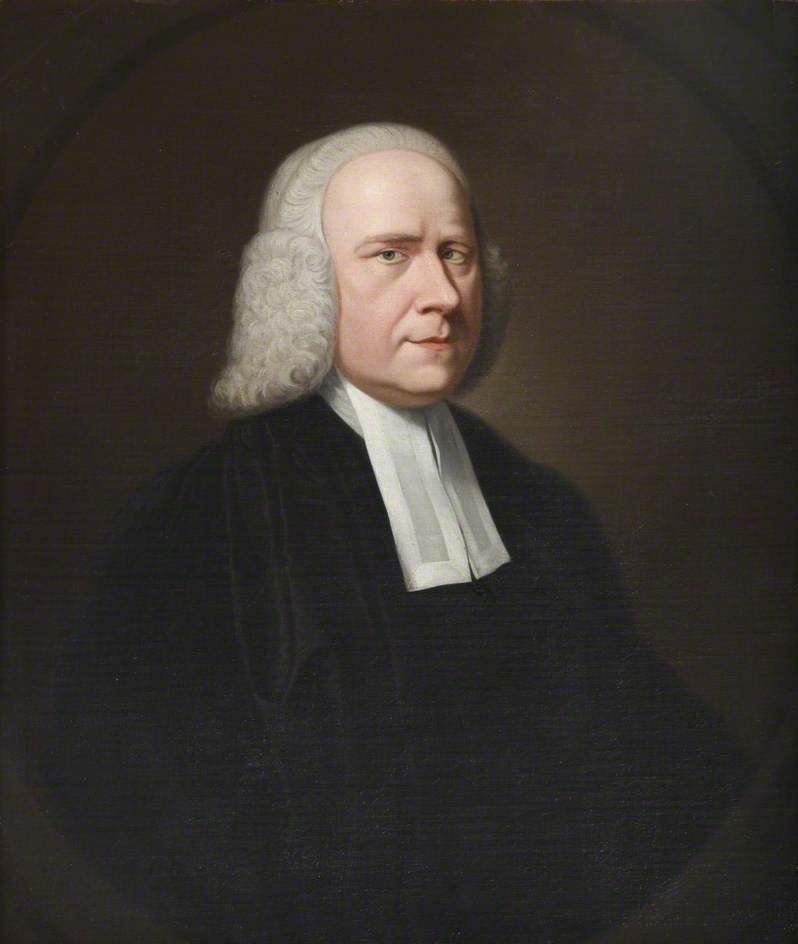
George Whitefield (27 December 1714 — 30 September 1770), was an Anglican cleric and evangelist who was one of the founders of Methodism and the evangelical movement.
Comments
Your comment has been submitted and is awaiting moderation. Once approved, it will appear on this page.
Be the first to comment!