Bootstrap
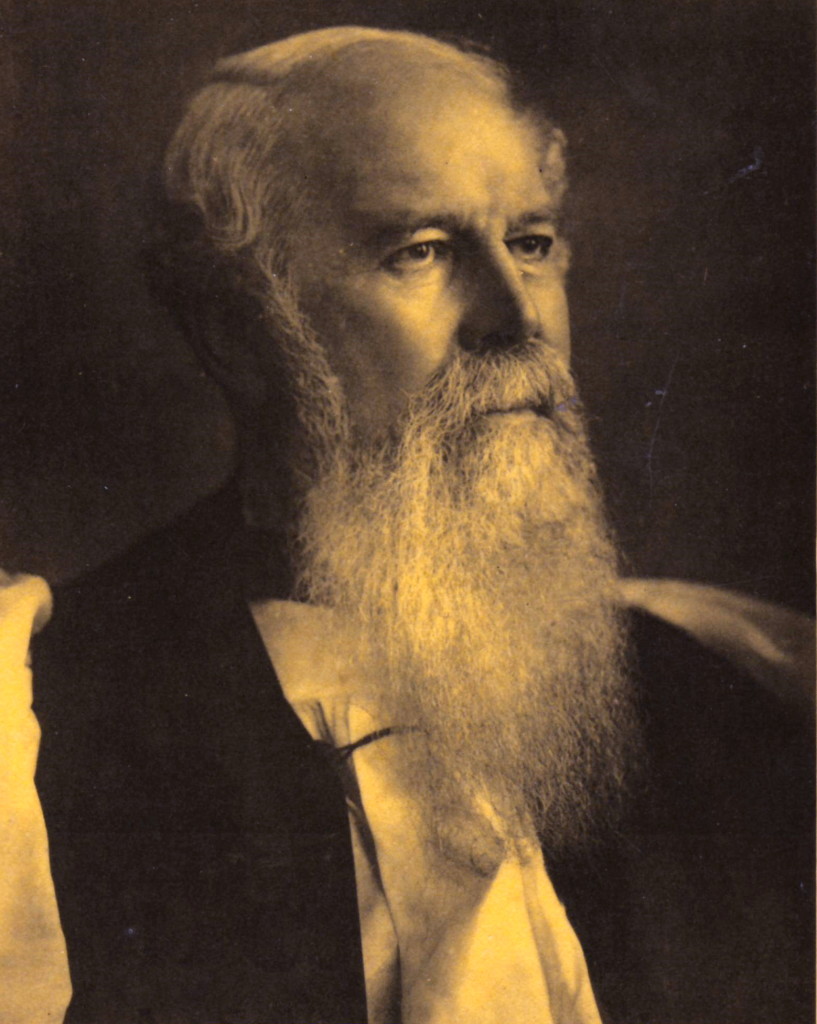
J.C. Ryle

The Fallibility of Ministers!

1 Timothy 4; Galatians 2:1-6
J.C. Ryle March, 10 2017 Audio
0 Comments
Choice Puritan Devotional!

Sermon Transcript

Auto-generated transcript • May contain errors

100%
The Fallibility of Ministers by J.C. Ryle Listen as I read from God's Holy Word, the book of Galatians, chapter 2, verses 11-16, where the Apostle Paul says, When Peter came to Antioch, I opposed him to his face, because he was clearly in the wrong. Before certain men came from James, he used to eat with the Gentiles. But when they arrived, he began to draw back and separate himself from the Gentiles because he was afraid of those who belonged to the circumcision group. The other Jews joined him in his hypocrisy, so that by their hypocrisy, even Barnabas was led astray. When I saw that they were not acting in line with the truth of the gospel, I said to Peter in front of them all, you are a Jew. Yet you live like a Gentile and not like a Jew. How is it, then, that you force Gentiles to follow Jewish customs? We who are Jews by birth and not Gentile sinners know that a man is not justified by observing the law, but by faith in Jesus Christ. So we, too, have put our faith in Christ Jesus, that we may be justified by faith in Christ and not by observing the law. Because by observing the law, no one will be justified.

Now, my friends, have you ever considered what the Apostle Peter did at Antioch? It is a question that deserves our serious consideration. Exactly what did the Apostle Peter do at Antioch? This is the point to which I want to direct our attention. This is the subject of our sermon today.

coming from a passage out of the epistle to the Galatians, which I have just read to you. On this point, the scripture speaks clearly and unmistakably. The six verses of the passage before us are striking on many accounts. They are striking if we consider the event which they describe. Here is one apostle rebuking another. They are striking when we consider who the two men are. Paul, the younger apostle, rebukes Peter, the elder apostle. They are striking when we remember the occasion. At first glance, there was no glaring fault, nor any flagrant sin that Peter had committed. Yet the apostle Paul says, I opposed him to his face because he was clearly in the wrong. He does more than this. He reproves Peter publicly for his error before the whole church at Antioch. He goes even further. He writes an account of the matter which is now read in over 200 languages all over the world. It is my firm conviction that the Holy Spirit wants us to take particular notice of this passage of Scripture. If Christianity had been an invention of man, these things would never have been recorded. An imposter would have hushed up the difference between the two apostles. The spirit of truth has caused these verses to be written for our learning, and we will do well to listen to them.

There are three great lessons from Antioch which I think we must learn from this passage. The first lesson is, that great ministers may make great mistakes. Let me say that again. Great ministers may make great mistakes. The second lesson is that to keep the truth of Christ in his church is even more important than to keep peace. To keep the truth of Christ in his church is even more important than to keep peace. The third lesson, that there is no doctrine about which we ought to be so protective as the doctrine of justification by faith apart from observing the law. There is no doctrine about which we ought to be so protective as the doctrine of justification by faith apart from observing the law.

The first great lesson we learn from Antioch is this, that great ministers may make great mistakes." What clearer proof can we have than that which is set before us here? Peter, without a doubt, was one of the greatest of the apostles. He was an old disciple. He was a disciple who had had exceptional advantages and privileges. He had been a constant companion of the Lord Jesus. He had heard the Lord preach. seen the Lord work miracles, enjoyed the benefit of the Lord's private teaching, been numbered among the Lord's intimate friends, and gone out and come in with Him all the time He ministered on earth. He was the apostle to whom the keys of the kingdom of heaven were given and by whose hand those keys were first used. He was the first who opened the door of faith to the Jews by preaching to them on the day of Pentecost. He was the first to open the door of faith to the Gentiles by going to the house of Cornelius and receiving him into the church. He was the first to rise up in the church council, recorded in the 15th chapter of Acts, and said this, why do you try to test God by putting on the necks of the disciples a yoke that neither we nor our fathers have been able to bear? And yet here, this very Peter, this same Apostle, clearly makes a great mistake. The Apostle Paul tells us, I opposed him to his face. He tells us because he was clearly in the wrong. He says Peter was afraid of those who belonged to the circumcision group. He says of Peter and his companions that they were not acting in line with the truth of the gospel. He speaks of their hypocrisy. He tells us that by this hypocrisy even Barnabas, his old companion in missionary labors, was led astray. What a striking fact this is. This is Simon Peter. This is the third great error of his Christian life. which the Holy Spirit has thought fit to record for coming generations to read in the Holy Scriptures. Once, we find Peter trying to keep back our Lord as much as he could from the great work of the cross and severely rebuked him. Then we find him denying the Lord three times and with an oath. Here again, we find him endangering the leading truth of Christ's gospel. Surely we may say, Lord, what is man that you care for him? Let us note this, that of all the apostles, there is not one except, of course, Judas Iscariot, of whom we have so many proofs that he was a fallible man. The Bible clearly declares that the early church at Rome was founded by the most fallible of the apostles.

As a side note, it is curious to observe the extent to which some writers have gone in order to explain away the clear meaning of the verses which we are looking at this morning. Some have maintained that Paul did not really rebuke Peter, but only faked it for show and appearance sake. Others have maintained that it was not Peter the Apostle who was rebuked, but another Peter, one of the Seventy. Such interpretations need no comment. They are simply absurd. The truth is that the clear, honest meaning of the verses strikes a heavy blow at the favorite Roman Catholic doctrine of the primacy and superiority of Peter over the rest of the Apostles. But all of this is meant to teach us that even the apostles themselves, when not writing under the inspiration of the Holy Spirit, were at times liable to error. It is meant to teach us that the best men are weak and fallible so long as they are in the body. Unless the grace of God holds them up, any one of them may go astray at any time. It is very humbling, but it is very true. True Christians are converted, justified, and sanctified. They are living members of Christ, beloved children of God, and heirs of eternal life. They are elect, chosen, called, and kept secure to the day of salvation. They have the Holy Spirit, but they are not infallible.

Will rank and dignity guarantee infallibility? No, they will not. It does not matter what a man is called. He may be a czar, an emperor, a king, or a prince. He may be a preacher, a minister, an elder, or a deacon. He is still a fallible man. Neither the crown, nor the anointing oil, nor the laying on of hands can prevent a man from making mistakes.

Will sheer numbers confer infallibility? No, they will not. You may gather together princes by the score and ministers by the hundred, but when gathered together, they are still liable to error. You may call them a council or an assembly or a conference or whatever you please. It means nothing. Their conclusions are still the conclusions of fallible men. Their collective wisdom is still capable of making enormous mistakes.

The example of the Apostle Peter at Antioch is one that does not stand alone. It is only a parallel of many a case that we find written for our learning in the Holy Scriptures.

Do we not remember Abraham, the father of the faithful, following the advice of Sarah and taking Hagar for a wife? Do we not remember Aaron, the first high priest, listening to the children of Israel and making a golden calf? Do we not remember Solomon, the wisest of all men, allowing his wives to build their places of false worship? Do we not remember Jehoshaphat, the good king, going down to help the wicked king Ahab? Do we not remember Hezekiah, also a good king, receiving the ambassadors from Babylon, showing them all of his wealth, which they later carried away? Do we not remember Josiah, the last of Judah's good kings, going out to fight with Pharaoh and being defeated and killed? Do we not remember James and John, wanting to call fire down from heaven to strike those who did not welcome Jesus?

These things deserve to be remembered. They were written down for a purpose, They cry out loud, there is no infallibility. And who fails to see when he reads the history of the true Church of Christ, repeated proofs that the best of men can err.

The early church fathers were zealous according to their knowledge and ready to die for Christ. But many of them advocated ritualism. and nearly all sowed the seeds of many superstitions.

The Reformers were honored instruments in the hand of God for reviving the cause of truth on earth. Yet, hardly one of them can be named who did not make some great mistake. Martin Luther held tightly to the doctrine of consubstantiation, which is believing that during communion the bread and wine literally becomes the actual body and blood of Christ. Melanchthon was often timid and undecided. Calvin approved of Servetus being burned at the stake. Cranmer recanted and fell away for a time from the faith. Jewel subscribed to Roman Catholic Church doctrines because he feared death. Hooper disturbed the Church of England by demanding the need to wear priestly ceremonial vestments when ministering. The Puritans in later times denounced Christian liberty and freedoms as doctrines from the pit of hell. Wesley and Toplity in the last century abused each other with the most shameful language. Irving, even in our own day, gave way to the delusion of speaking in the babble of unknown tongues. All these things speak with a loud voice, my friends. They all proclaim a warning to the church. They all say, do not trust man. Call no man master. Call no one on earth father in a spiritual sense. Let no man glory in man. He that glories, let him glory in the Lord. They all cry. There is no infallibility. The lesson is one that we all need.

We are all naturally inclined to lean on men whom we can see rather than on God whom we cannot see. We naturally love to lean on the ministers of the visible church. rather than on the Lord Jesus Christ, the great shepherd and high priest who is invisible. We need to be continually warned and to be on our guard. I see this tendency to lean on man everywhere I look. I know no branch of the Protestant church which does not need to be cautious on this point. It is a snare to the Scottish Christians to pin their faith on John Knox. It is a snare to the Methodists in our day to worship the memory of John Wesley. All these are snares, and into these snares many will fall. We all naturally love to have a Pope of our own. We are far too ready to think that because some great preacher or some educated man says something, or because our minister whom we love says something, then it must be right, without examining whether it is in Scripture or not. Most people dislike taking the time to think for themselves. They like following a leader.

Here at Antioch, even Barnabas was deceived by the error. We can well imagine that good man saying to himself, an old apostle like Peter surely cannot be wrong. I cannot go wrong by following him. And now let us see what practical lessons we may learn from this part of our subject. For one thing, let us learn not to put absolute confidence in any man's opinion merely because he lived many hundred years ago Peter was a man who lived in the time of Christ and walked with Christ and yet he could err. There are many who talk a lot today about the voice of the early church. They would want us to believe that those who lived nearest to the time of the apostles must of course know more about truth than we can. There is no foundation for any such opinion. It is a fact that the most ancient writers in the true Church of Christ often disagreed with one another. It is the fact that they often changed their own minds and abandoned their former opinions. It is the fact that they often wrote foolish and weak things and many times showed great ignorance in their explanations of Scripture. It is vain to expect to find them free from mistakes. Infallibility is not to be found in the early Church Fathers, but only in the Bible.

For another thing, let us learn not to put absolute confidence in any man's opinion, merely because of his office as a minister. Peter was one of the very chief apostles, and yet he could err. This is a point on which men have continually gone astray. It is a mistake often made by the early church. Men soon took up the saying, do nothing contrary to the mind of the minister. But what are ministers, preachers, elders, and deacons? What are the best of ministers but men, dust, ashes, and clay? Men of like passions with ourselves, men exposed to temptations, men that are prone to weaknesses.

What does the scripture say? It says, what after all is Apollos? And what is Paul? Only servants through whom you came to believe as the Lord has assigned to each his task. Ministers have often driven the truth into the wilderness and decree that which is false to be true. The greatest errors of the church have been started by ministers. Hophni and Phinehas, the sons of the high priest, made religion to be despised by the children of Israel. Annas and Caiaphas, though in the direct line of descent from Aaron, crucified the Lord. It is absurd to think that ordained men cannot go wrong. We should follow them only as far as they teach according to the Bible, but no further. We should believe them so long as they can say, thus it is written, thus says the Lord, but further than this, we are not to go. Infallibility is not to be found in ordained men, but only in the Bible.

For another thing, my friends, let us learn not to place absolute confidence in any man's opinion merely because of his education. Peter was a man who had miraculous gifts and could speak with a then valid gift of tongues, the known languages, and yet he could err. Again, this is a point on which many go wrong. This is a mistake which many men made in the Middle Ages. Men looked upon Thomas Aquinas and Peter Lombard and many of their companions as almost inspired. They gave special titles to some of them in token of their admiration. They talked of the indisputable preacher, the angelic minister, the incomparable pastor, and seem to think that whatever these ministers said must be true.

But what is the most educated of men if he is not taught by the Holy Spirit? What is the most educated of all theologians but a mere fallible child of Adam at his very best? Vast knowledge of books and great ignorance of God's truth may exist side by side. They have done so in the past, they may do so now, and they will do so in the future. I will tell you that the two volumes of Robert McShane's sermons have done more positive good to the souls of men than any one collection that Origen or Cyprian ever wrote. I do not doubt that that little book, Pilgrim's Progress, written by a man who hardly knew any book but his Bible and was ignorant of Greek and Latin, will prove in the last day to have done more for the benefit of the world than all the works of educated men put together. Learning is a gift that ought not to be despised. It is an evil day when books are not valued in the church. But it is amazing to observe how vast a man's intellectual attainments may be, and yet how little he may know of the grace of God. I have no doubt the authorities of Oxford University in the 18th century knew more of Hebrew, Greek, and Latin than did Wesley or Whitefield, but they knew very little of the gospel of Christ. Infallibility is not to be found among educated men, but only in the Bible.

For another thing, let us be careful that we do not place implicit confidence on our own minister's opinion, however godly he may be. Peter was a man of mighty grace, and yet he could err. Your minister may indeed be a man of God and worthy of all honor for his preaching and example, but do not make a pope out of him. Do not place his words side by side with the word of God. Do not spoil him by flattery. Do not let him think that he can make no mistakes. Do not lean your whole weight on his opinion, or you may find to your loss that he can err. It is written of Joash, the king of Judah, that he did what was right in the eyes of the Lord all the years of Jehoiada the priest. Jehoiada died, and so also the religion of Joash died. Likewise, your minister may die, and then your religion may also die. He may change, and your religion may change. He may go away, and your religion may go away. Oh, do not be satisfied with a religion built on man. Do not be content with saying, I have hope because my own minister has told me such and such a thing. Seek to be able to say, I have hope because I find it written in the word of the living God. If your peace is to be solid, you yourself must go to the fountain of all truth. If your comforts are to be lasting, you must visit the well of life yourself and draw fresh water for your own soul.

Ministers may depart from the faith. The visible church may be broken up, but he who has the word of God written in his heart has a foundation beneath his feet, which will never fail him. Honor your minister as a faithful ambassador of Christ. Esteem him very highly in love for his work's sake. But never, never forget that infallibility is not to be found in godly ministers, but only in the Bible.

The things I have mentioned thus far are worth remembering. Let us bear them in mind, and we will have learned one lesson from Antioch.

I will now pass on to the second lesson that we must learn from Antioch. That lesson is that to keep gospel truth in the Church is of even greater importance than to keep peace. I suppose no man knew better the value of peace and unity than did the Apostle Paul. He was the apostle who wrote to the Corinthians about love. He was the apostle who said, live in harmony with one another, live in peace with one another. The Lord's servant must not quarrel. There is one body and one spirit. Just as you were called to one hope when you were called one Lord, one faith, one baptism. He was the apostle who said, I have become all things to all men so that by all possible means I might save some.

Yet see how he acts here. He stands up to Peter to his face. He publicly rebukes him. He runs the risk of all consequences that might follow. He takes the chance of everything that might be said by the enemies of the church at Antioch. Above all, he writes it down as a perpetual memorial that it may never be forgotten. that wherever the gospel is preached throughout the world, this public rebuke of an Aryan apostle might be known and read by all men.

" Now why did he do this? Because he dreaded false doctrine. Because he knew that a little leaven leavens the whole lump. Because he would teach us that we ought to jealously contend for the truth. and to fear the loss of truth more than the loss of peace.

Paul's example is one we will do well to remember in the present day. Many people will put up with anything in religion if they may only have a quiet life. They have a morbid fear of what they call controversy. They are possessed with a morbid desire to keep the peace and make all things smooth and pleasant, even though it is often at the expense of truth. So long as they have outward calm, unity, tranquility, and order, they seem content to give up everything else.

I believe they would have thought with Ahab that Elijah was a troubler of Israel and would have helped the princes of Judah when they put Jeremiah in prison to stop his mouth. I have no doubt that many of these men of whom I speak would have thought that Paul at Antioch was a very careless man and that he went too far. I believe this is all wrong. We have no right to expect anything but the pure gospel of Christ, unmixed and unadulterated, the same gospel that was taught by the apostles to do good to the souls of men. I believe that to maintain this pure truth in the Church, men should be ready to make any sacrifice and, if necessary, to jeopardize peace, to risk dissension, and to run the chance of division. They should no more tolerate false doctrine than they would tolerate sin. They should withstand any adding to or taking away from the simple message of the gospel of Christ.

For the sake of truth, our Lord Jesus Christ denounced the Pharisees, though they sat in Moses' seat and were the appointed and authorized teachers of men. Jesus said, woe to you, teachers of the law and Pharisees, you hypocrites. He said this eight different times in the 23rd chapter of Matthew. And who will dare to breathe the suspicion that our Lord was wrong?

For the sake of truth, Paul withstood and blamed Peter, though a brother in Christ. What was the use of unity when pure doctrine was gone? And who will dare to say that Paul was wrong?

For the sake of truth, Athanasius stood out against the world to maintain the pure doctrine about the divinity of Christ. And who will dare to say he was wrong?

For the sake of truth, Luther destroyed the unity of the church in which he was born, denounced the Pope and all of his ways, and laid the foundation of a new teaching. And who will dare to say that Luther was wrong?

For the sake of truth, Cranmer, Ridley, and Latimer, the English reformers, counseled Henry VIII and Edward VI to separate from Rome and to risk the consequences of such division. And who will dare to say that they were wrong? For the sake of truth, Whitefield and Wesley in the 18th century denounced the weak, watered-down preaching of the clergy of their day. and went out into the highways and byways to save souls, knowing well that they would be cast out from the church's communion. And who will dare to say that they were wrong?

Yes, peace without truth is a false peace. It is the very peace of the devil. Unity without the gospel is a worthless unity. It is the very unity of hell. Let us never be ensnared by those who speak kindly of it. Let us remember the words of our Lord Jesus Christ. Do not suppose, he said, that I have come to bring peace to the earth. I did not come to bring peace, but a sword.

Let us remember the praise he gives to one of the churches in Revelation when Jesus said, I know that you cannot tolerate wicked men. that you have tested those who claim to be apostles but are not and have found them false. Let us remember the blame that Jesus cast on another, saying this, you tolerate that woman Jezebel who calls herself a prophetess.

Never let us be guilty of sacrificing any portion of truth on the altar of peace. Let us rather be like the Jews who if they found any manuscript copy of the Old Testament scriptures incorrect in a single letter, they then burned the whole copy, rather than run the risk of losing one jot or tittle of the Word of God. Let us be content with nothing short of the whole Gospel of Christ.

In what way are we to make practical use of the general principles which I have just laid down? I will give you one simple piece of advice. I believe it is advice which deserves serious consideration. I warn everyone who loves his soul to be very selective as to the preaching he regularly listens to and the place of worship he regularly attends. He who deliberately settles down under any ministry which is absolutely unsound is a very unwise person. I will never hesitate to speak my mind on this point.

I know very well that many think it is a shocking thing for a man to forsake his local church. I cannot agree with such people. I draw a wide distinction between teaching which is defective and teaching that is thoroughly false, between teaching which errs on the negative side and teaching which is positively unscriptural. But I do believe, if false doctrine is unmistakably preached in a local church, then a Christian who loves his soul is absolutely right in not going to that church any longer. To hear unscriptural teaching 52 Sundays in every year is a serious matter. It is a continual intake of slow poison to the mind. I think it is almost impossible for a man to willfully submit himself to it and not be harmed.

I see in the New Testament that we are plainly told to test everything and to hold on to the good. I see in the book of Proverbs that we are warned that if we stop listening to instruction, then we will stray from the words of knowledge. If these words do not justify a man in ceasing to worship at a church where clearly false doctrine is preached in it, then I do not know what words can.

Does anyone mean to tell us that to attend your local denominational church is absolutely needful to a person's salvation? If there is such a one, let him speak out and give us his name. Does anyone mean to tell us that going to the local denominational church will save a man's soul, even if he dies unconverted and ignorant of Christ? If there is such a one, let him speak out and give us his name. Does anyone mean to tell us that going to the local denominational church will teach a man anything about Christ or conversion or faith or repentance if these subjects are hardly ever mentioned from the pulpit? If there is such a one, let him speak out and give us his name. Does anyone mean to say that a man who repents, believes in Christ, is converted and holy, will lose his soul because he has forsaken his denomination and learned his religion elsewhere? If there is such a one, let him speak out and give us his name.

For my part, I hate such monstrous and extravagant ideas. I do not see a speck of foundation for them in the Word of God. I trust that the number of those who deliberately hold to them is exceedingly small. There are many churches where the religious teaching is little better than Roman Catholicism. Should the congregation of such churches sit still, be content, and take it all in quietly? They should not. And why not? Because, like Paul, they must prefer truth to peace. There are many churches where the religious teaching is little more than teachings on morality, The distinctive doctrines of Christianity are never clearly proclaimed. Plato or Seneca or Confucius could have taught almost as much. Should the congregations in such churches sit still and take it all in quietly? They should not. And why not? Because, like Paul, they must prefer truth to peace. I am using strong language in dealing with this part of my subject. I know it. I am treading on delicate ground. I know it. I am handling matters which are generally left alone and passed over in silence. I know it. I say what I say from a sense of duty to the church of which I am a minister. I believe the state of the times and the position of the congregation requires clear speaking. Souls are perishing in many churches in ignorance. Honest members of the church are disgusted and perplexed. This is no time for smooth words. I am aware of those magic expressions, order, division, schism, unity, controversy, and the like. I know the cramping, silencing influence which they seem to exercise on some minds. I too have considered those expressions calmly and deliberately. and on each of them I am prepared to speak my mind. The denominational system is an admirable thing in theory. Only let it be well administered and worked by truly spiritual ministers and it is calculated to confer the greatest blessings on the nation. But it is useless to expect attachment to the denomination when the minister of the local denominational church is ignorant of the gospel or a lover of the world. In such a case, we must never be surprised if men forsake their denomination and seek truth wherever truth may be found. If the local denominational minister does not preach the gospel and live the gospel, The conditions on which he claims the attention of his congregation are virtually violated, and his claim to be heard is at an end. It is absurd to expect the head of a family to endanger the souls of his children, as well as his own, for the sake of the denomination. There is no mention of denominations in the Bible. and we have no right to require men to live and die in ignorance in order that they may be able to say in the end, I have always attended my local denominational church. Divisions and separations are most objectionable in Christianity. They weaken the cause of true Christianity. They give opportunity for the enemies of the true church to blaspheme it. But before we blame people for them, we must be careful that we lay the blame where it is deserved. False doctrine and heresy are even worse than schism. If people separate themselves from teaching which is positively false and unscriptural, they ought to be praised rather than reproved. In such cases, separation is a virtue and not a sin.

It is easy to make sneering remarks about their itching ears or their love of excitement, but it is not so easy to convince a plain reader of the Bible that it is his duty to listen to false doctrine every Sunday when by a little effort he can hear the truth. Unity, quiet, and order among professing Christians are mighty blessings. They give strength, beauty, and efficiency to the cause of Christ. but even gold may be valued too highly. Unity which is obtained by the sacrifice of truth is worth nothing. It is not the unity which pleases God. The Roman Catholic Church boasts loudly of a unity which does not deserve the name. It is unity which is obtained by taking away the Bible from the people. by gagging private judgment, by encouraging ignorance, and by forbidding men to think for themselves. Like the exterminating warriors of old, the Roman Catholic Church creates an isolation and calls it peace. There is quiet and stillness enough in the grave, but it is not the quiet of health, but of death. It was the false prophets who cried, peace, when there was no peace.

Controversy in Christianity is a hateful thing. It is hard enough to fight the devil, the world, and the flesh without private differences in our camp. But there is one thing which is even worse than controversy, and that is false doctrine tolerated, allowed, and permitted without protest. It was controversy that won the battle of the Protestant Reformation. If the views held by many of the local churches of that time were correct, it is clear that we should never have had any Reformation at all. For the sake of peace, we ought to have gone on worshiping the Virgin Mary and bowing down to images and relics to this very day. Away with such abominations! There are times when controversy is not only a duty but a benefit. Give me the mighty thunderstorm rather than the deadly malaria. The one walks in darkness and poisons us in silence and we are never safe. The other frightens and alarms us for a little while, but it is soon over and it clears the air. It is a plain scriptural duty to contend for the faith that was once for all entrusted to the saints.

I am quite aware that the things I have said are extremely distasteful to many minds. I believe many are content with teachings that are not the whole truth and believe that it will all be the same in the end. I am sorry for them. I am convinced that nothing but the whole truth is likely, as a general rule, to do good to souls. I am sure that those who willfully put up with anything short of the whole truth will find in the end that their souls will have received much damage. There are three things which men never ought to mess with, a little poison, a little false doctrine, and a little sin.

I am quite aware that when a man expresses such opinions as those I have just brought forward, there are many ready to say, he is not faithful to the church, I am unmoved when I hear such accusations. The day of judgment will show who were the true friends of the church and who were not. I have learned in the last 32 years that if a minister leads a quiet life, leaves alone the unconverted part of the world, and preaches so as not to offend anyone nor edify anyone, he will be called by many a good pastor. And I have also learned that if a man studies scriptures, labors continually for the conversion of souls, adheres closely to the great principles of the Reformation, bears a faithful testimony against Roman Catholicism, and preaches powerful convicting sermons, he will probably be thought of as an agitator and a troubler of Israel. Let men say what they will. They are the truest friends of the church who labor most for the preservation of truth.

I lay these things before you who are listening to this sermon and invite you to give them your serious attention. I charge you never to forget that truth is of more importance to a church than peace. I ask you to be ready to carry out the principles I have laid down and to contend fervently if need be for the truth. If we do this, we will have learned something from Antioch. But I now pass on to the third lesson from Antioch. That lesson is, there is no doctrine about which we ought to be so jealous as the doctrine of justification by faith and not by observing the law. The proof of this lesson stands out most prominently in the passage of scripture which we are studying today.

What one article of faith had the Apostle Peter denied at Antioch? None. What doctrine had he publicly preached which was false? None. What then had he done? He had done this. After once keeping company with the believing Gentiles, as heirs together with Israel, members together of one body, and sharers together in the promise of Christ Jesus, he suddenly became ashamed of them and withdrew himself. He seemed to think they were less holy and acceptable to God than the circumcised Jews. He seemed to imply that the believing Gentiles were in a lower state than those who had kept the ceremonies of the Law of Moses. He seemed in a word to add something to simple faith as needful to give man an interest in Jesus Christ. He seemed to reply to the question, what must I do to be saved? Not merely believe in the Lord Jesus, but believe in the Lord Jesus and be circumcised and keep the ceremonies of the law.

The Apostle Paul would not endure such conduct for a moment. Nothing so moved him as the idea of adding anything to the gospel of Christ. I opposed him, he says, to his face. He not only rebuked him, but he recorded the whole transaction fully when, by the inspiration of the Spirit, he wrote the epistle to the Galatians. I invite special attention to this point. I ask men to observe the remarkable jealousy which the Apostle Paul shows about this doctrine. and to consider the point about which such a stir was made. Let us mark in this passage of Scripture the immense importance of justification by faith and not by observing the law. This is the doctrine which is absolutely essential to our own peace and assurance. No man on earth is a real child of God. and a saved soul till he sees and receives salvation by faith in Christ Jesus. No man will ever have solid peace and true assurance until he embraces with all of his heart the doctrine that we are counted righteous before God because of the work of our Lord Jesus Christ on the cross by faith and not for our own works and goodness. One reason I believe why so many professors in this day are tossed to and fro, enjoy very little assurance and very little peace, is their ignorance on this point. They do not clearly see justification by faith without their own good works. This is the doctrine which the great enemy of souls hates and works hard to overthrow. Satan knows that it turned the whole world upside down at the first beginning of the Gospel in the days of the Apostles. He knows that it turned the world upside down again at the time of the Reformation. He is therefore always tempting men to reject the doctrine. He is always trying to seduce churches and ministers to deny or obscure its truth. No wonder that the Council of Trent that Roman Catholic Council, which established their present doctrines, directed its chief attack against this doctrine and pronounced it accursed and heretical. No wonder that many who think themselves educated in these days denounce the doctrine as theological jargon and say that all serious-minded people are justified by Christ whether they have faith or not. The plain truth is that the doctrine of justification by faith and faith alone is all bitterness and poison to the unconverted hearts. It is just what the awakened soul needs, however, but the proud man who does not know his own sin and does not see his own weakness cannot receive its truth. This is the doctrine, the absence of which accounts for half of the errors of the Roman Catholic Church, The beginning of half of the unscriptural doctrines of Catholicism may be traced to the rejection of justification by faith. No Catholic teacher, if he is faithful to his church, can say to an anxious sinner, believe in the Lord Jesus and you will be saved. He cannot do it without additions and explanations which completely destroy the good news. He dare not give the gospel medicine without adding something which destroys its effectiveness and neutralizes its power.

Purgatory, penance, priestly absolution of sins through confession, the intercession of saints, the worship of the Virgin Mary, and many other man-made doctrines of Roman Catholicism all spring from this source. They are all rotten props to support guilty consciences and are brought about by the denial of justification by faith.

This is the doctrine which is absolutely essential to administer success among his people. Obscurity on this point spoils everything. Absence of clear statements about justification will prevent the utmost zeal from doing any good. There may be much that is pleasing and nice in a minister's sermon, much about Christ and union with him, much about self-denial, much about humility, and much about love, but all this will be of little profit if his trumpet gives an uncertain sound about justification by faith and faith alone.

This is the doctrine which is absolutely essential to the prosperity of a church. No church is really in a healthy state in which this doctrine is not prominently brought forward. A denomination and or a local church may have good forms and regularly ordained ministers, but a denomination and or the local church will not see true conversion of souls when this doctrine is not clearly preached.

Its schools may be found in every town. Its church buildings may be seen all over the land. but there will be no blessing from God on that denomination and or church unless justification by faith is proclaimed from its pulpits. Sooner or later, its candlestick will be taken away.

Why have all the churches of Africa and of the East fallen into their present state? Did they not have ministers? They had. Did they not have forms and ceremony? They had. Did they not have councils? They had. But they drew away from the doctrine of justification by faith and faith alone. They lost sight of that mighty truth, and so they fell.

Why did our own Church, the Church of England, accomplish so little in the 18th century? And why did the Independents and the Baptists achieve so much more? Was it that their system was better than ours? No. Was it that our church was not so well adapted to meet the wants of lost souls? No. But their ministers preached justification by faith, and our ministers, in too many cases, did not preach the doctrine at all.

Why do so many English people go to independent and Baptist churches in the present day? Why do we often see a splendid Gothic church empty of worshippers and a little plain brick building called a meeting house filled to suffocation? Is it that people in general dislike formal worship? No, not at all. The simple reason is, in the vast majority of cases, that people do not like preaching in which justification by faith is not fully proclaimed.

When they cannot hear it in the local church, they will seek it elsewhere. No doubt there are exceptions. No doubt there are places where a long course of neglect has thoroughly disgusted people with the church so that they will not even hear truth from its ministers. But I believe, as a general rule, that when the local church is empty and the meeting house is full, the cause will be evident. If this is the situation, then the Apostle Paul would be jealous for the truth, and he would oppose Peter to his face. He would maintain that anything ought to be sacrificed, rather than endanger the doctrine of justification in the Church of Christ. He saw with a prophetical eye the coming things. He left us all an example that we would do well to follow. Whatever we tolerate, let us never allow any injury to be done to that blessed doctrine, that we are justified by faith without any of our own good works. Let us always beware of any teaching which either directly or indirectly obscures justification by faith. All religious systems which put anything between the heavy burden sinner and Jesus Christ the Savior, except simple faith, are dangerous and unscriptural. All systems which make out faith to be anything complicated, anything but a simple childlike dependence, the hand which receives the soul's medicine from the physician, are unsafe and poisonous systems. All systems which cast discredit on the simple Protestant doctrine which broke the power of Roman Catholicism carry about with them a contagious disease and are dangerous to the souls. Baptism was ordained by Christ himself and is to be used with reverence and respect by all professing Christians. But when it is used rightly, worthily, and with faith, it is capable of being the instrument of mighty blessings to the soul, But when people are taught that all who are baptized are, as a matter of course, born again, and that all baptized persons should be addressed as children of God, then I believe their souls are in great danger. Such teaching about baptism appears to me to overthrow the doctrine of justification by faith. They only are children of God who have faith in Christ Jesus, and all men do not have that faith. The Lord's Supper was instituted and ordained by Christ himself and intended for the edification and refreshment of true believers. But when people are taught that all persons ought to come to the Lord's table, whether they have faith or not, and that everyone who receives the bread and wine also receives Christ's body and blood, then I believe their souls are in great danger. Such teaching appears to me to darken the doctrine of justification by faith. No man eats Christ's body and drinks Christ's blood except the justified man, and none are justified until they believe. Membership in the local church is a great privilege. But when people are taught that because they are members of a church they are thus, as a matter of course, members of Christ, then I believe their souls are in great danger. Such teaching appears to me to overthrow the doctrine of justification by faith. The only ones that are joined to Christ are those who believe by faith, and all men do not believe. Whenever we hear teaching which obscures or contradicts justification by faith, we can be sure that the preacher and or the teacher has gone astray. We should watch against such teaching and be on our guard. Once you let a man turn away from justification by faith, then he will say goodbye to peace, to true hope, and to the assurance of his Christianity. And an error here is decay at the root. In conclusion, let me say to everyone who is listening, to arm yourselves with a thorough knowledge of the written word of God. Unless we do this, we are at the mercy of any false teacher. We will not see through the mistakes of an erring Peter. We will not be able to imitate the faithfulness of a courageous Paul. An ignorant congregation will always be the curse of a church. A Bible-reading congregation may save a church from ruin. Let us read the Bible regularly, daily, and with fervent prayer, and become familiar with its contents. Let us receive nothing, believe nothing, follow nothing which is not in the Bible, nor cannot be proved by the Bible. Let our rule of faith, our touchstone of all teaching, be the written word of the living God. In the next place, let me ask all who are listening to this sermon to be always ready to contend for the faith of Christ. I recommend that no one foster a controversial spirit. I don't want any man to be like a Goliath going up and down saying, give me a man to fight with. To be always feeding on controversy is not proper. It is like feeding on bones. But I do say that no love of false peace should prevent us from striving jealously against false doctrine and seeking to promote true doctrine wherever we possibly can. True gospel in the pulpit, true gospel in the books we read, true gospel in the friends we keep company with, let this be our aim and never let us be ashamed to let men see that it is so. In the next place, let me entreat all who are listening to this sermon to keep a jealous watch over their own hearts in these controversial times. There is a great need for this caution. In the heat of the battle, we are apt to forget our own inner man. Victory in an argument is not always victory over the world or victory over the devil. Let the meekness of Peter in taking a reproof be as much our example as the boldness of Paul in reproving. Happy is the Christian who can call the person who rebukes him faithfully a dear brother. Let us strive to be holy in all of our conversations and especially in our attitude. Let us labor to maintain an uninterrupted communion with the Father and with the Son. and to keep up constant habits of private prayer and Bible reading. Thus, we will be armed for the battle of life and have the sword of the Spirit well fitted in our hand when the day of temptation comes. In the last place, let me entreat all members of a church who know what real praying is to pray daily for the church to which they belong. Let us pray that the Holy Spirit may be poured out upon it and that his candlestick will not be taken away. Let us pray for those churches in which the gospel is not preached, that the darkness may pass away and the true light shine in them. Let us pray for those ministers who now neither know nor preach the truth, that God may take away the veil from their hearts and show them a more excellent way. Nothing is impossible. The Apostle Paul was once a persecuting Pharisee. Luther was once an unenlightened monk. Bishop Latimer was once a bigoted Catholic. Thomas Scott was once thoroughly opposed to evangelical truth. Nothing, I repeat, nothing is impossible. The Spirit can make ministers preach that gospel which they now labor to destroy. Let us therefore be urgent in prayer. I commend the matters contained in this sermon to your serious attention. Let us ponder them well in our hearts. Let us carry them out in our daily practice. Let us do this. And we will have learned something from the story of Peter at Antioch. Amen.
J.C. Ryle
About J.C. Ryle
John Charles Ryle (10 May 1816 — 10 June 1900) was an English evangelical Anglican bishop. He was the first Anglican bishop of Liverpool.
Broadcaster:

Comments

0 / 2000 characters
Comments are moderated before appearing.

Be the first to comment!

Joshua

Joshua

Shall we play a game? Ask me about articles, sermons, or theology from our library. I can also help you navigate the site.