Bootstrap
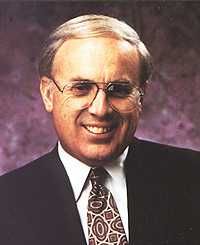
John MacArthur

Questions & Answers #43

Proverbs 1; Psalm 1
John MacArthur April, 1 2015 Video & Audio
0 Comments
2015 Shepherd's Conference
Question and Answer session with John MacArthur and others.

Sermon Transcript

Auto-generated transcript • May contain errors

100%
Brother John, the issue of inerrancy
isn't a new issue. Evangelicals declared that it
was settled in 1978, and you decided to go to all this trouble
to hold a conference about it in the year 2015. Something happened. And I would like to give you
the opportunity to state just as clearly as you will always
speak as to why you did this thing. You know, this really
started in your office. when we had a meeting a year
ago January. You're a good man. Thank you. This started in your office a
year ago, January. We were all together. You were
on the phone because you just had a new baby in your home.
But we were all together, and I was sitting next to Ligon,
and you guys were talking about inerrancy as an issue. And I
think you were responding to the Zonervan book, Five Views
on Inerrancy. We all know there aren't five
views. It's either inerrant or not, right? And you guys were so exercised
by this that you were thinking about recapturing, or adding
to, or developing this issue again. And, I mean, it struck
me as a reality, not just because of that book, but because the
climate had allowed that book to exist, and there didn't seem
to be a whole lot of ruffling as a result of that book. And
I thought, there is also a whole generation of young guys who
have gone out and started churches, many of whom don't have adequate
theological training, who wouldn't be able to fight this battle
if it was drawn up in their realm, and that we needed to reaffirm
why we must have an inerrant text. I also remember coming
back and thinking, it isn't that people deny the inerrancy of
Scripture, it's just that it seems irrelevant. It's like it
doesn't have a place in the seeker-driven kind of pragmatic churches that
seem to be flourishing today. I mean, who really cares? You
just flash a verse on a screen from whatever choice you have
translation. I just thought, you know, here's
a whole generation who haven't fought this battle, and this
is the greatest battle of all battles. And couldn't we bring together
some of the finest minds in evangelicalism, and wouldn't we find the best
of the best who would stand on this issue? And we just began
to say, okay, Lord, how would we do this? And this is the end
of that planning, praying. Well, there will be other opportunities
for this, but on behalf of us all, thank you for doing this.
No, thank you. Thank you. Athanasius, after the Council
of Nicaea, wrote a letter in which he said, therefore, the
issue is settled. It didn't stay settled. So Mark
Is that the way this works, that in every generation a theological
issue like this seems to be a recurring issue, especially in the modern
age with the pressures upon the doctrine of revelation and on
Scripture? It definitely is. I think some issues are more
particular. So the idea of the openness of
God was a raging debate, does God know the future, 10 years
ago. It's not a raging debate right now. It's not that there's
no discussion on it. This one is one of those perennial ones,
though, because Satan says, did God really say? So I think we
can expect that this is a battle that every generation faces in
different ways. At the Reformation, you know,
the material, or rather the formal principle of the sufficiency
of Scripture is predicated upon is the Bible true? Is it completely
true? Is it entirely trustworthy? So
yes, this is something that I don't care how young you are here and
if the Lord tarries a long time, you will face this now and you
will face this again. What I've tried to think through
in terms of this session are questions that I believe would be asked
or ought to be asked, especially by pastors who would be here.
And I think a lot of younger guys don't know that there's
a pedigree to this. And of course, we could go back
to the Garden of Eden. We can certainly go back to the
18th and 19th centuries and the Enlightenment. Hey, I believe
in the Garden of Eden now. I do too. Okay. So must we all. Just trying to be clear. But
we can't go back and trace it quite that far. I do want to
go back. to 30-plus years ago when you
and I were looking at a manuscript
from 1966 in Wynnum, Massachusetts, a little-known event in evangelical
history, when a group of evangelicals in 1966 tried to head off the
inerrancy controversy. They met at Gordon College, kind
of quietly. Very quietly. You weren't part
of that. I was very young. You were pastoring this church
in a year or two. All right. Actually, he wasn't yet. He was
three years away from being a pastor. Yeah, Al, so you're setting this
up. Keep swimming. No, please, brother. So yeah, this was an
important meeting, and go ahead. And what happened, as Carl Henry
said later, is that no one affirmed the errancy of Scripture, but
the majority would not affirm the inerrancy of Scripture. Then
10 years later, Harold Lenzel wrote a book, or it was published
then, entitled The Battle for the Bible, in which he named
names and went institution by institution and figure by figure,
denomination by denomination, showing the slippage on this
issue. And the reason I want to throw this back to you is
because evangelicals did their best not to address this issue,
certainly the leaders, until they simply had to, and a group
of very courageous men came together. And John, you were there then
in Chicago in 1978 for the International Council on Biblical Inerrancy.
I don't think we should assume that the people in this room
understand what happened there and why. I agree. There was not an institution
you could name almost that had in a previous generation been
known as the evangelical school, Fuller Seminary would be the
prime example, where the authority of Scripture was defended, which
by the 1960s and certainly into 1978 by the time the International
Council first meets, had not seriously and sometimes publicly
compromised on that issue. And, therefore, evangelicals
were confused, even in our lifetime, because I'm just… I'm in college
then, so I'm not really… I read the ICBI when it was published
in the Thimelios Journal. I read it, loved it, was thankful
for it. I was a recent convert from agnosticism
to Christianity. I was a religion major at Duke
University, and what the ICBI said was not what I was being
taught at Duke. But it was very much what I thought
was true, and I was glad that there were a bunch of, you know,
gray beards and brilliant guys around who said, yes, this is
the truth about the Bible. And it functioned as a rallying
cry, but I think as I got a little more mature looking back on it
through the 80s, I went to Gordon Conwell and then on, it was probably
more shocking to me all those who wouldn't affirm it. Even
people who we would think are, in some ways, our evangelical
brothers and sisters, but they would not want to affirm inerrancy.
And it was even more that way in the UK. Well, it kind of gets
back to what John said. They didn't exactly at that time,
at least most of them, want to affirm its opposite. They just
were not willing to affirm inerrancy. Or they said, it's not where
the lines need to be drawn. Well, and you had some time where
you were trying to sort out, is that the right word to use about Scripture?
Well, in the midst of a denomination that was fighting a civil war
over the question and thankfully settled the issue for inerrancy.
But yeah, I think there were millions of evangelicals and
certainly Southern Baptists trying to find out, is that what we
have to say about the Bible? Winston Churchill once said that
Americans can be counted on doing the right thing after everything
else has been tried. And that's kind of what happened
to the SBC in the 1980s, but we'll get to that. Yeah, just
a footnote to that. It's in the 70s. I'm here, Fuller Seminary is
in Pasadena. Jack Rogers comes out with a
book. He's a faculty member at Fuller that just assaults the
doctrine of inerrancy, but doesn't admit to that. It falsifies a doctrine of inerrancy. Just a footnote, this is called
the Rogers-McKim thesis, and it's the idea that it was created
at Princeton in the 19th century through rationalism, that inerrancy
is not an old doctrine of the church. So that sort of sweeps
the day at Fuller Seminary. The board is confused. There
are some significant people on the board, moneyed people, people
like the Weyerhaeuser family and people like that. They're
putting pressure on the school because they said, We come here
and You tell us how evangelical You are and how faithful You
are. We go back to our churches and our constituency, and all
we hear is that Fuller is compromising. We're trying to figure out what's
the real story. David Hubbard was the president at the time,
and his stated vision was to convert liberalism back to evangelicalism. But to try to do that with a
weak view of inerrancy would be an impossible task. So they
invited Ian Hay – do you remember that from the African Inland
Mission – myself and Ken Concer – I don't know why I got in the
triumvirate – to speak to the faculty and the board on our
view of Fuller Seminary in Pasadena at the school. I want to stay
there for just a moment, John. I'm going to turn to Ligon as
a seminary president here. Up until 1972, the Confession
of Faith in the Fuller Theological Seminary read on Scripture, quote,
the books which form the canon of the Old and New Testaments
as originally given are plenarily inspired and free from all error
in the whole and in the part. These books constitute the written
Word of God, the only infallible rule of faith and In 1972, at
the instigation of the faculty, the board changed that confession
to read, quote, Scripture is an essential part and trustworthy
record of this divine self-disclosure. All the books of the Old and
New Testaments given by divine inspiration are the written Word
of God, the only infallible rule of faith and practice. They are
to be interpreted according to their context and purpose in
reverent obedience to the Lord who speaks through them in living
power, end quote. What's the difference between
those two statements? Notice the shift to try and use
infallible as making a claim that is less than inerrant. The
first statement affirms plenary verbal inspiration, inerrancy,
infallibility, authority. The second one dials that back
down. Suddenly, it's a record of the
revelation and it's infallible. Now, that's an illegitimate use
of infallible in the first place. If you pick up your Oxford English
Dictionary, you'll find out that infallible is a synonym for inerrancy. When it came into the language,
it means exactly what we mean by Inerrancy. So when you say
infallible, you're not making a lesser claim for the Bible
than inerrant. In fact, John Frame argues you're actually
claiming more when you use infallible and somewhat persuasive when
he says that. But you will hear people use
infallible as a substitute for inerrancy as if it is not as
comprehensive a claim for the total truthfulness of Scripture.
That's inaccurate. But what clearly was being done
here was a step back away from an affirmation of biblical inerrancy. The reason I wanted to bring
it up that way is because when John talks about Jack Rogers,
a decade later, had the confession not been changed so explicitly,
which at least they were honest to do, and I want to give them
credit for the honesty in changing the confession rather than just
blinking at those who… who didn't mean it and signed it. That issue
would have been closed long before that book could have been written.
But it wasn't. And that book is The Authority
and Interpretation of Scripture. And as Mark said, it's generally
identified as the Rogers and McKim proposal. And you received,
as a part of your giveaway, a book that was written by John Woodbridge
at Trinity Evangelical Divinity School that devastates that particular
thesis. You need to read that volume.
It's still worthwhile. reading to this day. I'm very
glad that it was given out. You know, the irony of it all
is that Fuller lost the battle for the Bible, and they were
the source of the book in Lenzel's day. It's an issue not here of just
trying to point to an institution, but to point to the principles
of what has led to the… and the historical events that have led
to the debate as we know it now. I want to turn to Kevin and just
ask you explicitly, is the doctrine of inerrancy directly dependent
upon the verbal plenary understanding of inspiration? And before you
answer it, let me turn it around. If you do affirm the verbal plenary
understanding of inspiration as this confession once did,
would you not logically also affirm the inerrancy of Scripture?
He gives me the questions that already have the answers stated
in them, just to be sure. And just for the record, I wasn't
alive for any of these things that they were talking about,
so it wasn't my fault. So, man, what were you guys doing? Thank you for all the... Waiting
for you. No, no, no. Well, of course, you shouldn't
be able to have one consistently without the other. If you have
verbal, God-speaking, plenary, all of it, revelation, then what
we have in this book is God speaking to us. And as all these guys
know even better than I do, and most of you would have heard
about probably in your seminary education, we want to be wary
of any kind of Bardian neo-Orthodox understanding of inspiration,
which at first can sound very spiritual. Look, this contains
the Word of God, or this becomes to you God's Word when you preach
it, and oh, wow, that's so… But you see, all of that kind of
neo-Orthodox language puts this one step removed from the Word
of God, which is what Ligon was so astutely pointing to in that
language. It's now become a record of God's
revelation. So it contains what God has revealed
to man rather than this is God's revelation. So if this is verbal
plenary inspiration, God speaking to us, then it must have the
same truthfulness and trustworthiness that God Himself has. Let God
be true and every man a liar. So, we cannot budge on the doctrine
of inerrancy or on our doctrine of Scripture without impugning
the very character of God. That's why the stakes are so
high. John, when you were the new pastor at Grace Community
Church, 1969. when you surveyed the evangelical landscape, when
you were ministering here in Southern California, did you
expect this to be one of the defining battles of your generation? Outside the church, outside the
true church, I did, I think. I was exposed in seminary to
B.B. Warfield's treatment of the inspiration and authority
of Scripture, so I knew that liberalism was out there making
an assault on it. It was like a lot of things.
I knew they were out there outside the true church, but I think
the shock for me was when they all of a sudden showed up inside
the confessing evangelical world, the confessing people who believe
the gospel, the confessing people who believe the Bible, but were
equivocating and equivocating on all kinds of issues. I just…
that's been the biggest shock of my whole life is fighting
all these wars inside the professing church. I think seminary taught
me to expect… I mean, we all read higher critical theory.
We all had to be able to answer that. We were interacting with
the dead Germans that nobody would know ever lived if we didn't
raise them from the dead all the time. So we knew we had to argue with
that. Yeah, just keep a straight face. Yeah. Some people actually
get a PhD for resurrecting dead Germans. He's Scottish, not mine. But anyway, so I think the shock
for me was to see that going on. And the nearest expression
of that was Fuller Seminary because they're right on our doorstep. Very early in the ministry, Grace
Community Church and Fuller Seminary became like light and darkness.
There was a period of time—this would probably surprise you—when
Peter Wagner used to bring all the students in the School of
Church Growth from Fuller to Grace Community Church. to experience
a growing church. And this was when Peter hadn't,
you know, jumped off the cliff, and he was still in the church-growth
aspect of his journey. And then I got a call from him
one day and said, we're not bringing them anymore. And the curtain
went down. And I remember that conversation
very, very well. He said, it confuses our students.
Your church experience, conversations with you are very confusing to
the students. He was tampering with biblical authority on another
level, not on a liberal level, but on a pragmatic level, and
the Bible was coming to mean less and less to him at all,
not because of some intellectual theory or some rational argument,
but it just didn't fit the mystical model that was developing, the
pragmatic model. We've watched that alienation continue and
continue and continue. So here we are, ostensibly an
evangelical church with virtually, through the years, since the
very earliest years, absolutely no relationship to that institution. MOHLER Mark, you went as an undergraduate
to Duke University. You had recently been an agnostic. You were then a believer in the
Word of Jesus Christ, seeking to be a faithful believer When
did you become an inerrantist? In other words, when did the
inerrancy of Scripture become pressed upon you as what would
be very necessary to your theological self-understanding? I think probably
that first year at Duke. I think I assumed it. I think
when you come to Christ, you assume the Bible is true. So
I think you just walk in with that assumption. And I remember
my first weekend at Duke, I shared with my religion department advisor
all the things the Lord had been doing in my life that summer.
I didn't really have a category of liberals. I knew there were
unbelievers and believers. You know, that's all there was.
And so I later, when I told a friend that, a Christian undergrad friend,
that I just had this great time sharing with my religion department
advisor all the things the Lord had been doing in my life that summer,
they said, you know she's a Jewish atheist. I didn't know. I mean, she was just very, you
know, nice to me and, you know, who knows what I must have sounded
like to her, some nutcase from Kentucky, you know. But because
of the things that I was assigned to read, I immediately had to
think, okay, all of the historical constructions, leave the Old
Testament alone. Even in the New Testament, all
the historical constructions I see just aren't true, and they
immediately drove me to read Donald Guthrie's introduction
to the New Testament, R.K. Harrison's introduction to the
Old Testament. You know, all these things that were not assigned,
but I think Paul Pressler had a similar experience at Princeton.
You know, it's when you're put in an experience early on in
a school that doesn't believe… You had this at Furman. You had
this at Southern. I had this. You have it in your denomination.
You know, I think we're pressed to have to define these things.
But one thing I want to pick up on that comment that John
was making about Peter Wagner not being an intellectual opponent
necessarily, I think for most of the men sitting in this room
that the danger will come as much from language about evangelism
and mission, that's where liberalism comes from. And please don't
misunderstand. All these brothers here share the faith. We all
believe in evangelism and missions. But again and again, Edinburgh
1910, the World Missionary Movement, it's if we can get us to agree
on our common mission, we don't have to worry about the doctrine
that divides. And that's how you often shift
over into an unbelief in authority. Like ECT would be a more recent
example of that. Ligon, you grew up in a Presbyterian
home, and you are now chancellor of a Reformed seminary. You were
the moderator of the Presbyterian Church in America. That denomination
wouldn't exist but for the question of inerrancy. And I think it's
important that people know the story. A lot of folks, when they
hear the word Presbyterian, they think of one denomination, but
that's anything but. And that's a story that needs
to be told. I grew up in Greenville County, South Carolina, not but
a few blocks from where Southern Baptist Theological Seminary
once was. Amen. So close and yet so far. Southern Presbyterianism was
going through a theological decline. Neo-Orthodoxy had influenced
the agencies and the leading pastors of that denomination.
The seminaries of the denomination were not sound. You wouldn't
have found professors except for one in any of the Southern
Presbyterian seminaries in those days that believed in biblical
inerrancy, which is why so many Presbyterian ministers of those
times went to dispensational institutions like Dallas for
their education because they wanted to go someplace that believed
in inerrancy. And so I'm being reared in this
context in the 1960s and 70s. because my mother is a graduate
of the church music school at Southern Baptist Theological
Seminary, has been on the music faculty at Furman. I'm watching
what's happening in the Southern Baptist Convention. I see the
beginnings of the conservative resurgence. I'm profoundly thankful
that there are people that are standing up for the authority
of Scripture. I recognize the same thing going on in the Southern
Presbyterian world. My father is an elder, is working
to try and bring the Southern Presbyterian Church back to a
high view of God and a high view of Scripture. Eventually, it's
apparent that that is not going to work. And the Presbyterian
Church in America in 1973 comes out of the Presbyterian Church
US, what used to be called the Old Southern Presbyterian Church,
on the issue of inerrancy, the Westminster Confession of Faith,
obedience to the Great Commission, the same kinds of things that
were going on in Southern Baptist life. You won. You won your seminaries
back. We lost our denomination and
our seminaries, but we were prepared to stand with the Word of God
even if it meant walking away, and we did. And I think the issue
is we want everyone to know that thus you defined inerrancy within
the confession of faith of the PCA and within your requirement
of those who would be ordained within your dimension. That's
exactly right. And every minister of the Presbyterian Church in
America must vow to believe biblical inerrancy. It's in our ministerial
ordination vows. Now, Kevin, you're in a very
different Reformed denomination, and there's a very important
story to be told there as well, and it may be one that's even
less known among the pastors who are here. So it'd be helpful
if you told that story. So I was born and raised in the
Reformed church in America, who for many years our most famous
church was just down the road… The Crystal Cathedral. The Crystal
Cathedral. a cautionary tale, and, you know,
a wonderful history. The oldest Protestant denomination
in the country with a continuous ministry, back to the 1620s in
New Amsterdam, And again, it happened in the sixties that
there was a formal switch in the language to move away from…
and I don't know if the word inerrancy was in it, but it was
that idea that then switched to the Bible is truthful in all
that it intends to teach for faith and practice. So it's the
sort of thing that goes by, and you want to say, well, I do agree
that the Bible is true and all that, and it ends with these
for faith and practice, but it's what it was not saying by making
a decision to now say that instead of what it used to say, a softer
form of subscription and then this much watered-down version
so that now I don't think in any of… we have two seminaries.
I don't think there would be anyone in any of those seminaries
that would affirm inerrancy. And at times, people who have
gone through ordination through other means have been suspect
for being a part of those who… In fact, there was one prominent
person who was looking askance at people who were too influenced
by John MacArthur or John Piper or these these neo-Reform folks
and held to complementarianism and inerrancy. And so, though
I went to one of our denominational colleges and was thankful for
many things about it, I too had to cut my teeth. I remember we
had to learn to read books about the Jesus Seminar, and we had
to learn all of the the liberal theologians and neo-Orthodox
theologians when it came to Scripture, and it caused something of a
crisis of faith. How do I know that the Bible
is true? And that's similar to you guys. I found B.B. Warfield,
Inspiration Authority of Scripture. It wasn't being assigned to me.
I said, I need to read this. I found books about the canon
of Scripture to try to answer some of these questions and determine
what exactly is true about the Bible, because I knew that if
this gets wobbly, Everything else is a house of cards. R.C. Sproul, Jr.: : Kevin, tell them
who anchored you in the Word of God. Kevin Larson, Jr.: :
My parents? R.C. Sproul, Jr.: : Yeah. Kevin
Larson, Jr.: : Yeah. So, when I went to college and started
hearing things from people who are smarter than me, and this
is the danger of going to a Christian school because you've got the
professors, they go to church, they're really nice. They tell
you about their church experience, and they're telling you something
different from what you grew up with. Better to go to a university. You know, our students who go
to Michigan State, they don't expect anything that they tell
them about the Bible is going to be true. It's just clearer
that way. So, when I was hearing these
things, I really had to wrestle with, why is this different from
what I heard growing up in church? And what anchored me was this
thought, this isn't what my parents would believe. And it just gave
me pause. And though parents out there,
just you don't know, your teenage kids are not going to come and
tell you, I'm heading off to college. I just want you to know how much
you've anchored me in the truth. They're not going to say that.
They're going to be on their phone when you're crying and
they go off to school and, what? Are you crying, Mom? But things
stick with you and things that you just saw habits in your parents
and in your church are hard to shake off. And I, by God's grace,
just knew I should not shake that off. And so I ran to figure
out a better way to try to understand these questions. John, when the
battle for the Bible kind of exploded in the evangelical world
in 1976, what did you think? Where did you think that the
discussion would go? Was the ICBI, the Chicago Statement,
was that at all on the horizon when you were thinking about
this? Oh, when I first saw the book, of course, I devoured it,
and I honestly, thinking back, if I remember correctly, again
saw it as an answer to people outside the church, outside the
true church. It didn't take long to become evident to me, though,
that this had infiltrated the church, and I think Harold Lenzel
must have known that. That was a very unique book,
Al. You may remember some of the history of that book. It
hit the top of the bestseller list, and it was a theological
book, and that just didn't happen. I don't know that any theological
book has done that since. So it came at a critical, critical
time, and already I think those realities had moved into the
church. It was a little alien to me because it wasn't in here.
It wasn't a Grace Community Church, but I had already begun to feel
that coming from Fuller Seminary, that we can view Scripture, and
I knew it was around, and it didn't take long before we were
all very much aware that this book was speaking volumes, and
people were reacting, and it was in the thrust of that kind
of thing a few years later that the meeting over there was held
because by then Fuller had called all kinds of things into question.
Mark, while you were growing up, you grew up in kind of a
stereotypical Southern Baptist, First Baptist church in Madisonville,
Kentucky. Did you ever hear the inerrancy
of Scripture explicitly taught, and did you ever hear the suggestion
that Scripture had any error whatsoever? I think no to both
those questions. The Scriptures were taught. I
wasn't paying attention because I wasn't a Christian. I was just
coming along with my family when I was a, you know, single-digit
child, and then I was gone. And then I came back as a teenager,
came to Christ, was well taught there, but I was taught in the
middle of a believing community with the Bible always being treated
as true. But that's why I think I went
to Duke kind of unarmed. I was armed in the most important
way with the truth of Scripture. But I found Harold Lenzel's book
a few years later after it was published. when I'm an undergrad,
the thing that first really woke me up to the problem, not just
in the Duke religion department with, you know, theological liberals,
but inside—I was going to an old PCUS church at the time that
was evangelical, inerrantist, But I knew that there was a professor
at Southern Seminary who was coming out with a new systematic
theology. And I was getting excited, like, this is going to be helped.
Because I've read R.K. Harrison, you know, he's an Anglican
in Canada, and I've read Donald Guthrie, you know, and now the
Southern Baptists are going to come to help. And it was Dale
Moody's The Word of Truth. And I just had no idea what I
was in for. So I excitedly bought a copy
as soon as it came out. I was driving home from Duke
to back to Tokyo, drove right through Nashville, went to the
main bookstore there of the Sunday School Board, bought the book,
devoured it, and was shocked. I mean, the fundamentalists who
were objecting to what was going on in the seminaries didn't know
the half of it, if this thing was true. I mean, he was mocking
the idea of a bodily resurrection or of substitutionary atonement.
And I'm looking on the back and thinking, this guy teaches at
Southern Seminary, so I'm thinking of all the old people at my church
who've been given money to pay this salary, you know, since
Moses was a kid. And I'm thinking, and this is
what they're paying. Since Moses was a Southern Baptist. No, I do think he was more of
the older covenant. But anyway, I think that there was a sense
of betrayal, you know, that I just couldn't believe that this was…
that they could in good conscience take this money and teach this
stuff. Well, imagine what it was like for Dale Moody to be
your theology professor as he was mine. And to speak of Dale
Moody as I must as someone who was so gracious to me. and so
engaging in the classroom. I came to an errancy because
basically I was taught it as a child and because when I... Were you taught it explicitly?
Yes. Yes, but that was a different context. In Fort Lauderdale,
yes. Not in my single digits, as you
put it, but in the double digits, yes, because the issue had exploded.
DeJames Kennedy. Jim Kennedy was so central in
pressing that forward, and Francis Schaeffer, who had such a massive
influence on me when I had an apologetic crisis as a teenager.
So, then I arrived at Southern Seminary, and Dale Moody was
one of my teachers. And I did my very best to find
a way to make peace with what he was saying and the Scripture.
I mean, you know, these people cared for me greatly. Dale Moody
is not D.L. Moody. If we're confusing anybody,
D.L. Moody was a God-fearing evangelist
in the late 19th century. Dale Moody was a… I leave to
him his fear of God, but I mean, he was a professor at Southern
Seminary in the 20th century, no relation whatsoever. I'm so
sorry, I just realized that probably a lot of people were confused
there. Yeah. I never confuse the two, I can
tell you that. But that wasn't even what was
mostly being taught when I was a student, because Dale Moody
was already a very old man. And by the time I got there,
there was a professor who was actually at one point on the
Jesus Seminar, and so it had moved light years beyond where
it was. And folks here need to know that
the inerrancy battle in the Southern Baptist Convention and the battle
that was won for inerrancy that made the opportunity for the
recovery of Southern Seminary and the institutions of the SBC.
was driven by people who were willing to put their lives on
the line to define the issue. But it was made possible by God's
grace by laymen and laywomen who sacrificially gave up their
time and slept in their cars because they couldn't afford
hotel rooms. to go into a convention hall and vote for the inerrancy
of Scripture, because so far as they were concerned, that
was the most important issue for the entire future of the
denomination. And as one of them said, if my grandchildren are
going to get taught the Bible, I'm going to have to do whatever
it takes to make certain it starts right here. And so, it's just
with great humility, I just want to… I want folks to know that
this was something that… When Harold Lenzel wrote the book,
he did not expect Southern Baptists to recover the authority and
trustworthiness of the Scripture, much less that in the year 2000,
the Southern Baptist Convention would write inerrancy into its
confession of faith, a more conservative confession of faith. Where else
is there a denomination that survives its confession of faith
in a more conservative direction? But that's not an arrogant statement
of pride. It's a humbling statement of
necessity. But, you know, we are arriving at a conversation.
And so I became president of Southern Seminary when I was
33. I'm now 55. You can do the math. The issues are back, Ligon. Now, they're not back on my campus.
I'm so thankful for that. It's nailed down tight, and that's
one of the great things that does come as one of the effects
of this kind of civil war in the denomination. The people
who are left know what was bought at so high a price. But I look
out at evangelicalism, and I see all the old issues coming right
back. Very much so. And by the way,
I had the same feeling that you described, John, feeling this
thing's nailed down. I can remember as a seminary
student in the middle of the 1980s, having read the products
of ICBI, and I thought to myself, I think this is handled for another
50 years. And it's come back quicker than
I thought. I didn't expect it to stay settled
for the very reasons that you and Mark talked about at the
beginning of our conversation. And even when you look at the
Athanasius and Arius engagement that you referenced in the Council
of Nicaea, that was really the beginning of the second stage
of the Arian controversy. It went on for another 50 years
after the Council of Nicaea. And lives on today. It does.
So I expected there to be those issues, but not as quickly and
not as pervasively. And I think a lot of that is
the cultural shift that we've gone through. Al, in your work
on this, and you've written about this a little bit in the volume
that you did on those five views, you've pointed out that the kinds
of arguments against the Bible that we're facing today are a
little bit different than we were hearing in the 1970s, so
that people are now making moral judgments about the ethics of
the Bible being below their standards, which the liberals of the 19th
century would never have said. They wanted to get rid of the
supernaturalism and hold on to the ethics. But now we've got
a culture around us that's looking down on the ethics of the Bible,
and they're calling the Bible into question on a moral basis
and then on a theological basis as well. And I think that's impacting
evangelicalism. Well, you know, in that project
where I was asked to defend the classical view of inerrancy,
The three test cases included a case where it was historicity,
a case where there was supposedly an internal conflict, and a case
in which there was a moral judgment made on Scripture. And you're
right, that third one would not have appeared even, I think,
in the 1970s in the same way. I want to turn to Kevin. Kevin,
and I'm going to turn to everyone else on the panel and ask the
same question, so you get kind of a heads up here. where are
the hotspots right now? I mean, for a pastor, for a preacher,
where are the hotspots? Where are the landmines that
we just need to name where inerrancy is the definitional issue, whether
it's Acknowledged or not? But sufficiency and clarity would
be two other pressure points, and it gets to what John was
saying about pragmatism. That's really an assault on the
sufficiency of Scripture. Does the Bible tell you what
you need to know to run your church? It doesn't tell you everything
you need to know about everything you might want to know about,
how to change the oil in your car. I don't know how to do that.
at all, but it tells you what you need to know for ministry.
Is the Word of God sufficient to do the work of God? That's
the question, and that's what pastors have to deal with as
prayer and the Word, the Word and prayer. If you can grow a
church, if you can do a church apart from those two things,
and you can, but you're not doing Christ's church. So, the sufficiency
and then the clarity, what Christian Smith wrote about unhelpfully,
but He does have a way of turning a phrase. He called it pervasive
interpretive pluralism. This is what you find as pastors.
People come up to you. Mark talked about all the translations.
People say, well, look, there's all these five views of this
and four views of that and three, you know, Christians can't agree
on anything. So, how am I really to know?
And there's a lot of smart people out there, and there's PhDs who
can't agree on this. Look, if we're going to hold
up, you know, throw up our hands because PhDs can't agree on something,
You won't know anything about anything in all the corpus of
human knowledge, because that's… that's a human fallibility problem,
not a Word of God infallibility problem. And then the issue that
I'm sure we're all aware of is the issue of human sexuality,
because people who… in our churches who will affirm all of the principal
things that we're saying here will come to this issue, and
want to find a way to get around what the Bible says. It isn't
that the other side in this argument really has powerful arguments. The only arguments they can…
they really can marshal are arguments to try to say, well, the Bible
doesn't really say what it actually seems to be saying. And so, when
you find a way to do that, you've set aside the locus of authority
from Scripture. As I heard Carl Truman say one
time, it's not that we're losing the argument. It's that no arguments
are being made, and therefore we're losing. All right. So, Ligon, I'm going to interrupt
myself for just a minute and ask you a very blunt question.
Does the Roman Catholic Church teach the inerrancy of Scripture?
Roman Catholics at the time of the Reformation certainly would
have accepted the inerrancy of Scripture, but they would have
had a different view of religious authority. They would have wanted
to add alongside of an inerrant Bible an authoritative magisterium
and tradition. And so the Protestant engagement
with Roman Catholicism in the 16th century especially deals
with the issue of authority, not so much having to refute
bad of the Bible that were being purported. You know, the reason
I ask you is because in a real sense, I mean, Jehovah's Witnesses
affirm the inerrancy of Scripture. And the Roman Catholic Church
still, according to its official statements, affirms the inerrancy
of Scripture. But then it goes on to say, as rightly interpreted
by the magisterial authority of the church. So in one sense,
inerrancy is necessary, but it's not sufficient. True, and Carl
Truman brilliantly made that point in his lecture on Inerrancy
and the Reformers. And I think if I were going to
add, I'd agree with everything that Kevin just said. And by
the way, his book, Taking God at His Word, will outline. I require my seminary students
in the Doctrine of Scripture course to read that book, and
they love that scan outline because they know they're going to hear
it from me in the oral examination. And so everything he said, yes. I would add two more things to
that. One would be, and it's already
been echoed here, pragmatism is our big problem on this. There
will be a small, small wedge of left-linging evangelical academics
that will be able to make hay undermining scriptural authority
because they're speaking into a largely pragmatic evangelical
audience. That's our problem. Secondly,
what Carl said, what Ian Hamilton said, remember, every time you
meet a doctrine of Scripture, you are meeting a doctrine of
God. Underneath every doctrine of Scripture is a doctrine of
God. And you show me a low view of
Scripture, I'll show you a low view of God behind it. So theology
matters. And so the pragmatism of evangelicalism
leaves it vulnerable to bad theological arguments because it doesn't
think that theology matters. So part of this is having a robust,
historic, biblical, faithful theology and doctrine of God.
Mark, what do you see as the crucial areas of urgent debate
and defense? M-B-P. This is to pastors. Membership, books, and preaching.
Membership. Whoever has the authority to
take members into your church or see members out, those people
need to understand that they need to believe in the inerrancy
of the Bible. So if you're in a Baptist church like we are,
that means all of the members need to affirm inerrancy. because
they are the ones who vote on people coming into membership
and putting them out of membership. If you're in an elder rule church,
like John kind of is, and like Lig kind of is, and like Kevin
really is I think, those brothers better make sure
all your elders believe in inerrancy, because that's That's the camel's
nose. If you let people in who have
a vote on who can comprise the membership of your church who
do not believe in the inerrancy of the Bible or don't think you
need to, then you just might as well give the keys to the
building right then. I mean, that's it. So membership
matters on this point. Second thing, books. Watch what
books you're selling at your church. Watch what books you
recommend. Make sure you have good defenses
of inerrancy, like Kevin's book, on your church bookstore or that
you're recommending them or giving them away. So that's books. Do
not lightly give away books that have authors that will confuse
them on this topic. I don't care how good they are
on other things. You can privately suggest those
to people who you think are mature enough to pick them out, but
do not broadly suggest Christian books by people who do not believe
the Bible is inerrant. It will confuse too many sheep. And number three, in terms of
preaching. In your own preaching, take time to defend the authority
of the Bible as you're walking through. Think how a non-Christian
or an antagonist hears what you would say. I think in all four
of these men's preaching, I regularly hear that note. Be mindful of
the historical claims, the ethical claims. If you're preaching through
Joshua, and let me encourage you, go preach through Joshua
and take head on the idea that there is a genocidal atrocity
suggested there, you know, because we need to understand that morally
and ethically, and we need to be clear in defending that the
Bible records a good God. and His actions are good and
right, and we have nothing to be ashamed of in any way. Perish
the thought in Scripture, and preachers are the front line
of the sheep understanding that. John. Yeah, there's certainly
not much to add to that. I would… This might be expected,
but I would say this. The Scripture itself is its own
best defense. Nothing validates the inerrancy
of Scripture like the Scripture carefully taught. I look at Bible
exposition. Every sermon I preach is an argument
for what is revealed in the text. It is coherent. It is reasonable.
It is uniform. It is consistent. Analogia Scriptura. You can trace it everywhere because
of the soul authorship. My fear is that an inerrant Bible
doesn't matter that much if you're not an expositor, because you
can just pluck this up and pull this out of here and skim lightly
across the top of the surface of the Bible and suck up whatever
attaches to your outline. But every really, really faithful
handling of the Word of God is an argument out of a text. It
is a divine argument. And, you know, when you do this
for nearly 50 years, nobody around here is questioning the veracity
of Scripture. Nobody is questioning the integrity
of the text or its inerrancy because you just continually
You just continually build this massive exposure to this divine
coherency and this divine reason and these powerful arguments
that are made through the text of Scripture from the very mind
of God, and it carries such force in and of itself, so that I'm
not the convincer. Scripture is the convincer. And
that's at the heart of everything why I advocate expository preaching,
not because people need to kind of know their Bible, but because
you can't see the real revelation of God in any other way. I wanted to come back to what
Ligon mentioned because it was so central in the challenge I
faced in that Zondervan project. I think one of the things I don't
share with you is this. We've got to decide what we're willing
to be called. And at Forbes magazine about a week ago, I was specifically
singled out because of my beliefs on creation and Genesis 1 and
2 as being, quote, mired in anti-intellectualism, end quote. Did the author know
you? He knew what I believed about
Genesis 1 and 2, and that was quite sufficient. And so I actually
have told many people that, you know, that doesn't worry me.
Someone coming from that worldview saying I'm mired in anti-intellectualism,
I'll admit there's a part of me that wants to call him up,
but the other part of me says, he's mired in anti-intellectualism. But we have to decide what we're
willing to be called. And for the better part of the
last 250 years, if you affirm propositional revelation, you
affirm verbal plenary inspiration, you affirm the inerrancy of Scripture,
you've had to be prepared to be called anti-intellectual or
intellectually deficient in some way. But now there's more. You
also now have to be willing to be called immoral. Because the
arguments against us now is that the clear teachings of Scripture,
and Kevin got to this, the other side is giving up trying to argue
the Bible doesn't say what it says, because that is just such
a prima facie, just a losing strategy. It just loses on its
face. Anyone can read the text and tell what it says. Elizabeth
Ochtemeyer, a late Presbyterian professor at a liberal institution,
PCUSA, she said, if the Bible's clear about anything, it's clear
about God's pattern of sexuality. It's not that it's not clear.
It's abundantly clear. But we're now accused not only
of being anti-intellectual and being intellectually deficient,
we're now being charged of being morally deficient. And I just
want to warn you, if you are afraid to be called that by the
secular world, then you'll abandon not only the inerrancy of Scripture,
but the gospel of Jesus Christ, because the gospel itself in
naming sin as sin makes very clear that by the modern standards
of the political and sexual revolutionaries, the gospel itself is immoral
in their eyes. So together, every once in a
while, we need to gather and look each other in the eye and
say, we're willing to bear this scandal because it's necessary for the
sake of the church. I need to ask an embarrassing
question. What time does this session end? That's what I thought. That
means the session now ends. And I want to turn to our host
and ask Dr. John MacArthur to lead us in
a closing word of prayer. Thank you. Lord, we thank You for the clarity
of this conversation, the expression of biblical conviction so unwavering,
so passionate. Thank You for the leadership
of these men. Thank You that they are magnets to attract other
faithful men, that they have blazed a trail of leadership
in Your church and influence and impact. Bless them. Encourage their hearts. Fill
their ministries with fruitfulness and joy. Bless their families,
their And Lord, I pray that You'll take all of the men who are here
and listening to this as well and continue to build into them
the same convictions that marked these men and raise up an entire
generation of those committed to Your Word so that it can be
passed on to the generation that is in our hands to care for and
shepherd. Bless the rest of our conference
together, and we give You praise for such a privilege in the Savior's
name. Amen.
Broadcaster:

Comments

0 / 2000 characters
Comments are moderated before appearing.

Be the first to comment!

Joshua

Joshua

Shall we play a game? Ask me about articles, sermons, or theology from our library. I can also help you navigate the site.