Bootstrap
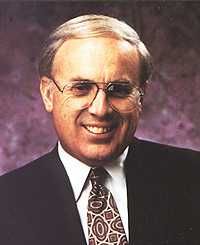
John MacArthur

Questions & Answers #22

Proverbs 1; Proverbs 2
John MacArthur March, 6 2014 Video & Audio
0 Comments
Shepherd's Conference
Question and Answer session with John MacArthur and others.

Sermon Transcript

Auto-generated transcript • May contain errors

100%
Welcome to the 2014 Shepherds
Conference General Session number 5 Keynote Q&A It is an honor
and somewhat shocking to be with you again after Strange Fire. I thought the only time I'd be
hearing from John MacArthur was on my local Christian radio station
after that. And because there was a little
bit of controversy after Strange Fire, I thought it would be good
to have some rules for this particular panel. I have three. Here's the
first one. Rule number one, no broad brush
painting. All of you, no broad brush painting.
Do not throw out any infants with the bathwater. And do not
be judgmental or critical of anyone unless you want to be
judgmental and critical of John MacArthur. I think those are
the rules after Strange Fire. That means I'm done. You're done. I'm done. It's his gift. You've got love, joy, peace,
patience, kindness, goodness, faithfulness, gentleness, and
Phil Johnson. That's what you got. Right up there. If I could talk before they do,
which means that I could actually say I preached at the Shepherd's
Conference. If I could just say, it's horrifying. You guys all
wear suits in such an austere way. It's just shocking to me.
If I could say, it's scary to be with these guys, but seriously,
it is such an honor to be in your presence. I realize that
the world and maybe your elders scream to you that you've got
to be famous or write a book or be on the radio or do a program
in order to be a really important pastor. I am telling you, you
are an important pastor. God taught me really the hard
way. We had this idea once at Wretched
Radio that people could send us an email if they weren't sure
that they were saved. The address was saved at wretchedradio.com. And God taught me that radio
hosts are nothing and talk show hosts on TV are nothing. We received
emails from people and I realized for the first time what it is
that you guys go through every single day, what you're confronted
with, and it is God's only ordained means of shepherding the sheep. Be encouraged. While the world
maybe screams you're only important if you're big, God's paradoxical
way says, no, you're faithful under-shepherds of the Lord Jesus
Christ. And if this means anything, I pray for you every single morning,
and I'm so grateful for you. Be encouraged. Your job is way
more important than radio monkey and talk TV guy. Okay? That's
my message to you. So with that, let's get started.
Gentlemen, I would like to talk about some of the current issues
that I believe are hitting the church today, and then we will
maybe get into some church issues depending on how chatty you are
or are not. Issue number one, you may recall
Dr. MacArthur from the Strange Fire Conference. I encouraged
you to host next the Strange Water Conference. Right? I trust you're still trying to
work out the dates with R.C. Sproul to get that figured out, but
in the meantime. See if he sends a video to that
one. We have some folks here from Arizona. It was a big week
in Arizona. Wow. It's like a Jesus culture
concert all of a sudden. All right. I wouldn't know. Yeah. In Arizona, the governor failed
to sign a piece of legislation that would protect Christians
so that they would not have to bake a cake for a gay couple. I would like to go around the
panel and I first just want a yes or no answer or a pass if you
don't want to give a yes or no answer. Can a Christian baker
bake a cake for a gay couple for a gay wedding? Phil? I can't
answer that with a yes or no. He can. I don't agree that he
should. Let me put it this way. Is it a sin for a Christian baker
to bake a cake for a gay couple who wants to get married? Again,
I think it depends. Let me put it this way. Let me answer it more clearly.
What's sinful is to participate in the celebration. If that's
what he's doing and that's what he feels like he's doing, then
he's going against his conscience and whatever is not of faith
is sin. Dr. Mohler. I think Phil actually is very much on target
there. It's not a yes or no because
there are situations in which to enter into the commons of
the business world means that one takes on certain responsibilities
and obligations that are not volitional. And that's also in
the Hobby Lobby case, that's the Obamacare contraception mandate,
there are issues. We're not asking or demanding
that all Christians cease engagement in the business world and in
the economy if these things are indeed upheld. We could anticipate
there would be moral challenges that would require that, but
I would not suggest that these are there. I would certainly
counsel, wherever one has the volitional choice, that one would
do nothing to encourage or to celebrate what one knows not
to be a marriage at all. And as I'll be saying tonight,
actually, but rather, to mislead themselves and others in order
to make sin look less sinful. That is something no Christian
would willingly do. But in the marketplace, at times,
Christians don't get to decide, and therefore they're not actually
sending that signal by the fact that they are obeying a law.
And I appreciate the way you ask it at the end. It's not baking
a cake for gay people. It's baking a cake to celebrate
a gay wedding. That means that the Christian's
conscience is being violated by requiring that Christian to
participate in a celebration. JOHN, and the reason I would
qualify the question the way I did is suppose you're working
at Costco and you're making generic wedding cakes and a couple comes
in and buys one for their gay wedding. If you just say yes
or no, yes it's a sin to bake a cake for a gay wedding. I don't
want some baker who baked a generic cake to feel like he has sinned
because somebody used his cake. in a gay wedding. The problem
is if you are entering into the celebration, if you are celebrating
something that's a sin, that's precisely what Romans 1 condemns
humanity for, for giving approval to things we know are sinful. PHIL. Yeah, I think this is where
a lot of Christians are going to find themselves in very short
order. I'm serving as a witness in the federal case in Washington
state having to do. with a very similar situation.
And if it's not in your state and in your business yet, it
will be in some way soon. And so Christians, as Christians
have had to do from the first century to the present, are going
to have to think very quickly about what our public responsibility
is what our gospel responsibility is and how we maintain first
priority to that gospel responsibility and also seek to be citizens
of this world even as we are ultimately citizens of the next.
It's not easy, it's gonna get a lot harder. Mark. Romans 1.32,
although they know God's righteous decree that those who do such
things deserve death, they not only continue to do these very
things but also approve of those who practice them. I agree with
what Phil and Alma said. Yeah, for me...for me it comes
down into every moral decision ultimately, every moral decision
we're faced with falls into one of three categories. Either it
is, thus saith the Lord, thou shalt, chapter and verse. Thus
saith the Lord, thou shalt not, chapter and verse. Or it falls
into issues of conscience, Romans 14, 1 Corinthians 8 to 10. And
the principles that are laid out there should govern the decision
for each individual believer. And there are many variables,
as has already been said. So I don't think it's as simple
as saying yes or no. Steve? Yes to what's already
been said. You followed the rules at least
by saying yes or no. That was something. I'm a man
under authority. Dr. MacArthur? Obviously I agree
with all this. I think just emphasizing the
other element is the conscience issue that you just don't want
to train yourself to violate your conscience. That's pretty
clear in Scripture. So if it is a conscience issue,
I think You want to say no to anything that violates your conscience.
I think keeping a healthy, sensitive conscience is a spiritual mandate
for us. And I think what Al said is very
true. This isn't going to be easy.
What if two people came in to buy a cake, a man and a woman,
who wanted to go celebrate their birthday by shacking up in a
local motel? Would you sell them a cake? What are you going to
do? Ask them to fill out a moral
questionnaire? I think if you're baking cakes,
if that's your business, you're not going to be able to morally
qualify everybody who gets to buy your cake any more than if
you run a gas station, you're going to go out and hand out
a moral questionnaire to the people that pump gas into their
car. This is life in the world, as Al was saying, and we interact
with the world, and they are the mission field, right? They
are the mission field. They're not the enemy. But I
think that the issue of celebration pushes it into a completely different
category. kind of focus in on that issue of participating.
I heard that as the common thread here. And that maybe in different
jobs would determine whether or not if I'm, somebody comes
in to buy the ingredients to bake a cake and I scan them,
I'm not participating in the wedding. Perhaps if I bake the
cake and they put my business card on the cake, on the wedding
table, am I participating in their wedding by baking a cake? Is that participating in a wedding?
A Christian worldview understanding of economics would actually suggest
that in selling the ingredients you are, in part, participating
in the making of that cake for a celebration you would not want
to join. But that's a part of Genesis
3. That's a part of living in a fallen world. To be a part
of an economy or a society is to realize that we are involved
in the same dollar bill that ends up in our 401k or in our
pocket as perhaps gone through a drug pusher's hands. In other
words, there is no position of moral purity in a Genesis 3 world
when you're in an economy. But then our responsibility is
then how best to exercise where we do have the stewardship of
choice and influence and activity And this is not just a matter
of baking cakes. It's a matter of decorating the
cake in order to make an expressive celebration of the union of two
people. That is what is being demanded
here. Of a wedding photographer, it is the use of an artistic
gift. My daughter, our daughter, my wife and I have a daughter,
got married just past June the 1st. We paid a lot of money to
people to do this. I fully expected those people
I hired to celebrate this wedding, let me tell you. You know, and so the photographer
was using an expressive gift to be able to catch this, you
know, do this, do this. That's very, very difficult,
but it doesn't stop it in there, and it didn't begin with same-sex
marriage. In several states right now,
and very quickly, because there's soft power and hard power, there's
the power of the law, there's also the power of professional
guilds and societies. Let's say you're a physician
involved in reproductive medicine. you would not choose to offer
assisted reproductive technologies to a same-sex couple. But in
some states and in some situations of so-called professional ethics,
you would have to cease your medical practice if you did not
do that. That's a very difficult situation. Now, this is where
you actually need the church to be the church, for a congregation
to be a body of faithful believers under the authority of Christ,
under the preaching of His Word, by the ministry of the Holy Spirit
to come together and say, let us reason about these things
so that we can be faithful to Christ. I don't want all the
Christians involved in medicine to leave, to leave medicine. On the other hand, When you look
at the history of the Nazi doctors during the period of the 1930's
and the 1940's, the Christians should have left the medical
profession under the conditions of the Nazi regime. So we can't
say it will never happen that Christians have to withdraw,
but we should say, you know, withdrawal is not the first responsibility,
rather gospel and biblical engagement is, but it's going to take wisdom
only the Holy Spirit can give. I think Al's right on the language
of participation. I think we do have to participate.
But I think in Romans 1.32, that word approval, that's what we
want to avoid. So Tom, I appreciate what you
said. I don't think we're going to be able to think of it necessarily
as scripture, verse, or passage that's clear and commanding,
forbidding all the choices we're going to have to make. But I
mean, certainly if you mean reasoning from them, that's exactly right. So another example in our church,
we have an architect who's been asked to work on a mosque. He's
a member of our church. He's a sound evangelical Christian.
His architectural firm has been hired to do a mosque. It's a
good job. You know, what does he do? Well, our options, we
could say, that's clearly wrong. That's participating in idolatry,
in a sense. Or we could say, well, it's clearly
right. It's like these other examples we're giving of we participate
in this world. Or you could say it's a matter for the individual
conscience. We could see it argued both ways. I think if you start
talking to the members of your church much, you'll find there
are a lot of people who face these kind of decisions long
before these issues came up. And I think we want to teach
people Not even the specific answers necessarily. In this
case, we didn't give him one answer. Different elders gave
the brother different answers. I think what we want to do is
we want to teach them how to reason faithfully. And that there are
times when, like Al is saying with the German doctors in the
1930s, there are times when you have to go, this is too far.
And the church as a whole church may have to take a stand on this.
I just read a great little short book on this by Robert Binney
called Good and Bad Thinking About Religion and Politics,
Erdmann's 2010. B-E-N-N-E, Bob Benny, good and
bad thinking about religion and politics. I would commend it
to you. Just for fun, building a mosque, you're a Christian
construction worker, may I? Show of hands, how many people
would advise the brother to build the mosque? A few. Look at that. And most of you would say, do
not build the mosque, is that correct? Oh, and the rest of
you would fall under the category of adiaphora, is that correct?
That it's a Christian conscience issue? Is that what I'm, that
it's up to the brother? Todd, you said construction worker,
not architect. I'm sorry, architect. Big difference. Okay. In my mind.
Uh-oh. So there's a difference between
the architect and the construction worker building it. It's the
stuff Al was talking about, about using your creativity. So with
that, Can we summarize that saying with the majority of these issues
that we're confronted with, these are Christian conscience issues
and different Christians are going to come up with a different
answer on the same situation. And we should perhaps not be
quick to throw stones at one another because these are challenging
issues. I would say that, but we have to recognize there are
limitations on that argument. There are moments in which the
church is going to have to say, it is giving a child to Molech
to be involved in that profession by these requirements in this
time. Come ye out. Not that that's easy. Again,
it's easier to see in retrospect. At some crucial moment in the
1930s, the Protestant church in Germany failed horribly and
largely gave false witness to the gospel that continues until
now by not withdrawing when withdrawal was the only option. BINGHAMTON
Catholic Charities made that heroic decision in Massachusetts
six, seven years ago. And in Illinois. And we're going
to see this come again and again. BINGHAMTON Dr. MacArthur, did you want to
say something? I just think the question is so replete, there's
no escaping. Does a Christian architect design
a strip mall that's going to carry a saloon, a bar? Does he
design that? What if his firm wants to design
a Catholic church? Is that acceptable, but a mosque
is not? I mean, we're not going to be
able to do anything if all we can do are things that are affirming
the Kingdom and the gospel. That's just not possible in the
world. But I think what Al is saying
needs to be taken to heart. These questions are going to
become more complex. as time goes on because we're
going to have more and more legal pressure to violate our convictions
on all fronts. And it's going to force us, it's
going to force us to that retreat mode if it keeps going the way
it's going. Which leads us to perhaps topic
number three. Ross Douthat. Douthat? Douthat?
Doubt it. New York Times, perhaps one of
the best surveyors of what's going on in culture these days,
just wrote an article that said, it is at the place in culture
right now where Christians are no longer at the table negotiating
what is morality, but basically we are waiting for the terms
of surrender. We are not even being asked,
what should the terms be? We're waiting for culture, the
secularist, to tell us, here are the terms of surrender. Gentlemen,
are we at that point, and are we, in your opinion, headed toward
genuine Christian persecution? I want to be very, very careful
in using the word persecution. There are brothers in this room
who have risked life to preach the gospel. We are not there.
It's not likely we will be there. That's different. But oppression is different than
persecution and social isolation and marginalization. I think
we have to keep a couple of things in mind. Our ultimate concern
should be freedom to preach the gospel. That should be our primary
concern. There are many other privileges
we're losing fast in this culture. We've lost the privilege to establish
the moral norm. We've lost the privilege to speak
in some places. You're not going to see an evangelical
who holds to biblical morality likely to offer the invocation
at the inauguration of anyone, of any party elected president
of the United States in any near future. And so we've lost certain
privileges in the society. I would not call that persecution.
I would simply say that that's a direct attempt to subvert and
marginalize the gospel and those who represent the gospel. However,
Ross Douthat's a friend. We recently spoke together. I
think what he's writing, especially where he wrote it in the pages,
the opinion page of the New York Times, he's exactly right. He's
a part of some of the same conversations that I'm a part of. They're very
depressing conversations from a legal and political, cultural
perspective. But the reality is that those
who are now calling the shots in the culture, in the courts,
in the law, in politics, in major media, in the cultural creatives,
they believe that we are now to be silenced, and they're gonna
do everything they can to silence us. And the other thing is, and
I'm preaching on Romans 1 tonight, so I'm trying not to preach my
sermon, nor to allow Mark to. But you have to realize, and
I will document tonight, that what is being demanded of us
is celebrating this. That is the overarching ambition
behind the legalization of same-sex marriage. It is to put society
in the position of normalizing and celebrating. That's exactly
where this is headed. Those who will not do that are
going to pay a huge price. The surrender language that Ross
is using doesn't originate with him. It originates with the other
side of the argument. And I have those legal briefs
actually on my iPad as I sit here in which the folks who are
pushing this on the other side are saying, in order to maintain
the understanding that this is a matter of human rights and
human dignity, no dissenting voices can be allowed cultural
privilege. Yeah, I wouldn't want us to hear
that language of surrender and think that that's calling us
in any way to be passive. He's not saying that. Right,
but I just want to make sure people here who don't read that
article and hear this phrase be used, because even if it's
true that the cultural privilege is something that we don't have
for a time or until the return of Christ in this country, we
in our local churches have to be very active in responding
and thinking through and how we actively pursue the commands
of Christ on the terrain that God and His providence allows
us to inhabit. So we'll have to use all of our wits about
us, and you know the word well, and be charitable and careful
with each other's souls in order to get through this, and the
Lord will no doubt get great glory to Himself through it. That's
very well put. I would just say you can make
the word surrender go away pretty fast with this group if it becomes
crystal clear that we're nowhere near surrendering the truth.
The word surrender can go out of the conversation as fast as
we eliminate it. I think this is when we speak
prophetically to the hour and the time and the day and equivocate
not at all. I think in fairness to the argument,
John's exactly right. God bless you for that affirmation.
But that language came out of Massachusetts when same-sex marriage
was being legalized, and at the last minute, Efforts were made
to try to arrange after same-sex marriage. The momentum was already
there. They're already legislating it. It's already heading in that
direction. The Supreme Court of that state had already ruled.
The issue was, okay, now what protections can be put in place
for Christians and others of conscience? And the answer was
basically nothing. That's why Catholic Charities went out of
business. which had been the largest adoption agency in the
entire state for decades and decades. And so the politicians
said, of those asking for those religious liberty privileges,
that's the equivalent of negotiating over terms of surrender. Those
folks didn't surrender. And I want to argue that when
Catholic charities went out of business, out of conviction,
in this sense, they weren't surrendering. They were simply saying, we will
not bow the knee to Baal. We're going to find out whether
evangelicals have the same kind of courage in very short order.
Two-fold, two-part question. Does anybody believe that in
the near future, the state might require that the church does
not speak about the issue of homosexuality from pulpits? And
is this the time for the church to be doing anything besides
the typical daily business of the church, considering the hour
that we're in? Those demands are already being
made in certain venues. You already can't speak about
homosexuality, calling it a sin, on the radio in Canada or England. I mean, that's already a pretty
strict policy. Football player was just released
for tweeting. Yeah. So, yeah, I think that's
imminent. At least that's what secular
culture is going to try to impose on the church. Even inside the
church. Yeah, but it's a microcosm of what you see, or you see this
in a very clear way in the early chapters of Acts when they tried
to silence the apostles and they just said, look, we have to obey
God rather than men. And they preached the gospel
anyway. And we have to do that with gospel truth, with everything
scripture says about what's sin and what's not. It won't dissuade
me if they say, you know, we'll put you in jail if you say homosexuality
is a sin. I'll just have a prison ministry. I would be far more in touch
with this, but it just seems from a distance that The first
step is going to be saying, if you preach on this, if you state
that homosexuality is a sin, we're going to remove a privilege
that you have, which is your tax exemption. That's not something
that you've earned, something that has been given to you, and
if you're not in step with where the culture is, we're going to
begin to take steps to silence you. The first one not being
probably jail, but some pretty serious penalty. And that's when
the test really comes for us. JOHNSON That was the conversation
about property taxes. before they start tampering with
deductions for charity that come against the church, just remove
your property tax exemption. That could put Grace Community
Church out of business. If all of a sudden we had to pay the
United States, the federal government, a couple million dollars a year
for this facility, this would be devastating. The Master's
College has 52 acres of prime land. If they took away our tax-exempt
status, which could happen at a school, maybe faster than it
might come to a church, we'd be done. We'd be out of business.
That would be the end of that institution. They know that,
and they need money. That's why I began by saying
our concern must be advocating in every way possible the freedom
to preach the gospel and to preach the scripture. And that's what
is extended to this argument. All the legal mechanisms for
removing tax exemption are there. The Supreme Court case, several
years ago, the precedence there. Cultural pressure would make
it very expensive for politicians to do that now, but don't count
on that lasting very long. Just consider there are other
parallels. There is non-discrimination language in virtually, well,
first of all, in federal statute and in every state, to some extent,
certainly here in California, on the issue of gender discrimination
or gender distinction. And yet no one has tried to remove
the tax exemption of Grace Community Church for preaching complementarianism. This is different. And so don't
count on those parallels lasting. And this is going to require
an awful lot of Christian vigilance. And this is where, quite honestly,
it is a matter of the freedom of the church to be the church.
Because we can preach under a tree, and we'll be willing to do that.
We'll preach in prison if the Lord should so will. But I don't
want to willingly give up the freedom for us to gather in this
room right now. and the freedom to be president
of a seminary sending out gospel ministers into the world. We
can't surrender that. We've got to fight it to the
very end, and we need smart lawyers and smart people, and we need
lawyers with tenacity, and we need to start holding politicians
accountable, naming names. We also need preachers that aren't
cowards. I want to just tell a quick story.
The city of Los Angeles wanted to honor Grace Community Church.
This is a church where If an officer is shot, his funeral
is likely to happen. If a fireman dies in a fire,
his service is likely to be here. We do police training here, which
is really good for our profile, for the community to see 35 or
50 cop cars in the parking lot now and then. But the city of Los Angeles wanted
to give us honor, and the mayor wanted to come and speak to the
congregation on a Sunday morning. Richard Reardon, you may remember
that name. And he came and he stood in the pulpit and it was
really an epic thing, he said, because he knew that Grace Community
Church was a church that did not discriminate according to
race, color, or sexual preference from that pulpit. And there was
the same dead air that I just heard from you. Did I just hear
that from the pulpit of Grace Community Church? That was an
assumption. of the mayor of Los Angeles.
That was how many years ago, Phil? Ten, twelve years ago?
His assumption was that we wouldn't discriminate, and here we are
a dozen years later, so far down that path. Is this an hour where
the local church, where these men will return? to do anything
beyond the daily business of the local church? Does this hour
cry out for any other sort of response? Putting a sign in my
yard, evangelizing the community, doing a public event, putting
a sign up on the side of the church. Should we be doing something
more because of the hour? I think the church is always
doing something more than you may mean to imply there in that
the church disperses its members into the community in order to
be salt and light. You're not talking about a Westboro
Baptist approach. I'm asking the question because
we all feel stirred because we see what's happening and I think
that the response tends to be, I want to do more. I want to
do something. So maybe I'll phrase it that
way. What should we do when we leave here? Articulate the gospel. Demonstrate the gospel. Raise
up a generation of Christians who will do the same wherever
they are in the school, in the workplace. Be visible. Be winsome, but be courageous.
All the politicking and all the signs and all that stuff fights
the credibility gap that exists in the perception of what the
church really is. Do you know what I'm saying by
that? If we were just a holy influence, if we were so gospel-saturated,
if we were so Christ-exalting all the time, then maybe we could
say that and it might seem consistent. But to put up signs, take political
action, to do whatever we do in a sort of a public way and
have so many churches undermining what the church is and what the
gospel is makes it very difficult. As I'll say, we've got to be
godly people living in the world on every level, at every point
of social contact, holding up the gospel, living godly lives.
And then when we speak to those issues, we speak as a force.
And it's not the confusing thing that it is now. When I see those
signs, I know they just pour salt in the wounds of people.
They just irritate when somebody lashes out against homosexuals.
We don't do that. We pick our sins that we're going
to lash at. But I just don't think the church
today has the undergirding credibility to be a voice that's going to
be seen as anything but kind of radical. I mean, you're asking
that question because it's been...I think for 40 years or longer,
evangelicals have been sort of conditioned with this impulse
that when there's something we're concerned about of this nature,
government intrusion or the society is melting down and those things
have been happening continuously, the impulse of evangelicals is
to stage a boycott or a protest. And that's, I think, just the
wrong way to think. a biblical response. It's not
the way the Apostles would have responded. You don't see them
organizing boycotts and protests. What they did was aggressively
proclaim the truth everywhere they went and make disciples. That's what Christ called us
to do. And ultimately, that's the thing that is going to make
the biggest impact on our culture. Todd, an unhealthy church is
not prepared to do anything well. The healthier your church is,
the more prepared you are to do whatever. Let's say that you
need to take some difficult steps in your church. If you've not
been preaching expositionally, if you've not been clearly preaching
the truth about Christ that we heard from John 5 this morning,
if you've not been clear on the gospel, if you've not been clear
on what conversion is, what it really means for somebody to
be born again, if you've not been clear in your evangelism,
in discipleship, in the way you practice church membership and
church discipline, you won't be able to do anything about
it if something is going wrong even with members of your congregation.
So if we as pastors will work to make that daily business that
you refer to far more epic than the way that phrase seems to
sound, if you realize how significant that work always is and get your
church healthy for that, then you'll be ready for whatever
circumstances the Lord calls us to live in. Let's go to Colorado.
It would appear that the police officers there were filled with
free time and had no criminal activity, so the state decided
to legalize marijuana. Historically, if a teenager would
approach the pastor or the youth pastor and ask if marijuana is
a sin, we could simply respond, it's illegal, so don't do it.
Well, now with Washington soon becoming a practicing state,
four more states, Washington, D.C., taking a look at legislation,
it would appear that marijuana legalization is coming perhaps
to all states. Is smoking pot a sin? Yes or no? On that one, I'll give you a
yes. Yes, Dr. Mohler. And I'll let you tell
us why, because what I'd like you to do is give me a yes or
no, and then I want you to give me your theological case for
that. At the same time? No. Yes. It's a sin. It's a sin. Mark? Yes. Tom. Yes. Steve. Yes. Dr. MacArthur. Yes, absolutely. Build a theological case because
I'm not aware of a Bible verse that says you should not smoke
a big fat doobie. Right? There's no Bible verse
that says that. So how do you build the case?
Paul says all things are lawful but I will not be brought unto
the power of any. And the answer to the question is, you know,
people say, well, it's no different than drinking alcohol. You can
drink alcohol and not have your mind altered. You can't smoke
a joint without having your mind altered. That's the purpose of
it. You've yielded up control to an external force that's been
taken internal. It has the sole purpose to alter
your consciousness, to diminish your responsibility to diminish
your accountability, to diminish you at every level of thinking,
which then diminishes you at every level of function. It has
no other purpose. It's compared to drinking, but
it's not the same because you can have a glass of wine at dinner,
and it doesn't alter your consciousness at all. But when you smoke a
joint, that is the sole purpose of doing that. That then yields
up control to, or I should say it releases your self-control,
and that's always a sin. Yeah, I agree wholeheartedly
with that. I think that's the very verse
that I thought of, along with the fact that the Scripture just
routinely throughout, pervasively, condemns intoxication. Where it doesn't roundly condemn,
obviously, what it would classify as wine and other things. When
you start to put it into context, you realize what's being discussed
there, even the biblical etymology, look at the context. The warnings
against intoxication mean that whatever you may drink lawfully
and enjoy lawfully, and Paul would say to Timothy, is good
for your health, is not something that leads to intoxication. Intoxication
is itself a big problem. Christianity Today has an editorial
out on this this week. Suggesting that it would not
be...that Christian freedom should extend to the freedom to smoke
marijuana, but Christian judgment should extend to not doing that. I think the big problem is, one
of the arguments there is that whatever God gives us is good.
You know, we don't condemn any good thing. But God didn't give
us a marijuana plant and say, roll this up and smoke it. In
other words, God's purpose to give us something for its intended
end is good. You know, it's just hard to it's
hard to justify that. Colorado's new tourism motto,
by the way, has come to Colorado. You'll forget to leave. All right. None of us will know whether
to applaud this or to give a deep sigh. How's about the Girl Scout
cookie salesperson, the little girl selling Girl Scout cookies
outside of the pot store in Denver? Part of you wants to go, wow.
And the other part wants to go, well, that's brilliant. Who else
wants Girl Scout cookies more? Before the legalization of so-called
recreational marijuana, they had medical marijuana in Colorado.
And even then, there were more marijuana distributorships in
Denver than Starbucks and McDonald's combined. Wow. And that tells
you a great deal where this is going. By the way, your governor
suggested in recent days that it might not be smart for the
entire state of California to be stoned because it could have
a bad impact on the economy. But he went on and said, but
we have medical marijuana, which is about the same thing. And
I just want to tell you that some years ago when I was here
for this conference, I was having dinner in Santa Monica and there
was a stand set up with someone who I guess is an MD sitting
behind it. And you could come and say, I have a hangnail and
get a prescription for medical marijuana. Let me ask this question.
We were all assuming we're talking about recreational use, medicinal
use of marijuana. Am I opposed to that as a Christian?
I want to suggest you shouldn't be opposed to medical marijuana
any more than you should be opposed to medical penicillin. Medical
penicillin isn't available at Santa Monica Beach and appear
from a guy with a beard and a tie-dyed t-shirt. So if it is being handled
by the medical establishment according to medical means, the
American Medical Association, which, by the way, condemns the
use of marijuana in this way. In other words, if it's regulated,
we wouldn't want half the stuff sold at the pharmacy available
for any kind of use. You could just go get it at the
pier. And so much of the talk about medical marijuana is an
emotivist camouflage of the real issue. And your governor admitted
that this week. God bless Governor Moonbeam.
We never thought you'd say that sentence, did you? In that sense,
in that sense. You're talking about the California
governor? Yes. Yeah, yeah. Could we just take out the personal
pronoun? Which one? The governor. Not our governor. Oh, I'm sorry. Yes, the governor.
I'm sorry. I was counting pronouns. I would like to ask for more
biblical support. Can you give me any other Bible
verses that say, No son, daughter smoking pot is a sin. Any other
Bible verses? I think they've already been
touched on. I mean, the two big issues... I would use one in
Revelation, pharmakeia, the use of that word pharmakeia in the
book of Revelation clearly is pharmakeia, and from what we
get the word for pharmacy, pharmaceuticals... Somebody would say that's actually
witchcraft, that's divination. Yeah, I know, but it's the word
pharmakeia. And it, you know, witchcraft, historically, going
as far back as you want to go, involved all kinds of induction
by means, you know, using drugs. Yeah, so it's inseparable. So
you would keep the two, is it Galatians 5, you'd keep the two,
the term witchcraft, which I believe is what is used. Wherever you
see the word pharmacain, and it's again in Revelation where
it uses it again. But what I've heard, I don't
know if I can verify this, but something like marijuana today
is 20 to 40 times more powerful than it was a generation ago.
Much more. Would that be true? Yes. Now you've got a high-powered
kind of thing that induces people into a lack of self-control that
leads to witchcraft. There's a new term, brand new,
called dabbing. D-A-B-B-I-N-G. The kids take
the marijuana that's legal and they cook it real hot. and it
multiplies it times five, the strength, the potency of marijuana. One other little note. Yesterday
on the news here in California, three third graders were found
smoking pot in the bathroom at an elementary school in Sonora.
So that's where it goes, three third graders. Being controlled
by the Spirit as opposed to being controlled by something external.
Sure, Ephesians 5.18. Could I build a gospel case that
says basically God purchasing us through His Son for our good,
forgiveness of sins, and for our flourishing, pot does not
contribute to that, nor is it in alignment with the gospel?
Is that an argument? You could use 1 Corinthians,
whatever you do, whether you eat or drink, do all to the glory
of God. That would be consumption. Okay, now, with that in mind,
the issue of marijuana and gay marriage, it is my opinion, based
on just my interaction with folks that I hear from regularly, there
is a growing, I don't know how big it is, George Barna has not
done this poll yet, there's a growing trend of Christians who are Libertarian. They like the Libertarian Party.
I took the time to look up the 2012 platform. It's basically
about individual sovereignty that you control your own decisions. And there should be no laws that
control your behavior as long as it's peaceful and it doesn't
harm anybody. And that includes marijuana.
It includes any form of drugs. Drug legislation. It also includes
abortion. It also includes sexual proclivity
or gay marriage. If my assessment is accurate,
more Christians are looking toward the libertarian party. Is that
a place that a Christian should be lending its support? Libertarianism. No, that's yours. Well, I think the quick answer
is no. I think we have to be very careful
here and say, first of all, this libertarian temptation is written
into the American experiment. I mean, you can look at some
of the Federalist Papers and see that some of our forefathers
were making very similar arguments, countered by people who had better
arguments, such that there was a boundary established. The conservative
coalition in America since 1979 has had as one of its three main
legs a libertarian impulse. It's very popular among young
people because it basically gives them a way out of the cultural
collision. If you're in the cultural vice,
the way out of this is to adopt a libertarian understanding.
The ideological base of libertarianism is idolatry. It's Ayn Rand. It's Randian individualism. And she was at least honest in
saying that she's like Nietzsche, that Christianity is the religion
for weak people who need this kind of support. I mean, we need
to realize what we're up against. And frankly, we need to call
these people who claim to be libertarians and say, look, you
know, if you're a libertarian and you're buying into that,
then you're denying the gospel by doing so. Not all libertarians
do that. Not all people who are tempted
by libertarian arguments do that. But I think we need to recognize
that the ideology there is very, very difficult. Now, we come
back to say that the alternative to libertarianism is not a dictatorship. It's not giving the state the
kind of sovereignty the state wants to claim over our lives.
That's the balancing problem, is that we have an encroaching
state that genuinely does want to control every aspect of our
lives. And this is something that, in other words, the libertarian
impulse has checked that statist impulse on the part of others,
but this is where we have to be continually negotiating these
things in the public square. Yeah, let me, because I've made
some of those statements, and then I get emails back. This
is the response. Wait a second. It is not the
government's job to be legislating morality. It's the church's job
to be proclaiming the gospel, to be proclaiming the truth,
and there should be that separation and government should not be
making those laws. regarding abortion, drugs, sexuality? The Christian response would
be? First of all, that's insane. But there are smart ways to make
that argument. That's just not the smart way
of making it. You were smart to make it in the unsmart way
to make its unsmartness apparent. That was so smart I didn't understand
that. But in other words, first of all, first of all, it is the
church's responsibility to preach the gospel. It is not our...we
shouldn't expect the government ever to preach the gospel. The
government's responsibility is to get out of our way to allow
the church to preach the gospel. And by the way, we've counted
on the culture helping us to preach the gospel, and the culture
is not helping us anymore. Cultural Christianity is disappearing,
and we're finding out we're now the only people who are gonna
be talking about the gospel, and we're gonna find that there are
a lot of people who thought they were talking about the gospel who
weren't. We're the people who know the gospel, preach the gospel,
will die for the gospel, bleed out for the gospel. But the government
legislates morality all the time. That's all the government actually
does in legislation. The laws regarding traffic are
moral laws. They're establishing a moral
universe in which it's right to have respect in this way for
others on the road. Everything the government does
is legislating morality. When people say that, they're
talking about a zone of specific morality having to do with individual,
usually political, economic, or sexual behaviors. And then
they're saying, well, there you have to be hands-off. But here
again, the people who are saying that don't mean it. I mean, you
do not have people who are right now saying we need to stop legislating
all sexual morality. They're not trying to decriminalize
issues having to do with incest or all kinds of things we could
mention the Bible's very candid about. And so they'll try to
say, well, no, only where...we just want to stop moralizing
where there are consenting adults involved. Well, but even then
they're not really consistent with that. We need to call them
on their inconsistency. Governments always, cultures
always moralize. In New York City, they've stopped
moralizing on pornography and they started moralizing on supersized
cokes. And so every society decides
to moralize by its regulations. We have to stop legislating morality.
It's wrong to have that many calories. You're rotting the
teeth of children and making them obese. And so you just have
this negotiated all the time. But we just need to look at people
and say, you don't legislate morality. And say, well, what in the world
do legislators do? If this isn't about a moral purpose,
Then what are you doing? Now sometimes that moral purpose
is a little more abstract, but that is the purpose for the legislation
and we need to call it. But the church preaches the gospel.
We shouldn't count on the government to do it. We should tell the
government not to do it, as a matter of fact. That's our job. That's
our responsibility. But the government does have
a responsibility to, as Romans 13 makes very clear, to execute
justice. That's morality. There are limits to what government
can do. But government needs to fulfill that purpose and be
held accountable. There are a gazillion things going on, not just the
social issues that we've been talking about this morning, but
church issues, the wonky theology that's being introduced, the
stuff that we see on the TVs, what comes through the bookstores.
How does a local pastor balance being aware of these issues,
engaging in these issues without being overwhelmed by these issues
because they are supposed to be shepherding people's souls.
Give advice to the local pastor how to be aware but not swamped
by these things. Tom. I think you read guys like
Al who keep us abreast, who do all the work and the research
and you know enough of what's going on. You know enough of what's going
on to be able to inoculate your people. They don't need to know
everything that Al knows about the issues that are going on
necessarily, but they need to know enough to know the danger
and to be alert to that danger. And you do that in the context
of a regular faithful exposition. I think that's really the key
issue and you introduce and deal with those issues as they arise,
but not in a complete thorough, I'm going to explain everything
there is to know about this. Just enough to warn them if you
hear about this, if you see this, here's the problem and here's
why biblically and then move on with building the church and
building into people's lives. I just think it's cultivating
such a rich knowledge of theology from the Scripture that people
have discernment, and you're just kind of turning them and
pointing them and helping them avoid this and that. Everything
is not epic. Everything is not overwhelming
because there's a general flow of understanding of the Word
of God. They're probably asking questions about things if they've
been taught like that rather than succumbing to things. So
I just think you lead them, but the foundations have to be very
strong by which they can discern. In other words, the maturing
of your people is your task, to get them to be mature. In
the 1 John language, not to be spiritual children. to at least
be spiritually young men who have overcome the evil one and
all his deception which comes through the culture because they're
strong in the Word which abides in them, and even bring them
to being spiritual fathers who begin to know God in an intimate
way. So it's the maturing of the congregation around the Word
of God. That's what we do, and anything less than that is a
violation of our calling. If all you do is show up and
create an event for people that stimulates their emotion, you
have done nothing for those people with any long-range value. It's
that continual building of a foundation of truth that becomes a set of
convictions by which they evaluate the world in which they live
that is fulfilling pastoral duty. close this by springboarding
off of what Pastor Mark talked about last night. Perhaps you
felt a little bit unsettled considering the shifting times and that we
seem to be living in a post-Christian society. Please don't forget. what we hold and what we proclaim
and what you do. And even if the world or maybe
even other people in the church says that your role is small,
your role is monstrously big in the local church. The bottom
line at the end is Jesus wins. He is winning. and he's going
to win, and he's brought us onto his side. Don't grow weary, cling
to what is good, preach the gospel, and thank you for what you do
day in and day out. You are much loved and appreciated. Thank you. Steve, would you close
us in prayer? Father, thank you for the gathering
here this morning. Thank you for John chapter 5.
and the proclamation of the deity of Christ. May that be what is
primary that we take from this morning. May we stand with great
authority upon the supreme authority and eternal deity of the Lord
Jesus Christ. I pray for these men that You
will make them mighty in the Scripture and mighty in the gospel.
and they will herald and proclaim Your Word. And we know there
is zero way to change the culture apart from the preaching of the
gospel of the Lord Jesus Christ and the regeneration of spiritually
dead souls. So I pray that You would unleash
us and cause Your gospel to flourish and that You would use this conference
to make us strong in Your grace, help us to act like men and to
be strong in the grace that is in the Lord Jesus Christ. And
I pray that we will keep the main thing, the main thing which
is to fulfill our calling, to preach Your Word, to shepherd
the flock, and I pray that You will continue to raise up such
men as we have heard today to help us think critically through
ethical issues. Father, thank You for the food
that we're about to have and I pray that the rest of this
day Your hand would be strongly upon us and that You would cause
this day to have life-changing effect upon each of us as we
gather. Help us to redeem the time and
to be good stewards of this extraordinary opportunity to allow us to be
at this conference. May you open the windows of heaven
and pour out your favor and your blessing upon us in Christ. In Jesus' name we pray, amen.
Broadcaster:

Comments

0 / 2000 characters
Comments are moderated before appearing.

Be the first to comment!

Joshua

Joshua

Shall we play a game? Ask me about articles, sermons, or theology from our library. I can also help you navigate the site.