Bootstrap
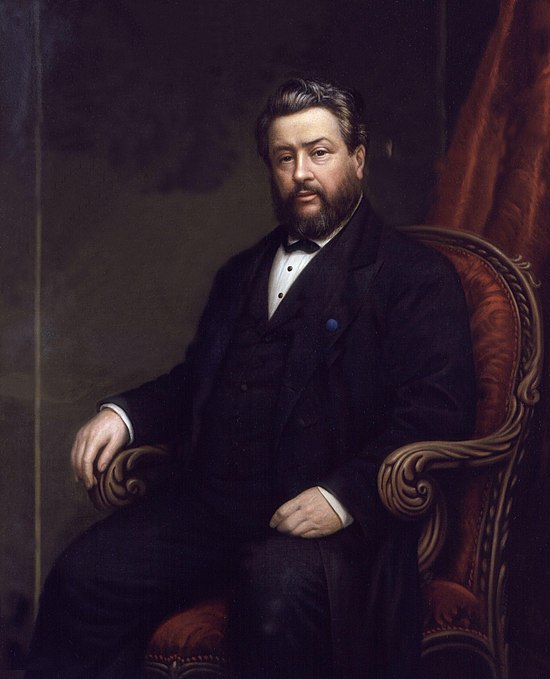
Charles Spurgeon

Spurgeon devotionals #3

John; Romans
Charles Spurgeon November, 30 2013 Audio
0 Comments
This superb audio has been graciously provided by Treasures 365. If you would like to purchase all 370 audio files of Spurgeon's "Morning and Evening" (36 total hours) for $19.95, you can do so at their website:
http://www.treasures365.com/prodme.html

Sermon Transcript

Auto-generated transcript • May contain errors

100%
Tell me where thou feedest, where thou makest thy flock to rest at noon. Song of Solomon chapter 1 verse 7. These words express the desire of the believer after Christ and his longing for present communion with him.

Where dost thou feed thy flock? In thy house? I will go if I may find thee there. In private prayer? Then I will pray without ceasing. In the word, then I will read it diligently. In thine ordinances, then I will walk in them with all my heart.

Tell me where thou feedest, for wherever thou standest as the shepherd, there will I lie down as a sheep, for none but thyself can supply my need. I cannot be satisfied to be apart from thee. My soul hungers and thirsts for the refreshment of thy presence.

Where dost thou make thy flock to rest at noon? For whether at dawn or at noon, my only rest must be where thou art, and thy beloved flock. My soul's rest must be a grace-given rest, and can only be found in thee.

Where is the shadow of that rock? Why should I not repose beneath it? Why should I be as one that turneth aside by the flocks of thy companions? Thou hast companions. Why should I not be one?

Satan tells me I am unworthy but I always was unworthy and yet thou has long loved me and therefore my unworthiness cannot be a bar to my having fellowship with thee now. It is true I am weak in faith and prone to fall but my very feebleness is the reason why I should always be where thou feedest thy flock that I may be strengthened and preserved in safety beside the still waters.

Why should I turn aside? There is no reason why I should. But there are a thousand reasons why I should not. For Jesus beckons me to come. If he withdraws himself a little it is but to make me prize his presence more. Now that I am grieved and distressed at being away from him he will lead me yet again to that sheltered nook where the lambs of his fold are sheltered from the burning sun.

The Love of the Lord Hosea chapter 3 verse 1 Believer, look back through all thine experience, and think of the way whereby the Lord thy God has led thee in the wilderness, and how he hath fed and clothed thee every day, how he hath borne with thine ill manners, how he hath put up with all thy murmurings and all thy longings after the fleshpots of Egypt, how he has opened the rock to supply thee, and fed thee with manna that came down from heaven.

Think of how his grace has been sufficient for thee in all thy troubles. How his blood has been a pardon to thee in all thy sins. How his rod and his staff have comforted thee. When thou hast thus looked back upon the love of the Lord then let faith survey his love in the future.

For remember that Christ's covenant and blood have something more in them than the past. He who has loved thee and pardoned thee shall never cease to love and pardon. He is Alpha and he shall be Omega also. He is first and he shall be last.

Therefore, bethink thee when thou shalt pass through the valley of the shadow of death thou needest fear no evil for he is with thee when thou shalt stand in the cold floods of Jordan thou needest not fear for death cannot separate thee from his love and when thou shalt come into the mysteries of eternity thou needest not tremble For I am persuaded that neither death, nor life, nor angels, nor principalities, nor powers, nor things present, nor things to come, nor height, nor depth, nor any other creature shall be able to separate us from the love of God which is in Christ Jesus our Lord.

Now, Saul, is not thy love refreshed? Does not this make thee love Jesus? Doth not a flight through illimital planes of the ether of love inflame thy heart and compel thee to delight thyself in the Lord thy God? Surely, as we meditate on the love of the Lord, our hearts burn within us, and we long to love him more.

Praying always. Ephesians chapter 6 verse 18. What multitudes of prayers we have put up from the first moment when we learn to pray. Our first prayer was a prayer for ourselves. We asked that God would have mercy upon us and blot out our sin. He heard us.

But when he had blotted out our sins, like a cloud, then we had more prayers for ourselves. We've had to pray for sanctifying grace, for constraining and restraining grace. We've been led to crave for a fresh assurance of faith for the comfortable application of the promise for deliverance in the hour of temptation for help in the time of duty and for succor in the day of trial.

We've been compelled to go to God for our souls as constant beggars asking for everything. Bear witness, children of God. You've never been able to get anything for your souls elsewhere. All the bread your soul has eaten has come down from heaven. And all the water of which it has drunk has flowed from the living rock, Christ Jesus the Lord.

Your soul has never grown rich in itself. It has always been a pensioner upon the daily bounty of God. And hence your prayers have ascended to heaven for a range of spiritual mercies all but infinite. Your wants were innumerable and therefore the supplies have been infinitely great. And your prayers have been as varied as the mercies have been countless.

Then have you not cause to say, I love the Lord because he hath heard the voice of my supplication. For as your prayers have been many, so also have been God's answers to them. He has heard you in the day of trouble, has strengthened you and helped you even when you dishonored him by trembling and doubting at the mercy seat.

Remember this and let it fill your heart with gratitude to God who has thus graciously heard your poor weak prayers. Bless the Lord, O my soul, and forget not all his benefits.

Arise ye and depart. Micah chapter 2 verse 10. The hour is approaching when the message will come to us as it comes to all. Arise and go forth from the home in which thou hast dwelt from the city in which thou hast done thy business from thy family, from thy friends.

Arise and take thy last journey. And what know we of the journey? And what know we of the country to which we are bound? A little we have read thereof, and somewhat has been revealed to us by the Spirit. But how little do we know of the realms of the future?

We know that there is a black and stormy river called Death. God bids us cross it, promising to be with us. And after death, what cometh? What wonder world will open upon our astonished sight? What scene of glory will be unfolded to our view? No traveler has ever returned to tell.

But we know enough of the heavenly land to make us welcome our summons thither with joy and gladness. The journey of death may be dark, but we may go forth on it fearlessly, knowing that God is with us as we walk through the gloomy valley. And therefore, we need fear, no evil.

We shall be departing from all we have known and loved here, but we shall be going to our Father's house, to our Father's home, where Jesus is. To that royal city which hath foundations, whose builder and maker is God. This shall be our last removal to dwell forever with him we love in the midst of his people in the presence of God.

Christian, meditate much on heaven. It will help thee to press on and to forget the toil of the way. This veil of tears is but the pathway to the better country. This world of woe is but the stepping stone to a world of bliss.

Prepare us, Lord, by grace divine for thy bright courts on high. Then bid our spirits rise and join the chorus of the sky.

And they heard a great voice from heaven saying unto them, Come up hither. Revelation chapter 11 verse 12

Without considering these words in their prophetical connection, let us regard them as the invitation of our great forerunner to his sanctified people. In due time, there shall be heard a great voice from heaven to every believer, saying, Come up hither. This should be to the saints the subject of joyful anticipation. Instead of dreading the time when we shall leave this world to go unto the Father, we should be panting for the hour of our emancipation. Our song should be, My heart is with him on his throne, and ill can brook delay. Each moment, listening for the voice, rise up and come away.

We are not called down to the grave, but up to the skies. Our heaven-born spirits should long for their native air. Yet, should the celestial summons be the object of patient waiting. Our God knows best when to bid us come up hither. We must not wish to antedate the period of our departure. I know that strong love will make us cry, O Lord of hosts, the waves divide and land us all in heaven. But patience must have her perfect work. God ordains with accurate wisdom the most fitting time for the redeemed to abide below.

Surely, if there could be regrets in heaven, the saints might mourn that they did not live longer here to do more good. Oh, for more sheaves for my Lord's garner, more jewels for his crown. But how, unless there be more work? True there is the other side of it that living so briefly our sins are the fewer but oh when we are fully serving God and he is giving us to scatter precious seed and reap a hundredfold we would even say it is well for us to abide where we are. Whether our master shall say go or stay let us be equally well pleased so long as he indulges us with his presence.

Lead us not into temptation but deliver us from evil or the evil one Luke chapter 11 verse 4

What we are taught to seek or shun in prayer, we should equally pursue or avoid in action. Very earnestly, therefore, should we avoid temptation, seeking to walk so guardedly in the path of obedience that we may never tempt the devil to tempt us. We are not to enter the thicket in search of the lion. Dearly might we pay for such presumption. This lion may cross our path or leap upon us from the thicket, but we have nothing to do with hunting him. He that meeteth with him, even though he winneth the day, will find it a stern struggle. Let the Christian pray that he may be spared the encounter.

Our Savior who had experience of what temptation meant thus earnestly admonished his disciples Pray that he enter not into temptation But let us do as we will we shall be tempted hence the prayer deliver us from evil God had one son without sin but he has no son without temptation. The natural man is born to trouble as the sparks fly upwards and the Christian man is born to temptation just as certainly. We must always be on our watch against Satan because like a thief he gives no intimation of his approach. Believers who have had experience of the ways of Satan know that there are certain seasons when he will most probably make an attack just as at certain seasons bleak winds may be expected. Thus the Christian is put on a double guard by fear of danger and the danger is averted by preparing to meet it. Prevention is better than cure. It is better to be so well armed that the devil will not attack you than to endure the perils of the fight even though you come off a conqueror. Pray this evening first that you may not be tempted and next that if the temptation be permitted you may be delivered from the evil one.

I know how to abound. Philippians chapter 4 verse 12. There are many who know how to be abased who have not learned how to abound. When they are set upon the top of a pinnacle their heads grow dizzy and they are ready to fall. The Christian far oftener disgraces his profession in prosperity than in adversity. It is a dangerous thing to be prosperous. The crucible of adversity is a less severe trial to the Christian than the refining pot of prosperity. Oh, what leanness of soul and neglect of spiritual things have been brought on through the very mercies and bounties of God.

Yet this is not a matter of necessity, for the Apostle tells us that he knew how to abound. When he had much, he knew how to use it. Abundant grace enabled him to bear abundant prosperity. When he had a full sail, he was loaded with much ballast, and so floated safely. It needs more than human skill to carry the brimming cup of mortal joy with a steady hand. Yet Paul had learned that skill, for he declares, In all things I am instructed both to be full and to be hungry. It is a divine lesson to know how to be full.

For the Israelites were full once but while the flesh was yet in their mouth the wrath of God came upon them. Many have asked for mercies that they might satisfy their own hearts lust. Fullness of bread has often made fullness of blood and that has brought on wantonness of spirit. When we have much of God's providential mercies it often happens that we have but little of God's grace and little gratitude for the bounties we have received. We are full and we forget God. Satisfied with earth we are content to do without heaven. Rest assured it is harder to know how to be full than it is to know how to be hungry. So desperate is the tendency of human nature to pride and forgetfulness of God. Take care that you ask in your prayers that God would teach you how to be full.

let not the gifts thy love bestows estrange our hearts from thee
I have blotted out as a thick cloud thy transgressions
and as a cloud thy sins
return unto me for I have redeemed thee
Isaiah chapter 44 verse 22

Attentively observe the instructive similitude. Our sins are like a cloud. As clouds are of many shapes and shades, so are our transgressions. As clouds obscure the light of the sun and darken the landscape beneath so do our sins hide us from the light of Jehovah's face and cause us to sit in the shadow of death. They are earth-born things, and rise from the miry places of our nature. And when so collected that their measure is full, they threaten us with storm and tempest. Alas, that, unlike clouds, our sins yield us no genial showers, but rather threaten to deluge us with a fiery flood of destruction.

O ye black clouds of sin, how can it be fair weather with our souls while ye remain? Let our joyful eye dwell on the notable act of divine mercy blotting out. God himself appears upon the scene and in divine benignity instead of manifesting his anger reveals his grace. He at once and forever effectually removes the mischief. Not by blowing away the cloud, but by blotting it out from existence once and for all. Against the justified man, no sin remains. The great transaction of the cross has eternally removed his transgressions from him. On Calvary's summit, the great deed by which the sin of all the chosen was forever put away was completely and effectually performed.

Practically. Let us obey the gracious command, return unto me. Why should pardoned sinners live at a distance from their God? If we have been forgiven all our sins, let no legal fear withhold us from the boldest access to our Lord. Let backslidings be bemoaned, but let us not persevere in them. to the greatest possible nearness of communion with the Lord. Let us, in the power of the Holy Spirit, strive mightily to return. Oh Lord, this night, restore us.

And they took knowledge of them that they had been with Jesus. Acts chapter 4 verse 13 A Christian should be a striking likeness of Jesus Christ. You have read lives of Christ, beautifully and eloquently written, but the best life of Christ is his living biography, written out in the words and actions of his people. If we were what we profess to be, and what we should be, we should be pictures of Christ. Yea, such striking likenesses of him that the world would not have to hold us up by the hour together and say, well, it seems somewhat of a likeness. But they would, when they once beheld us, exclaim, he has been with Jesus. He has been taught of him. He is like him. He has caught the very idea of the holy man of Nazareth. and he works it out in his life and his everyday actions.

A Christian should be like Christ in his boldness. Never blush to your own religion. Your profession will never disgrace you. Take care you never disgrace that. Be like Jesus, very valiant for your God. Imitate him in your loving spirit. Think kindly, speak kindly, and do kindly that men may say of you, he has been with Jesus. Imitate Jesus in his holiness. Was he zealous for his master? So be you. Ever go about doing good. Let not time be wasted. It is too precious. Was he self-denying, never looking to his own interest? Be the same. Was he devout? Be you fervent in your prayers. Had he deference to his father's will? So submit yourselves to him. Was he patient? So learn to endure. And best of all, as the highest portraiture of Jesus, try to forgive your enemies as he did. And let those sublime words of your master, Father, forgive them, for they know not what they do, always ring in your ears. Forgive as you hope to be forgiven. Heap coals of fire on the head of your foe by your kindness to him. Good for evil recollect is godlike. Be godlike then and in all ways and by all means so live that all may say of you he has been with Jesus.

For as the sufferings of Christ abound in us, so our consolation also aboundeth by Christ. 2 Corinthians 1 verse 5 Here is a blessed proportion. The ruler of providence bears a pair of scales. In this side he puts his people's trials, and in that he puts their consolations. When the scale of trial is nearly empty, you will always find the scale of consolation in nearly the same condition. And when the scale of trials is full, you will find the scale of consolation just as heavy. When the black clouds gather most, the light is the more brightly revealed to us. When the night lowers and the tempest is coming on, the heavenly captain is always closest to his crew. It is a blessed thing that when we are the most cast down then it is that we are the most lifted up by the consolations of the Spirit.

One reason is because the trials make more room for consolation. Great hearts can only be made by great troubles. The spade of trouble digs the reservoir of comfort deeper and makes more room for consolation. God comes into our heart. He finds it full. He begins to break our comforts and to make it empty. Then there is more room for grace. The humbler a man lies, the more comfort he will always have because he will be more fitted to receive it.

Another reason why we are often most happy in our troubles is this. Then we have the closest dealings with God. When the barn is full, man can live without God. When the purse is bursting with gold, we try to do without so much prayer. But once take our goods away, and we want our God. Once cleanse the idols out of the house, then we are compelled to honor Jehovah. Out of the depths have I cried unto thee, O Lord. There is no cry so good as that which comes from the bottom of the mountains. No prayer half so hearty as that which comes up from the depths of the soul through deep trials and afflictions. Hence they bring us to God, and we are happier. For nearness to God is happiness.

Come troubled believer fret not over your heavy troubles for they are the heralds of weighty mercies. He shall give you another comforter that he may abide with you forever. John chapter 14 verse 16

The great father revealed himself to believers of old before the coming of his son and was known to Abraham, Isaac, and Jacob as the God Almighty. Then Jesus came and the ever-blessed son in his own proper person was the delight of his people's eyes. At the time of the Redeemer's ascension the Holy Spirit became the head of the present dispensation and his power was gloriously manifested in and after Pentecost. He remains at this hour the present Emmanuel God with us dwelling in and with his people quickening, guiding, and ruling in their midst.

Is his presence recognized as it ought to be? We cannot control his working. He is most sovereign in all his operations. But are we sufficiently anxious to obtain his help? Or sufficiently watchful lest we provoke him to withdraw his aid? Without him we can do nothing. But by his almighty energy the most extraordinary results can be produced. Everything depends upon his manifesting or concealing his power. Do we always look up to him both for our inner life and our outward service with the respectful dependence which is fitting? Do we not too often run before his call and act independently of his aid?

Let us humble ourselves this evening for past neglects and now entreat the heavenly dew to rest upon us the sacred oil to anoint us the celestial flame to burn within us.

The Holy Ghost is no temporary gift He abides with the saints. We have but to seek him a right, and he will be found of us. He is jealous, but he is pitiful. If he leaves in anger, he returns in mercy, condescending and tender. He does not weary of us, but awaits to be gracious still.

sin has been hammering my heart unto a hardness void of love let supplying grace to cross his art drop from above behold what manner of love the father hath bestowed upon us that we should be called the sons of God Therefore the world knoweth us not, because it knew him not. Beloved, now are we the sons of God. 1 John 3, verses 1 and 2. Behold what manner of love the Father hath bestowed upon us. Consider who we were and what we feel ourselves to be even now when corruption is powerful in us. And you will wonder at our adoption. Yet we are called the sons of God. What a high relationship is that of a son and what privileges it brings. What care and tenderness the son expects from his father and what love the father feels towards the son. But all that, and more than that, we now have through Christ.

As for the temporary setback of suffering with the elder brother, this we accept as an honor. Therefore the world knoweth us not, because it knew him not. We are content to be unknown with him in his humiliation, for we are to be exalted with him.

Beloved, now are we the sons of God. That is easy to read, but it is not so easy to feel. How is it with your heart this morning? Are you in the lowest depths of sorrow? Does corruption rise within your spirit and grace seem like a poor spark trampled underfoot? Does your faith almost fail you? Fear not. It is neither your graces nor feelings on which you are to live. You must live simply by faith on Christ.

With all these things against us now, in the very depths of our sorrow, wherever they may be, now as much in the valley as on the mountain, Beloved, now are we the sons of God. Ah, but you say, see how I am arrayed. My graces are not bright. My righteousness does not shine with apparent glory. But read the next. It does not yet appear what we shall be. But we know that when he shall appear we shall be like him. The Holy Spirit shall purify our minds and divine power shall refine our bodies. Then shall we see him as he is.

There is therefore now no condemnation. Romans chapter 8 verse 1. Come, my soul, think thou of this. Believing in Jesus thou art actually and effectually cleared from guilt. Thou art led out of thy prison. Thou art no more in fetters as a bond slave. Thou art delivered now from the bondage of the law. Thou art freed from sin and canst walk at large as a freeman. thy Saviour's blood has procured thy full discharge thou has a right now to approach thy father's throne no flames of vengeance are there to scare thee now no fiery sword justice cannot smite the innocent thy disabilities are taken away thou was once unable to see thy father's face thou canst see it now thou couldst not speak with him but now thou hast access with boldness once there was a fear of hell upon thee but thou hast no fear of it now for how can there be punishment for the guiltless he who believeth is not condemned and cannot be punished and more than all the privileges thou mightest have enjoyed if thou hadst never sinned are thine now that thou art justified all the blessings which thou wouldst have had if thou hadst kept the law and more are thine because Christ has kept it for thee. All the love and the acceptance which perfect obedience could have obtained of God belong to thee because Christ was perfectly obedient on thy behalf and hath imputed all his merits to thy account that thou mightest be exceeding rich through him who for thy sake became exceeding poor.

O, how great the debt of love and gratitude thou ow'st to thy Saviour!
A debtor to mercy alone, of covenant mercy I sing.
Nor fear with thy righteousness on, my person and offerings to bring.
The terrors of law and of God with me can have nothing to do.
My Saviour's obedience and blood hide all my transgressions from view.

you and his allowance was a continual allowance given him of a king a daily rate for every day all the days of his life
2nd Kings chapter 25 verse 30 Jehoiachin was not sent away from the king's palace with a store to last him for months but his provision was given him as a daily pension
Herein he well pictures the happy position of all the Lord's people.
A daily portion is all that a man really wants.
We do not need tomorrow's supplies.
That day has not yet dawned, and its wants are as yet unborn.
The thirst which we may suffer in the month of June does not need to be quenched in February, for we do not feel it yet.
If we have enough for each day, as the days arrive, we shall never know want.
Sufficient for the day is all that we can enjoy.
We cannot eat or drink or wear more than the day's supply of food and raiment.
The surplus gives us the care of storing it, and the anxiety of watching against the thief.
One staff aids a traveler, but a bundle of staves is a heavy burden.
Enough is not only as good as a feast, but is all that the greatest glutton can truly enjoy.
This is all that we should expect.
A craving for more than this is ungrateful.
When our father does not give us more, we should be content with his daily allowance.
Jehoiachin's case is ours.
We have a sure portion.
A portion given us of the King.
A gracious portion and a perpetual portion.
Here is surely ground for thankfulness.

Beloved Christian reader, in matters of grace, you need a daily supply. You have no store of strength. Day by day, you must seek help from above. It is a very sweet assurance that a daily portion is provided for you. In the word, through the ministry, by meditation, in prayer, and waiting upon God, you shall receive renewed strength. In Jesus, all needful things are laid up for you. Then enjoy your continual allowance. Never go hungry while the daily bread of grace is on the table of mercy. whereby they have made thee glad. Psalm 45 verse 8. And who are thus privileged to make the Savior glad? His church, His people. But is it possible? He makes us glad, but how can we make Him glad? By our love. Ah, we think it so cold, so faint, and so indeed we must sorrowfully confess it to be, but it is very sweet to Christ. hear his own eulogy of that love in the golden canticle how fair is thy love my sister my spouse how much better is thy love than wine see loving heart how he delights in you When you lean your head on His bosom, you not only receive, but you give Him joy. When you gaze with love upon His all-glorious face, you not only obtain comfort, but in part delight. Our praise, too, gives him joy. Not the song of the lips alone, but the melody of the heart's deep gratitude. Our gifts, too, are very pleasant to him. He loves to see us lay our time, our talents, our substance upon his altar. Not for the value of what we give, but for the sake of the motive from which the gift springs. To him, the lowly offerings of his saints are more acceptable than the thousands of gold and silver. Holiness is like frankincense and myrrh to him. Forgive your enemy, and you make Christ glad. Distribute of your substance to the poor, and he rejoices. Be the means of saving souls, and you give him to see of the travail of his soul. Proclaim his gospel, and you are a sweet savor unto him. Go among the ignorant and lift up the cross, and you have given him honor. It is in your power even now to break the alabaster box and pour the precious oil of joy upon his head, as did the woman of old, whose memorial is to this day set forth wherever the gospel is preached. Will you be backward then? Will you not perfume your beloved Lord with the myrrh and aloes and cassia of your heart's praise? Yes, ye ivory palaces, ye shall hear the songs of the saints. I have learned in whatsoever state I am therewith to be content. Philippians chapter 4 verse 11. These words show us that contentment is not a natural propensity of man. ill weeds grow apace. Covetousness, discontent, and murmuring are as natural to man as thorns are to the soil. We need not sow thistles and brambles. They come up naturally enough because they are indigenous to earth. And so we need not teach men to complain. They complain fast enough without any education. But the precious things of the earth must be cultivated. If we would have wheat, we must plow and sow. If we want flowers, there must be the garden, and all the gardeners care. Now contentment is one of the flowers of heaven, and if we would have it, it must be cultivated. It will not grow in us by nature. It is the new nature alone that can produce it. And even then, we must be specially careful and watchful that we maintain and cultivate the grace which God has sown in us. Paul says, I have learned to be content, as much as to say he did not know how at one time. It cost him some pains to attain to the mystery of that great truth. No doubt he sometimes thought he had learned, and then broke down, and when at last he had attained unto it, and could say, I have learned in whatsoever state I am therewith to be content, he was an old gray-headed man. Upon the borders of the grave, a poor prisoner shut up in Nero's dungeon at Rome. We might well be willing to endure Paul's infirmities and share the cold dungeon with him if we too might by any means attain unto his good degree. Do not indulge the notion that you can be contented without learning, or learn without discipline. It is not a power that may be exercised naturally, but a science to be acquired gradually. We know this from experience. Brother, hush that murmur, natural though it be, and continue a diligent pupil in the college of contempt. Father, I have sinned. Luke chapter 15 verse 18. It is quite certain that those whom Christ has washed in his precious blood need not make a confession of sin as culprits or criminals before God the judge. For Christ has forever taken away all their sins in a legal sense so that they no longer stand where they can be condemned, but are once for all accepted in the Beloved. But having become children, and offending as children, ought they not every day to go before their Heavenly Father and confess their sin, and acknowledge their iniquity in that character? Nature teaches that it is the duty of erring children to make confession to their earthly Father. And the grace of God in the heart teaches us that we as Christians owe the same duty to our Heavenly Father. We daily offend and ought not to rest without daily pardon. For supposing that my trespasses against my Father are not at once taken to him to be washed away by the cleansing power of the Lord Jesus, what will be the consequence? If I have not sought forgiveness and been washed from these offenses against my father, I shall feel a distance from him. I shall doubt his love to me. I shall tremble at him. I shall be afraid to pray to him. I shall grow like the prodigal who, although still a child, was yet far off from his father. But if with a child's sorrow at offending so gracious and loving a parent I go to him and tell him all and rest not till I realize that I am forgiven then I shall feel a holy love to my father and shall go through my Christian career not only as saved but as one enjoying present peace in God through Jesus Christ my Lord. There is a wide distinction between confessing sin as a culprit and confessing sin as a child. The Father's bosom is the place for penitent confessions. We have been cleansed once and for all but our feet still need to be washed from the defilement of our daily walk as children of God. Thus saith the Lord God I will yet for this be inquired of by the house of Israel to do it for them Ezekiel chapter 36 verse 37 Prayer is the forerunner of mercy. Turn to sacred history and you will find that scarcely ever did a great mercy come to this world unheralded by supplication. You have found this true in your own personal experience. God has given you many an unsolicited favor but still great prayer has always been the prelude of great mercy with you. When you first found peace through the blood of the cross you had been praying much and earnestly interceding with God that he would remove your doubts and deliver you from your distresses. Your assurance was the result of prayer. When at any time you have had high and rapturous joys you have been obliged to look upon them as answers to your prayers. When you have had great deliverances out of sore troubles, and mighty helps in great dangers, you have been able to say, I sought the Lord, and he heard me, and delivered me from all my fears. Prayer is always the preface to blessing. It goes before the blessing, as the blessing's shadow. When the sunlight of God's mercies rises upon our necessities it casts the shadow of prayer far down upon the plain. Or to use another illustration when God piles up a hill of mercies he himself shines behind them and he casts on our spirits the shadow of prayer. So that we may rest certain if we are much in prayer our pleadings are the shadows of mercy. Prayer is thus connected with the blessing to show us the value of it. If we had the blessings without asking for them, we should think them common things. But prayer makes our mercies more precious than diamonds. The things we ask for are precious, but we do not realize their preciousness until we have sought for them earnestly. Prayer makes the darkened cloud withdraw. Prayer climbs the ladder Jacob saw. Gives exercise to faith and love. Brings every blessing from above. He first findeth his own brother, Simon. John chapter 1 verse 41 This case is an excellent pattern of all cases where spiritual life is vigorous. As soon as a man has found Christ, he begins to find others. I will not believe that thou hast tasted of the honey of the gospel if thou canst eat it all thyself. True grace puts an end to all spiritual monopoly. Andrew first found his own brother Simon, and then others. Relationship has a very strong demand upon our first individual efforts. Andrew, thou didst well to begin with Simon. I doubt whether there are not some Christians giving away tracts at other people's houses who would do well to give away a tract at their own. Whether there are not some engaged in works of usefulness abroad who are neglecting their special sphere of usefulness at home. Thou mayest or thou mayest not be called to evangelize the people in any particular locality, but certainly thou art called to see after thine own servants, thine own kinsfolk and acquaintance. Let thy religion begin at home. Many tradesmen export their best commodities. The Christian should not. He should have all his conversation everywhere of the best savor. But let him have care to put forth the sweetest fruit of spiritual life and testimony in his own family. When Andrew went to find his brother, he little imagined how eminent Simon would become. Simon Peter was worth ten Andrews so far as we can gather from the sacred history and yet Andrew was instrumental in bringing him to Jesus. You may be very deficient in talent yourself and yet you may be the means of drawing to Christ one who shall become eminent in grace and service. Ah, dear friend, you little know the possibilities which are in you. you may but speak a word to a child and in that child there may be slumbering a noble heart which will stir the Christian church in years to come Andrew has only two talents but he finds Peter go thou and do likewise God that comforteth those that are cast down. 2 Corinthians chapter 7 verse 6 And who comforteth like him? Go to some poor, melancholy, distressed child of God, tell him sweet promises, and whisper in his ear choice words of comfort. He is like the deaf adder, he listens not to the voice of the charmer, charm he never so wisely. He is drinking gall and wormwood, and comfort him as you may. It will be only a note or two of mournful resignation that you will get from him. You will bring forth no psalms of praise, no hallelujahs, no joyful sonnets. But let God come to his child. Let him lift up his countenance, and the mourner's eyes glisten with hope. Do you not hear him sing, "'Tis paradise if thou art here, if thou depart, "'tis hell." You could not have cheered him, but the Lord has done it. He is the God of all comfort. There is no balm in Gilead, but there is balm in God. There is no physician among the creatures, but the creator is Jehovah Rophi. It is marvelous how one sweet word of God will make whole songs for Christians. One word of God is like a piece of gold and the Christian is the gold beater and can hammer that promise out for whole weeks. So then, poor Christian, thou needest not sit down in despair.
Go to the comforter and ask him to give thee consolation.
Thou art a poor dry well.
You have heard it said that when a pump is dry you must pour water down it first of all and then you will get water.
And so, Christian, when thou art dry, go to God, ask him to shed abroad his joy in thy heart, and then thy joy shall be full.
Do not go to earthly acquaintances, for you will find them Job's comforters after all.
But go first and foremost to thy God that comforteth those that are cast down.
And you will soon say, In the multitude of my thoughts within me, Thy comforts delight my soul.

Then was Jesus led up of the spirit into the wilderness to be tempted of the devil.
Matthew chapter 4 verse 1
A holy character does not avert temptation.
Jesus was tempted.
When Satan tempts us, his sparks fall upon tinder.
But in Christ's case, it was like striking sparks on water.
Yet the enemy continued his evil work.
Now, if the devil goes on striking when there is no result, how much more will he do it when he knows what inflammable stuff our hearts are made of?
Though you become greatly sanctified by the Holy Ghost expect that the great dog of hell will bark at you still.
In the haunts of men we expect to be tempted but even seclusion will not guard us from the same trial.
Jesus Christ was led away from human society into the wilderness and was tempted of the devil.
Solitude has its charms and its benefits and may be useful in checking the lust of the eye and the pride of life.
But the devil will follow us into the most lovely retreats.
Do not suppose that it is only the worldly-minded who have dreadful thoughts and blasphemous temptations, for even spiritual-minded persons endure the same, and in the holiest position we may suffer the darkest temptation.
The utmost consecration of spirit will not ensure you against satanic temptation.
Christ was consecrated through and through.
It was his meat and drink to do the will of him that sent him, and yet he was tempted.
Your hearts may glow with a seraphic flame of love to Jesus, and yet the devil will try to bring you down to Laodicean lukewarmness.
If you will tell me when God permits a Christian to lay aside his armor, I will tell you when Satan has left off temptation.
like the old knights in wartime we must sleep with helmet and breastplate buckled on for the arch deceiver will seize our first unguarded hour to make us his prey
the Lord keep us watchful in all seasons and give us a final escape from the jaw of the lion and the paw of the bear

The Lord is slow to anger and great in power.
Nahum 1.3
Jehovah is slow to anger.
When mercy cometh into the world, she driveth winged steeds.
The axles of her chariot wheels are red hot with speed.
But when wrath goeth forth, it toileth on with tardy footsteps, for God taketh no pleasure in the sinner's death.
God's rod of mercy is ever in his hands outstretched.
His sword of justice is in its scabbard, held down by that pierced hand of love which bled for the sins of men.
The Lord is slow to anger because he is great in power.
He is truly great in power who has power over himself.
When God's power doth restrain himself, then it is power indeed.
The power that binds omnipotence is omnipotence surpassed.
A man who has a strong mind can bear to be insulted long and only resents the wrong when a sense of right demands his action.
The weak mind is irritated at a little.
The strong mind bears it like a rock which moveth not though a thousand breakers dash upon it and cast their pitiful malice in spray upon its summit.
God marketh his enemies and yet he bestirs not himself but holdeth in his anger.
If he were less divine than he is he would long ere this have sent forth the whole of his thunders and emptied the magazines of heaven
He would long, ere this, have blasted the earth with the wondrous fires of its lower regions, and man would have been utterly destroyed.
But the greatness of his power brings us mercy.
Dear reader, what is your state this evening?
Can you, by humble faith, look to Jesus and say, My substitute, thou art my rock, my trust?
Then, beloved, be not afraid of God's power, for now that you are forgiven and accepted, Now that by faith you have fled to Christ for refuge the power of God need no more terrify you than the shield and sword of the warrior need terrify those whom he loves.
Rather a choice that he who is great in power is your father and friend.

I will never leave thee.
Hebrews chapter 13 verse 5
No promise is of private interpretation.
Whatever God has said to any one saint, he has said to all.
When he opens a well for one, it is that all may drink.
When he openeth a granary door to give out food, there may be some one starving man who is the occasion of its being opened.
But all hungry saints may come and feed, too.
Whether he gave the word to Abraham or to Moses matters not, O believer.
He has given it to thee as one of the covenanted seed.
There is not a high blessing too lofty for thee, nor a wide mercy too extensive for thee.
Lift up now thine eyes to the north and to the south, to the east and to the west, for all this is thine.
Climb to Pisgah's top and view the utmost limit of the divine promise, for all the land is thine own.
There is not a brook of living water, of which thou mayest not drink.
If the land floweth with milk and honey, eat the honey, and drink the milk, for both are thine.
Be thou bold to believe, for he hath said, I will never leave thee, nor forsake thee.
In this promise God gives to his people everything.
I will never leave thee. then no attribute of God can cease to be engaged for us.
Is he mighty?
He will show himself strong on the behalf of them that trust him.
Is he love?
Then with loving kindness will he have mercy upon us.
Whatever attributes may compose the character of deity, every one of them, to its fullest extent, shall be engaged on our side.
To put everything in one, there is nothing you can want.
There is nothing you can ask for.
There is nothing you can need in time or in eternity.
There is nothing living, nothing dying.
There is nothing in this world, nothing in the next world.
There is nothing now, nothing at the resurrection morning.
Nothing in heaven which is not contained in this text.
I will never leave thee nor forsake thee.
Charles Spurgeon
About Charles Spurgeon
Charles Haddon Spurgeon (19 June 1834 — 31 January 1892) was an English Particular Baptist preacher. His nickname is the "Prince of Preachers."
Broadcaster:

Comments

0 / 2000 characters
Comments are moderated before appearing.

Be the first to comment!

Joshua

Joshua

Shall we play a game? Ask me about articles, sermons, or theology from our library. I can also help you navigate the site.