Bootstrap
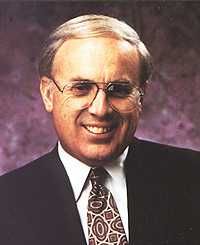
John MacArthur

Questions & Answers #5

Proverbs 1; Romans 12
John MacArthur August, 29 2013 Video & Audio
0 Comments
Questions & Answers with MacArthur, Horton, and Sproul

Sermon Transcript

Auto-generated transcript • May contain errors

100%
Most of these questions are directed
at John. They want to know how he really
feels about Joel Osteen. He did reparricate a lot. Lots of good questions. We'll
try to get through as many as we can. My job is just to moderate,
not to be on the panel. So this will be, you two guys
will be under the gun. Although I did have a question
directed specifically to me. then I thought, just out of courtesy,
I'll answer that first before we get started, because it touches
the very essence of everything we're concerned about. And it
says, R.C., will Big Ben be the quarterback for the Steelers
this year? And then the second part is,
can they win without him? Well, so far Ben has not been
charged with any crime. But if he is charged, it's almost
certain that he'll be suspended for a significant amount of time,
and that may be the least of his problems. I know that the
Pittsburgh Steeler Organization is extremely displeased with
him for what he's done to the image of the black and gold,
and I wouldn't be surprised for the Steelers to sanction him
in some way, even if he isn't charged. And the question, can
they win without him? Of course. What kind of a question is that?
You know, I used to tell my students there's no such thing as a stupid
question. That was a stupid question. Dr. MacArthur, you talked about
the assurance of salvation as if someone who lacks or doubts
has not has not looked forward to the
next life and is concerned more with this one, how would you
see assurance in the light of Calvin saying all Christians
doubt, and also in view of the ordo salutis? And we're going
to pay close attention to the ordo salutis here, and no messing
around with the ordo salutis. Okay? Right? We don't play with
the ordo salutis. When you're talking about assurance,
you're not talking about anything in the ordo salutis, to start
with. You're talking about the believer's personal confidence. You're not talking about security.
You're not talking about perseverance. You're not talking about the
eternality of salvation. You're talking about whether
or not the believer experiences that sense of that reality of
salvation. And I agree with what Calvin
said. Every believer doubts at points
in life. Those doubts may come and go
in every believer's life. They may be stronger in one person's
life than in another. They may be related to circumstances.
They may be related to personality kinds of things. Some people
are naturally more doubtful and more melancholy or whatever.
But all I was saying was that Peter gives testimony to the
fact that the testing of faith produces assurance because then
you know your faith will stand. I can only tell you from the standpoint
of looking back over my life, my faith is stronger now than
it's ever been because it has stood every test. When you have
the largest disappointments that you could possibly have in life,
when they come in and tell you your wife has broken her neck
and fractured C2 and C3, and your son has a tumor and those
kinds of experiences, The… there was absolutely the opposite of
what you might expect in faith. Faith was elevated immediately. There was a great grace poured
out, strengthening of faith, a strength… I found myself, when
they told me that my wife was airlifted after a fractured neck
and… I didn't know all the details. I sang hymns all the way to the
hospital. I can't explain that other than
to say that I don't have a human faith, the same kind of faith
I have when I drink a glass of water out of the tap. This is
supernatural kind of thing, and I think that when I'm talking
about assurance, I'm talking about the development of enough
evidences in life of trials in which faith literally grows and
is strengthened that diminishes the times of doubt and gives
you a greater and greater assurance. All I was saying was that sometimes
when persons lack assurance, it's because they haven't suffered
enough to have a tested faith, and that tested faith is what
assures the believer. That's Peter's whole point there.
Okay. Abraham was going to slay his
son. How is that a good thing? I would be thrown in jail for
doing the same thing. Mike? Wow. Answer this with fear and trembling. Now, that's an allusion to Kierkegaard,
and how did Kierkegaard answer it? In fear and trembling. God is basically able to do anything
that He wants to do. Or even beyond that, His will
is unhinged from His nature. God can decide to do anything.
And, of course, we believe God can't decide to do anything.
God can only decide to do that which His nature delights in. It can't be… So, right at the
outset, we can't say that God commanded something that was
evil. The fact of the matter is that
not only did God spare Isaac and spare Abraham from having
to sacrifice His Son, but He sent His own Son at His own expense
to be the Savior of sinners. So, not only There's always a danger in trying
to figure out the problem of evil philosophically, to resolve
it philosophically so that we're okay with it, rather than realizing
that God has solved it historically at the cross. That's where we
see exactly what Abraham's almost sacrifice of Isaac foreshadowed…
what it foreshadows. And there, God's justice and
God's mercy are completely reconciled, but you never could have figured
that out until it happened. That's the way, you know, it's
an unfolding plot. You know, in theology, when we
talk about the law of God, we make a distinction between the
natural law of God and the purposive law of God. And when I talk about
the natural law of God, we're not talking about natural law. That's a different question.
But we're talking about those laws that come from God that
are rooted and grounded in His nature, as you just said. And there's nothing that could
ever abrogate that law. There's no circumstance conceivable
that would be a good thing to worship an idol, okay? And if God permitted that now,
where He forbade it in the Old Testament, He would be going
against His own nature. But the purposive law has those
laws that had in history, as you're pointing out, a particular
purpose, like the kosher laws, the dietary laws of Israel, the
sacrificial system in the Old Testament would have been a sin
to disobey them. It would be a sin to reinstitute
them, because there was a historical purpose behind them. Now the
question you have to ask is, is the prohibition of killing
a human being based on the nature of God, or is that a purposive
law? If it's a purposive law, he could
suspend it at any time. for his own holy purpose, which
he did at that time. He had every right to require
the death of Isaac. He didn't owe that life to Abraham. And Abraham… It's like the policeman
on the street. When the red light is red, and
the cop's on the corner, and he waves you through, you obey
the cop rather than the light. And if God gives you a direct
command, then you're responsible to carry it out, which is what
Abraham tried to do. You know, that's asking for special
revelation like we don't get. Sproul, Jr. Yeah, I'm thinking
of the book of Acts where the apostles responded to the leaders
of Israel, do we obey God or man? God always trumps man. But I think the bigger issue
would be, does God have the right then to command the death of
anyone? God didn't just tell Abraham
to kill Isaac. God told all the Israelites to
completely obliterate the Canaanites. The truth of the matter is that
no man has a right to live, take one more breath. Since the soul
that sins shall die and the wages of sin is death, the fact that
we even take another breath is God suspending the just punishment. So at any point that God would
command the death for anyone, that would be within the frame
of His righteousness and His holiness and His justice. to
bring that to pass. It is that God shows Himself
to be a God of grace. He's a Savior of all men, temporally
and physically, especially of believers spiritually and eternally.
But I think He puts His grace on display by not giving the
sinner what the sinner deserves in the moment the sinner deserves
it. So any suspension of capital punishment to any believer born
in…unbeliever born into the world is a pure act of God's common
grace extended to man. So what he asked Abraham to do
in taking a life would be perfectly within his right because Isaac
was a sinner and deserved the same thing the Canaanites deserved
or anybody else deserved. Sproul, Jr. Good job, John. Here's one good one for you. You know, I love it when I hear
questions that I've never heard before in my whole life, which
is, you know, we've been listening to the same questions for fifty
years, and well, at least I have, and you haven't. And when you get a new one, it's
really exciting. So, John, you'll like this, because
you have never heard this one before. If Samson was to never
touch a dead body, how's come he killed a thousand men with
the jawbone of a donkey? I bet you never heard that one
before. No, I never heard that one before.
I'm not sure I needed to hear it now. Are you saying He violated His
Nazarite vow by picking up the jawbone? Well, that's what apparently
is what is being… It didn't even take a Nazirite vow to be defiled
by coming in touch with a dead body. No, I know. I understand
that, yeah. But, you know, he was pretty accustomed to breaking
every imaginable vow. Yeah, this was not anything new
for him. Can we make a distinction between
a body that is in the state of decomposition and decay that
is unclean ceremonially. Sproul, Jr. You mean how long
the donkey was dead? Sproul, Jr. Yeah. Well, it's a jawbone.
He's obviously in skeletal form now. No, he's not doing well
at all. Even Billy Crystal couldn't raise
him from the dead. He wasn't just almost dead. He
was long gone. All of the decay and corruption
of the rottenness of decomposition is all done with. Sproul, Jr.
Okay, if that makes you feel better, we'll go with it. It's
good for me. What do you think? All right. Please comment on the concept
of seeker-sensitive. Who seeks whom in the process
of salvation, and how does contemporary American evangelism tend to get
it right or wrong? Well, I think there's only one
true seeker, and that's God. And that's why Jesus said He
had come to seek and save the lost. John 6, our Lord said,
no man comes to Me unless the Father draws him. So God is the
true seeker. And Romans 3 says, no man seeks
after God. naturally, and yet you have to
include Old Testament, if you seek Me with all your heart,
you'll find Me. That's the prompted heart that God has moved in His
direction that responds. But I think we often say in our
church there's only one seeker who shows up every Sunday here,
and that's God who seeks those. whom He has chosen as love gifts
to His Son, and He is the true seeker." I think it's an illusion
to think that men are running around seeking God on their own. I think they're seeking the kind
of stuff that shows up in the prosperity gospel and in the
kind of American evangelicalism that's so highly successful,
all the temporal things, all the things that are connected
to the lust of the flesh, the lust of the eyes, and the pride of life,
which is all a part of fallen flesh. But the sinner does not
seek the true and living God? Thomas Aquinas was asked that
question once, and he said that people look around and they see
unbelievers seeking desperately the things that we know only
God can give them – forgiveness, peace of mind, reconciliation,
all the benefits that we only can get from Christ. And he said,
but we mistake that people seeking the benefits that only God can
give them from actually seeking God. The sinner wants the benefits
without God. All the while, the metaphor of
the Bible is that we're fleeing from God. We're fugitives from
God. We're hiding from God, while at the same time wanting all
of those benefits. Now, this has radical implications,
though. You know, we've seen a revolution
in worship in America. designed on the basis of designing
worship for the unbeliever. He's an unbeliever, but he's
seeking, right? I mean, that's ghastly. Since when do you design worship
to please unbelievers rather than to please the living God? And I'm all for evangelism and
all of that, but the purpose of the assembling together of
the saints on the Sabbath day is not primarily evangelism,
but for the offering of worship by the people of God to God.
And then as soon as we start designing worship for something
else, we've departed from the biblical model. I think… Sproul,
Jr. Yeah, I think the trend is to let the world design it for
you. Sproul, Jr. Yeah. Here's a question
specifically addressed to Dr. Michael Horton, who's professor
as a Jay Gresher Mason Professor of Systematic Theology and Apologetics
at Westminster Theological Seminary, Escondido. You ready? You mentioned, yes you did, Michael,
the names of some well-known persons in our society who were
born and raised up in evangelical and fundamentalist homes. yet
they are now either don't believe in God or are even anti-God. You know, that's not an either
or there. If they don't believe in God, they are anti-God. Let's
get that straight. I wonder what some of the reasons
would be that cause this, and what remedy do we have? Why did
that happen? Why does it happen so often? Well, doubtless a whole variety
of reasons that the two of you would know better than I, having
spent more years on earth. Wait. Beep, beep, beep, beep. No, I… that's one of the things
that fascinates me looking at for all of the difference and
all of the different reasons people were in bad churches while
people were in bad families, and they managed to sort of stay
together. But the more church becomes voluntary,
the more you don't have to hang out with these people who have
hurt you or what have you. People are going to get wounded
in any family, and that's true in the church. But I think sometimes
a lot of people… Okay, there's some people who really have been
victims in their church. They've been victims of a really
horrible preaching, teaching, heavy-handed discipline, and
so forth. They really haven't understood
the gospel. I think a lot of people just wander away, and
it's because it's not really addressing their crucial questions. According to one study, 60 percent…
I've seen one that goes up to 80, but I don't… I'll go with
a lower one, that 60% of those raised in evangelical Christian
homes, 60% will be unchurched by their sophomore year in college. And I look at that and I think
you can see that, frankly, with a lot of the Enlightenment leaders
who were raised in pietist homes where it was all about the heart,
not doctrine. And then eventually they said,
well, we don't really want the heart much either. A lot of the
founders of Protestant liberalism, of course, were raised in pietism.
And I think a lot of today's liberals, I think of Brian McLaren
and a whole bunch of people on the emergent side of things,
they all grew up in megachurch, sort of Willow Creek oriented
environments. And it's just this… this downplay,
deeds not creeds. Have you heard that before? Well,
that's Immanuel Kant. This has been over and over and
over again, and he got it from his pietist upbringing. So I
think that the downgrading of doctrine and the significance
of doctrine is there, and you look at the way a lot of… a lot
of young people today have never really grown up in the church.
Say, what are you talking about? I've been a Christian all my
life. Well, tell me about your Christian background, your upbringing.
They have nothing like morning and evening worship services
that they go to in their past. Well, what do you mean? No, I
went to church. Well, no, you went to the parking lot. Then you went to the youth
group. I'm not against youth groups,
but really the nursery, the youth group, and then inter-varsity
or campus crusade in college, and then you wonder why they
don't join a church. They never have joined a church.
They've never been a part of it. So I think we've got to incorporate
people from the earliest ages into the life of the communion
of saints that they are baptized into. Sproul, Jr. But we also
have to remember that none of them were born Christians. And… There's a whole lot of reasons
just that they just never were converted. They could have been
in wonderful families and wonderful churches and still not be converted.
Or they could have been abused, and that happens, and it really
does happen. You know, when we get a question like this, I think
of one guy who was a Jew, and his family were devout in their
practice of Judaism. His father was a businessman,
and he moved his family to another town. And in this town, the majority
of the merchants were Lutheran. So this guy took his family and
joined the Lutheran church, clearly for economic reasons, not for
spiritual reasons. And this young fellow saw that,
and he said, all religion is about is economics. And Karl Marx was very bitter
about what his father did when he joined the Lutheran church
and made him join the Lutheran church. So they see that. I mean,
people see that. So even though they're unconverted,
they're exacerbated by being wounded this way and that way.
There's thousands of illustrations. But the second part of the question
is, what do you do about it? Well, you just do what the church
is always supposed to do. preach the gospel and the maids
of grace. I think what you're saying is
what John says in 1 John 2.19, they went out from us because
they were not of us. If they had been of us, they
would have continued with us, but they went out from us that
it might be made manifest they never were of us. From the human
viewpoint, you nailed it. Hypocrisy is deadly to a young
person. Legalism, a stranglehold on the
external with no real change in the heart. Superficial gospel. I think a low view of God. I
think You know, without being heavy-handed, I think if you
have a balanced presentation of the attributes of God and
the glory of Christ, somebody might walk away from it, but
they would have a harder time becoming a public critic of it
because they would be attacking the majesty and the beauty and
the glory and the full understanding of God. So I think if… One of
the reasons in the years I've been here, 40 plus years, 25
of those years we've been going through one of the four Gospels.
And it's Christ every week, Christ every week, Christ every week,
every week. And if you're going to walk away
and you're going to condemn this church, you're going to condemn
the glory of Christ that dominates this church. That's a little
harder to do than to condemn all the people sitting in the
pews. So I think it does relate to the message from the human
view, but from the divine perspective, they go because they never really
were a part of us. All right, well, here's another
question with the statement, please, please answer. Why hasn't anything been said
about the spiritual formation movement? We've heard all these
other ones. Please address this, the main
people, Richard Foster, Dallas Willard, and Both edited the
Renovare Study Bible, which says Genesis is made up of myths and
traditions. Dallas Willard says, quote, you
do not have to have a relationship with Jesus Christ to be saved.
And the church is immersed in this sort of thing today. What
do you think about it? Well, there are… there are seminaries
that have been evangelical and Christian colleges that have
evangelical testimonies and histories that have started departments
in spiritual formation and sucked and drunk all the Kool-Aid that's
coming out of these guys. And I personally, having read
Dallas Willard and there are many others, you know, they go
back a long way. I have no real assurance that
any of these people are Christians. I mean, I would go that far.
There's a statement that sounds to me like a statement from somebody
who doesn't understand salvation. But while the language is there,
I just I have no confidence that there's
a real understanding of the… the real understanding of the
doctrine of salvation with these people. Way too much intuition,
way too much experiential stuff. But what amazes me is how it
has literally become a department in… traditionally evangelical
environments, spiritual formation, and it's mystical, and it's intuitive,
and it's experiential, and it's tied to these kinds of things
that I think disappointed Christians pursue as if there's some secret
knowledge. It goes back to that deeper life,
Keswick kind of approach. Yeah, I… just recently, I hadn't
read them before, but I did recently for this book, Follow Up to Gospel-Driven
Life, on the Great Commission. And, you know, the part of their
concern is that there isn't sufficient discipleship going on in the
churches, the way they interpret discipleship. But they're very
clear about it. Discipleship for them doesn't
mean being a part of… It doesn't revolve around. It doesn't center
on being part of a local body of Christ. It centers on you
going inward, doing things by yourself, going inside of yourself. And then the methods have absolutely
nothing to do with the ones that Jesus commanded, which are all
communal. Preaching the gospel, baptizing,
teaching them everything that I've commanded you, that's all
something that creates a community. It's not something I take over
to the corner, as Martin Luther said, read the Bible by yourself
in a corner and you'll… every man will go to hell in his own
way. Now, this is a guy who wanted everybody to read the Bible.
But he said, you don't read the Bible by yourself. You've got
to read it with the communion of saints. And I'm just very
concerned that this is a shift back to medieval spirituality,
and there's a strong criticism of the Reformation tradition
among these folks. Many of them are Quakers, Methodists,
and Anabaptists. And so there's a history of antagonism
toward the Reformation stream and being a little closer to
the mystical medieval system there. And, I mean, Arminianism
just, I think, makes sense within a medieval spiritual set of practices. But it's fundamentally different
from the Reformation approach to faith and life. A lot more
that could be said, but… There's another question, many
exhort that millions are dying apart from Christ and that we
must therefore urgently reach them, but doesn't this conflict
with John 6, quote, all that the Father has given me will
come to me? Yeah, well, the only way they'll
come is by hearing the gospel. So, you know, we're not supposed
to figure out, like Spurgeon said, you don't pull up a shirt
and see if people have an E stamped on their back. You know, the
mandate is clear. We go into the world, and we
preach the gospel to every creature. The secret decree of God is known
only to Him. Our responsibility is obedience,
and no one is going to come to salvation apart from the truth. First Peter 2 again, as I mentioned
earlier, or 1, we're begotten again by the Word of truth. Faith
comes by hearing the Word concerning Christ. How will they hear if
there's not a preacher? How will there be a preacher
if a preacher is not sent? And the responsibility of the
church, of course, is to send the preachers. That's the method
that God has chosen. No gospel, no salvation, so that
the work that we do is a… is not… it's not the primary cause.
It simply means that the Lord has determined to use the preaching
of the gospel, and that is our responsibility across the face
of the earth in every generation of the church. SPROUL JR.: :
There's a trend today of conservative Bible teaching churches trying
to, quote, take the good from secular movements and using their
methods without compromising the message. Take the method
without compromising the message. How does that work? Badly. Well, I mean, here's the thing.
There is this almost gnostic assumption that the body and
the soul are disconnected. And it's simply not the case.
Our practices form our beliefs as much as our beliefs form our
practices. You know, we're… You can't… You can't glue an
Arminian view of how you bring people to faith and nurture them
in that faith to a set of convictions that are basically inimical to
Arminianism. And that's what a lot of people
are trying to do. Give him credit. Charles Finney was Consistent. He was a lot more consistent
than a lot of us are. He said, look, there… no original
sin. People are not born innately
depraved. They can regenerate themselves
if they believe. No substitutionary atonement,
no justification. Therefore, our goal is to find,
these are his words, excitements sufficient to induce repentance. And then he found them. And there
aren't any methods that you find in the Bible, but that's okay
because He knows that He can find efficient methods. And now,
a lot of… a lot of people say, we just jettisoned… I left it
out of my notes, but I had it in there, quotes from Tony Jones
from the Emergent Movement who says, we just jettisoned the
magisterial sermon from our services. And the Bible now becomes a conversation
partner and a group as we have our conversations. I think, it's
a Quaker meeting, that's not new. that's been tried, and it's,
you know, your inner light pulled ignorance. Let's all just sit
around and share our inner light instead of having the Word expounded
and explained. So, I mean, you can't… If you
believe that the power is in the gospel and it has to be preached
and taught and expounded, and you believe in baptism in the
Lord's Supper as means of grace, if you believe that, it is impossible
to take the methods of the church growth movement or any of these
other movements of pragmatism and consumerism and staple them
onto that. I've been thinking a lot about
a passage here in Mark 4. I just...this is really...this
is a whole section of Jesus' Magna Carta on evangelism, and
He says, "'The kingdom of God is like a man who casts seed
upon the soil. and he goes to bed at night and
gets up by day, and the seed sprouts and grows, how he himself
doesn't know." So that is my mandate for evangelism, sow and
go to bed. I am not in charge of the results."
And you say, well, you'd be more effective if you had a designer
seed bag. Really? So I need to get a designer
seed bag. Is that the idea? And you'd be
a lot more effective if you had a t-shirt while you're sewing
that had a skull and crossbones on it because that would really
communicate to the dead. blind, ignorant, people cut off
from the life of God, if you just had that t-shirt on. Or
if you could just back up your sewing with rock and roll music,
that would really make an impact. I mean, what kind of ridiculous
stuff is that? The bottom line is in the parable
of the sower earlier, he says a sower went out to sow. That
is all that is said about a sower, and he went out to sow seed.
All it says about the sower is he went and sowed. All it says
about the seed is he threw seed. The rest of the parable is all
about the state of the heart. It's not the skill of the sower
and the seed is set. It's the condition of the heart.
Now, if you're under the illusion that Finney was under, that you
can change the heart, then you're worried about all of that cultural
accoutrements that you want to embellish, and you think that
has an impact. It wouldn't matter what the seed
bag looked like. It wouldn't matter what the surrounding
situation was like. All that really matters is the
seed that is fixed and set in the Word of God. The seed is
the Word of God, it says in the account of the parable in Matthew.
That's all we need to know. The power is in the Word. We
sow the seed. It goes into the ground. It does what it does.
We don't know even how it does it. The soil produces crop, and
it uses the Greek word automatae. It produces automatically. It's a divine automatic. First the blade, then the head,
then the mature grain in the head. And when the crop's ready,
He puts in a sickle and the harvest. It's almost like 1 Corinthians
3, somebody sows, somebody waters, and boom, here comes the increase. Now if you're under any kind
of illusion that anything matters but the sowing of the seed, then
you don't understand how this really operates. It's a divine
miracle, and only God can make it happen. Sproul, Jr. It's not
just a question of not understanding it. The church doesn't believe it, John.
John MacArthur No, they don't believe it. Sproul, Jr. They don't really
believe it. John MacArthur And the unbelief of this is widespread. Sproul, Jr. When I preached or
when I spoke at your graduation a couple of years ago and preached
from Luther's last sermon before he died, Luther starts that sermon
by saying, what a fine gospel we have. And then he goes on
in his last sermon to talk about how people are running to Trier
and other places for the relics to find Joseph's pants and that
kind of thing, because they think that they can find power somewhere
better than in the gospel, because that's why they do it. I mean,
and it's the same thing in our churches today. We're just not
chasing after Joseph's pants, but we're still looking for ways
to improve the gospel. A more powerful church is grown
by every means possible except the one God's ordained. He's
put the power in the Word. and it's through the preaching
of the Word that He has decided He's going to save the world.
And we can't improve on that, but we can deprove on that and
depart from that. And that's what we're seeing
on a grand scale right now. But here's another one. Can God
regret and wish, like God regretted making man, making Saul king,
and Jesus said, you know, lament over Jerusalem how often I would
have gathered you as I had gathered the chicks, but you would not.
You know, it's like He's saying, I wish you would, but you won't.
I think you ought to answer that. That is right in your wheelhouse.
It is a kind of R.C. Sproul question. That's an R.C.
Sproul question. Well, you know, it's funny. I
wrote it. We do have these passages in
the Bible where it speaks of God's repenting of having done
this or having done that, or ruling it or regretting it, and
a whole theology has sprung up in recent years over that, this
whole open theism heresy. which denies the omniscience
of God, and that God just didn't know what was going to happen,
and He can't know what human beings are going to do. And so
He has not only a plan A, but a plan B. If plan A doesn't work,
then He'll throw away plan A and try plan B, regret the mistakes
that He made the first time around. What a dreadful doctrine of God
this is. Wow. Talk about open blasphemy
is what that is all over the place. But you can't get away
from the fact that the Bible does use that language. Now two
things I want to say. We have throughout Scripture
anthropomorphisms and anthropopashadisms, that is where God is described
in human forms or in human terms. The Bible tells us that God has
a strong right arm, and He uses the earth as His footstool. But
we know when we read those texts that that's metaphorical language,
and it doesn't mean that we're to interpret it that God really
has a right arm because He's a Spirit. And it doesn't really
mean that he has long legs and he stretches out and uses the
earth as his footstool. But nevertheless, that kind of
language is used. This is one of the principles
that Calvin spoke of when he talked about that God addresses
us as an adult addresses a baby by lisping and communicates to
us in human terms. Because that's the only terms
we know. We don't have any other point of reference. But at the
same time, as we find this kind of language, particularly in
the narratives of Scripture, we have in the didactic portions
of Scripture the clear warnings not to take these statements
as if they were univocal statements comprehensively defining the
character of God. For example, we're told God is
not a man that He should repent, even though the Bible uses that
human language in narrative saying that God repents then we're reminded
this is just a metaphorical manner of speech, because God, being
God, is incapable of repentance for many reasons. First of all,
He has nothing to repent of because He's perfectly holy. Second of
all, repentance involves a change, and He is immutable. Third of
all, repentance or regret implies that he made some kind of a mistake,
at least in judgment, which would throw a cloud over his omniscience. So just about every attribute
of God is compromised if you take those terms univocally. May I throw in something from
1 Samuel? Sproul, Jr. Throw it right in here. We'll knock it
right out of the park. A great example of what you're
talking about is 1 Samuel 15, where in verse 10 we read, the
Word of the Lord came to Samuel, I regret that I have made Saul
king, for he has turned back from following Me. And then over
to verse 29, and also the glory of Israel will not lie or have
regret, for he is not a man that he should have regret. How do you… how do you reconcile
that? Well, by realizing that this is… this is a story, and
as you say, God is speaking baby talk. He is making Himself have-able,
you know, putting Himself within our reach, within our grasp by
expressing Himself in this way. And from a human perspective,
it would have looked like God repented. But then the same narrative
says, I'm not a man that I should repent. And I think the extremity
of it, when God does that, it's a way of saying, the worst that
could possibly be said about this person or this situation
is, I wish it had never happened. Like Judas, I wish, and it doesn't
say it that way, but it would have been better for that man
if he had never been born. Well, who's in charge of that?
but the implication in all of those situations to us, that
would be a human way to express regret. I wish that had never
happened. I wish that person had never
lived. That would be a human way at
the most extreme level. You know, that's more extreme
than saying, you know, I'm sorry they turned out the way they
are. I have to say, I wish that person had never been born. I
wish that nation had never come along. What happened to that
city of Jerusalem is tragic, etc., etc., beyond words. So
I think that is the extreme way to demonstrate God's disappointment
with someone's behavior. But it doesn't mean that in actuality,
as you've already heard, that God is winding His way through
circumstances and correcting His judgment as He goes. Here's another one. If God has
a general love for all people, when does He start hating people,
or is that from the beginning? Now, this is a good question,
because, you know, one of the banes of our preaching today
is that the minister stands on television there in his pulpit
and says, God loves you unconditionally. How in the world does the pagan
interpret that statement? Well, I don't have to do anything.
I don't have to repent. I don't need Christ. I don't
need an atonement. There are no strings attached. God loves
me unconditionally. Unconditional love is what I
enjoy from God, you know. So we've got to talk about the
love of God, and how does the Bible ever say that God hates
people? Besides Esau. Does not God in sacred Scripture
say that He abhors the wicked? He hates them. So how do you
reconcile that with the love of God? It says He's angry with
the wicked every day, Psalms, angry with the wicked every day.
I think all of God's attributes operate in full at all times
so that God can love and hate at the same time. I think we
would understand that. We would understand that there
are two sides to us. There are things that we love
so much, we hate everything that's opposite that or opposes that.
But I think the way to understand God's love is that it's manifest
in common grace. God's love is, I think, expressed
by Christ in Matthew 5 where He says, love your enemies and
be the sons of your Father. a walk in love, Ephesians 5,
and demonstrate that you're the sons of God. God loves with common
grace. The sun shines on the just and
the unjust. The rain falls on the just and
the unjust. The unregenerate wake up and smell the coffee
and watch the sun rise and fall in love and have children and
enjoy the richness of life and the bounty of this world. That's
one aspect of God's love. That common love, the general
love, I think the opposite… I mean the other side might be the gospel
opportunity is extended to preach the gospel to every creature.
They're given the opportunity to hear and to believe. All of those aspects of the withholding
of judgment, that's an evidence of God's love. He grieves over
Jerusalem. He finds no pleasure in the death
of the wicked. Those are all aspects of that.
But as far as the iniquity that is part of their lives and the
guilt that they bear for that iniquity, God has to hate that
because He's a holy God. When you move to believers, I
think the best language is in John 13 where He says He loves
them eis telos. He loves them to the finish,
to the end, to the max. It's the same language that speaks
of eternally. He looked at the disciples, and
it says of Him, He loved them eis telos, to the limit. That's another kind of love.
It's the kind of love that's celebrated in Ezekiel 16, where
after describing the horrors of Israel, He says, you're the
people of the covenant, and pours out a final note of love on them.
But I think when the sinner does not respond to the grace that
is offered, when the goodness and kindness of God doesn't lead
the sinner to repentance, then hate takes over. At what point
that happens, maybe Pharaoh is an illustration of that. He hardens
his heart, he hardens his heart, God hardens His heart, if you
can see any kind of distinction there. Sproul, Jr. In systematic
theology, you know, we have the right to make distinctions. That's
our stock and trade. And when we talk about the love
of God, we distinguish among three types, which you have just
done biblically. We talk about His benevolence,
His love of benevolence, bene volente, His good will towards
all man. God takes no pleasure in the
death of the wicked. You say His basic disposition
is positively one of kindness toward a fallen world. And secondly,
His love of beneficence is His good deeds, which you described
in terms of His common grace, the rain falling upon the just
and on the unjust. I'd like to just stop you and say one thing.
The greatest illustration of common grace, I think, was the
healing ministry of Jesus, which was totally indiscriminate. That's
right, and then we talk about the love of complacency, and
there the term complacency doesn't mean what it means in our contemporary
uses of it being smug and all that, but it has to do with that
special love that He has for His Son and through His Son to
those who are indwelt by His Son, who are in His Son. There's
that love that goes to the ages. But we don't have that. We have
almost a romantic view of God. that God loves everybody in terms
of the love of complacency in the salvific sense unconditionally. That's not true, and that's a
false message that we give. Here's a practical question,
although they're all practical. If you're in a position of leadership
in a church that preaches man-centered sermons or shallow sermons, Is
it okay to leave that church, even though you have a sort of
influence among the congregation? This is a question we get all
the time. When is it okay to leave a church, or when is it
necessary to leave a church? Sometimes it's necessary. Sometimes
it's not necessary, but okay. Sometimes it's not okay. How
do you counsel people about that? The first thing I tell people
about is the seven churches of Revelation. If you happen to
live in Laodicea, there was only one church. If you happen to
live in Sardis, there was only one church. If you lived in Pergamos
and Smyrna, there was one church. And our Lord commends those in
those churches that had some deep problems, so deep that He
even told them if they continued in the direction they were going,
He would disown them. And… but He commends those who
haven't soiled their garments. I think you have to look at your
options, and if you're in a situation where there are problems and
issues, but you don't really have an alternative, I think
there's understanding with the Lord with regard to that, and
there may be some good done and accomplished. But if you have
an option and an alternative to go from a church that dishonors
the Lord to a church that honors the Lord, I don't think that's
a tough decision. I think you need to go where the gospel is
proclaimed, Christ is exalted, where church is really functioning
in a biblical way if you have that option. I encourage people
speak to the leadership, go directly to the leadership, express your
concerns, see if there's any interest in change or repentance. I don't… I don't think you want
to tear the thing to shreds. I don't think there's any virtue
in that. That sort of unsays everything
that you're trying to say about doing things that honor the Lord.
I think you have to, you know, maybe God will write Ichabod
on the church. Maybe the Lord will fight against that church,
but that's His battle to fight, not yours. But I do think you
are, as a believer, responsible for your own spiritual development
and growth, and you need to put yourself in the place where that
is maximally going to happen. And I think if you have alternatives,
you need to take those alternatives. I agree with that. You know,
often people leave over trivial matters, and they shouldn't because
there's this community that's a covenant community that you're
in, and you don't leave over every peccadilla. But if your
soul is in jeopardy, and your family's, you've got to run for
your life. And that's a good point that you make. People leave
for the most ridiculous, stupid reasons. First of all, they don't
want to join a church to start with. I am a strong advocate
of church membership. That's a real battle today. You
understand that. Many of these independent churches,
take the whole Calvary Chapel movement, they don't believe
in doctrinal statements or church membership or church boards.
People are just floating in and floating out. You don't have
any real identification. You don't know who you're shepherding. We deal with that all the time
because we practice church discipline. So the question always comes
up, this person is a member of the church. Who are these non-member
people that float in and out, and what is exactly our responsibility
toward them? People want to consider all their
options. Like you said, you put on somebody's playlist, and you'll
find out what church they go to by the music. I wish that
God would just shut the music down for about six months, and
then we'd find out who went where. and the truth would really be
revealed as to what people are after. But I do think there's
just way too much of this personal offense stuff, or it isn't the
style I like, and people migrating around to their own spiritual
detriment. Sproul, Jr. This one's for Dr. MacArthur
regarding miracles and answers to prayer. How does Matthew 17,
and John 14, 13. I'm asking you because you're
the only guy up here who's going to know what those references
are. Stop me if I'm lying. How does Matthew 17, 20 and John
14, 13 fit into prosperity Christianity? Let's just take John 14, 13 and
14. Jesus in the Olivet Discourse says to the disciples, if you
ask anything in My name, I will do it that the Father may be
glorified in the Son. That is a… that is a promise.
Obviously, our faith can move mountains. Our faith can… is
a factor, is a part, a component in the things that God does. The effectual, fervent prayer
of a righteous man avails much, as James says. But I think the
key in John 14, 13 and 14 is that phrase, if you ask anything
in My name. I think if you know anything
about the use of names in Scripture, you understand that that's consistent
with who He is, and being consistent with who He is is being consistent
with what He wills. and what He plans and what He
purposes. So our Lord is simply saying, anything you pray consistent
with my will, I will do it that the Father may be glorified in
the Son. You know, the essence of prayer is lining up my life
with the purposes of God. And if I don't pray, God's gonna
do what He's going to do, I believe that. But I'm not gonna be able
to give Him glory to the degree that I would if I was engaged
in praying in the direction that God was working. So I think it
simply gives us the opportunity to glorify God, to honor God
when our prayers are poured out to Him within the framework of
His purposes. And as those purposes unfold,
we are able to give Him glory because we've been a part of
the process in our prayers. SPROUL JR.: : We have to be careful
that we don't have a simplistic treatment to isolated texts.
You have to read the whole teaching of Christ with respect to prayer.
If any two of you agree on any one thing in my name, it shall
be done for you. Now, how many of you would like to see the
war in Iraq end tonight? We've got more than two here
in agreement. How many would like to see a total cure for
cancer tonight? Can we agree on that? Obviously, that was not the point.
No, that's not even talking about prayers. It's talking about church
discipline and two or three witnesses in a discipline situation. But
that doesn't stop people from… You know, context doesn't mean
much to those people. Sproul, Jr. Well, our time is up for
this. We still have some questions, but we still have more Q&A time
coming up, don't we, Chris? What do we do now? Chris Larson First thing we do
is thank you all for your contributions.
Broadcaster:

Comments

0 / 2000 characters
Comments are moderated before appearing.

Be the first to comment!

Joshua

Joshua

Shall we play a game? Ask me about articles, sermons, or theology from our library. I can also help you navigate the site.