Bootstrap
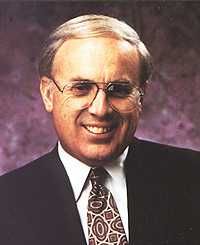
John MacArthur

Questions & Answers #10

Proverbs 1; Romans 12
John MacArthur August, 1 2013 Video & Audio
0 Comments
Questions & Answers with MacArthur, Dever, Duncan, and Sproul

Sermon Transcript

Auto-generated transcript • May contain errors

100%
please comment on whether the
principles of worship apply to Christian entertainment and whether
there is a case to be made for Christian entertainment in the
first place. I think there is, just not on
Sunday morning. No other comment? Well, if you're
in our church or on Sunday night. Okay. We have a few radio ministries
represented here. This may also be interesting,
particularly the kind typified by the current contemporary Christian
music radio stations who admittedly offer programming that is very
shallow but is yet good, clean fun. I think it's a great movement. I heard this past week that John
MacArthur was taken off of one of the major stations in America
and replaced by Christian hip-hop music. It's a great trend, isn't
it John? I heard a song the other day.
I was driving to the office, and I was listening to one of
these songs, and I counted the same phrase in one song forty-two
times. And I thought, What's wrong with
this picture? Another thing that is missing
in the modern music is there are no subtleties. There are
no theological nuances. There are no inferences that
those who are more deep in the things of God capture. The richness
is out. Everything seems to be across
the surface. and the great hymns of the past
were great poetry, but more than that, they were great poetry
that gripped the depth of doctrinal truth in all of its richness
and nuance, and that seems to be missing in the sort of superficial
kinds of things that we hear today. Just one other note. I really
do think your spiritual growth determines your response to that
kind of thing. I really have very little interest
in listening to much of Christian music. It doesn't serve any purpose
in my heart. It doesn't produce worship. It
doesn't thrill my soul, and some of it irritates me. A lot of
it irritates me. It gets in the way of whatever
they're trying to say, but I think that has a lot to do with how
deeply you think about truth, biblical truth. Can I put in
a plug for the book or the chapter or the article that Mark Dever
mentioned earlier today by Carl Truman called, What Can Miserable
Christians Sing? And that article, which originally
appeared in Thamelias, is now a part of a collection of Carl's
essays published by Christian Focus out of Scotland called,
The Wages of Spin. And it's an excellent set of
essays, by the way, but that article is in there. It's very
thought-provoking on this very subject that you're talking about.
SPROUL JR.: : I have to say, though, in addition to that,
that music isn't bad just because it's new. I mean, there also
has to be some really fine compositions being made and created today
even as we speak. And remember the rich hymns of
the church and the great choral music of the church at one time,
they were all new, they were contemporary, but one of the
things that we love them so much is because they've stood the
test of time. We see songs in the popular realm and the secular
realm hit the top of the charts, a meteoric rise. They last a
few weeks, and then they're gone. But there's a test over time
where God gives His church great music. And that happened in the
past, too. I mean Charles Wesley wrote 6,000
hymns, you know, and we sing several of his still today. Yeah,
but we don't sing 6,000 of them. Exactly. That's right. Yeah.
Okay. Dr. MacArthur, this is concerning
something you said in your book, Ashamed of the Gospel. You say
that the church is for believers, not unbelievers. the early church
gathered to edify slash grow and scattered to evangelize the
world. As such, should our services
have any focus on unbelievers?" Well, I think it's obvious that
the church is the assembly of the redeemed for the purpose
of worship. And we come together to pray,
we come together to worship, we come together to And I think
the highest form of worship is to submit to the authoritative
Word of God brought to bear upon our hearts by the gifted and
prepared servant of the Lord who preaches His Word. I do believe
that is the church's purpose. If you look at Hebrews chapter
10, it says, "'Forsake not the assembling of yourselves together
as the manner of some is, and much the more you see the day
approaching, in order that you might stimulate one another to
love and good works.'" It's a one-another kind of experience. And in 1
Corinthians 14, Paul says, if somebody comes in, if an unbeliever
happens to drop in, which is kind of an interesting way to
phrase that, you never know. An unbeliever might show up.
Just make sure you're not doing something chaotic, in that particular
instance the tongues issue, but if there's preaching, if there's
proclamation of the truth, He'll fall on his face and say, God
is in this place. And what I would like to think
the church is, is heaven on earth. It's the closest thing to heaven
on earth. It's where God is honored, Christ is exalted, and holiness
is pursued. And in that kind of environment,
an unbeliever should feel like an outsider looking in and be
having an experience the likes of which it is impossible to
have anywhere else in the world. And so it is the church. It is
the church at worship. but it is exactly that that makes
the unbeliever very much aware that he is not a part of it,
and that's crucial for understanding that you're outside the kingdom. And I think to give the church
up to unbelievers and let them dictate this is exactly opposite
what we're to do. And, of course, the net effect
of all that is all kinds of chaos, and carnality, and superficiality,
and shallowness, and struggling Christians, and etc., etc. Yeah,
but I think that, John, that we should design worship for
Sunday morning for the time of assembling for seekers, because the New Testament makes
it very clear that the only people who seek after God are those
who have already been converted by the Holy Spirit. And we have
this idea today that there are all these people who are unbelievers
out there who are desperately seeking for God, but God is somehow
fleeing from them and hiding from them. And so… But he could
be found through rock music. Yeah, but the Bible makes it
very clear that nobody in their natural state seeks after God. The seeking after God is the
business of the Christian. You don't start seeking after
God until after you've found Him. That's the irony there. And that once we are converted,
that begins the lifelong quest to know God as deeply as we possibly
can. But the whole point that John
is saying, the New Testament, look at every way in which the
Bible speaks about the church as the communion of saints, as
the ecclesia, those called out from the world, as the church
curiaque, those who belong to and are the possession of Christ.
Sunday morning is that which fills our hearts and our minds
with the Word of God and drives us to the mission field for evangelism
outside the church. But Sunday morning is not supposed
to be an evangelism service. We often say in our church, there's
only one seeker in our church, one true seeker, and that's the
Father who seeks true worshipers. A follow-up question, which I
remind you, we did not write these questions, and we may not
answer all of them. There is a book R.C. has called
Now That's a Good Question, in case we don't answer yours. If
you see your home church calibrating worship for seekers instead of
calibrating with or towards Scripture, what advice would you give beyond
prayer? Well, I'd want to know who it
is asking the question. I mean, is this the pastor asking
the question? If this is someone who could
materially affect what's being done, then what you want to do
is obviously change that. But I assume what that is is
somebody who's in a church right now, and you're seeing that being
done. I think you certainly do want to praise. You've suggested
the question. You also want to talk to those who are in authority.
You want to raise questions respectfully, try to help them see what you
see. And at the end of the day, if they cannot do that, then
you have the very tough decision to make before you. Are they preaching
the gospel? Are you continuing to hear the
gospel being clearly presented? And if you are not, then it is
probably clear that you should go elsewhere. On the other hand,
if they are preaching the gospel, if they're committed to expositional
preaching, at some point the very things that, you know, R.C.
and John just said about who we have our meetings for should
come out in their own expositional preaching as they study God's
Word in 1 Corinthians 14 and Hebrews 10. But you would have
to weigh that up and take godly counsel. Essentially, though,
I should say, if you're not the pastor, I don't think there's
a lot of hope that you're going to change the church generally.
That's just from experience and talking with people. I think
just to agree completely with what Mark said and add this footnote,
don't talk to everybody else in the church about your discontent.
Go directly to the pastor. Go directly to the elders of
the church and lay your case before them in a gracious way
and give them the most carefully thought out biblical concerns,
and I would even encourage you to perhaps take other folks who
feel the way you do and don't spread anything until you've
addressed it with them, and then you do have to make the decision
as to what you can do. The thing that's happening with
this, and I run into it constantly, is this is having severe effects
on churches. People are trying to turn churches
into seeker-friendly churches, and in the process most people
who try this, most pastors who try this can't pull it off. What
is high drama in some churches is a bad skit in most places.
It's just hard to keep up with it. They don't have the production
budget capability. So what happens is, you alienate
the good people in the church, you alienate the people who have
some depth, you alienate the people, in many cases, who are
the givers and the sustaining servants of the Lord in that
church, and you take the church that direction, the guy isn't
fulfilled in what happens. It doesn't turn out the way he
thought, and he leaves, and the church is left in the chaos of
not knowing what its identity is, trying to figure out where
they go next. And then you look out there,
and there's all this plethora of options, paradigms that belong
to varying pastors they have to pick from without a leader.
And so what we're getting is really burned churches all over
the place because of this. This is really to be viewed as
a radical act in a church on the part of a leader to take
a church away from being oriented toward the people of God as the
worshiping body of Christ and turn it into some kind of an
event for unbelievers. That is not a minor transition.
That is a major paradigm shift, and it creates havoc in most
cases. Well, you just covered the last
two questions and the first part of this one. So, where do you
go if you leave because so many are in this dilemma? Yeah, and
that's really the question. I know, I'm sure, Tim, you and
R.C. in Renewing Your Mind ministry,
you get letters from people all the time. We get them by the
bag load every day. I can't find a church, I can't
get fed, I can't find a place to had to be taught. I'm very
frustrated. My church is going this direction.
What do I do?" You know, we get letters at the Master's Seminary.
We have this huge list of churches pleading with us to send them
somebody who will be a Bible expositor, and I understand,
and I guess you have to take the best option you have. You
may end up like Revelation 2 and 3. You know, what would you do
if you were in one of the five churches out of the seven that
was so deeply flawed. In some cases the Lord threatened
the church, but He said, you know, blessed are you who are
there, and you're doing what's right. You know, you've not soiled
your garments. And there may be situations where
you don't have an alternative but to stay and be faithful.
And I would add one other note. Be patient. I tell people this
all the time, because when people try to make this transition,
in my experience, sort of anecdotally, most of the time it doesn't work,
and the people trying to do it leave. And if all the good people
who feel like they're being dispossessed are gone by that time, they can't
recover it. So I would encourage you to,
if that's the only option you have, be very, very prayerful,
very, very patient. You've got a number of networks
of churches represented up here. I mean, John's just mentioned
you can write Master's Seminary. They may know of churches in
the area that they could recommend. Certainly, you can go to the
PCA website. And what would that web address be? PCANet.org. You can certainly go there and
search for churches. You can go to 9marks.org. We have a national
map that churches register with that you can click on a location
and see if there are any churches there that have registered at
9marks.org. So there are various ways you
can tap into. Good churches, if there's an expositor in your
area that you like, you can always ask them, look, I'm over in this
city or this town. Can you suggest any church? We get calls like
that all the time at our church in Washington. Okay, Mark, this
was directed to your point number eight, public worship should
edify the congregation. Now, I didn't verify that was
the point, but I'll take it. It's true. Do you aim to appease
the convictions of every member? No. How? Well, if we just stay
faithful to Scripture, hopefully every member is being shaped
by the teaching of God's Word. So we realize that in a church,
in a given local church, there are going to be brothers and
sisters who are truly regenerate who just disagree over some matters, and
it would not be good leadership for the leaders to be too sensitive
to every disagreement that's going on in the church. We want
to continue to be led by Scripture, expositionally preach God's Word,
have the services flow naturally out of that, and trust that that
would be sufficient. We will not lead well if we are
constantly responding to every little complaint or thought that
anyone has in the church. So the examples given, music
and elements frequently, you're just very consistent with those.
You don't change those monthly, quarterly? That's right, Tim,
we don't. Just checking. Dr. Sproul, this is addressed to
you. How often should a church have the Lord's Supper? I don't know. It says should. I know. He says
should. I don't know. You know, Calvin,
of course, was convinced that it should be weekly, but the
people of Geneva wouldn't let him. And here where churches
are all over the map on this, there are churches that have
communion three or four times a year. What we do at St. Andrews is
that we have two services, and what we've been doing is having
communion at the 11 o'clock service twice a month and at the 845
service once a month. We've just decided to change
that to have communion twice a month at both services. But again, we wrestle with that
all the time. Should we have it—we just wrestled with that
at our last session meeting—should we have it weekly? one of the
concerns that was brought up at our session meeting is we're
afraid that if we have it weekly, then people will begin to take
it for granted and not understand the greatness of the event. On the other hand, our view of
the Lord's Supper is that we believe at St. Andrew's in the
real presence of Christ, not in the consubstantial way or
transubstantial way, Calvin's view we embrace of the Lord's
Supper, and we believe Christ really comes to meet with His
people in a special redemptive way at His table, and that really
is a sign and seal for our edification. And it's so vital and so rich
to our spiritual growth. The other side of the coin is,
why wouldn't we do that? every week, every opportunity
that we have. And so when I said I don't know,
I'm really being candid there because I vacillate on that. I don't know what you guys think
about that, but I would be very happy. Part of the time it's
selfish. If I preach And because I've tried doing communion meditations.
If people don't want that, they want a full sermon. And when
we have a full sermon, and then I'm fighting the constraints
of time because we're going to have the Lord's Supper there
too. And then the other problem I deal with is the problem of
my own flesh is that I find it absolutely exhausting. to lead
worship, preach a full sermon, and lead the congregation through
the Lord's Supper. Now that's a stupid… that should
have nothing to do with what we do, but that does get into
my head. Well, and I think because we're
not just pure sacramentalists, we don't… the mechanics aren't
enough, so just sticking the mechanics at the end of a service
isn't how we do that. No. You want to say more. You want to explain. You want
to call the people to confession. You want to do all of those things. In our situation, we decided
many years ago, going through the same struggles that you did,
that we would do it one Sunday morning a month, and that's the
entire service. So whatever series I'm preaching
is set aside so that the focus of the entire service is toward
the Lord's table and toward the cross and the celebration of
our redemption in Christ and a time of confession, and we
do those sad situations of church discipline at that time too. that becomes a whole directed
service, particularly at that. And by the way, it is one of,
if not the most effective evangelistic service we have because we are
showing forth His death until He comes, and people who come
and see that are are often drawn by the Spirit of God in that
setting. John, surely at that service you do have a sermon,
even if it's not one of your normal sermons. Oh, I definitely have.
No, no, I never go to church unless I preach a sermon. It may not be a long one, but
I probably preach, Mark, I probably preach twenty-five minutes on
that. That would be about half of what
I normally preach. It ought to be emphasized that no matter
what your answer to that question is, the administration of baptism
in the Lord's Supper are inevitably going to be occasional. That
is, if you have a Sunday morning and Sunday evening service, like
John, like First Press, like Mark, Capitol Hill, etc., you're
not necessarily going to have the Lord's Supper at every service,
even if you have it every Lord's Day. So you're not seeing the
Lord's Supper or baptism as absolutely essential in order for the people
of God to gather and worship the Father, Son, and Holy Spirit
through the finished work of Jesus Christ. So it is a matter
of discretion and it should be left to the leaders of the church,
the pastor, the elders, to think in accordance with the principle
of God's Word. And if you're a congregation
member and you happen to have a different opinion, with the
elders. That's a good example of where you need to submit to
what the wisdom of the eldership has decided because they may
have very many prudential considerations like R.C. has already mentioned.
There may also be in a very large congregation like Grace Community
issues of time, how long that takes to administer the Lord's
Supper. That would be a significant period
of time presumably. in a larger congregation. In
our congregation, it takes a good 25 minutes or so for us to go
through the administration of the Lord's Supper with the fencing
of the table and the words of institution and the distribution
of the elements and those things. And those are prudential matters
that the elders of the church have to take into consideration.
So… Okay. How is our worship affected,
particularly our understanding of God's Word, when the preaching
is limited to the New Testament? Well, just to continue picking
at the questions, you know, as a Christian I don't like saying
limited to the New Testament because in the New Testament
I have the best exposition of the Old Testament that there
is. So if someone is preaching the New Testament well, they
are going to be preaching the Old Testament as part of that. But I take it what they mean
is, should we in our churches also have expositional series
going through the Old Testament? And I would say the answer is
yes, though we will by principle spend less time in the Old Testament
than we spend in the New Testament. You know, Isaac Watts wrote magnificent
hymns on the Psalms. And if you ever can get a hold
of it, there's a reprint of it. I have that, but I was given
a gift of the original Isaac Watts hymnal on the Psalms, and
he felt that as a Christian on this side of the cross, as wonderful
as the Psalms were, they were celebrating a redemption from
the past, the great redemptive model being the deliverance from
Egypt. And for his own worship and for the worship of the redeemed
church on this side of the cross, they needed to contain the gospel.
And so he went back and added, you've probably read all of those.
I read them almost every day. I read through those hymns. And
he put the gospel in the hymns and kept his, you know, his poetic
genius rolling with that. But I do think if you spend all
your time, if you think of praise as psalms and those songs that
speak about God, but leave out the cross And a lot of modern
praise choruses have done that. I think you sort of shortchange.
I'd be more worried about leaving out the New Testament than tending
to go the other way. We attempt to have a balance
of exposition of Old Testament and New Testament. It would be
perhaps heavier on New Testament exposition. but we're working
through various Old Testament books. We also, Derek and I,
as we've worked through the schedule of preaching and Scripture readings,
always try and keep us in a gospel somewhere, whether it's being
read in the morning services, whether it's being preached on
Sunday morning, Sunday evening, or Wednesday night, because we
believe that's one good way to make sure that we're always preaching
the saving truth of Jesus Christ, His person and work, try to have
a balance of the different genres of Scripture as well. Maybe that's why he has them.
That's his evangelism. Actually, I own about 8% of one,
and the bank owns the other 90%. R.C., how does St. Andrews make certain that the
Old Testament is included in worship service? Well, I sort of choose what I
preach on. Nobody tells me what to preach
on. You know, I've gone through a
shift on this, Tim, and I struggled with it. I was struggling with
it even during this conference, listening to Max on Romans. Since
we started at St. Andrew, I've preached through
Genesis. I've preached through Romans.
I've preached verse by verse through the gospel of John, and
now I'm in Acts. and I'll be done with Acts pretty
soon, God willing, when the congregation is willing I think. It takes
me so long to get through these things, and I've really been
debating on what to do next, and I've thought about doing
themes from Exodus because it really is important that the
people understand so much of those background foundational
principles that are expanded throughout the New Testament,
but I thought just today." I thought, no, I think what I'm going to
do is I'm going to go through Mark next, go back to the gospel,
because the gospel gives me the opportunity to go back. As you
said, Mark, I mean one of the things that Martyn Lloyd-Jones
would say is that one of the best ways to illustrate in preaching
is through biblical text. Now historically when I preach
here, there, and everywhere, and just preach one text here,
and I hear their text there, you know 90% of my sermons are
from the Old Testament because the narratives are so rich in
explaining redemptive historical themes. But now that I'm really
doing expositional preaching, because I'm preaching to the
same congregation every Sunday, I go through basically New Testament
books, but I'll look for incidents and events in the Old Testament
to illustrate those New Testament principles. But I think it's
a difficult thing. I like what you're doing on having
the evening, and then your Bible study kind of a thing. One thing
we do with two services, we have a morning service and an evening
service, and we can pretty well expect the members are going
to be at both. So in the morning, whatever the
series is, we'll have an hour-long sermon. In the evening, it's
very brief, but it will be from the opposite testament of Scripture,
and it will be something that's related to the morning text.
So we try to always have a balance on the Lord's Day in that sense.
Well, I've heard you have the reading of the law on Sunday
at your church as well. Yes, almost every Sunday we have
a reading from the Decalogue, where we'll take one of the commandments
and usually use the liturgy from the Westminster Catechism or
from the Heidelberg Catechism, where we have a brief exposition
of one of the Ten Commandments, followed by a prayer confession
with respect to the violation of that particular commandment,
followed by the assurance of pardon. but we always introduce
that by explaining to the people that the reason why we read the
law is because the law lays bare our sin and our frailty, and
it drives us to the cross and drives us to the gospel. But
I've seen that there's a famine of knowledge of the law in the
church, and my greatest concern, and you guys know I've been really
in the battle on this, is the eclipse of the gospel in evangelical
churches. And I think one of the main reasons
for that is because people have lost sight of the law. When there's
no law, there's no need for the gospel. Who cares about the gospel? The gospel has become therapeutic
instead of redeeming us from damnation. Every time I hear
the law of God. I've run to the cross because
there's no other refuge. I mean, where else can you go?
I mean, our only hope in life and death is there. So I guess limiting to the New
Testament could affect your worship. assuming you were an average
preacher that couldn't bring the Old Testament through the
New Testament. SPROUL JR.: : Yeah, but what they say is, I mean, you don't
limit it to the New Testament. When you're preaching the New
Testament, if you're really going to preach the riches of the New Testament,
you're driven back to the Old Testament. MACARTHUR, JR.: :
In 1 Corinthians 10, Paul says, these things in the Old Testament
happened as examples to us. And, I mean, it's obvious that
the Apostle Paul drew on the events of Israel in that tenth
chapter and gives us a good illustration of exactly what he's saying.
I know even when I'm preaching New Testament, I'm always reaching
back. I'm always going back to the
Old Testament foundations for understanding. SPROUL JR.: :
It's because the New Testament constantly goes back. LARSON.
Yes, that's right. MOHLER. And, I mean, think of the great
second century heretic, Marcion, attempted to expunge the Old
Testament from the Pauline letters and from the Gospels. He had
to get rid of Matthew entirely, Mark entirely, John entirely,
and butcher Luke to try and get rid of the Old Testament. And
Tertullian took his version of Luke and showed him how he had
not done a good enough job expunging the Old Testament from Luke and
proved from Luke the continuity of God's redemptive plan from
the Old Covenant to the New Covenant. you can't get rid of the Old
Testament if you're going to be faithful and do exposition
of the New Testament. But if you're going to do the
Old Testament, do the Old Testament. Don't read New Testament spiritual
life principles into Old Testament texts. I tried every way I could to
answer that question. Okay, topic of prayer. Does God
hear, act on, or grant the prayers of an unbeliever? There are different ways to look
at that. On the one hand, of course, God hears every prayer in the
sense He's cognizant of them, but if you mean heed them, lend an ear to them in that sense,
I have to say yes and no. So that means sometimes. I was
thinking about that when you guys were lecturing on prayer
today. I thought back to one of the most moving moments of
my life was when I was in high school, and my sister, who had
been married and she was giving birth to her first child, and
after she bore that child, she went into life-threatening hemorrhaging. very serious, where she was in
critical condition, and her life was hanging in the balance for
several hours. And it was late at night, and
I was alone in the hospital. There was a chapel in the hospital.
I was beside myself in fear, and I ran in the chapel. This
was a foxhole prayer. I was praying my heart out for
the life of my sister. As an unbeliever, that is as
an unconverted person, I knew there was a God, and I was crying
out to God. This was a foxhole type prayer,
and my sister's life was spared. Now, I counted it as a very kind
and generous, in part, response to the prayer. On the other hand,
you know, the Bible warns us that God, in one sense, hates
the prayers of the unbeliever. I remember a few years ago, Jerry
Falwell got in all kinds of trouble because he said God doesn't listen
to the prayers of Muslims or something like that. And somebody,
some guy in the press interviewed me about it, about Falwell, and
said, you know, what do you think about Falwell? And I said, well,
he must be doing something right to antagonize you guys the way
he does. But in any case, the Bible talks
like that, just like the worship of godless worship is a stench
in his nostrils, and the hypocrisy of the unbeliever's prayer is
an insult to the majesty of God, and there is a sense in which
God says, I won't listen to that. I think it's important for a
person to understand what the nature of the reason for that
question being asked is. If somebody is asking if there's
a way to come to God apart from Jesus Christ, then I think we're
going to have a fairly uniform answer to that on the platform
up here. The larger question of the nature
of unbelievers to God in prayer as R.C. has already indicated,
can be fairly tricky and problematic. But I think it's also important
for us as believers not to forget the privileges that we have uniquely
in the way that God does hear our prayers. Calvin once said
that God does not answer our prayers as we pray them. but
as we would pray them if we were wiser. And that is a unique blessing
that believers have when they go to the Lord. The Greeks used
to have a saying that said, whom the gods would destroy, they
answer their prayers. In other words, an unbeliever
doesn't even know what he or she ought to be praying for himself
or herself. And the believer, though we may
not know what we ought to pray for ourselves, the Lord in his
mercy answers that prayer as if we had prayed it being wiser
biblically. I think a way to understand it
that helps me is the Lord never obligates himself to answer the
prayer of an unbeliever. He makes no promise. He's under
no obligation. He will do what suits his purpose,
however. and what suits His purpose may
intersect with the prayer and the wishes of an unbeliever,
but they do not move God on the basis of any pledge or any promise
or any covenant. Yeah, in Ezekiel chapter 20 you
have a very interesting incident where the elders of Israel come
to the Lord to inquire of Him. And then the Word of the Lord
comes to Ezekiel and He says to Ezekiel, son of man, speak
to the elders of Israel and say to them, this is what the Sovereign
Lord says, have you come to inquire of Me? As surely as I live, I
will not let you inquire of Me, declares the Sovereign Lord.
So we can never forget that prayer is something that God has told
us about, commanded us as believers to do, but God is sovereign,
and He is not outside of His rights if He refuses to hear
the prayer of an unbeliever. And here were people who were
leaders of God's people who said they were believers. But yet
God knew the truth about what was going on, and He was in the
process of judging Israel. So there's a good, clear example
if you're talking to a friend, and you want to go, well, doesn't
God have to answer all prayers? Or if you've been under some
bad Charismatic teaching, which says that the death of prayers
is if you pray, if thy will be done. I don't know how many times
I've heard in Charismatic sermons that phrase latched onto as what
kills prayer's effectiveness. And that's simply not accurate.
We heard from John today an exposition of part of the Lord's Prayer.
We know from the Garden of Gethsemane that Christ prayed for the Father's
will to be done. Well, here at Ezekiel 20 are
people who are not praying in accord with God's will, and therefore
God says very clearly He will not hear their prayer. Okay, the early church modeled,
this is for Dr. Dever, the early church modeled
the family as the primary avenue of teaching the Word and how
a Christian is to live. With this in mind, do you think
that the church today places too much emphasis on programs,
i.e., Sunday school, junior church, Awana, youth groups, allowing
the head of the household a convenient way out of the teaching and shepherding
of his family? Yeah, my short answer to that
would be yes, I agree with the questioner. I think that you
could look at it, at least speaking in from my own denominations
experience, Sunday school has been the most disastrous thing
to happen to the Christian family in America. Not that there's
anything wrong necessarily with Sunday school itself, but I fear,
like the questioner presumes, that countless Christian fathers
have entirely seconded the responsibility for raising their children in
the nurture and admonition of the Lord to Sunday school teachers.
And I don't think Sunday schools were ever meant to bear that
kind of weight, and they can't do it well. I'm in favor of Sunday school,
by the way. That's an interesting one. Dr.
Sproul, give us some guidance concerning the liturgical church
calendar, Advent, Lent. Should these be recognized during
corporate worship? Well, the question is addressed
to me, and probably if we've had any questions so far that
would find a divided house up here on the platform, it's that
one. because there have been different directions of the structure
and forms of worship, as Mark indicated today, in historic
evangelicalism and even within the Reformed tradition. you know,
the great issues in the British Reformation between the Church
of England and the Puritans had to do with that sort of thing.
I mean, there were people that lost their jobs and were jailed
because they refused to wear surpluses, you know, the Puritans
said. I mean, that was the hill they
were ready to die on whether they had to wear vestments or
wear surpluses on Sunday morning. That is the decorations, whether
they followed the church calendar and so on. Now, part of that
grew out of the magisterial reformation, reformers. You think of Calvin,
for example, when he writes on the reform of the church. If
there's a big distinction to make between Calvin and Luther
in my mind, it's this. Luther, the hill he wanted to
die on, was the doctrine of justification on the gospel. And we tend to
think of Luther and Calvin as contemporaries when they really
weren't. Luther was twenty years or so
older than Calvin and was the theological mentor to Calvin. Luther was alone for a long time,
didn't have Calvin's shoulders to lean on. In his older age,
Luther referred to Calvin as the theologian and so on and
deferred to him at many points. But Calvin's great passion at
the beginning of the Reformation, though he embraced with as much
gusto the doctrines of justification by faith alone and the doctrines
of grace as Luther did, Calvin's consuming passion was the reform
of worship. because he saw that the great
error coming out of the medieval church that led to the eclipse
of the gospel was the patterns of worship that were developed
around icons and all the trappings of the liturgy of the Roman church,
where he saw in this the churches fall into radical idolatry. You know, he took on Rome's distinction
between idolatria and idoladulia, where Rome says, we don't worship
these idols, we serve them. Calvin said, that's a distinction
without a difference. And so Calvin and the Puritans
got rid of all that stuff from the church. Calvin, when he talked
in the first generation, admitted that there, in some of these
issues, there was no absolute, biblical, principial prohibition
against some of these things, but for Calvin, much of it was
prudential because the people had become conditioned to associating
these images and icons with their idolatrous practices, and he
thought at least for a while we ought to get this stuff out
of the church all the way so that people have the unadorned
gospel and focus attention on that. Sometimes, frankly, here's
where we differ, I sometimes feel like Puritans felt a moral
obligation to make churches as ugly as they possibly could.
And I think that's a mistake, because I think the Reformers
at some point overreacted and missed the sanctity of beauty
that God established when He ordained patterns of worship
in the Old Testament, the first people who were filled with the
Holy Ghost that are mentioned of being filled with the Holy
Ghost were the artisans and craftsmen that God ordained to adorn His
sanctuary, the tabernacle and then the temple. I know we don't
carry on the sacrificial system of the Old Testament, but I believe
there are what we would call transferable principles that
can inform our worship in the New Testament. So I'm more Lutheran
in this regard. I think it's perfectly fine to
follow the church year. We have Maundy Thursday. We have
Good Friday. We celebrate Easter in our church. And also, if you come to our
church on Sunday morning, I hope many of you will, you'll see
that we have pyramids that go according to the church calendar. We have candles. in our church,
symbolizing Christ as the light of the world, just as you find
in the tabernacle in heaven, the heavenly sanctuary has Him.
I think it's good enough for heaven. It's good enough for
our church. But in any case, there are serious differences
of opinion on this, even among evangelicals, and particularly
among Reformed people. And I've always been in the minority
in the Reformed tradition with respect to liturgy and form and
beauty in the church. And so I think I'd probably be
in the minority up here on this platform. Maybe. Okay, so is decorating
the sanctuary for Christmas allowable? Christmas tree, poinsettias,
candles, wreaths, nativity? I don't like advent wreaths,
but we have them. I don't know how they got started
at St. Andrew's. I didn't start it,
but there they are, and the people like it. I don't lose much sleep over
that sort of thing. I think it's in the same category
of putting flowers in the sanctuary and such, and as long as it's
an act of beauty and one doesn't attach any sacramental or religious
symbolic significance to it, that's fine. As long as it's purpose-driven. That was to see if you were awake,
John. I'm saving that one for last. Okay. Applause in church
seems to focus so much on an entertainment mentality. We're
encouraged to clap to encourage one another. Do we clap during
or after a sermon or a wonderfully moving prayer? Even at this conference,
applause seems to move the focus from worship to entertainment.
Well, let me just say two things about that. First thing, this
is not church. This is a conference of basically
educational in nature, not Sunday morning worship. And I think
we need to make that distinction very clear. I would perish if
people applauded after my sermons on Sunday morning or after the
choir sang an anthem. I just, you know, that would
just drive me crazy. But I do not think that applause
is simply connected absolutely to entertainment. applause is
given to entertainers as well as others as an expression of
appreciation. We've had probably applause break
out three or four times in the eight years we've existed at
St. Andrews. I remember the first time is
when during the announcements I announced that there was this
couple in the church that had just celebrated their fiftieth
anniversary, and during the announcements the people applauded. I wasn't
offended by that. I thought that was kind of nice. The congregation was rejoicing
with those who rejoice, and they were expressing their appreciation
for the fact that this couple had been committed to each other
in the sacred institute of marriage for fifty years. That's not the
same thing as applauding a sermon. That's interesting. The biggest
applause we have had in our church, we ask our people not to applaud,
but recently I announced that we got a huge applause. I announced
we were building a new women's restroom facility. You couldn't hold it back there.
I mean, it was bordered on paranoia,
actually. We get, occasionally, because
so many people visit our church, we get the lone clapper. Do you
get that? It's sort of quietly fading away, but we encourage our people to
stay in the flow of worship and be thoughtful and meditative
and be thinking about the things that they're hearing and not
interrupt that flow with that kind of stuff. I remember a second time St.
Andrews broke into applause was when R.C. mentioned that John
MacArthur suggested that he preach more than twenty-three minutes.
SPROUL JR.: : That happens, and it's your fault. Okay, we're running short. There were several questions
that related to the one video that we presented on the Council
for Biblical Manhood and Womanhood, so I just tried to get one maybe
or two that try to address it. Our worship service includes
readers from the congregation. As a woman, can I read Scripture
to the congregation? When Scripture is read in a worship
service in our local church, we view that as a prescribed
element of worship that ought to be done by a minister or elder. And that handles that question
of female Scripture readers. Now, obviously, if there's a
responsive reading, the women in the congregation are going
to participate in that just like they participate in the singing
of praises and intercession and thanksgiving and supplication
to God in the songs. of the service. But for me, our
Westminster Directory on worship, our larger catechism, as it speaks
to the elements of worship, it emphasizes that that Scripture
reading, whether it's the Old Testament reading or a New Testament
reading or that public reading of Scripture, is an act of pastoral
care by the elders of the church to the people of God. And so
that's restricted to the elders of the church in our setting.
And I think that that is a safer practice in our gender-confused
society. And would that encompass the
Scriptural background for the PCA's position as well? Yes. That was another question. Yes. Anybody else? I think that one of the things
you have to realize here is that the role of women in many circumstances
is related to the polity of various churches. You base this thing
on the business of elders. You know, the fundamental thing
that I see in the New Testament from which women are prohibited
are holding offices of governing authority. And so in the Presbyterian
system, polity, anybody who is an elder, for example, teaching
elder or ruling elder, is given with their ordination the cloak
of juridical authority, right? So if women are not allowed to
be involved in juridical authority, and if in the polity of that
particular denomination, ordination grants juridical authority, then
they can't be ordained. Other denominations see service
roles in the church for which people can be ordained that don't
involve governing authority and are open to women. So in some
denominations, women could be involved in certain service functions
that they wouldn't be allowed to be done in the Presbyterian
church because of the difference in their governmental structure. And so a lot of times we answer
that question out of our own polity And the reason I said
all of that is that I'm a subject to the same polity that you are
there because I'm ordained in that church, but I've also written
minority reports for the church on that subject, and I think
the New Testament opens the involvement of women to a much broader degree
than my own church does. But that's a personal opinion.
I abide by the law of our own church and have been a minority
report on it and loyal dissent. You know, I came out of the Northern
church where we had women deacons. Southern church didn't. PCA worked
on the basis of… Do you guys have deaconesses? Do we have deacons? We have deacons
that are male and female. SPROUL JR.: : That's what I mean,
yes. We're not allowed to do that. We're not allowed to do that. It's non-official. It's not an
ordained office. It is a service. They are servants. We take a somewhat more informal,
we list them, we identify them only because they render service.
We don't appoint them to service. We identify them as those who
faithfully render service in the church and whose lives fit
the qualifications laid out in the pastorals. Tim, I think you
would find if you visited First Presbyterian Church in Jackson
that, first of all, our women in the church, which is actually
the title of the organization of our women in the congregation,
are very actively involved in diaconal care in the church.
In fact, in many ways, motivated our deacons to be more active
in mercy ministry within the congregation and work hand-in-hand
with them. And I have a collection of women, many of whom could
run small South American countries by themselves. And I don't think
that you would find any of them expressing a frustration that
they are not participating to the full in the life of the congregation. I think sometimes ministers,
because of desiring to compensate to the politically correct sort
of environment in which we are, will come up with token things
for women to do when, in fact, what women are looking to do
is to do substantive service in the life of God's people and
just cut them loose. And I think we have a very healthy
relationship between our elders, our deacons, and the women who
work alongside them in serving in the congregation. Just one
example of that, we had a longtime member, whose father passed away,
that member had been infrequent, very frankly, in attendance at
the congregation. During the time of the preparation
for his father's funeral, the women in the church who are involved
with care of bereaved families moved into his home. The wife
and the husband just sort of stepped aside and they took over
and provided, cleaned the house, prepared it for the family to
utilize it after the funeral services and such. I was speaking
to the man the day after the funeral. And he said to me, seeing
those women in his home ministering to him in his time of need had
reminded him of how much he needed the body of Christ and that it
brought him back to church seeing those women just serving. Now, I think that all of them
would have known that they were being a tangible help to that
family. But I think very few of them
would have realized what a spiritual help that they were to that family
and to that particular man in that time. And none of us should
underestimate those acts of service that Mark talked about this afternoon
and the spiritual effect that they can have on the life of
God's people. And those things are open to
every member of the church to do, irrespective of our gender. SPROUL JR.: : I have a woman
in my church who could run the United States of America. I married
her.
Broadcaster:

Comments

0 / 2000 characters
Comments are moderated before appearing.

Be the first to comment!

Joshua

Joshua

Shall we play a game? Ask me about articles, sermons, or theology from our library. I can also help you navigate the site.