Bootstrap
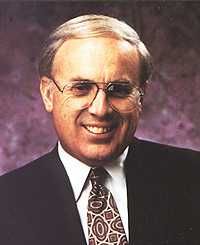
John MacArthur

Questions & Answers #9

Proverbs 1; Romans 12
John MacArthur July, 26 2013 Video & Audio
0 Comments
Questions & Answers with MacArthur, Begg, Ferguson,and Sproul

Sermon Transcript

Auto-generated transcript • May contain errors

100%
Does the openness of God movement
have any impact on the holiness of God? Does it diminish the
concept of the holiness of God? The first thought that went through
my mind when you asked that question was a vivid image that I heard
before lunch from John MacArthur, where the Son of Man has a sword
coming out of His mouth going after false prophets. I don't
believe that openness theology is part of the intramural debate
within evangelical Christianity between Arminians and Calvinists
and so on. I believe it's sub-Christian
and anti-Christian, and the true Christians ought to flee for
their lives from this theology. And the thing that's so scary
to me is that how popular it's becoming with the people, because
it's based upon a simplistic hermeneutic or principle of interpreting
the Scripture, and it not only diminishes the holiness of God,
it diminishes the whole nature of God. And I think it's significant
that the people who developed this particular approach to God
understood at the outset and declared self-consciously that
they were seeking to develop a doctrine of God somewhere between
process theology on the one hand and classical orthodox theism
on the other. So when I say this is not orthodox
theism, I'm simply seconding the motion of their expositors
themselves who have declared at the outset their recognition
that they are making a conscious departure from orthodox theism
and certainly from orthodox Christianity. And apart from that, Paul, I
really don't have an opinion. Well, you know, some of the people
who are promoting open the openness theology, are very winsome in
their presentations. And I think a lot of people can
be taken in by it before they even know what they're listening
to. Can anybody here give us two or three earmarks of how
you would identify open theology? Either one? I would just suggest that you read
a book by Bruce Ware, W-A-R-E, I think it's something about
a lesser God, I can't remember the title exactly, a lesser God.
It really deals with this issue, and I do believe what R.C. Sproul said is exactly accurate. This is not Christianity. This
is not the god of Christianity. This, therefore, is a false god.
This is an idol. This is a god created to satisfy people's emotional
needs. They want to sort of make God
into a good guy, and this all is ostensibly about how could
God do this, and how could God do that, and how could He allow
this and allow that, and the answer to that is He doesn't
allow that. He doesn't even know what's going to happen. He's
not sure what's going to happen. He knows no more about the future
than we do, and He's trying to adjust to what's happening like
everybody else is trying to adjust to it. That's what it means. And ostensibly, this sort of
removes the responsibility or the culpability from God for
everything that's wrong in the world, which, by the way, God
isn't interested in being removed from. He continually takes responsibility
for everything. I've been preaching through Genesis
and recently on the flood and noting how many times God says,
I will destroy the world. If you think God is the ultimate
good guy, then ask yourself how you can drown the entire human
race and leave eight people. And that to me is a massive indication
of what God feels about sin and how He reacts to it. And, you
know, some estimates would go as high as I've read some who
would go as high as seven billion people could have been on the
earth at the time of the flood, and others would say a few million,
but God drowned them all but eight people and repeatedly says,
I will do it, I will do it, I have done it, I have done it. My spirit
will not always strive with man and so forth, so there's no need
to somehow transform God into a likable, irresponsible being
who's just trying to find his way through the maze like the
rest of us. And as he said, I think this is not God. This is not
God at all. This isn't anything that's true
about God. It makes him like us, which is the antithesis of
holiness, which is his utter separateness from what we are. Sinclair, do you want to chime
in on that? Yes, I think, you know, reflecting on what Jerry
Bridges said last night about the holiness of God, as on the
one hand, His difference, He is the Creator, we are creatures,
and His difference also in the moral dimension, He is pure and
we are sinful. And it seems to me that the openness
of God movement, like all deviations from orthodox theology, from
an orthodox doctrine of God, wriggles on both these points.
Point number one, it wriggles because it wants to try and create
a God who is more like us. And point number two, it wriggles,
and this is the point that John is bringing out, on the point
Surely we deserve better from the hands of God than what we
are actually getting. when the presupposition of Scripture
from Genesis 3 onwards is that anything we get from the hands
of God is at least common grace, and in the case of the gift of
Christ, special grace. And so reflecting back on the
questioner's desire to ask if the openness of God movement
does anything to the holiness of God, the answer is I think
in the last analysis, riding on the back of what Jerry said
yesterday, actually destroys the holiness of God. And I think
the interesting thing about all this is that like so many things,
and they come I guess in ten, fifteen year cycles, this has
flashed on evangelicalism as the latest new thing And to me
it acts as a litmus test of whether we really are true evangelicals
or not. And it sweeps away. those who
are on the margins, and sadly I think in some cases it would
be improper to mention names, you would be able to detect from
the writings of some of these men that they were already on
the margins and that this is a new thing that brings them
a sense of satisfaction. My problem with that is historically
the openness of God is no new thing. There really is in theology
nothing new under the sun. And you go back, the openness
of God was one of the characteristics of the theology of the Hellenistic
world that the Apostle Paul was constantly counteracting. at
the time of the Reformation, immediately following the Reformation,
they went through all this all over again. They did it in Latin,
people today are doing it in English, but it's the same old
story. How can we reduce the threat to my autonomy? that there is from the doctrine
of an absolutely sovereign God who, as Paul says, works everything
together according to the counsel of his own will. And the sheer
logic of the grammar is that the counsel of his will is prior
to the outworking of the will. The logic of the statement is
that everything that comes to pass comes to pass in accordance
with God's decreed will. And instead of wriggling against
that, I think our responsibility as exegetes of Scripture is to
see how this plays out in what are admittedly difficult questions
that the Scriptures themselves recognize are forced upon us
by sometimes the strangeness of God's providences, by the
fact that within the Scriptures themselves, the people of God
who absolutely believe in the total sovereignty of God are
frequently asking, how is it that the promises of God and
the providences of God don't seem to coalesce together? To
which the biblical answer is, wait and see. Don't invent a
new God, but wait and see what this God will show to you. So
I'm very much at one with what's being said. If they're right,
I'm going to sleep in tomorrow. Because there's no reason for
me to trust a single promise of the future that God has given.
Because not only the best laid plans of mice and men, but the
best laid plans of an open God are also open to the destruction
by a maverick molecule or a human decision that changes everything. Paul, can I add here, I think
a great litmus test in many theological questions is this simple test,
does it work with Jesus? Can you put together the openness
of God and everything the gospel tells you about Jesus? who was
crucified by the hands of cruel and wicked men according to the
determinate counsel and foreknowledge of God. And if it doesn't work
with Jesus, it doesn't work. In a way, it's as simple as that.
Well, thank you. Alistair, we welcome you. We
know we haven't heard you speak yet. But welcome to the panel. No stranger to this Ligonier
platform. In fact, not the most frequently
asked questions, but so many people put in the question and
answer box, they wondered if we were going to do another round
of limericks this year. You got us started on last year,
do you remember that? Yes, that was a mistake and we won't be
doing that again. Maybe when getting all four of
you Scots together, it just kind of comes out here a little bit,
but we do welcome you. It's always exciting to see how
many young people come to the Ligonier Conference, and we have
had questions. Here is a question from a 14-year-old,
Sinclair, and I think it's directed towards you. Since John the Baptist
and Jesus were cousins, did John see the holiness of Jesus as
they were both growing up? And he asked it a separate second
way. Did John the Baptist see the holiness of Jesus when John
said that he should be baptized by Jesus rather than the other
way around? The answer to the first question
is that we don't know the answer, I think. Reading insofar as it's legitimate
to read between the lines, I think it's possible that they may not
even have met during those hidden years of Jesus' life. If they
had met, if they had met, then in the light of the little hint
that Luke gives us about the meeting of their mothers and
John the Baptist leaping in the womb, which Luke seems to understand
as a kind of fetal recognition or something, you know, he's
trying to say something, he's maybe not sure what he's trying to
say, but he is, there is a kind of divine intimation there. If
you then, and it's Luke who is most interesting in this point,
if you then trace what he then says into Luke chapter two about
Jesus' response to his parents, which I think is actually based
on Psalm 27. Don't go there, just stay exactly
where you are. Psalm 27. We will pronounce A's as A's,
as in Sam, and O's as O's, as in God, and not reverse the trend,
Alistair. Where the psalmist says, Your
face I will seek, he's speaking about the temple. I think that
lies at the background to the story of Jesus in the temple.
You should have known that somebody who lived in Psalm 27 could have
been found in the temple. And then the words that follow
about his obedience to his parents and his growth in physical stature,
but also in favor with God and man. From that you could deduce
that if they had met, then Jesus would have grown in favor with
John the Baptist. I think all that you could deduce
legitimately, whether they ever actually met or not, we do not
presently know, but one day we will know. I think the second part of the
question, that whole context of John saying to Jesus, and
how wonderful to hear a fourteen-year-old ask this question, bespeaks the
sense that John had that there was something unfitting about
one who was a sinner who was giving a baptism for sinners,
giving such a baptism to Jesus, who he recognized as the Lamb
of God who had come to take away the sin of the world. It's very
encouraging to hear a question like that. Here's our 14-year-old
here in the room, Bri, is that how you, Brian? Oh, it's Bri,
right down here. Well, thank you, a young lady.
Let's welcome her to the conference. Isn't it great to have a young
lady to ask these questions? Thank you very much. Let's see, I think John MacArthur
and Sinclair, I think this is probably directed both of your
directions. John MacArthur mentioned the sin unto death and how some
Corinthians were dead at God's hand so the church has spared
their wickedness and they go, they're taken to glory. How do
we reconcile these comments with Hebrews? There is no, there is
a holiness without which one will not, let's see, there is
a holiness without which no one will see the Lord. How do we
reconcile the sin and the holiness and God removing them and taking
them to glory? Well, the sin, the holiness without
which no man shall see the Lord is the imputed righteousness
of Christ that is granted to the believer at the point of
salvation which covers him. It's obviously not our holiness
that makes us fit to enter into heaven. We receive a holiness
not our own. That was the whole intent of
Philippians chapter three when Paul gave his testimony. He spent
his life up to that point trying to accumulate what he assumed
were things that were going to make him acceptable to God from
his circumcision on, things for which his parents were responsible
and things for which God was responsible, like being born
into the tribe of Benjamin and an Israelite and all that, and
then the traditions that he followed in zeal for the law and blamelessness
and He saw all of those things as accumulated gain until he
met Christ and saw a righteousness of God, not his own, granted
to him in Christ, at which point all of that became loss. So the
holiness without which we will see the Lord is the gift of holiness
that God grants to us when he gives us his own righteousness. There's never going to be anyone
this side of glorification that is going to attain a holiness
that is acceptable to God. And consequently we are all at
some point along the path of sanctification. If we do well
we flourish and are blessed. If we somehow retard that sanctifying
process and become a problem to the church, which the Lord
of the church deems serious enough, He may remove us for that reason,
and does. Even as a pastor, I look back
over the years and I can think of a few people in my own life
that I really, they're really even among family members, was
no reason for death to occur. There was no real diagnosis,
seemed to be evasive or something came suddenly and took a life.
But in some cases, a few cases, I can remember things that other
people didn't know that I thought to myself, this may be a 1 Corinthians
11. This may be a situation like
1 John, so the Lord does that for the purity of His church,
but that person still is covered by the absolutely sufficient
righteousness of Christ to be acceptable to God. then are we
to understand you're saying that the sin unto death is a sin committed
by a believer? Yeah, I take it that the sin
unto death is some sin, not in particular sin, but whatever
sin causes you to die, whatever sin God uses as a point of judgment. First Corinthians 11, it was
how they were treating the table of the Lord. They were coming
without judging themselves first. They were coming without an appropriate
confession of sin, and they were trivializing the table of the
Lord. And some of them were weak, and some of them were sick, and
some of them were asleep because of that specific thing. And I
think there could be a number of different sins. There could
be any sin that the Lord says that's as far as it can go, and
it can go no further. And I think that's the kind of
sin John says that, you know, it's really not going to do any
good to pray for that, because that's You're not going to get
a positive answer. The Lord's going to do what he
needs to do to protect his church. Sufficiently covered. Alistair,
what are some of the primary reasons you might see for the
lack of holiness in our contemporary society? And I suppose you could
say are within the church and outside of the church. Well, outside of the church.
I think we'd have to say that if the yeast of the church is
going to work through a culture and through a community in a
life-changing way, then the church somehow owes a piece of the circumstances
there in as much as if you take, for example, the law of God that
is given to the people of God in order that they might be seen
to be absolutely distinct within the culture in which they're
set. then any abuse of God's law in terms of the moral activity
and the lifestyle of the people of God has some kind of impact
on the society. So, for example, if you take,
and I don't want to start the debate, but if you take the issue
of the Lord's Day and you leave it where it sits as the fourth
commandment, and you go back even 30 years in America, I think
it would be possible to at least argue the case that there is
some correlation between the different perspective of the
people of God in relationship to the nature of the Lord's day
and the overspill of that into the community. For example, the
Open Golf Championship, which Americans refer to as the British
Open, but the Open Golf Championship never was concluded on a Sunday.
right up until the 1960s. In Scotland, it wasn't by law
that shops were closed on Sundays when I was still in my teens.
It was as a result of what somebody has referred to as the law of
the unenforceable. And that is that it just seemed
it was an impropriety. It just wasn't right. And I think
that had something to do, and still up in the Western Isles
of Scotland, has something to do with the impact of the people
of God infiltrating a community and a culture. And I'm just rambling
now, but I think that as I've been here these last 18 years,
one of the things that has struck me is how much emphasis has been
placed on trying to make an impact on America as it were politically
and structurally from the top down. And yet at the same time,
we've... been rather poor in making an
impact culturally and in the realm of the media and in the
realm of the arts and in the interface of solid believing
people who have been able to have an impact there. When you
come to the issue of the church and the absence of holiness, One of the great problems, I
think, is the absence of the preaching of the Bible, the teaching
of the Bible, which establishes then who God is and the nature
of God. And Tozer in his, is it The Knowledge
of the Holy, you know, he speaks about how no church is going
to ever be able to rise any higher than its awareness of who God
is in all of his glory and in his majesty. And so when you
have then a devalued view of God in the pulpit, which is then
communicated to the pew, then there's a sort of almost inevitable
decline that then follows. And while it would be unfair
to cast that as a broad explanation, it would actually be unwise,
but I think that is at least part of it. Anybody else want
to suggest some aspect that All right, we'll leave that one
right there. I know that all of you are somewhat hesitant
to talk about yourselves personally, but there are a lot of questions,
and I think when people hear you speak on these topics in
a as a concept or a proposal from the scriptures, the question
comes to their mind, questions of this, in this nature. How
do you pursue personal holiness in your own lives, your own devotional
lives, or your own daily lives? What are one or two things from
each of you that you practice that encourage the pursuit of
holiness in your own lives? Someone like to start? Choose
the holiest one. The holiest one? We'll start with the younger
set. I don't know whether Alistair would
agree with this but when you're reared in a certain kind of culture
Whatever culture you're reared in, you struggle to allow the
scriptures to make their true impact on you in order to balance
you. I was brought up in a fairly
rigorously Puritan home where my parents were not then Christians. sharing the same geographical
space and time, more or less, give or take a few years as Alistair.
I remember as a five-year-old going to the window of my parents'
home and seeing one of my pals playing football in the street
on a Sunday afternoon, soccer in the street. And my mother
used to remind me of this when she eventually began to come
to church to teach me what a little Pharisee I was. I came running
to her and said, mummy, mummy, Douglas is out in the street
kicking a football and it's Sunday afternoon. And I apparently was
outraged at this boy's breach of the Sabbath commandment. Absolutely
outraged by it. So, I guess I have come to the
whole question of personal walk with Christ, holiness. against
a fairly dark, some might say sinister background, some might
say the sinister best not disappeared. And one of the things I found
most helpful in the way in which Paul approaches the whole question
of personal holiness is his absolute insistence that you cannot grow
in personal holiness merely by putting things off. Constantly when he speaks about
what does it mean for me to grow as a Christian, he comes back
to, I think Colossians 3, 1 to 16 and 17 is a good example of
this, comes back to point number one, you're a new man or a new
woman in Christ, you're united to Christ. Point number two is,
since that's the case, you must radically seek to rid your life
of everything that is contrary to Christ by putting it to death. But point number three is, you
cannot live the Christian life like Hopalong Cassidy. You've
got to live the Christian life on two feet. There is, in a sense,
no fruition of putting off. unless you're simultaneously,
it goes on to say in verses 12 to 17, unless you're putting
on the graces of Jesus Christ. And it's, I think, constantly
been my personal struggle in this area to seek for that simultaneity
of getting rid of what grieves Christ and at the same time,
wearing the garments that Christ gives me by the power of His
Holy Spirit. I think if there is a kind of
Pauline secret to thinking about how we are to grow, it's that
getting of the foundation right, our union with Christ. and then
are putting off and are putting on. I use an illustration that
appeals to all of us because of our love for the sanctifying
game of golf. Years ago, I bought two Jack
Nicklaus books for one of our boys as a Christmas present.
And as a diligent parent who wanted to know what his children
would be reading, I read them before I gave them to him for
Christmas. And in the introduction to one of these books, Nicholas
says, and at this time he was the greatest golfer in the world,
at the beginning of every golf season, he would come down to
Florida, go to see Jack Grout, who had taught him, I suppose,
basically from the beginning, with a golf club in his hands.
This blew my mind when I read it. And he would go to Jack Grout
and he would say, Mr. Grout, teach me how to play golf. And what Grout would do, would
essentially say, you've got to have the fundamentals in place,
the grip, the stance, and the rhythm of the swing. And ever
since I read that, and as somebody who preaches, you're always looking
for slide over illustrations, I thought, that's true in golf,
because it's true of gospel life. and the two are, as we know,
intimately connected. The grip you have on Christ,
the stance you take against everything that doesn't belong to Christ
that's going to keep you stable, and the rhythm of that Christ-like
pattern of life. And I need to remember that swing
thought. We're going to get his 18-hole
sermon here, I think, in a moment. That's terrific. Going back to
the basics, the fundamentals, reviewing there. Not staying
there, but reviewing there. What about the rest of you? I
was just going to say, I've tried all of that, and I still hit
the ball in the woods. And I think my Christian life maybe follows
that pattern as well. I think for me, it is a great, great blessed bondage
to be in the same church for 32 years, to have everything
you've ever said on tape, so that you can never repeat
it. And to have to continue to prepare
new material over a period of 32 years, to preach every Sunday
morning and every Sunday night of your life for all these years.
You know, 4,000 plus sermons or whatever it is, or 5,000.
That's all time invested in the Word of God for me. People ask
me, what I do, you know, you have a lot of organizations you're
associated with, but still for me, life is about studying the
Word of God. And I confess to you that I really
wouldn't do that to the degree that I do it, to the intensity
that I do it, if I wasn't forced to do it. I would do it because
it's my love, but I would never, as one of my theology professors
said years ago to me, I could never be a pastor because I cannot
force myself to make a conclusion about everything by Sunday. I have to make a conclusion about
everything by Sunday. and that's the way it is, and
so some weeks that might be 12 hours, and some weeks that might
be 20 hours. I remember some weeks where you'd
say, come back next week for the conclusion of the sermon.
Were those weeks the? Well, I had to make some conclusions about
what I said. I didn't have to make all the conclusions, but
that's true too. So I think for me, it's the work
of the word. If you, if I think about John
17, where Jesus is praying for us, And he says, Father, sanctify
them by thy truth. Verse 17, thy word is truth. And I think that the agency of
sanctification is the word. And one of the reasons, in all
honesty, that I stay in the same church, I haven't had any offers
for years, but one of the reasons. One of the reasons that I stay
in the same church is that blessed bondage, as I like to call it,
keeps me in the Word. And I'm not under any illusions
that somehow you can reach some sanctified plateau and coast
the rest of your life. It's that incessant, constant,
relentless exposure, not to the truth itself, but to the truth
as it's connected to the God of truth. I see in every passage
the revelation of the glory of God. That's what I'm always looking
for. What does it tell me about God? What does it tell me about
the Trinity? And I find that in that constant, relentless
exposure, to the Word of God, my thinking is shaped. And I
know what honors God, and I know what delights God, and I know
what disturbs God. I know what it means to walk
in the Spirit. I know what it means to quench
the Spirit. And as you become entrenched in the Word of God,
It controls your thinking, and then the battle, and I'll talk
about this tonight, then the battle goes inside, where the
word of God is working on the inside, and I think that's the
only way you can win it. What I have done over the last three
years or so, I made a little shift in my reading, I do an
awful lot of reading, but I've decided that, I've sort of read
theology all my life, doesn't mean I know everything about
it, but I feel kind of comfortable with most things, and so I decided
I needed to spend some years of my life reading biographies,
Because I need to really see some examples of those godly
people that just just sort of overwhelm you and so I'm reading
these big tomes on William Carey and and William Tyndale the Yale
Divinity Yale work on him, I'm reading David Brainerd, Jonathan
Edwards on David Brainerd again, painstakingly crawling through
all of that and exposing myself to people who think so profoundly
about their own condition spiritually and I found that to be tremendously
helpful to me. Because when you get to the point
you think, well I know my theology pretty well, then you meet these
people and you feel like an absolute worm. And that's important, I
mean that's where you always want to go, that's part of the
basics. I know it's not good in golf, and blows the analogy.
You're not supposed to stand there and say, I can't do this,
I can't do this. The late Charles Schultz, the
cartoonist, said that his job was drawing the same cartoon
every day without ever repeating himself. And that sounds a little
bit of your sentiment there. What about you two? Any esoteric
practices, R.C.? Well, you know, I've been very
interested in scientification, studied it many times. This is
the first time in my life I ever heard it related to a Hopalong
Cassidy. I needed to ask, are you referring
to the football player or the cowboy? You didn't know there
was a football player by that name, did you? No, it's a cultural
thing. His mother didn't let him watch
football. I wonder if John, preaching 5,000
sermons, he hasn't learned the trick. I have five sermons, I
preach each one of them a thousand times. Not quite. Did I need to remind you of the
question? I focused my attention on the
holiness of God, on the character of God, and because of that some
people get the – nobody knows me, but some people from a distance
get the impression that I must be a holy guy if I'm all that
concerned about God's character, but it's just the opposite. It's
because I know I'm not holy. And then I realize that I will
fool myself at every chance I have to lower the bar, to discount
what holiness really requires. and at the same time inflate
my own view of my own performance. That's why I need to have an
Isaiah 6 experience every day. And I really do try to trick
myself. I say, I have got to immerse
myself in a study of the character of God so that I can begin to
really understand what he loves and what he hates and how much
he loves what he loves, and how much he hates what he hates,
because we're called, in our sanctification, to imitate God,
and to do that, we have to have the mind of God, or the mind
of Christ, which brings me right back to what John was talking
about, and Sinclair, immersing ourselves in the word of God,
that the word of God may minister to my own soul and give that
added thing. It's not just a subtraction.
I mean, when Paul talks about the war between the flesh and
the spirit, on the one hand, the old man is supposed to be
being put to death, but the new man is to be strengthened, and
that means it has to be fed. It has to be nurtured. It desperately
needs worship on the Lord's day. That's a means of grace. It desperately
needs prayer in a disciplined way. And above all, it needs
the ministry of the word. And I think that when I, you
know, I've done that, I've been through that, and I come back
to it every now and then, John, studying biographies of the great
saints. One of the things that stands out to me when I read
the lives of the really, really great saints, the giants that
God has gifted his church with, is that the older they got, the
more sanctified they became, the more aware they became of
how much sanctification was left. And I think that's one of the
kindnesses of God, that he doesn't reveal all of our sin to us all
at one time. I don't think we could stand
it. And sometimes it seems like we're
hanging on by our fingernails and that our growth in grace
is infinitesimal. And yet at the same time we know
that the Word does not return void, and that these means of
grace that God has given to His people and to His church are
powerful things. And we just got to make use of
them. I can just piggyback on that.
The kids at the Master's College and Seminary often ask me, will
I ever overcome sin in my life? They feel a strong pull of sins
in their years as college kids, seminary, and I say, yeah, as
you mature, as you're sanctified, there will be a decreasing frequency
of sin. That's the good news. Bad news
is there will be an increasing hatred of it, so you'll feel
worse about it. That was a great point Jerry
made last night about self-righteousness. Very, very well put. Alistair,
you've got a glean here from the These guys have already picked
the crop here a little bit. Actually, it's a lot of fun just
to sit this close and listen. This is the best seat that you
can get here. And I don't mean that in any
sense of self-deprecation. It is fun. It's not often we
get a chance to talk with these kind of questions and views.
So it's terrific. And so I'm learning, and I'm
concurring with what's being said. Maybe just since you asked
esoterically, is there anything? One of the things that has been
part of my background, not... as an attempt at trying to create
it, but it just has emerged for me, is the way in which my mind
has been able to retain anything that had poetic or lyrical value
to it, easier than stuff that was more disjointed. Consequently,
hymnody as a summary of theological insight has been and remains
a very large part of my own spiritual pilgrimage. And in terms of the
work of the Word of God in as much as strong, helpful hymns
and childhood choruses, In as much as they are true to the
scriptures and set forward God's desires for us, I often find
that a good hymn book or the recollection of those things
helps me to get back in, if you like, to the rhythm of the swing,
to go back to where we started from. Because my Christian life
is, sadly, and I hate to admit it in front of John particularly,
but I think my Christian life is far too much like my golf
game. And it is an indication of the fact that it's fits and
starts and bursts of enthusiasm followed by periods of chronic
inertia. And that the Westminster Confession of Faith describes
it, that we are involved in a continual and irreconcilable war. And so
as I make my way through that journey, you find yourself going
to a hymn like, as you come to your responsibility, Spirit of
God, descend upon my heart, and wean it from earth, through all
its pulses move, and speak to my weakness, mighty as thou art,
and make me love thee as I ought to love. See, even if you can't
sing when you're singing that in the car by yourself, if you
mean it, it's great. Or from Sunday school, cleanse
me from my sin, Lord, and put thy power within, Lord. And take
me as I am, Lord, and make me all your own. And keep me day
by day, Lord, underneath your sway, Lord. And make my heart
your palace and your royal throne. These are things I learned as
a wee boy, but they've never left me. And in as much as they
reinforce Scripture, just as an addition, a supplement to
what's being said, I find myself retreating to my hymn book a
lot. Well, that's good personal reflection
from each of you. We appreciate that. John, will
we as Christians saved by the blood of Jesus and trusting in
Jesus alone by faith for eternal life ever see the full glory
of God? I think we've been wetting people's
appetite for the glory of God and this question comes along
that line. Well, we will see as much of
the glory of God in heaven as as our redeemed and glorified
humanity could take without being incinerated? I'm not sure. That's a very difficult question.
Even the angels R.C. was talking about last night,
referring to them back in Isaiah 6, with two of their wings cover
their faces, even those holy creatures recognize some need to cover themselves
in the face of the full glory of God. I mean, obviously that's
a spiritual imagery, but no creature can ever see God and live, it
says in Exodus. I guess I don't know what unlimited
glorified humanity would be like. I don't know how far our capacities
will go, but we will certainly see God's glory in ways that
are are relatively infinite to what we experience at this point
in life. We see the glory of God veiled.
You follow it along from the time of the fall and the glory
of God appears as a cloud or a pillar of fire or it appears
in the holy of holies at the building of the tabernacle and
again at the temple. And it's unveiled in the transfiguration
for a moment and blazing glory shines on the apostles. And always,
it's limited. Moses is tucked in the rock in
Exodus 33, and he says, you can't see my glory and live, but I'll
let my afterglow, my back parts pass before you. I think we'll
see a greater glory, certainly the New Jerusalem, The incredible
display of light shining out of the middle of that city through
transparent gold and all of the jewels is indicating to us a
blaze of glory, the likes of which is incomprehensible to
us. But to what degree, when you say, do we see the full glory
of God as still being created, even if newly created, there
may be some limitation to that. I wonder whether in heaven we
will just see Jesus and, you know, that will be it. And that
will be all of, you know, because kids ask, are you going to see
God the Father? At least they ask me that. I personally, I'm not anticipating
that. I'm not sure I can go to the
scriptures and say exactly why not. But I think that when you
take the Colossian passage, when you take the Philippians passage,
when you realize that here in the person of Christ, God in
all of his Trinitarian fullness has chosen to disclose himself.
I anticipate that somehow in heaven that that we will see
Christ in all of His glory, and that we will be fitted for that
capacity, and that that will be sufficient. I think the greatest promise
we have is the promise of the beatific vision, the vision of
God that even Jesus promises to the pure in heart, which we
are not now, but we shall be. But one of the first doctrines
we teach in the doctrine of God, theology proper, is the incomprehensibility
of God. Not that we can't know anything
about God, but that we cannot have a comprehensive knowledge
of God is, again, theology 101. But often the question arises,
well, what after we enter into glory and we're glorified, Then
will we get past the barriers of incomprehensibility, but we
will still be finite. We will still be creatures. And
Calvin, I believe, was right. I promise no more Latin, but
that's in my lessons, not in this thing. You know, that axiom
infinitum non capax infinitum, the finite cannot contain or
grasp the infinite. And we are not going to be deified
in heaven. We're going to be glorified creatures,
but creatures we will remain, and therefore finite beings,
and no finite being will ever have the capacity to comprehend
the infinite glory of God. So the word he's picking up on,
I agree with. We won't see the full glory of
God. We'll see the unveiled glory of God, and so on, to the greatest
capacity that we as glorified creatures will have, but there'll
be still a transcendent dimension of God that will elude us, I
think. I connect it with light because
at Revelation 22 it says, and the Lord God shall illumine them,
and he's the sun and he's the light, and that's what I say.
I think the image of God as light revealed, the spirit revealed
as light, and it always, as you say, is incomprehensible ultimately
to us. Sinclair, let me give you probably
the last question that we have time to deal with. What happens
with the Holy Spirit when God allows us to travel through the
valley of the shadow of death? I understand he never leaves
us, but what is his function during this time? Just repeat
that question, Tom. What happens with the Holy Spirit
when God, or probably should be what happens to the Holy Spirit
when God allows us to travel through the valley of the shadow
of death? During difficult times, I think they're saying. I understand
he never leaves us, but what is his function during shadow
of death, valley experience times? Does that make any more sense
to you? Well, I'll answer a question,
and if I'm not hitting the spot, stop me. The Puritans used to
make what I think is an interesting distinction, which I think you
see the validity of in various biblical passages. Between the
office of the Spirit, for example, it is the Spirit's office, in
the believer's life to be the comforter, and the Spirit's existential
ministry in the believer's life, that though he has the office
of comforter, he doesn't always reveal his ministry in us in
such a way that we feel comforted. And getting back to the confession
of faith, Alistair and I were talking about the confession
last night, and I think we're both very struck by the way in
which it was so obviously written by pastors, and how they emphasize
that for his own purposes, the Lord may leave his people for
a season without comfort. If we talk about the actual movement
of a believer towards death, I think it's just quite evident
from our own pastoral experience that there are some believers
who go through enormous struggles and go through seasons when they
have very little comfort. We probably see that less today
than our forefathers did because they saw people going right to
the end without medical aid, basically. And they saw all the
seasons and the flows of the soul as the soul approaches the
great schism, the unnatural schism of body and soul. And I've seen
this sometimes, not a lot, because so many people are, so medically
taken care of that they're not very conscious. But I have seen
believers approaching death who have gone through enormous struggles
of discomfort. And since, to be honest, I've
often anticipated that myself, that I would go through a season
of discomfort, chiefly because I love this life so much and
If my family were around, because I love my family so deeply, that
the thought of parting with them, even for a season, is as mysterious
as the idea that there is no marriage in heaven. That's one
of the most mysterious, I understand that text, but if you're married,
that is a very, the opposite of the privilege of the love
is the horror of the parting. And I personally found great
help in this area, in some things that John Owen says about the
soul's movement from this world to the world to come, in the
way in which as we progress in the Christian life, at that stage
we are actually laying down the things that are most precious
to us. And we're brought to what is really a totally new challenge,
except it comes suddenly to us, that we have to give up wife
and or husband, children, ministry, everything. And the only thing
that is going to get us through the period of struggle into glory
is our absolute dependence on Jesus Christ. Those of you who
have the Banner of Truth edition of the second volume of Bavinck's
Dogmatics, there's a quotation on the dust cover, and I know
it's there because I put it there myself, in which, on his deathbed,
Bavinck, who was just one of the greatest theologians who
ever walked on two feet. I just could not tell you what
a great theologian was. On his deathbed, he said, my
dogmatics cannot save me. Only Jesus Christ can save me.
And my own view is that in the soul's journey in that last part
of the pilgrimage, one of the things that withdrawal of comfort
of the Spirit may do. This doesn't happen to all believers,
but it does happen to some believers, and there must be very mysterious
reasons for it. It will show in the glory. I'm
sure there'll be marks in the glory of everything that we've
been through, that in the lives of some believers, the Spirit
withdraws a certain amount of comfort in order that we may
rest more fully and finally, exclusively on Jesus Christ. You know, part of the whole of
the pilgrimage of the Christian life is discovering how little
you're really resting on Christ. Constantly discovering that you
need to place more weight on Jesus Christ. Constantly discovering. I was thinking as John spoke
of words of Murray McChane in his journal, which helped me
tremendously when I was a teenager and was wrestling inwardly with
all kinds of things. And he was this holy man who writes in his
journal, I've come to see that in my heart there are the seeds
of every known sin. And that's a very discomforting
thing. for the Holy Spirit to reveal
to us, especially if we're in the last days. But the promise
that's given in the 23rd Psalm, which applies to the Great Shepherd,
obviously applies to the one who administers all the riches
of the Great Shepherd, even though I walk through what's literally
the valley of deep darkness. I need fear no evil, because
you are with me. You are with me. I may not feel
you. I may sense great discomfort, but he has given me this promise
that he will be with me. And that even in those last struggles,
he's preparing me to shine in the glory. So that when we see
one another in the glory, and hopefully recognize one another
in the glory, Those marks will be on us. We won't need to say
to each other, did you hear about the battle I went through? It
will just be written all over us that He has been with us through
the Saul's last battle and that His promises never ever fail. I think you put your finger right
on the point of that question. Because I think the question
is, can you be holy and still fear things such as death that
come? You mentioned pilgrim and progress.
And you know, in Pilgrim's Progress, Bunyan has the worst test for
pilgrim comes right at the end when he reaches the river of
crossing over and death. And that's interesting. Can I
just add, we had a lady in our church two years ago, a missionary
in the Middle East, went to the doctor, she was a physician herself,
a psychiatrist, went to the doctor in this country where the system
was, you picked up the x-rays, you went to another doctor to
read them, and on the bus she read them, and she knew she was
dying of cancer. She packed up every single thing
she had, gave it all away, came home, went into a hospital, and
exactly like Pilgrim's Progress, she started calling people to
her deathbed. and giving them one after another.
It was just an amazing thing to see. But not all Christians
die that way. Some, as they go through the
River Jordan, are feeling, are there stones under there? Is
the ground still secure? But all that is only to bring
us to know in the last stage of the pilgrimage that the ground
is secure. There's diversities of the spirits
working right to the end. Well, our time is gone, and we
appreciate each of you. I want to just get a quick response
from each of you, though. You've all mentioned the value
of biographies. Now, the biographies that are
written today, by and large, are sort of public relations
sort of biographies, or out of a particular experience at a
time of life. What thought does it bring to
you that someone might seriously write a biography of your own
life as a Christian leader in the end of the 20th century and
the beginning of the 21st century? Since you know those values of
those biographies of those who have gone before you, how do
you react to that? Briefly. Well, I just burst out
laughing, but these guys are certainly worthy of it, and I'd
buy one. At a discount? At a discount,
yeah. No, I mean, I write my journals
with frequency, but I write them for my own soul, and I don't
even, I don't think my children will take two minutes to look
at them when I'm gone, so. That thought never once occurred
to me. What about you? Everything about that? Yes, because
I've had publishers talk to me about it, but that never goes
anywhere, because my wife won't allow it. She's wise. Well, who knows what the future
might hold. Yeah, it will have to be long
after I'm gone, and especially after she's gone. What about you, John? You ever
think about that? No. I think all of us would wish that
whatever legacy we left would not be our life, but our message.
Just the message is enough. But you all testify to the value
of great biographies. And they can't just stop at 1812
or something like that. I wish we had time we could suggest
what the title should be of these biographies. We know what yours
would be, Four. What about you, Sinclair? Does
that thought send a chill up your spine that someone might
write your biography? Your son sitting out here might
write it someday. It terrifies me. horrible thought, and it's
banned. There is a ban on it, and you
know, it's the family threat. But what we said, Paul, was that
we enjoyed reading great biographies. That's the point. The adjective
is very important. We'll wait and see, time will
tell. But thank you for sharing your theology and your biblical
knowledge. I got the title for a corporate
biography of the guys here. Great golfers and their lies.
And their lies? And their lies. Lies. Let's thank all four of these
great golfers, Sinclair Ferguson, John MacArthur. R.C. Sproul and Alistair Begg.
Broadcaster:

Comments

0 / 2000 characters
Comments are moderated before appearing.

Be the first to comment!

Joshua

Joshua

Shall we play a game? Ask me about articles, sermons, or theology from our library. I can also help you navigate the site.