. People who long to be rich. Letters by John Newton.
An inordinate desire and attachment to the things of this present world is a prevailing cause of a spiritual declension. Unless this evil principle is mortified in its root by the doctrine of the cross, it will in time prevail over the most splendid profession.
That love of the world, which is inconsistent with a true love of God, manifests itself in two different ways, as men by temper and habit are differently inclined. The first is covetousness, or greediness for gain. This was the ruin of Judas, and probably the cause of the defection of Demas. By the honourable mention made of him in some of Paul's epistles, Demas seems to have had much of Paul's confidence and esteem for a season. Yet at length his covetous passion prevailed, and the last account we have of him from the Apostle is, Demas has deserted me, because he loved this present world. â€"2 Timothy 4.10.
Again, there are people not chargeable with the love of money for its own sake, for they rather squander it than hoard it, yet they are equally under the influence of a worldly spirit. They manifest their worldly hearts by an expensive taste in the articles of dress, furniture, and feasting, which are always unsuitable to a Christian profession.
It is not easy to exactly mark out the precise line of Christian conduct in these respects, which befits the different situations in which the providence of God has placed us, nor is it necessary to those who are poor in spirit and upright in heart. A simple desire of pleasing God and adorning the gospel will solve most cases of how a believer should spend his money, which occupy little and trifling minds.
The inclination of our heart will always direct and regulate our voluntary expenses Those who love the Lord and whose spirits are lively in His service will avoid both stinginess and selfish extravagance. They will rather lean to the frugal side in how they spend their money on themselves, that they may be better able to promote God's cause and to relieve the necessities of His people.
Misers who can be content with a mere form of religion will hoard all they can save in order to gratify their avarice. Others will spend all they can spare to gratify their vanity or their worldly appetites. It is not easy to determine which of these evils is the greatest, Perhaps of the two, the miser is least accessible to conviction, and consequently the most difficult to be reclaimed.
But a desire for extravagance and indulgence, if persisted in, will gradually lead to such compliances with the spirit and maxims of the world, as will certainly weaken, if not wholly suppress, the exercise of vital godliness. In whatever degree the love of the world prevails, the health of the soul will proportionately decline.
People who long to be rich fall into temptation and are trapped by many foolish and harmful desires that plunge them into ruin and destruction. For the love of money is at the root of all kinds of evil, and some people craving money have wandered from the faith and pierced themselves with many sorrows. 1 Timothy 6, 9, 10
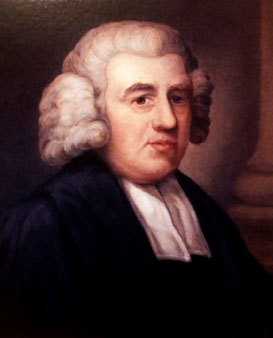
About John Newton
John Newton (1725-1807) was an English Anglican clergyman, staunch Calvinist, and abolitionist, most widely known for authoring the hymn Amazing Grace.
Comments
Your comment has been submitted and is awaiting moderation. Once approved, it will appear on this page.
Be the first to comment!