Bootstrap
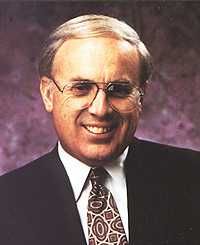
John MacArthur

Questions & Answers #23

Proverbs 1; Proverbs 2
John MacArthur March, 7 2013 Video & Audio
0 Comments
Shepherd's Conference
Question and Answer session with John MacArthur, Phil Johnson, Al Mohler, Steve Lawson, and Tom Pennington

Sermon Transcript

Auto-generated transcript • May contain errors

100%
Welcome to the 2013 Shepherds
Conference, General Session 5, Keynote Q&A. Now I want to start
with a question for John, and actually a confession. John,
I prepare my sermons on a computer. Who's talking to us here? Well, I'm not seeking absolution,
I just...I want to set up...I want to set up this question
for you. I prepare my sermon notes on a computer and then
I actually mark them up with a flare pen, and all of that's
an abomination to you. I heard you recently say that
you think that that is not the best way to go, and so I wanted
to ask you to give us your thoughts on that, on sermon preparation
and your use of pen and ink and all of that. I really feel that
writing with a pen, especially a fountain pen, slows me down
because sometimes I have to change the ink and that slows me down again. It's almost a sacramental act
to change the ink, isn't it? Let me tell you something. Well, the answer to that is no. But slow is better than fast.
Sometimes people ask me, where do you get all that that you
say? And my simple answer is I think about that. I think. And my chair goes up so I can
write and read. It goes back so I can think.
I spend as much time back as I do up. For me, slapping something
together from all kinds of sources on a computer and coming off
with a printout and then taking that into a pulpit is really
not an efficient way to handle the Word of God because you have
to think deeply, you have to meditate, you have to pursue
things, you have to chase around in your Bible. So a pen, for
me, slows everything down. It gives me an opportunity to
think. I talked to one of the guys that
I work with and he said he tried that after doing all his sermons
on computers and it had a monumental effect. First of all, he had
ten times more data going in than he'd ever had before because
when you slap something together, that's very different than doing
a rough draft by hand of everything you're thinking about and musing
and contemplating and drawing out. I just think it enriches
the process, and so I think great preachers write their sermons.
And I would think that you guys do, just because I know. JOHN
HATHAWAY Actually, the way you said it last time was you didn't
know of a single great preacher who didn't do it that way, which
pierced me to the heart. But... I actually don't know of any
preacher who uses a flare pen. I accept that criticism. I'm
actually a book editor more than a preacher, and that explains
a lot. Today I'm using an iPad and a bamboo stylus, so I took
a step up, okay? Actually, all of...it'll interest
you. You need to hear from Al on this.
I'm going to ask Al a question about this. But I wanted to let
all you guys know that every one of these men, except for
me, is a pen aficionado. And I mean, they are serious
about it. They were talking about it at dinner last night, pens
and nibs, and they know the brand names and all the inks and all
that stuff. It's fascinating. And probably
the best expert of all is Al Mohler. Give us your thoughts
about the use of a pen and preparation of your sermons. I think it's
just under the level of creedal orthodoxy, but it is under. In all seriousness, it's not
a matter of an ironclad conviction, but it is a matter of, I think,
the fact that we're associating with something that began long
before ourselves. I think there are certain habits a man needs
to have that his great-grandfather would have had. And in this world,
those are increasingly difficult to find. And the use of a pen
in a man's hand is different than the use of a keyboard. You
actually will think differently. Your cognitive processes will
operate differently. There are studies that have been
done showing that if high school and college age young men in
particular, because men are tactile learners, if high school boys
and those in college will switch from taking notes on a computer
to taking notes with pen and paper, they will retain more.
And it is because you're doing something with your hand that
requires a complete different set of cognitive skills than
if you're working at a keyboard. What you see on a keyboard all
looks the same. You can forget it. If you look
at my sermon notes written out in always pen and ink, what you're
going to note is, you can tell my moods. on the paper, you can
tell what I think is important. You can tell my mind, you can
see how ideas are being shaped if you're looking at that, which
is an entire area of knowledge is going to be completely lost
in a generation that just works in a digital world. That's true
with John, too. I always go back when I'm editing
his material to look at the sermon notes he preached from, and you
can tell his moods. He writes things in the margin
that tells him what to emphasize. It's fascinating, and almost
illegible, too. John's handwriting is...and I'm
not joking. John would confess this, I think,
his handwriting is not particularly readable. JOHN, You know, that
may be bad, but I'll tell you the worst. Steve Lawson's wife
writes, calm down, inside his sermon notes. Is that true? No, but she sits
on the front row and gives me what's known as the look. Which
means settle down. Yeah, yeah, Darlene does that
for me too. I appreciate that. But I, there
have been times when I've encountered in John's notes stuff I just
couldn't make out. I can usually figure out what
he writes and I took it to him and showed him that and said,
what does this say? And he looked at it and he said, And I said, but you're preaching
from that. When you get to that and you
can't read your own handwriting, what do you do? And his answer
was, he's not that tied to the notes. And so I wanted to talk
about that as well. How tied are you, let's say Steve,
how tied are you to what you actually wrote? Because I'll
admit, I'm pretty tied to my notes. Sure. I'm tied in the
introduction. I don't want to get up and ramble. I don't like pastors who kind
of have a speech before a speech before a speech before a speech
before they get into the message. I really want to hit the ground
running, and so if any part of my sermon has been rewritten
and rewritten and tightened, and using a thesaurus to try
to expand the word selection, it would be in the introduction.
I don't do it for the conclusion, because at that point, the momentum
of the preaching event has carried me at such a rapid pace that
I don't need it at the end, but I do need it at the beginning,
and there's an economy of words as well. In the main body of
the message, I don't have a percentage or anything, but for me, it's
read the text, explain the text, and exhort with the text. And
the explanation of the text, I've given careful thought as
to its interpretation, the exegesis, and so I'm fairly connected at
that point with the exhortation, which would be like the implication
of the text and the application That's a little bit more of the
heat at the moment and you're looking up to make eye contact
to connect it to the listener and you get more to the you of
the sermon, I'm not as tied, although I have written it out
nevertheless to try to discipline my own thoughts, to think through
the targets that I want to hit to relate this text to people.
So, heavy with the introduction, a little bit less with the explanation
and then less with the exhortation. Al, my sense would be of all
these men up here, you're probably the most extemporaneous. On a
typical sermon, say a 45-minute sermon, how many pages of notes
would you bring into the pulpit? Six to eight. Really? Six to
eight, but they are not sentences. Right. They are speaking units. I speak off of what I call a
speaking outline. It's points that are made. transitions, and that's why the
pen's also important to me, is because mine looks like a map.
If you look at my sermon notes, you know, there's an arrow going
over here, and then an arrow that comes down here. There's
an inserted quotation that I want to put here, and that quotation's
usually just, if it's short, I try to memorize it. If it's
longer, I write it out. Sometimes it's just the name
that I'm going to go to in order to make the point. But, you know,
every preacher has to do what works for him as he stands in
the pulpit and has the responsibility, rightly, to divide the word of
truth and to preach the word of God. But I make no apology
for carrying notes. I think the person who says,
I never use notes, probably demonstrably needs to. But on the other hand, I don't
slavishly follow them because it is an event and the word is
alive and so is the congregation. And so you're in a constant sense
of awareness of maybe I need to spend a little more time here.
I can move more quickly here. You know, just to add a footnote
to that, Phil, I think the genius of all of this is that you know
and have in your mind a whole lot more than you have in your
notes, which is the way it has to be. If you have in front of
you everything you know about a subject, you are stuck with
those notes. If you have in your mind less
than you have in your notes, you're really in serious trouble. I'm going to give up preaching
after this Q&A. I've actually used the map system
you talked about with the arrows. Sometimes when I do a late edit
to my notes, I'll draw an arrow here and write something down
here. And that never fails to confuse me when I get in the
pulpit. So… You know, the other thing I do is that I write only
on one side of the paper. which is the right side of the
notebook. And then I can, at points, insert
something on the back of the previous page as you have a thought. And so, again, couldn't do that
with a computer, but you can do that with a pen. Yeah, with
a computer, you'd have to go back and edit the original file,
but that's pretty easy to do, actually. It is, granted, pretty easy to
do, unless you have to be sitting on the front row when you have
the thoughts, at which point it's harder to do. How many times,
Al, would you get up and start a message in a way that you had
not at all planned? You just come up there, and in
the time you were there, you're listening to the hymns, you're
thinking, you restructured the beginning and maybe a whole lot
of the rest. JOHN HATHAWAY I restructure the introduction many times,
especially as you just imply, as you find yourself also in
a situation in which the context of worship which comes before
you, and I'll tell you, as you all know because you're a master
at this, What's the real challenge is when you've got to get up
after someone else has preached, and you can't let what they just
said be the last word that the congregation hears on this, and
you've got to find some kind but direct way to say, that's not right. I'm actually
seeing John do that in his closing prayer. Yeah, that'll work. If
you put it in a prayer, it's more noble. Well, in Southern Baptist life,
what we do is the next guy gets up and goes, well, bless his
heart. So do you ever, do you ever take
notes of a sermon you preached four years ago and, and can you
pull them out then and come right back to that sermon? I can, I
wouldn't, come right back to it, but I could step right back
into it. Well, if you rework it, then
would you rewrite the notes or would you just add stuff? I rewrite
the notes. Okay. Every time. Tom, how many pages
of notes do you take into the pulpit? Well, if I had a memory
like Al's, I would only take in what he takes in, but I take
in typically for a 45, 50-minute message at my church, I'll take
in about 12 pages of notes. I don't use them slavishly, but
in case I have a slip of memory of where I want to go, I'm there.
I tell you, the other real benefit for me is John, at your encouragement,
try to invest 30 hours a week in study. I don't want to lose
that 30 hours of work. And I'm not going to remember
all the nuances that I discovered in that study. So capturing it
in a more permanent form is good for me, not only to think it
through in terms of making me more exact in what I want to
say, but also in securing it for the future so it's not lost.
Now, let me also go through, starting with John, we'll work
this way, and each of you give just a brief description of how
it is you prepare your sermons. I remember 30 years ago today,
I actually walked into your office and for the first time saw how
you prepare your sermons, and it blew me away. You had books
all around you in the front and in the back, open books, just
literally surrounded you 360 degrees. Talk about how you do
that. Well, I mean, the objective is
to understand the meaning of the text, first of all, interpretation. But first of all, you want to
get an accurate reading of what you're dealing with. So I know
what the text is because I'm going through books. The first
thing I do is get into the original text in the New Testament, find
out what the Greek and what the syntax, lexicography, whatever
it is, the issues that are there, take notes on an 8 1⁄2 by 14
pad just regarding each verse and any textual issues so I know
I'm dealing with the real text and I understand that. Then I
begin to surround myself with commentaries. For the reason
that I'm not the first person the Holy Spirit has illuminated,
there's a history of illuminated people and I want to touch base
with all of them. I don't want to leave anybody
out. And most of the people I read are dead. There are a few that
are alive. A lot of what is produced today
is devotional kind of things. I don't really need that. So
I would read maybe 15 commentaries and I would take copious notes
on everything they have to say. You know, if you're reading Lenski,
who's sort of a Lutheran sacramental approach, I get I get an interpretation
within a context of His Lutheranism, His sacerdotal kind of approach,
so that helps me to understand how He thinks. I might read William
Hendrickson, which is Reformed, rich in theology and historic
theology. So I'm just trying to take advantage
of everything that is there because I don't want to miss anything
that the Holy Spirit has illuminated in an evident revelation of truth. What I'm saying is, you read
things and you say, that doesn't make sense, I don't see that
there, I think that's pushing the point. But then there are
those times when you read something and you say, that's absolutely
true, and it's supported. So I want to take advantage of
all that. That's where most of those hours for me are eaten
up, in exposing myself to the range of guys that have something
to say about a text within a framework in which in which they have interpreted
the whole book. I mean, that's very important.
You don't want to just pull something out of the air on a chapter because
you know they've had to make this work in the entire book,
beginning to end, right in the introduction. That's where commentary
is helping. And you should say, at this point, the notes you're
taking are kind of random order. These are not the same notes
you're going to take into the pulpit. JOHN, They're all over
the page. You couldn't really read them. They're kind of a
shorthand. You know, I can tell what letters
and what words they are just by the curves and things. So
I'm just amassing all this data, and in the process of that, It
becomes clear to me what the point of this is, and then I
begin to go back to those notes and I'll write in an introduction,
kind of a basic introduction. This is where I'm going. I'll
write a basic conclusion. This is where I want to end.
And then I'll begin to formulate an outline. But those don't get
firmly fixed until everything is done in terms of the exposition.
So I'm not imposing that text on my idea, I'm rather letting
the text tell me what So you actually write your introduction
and conclusion before you do the heart of the sermon. I don't
write them fully out, I just write the idea or the notion
of it. And then that subject to change,
particularly on introduction. I'm like Steve, I think more
about the introduction. than I do about the conclusion
because there is a momentum and sometimes it's a dynamic and
rather explosive conclusion and that can happen sometimes. And
sometimes, maybe like this morning, I kind of ran out of time and
just kind of...let's sing a hymn, you know. So, you know, sometimes you have a conclusion,
sometimes you stop. But hopefully in the process
you have made those people encounter that text so that they have seen
the beauty and the magnificence and the wonder of that text,
regardless of, you know, how you finished with a flourish
or without a flourish. But all of that sort of gets...that's
sort of the last thing for me because how can I introduce and
conclude what I'm not sure I've got? So I have to know the flow,
the message first. And then all of that is reduced
by hand with a pen to notes. No one ever sees anything I preach
but me. No one ever sees it. I do all
of that, all the processes, and I come into the pulpit with handwritten
notes. And as you know, I use a little
red pen and kind of highlight. AUSTIN SILVERMAN Yeah, multiple
colors of ink. Talk about that as well. JOHN, Well, I just use red. They're like landing lights for
me. I'm looking for two things. Key statements. Key clarifications,
explanations, critical, I can add the stuff in the middle,
and maybe one other thing, transitions. Transitions are very important.
You've got to move people logically from one thing to the next. And
you don't necessarily, you know, want to leave that to spontaneity. You want to think through your
transitions. That's why people outline. They don't outline because,
you know, it's It's clever. They outline because that's how
you move people from one idea to the next. So, yeah, so I write
that all out. And then when I finally go over
my sermons on Saturday, that's when I take the red pen out and
I highlight. And it almost becomes like Al's
arrows. It becomes tracks for me to follow. I don't read the
sermon. I didn't read anything I gave
you this morning in Isaiah. I didn't read any of that. I
think I had five pages in my hand. of handwritten notes, but
I'm so familiar with them, I've looked at them so many times,
I come in here off of looking at them, the little red markers
kind of move me through. Now I see your sermon notes after
you've preached, and it seems to me lots of times you don't
actually make it to the end of the notes, and so what you intended
to finish this week becomes the beginning of next week's sermon.
JOHN HATHAWAY Yeah, sometimes a really well-crafted sermon with a clear
introduction and a great conclusion becomes a series because I can't
get past point one. And so, you know, nothing really
gets completed. But that's the wonderful thing
about preaching in the same place all the time. You know, my sermons
are like link sausage, you can whack them up anywhere and get
the whole thing. You say that a lot and it sounds
like you're denigrating your style, but really it's one of
the keys to the success of Grace to You that each point you make
is a succinct thought that has its own conclusion. So we can...we
never broadcast a complete sermon on Grace to You. We typically
do half a sermon and then complete it tomorrow. But people who listen
to the radio don't have that sense that this is an unfinished
sermon. JOHN, but here's the point. This is not about oratory. This isn't about some masterful
creation. This is about you understanding
the Word of God. And I can only go as far as I
can go and say to myself, if I've made this section clear,
then I've discharged my responsibility, regardless of whether I had a
wow factor at the end. If they've engaged the Word of
God and they grasp the truth, that's all I'm ever after. And
then the next time, we'll go to the next one. And if what
started out as a sermon ends up, as it often does, in four
messages, like when I did John 3, was that yesterday? John 3,
1 to 10 was four messages here. And I didn't intend it to be
four, but it became four. And that's part of knowing more
and studying more than you've got in your notes. All of a sudden
you get in it and you just get flooded with these ideas and
these truths and cross-references and all that. JOHN, what's the
process you go through? Well, for me, it really begins
with a block analysis. I want to see the flow of the
author's thought. And so either Greek or Hebrew,
I want to see how they laid out the thought, because obviously
not only the basic theme or concept, but even the structure is inspired
by the Spirit. So that helps me capture, keeps
me from atomizing the text, which I think sometimes we hear in
expository preaching. And so that's where it begins
and then from there a very similar process. I do enjoy writing with
a pen, writing out on a number of sheets of an eight and a half
by eleven legal pad, you know, for each point or each passage
or in some cases a word. all that I'm learning about that
Word from my study of both the parallel passages from the lexicons,
whatever it might be, in that process. TODD PURDUM Again, those
aren't the notes you take into the pulpit. JOHN COATES No, not at all. In
fact… TODD PURDUM What do you do with those? When you… JOHN COATES Those… TODD
PURDUM Do you file them? JOHN COATES What's that? TODD PURDUM Do you file
those then and keep them? JOHN COATES No, I don't. Those ultimately
become the backbone of what my preaching notes will be. So I
take, and Al and Steve, you may want to close your ears here,
but I take that notes, the notes that I've made in handwriting,
I then dictate them into my computer because I can talk a lot faster
than I can type. And so, using a dictation program,
I dictate in those notes that I've written out. It saves me
a lot of time. And then I can take it from there.
And so, you're only a… R.C. Sproul, Jr.: : You know what
I do with my rough notes? I give them to Phil who sells them on
eBay. I don't sell them on eBay, but
it's true. He used to throw them away. And I said, what are you
doing? He said, these are notes I'm not going to use anymore.
I said, give them to me. So I've got a file cabinet full.
So you haven't started selling them on eBay, waiting for me
to... No, no, my grandchildren will do that. That's his retirement plan. That's
his retirement plan? That's right. Al. I'm a firm believer in the necessity
of going to the original languages. However, I'm a firm believer
in not beginning there. I think one of the tasks of preaching,
and this is our confidence in really, really fine English translations,
this is what our people will be using, the first thing I want
to do is situate myself in the text they're going to read and
they're going to hear, and do my original thinking from that,
and that's more devotional, actually. And then I move into the more
intentionally exegetical hermeneutical work. And there I do something
different now than I would have 20 years ago. Now I have this
vast assortment of materials. I do the language work just by
myself. You just get that done. And then
I turned to the commentaries, much like what Dr. MacArthur
said, and as John does, I've got a massive array of commentaries. But what I do now is a bit different
because I used to just do my work in the commentaries. And
I mean in the commentaries. I would write on the commentaries. And now- In the margins, you
mean? Just all over the place, actually.
With the maps and arrows and stuff. Yeah, okay. No, what I
mean is I'm in a conversation with the commentator. I'm not
just receiving what he's given me. I do that. But now I actually
have, for a message, I will have those sections of the relevant
commentaries photocopied and bound together. And I now write
on that. I now do my work on that. And
the commentaries have two functions. One is to make sure you're not
being an idiot. Because, here's what John said, you know that
faithful men have looked at this before, and if they see something
as a consensus you're not seeing, you better go back to the text.
Or if you're seeing something that the consensus of the commentaries
is not seeing, then you really better be justified in terms
of what you believe you see in the text. But then I move to
the imaginative part, which is where you, the preacher, this
is where, as Calvin said, The amazing thing that God would
use a human being to preach his word, he could have the word
preached by some other means, but he chooses to do this because
he actually wants a human instrument. to be the agent of doing this,
and that means to have to form arguments and form words. So
this is a God-ordained calling. And that's where I want to step
back and make sure that I'm doing the exegetical work, that I'm
getting the passage, that I'm doing the biblical theology work
to put it in the context of the canonical shape of Scripture,
that I want to know where this flows, how it fits, where this
is going, what it is fulfilling, what it is affirming, what it
is correcting, where it is where it is heading, what is going
on if it's First Corinthians, what in the world is going on
in this congregation, and how does this fit within the larger
theological purpose of the Apostle Paul, the larger context of the
New Testament, the flow of biblical history. And then I moved to
actually outlining it. And after that, I actually used
my entire library, everything I know and can remember and think
about at the time, to think about what will be the very best way
of making this point. And I don't call that illustration.
I'm not opposed to it, but it really is what I would call the
amplification. That's where I'm looking for
the specific points, the specific illustrations from church history,
most importantly, the crucial biblical cross-references. which
are going to make this point and amplify it so that the congregation
will understand it. And then I aim towards a conclusion.
You often don't get there, especially as you're doing verse-by-verse
teaching. And in my Sunday morning ministry, I'm never actually
sure where it's going to end. But I know next time it's going
to begin wherever it ended this time, right? And yet there is
a conclusion to every passage that you preach. And so, as John
said, sometimes you just end, but you're actually ending the
way I think Scripture would naturally be read and preached. You make
the point and you say, we'll be back next time. The actual
flow, the pen and paper work, I'm working on that to the very
end. That's why I hear people say, you know, I believe in finishing
my message on Wednesday. Well, I don't think the Holy
Spirit's finished with you. If you're going to be preaching
that text, you're going to live in it. If this is your passion,
you're going to be living in it. Two minutes before you get up
to preach, you're going to be thinking about exactly how you're
going to do this, and it is likely to be different because of that,
that it was when you sat down two days ago and wrote that particular
section of your notes. That's a great point. You know,
if you guys are listening to this, you notice some nuances
of difference in the way all of these men work. But the thing
they all have in common is this is rigorous work. Now, Al, if
you say you're preaching on a passage from the New Testament epistles,
ten verses or so, how much time on average would you spend from
scratch when you first begin to look at that passage to preach
from it? How long would it take you to…?
ALAN MENKEN Well, it would be many hours, but it's going to be hard
to track them because if you are preaching, as I believe the
Scripture is naturally and rightly preached book by book chapter
by chapter, verse by verse, then you're doing an enormous amount
of work. I mean, countless hours of work before you preach the
first sermon from that book. And so you say, how many hours
do you spend doing this? Well, there was a month of July that was
spent getting ready to start preaching this book. Now, when
I look at these particular verses, you know, I don't have a formula,
Phil, but I will say this. Any preacher who says he has
enough time to master this thing and put it to bed is fooling
himself. Because it demands every bit
of time we can possibly give it till the minute we get up
to preach it. That's good. Steve, what's your process? Yeah,
I'm preaching through books in the Bible as well, so I'm beginning
by trying to get a handle on how many verses I'll be looking
at for this particular week. I think the older you are and
the longer you've been preaching, those literary units are fewer
verses. As a young man, you preach more
verses, and older you bring more to the process. So, I'm beginning
to anticipate how many verses. The first thing I do to start
each week is to Xerox everything that I'm going to need to study
for this sermon. I put it in a manila folder.
I carry it around with me wherever I am. I don't want to mark up
my books. I just love my books too much. I mark up my kids, but I won't
mark up my books. HOLDEN, Hold that thought because
I want to ask a question about that later, but go ahead. LAWSON,
Okay. So I Xerox everything from study
Bibles to commentaries to historical background to what I can anticipate
are some key word studies. I just have it all in a manila
folder, and I'll begin with just my preaching Bible, and I go
through the text, and I'm just marking it up, underlining circles,
arrows, cause and effect, intense verbs, conjunctions, and I'm
just trying to observe everything that I can in the movement, development
of thought, Sometimes I will do like Tom and write out a block
diagram so I can see what's subordinate to what and just visualize this
in my mind. And I'm a visual learner. I've
got to see it to get it. And after I do that, I like an
outline. It's like a roadmap through a
text. It helps me be on target. And I can begin to anticipate
how I'm going to break open this text. They said of Alexander
McLaren, he had a golden hammer, he could tap the text and it
would break out into the perfect parts, and I think that's a part
of some of the skill, just even in knowing yourself. That outline
may not work for someone else, but to break open that text into
parts, And I then read everything that I have Xeroxed. I start
with the simplest. I start with study Bibles. I
start with the footnotes at the bottom of the page, which is
the easiest entry level. And usually whatever is in a
study Bible footnote, it's just very basic or it deals with a
problem. And I'm learning as I'm going
into this, being able to anticipate what are interpretive problems,
And then I read more popular commentaries and work my way
to technical commentaries. I read some expository sermons
that other men have preached on this, and I'm marking it all
up because I'm going to come back and harvest out of these
marked-up notes. I keep a Thetharis right in front
of me. Other than the Bible, I use that
more than any other book. And as I'm pulling out of these
commentaries, I want to shift some of the words and sort of
be more original with me and where I'm not just using all
of those words and beginning to craft it into a sermon, I
start with Roman numeral I. The last thing I'll do will be
the introduction and conclusion. I start with Roman numeral I,
and I can hear myself preaching, so I'm not trying to write a
commentary that would be published as a commentary. This is a sermon.
And so I write the Roman numeral I, the transition to set it up,
And I am a pen guy to the point that I've been cutting and pasting
for years. In that, I cut up, I Xerox my
preaching Bible, and so when I'm in the pulpit, my preaching
Bible and my sermon notes, it's the same font, it's the exact
same type, and I have scissors and scotch tape. I have little pink scissors and
scotch tape, and I strip in the first half of that verse, and
I draw a line, and then I'm writing my commentary down the left side
on what the text means, what it says and what it means, and
then having written out the interpretation of that text, usually towards
the bottom of the page I'll have the exhortation, the application,
the implication, and I'm wanting to apply it as I'm moving through
this. I don't want to wait till the
end and say, let me give you three things you should learn
from this, but I'm weaving the application all through, and
I know how many pages per homiletical heading that I would use approximately
on my notes. I put my cross-references in.
I don't want to waste time going to lots of different, you know,
taking the time to turn to all those. in, not just the reference,
right? LAWSON Yeah, I put the text in.
I actually have a Xerox copier next to my desk and I Xerox all
those verses and then cut them out. You know, I'm a dinosaur, I admit
it, I'm archaic, but I'm so hands-on that there's a sense of ownership
of everything. I haven't, like John said, I
haven't hit buttons and things are just appearing on the screen.
I mean, I've literally looked up all these verses and I've,
with my own hands, put them into the text and then I'm drawing. And I've learned from John, as
he would use all of his cross-references, he'll have a follow-up sentence
after reading a cross-reference that restates that text in a
very helpful, explanatory way. Well, I have those little notes
out in the side, and it may not be a complete sentence, but it's
a restatement in synonyms and it's more emphatic and it drives
it home. as I'm whipping through those
cross-references, and I try to usually summarize each heading
with some kind of Exhortation, I call it kind of the preacher
point to drive it home to the listener. I want to get to the
you, how this relates to your life. And then I move Roman numeral
2 and the whole process again, but as Paul said in 1 Timothy
4.13, until I come, give attention to the public reading of Scripture,
to exhortation. And to teaching, I'm just repeating
that. Read the text, explain the text,
exhort with the text. Read the text, explain the text,
exhort with the text. And there will be some illustrations
thrown in as well. And then just to wrap this up,
the last thing I do is the introduction and then the conclusion. After
I build the house, I put the front porch at the front to get
into the house and then the back porch to get out of the house.
And I've got, you know, that whole thing for me pulled together. SPROUL JR.: : Sometimes on the
front row, he adds a driveway to get into the house. LAWSON.
A little curb appeal that doesn't hurt. You guys exhaust me just
with the process. There's an interesting common
denominator. It's obvious, but it's very important. The greatest
safety that you have is cross-referencing because of analogia Scriptura. The Scripture is analogous to
itself with a single author. You're protected from some aberrant
view, from wandering off by continually looking to support any interpretation
with the rest of Scripture. then you're never going to depart.
You're always going to be framed. And let me stretch that a little
further and say, the reason we teach systematic theology, I
think one of the reasons we teach systematic theology in seminary
and not just skills and exegesis of the text, is because ministry
is spontaneous. Preaching has a dynamic, spontaneous
element in it. And what What fences your spontaneity
in is your theology. When you have clear boundaries
in your theology, you don't go over the line. I can say to you,
go and speak your heart without fear. If you don't have a clear,
systematic theology, you're not framed in, you're dangerous.
We don't know where you're going to go. So, that's...you need
the skills to exegete the text, but you need the sound doctrine
to put the walls around so that you stay within the confines
of truth. PHIL ANDERSON Yeah, I want to talk a bit about cross-references.
I think the most important thing you taught me, John, about how
to handle Scripture is is just that, to illustrate Scripture
with Scripture, to use the cross-references to sort of highlight the true
meaning of this. Steve said the book he uses the most is a thesaurus. I happen to know the book you
use the most besides Scripture is A Treasury of Scripture Knowledge,
which is basically just a book full of cross-references. Treasury
of Scripture Knowledge is where I started, and it was the most
shaping book, not really a book, but the most shaping resource
I ever had in the beginning of my ministry because I knew the
Bible was its own best explanation. There used to be a big, fat volume,
Al will remember this, called the Self-Explained Bible. But
TSK, you go to a verse, you look up a verse, and it'll give you
not… like a concordance, other references with the same word,
but other references with the same idea. So that was an absolute
blessing from heaven for me in the early years as it chased
me all around Scripture to find supporting data for the interpretation
of any given passage. And the reason you should prefer
biblical illustrations is because they not only have interest and
clarification, but they have authority. So you've now taken
them out of the realm of non-biblical illustrations which may provide
clarity and interest but can't bring authority. Plus, you're
teaching while you're illustrating. I mean, you're exposing them
to the most powerful information which is biblical truth. AUSTIN
SILK ROGERS And plus, it translates into any culture, any language.
AUSTIN SILK ROGERS Right. And we've found that. We've said
this before. Your sermons ought to be able
to get out of your zip code and out of your time and place because
you're handling the Word of God, and that's what's been gratifying,
you know, for thirty years. You've seen it at Grace to You.
the sermons, and you can put them in any culture at any time.
They don't know whether they were preached in 1975 or in 2010.
And it can go across cultures because we haven't burdened the
process with all kinds of limited illustrations. I just came back
from Vietnam, and they're translating your material into Vietnamese.
And the guy who does the translation told me he loves to translate
your stuff. It's the easiest of all that he deals with, because
you don't use illustrations from American pop culture, the latest
movies and all that. It's biblical, and so it translates
naturally into any culture, any language. You know, it's interesting,
too, at the beginning of my ministry, I don't know why I decided to
do that. I decided to do it because nothing was as interesting to
me as the Bible. And then I was reading in Corinthians
where Paul says that these things that have happened unto us as
examples. So I thought, well, there it
is. I mean, 1 Corinthians 10, these things have happened, the
examples, that's the whole Old Testament, the illustration book.
So I've drawn on that through the years. It's interesting you
say, what book do you use most often other than the Bible in
preaching? And for me it's not a thesaurus,
it's a concordance. And I think that started when
I was a teenager studying Scripture. Somehow I just learned to want
to know where else has this appeared, where is this? And this is where
the digital age has brought some real, real assistance to the
preacher. For instance, you can put words
together, you can put a phrase in and find it. For instance,
I'm working on a message right now, a tiny little bit of it
will appear tonight, where I'm going through all the Scripture
where the exhortation, fear not, is found. And you can't really
do that just with an old concordance. You'd have to look fear and then,
you know, you have to put it together. But you can put this
together in these remarkable electronic searches now. And
it is because the analogy of faith, the analogy of Scripture
is not a hermeneutical technique for us, it's a doctrinal conviction.
And we want people to have the reflex, we want the congregation
to develop the reflex when they are looking to a text, how am
I going to understand this? I'm not primarily going to hope
the preacher is going to explain this to me, although that's our
task. I'm not going to believe that some professor, you know,
in university or seminary X has to explain this. Scripture will
explain itself. And we need the congregation
to have the habit and the intuition, the reflex to want to go back
and find out, okay, where in Scripture does this fit? What
else speaks to this? Where else have I heard this?
I was just going to say, Phil, that all of this is behind the
scenes. You're talking to us about the
construction crew, what's behind the drywall. You know, you don't
see this, but it has to be there. Hopefully you didn't, when you
were listening to Steve last night, you didn't have any kind
of sense of this. You didn't decompress all of what was going
on and break it up into little parts. You know, we have Mark
Rice, and Mark Rice does a lot of arranging, and I asked him
one day if he enjoyed music, and he said, not particularly,
because he can't hear the music, he only hears the parts. And
great preaching, you don't experience all of this. So you get the impact
of the seamlessness of this done well and then presented well.
And it becomes the event that Al talked about. It is an event.
It is a dynamic, spiritually empowered event through a gifted
man. And the Word of God is alive
and it's supernatural. This is a supernatural event.
After I talked this morning, I went out and one of the guys
said to me, Wow, you really got yourself completely out of that
text, didn't you? I thought, Well, that's an interesting
statement. Yeah, I'm not...that isn't about
me. I ought to be out of that thing, totally. So that...all
of a sudden the text comes alive, right? I mean, that's what it's
all about. So somehow getting from all this mechanical stuff
to that. is the dynamic of the Holy Spirit
and the experience of the Word with all of its innate supernatural
power and the prepared heart of the preacher. And what you
get is a living explosion of truth that comes to you from
the page. I think that's...excuse me, go
ahead. JOHN HATHAWAY I was going to say, it's like a skeleton. Everybody needs
one, but nobody wants to see it. You have to have the support
there behind the scenes. AUSTIN BROWN Good point. And
let me make a plug for computers at this point. I have...I have
on my computer... I have the treasury of Scripture
knowledge, a built-in thesaurus, and a built-in concordance function,
and they all work beautifully. And I use them with equal frequency,
so, you know. Phil, may I just say one other
thing about this? And it comes back to the fact
that when I hear preachers ask the question, how many hours
did you spend, you know, doing this? I always hear that as if
to say, how minimal Can I do this? Minimally, can I address
this? And I just want to come back
and say, if this isn't your passion, if this isn't your lifeblood,
you know, if time in the study is a burden to you, then consider
your calling because this should be the stuff that excites us
the most. And I appreciate what John just said. This is backdoor
stuff, but this is the stuff we get to do. This is the stuff
the congregation doesn't get to enjoy that we do. JOHN MACKEY
I never wear a watch when I study. I don't take a watch in there.
I don't want a clock. I don't want a watch. I don't
want anything. You know, if I could do it in a submarine, I'd do
it. I could probably do it in a Las Vegas casino. I understand
they don't have clocks or windows. But really, if that is an issue,
Al, you're absolutely right. If you're saying, I've got to
get this thing out of here, I've got to crank this up, you know,
I've got to play golf in 15 minutes. You can't do that. What it takes,
it takes. And there are weeks when it takes
15 hours, and there are weeks when it takes four. And it's
just...but that can't be the issue. That can't be. So you
always give yourself more time than you think you need. And
part of it too, and you all know this. You get into the dynamic
of this experience, and sometimes you just have to stop to take
your breath, don't you, Steve? I mean, you've got to get up
and walk away, and you just...you're overwhelmed. I don't know. PHILIPSONS
And too much nervous energy just built up, your excitement level.
JOHN And if you at all responded to the preaching You have to
understand that whatever activated and energized you in what you
heard so far this week did the same thing to me, maybe more
powerfully than it did to you because I was on the ground floor
of the discovery process. And sometimes I just have to
get up and go somewhere, walk somewhere, turn around, you know,
just because I'm trying to recover from what I've discovered. So
you need that kind of process. I mean, you know, you want the
time to really be... able to capture everything that's
there and you can never anticipate all that's going to be there
until you get into it. You made a kind of throwaway comment I
want to follow up on about getting yourself out of the text. I think
that's one of the big problems in popular preaching today, that
pastors seem to do the opposite. They look for ways to put themselves
in the text as if that's a way of contextualizing or something
like that. My friend Chris Roseborough calls
it narcigesis. And that, I think, is a huge problem. You
listen to some of the young celebrity pastors and they're always the
heroes of their own stories, they're always the point of the
illustration. Talk about that, John. JOHN,
my dad used to say to me when I was trying to learn how to
preach, beware of preachers who are the heroes of all their own
stories. You know, I run the other way,
it never can be about me. I'm trying to get myself out
of the text. I don't even want to find myself
in the text to start with, but this isn't theatrics. You know,
you hear people say, I was looking for Jesus but so-and-so was in
the way. I couldn't find Him because I couldn't get past the
guy talking. You know, it's just...that is basically... That is basically
a spiritual issue. You know, John, one of the most
helpful things you've ever said to some of us who are sort of
coming behind you and learning from what you do is, we're not
the chef. Our job's not to create the meal.
We're just the waiter. We're supposed to get it to the
table without messing it up. And that's such a great perspective. Well, I've always said, you know,
people say, well, what does this text mean to you? Who cares what
it means to you? I don't care what it means to
you. What does it mean if you're dead?
What does it mean if you never existed? What does it mean to
God who authored it? So, you know, that tends to be
the attitude that keeps you out of it. AUSTIN, you look like
you're itching to add to that. Well, I think this is where evangelical
preachers often talk themselves into trouble. I mean, for instance,
you'll hear someone, a lot of homileticians, a lot of homiletics
professors, a lot of preachers will say, well, remember what
Phillips Brooks said as he defined preaching is truth through personality.
Well, you need to know that Phillips Brooks was a theological liberal
and that what he meant by personality fits within a philosophical stream
of his day that is not where you want to go. suggesting that
the special giftedness of the human personality was the vehicle
that religion, as he would use the word, and I would say revelation
is dependent upon. We don't believe that revelation
is in any way dependent upon the human personality, nor does
it need to ride upon the rails of the human personality. Trust
me, the fact that God uses earthen vessels to preach means there
are going to be plenty of personality, generally too much personality.
And we do need to understand that God does want human beings
to preach. This is not a robotic act. And there are five of us
here up on the platform. Every one of us would preach
a different sermon on the same text. But the same text better
come shining through every one of those five sermons. And not
only that, five years later or five minutes later, you might
preach a different sermon on that same text because you're
a different person. But trying to amplify the personality is
leaning into the dark side of preaching. We lean into the text. You're not going to have to worry
about there being enough personality in there. Trust me, you're there.
There's going to be more than you need. I have so many questions and
so little time. You guys are all writers. And
Al, let me start with you on this one. How do you find the
time to write as much as you write? Well, I'm always frustrated that
I don't write enough. You get up at 3 a.m., is that
true? No, that is not true. Okay. That is not true. I am
up at 3 a.m. He goes to bed at 3 a.m. I'm
up at 3 a.m., but I'm not getting up then. Now, I do almost all of my writing
very late at night because that's when it's quiet, no one calls
me. It's an amazing thing, no one calls me. And I can actually
get things done. That's when I'm alert. I do believe
that you need to know if you're primarily able to do your best
intellectual work in the morning or at night. And if you know
that of yourself, then lean into that. Understand that you have
24-hour days. It's the most frustrating thing
to me. We can't improve on that. I don't
have any more time than Adam had. And time management is both
an oxymoron and a lie. The reality is, it's just never,
and I'm making facetious fun of that, but of course we have
a responsibility, but at the end of the day, if you're going
to get it done, it means you can't do it while you're sleeping.
And if you're going to write, you can't do it while you're
doing something else. And so it's going to require concentrated
blocks of time you can devote to this. And I would say the
other thing is, at some point, to get like a book-length project
done, you can't do it all just in even four or five-hour blocks. At some point, you're going to
have to have a one or two-week period. perhaps even more, depending
on the scope and scale of the project, to sit down and just
say, I am monomaniacally giving myself to this. Yeah, I'm glad
to hear you say that, because I can't get a book-length project
done without actually leaving the office, going home, and just
camping out on it for weeks. Well, what I've learned of myself
is that I actually have to get out of my normal space just with
the stuff I need just to finish this project. And get that done. And so I will sometimes go to
a different location and just... I like the idea of a submarine.
I'm going to see if I can get one of those. But you seem to be a little
bit like John. What's extraordinary about John
and has always amazed me is he can shift gears quickly and it
doesn't seem to bother him. I traveled once through Russia
with him where he would preach at pastor's conferences, meet
guys, do all this, and then instantly go to his room and start working
on a book. I can't do that. I can't shift gears in my mind
that quickly. You seem to be able to do that.
Well, I guess that everybody has a different set of skills.
That's one thing I had to develop very early, the ability to do.
And also, I mean, we have more time than you'd like to think.
I wrote two essays on the flight from two segments of a flight
from Louisville here on an airplane. And that's just, if I'm up and
it was an early morning flight, we're going to make this, then
I'm going to use this time. I'm not going to sit here. And, you
know, I will use the time. And you can actually get things
done if you think about how you're going to get yourself ready to
do this. And the night before, I laid out two file folders with
two materials, sets of materials for two essays. I said, I'm going
to sit down. I'm going to get this done. Can I just say on
behalf of all of these guys, thank you for making us feel
so puny and impotent, you know? JOHN HATHAWAY I understand that,
Al. I got on a plane to fly back
to Nashville on Monday and I had all my stuff to work on two chapters
of the fourth volume on Luke commentary and sat down comfortably
in my seat with all my material. The guy sits down next to me,
looks over. My name is Mal, I'm from Sydney.
What's your name? My name is John. You have a Bible
there. Yeah. What do you do? John MacArthur. Four hours of nonstop questions.
He was a Christian who needed all kinds of instruction, apparently. And that's one place where we
usually can get work done. You know, unless there's some
kind of divine appointment. So I lost that four hours, so
I thought, okay, on the way back I'll do it. Can I sit next to you? We can
talk, you know, somebody from the event, four hours. So, you
know, I mean, but that's how it works. You might capture that,
you might not. So, I mean, you make up for it,
right? I mean, you find the cracks to
make up for it. And, you know, what I have going
for me is when it isn't really what it should be and I've worked
hard on it, I give it to Phil and he fixes it. Well, I think a lot of people
think that what a writer does when he writes is that he sits
down, and it could happen on a desert island, with a blank
sheet of paper, a pen, or a word processor and a laptop.
And by the way, I write a lot of book link material just that
way, because that's not a sermon, it's not the same thing. The
original notes are in handwriting, but no, I'm very dependent upon
the laptop. But that's not actually the case.
You have to be ready to write. Writing is the end of the process. with editing and other things
to follow. But, I mean, you have to be ready. And that's why I carry
materials with me so that if I end up being delayed in an
airport, if I end up somewhere, if I'm stuck somewhere, I've
got material. I can get writing done. But you have to be ready,
you have to have the stuff with you, you have to know, kind of
premeditate how you're going to take advantage. Steve, you're
also a very prolific author. And in a different way, I mean,
Al writes a lot about things that are going on. I don't know
how you keep up with everything that you write about, Al, but
it seems like you know about the latest thing that happened
everywhere. And Steve is almost at the opposite end of the spectrum,
writing about church history, biographies and all of that,
and you do one after another. How do you...how do you do all
the study that's necessary to write multiple biographies like
that? And is the majority of your time
spent in the study or the writing? Or do they blend together? STEVE
LAWSON Well, they blend together. Obviously it's different. Many books come out of your preaching,
like John's commentaries, which just are such a phenomenal blessing
to all of us. The church history is different
in that it doesn't flow out of a message. It's just, for me,
original research. And so it begins with stockpiling
a treasure house of books and articles and chapters and everything
that I would need to read in order to write a book on Luther
or a book on Spurgeon or whatever. And again, I go through and I
read the whole thing and I have pens and I just mark up everything
that I read and that I know I'm going to be going back to that.
I'm going to need to pull this out. And I sit down with a fountain
pen and a blank piece of paper even for the church history books
and just write it all out by hand. And I have the quotes and
the footnotes and as I Xerox, I've got the title page and all
that stuff so that it's impossible virtually to go back at the end
and footnote everything. Pillars of Grace, I think I have
something like 3,500 footnotes in there. You just have to do
that as you go. And then the writing of it, there's
both substance and style. And the substance part, in some
ways, is a little bit easier. Once you find it, you have it. It's the writing with the style
to be engaging to the listener, so it's not encyclopedic, or
so that it doesn't read like a phone book, you know, where
it's just information data dump. You've got to write it in a way
that pulls the reader in, or at least the sentences are pithy
enough and have enough energy in them that you keep going through,
you pull them through the material. But I will edit numerous times,
and so by the end of the process, probably there's more on the
style than the substance. The substance on the front end,
the style is on the back end. JOHN, you know, just a footnote,
and we need to stop, but you all need to read Steve's book
on Martin Luther and you need to read Al's book on leadership.
Just really, you have to read those books. I don't know if
we're giving them away or if you're buying them, but whatever
you need to do to get a hold of those. The book on Luther,
really exceptional, helpful. The book on leadership, the best
I've ever read and I've read a lot of things. So make sure
you get those. Amen. Yeah, I have five categories
of questions. We didn't even get through the first one, so
I'm sorry about that. But the In-N-Out people are out
there with the hamburgers. So, Tom, can we ask you to lead
us in prayer for lunch and we'll be dismissed. Our Father, we thank you for
your amazing grace to us, even as we were reminded this morning
the gift of our Lord and his substitution in our place. Father,
we thank you as well for the amazing privilege that is ours
to serve you in your church. Lord, we are humbled by that.
We are so inadequate in so many ways. We thank You that we are
made adequate through Your strength, through the work of Your Spirit
and Your Word. Father, I pray that You would challenge us all
from what we have heard this morning, that You would strengthen
us and cause us to be reconnected to our calling, to be devoted
in a fresh way to the priorities of Your Word. feeding our own
souls, learning the text so that we can in turn feed your people. Father, thank you for the privilege
of fellowshipping together, for the food we're about to enjoy.
We pray that you would use all these things for our strength
and our upbuilding in Christ, in whose name we pray. Amen. You've reached the end of this
audio presentation. For more audio, or for more information
on the Shepherds Conference, please visit shepherdsconference.org.
Broadcaster:

Comments

0 / 2000 characters
Comments are moderated before appearing.

Be the first to comment!

Joshua

Joshua

Shall we play a game? Ask me about articles, sermons, or theology from our library. I can also help you navigate the site.