Bootstrap
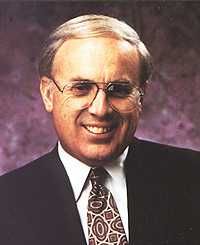
John MacArthur

Questions & Answers #24

Proverbs 1; Proverbs 2
John MacArthur March, 8 2012 Video & Audio
0 Comments
Shepherd's Conference
Question and Answer session with John MacArthur and others.

Sermon Transcript

Auto-generated transcript • May contain errors

100%
Welcome to the 2012 Shepherds
Conference, General Session 5, John MacArthur. Thank you, John. You made that crack earlier about
job security. I should mention that actually
this week is my anniversary of employment here. The first day
on the job for me was the first day of the Shepherds Conference
that year. It was 29 years ago. And so I have Set aside my concerns
about job security for the moment. JOHN, 29 years, really? PHIL,
29 years. JOHN, Will you sign on the dotted line for another
29? PHIL, I'll stick around for at least one more year. I've
got to make it 30. JOHN, No, no, we're going to keep you.
We're good. You're a keeper. PHIL, Now you've been here 43
years, which means I've been here exactly two-thirds of your
ministry. and listened probably to every
message you've ever given because I listened to all those messages
you did on tape before I came. And I just have to say it's an
amazing output and so much fresh material, not a lot of recycled
outlines and things. How do you do that week after
week, two sermons a day? I'm sure, you know, it has to
become times when it feels like a drudgery to you. What do you
do when you feel that way? Well, first, I don't have a choice
because everything I've ever said has been recorded, and so
I have to keep coming up with new things. But it's never been
a drudgery to me. It's a discipline. There are
times when I would like to do something else. It's a kind of
blessed bondage. It's a ball and chain. Any of
us who do this, I always think back to this English orator who
said the most paralyzing thought he ever had was that he would
have to speak twice to the same audience. Well, we speak twice
to the same audience every week for our lives as long as we're
in an environment. And to try to be fresh and interesting
is a great challenge. But for me, the Word of God is
alive and powerful. And if I stepped outside the
Bible, I would be terrified. I would be absolutely terrified.
So I completely rest in the living Word of God doing its mighty,
powerful work, even if it comes out of the same voice. I actually
try to minimize myself if I can. That's why you will never see
big screens in here because people need to hear the Word of God.
They don't need to see my nose hairs. They don't need to become
overly familiar with every nuance of my face and my expressions.
It's not about me. And, you know, when you're such
a dominating presence and such a continual presence in a congregation,
you need to disappear. You know, you need to be out
of the picture and that's one of the reasons, that's the dominating
reason why we've never even considered putting anybody's face on a big
screen. I don't need to be 20 feet high. The Word needs to
be taught. I have such confidence that this
is all about the truth of Scripture that what drives me is that confidence
in my being able to come back and back and back and back for
43 years. But the other aspect of it is that personally...personally
the Word of God to me now in my life is more interesting and
more exciting and more energizing and I find a greater passion
than I ever have. I haven't...that has not diminished
one bit. And I believe with all my heart
that if I had packed up everything, say, five years ago and gone
to repeat this somewhere else, I wouldn't have that same passion
because the passion comes out of the discovery. It comes out
of the freshness of it. Preaching is something I have
to do. Study is something I love to
do. And I'm not a scholar, you know that. I'm not a scholastic.
I'm not an egghead. But I just love discovering the
Word of God. It's living truth coming out. And... JOHN, Yeah, it seems like
this shift to the Old Testament has just infused you with new
energy. That scares me because I can't
keep up with you. Well, look, it has. You know, look, I should
be dead because I did what I thought I was supposed to do. I did the
New Testament and that's it. So, you know, I'm now ready to
be offered. So time of my departure is at
hand. But here I am. So I'm saying
to myself, I can't come to every Monday and say, I've got to come
up with something for Sunday. You know, I've done the big deal,
now I'm just going to, you know, find something to preach. I have
to have a big picture. I have to have a big passion.
I have to have a... A big task with lots of parts. And so last summer when I finished
the New Testament, I went away for a few months. I just started
absorbing everything about the Old Testament. I got energized
and, you know, I'm ready to go for as long as the Lord lets
me. And you're right, you're absolutely right. I am excited
about the bigness of this opportunity and this privilege that I have.
And that energizes me for the component parts of it. I put
the word out that I was doing this Q&A and invited people to
submit questions, and our friend Steve Kreloff wanted me to ask
you, what's a typical day like for you? And I thought when I
saw that question, do you ever have a typical day? STEVE KRELOFF
Well, there's a relentless variety to my days because, you know,
there's so many organizations and so many people I work with
and, you know, the church and Grace to You and the college
and seminary and whatever other things I'm doing. I guess it's better to say I
have a typical week because the days may vary, but the one compelling
reality in every week of my life is that Sunday's coming and I
have to preach a sermon on Sunday morning and another one on Sunday
night, and it has to be something I've never preached before. And
that means that there are at least two full days at this point
in my life, at least two full days and very often spilling
over to three when I have to do nothing but focus on the preparation
for the preaching of the Word of God on the weekend. So it…and
I typically will start that at the beginning of the week. For
years and years, I sort of breathed on Mondays. You know, a Monday
can be a joyful day, or it can be a somewhat disappointing day,
depending on how you feel you did on Sunday. There are some
Mondays when I just feel kind of a sinking feeling inside.
There was so much more than I did. It could have been done better.
I could have emphasized something else. I just feel like I failed. I don't have the luxury to live
with that very long. There are other Mondays when
I'm thankful. I'm just thankful that I escaped
with something that I could live with and sleep on. But by the
time I get to Monday night, I'm starting to think already about
what is coming the next week. And I get on it as fast as I
can on Tuesday to start to capture that next passage. I know where
I'm going, but I need to capture that passage and begin to think
about interpreting it, which is what my big effort is, to
work with the text so that I know that I've got that thing prepared
early. There aren't any Friday sermons,
there aren't any Saturday specials. I don't leave it till then because
I don't ever want to make up my mind about the meaning of
a passage in a short amount of time. I want to be able to come
to the right meaning and sometimes I can't do that in a hurry. Yeah,
and it's...I know from personal experience, it's hard to get
in touch with you on those days when you're studying. We try
to leave you alone, but... JOHN, Right, well now we've kind
of tried to say, okay, Monday and Tuesday I'm...nothing, because
what happens is people look...people in these organizations look at...when
we see John's calendar, oh, there's a spot, there's a spot, and they
just stuff things in. So he said, wait, hold it, stop,
you know, I have to... If people don't understand that,
you come and you hear somebody speak, and that's the typical
tip of the iceberg. I mean, what's underneath that
and behind that is... PHIL It's intriguing and somewhat
comforting for me to hear you of all preachers say that you
have those Mondays when you just feel disappointed that you, you
know, you didn't do as well as you wished. You really feel like
that. JOHN Oh, absolutely. PHIL I've never come away from
a... Grace Church sermon where you were preaching, thinking
you must feel that way. JOHN HATHAWAY You know, I actually
sort of... PHIL But, you know, Lloyd-Jones said something similar.
He said one time, I think, that in his whole life he only felt
like maybe two or three times he'd ever really preached. JOHN
HATHAWAY Yeah, but he was looking for some Holy Ghost buzz. And I'm not talking
about that. I mean, he said that the only
two times was did he know the anointing. Well, I don't know
what he ate that day, but I don't think... I just think he was looking for
something that he didn't need to look for. You know, he couldn't...he didn't
disconnect from the old Welsh revival thing and he kept expecting
something that he never could find. And he died without ever
realizing it. So I think that's not it. It
is...it's more like, you know, it... Like you've prepared more
than you can possibly deliver. That's part of it. JOHN, No,
it's getting it right and saying it in a compelling and powerful
and accurate way. And sometimes you just kind of
fumble it, you know. I always used to say when I played
football, I could sleep like a baby the night before a game
and never sleep the night after because I replayed everything.
What if I had a zig there and zag there and, you know, what
a...I mean, I will analyze that to the point where it bothers
me. And depending on how much failure
I felt was exhibited on a given Sunday, it can go on for a long
time. Sometimes I call Grace to you, not often, but once in
a while and ask Him to kind of pull a section out, you know
that. PHILIPSONS Yeah, I've gotten calls like that from you, but
not very often. And, you know, you don't sort
of project the sort of personality that would be that introspective.
It's interesting to hear you actually critique your own sermon. JOHN Well, there are some things
I don't really care about, but preaching the Word of God accurately,
that doesn't belong in the category of things I don't care about. I mean, I have to give an account
for every single passage. You don't want to do this unless
you are serious about what you're handling. JOHN, Yeah. Talk a
bit about the process of your preparation. One of the things
I vividly remember from that first year when I came here,
and I think it was that week during Shepherd's Conference,
I came into your office. In those days you did all your study here
at the church and I walked in and you were in the midst of
studying for a sermon. And it absolutely amazed me, the scene
that unfolded before me. You had two large surfaces of
desks filled with books that were open on these little bookstands
and you were going from book to book writing stuff down. Is
that still...talk about the process. You also do kind of two drafts. While you're studying, you take
notes, and then when you prepare your sermon, you transfer those
notes to talk about. JOHN, Okay, well let me just
say, all this is driven by a high degree of desperation. All these people show up, like
you don't think there's a certain desperation in my mind when I
arrive here on Wednesday and have to talk to you guys twice
with the level of expectation you have. I mean, I basically
live at a high level of desperation about my preaching. And that
desperation shows up in this fashion, and what Phil's talking
about is I will read on any given passage anywhere from 15 to 20
commentaries. I don't need 15, 20 to 20 commentaries
to get the sense of the text. I can go into the original, which
I do, and study that and come to conclusions and get a few
commentary insights. But I realize that somewhere
in one of those 20 commentaries there might be some truth that
is so fresh and so compelling. and so heart-capturing, and so
rich, and so helpful that I might miss it if I didn't read them
all. That's the level of desperation I'm talking about. I could take
one commentary in my Bible and come up with whatever, an interpretation
of it and kind of wing it. But I'm looking for those things
that are hidden in places...and commentaries are places where
good stuff gets hidden in, you know, dense paragraphs and things. But I've always exercised myself
to read that, so I string them out around me. And I...when I
hit a verse, I just go through all those verses and I might
write down one thought, or one thought, or it chases me to a
Scripture verse that elucidates that, or it gives me a historical
point of contact. And it's that I don't want anything
to escape my view, so what I say when I write a commentary is
that...I What you're going to find in my commentary is what
I have deemed to be the very best stuff that I've found in
every single commentary I've ever read, distilled, poured
through my own heart and put on that paper. PHILONISE And
you write those notes on yellow legal paper with a fountain pen. Are those in random order? JOHN
I write them with a fountain pen, yeah. PHILONISE In random
order? What do you mean, random order? PHILONIST Well, as you're
reading through, do you...it seems to me that you just take
down thoughts, and then later you come back. JOHN No, I take
a sheet, an 8 1⁄2 by 14 sheet, and this is like verse 6, and
then another sheet's verse 7. PHILONIST But later you come
back then and organize those in a different order in your
sermon notes. Yeah, this is just note-taking. And I just take...first
I take notes from the...you know, I look at the Greek text and
make sure I'm dealing with the right stuff. And then I just
start writing this stuff. I have a large collection of
these notes, by the way. Years ago I asked John to save that
yellow. He was throwing that stuff away.
Yeah, I know. I know it's your retirement program, isn't it? Actually, it's more of a plan
for my great-grandchildren. I figure they'll be able to sell
them on eBay. Well, yeah. Look, they're still selling Spurgeon's
written notes. Yeah, I know. That's exactly
what I'm thinking. But anyway. Anyway, I didn't mean to interrupt.
Go ahead. Where was I before we got into your future economic
point? You're reading these commentaries
and choosing the best thoughts. Right, and my thoughts are mixed
and, you know, one thing stimulates another thought. And all the
time I'm also looking for cross-referencing because the analog of Scripture
is a big issue to me, that the Bible's consistent with itself
and what it teaches in one place is going to be supported somewhere
else. And once you've seen the truth here, when you expand it,
then people not only get the individual look at it, they get
the big picture look at it. So the best tool to explain the
Bible is the Bible itself, and it enriches its own truth. So
I'm working to get cross-references written down, and I write a lot
of those down. That, by the way, I think is
one of the most powerful things about your sermons, the way you
use Scripture to illustrate Scripture. You don't sit around and think
about… How can I illustrate this point from some cute story or
clever joke?" You typically illustrate Scripture with a joke. JOHN,
If there is ever any kind of analogy in a sermon that I give, it is
purely spontaneous. If there's any kind of illustration,
it's almost always spontaneous. PHILIP I've noticed that because
I look at your notes and the anecdotes and personal stories
and anything like that, if it slips into your sermon, It's
not in your notes, it just comes out when you're preaching. JOHN,
Yeah, and I've got to watch that because it's easy to talk about yourself because
you're so familiar with yourself, but I choose not to do that.
And I don't talk about my kids and my wife and my own experience. And I don't repeat conversations
that I had 14 years ago because I can't repeat them accurately
and I don't want to make them up as I go. So I just think you
illustrate the Bible from the Bible and it's got living illustrations
that also have authority as well as interest. No, it's nothing
wrong with using Where's Waldo? That was a spontaneous thing.
JOHN, That was good, by the way. That was a great illustration.
PHIL Well, your grandkids, you know, you got something. They
made a contribution to your ministry in strange ways. Yeah. So did I answer the question
that you asked? JOHN, You're halfway there, but let me just
follow it up and I'll get you going. Yesterday you made some
Remarks that amused me, sort of disparaging homiletics, and
you said, you rarely spend five minutes making an outline. And
can I just say, sometimes it shows. But... JOHN, You can say that. You can say that. PHIL No, in
fact, well, job security. Yeah, no, in fact, my favorite,
you did a sermon once from Matthew 27 on the miracles that occurred
during the crucifixion. And...and you had...you had doubly
alliterated every point. There were like six or seven
points, I forget how many miracles there were, but I do remember
your outline because it had to do with the tearing of the curtain
in the tabernacle and you called that sanctuary desecration and
then there was the supernatural darkness. And when you got to
the earthquake, you called it soil disturbance. Well, that was the best I could do
with an S.D. for an earthquake. You know, I have to say, the
Lord has forgiven me for that. No, no He hasn't because whoever edited that part of your
commentary left it in there. If you look at the Matthew commentary
on that passage, it's right there, soil disturbance. I'm the only
one who edits the commentary. But, you know, that's a very...you
can only think of that one illustration because that's a very...you know,
I used to try to... I know, I know. But I used to
do that, but it only takes me like...it just comes quick, quick,
quick. And eventually I thought, you
know, this...I don't want people getting caught up in it. It helps
in a commentary cause you're breaking sections out, but...
PHIL If you guys use that, make it seismic disturbance or something.
Anyway. JOHN Yeah, well why didn't I
think of that? That's why I u-edit my books.
That's why you need an editor, that's why. Yeah, that's why. Anyway... Yeah, but you know
what he does a lot of times? He'll say something so inflammatory
after he's edited something, and I'll come back to him and
say, Phil, did I say this? And he'll say, No, no, I added
that. I said, Phil, you can't do that to me. You
can do that in your own book. So that's why he called his website
Pyromania. At what point in the process,
because you do use outlines and seriously, most of your outlines...
JOHN, There's a logical flow of thought. I just don't spend
a lot of time dreaming and scheming those up. They fall naturally
into clarity. PHIL Yeah, in this preparation
process though, where do you start thinking about the outline?
Do you do that...I mean, I do that at the beginning. I read
the passage and think through the passage and think, what is
this saying and how can I outline it? But you don't do that. You
actually do the outline somewhere later in the process. JOHN, Yeah,
I think there's a logical flow of thought that you pick up on
pretty quickly. And I'll mark that along the way, like here's
a point, here's a sub-point, here's a point, here's a sub-point.
And somewhere in the process it starts to congeal and you
pick up a point and another point and another point. But really
the clarification of that outline usually happens toward the end.
So, as you're working through it, you study the passage, you
take all these notes on the yellow note paper. Do you put it aside
then for some time, maybe go play a round of golf before you
come back and actually start to write your... JOHN HATHAWAY
Don't I wish. No, when I get...that's not the
time to step away. Because that's the time when
your mind is at the fullest point, and if you...and it's cryptic,
those notes are cryptic. And if you walk away from that,
you'll never be able to recover what you had at that moment.
So that's the most intense drilled-down time for me when I write the
first draft. It's amazing to me, frankly,
that you can do that because... JOHN, and I write it out, the
whole thing. PHIL, Yeah, I know, and I see
you doing that for two days with no interruption, no recreation. You've said many times that the
secret to your preparation is that you learn to keep your seat
in the chair. And that's not easy, that's not easy for most
of us. You know, I'm sort of living in Proverbs 2. You know,
I want that wisdom. And I go for it with everything
I've got. And I love the hunt. I love that. It gets more exhilarating
as I go. The hardest thing is the sort
of the... the beginning point. It's getting
off the launch pad, you know, it's getting it going. Once I
get that thing going, momentum starts to build and the closer
I get to the finished product, the more I'm energized and the
more excited I get in my own heart. And then I really can't
stop. It's like I'm going downhill.
I would find it very difficult. Any kind of interruption is distressing
because...and that's why I have my office at home. But any kind
of interruption, even well-intentioned and sometimes necessary ones,
stop a very intense, focused time of thinking. Look, I'm confident
most people don't need to do this the way I do. I have to
work with what I've got and I can get really focused. I don't consider
myself a scholar or an intellectual, but I can get very focused on
what I'm doing. And I don't necessarily hold
on to everything going on in my mind at a given moment, but
when I've got it, it's got to get on to that page because if
it doesn't get on that page, it may never come again. And
it doesn't get any easier as time goes by. JOHN, you must
experience that when you're putting something together. You've got
this captured, and if you don't get it down, it'll go away and
you can't recover it. I absolutely tune her out when
I'm deep in the thought like that. She might come along and
start to talk to me, and I'll carry on a conversation with
her in the back of my head. I'm answering her questions,
but I'm not thinking about what she's saying, and not remembering
it, and she'll say later, well, we had a conversation about that.
I don't remember that. JOHN HATHAWAY She doesn't say,
you don't pay any attention to me? That too? PHIL Well, yes, she said that. I heard that. JOHN HATHAWAY Yeah,
when I first moved my office home, you know, it was in a couple
of weeks, Patricia came to me and she said, you know, I think
you ought to take your office back to the church. I said, why? She'd never received rejection
at the level that she'd received it in the weeks that I came home.
PHIL I feel your pain, I know it. JOHN HATHAWAY Yeah, because
it's hard, you know, and she was so excited when I came home,
she was going to give me lunch, and pretty soon she was trying
to find the flattest pizza in the place so she could slide
it under the door. Unless he was mortally afraid,
you know. And grandchildren don't make
that any easier, do they? And then they bring the grandkids
over. Then what are you going to do? No, we had...when we had kids,
I couldn't have my office at home. Then the kids were gone
and now the grandkids come and it's...they don't knock. Grandkids
don't knock. They just come flying in. Yeah,
my granddaughter will sneak up behind me and grab the office
chair and turn it around and make me look at her. And, you
know, you love every minute. You realize this is damaging
to the kingdom, but oh, it's so wonderful. Exactly. I mean, we've got to
have some of that, right? People often ask this and I'm
going to ask it. I know you don't like to talk
about negative things or whatever. What have been the most difficult
trials in your ministry? You look back over 44 years.
If you had to name the two or three greatest trials, what would
they be? Because a lot of us watch your ministry and think
everything you've ever touched is successful and easy and it's
not like that at all, is it? I think when my second son, Mark,
had a brain tumor, that was an overwhelming reality. I fasted and prayed for, I think
it was nine days, and the Lord was gracious in His case. And
the next event was Patricia having a car accident and breaking her
neck, shattering C2 and C3. And they said that, you know,
she should have been a quadriplegic. And there's just overwhelming
dread sets in. Those kind of intimate things
in our lives. Those were very, very deep points
in time. You didn't know the outcome of
those things, and God was very kind and gracious to me. in regard
to that. The personal, you know, illnesses
and blood clots and stuff like that, those didn't seem to affect
me anywhere near the way it did when it was somebody I loved.
I didn't have any fear if I were to go to heaven, but the loss
of those people was dramatic. I would say the second category,
the potential loss, was just overwhelmingly dramatic. The
second thing is the disappointment in people that you love and work
very close with. Being blindsided by people that
you thought you had a good relationship with, who at some point in time
turn on you, that's very hard to deal with. To be betrayed
by your own familiar friend who lifted up his heel against you,
you know? JOHN, That seems to happen at every ministry, too,
isn't it? That's a common experience of pastors. It is, but, you know,
it's still a surprising thing because when you put people in
positions of responsibility in a ministry, it's because you
trust them. And it's because you believe in them and you believe
they believe in you. And when betrayal comes and,
you know, you start to uncover that kind of stuff, it's very,
very hard to deal with. And you can't get jaded. You
know, you can't get to the point where you insulate yourself from
anybody because you're afraid somebody's going to bring you
down. I don't care about that part of it. It's just kind of
heartbreaking. It's just a disappointing thing
because in any kind of ministry in anybody's life. You know,
the closer people are to you, the more potential they have
to hurt you. And I'm a very trusting person. You know, I can say that
and people wouldn't know it's true or not. But I'm a very trusting
person. If you have a responsibility
in ministry, I'm going to trust you and I'm going to be your
defender. And I'm the last person that anybody in this church would
ever come to to complain about anybody because I don't receive
that. I want to be supportive and loyal
to the people who serve. So when things happen, and I'm
not saying I'm free from culpability and the reason some things, some
relationships don't stay the way they should, but I think
that is the most difficult thing to deal with. I think that's
what was cutting the heart out of the Apostle Paul was the way
he was being treated, for example, by the Corinthians. And you never
see him more heart-sick than he is in 2 Corinthians. And it
has to do more with how the church is treating him than how the
non-believing world is treating him. He's just in agony over
that. And he even...he even prays three
times to have this thorn in his flesh, this messenger from Satan. I think it was a demon-led conspiracy
of false teachers just blasting away at his Corinthian congregation
and turning them against him, and it was almost so overwhelming
he couldn't get past it. He even talks about being depressed
earlier until Titus came and gave him the news. So I think
that the deepest pain in ministry, it's not about It's not about
economic things. It's not about buildings. It's
not about, you know, programs. It's people. And then I think
the third category is the people in whom you pour your ministry
who seem to walk away as if they never heard anything. That's
hard. PHILIPSON That's a common problem,
too, isn't it? I mean, we preach the Word of
God, people are here, they're here Sunday after Sunday, they
serve, and all of a sudden they just walk away, leave the church,
maybe leave the Lord, leave their wives, run off with somebody.
And, you know, people have made maximum impact in their life
personally as well as, you know, in terms of teaching. But it
all really comes down to those kind of relationships. PHILIP
If you could go back to the very beginning of your ministry, is
there any key thing you would do differently? I'd preach better. maybe be a little more patient.
I think, you know, I was so anxious to try everything and do everything
that, you know, we made a lot of stupid moves. But I don't
know that I could say I would do it differently because I think
God had a purpose in all of it. And His strength was perfected
in my weakness. If I hadn't failed on a number
of fronts, I think I would have believed myself to be invincible
and I needed to believe that I wasn't. I needed to be wrong. PHIL DONAHUE, JR.: : Anything
that you felt like, in retrospect, your seminary education didn't
adequately prepare you for? JOHN PODESTA, SR.: : Yeah, oh
yeah, a lot of things. I think my seminary education
didn't prepare me for the rigors and the responsibilities of leadership.
It was all about the Bible and that was necessary. It was all
about the languages and history and theology. But it wasn't about
leadership. Whatever I got in pastoral ministry
was virtually useless to me. And given the world we live in
today that nobody told me about how to read a balance sheet.
And all of a sudden I wake up one day and I've got a multi-million
dollar complex on my hands. I mean, just some basic knowledge
of those kinds of things would have been helpful. You know,
in college I studied Greek and I studied history. And I didn't
study anything else, you know, I didn't study anything about
economics or business or...but the Lord's always surrounded
me with people. But having said that, I will say this, Phil,
the most important thing is to learn to handle the Word of God
carefully and get a grip on your own life, right? Isn't that what
Paul says? You know, that your life is an
example in how you handle the Word. And then surround yourself
with people who can take care of the stuff you don't know how
to do well. But I do think, I would love to see a much more intentional
direction in seminaries on leadership. There are a lot of good material
out there, and there's a lot of bad material out there. Biblical leadership.
PHIL DONAHUE, JR.: : In fact, I have some questions on leadership
that maybe we'll come back to, so hang on to that thought. What
time do we have to be finished, Jonathan? Like a quarter till? Okay. Yeah. Talk briefly about your philosophy
on travel and conference speaking. I often have people ask me, how
can I get John MacArthur to come speak at my church? And my standard
answer is, you can't because you just don't go. And I mean,
on a Sunday when you have the option to be here at Grace Church
or a guest speaker in someone else's church. You're going to
be here at Grace. What's your… ? I would rather
be in my own house. I would rather be in my own bed.
I would rather be with my own family. I'd rather be with you.
I'd rather be with my own church, with my own flock that God has
given me than any people on the planet. This is my home, this
is my place, this is what I love, this is the flock God's given
me. I love being here. I love working with the men that
surround me in all of these ministries. It's my joy. So this is where
I want to be. So I don't have any urge. I don't
have any itch. I'm not trying to stifle some
compelling need. I never have really felt that
way. I am willing to serve in other places. Look, now I'm downloadable,
so I don't need to go anywhere, really. But I do want to be available
to serve the people that the Lord has brought into my life
to serve, my own congregation, missionaries. I just came back
from a three-week-plus tour of mission fields all across Europe.
Why did I do that? Because these are the people
that are in my flock. These are the people God has
given us at Grace Church. I wanted to go to be an encouragement
to them, to help them, to assist them, to serve them, to be able
to better tell their story, to be an encouragement to them.
I don't feel like I need to do that for other organizations
and other meetings. And I get it. I mean, in a sense,
I do. I know that I get invited places
because it contributes to the success of an event. And that's
okay, but that's not compelling to me. There are some very strategic
things that I would go to because there's a certain sense in which
I feel urgency about speaking in that situation where I might
be the only voice. Recently I went to Charleston,
South Carolina. to do a conference for Dallas
Wilson who's an African-American Episcopalian rector. I don't
do a lot of stuff for the Episcopalian church, as you would know. This
was under the authority of the South Carolina Diocese of the
Episcopal Church in St. John's Episcopal Church in the
east side, the ghetto, the African-American ghetto of And some people said,
why would you link up with the Episcopalian church? And my answer I'm not linking with the Episcopalian
church. Hopefully some Episcopalians will come and hear the truth.
So don't judge me by where I am, judge me by what I say when I
get there. That's the issue. I don't want to spend my whole
life just talking to the people who already believe what I believe.
I'd like to think the Lord can get me out of that box. There
are unregenerate people in the world that I could speak to,
but there are unregenerate people in the church that I need to
speak to as well. And that's a form of evangelism
and I want to be a help. Well, the fallout of that is
they said, would you come back because we have all these guys,
these pastors who want to be able to preach the Word like
you do. So we just finished...we sent four of our guys, I think
four of our African-American guys who graduated from the seminary
back there to hold a conference for the guys in that area and
follow up on that. Well that's...and there were
only like 300 people there. That doesn't matter to me. And by the way, they wanted me
to do the whole conference built around the theme of slave. Charleston was like slave central
in American history, and the news people called up and said,
are you out of your mind? You're going into Charleston? You're
going to do a conference on slave? But it was a really remarkable
opportunity. So, you know, there might be some things like that
that I feel compelled to do, but the basic rule is I don't
really want to go anywhere. I love being here. My productivity
for the years that God gives me is tied to my preaching in
this pulpit. Otherwise I become an echo, right? It's here where I prepare new
things. It's here where I'm fresh. It's here where I advance the
breadth of ministry. Somewhere else I just repeat
and tweak. So I don't know if that answers.
That's good. No, that's good, and it prompts
another question in a similar vein but totally different topic.
Zondervan just recently announced that they are beginning work
on the MacArthur Study Bible, new international version. Talk
about the thought process that you went through in deciding
whether to authorize such a project, or what is your thinking in doing
that? TODD PURDUM Well, I was approached
and asked if I would be willing to do an addition of the MacArthur
Study Bible in the NIV. There's a lot to think about.
The first thing to know is that over 40 percent of the English
Bibles in the world are NIV. It's 9 percent ESV and 2 percent
NAS, and I don't know, New King James is in there. So by far,
the majority Bible in the English-speaking world is the NIV. It's not your
favorite translation. JOHN, It is not my favorite translation.
That was the first question. The second question was, does
anybody who reads the NIV care what it means? Obviously you get the question.
You know what I'm saying. It's sort of like a pew Bible. But I realized that if you get
out of the United States and you get into Australia and you
get into the U.K. and you get into New Zealand
and any other English-speaking part of the world, it's all NIV.
It's everywhere. And so it took a year to decide
and here were the criteria for it. Can we in the notes say exactly
what we have said in every edition as to the interpretation of every
passage and where the text needs to be corrected, can we be free
to correct it?" And they came back and said, absolutely. So you can curse the darkness
in a sense and say, oh, it's terrible, they've got an NIV,
or you can turn on the light inside the NIV. If I wanted to
do anything to help people to understand the Bible who use
an NIV, the best thing I could possibly do was get inside their
NIV and explain it. Right? I was thrilled that they...I
was thrilled that they said, we want to do this. I said, you
understand this, this is...you know, Charles Ryrie did it, there's
an NIV Ryrie Study Bible, Moody produced it. Well, now you say,
well they've got a new NIV. I understand that and there's
11...they dumped the TNIV which was... Horrific gender stuff. There's only 11 percent change
from the older one to the 2011 NIV, from what I understand.
Eleven percent change. You, I said, Phil, find controversial
passages, right? PHILIPSONS Yeah. Yeah, actually
we picked...because one of the issues is it seems like Zondervan
is driven by this egalitarian agenda. to the point where they
changed genders on pronouns and things like that. And so, I deliberately
picked the passages that would be most provocative, you know.
Where my note would be most out of touch with their text. Because
I was kind of trying to show them, you know, here's what this
is going to mean. Here's what you're getting into. Yeah. So
what happened? Well, we edited the notes so
that they fit the text, you know, and corrected the problems and
submitted them, and they read it and said, this is fine. So
when they came back and said, this is fine, if this is what
you want to say, one of those texts was in 1 Timothy 2 where
the NAS says, I permit not a woman to... I think it says, I can't remember
how they worded it, but the idea is they took out...take authority.
It doesn't say take authority, it's another word there. They
tried to take out the idea of you serving authority. I permit not
a woman to exercise authority. In the new one, and this is how
subtle the change is, it says, I permit not a woman to assume
authority. Well, one could read that and not see a difference.
That's pretty nuanced between assuming authority and exercising
authority. Their intention may be egalitarian. In other words, she can't assume
on her own, but she could take authority if a man gave her that
right. But that's so...that's so nuanced. But the note says,
this text makes clear that women are not to take positions of
leadership in the church. The nuance just disappeared. Now, you know, I get it because
we had people call Grace to You and say, you know, I've been
a Grace partner and we won't give you any more support in
the future because John sold out to the NIV. You know, we'll
have to see, but there are millions of people in the body of Christ
in the Kingdom who have that Bible and read that Bible, and
we think the higher ground is to give them a tool that can
help them understand what they've got in their hands in the Word
of God. Another footnote to that, I have no idea what the Arabic
translation of the Bible says, okay? I know it's the Van Dyck...it's
the Van Dyck text. And the Van Dyck text of the
Arabic Bible is basically a textus receptus, it's a text, it's the
later manuscripts that, you know, that the King James is from.
Would everything in the Arabic Bible be exactly the way I would
like to see it in the Scripture? That's not even the question.
The question is, should we explain the Bible that they have to them?
That's the question. And it would be true. I don't
know what's in the Russian Bible, the Italian Bible, Spanish Bible,
French Bible, Portuguese Bible. Now we're doing the Chinese Bible.
I have no idea what's in that either. I don't even know what
the text says, but I'm willing to say here's what it means.
So does that make sense? Okay. We're running out of time
very quickly and I haven't even asked you. one-tenth of the questions
I had brought. So let me do what Todd Friel
did with you once, word association. I'll just throw some words at
you and you give me your quick response. And mainly, mainly these are
going to be issues people want to ask you about because they've
been recent controversial issues that you really haven't said
anything publicly about people want your opinion on and so on. So we'll do word association. Elephant Room. That is, let's see a word, self-destruction. It was its own destruction. Robert
Schuller. A spiritual tragedy. You saw the
news on that yesterday. Yes, suing the Crystal Cathedral. Stephen Furtick. Unqualified. Church planting. I'm for it. What else would we plant? Yeah,
that's right. That's good. Multi-site. Wrong. A celebrity... I've got to explain
that. Go ahead. Hebrews 13, 17, follow the faith
of those who are over you in the Lord. Those who care for
your souls because they have to give an account. You tell
me how a flat-screen pastor lives an example to back up his message
and how he cares for the souls that are sitting out there staring
at the screen. That is a million miles from a model of a pastor. All right, I don't like the one-word
answers cause it really doesn't give us enough. So let me ask
you another sort of recent controversial issue that you didn't say anything
specifically about, but it relates to the issue... PHIL DONAHUE,
JR.: : You're not looking for information on this. You already know the answers to it.
You just want to... JOHN, JR.: : Yeah, yeah. But
people want to hear what you say. PHIL DONAHUE, JR.: : I know. You're just putting
me on the spot. Okay. JOHN, JR.: : Sometimes I'll...and this is why I put
the, you know, pyromaniac stuff in your books. People want to
know what you think, and I'll say something and they go, well,
does John MacArthur agree with that? I wouldn't put it online
if I didn't think you pretty much agreed, but... And if I'm not sure... JOHN MACARTHUR
That's pretty safe since I don't have a computer. PHIL That's right.
And if I'm not sure, I'll slip it in one of your books and see
what you do in the editorial process. That's how I figure
stuff out. You didn't make any public comment
about Mark Driscoll's recent book, Real Marriage. Do you want
to? Do you want to? There is such a beautiful dignity
to the way the Scripture speaks of marriage in such a precious,
veiled way in which even the intimacies of marriage are presented
in Scripture. that maintains its intimacy and
its personal nature and its beauty without painting it in what are
commonly deemed pornographic language. I just think these
are things that don't need to be said, shouldn't be said, and
pandered a prurient interest in the part of people. And the
last thing you ever would want for the people who gather before
you to hear the Word of God was to have their minds filled with
your sort of uncouth, unclean speech
and the images that go with it. Last question, this has to do
with the messages you're doing on the Holy Spirit. Are you planning
to do a new book on the Charismatic Movement? Again, I know the answer
to this, I just want you to say it out loud. JOHN, Yeah, I want
to, because if somebody else would do it, maybe I wouldn't
have to do it. But it needs to do several things. One, it needs
to follow what we've said a little bit last night and we'll say
tomorrow night about restoring the rightful place of the Holy
Spirit in the life of the church. It needs to deal with aberrations.
We did a long series on the unholy trinity, trinity network. It
incorporates some of that. And we need to go back to the
history of this movement and we've got great material on the
history of the movement because sweet water doesn't come out
of a bitter fountain and good fruit doesn't come on a bad tree.
So, yeah, with all that pulled together, not a rewrite of Charismatic
Chaos, but a whole new treatment of this. And, of course, what
we didn't talk about last night, because it's not directly connected
to the Holy Spirit, it's the abomination of the prosperity
message, which is now starting to seep over the edges into more
mainline evangelicalism because people are thinking they can't
capture those audiences if they don't give them that shtick.
So, yes, so I think the book... PHIL DONAHUE, JR.: : Yeah, in
fact, it's interesting you say you wish somebody else would do this.
It's true, I think you kind of referred to this last night,
that cessationism has pretty much lapsed into silence. There
haven't been any... JOHN, right, and that's the other
part of the book. It needs to deal with the reformed non-cessationism
that allows for us, these people, to think that if the scholars
aren't on our back, we might be okay. Now, see, I'm a cessationist,
so I know that the reason cessationists have lapsed into silence is not
because they've run out of arguments or conceded the argument. Do
you think there's a sort of downside to our stress on gospel unity
together for the gospel, the gospel coalition, groups like
this? You can't...you could never overemphasize the gospel enough,
but in this emphasis on the gospel, there has been indifference toward
a lot of other things that are of essential importance and have
to be embraced within the big picture of the gospel. For example,
do you have a full understanding of the gospel if you have no
ecclesiology? No. No. It's as if if you affirm
substitutionary atonement or imputation, then you can have
no ecclesiology. I mean, you can get your ecclesiology
from the local singles bar. I mean, you can repeat the singles
bar experience and call it church. PHILONISE Which is what people
literally do. JOHN Yeah. I'm just saying, you don't get
a pass on the rest. And Tom said that yesterday in
his message. You don't get a pass on everything
else just because you check off the box on imputation and say
you're a believer in the sovereignty of God in Calvinism. That is
no excuse for you to fail to declare the whole counsel of
God. And these guys that think they...and they have no interest
in ecclesiology, a biblical ecclesiology. They have no interest in soul
care of the flock and all of that. They also...I think they
get a pass on the doctrines of the Holy Spirit and the doctrine
of sanctification which is woefully missing as they try to make the
church as much like the world as they can rather than separating
it. They get a pass on eschatology. You know, if you even have an
eschatology that's cohesive and biblical and clear and you have
some strong conviction about it, you're seen as some kind
of a fanatic. I don't understand how people
can think that God muffed the ending of this whole deal. So
I don't think you...I think to say you have an accurate soteriology
is then to put yourself on notice that you're required to have
everything else accurate as well. You don't get a pass on the rest.
Don't say too much more because my seminar this afternoon is
on that very subject, so... And I stole all my material from
you, so you're going to...you're going to... You did not. Phil's going to tell you why
you shouldn't get a pass on everything else just because you affirm
the gospel. That's a narrow view of the gospel.
All right, we're out of time. I have to make one announcement,
then I'm going to ask you to close in prayer and pray for
our lunch. No, I'm going to ask you, you close in prayer. Okay,
will do. Because you have the most to pray about. Suddenly I'm worried about job
security. All right, let's pray. Lord,
thank You for this time we've had together. These subjects
are weighing on all of our minds and we pray, Lord, that You would
give us wisdom, give us biblical understanding, give us power
as we preach. We pray, Lord, for the mess that
church is in in so many venues today that we would be instruments
in Your hand to help correct things and set right what needs
to be set right. We pray, Lord, also for the lunch
that's coming. Bless the food. Bless our fellowship
together, we pray in Jesus' name. Amen.
Broadcaster:

Comments

0 / 2000 characters
Comments are moderated before appearing.

Be the first to comment!

Joshua

Joshua

Shall we play a game? Ask me about articles, sermons, or theology from our library. I can also help you navigate the site.