Bootstrap
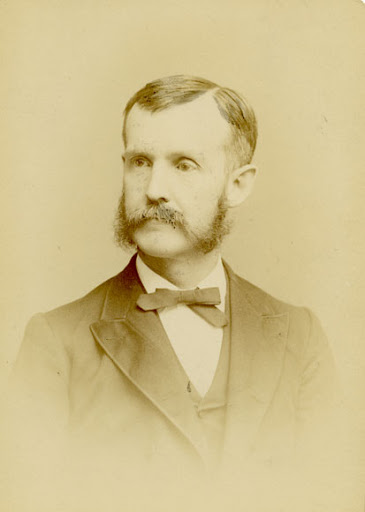
J.R. Miller

Getting Help from Criticism

J.R. Miller August, 20 2011 Audio
0 Comments
Choice Puritan Devotional

Sermon Transcript

Auto-generated transcript • May contain errors

100%
Perfection in life and character
should be the aim of every Christian. Our prayer should ever be, to
be fashioned into spotless beauty. No matter what the cost may be,
we should never shrink from anything which will teach us a new lesson,
or put a new touch of loveliness into our character. We get our
lessons from many teachers. We read in books fair lines which
set holy tasks of attainment for us. We see in other lives
lovely things which inspire in us noble longings. We learn by
experience, and we grow by exercise. We may get many a lesson, too,
from those among whom we live. People ought to be a means of
grace to us. Mere contact of life with life
is refining and stimulating. Iron sharpens iron, so a man
sharpens the countenance of his friend. The world is not always
friendly to us. It is not disposed always to
pat us on the back, or to pet and praise us. One of the first
things a young man learns, when he pushes out from his own home,
where everybody dotes on him, is that he must submit to criticism
and opposition. Not all he does receives commendation. But this very condition is healthful. Our growth is much more wholesome
in such an atmosphere than where we have only adulation and praise. We ought to get profit from criticism. Two pairs of eyes should see
more than one. None of us have all the wisdom
there is in the world. However wise any of us may be,
there are others who know some things better than we know them,
and who can make valuable and helpful suggestions to us, at
least concerning some points of our work. The shoemaker never
could have painted the picture, but he could criticize the buckle,
when he stood before the canvas, which the great artist had covered
with his noble creations. And the artist was wise enough
to welcome the criticism and quickly amend his picture to
make it correct. Of course the shoemaker knows
more about shoes, and the tailor or the dressmaker more about
clothes, and the furniture-maker more about furniture than the
artist does. The criticisms of these artisans
on the things in their own special lines ought to be of great value
to the artist. He would be a very foolish painter
who would sneer at their suggestions and refuse to profit by them.
The same is true in other things besides art. No one's knowledge
is really universal. None of us know more than a few
fragments of the great mass of knowledge. There are some things
somebody else knows better than you do, however wide your range
of learning may be. There are very humble people
who could give you suggestions well worth taking on certain
matters concerning which They have more correct knowledge than
you have. If you wish to make your work
perfect, you must condescend to take hints and information
from anyone and everyone who may be ready to give it to you.
It is true, also, that others can see faults and imperfections
in us which we ourselves cannot see. We are too closely identified
with our own life and work To be unprejudiced observers, or
just critics, we can never make the most and the best of our
life if we refuse to be taught by other than ourselves. A really
self-made man is very poorly made, because he is the product
of only one man's thought. The strong things in his own
individuality are likely to be emphasized to such a degree that
they become idiosyncrasies, while on other sides his character
is left defective. The best-made man is the one
who, in his formative years, has the benefit of wholesome
criticism. His life is developed on all
sides. Faults are corrected. His nature
is restrained at the points where the tendency is to overgrowth,
while points of weakness are strengthened. We all need, not
only as a part of our education, but in all our life and work,
the corrective influence of the opinions and suggestions of others. But in order to get profit from
criticism, we must relate ourselves to it in a sympathetic and receptive
way. We must be ready to hear and
give hospitable thought to the things that others may say of
us and of what we are doing. Some people are only hurt, never
helped by criticism, even when it is most sincere. They regard
it always as unkindly, and meet it with a bitter feeling. They
resent it, from whatever source it may come, and in whatever
form, as something impertinent. They regard it as unfriendly,
as a personal assault against which they must defend themselves.
They seem to think of their own life as something fenced about
by such sanctities that no other person can with propriety offer
even a suggestion concerning anything that is theirs, unless
it is in the way of commendation. They have such opinions of the
infallibility of their own judgment, and the flawless excellence of
their own performance, that it seems never to occur to them
as a possibility that the judgment of others might add further wisdom,
or point out anything better. So they utterly refuse to accept
criticism, however kindly, or any suggestion which looks to
anything different from what they have done. We all know people
of this kind, so long as others will compliment them on their
work They give respectful attention, and are pleased, but the moment
a criticism is made, however slight, or even the question
whether something else would not be an improvement is asked,
they are offended. They regard as an enemy, any
one who even intimates disapproval, or who hints, however delicately,
that this or that might be otherwise. It is hard to maintain cordial
relations of friendship with such people, for no one cares
to be forbidden to express an opinion which is not an echo
of another's. Not many people will take the
trouble to keep a lock on the door of their lips all the while,
for fear of offending a self-conceited friend. Subsequently, one who
rejects and resents all criticism cuts himself off from one of
the best means of growth and improvement. He is no longer
teachable, and, therefore, is no longer a learner. He would
rather keep his faults than be humbled by being told of them,
in order to have them corrected. So he pays no heed to what any
person has to say about his work, and gets no benefit whatever
from the opinions and judgments of others. such a spirit is very
unwise, infinitely better is it that we keep ourselves always
ready to receive instruction from every source. We are not
making the most of our life if we are not eager to do our best
in whatever we do. and to make constant progress
in all our doings. In order to do this, we must
continually be made aware of the imperfections of our performances,
that we may correct them. No doubt it hurts our pride to
be told of our faults, but we would better let the pain work
amendment than work resentment. Really, We ought to be thankful
to any one who shows us a blemish in our life, which we then can
have removed. No friend is truer and kinder
to us than he who does this, for he helps us to grow into
nobler and more beautiful character. Of course there are different
ways of pointing out a fault. One person does it bluntly and
harshly. Almost rudely, another will find
a way to make us aware of our faults without causing us any
feeling of humiliation. Doubtless it is more pleasant
to have our correction come in this gentle way. It is also the
more Christian way to give it. Great wisdom is required in those
who would point out faults in others. They need deep love in
their own heart, that they may truly seek the good of those
in whom they detect the flaws or errors, and not criticize
in a spirit of exultation. Too many take delight in discovering
faults in other people, and in pointing them out. Others do
it only when they are in anger, blurting out their sharp criticism,
in fits of bad temper. We should all seek to possess
the spirit of Christ, who was most patient and gentle, in telling
his friends wherein they failed. Harm is done oftentimes by the
lack of this spirit in those whose duty it is to teach others. Paul enjoins fathers not to provoke
their children to anger, lest they be discouraged. There are
parents who are continually telling their children of their faults,
as if their whole existence were a dreary and impertinent mistake,
and as if parents can fulfill their duty to their children
only by continually nagging at them and scolding them. Those
who are anointed to train and teach the young have a tremendous
responsibility for the wise and loving exercise of the power
that is theirs. We should never criticize or
correct, but in love. If we find ourselves in anger,
or cherishing any bitter, unkind, or resentful feeling, As we are
about to point out an error or a mistake in another person,
or in the other's work, we would better be silent and not speak,
until we can speak in love. Only when our heart is full of
love are we fit to judge another, or to tell him his faults. But,
while this is the Christian way for all who would make criticisms
of others, It is true, also, that however we learn of our
faults, however ungentle and unsympathetic the person may
be who makes us aware of them, we would better accept the correction
in a humble, loving way and profit by it. Perhaps few of us hear
the honest truth about ourselves until someone grows angry with
us, and blurts it out in bitter words. It may be an enemy, who
says the severe thing about us, or it may be someone who is base
and unworthy of respect. But, whoever it may be, would
better ask whether there may not be some truth in the criticism,
and, if there is, then set ourselves to correct our deficiency. In
whatever way we are made aware of a fault, we ought to be grateful
for the fact, for the discovery gives us an opportunity to rise
to a better, nobler life, or to a higher and finer achievement. There are people whose criticisms
are not such as can profit us. It is easy to find fault, even
with the noblest work. Then there are those who are
instinctive fault-finders, regarding it as their privilege, almost
their duty, to give an opinion on every subject which comes
before them, and to offer some criticism on every piece of work
that they see. Their opinions, however, are
usually valueless, and oftentimes it requires much patience to
receive them graciously, without showing irritation. But even
in such cases, when compelled to listen to unjust and harsh
criticisms, from those who know nothing whatever of the matters
concerning which they speak so authoritatively, we would do
well to receive all criticisms and suggestions in good temper
and without impatience. An interesting story of Michelangelo
is related, which illustrates the wise way of treating even
ignorant, meddlesome, and impertinent criticism. When the artist's
great statue of David was placed for the first time in the plaza
in Florence, all the people were hushed in wonder before its noble
majesty. all except Soderini. This man
looked at the statue from different points of view with a wise, critical
air, and then suggested that the nose was a little too long. The great sculptor listened quietly
to the suggestion. And, taking his chisel and mallet,
he set a ladder against the statue, in order to reach the face, and
climbed up, carrying a little marble dust in his hand. Then
he seemed to be working carefully upon the objectionable feature.
as if changing it to suit his critic's taste, letting the marble
dust fall as he worked. When he came down, Soderini again
looked at the figure, now from this point of view, and then
from that. at last expressing entire approval. His suggestion had been accepted,
as he supposed, and he was satisfied. The story furnishes a good illustration
of a great deal of fault-finding, to which we must listen. It is
unintelligent and valueless, but it cannot be restrained.
There is not subject under heaven on which these wise people do
not claim to have a right to express an opinion, and there
is no work so perfect that they cannot point out where it is
faulty and might be improved. They are awed by no greatness.
Such criticisms are worthy only of contempt, and such critics
do not deserve courteous attention. But it is better that we treat
them with patience. It helps at least in our own
self-discipline, and it is the nobler way. This, then, is the
lesson, that we should not resent criticism, whether it be made
in a kindly or in an unkindly way, that we should be eager
and willing to learn from any one, since even the humblest
and most ignorant man knows something better than we do, and is able
to be our teacher at some point, that the truth always should
be welcomed, especially the truth about ourselves, that which affects
our own life and work, however it may wound our pride and humble
us, or however its manner of coming to us may hurt us, and
that the moment we learn of anything that is not beautiful in us,
we should seek its correction. Thus alone can we ever reach
the best things in character or in achievement. This concludes Getting Help from
Criticism by J.R. Miller.
J.R. Miller
About J.R. Miller
James Russell Miller (20 March 1840 — 2 July 1912) was a popular Christian author, Editorial Superintendent of the Presbyterian Board of Publication, and pastor of several churches in Pennsylvania and Illinois.
Broadcaster:

Comments

0 / 2000 characters
Comments are moderated before appearing.

Be the first to comment!

Joshua

Joshua

Shall we play a game? Ask me about articles, sermons, or theology from our library. I can also help you navigate the site.