Bootstrap
J.R. Miller

While We May

Mark 14:3-8
J.R. Miller August, 20 2011 Audio
0 Comments
Choice Puritan Devotional

Sermon Transcript

Auto-generated transcript • May contain errors

100%
While Jesus was in Bethany, reclining
at the table in the home of a man known as Simon the leper, a woman
came with an alabaster jar of very expensive perfume, made
of pure nard. She broke the jar and poured
the perfume on his head. Some of those present were saying
indignantly to one another, Why this waste of perfume? It could
have been sold for more than a year's wages, and the money
given to the poor. And they rebuked her harshly.
Leave her alone, said Jesus. Why are you bothering her? She
has done a beautiful thing to me. The poor you will always
have with you, and you can help them any time you want. But you
will not always have me. She did what she could. She poured
perfume on my body beforehand to prepare for my burial. Jesus defended the woman when
the disciples criticized her anointing of him. They said the
ointment should have been sold, and the money given to the poor,
instead of being used for a mere personal service. But Jesus said
to them, The poor you will always have with you, and you can help
them any time you want. but you will not always have
me. Whatever they did for him, they
must do then. In a little while he would not
be with them any more. There would never be a day when
they could not minister to the poor, but he would not sit again
at that table. If the woman had not brought
her alabaster cruise that evening and broken it, she never would
have done it. If you knew that this is the
last day you will have a certain rare friend, that to-night he
will vanish from your companionship and you will never see him again,
you will surround him with the warmest devotion, and lavish
upon him your heart's holiest affection while you may. This
is a lesson we should learn well. Opportunities come to-day and
pass, and will never come to us again. Other opportunities
will come to-morrow, but these will never return. The human
needs that make their appeal to you now will be beyond the
reach of your hand by another day. Whatever kindness you would
do, you must do now, for you may not pass this way again. If we realize this truth as we
should, it would make the common events of our life mean far more
than they do. We are always meeting experiences
which are full of rich possible outcomes. God is in all our days
and nights. Opportunities come to us with
the hour, with the moment, and each one says to us, ìYou will
not always have me.î If we do not take them as they come, we
cannot take them at all. There are two kinds of sins,
sins of omission and sins of commission, sins of doing wrong
as when we do evil things. and sins of not doing good, as
when we neglect to do the things we ought to have done. One comes
to you in distress, needing cheer, some kindly help, or deliverance
from some danger. And you let the trouble go unrelieved,
the sorrow uncomforted, the need unsupplied. The opportunity has
passed, and you have missed it. There is a blank in your life.
You have left a duty undone. Everyone we meet, any day, comes
to us, either to receive some gift or blessing from us, or
to bring some gift or blessing to us. We do not think of this,
usually, in our crowded days, in the confusion of meetings
and partings. We do not suppose there is any
meaning in what we call the incidental contacts of life, as when we
ride upon the bus beside another for a few minutes, or meet another
at a friend's house and talk a little while together. or when
we sit beside another in the same office, day after day. We are not in the habit of attaching
any importance to these contacts with others. We do not suppose
that God ordered this or that meeting, that he sent this person
to us because the person needs us, and that we are to do something
for him, or else we need something, some influence, some inspiration. some cheer from him, but the
fact is that God is in all our life and is always ordering its
smallest events. When older people really think
of it, they will see that this is true. When they look back
over their years, they will find that the strange network of circumstances
and experiences that has marked their days has not been woven
by chance, is no confused tangle of threads, crossing and recrossing,
without any divine plan or direction. but rather that it makes a beautiful
web, and not one thread out of place. The whole is the filling
out of a pattern designed by the great Master of Life. Most
of the friendships of our lives are made in this way. You and
your friend meeting first by chance, as we would say. You
did not choose each other. Emerson spoke of all, when he
said, My friends have come to me unsought. The great God gave
them to me. All of life is thus full of God. Jesus taught the importance of
the present opportunity in the Garden of Gethsemane. He asked
three of his disciples to keep watch with him, while he went
deeper into the shadows and knelt in prayer. A great anguish was
upon him, and he needed and craved human sympathy. After his first
agony of supplication, he came back to his friends, hoping to
get a little strength from their love, but found them asleep. In his bitter disappointment
He returned to his place of prayer. A second time he came back, and
again they were asleep. The third time he said to them,
Sleep on now, and take your rest. There was no need to wake and
watch any longer. The hour had come. The trader
was approaching, and the torches were flashing through the trees.
There is a strange pathos in the Master's final words. The
disciples had had their opportunity for helping him, but had not
improved it. They had slept, when his heart
was crying out for their waking. Now the hour was past, when waking
would avail, and they might as well sleep on. We do not dream
of the criticalness of life, of the mighty momentousness there
is in the hours through which we pass, what blessing and good
come to us when we watch and are faithful, what loss and sorrow
come to us when we sleep and are faithless. You will not always
have me, is the voice of every opportunity to receive good in
some form. We miss God's gift because we
shut our hearts upon it, and only when it is too late, when
the gifts have vanished. Are we ready to accept them?
Or it may be an opportunity to do something for another. We
dally, and the opportunity passes. The person perishes, perhaps,
because we were not awake. Opportunities differ in their
importance. The poor you will always have
with you, and you can help them any time you want, but you will
not always have me. Jesus was defending the woman's
act of love to him. If she had not brought her precious
ointment that night, she never could have brought it. Leave
her alone. Why are you bothering her? She
has done a beautiful thing to me. We never can know what great
good she wrought for him, how much comfort and strength she
gave to him. He was carrying then the heaviest
load that any heart ever carried. We all remember hours of great
need in our own lives, hours of anxiety, of sorrow, of pain,
when a word spoken to us, or a flower sent to our room, or
a card coming through the mail, or some little human touch, came
to us as a very messenger of God. We never can tell how the
woman's love helped Jesus that night. The disciples said the
ointment was wasted. Did no one any good? Ah, they
did not know what that expression of love meant to the Master,
how it cheered him, how it heartened him for going on to his cross. If they had known, they never
would have said that the ointment would have done more good if
it had been applied to relieving the poor. There would have been
times when the poor should have had the benefit of the woman's
gift. If the cruise of oil had been
broken to honour some unworthy man, it would have been wasted. But Jesus was the Son of God. This particular hour was one
when he needed love, when he craved sympathy, when he longed
to be strengthened. In all time there never was an
hour when a simple gift of love could have meant so much as the
woman's meant that night in Simon's house. You will not always have
me. The blessing which that money
would have given to the poor never could have been compared
for a moment with the blessing which the ointment, as an expression
of love, was to Jesus. Life is full of similar contrasts
in the value of opportunities. There are commonplace opportunities,
and there are opportunities which are radiant and splendid. There
are days and days when the best use one can make of money is
to give to those who need it, or to some Christian institution. Then there comes a day, an hour,
when some rare and sacred need arises, which eclipses in importance
as day excels night in its brightness, all common needs, a need which
must be met instantly, and heroically. and at once. A few times in every
godly man's life there comes a moment of supreme importance
when every other appeal or call for help must be unheeded for
one which must be answered at once. There are many things which
must be done instantly, or they cannot be done at all. An artist
was watching a pupil sketch a sunset scene. He noticed that the young
man was lingering on his sketching of a barn in the foreground while
the sun was hastening to its setting. The artist said to his
pupil, Young man, if you lose more time sketching the shingles
on the barn roof, you will not catch the sunset at all. This
is just what many people do. They give all their time to commonplace
things, to fences and barn roofs and sheds, and miss the glorious
sunsets. They give to the poor, and help
them. but have no thought for Christ.
They toil for honor, money, and fame, and never see God, nor
get acquainted with Him. There are friendships which never
reach their possible richness and depths of beauty, playing
only along the shore, while the great ocean of love lies beyond
unexplored. They miss the really splendid
things in life, while they live for the poor and sordid things.
We do not begin to realize how many of us pay heed only to second-rate
things, while we miss altogether the great things of life. We
spend hours upon newspapers, never reading a book that is
truly worthwhile. All the best opportunities of
life are transient. They are with us today, but tomorrow
they are gone. You will not always have me.
There is a time for forming friendships, but it does not always stay.
Miss it, and tomorrow you cannot find it. There is a time for
making a beautiful home life, but soon the time is gone if
it is not improved. Impatience, fretfulness, selfishness,
irritability, nagging. You know how the beauty is marred,
the brightness dimmed, the sweetness embittered by these. When two
young people marry and begin to make a home, they have almost
infinite possibilities before them. But the vision must be
seized at once, and not a moment must be lost. You will not always
have me, the opportunity says to the home-builders. Some years
after, they find that they have failed, that the vision has faded,
and that they cannot get it back again. To every young person
there comes in the bright days the opportunity of living a beautiful
life, but it comes only once, and it stays only for a little
while. The vision will not wait. You
will not always have me, it says. There are some things we can
do any time, but this is not true of following Christ. We
think it is that we can accept him and take the blessings of
his love when we will, but it is not true. Delay dulls and
hardens our hearts. Delay uses up the moments of
his waiting, and eats up our opportunity. At my convenience,
we say. I will take him now." We turn,
and he is gone. All the best things are transient. As we gather about our home-table,
let us remember we may not all be there again, and let us make
the meal one of sweetness and joy. Let us be patient with one
another, kind and thoughtful, gentle while we may. Soon we
shall not have each other. This concludes While We May by
J.R. Miller.
J.R. Miller
About J.R. Miller
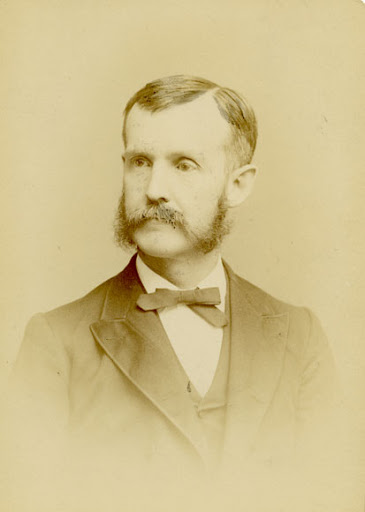
James Russell Miller (20 March 1840 — 2 July 1912) was a popular Christian author, Editorial Superintendent of the Presbyterian Board of Publication, and pastor of several churches in Pennsylvania and Illinois.
Broadcaster:

Comments

0 / 2000 characters
Comments are moderated before appearing.

Be the first to comment!

Joshua

Joshua

Shall we play a game? Ask me about articles, sermons, or theology from our library. I can also help you navigate the site.