Bootstrap
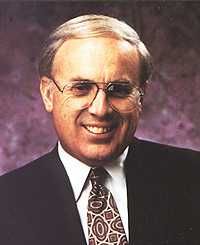
John MacArthur

The Divine Means of Church Growth

1 Timothy; Titus
John MacArthur May, 21 2010 Audio
0 Comments
This outstanding sermon was the keynote address of the 2008 Shepherd's Conference.

OUTLINE:

1. A transcendent message.

2. A regenerate congregation.

3. A valiant perseverance.

4. An evident purity.

5. A qualified leadership.

This is the best message on the nature of the church that we have ever heard! Please 'forward' this to your church leaders.

Please visit our other website:

GRACE GEMS—
http://gracegems.org/

Today's Grace Gem—
http://gracegems.org/Grace_Gems.htm

Grace QUOTES—
http://gracegems.org/gq.htm

Grace SERMONS—
http://gracegems.org/SERMONS.htm

Grace BOOKS—
http://gracegems.org/BOOKS.htm

Grace AUDIO Treasures—
http://www.gracegems.org/audio_authors.htm

Grace VIDEOS—
http://www.gracegems.org/Video.htm

Sermon Transcript

Auto-generated transcript • May contain errors

100%
Welcome to the 2008 Shepherds
Conference. General Session number 1, John
MacArthur. Well, it falls to me and it's
a joy to kind of open up our conference and draw your attention
to the Word of God. And I want to sort of set the
tone a little bit this year as I tried to last year for... Oh, you remember that. That's
encouraging. Last year, I kind of addressed
the subject about why every true Calvinist must affirm a biblical
eschatology and reject replacement theory. This year, why every
true Calvinist must affirm a biblical ecclesiology and reject church
growth theory. That would be a summation statement
of what I want to say to you. If you believe that God is sovereign
in salvation, if you believe that Jesus meant what He said
in Matthew 16, 18 when He said, I will build My church and the
gates of Hades will not prevail against it. If you believe that
Jesus spoke truly when He said in John 6, all that the Father
gives Me will come to Me, and whoever comes to Me I will not
cast out. And of all that the Father has
given Me, I lose none, but will raise him up on the last day.
And no one can come to Me unless the Father who sent Me draws
him, and I will raise him on the last day. If you believe
the words of our Lord that God has chosen and determined who
He will redeem and has, as the Scripture says, written their
names down in a book, the Lamb's Book of Life, even before creation,
if you believe that Jesus will receive all those whom the Father
draws and gives to Him, will keep them, lose none, and raise
all at the last day." The question is, how does church growth theory
fit into that? Sovereign election has already
been determined. It has determined who will be
saved and constitute the regenerate church. That was done in the
councils of the Trinity before time began. Furthermore, our
Lord has fully propitiated the just anger of God over the sins
of the elect by suffering in full the righteous judgment for
all their sins. Scripture teaches that the death
of Christ was an actual atonement. an actual satisfaction, not a
potential one. Scripture teaches that the sinner
for whom Christ died has received by grace alone the gift of a
true and real payment for all his sins, fully born by Christ. It is biblical to use words like
real, actual, definite, particular, and specific with reference to
the atonement. Christ's substitutionary sacrifice
was the divine work of the Trinity to accomplish redemption, not
merely to make it possible, to procure salvation, not merely
to make it optional. Jesus Christ, according to Scripture,
actually bore the penalty for all the sins of all whom the
Father chose. And all whom the Father chose
He will draw, and all whom He draws will come, and all who
come Christ receives and keeps and raises. Christ certainly did not do on
the cross the same thing, make the very same provision for the
people in hell as He did for the people in heaven. This is what Scripture affirms.
Defending that is for another time. That is nonetheless what
Scripture affirms. That leads then to the necessary
conclusion that I want you to think about today in our opening
session. that since the Lord has determined His church, draws
His church, regenerates His church, justifies His church, and brings
His church through sanctification to eternal glory, this is all
a supernatural work. It is also true and revealed
in Scripture that this supernatural work is not apart from means. through which God does His work
and in which we all participate. It is nevertheless the Lord building,
regenerating, giving life, granting repentance, giving saving faith
to His church, and it will not fall short by one soul. The question for us then is this. As the Lord builds His church,
by what means does He do it? And secondly, has He revealed
the means to us? If we are the under-shepherds
of Christ, if we are ministers of Jesus Christ, if we are the
called and the gifted by the Holy Spirit to be the human instruments
by which Christ builds His church, then we need to understand how
it is that He does that. We are compelled to get in line
with the divine pattern. Now I will acknowledge that there
are many, many ways to build the first church of the tares. Many ways. Behind which, Satan is the real
power. And it can be done very effectively.
The church of the tares can be very effective. It can be big,
and it can be enduring. The Gnostics did it, and it's
still around. The Roman Catholics have done
it, and it's still around. The liberals have done it, and
it's still around. The cults have done it, and it's
still around. The church of the tares is actually
bigger than the church of the wheat. And today, those who call themselves
evangelicals are busy doing it. And there's a long list of locations
called churches where tares assemble in increasing numbers with a
scattering of weak wheat stalks among them. The successful assemblies
of tares will eagerly market their skill at tare development. It can be very seductive to those
who are motivated by numbers or pride or popularity. So, if you want to take a shot
at competing with the rest of the tare pastors to see how many
tares you can get in a building, there's ample information, lots
of seminars, plenty of books and data on the internet that
you can draw down to work on building your church of the tares
with a smattering of wheat. However, if you serve Christ
and you recognize that He is the one head of the true church,
and He it is who builds the church by divine design, determined
by the Father, energized by the Holy Spirit, then all you want
to know is how can I be useful to Him in the building of His
church. And I assume that's why you're
here and not somewhere else. So we're back to our one essential
issue. How does Christ build His church,
and has He revealed that to us, or are we in the dark? Is there
some wiggle room here that allows for some of the contemporary
approaches to this? Well, I'm happy to say to you,
the answer is not vague. The answer is not obscure. When
you ask how does Christ build His church, the answer is not
debatable. It's not complicated. It's not even difficult. It is
simple. It is straightforward. It is
so clear that it is inescapable. It is so singular as to make
every one of us duty-bound and accountable to the Lord of the
church for being faithfulness to His will and His means so
clearly revealed. If you are caught up a little
in chasing every passing fad for church growth, If you are
buying the bags of church growth stuff that clever entrepreneurs
and marketers are selling, if you're reading every survey that
comes out and doing your best to analyze culture, if you're
trying every device to increase numbers, I sort of want to throw
the gauntlet down today and ask you to make a choice. You want
to build the church of the tares? You're on your own. Get all you
can. You want to be a means by which
Christ built His church, that's a different thing altogether. And the heartbreaking reality
is that I'm not going to show you anything you don't know.
I'm not going to tell you anything you haven't had in your own hands
and before your eyes for years. It's not even hidden. It's not
even under some subtle Greek nuance. or some obscure historical
contextual reality. It's just a plain message. Christ said He would build His
church. The book of Acts describes how He did that. So let's turn to the book of
Acts. Is it too obvious, too junior
high Sunday school class level to say that the book of Acts
was given to us by the Holy Spirit to show us how Christ built His
church? Not in theory, but in reality,
practicality. This is exactly how the Lord
went about building the church that He promised He would build. Now, I want us particularly to
see the amazing story of church growth in the early chapters
of Acts. This is the greatest story of
church growth in history… in history. And this is only the beginning.
There's a hint at how big this is going to be in chapter 2 verse
39 where Peter says in his sermon on Pentecost, the promise is
for you and your children and all who are far off, as many
as the Lord our God shall call to Himself. That is… that's the
key to this whole passage. In that verse is divine, sovereign
election. In that verse is effectual call. In that verse is the substance
of everything I said to you in the opening few remarks about
the fact that the Lord is building His church, and it's for you,
and it's beyond your generation, and it's beyond your nation.
It's for those who come after you and those who are far away
from you. This is an almost infinite verse. It goes on and on and on throughout
all of history to generations and generations and generations
and places and places and places until finally we get to heaven
and we see that people are there from every tongue and tribe and
people and nation gathered around the throne and worshiping the
Lamb. This is a hint at how this church
Christ is going to build will extend itself through generations
and across nations. Now how successful was Christ's
effort in the early church? Let's go to chapter 1, verse
12. They return to Jerusalem from the mount called Olivet. where you remember Jesus had
ascended near Jerusalem a Sabbath day's journey away. When they
had entered, they went up to the upper room where they were
staying, that is Peter, John, James, Andrew, Philip, Thomas,
Bartholomew, Matthew, James, the son of Alphaeus, Simon the
Zealot, and Judas, the son of James. These all with one mind
were continually devoting themselves to prayer along with the women
and Mary, the mother of Jesus, and with his brothers who had
now come to faith. And at this time, Peter stood
in the midst of the brethren, a gathering of about 120 persons
was there together. So, if we just start in Jerusalem,
we have 120 people, 120 people. It doesn't last long. Chapter
2, verse 41, "'So then, those who had received His word were
baptized, and there were added that day about three thousand
souls.'" That's within hours. The church goes from 120 to 3,000. The Lord is building His church.
Go to verse 47, end of the verse, and the Lord was adding to their
number day by day those who were being saved. Those who were being
saved. You go to chapter 4. And verse
4, and many of those who had heard the message believed, and
the number of the men came to be about five thousand. And you can add to that women. The number is growing and growing. You come to chapter 5 and verse
14. And all the more believers in
the Lord, multitudes of men and women were constantly added to
their number or to the church. Now it's in the multiples of
thousands and tens of thousands. You come to chapter 6. And verse
7, and the Word of God kept on spreading and the number of the
disciples continued to increase greatly in Jerusalem and a great
many of the priests were becoming obedient to the faith. Now we
don't have time to keep going. Chapter 9, verse 31. Chapter
12, verse 24. Chapter 16, verses 4 and 5. Chapter
17, verse 12. Chapter 19, verse 20. And even
when you come to the very end of this wonderful, wonderful
book, in verse 31, preaching the kingdom of a God goes on
in teaching concerning the Lord Jesus Christ with all openness
unhindered. and the church continues to grow. So when I say that the simple,
obvious theme of the book of Acts is to answer the question,
how does Christ build His church, you can see it. There's great
attention given to how the church grew. Now, it will be helpful
for us to go back and identify the components that produce this
kind of stunning growth. And remember, this is coming
out of no history. This is the first generation
church. What are the elements? I want
to give you several of them to think about, and I want to just
kind of provoke your thinking and hope you'll have some helpful
discussions through the week. Number one, and this is important. They had a transcendent message. They had a transcendent message. This is so obvious that it may
actually embarrass many of us who have forsaken it. They had
a transcendent message. There's an underlying reality
here of which I briefly remind you, 1 Peter 1.23, you are begotten
again by the Word of truth, right? We all affirm that. What is the
agency that produces...that is the means by which the Spirit
produces salvation? It is the Word of God. How can
they believe unless they hear? And faith then comes by hearing
the Word of Christ, Romans 10. So we understand then that salvation
comes by means of the Holy Spirit using the message And that message
is a singular message. Agreed? It's a singular message. If you preach any other message,
what? You're cursed. Any other gospel, you're cursed.
So we have this singular message, which then by definition must
be a transcendent message. What is plain is that the message
of the early church transcended all languages, all nations, all
cultures, all societal norms, all contexts, all levels of education,
all notions about status. It transcended everything. And remember this, please. There
was no global village. You understand that national
identity was fixed and unmixed in many, many cases. They didn't
have media to wash away all the differences in the sort of universal
mentality that we're used to in our exposed culture. There
were hard lines drawn between people groups and languages and
societal norms and behaviors and forms of entertainment, etc. There was no mass media creating
world norms. There were deep-seated, distinct,
cherished, ingrained cultural perspectives all over the globe,
and they had no effect on the message. No effect. Jesus said, Matthew 28, go into
all the world and preach. the gospel. Make disciples, teaching
them to observe all things whatsoever I have commanded you." And all
those great commissioned passages. Go back to Acts 1 now, verse
8. You shall receive power when
the Holy Spirit has come upon you. You'll receive power for
evangelism when the Holy Spirit has come upon you, and you will
be witnesses of Me in Jerusalem, Judea, Samaria, and the remotest
part of the earth." Do you notice the utter indifference to language,
societal norms, social issues? Racial barriers, they don't exist. The power of the Spirit and the
power of the gospel, that's all that is necessary. You can take
that message from where you are in Jerusalem to the ends of the
earth. In chapter 2, verse 5, the Jews
were in Jerusalem. Devout men from every nation
under heaven. Sure, they would have had some
commonality in their Jewish religion, but they would have also had
some very distinct characteristics in terms of societal experiences. They were all there at this particular
time at Pentecost, and you know what happened. The power of the
Spirit of God came and they were speaking in languages and it
is noted in verse 8, how is it that we each hear them in our
own language to which we were born? Parthians and Medes and
Elamites and residents of Mesopotamia, Judea and Cappadocia, Pontus
and Asia, Phrygia, Pamphylia, Egypt, the districts of Libya
around Cyrene and visitors from Rome, both Jews and proselytes. that Cretans and Arabs can be
thrown in, we hear them in our own tongues speaking the mighty
deeds of God. All that is necessary for the
power of God to be released in a situation is that the truth
of God be proclaimed. It is irrelevant what the cultural
expectations are. And then Peter preaches his sermon,
and at the end, verse 36, Acts 2, let all the house of Israel
know for certain that God has made Him both Lord and Christ,
this Jesus whom you crucified. And when they heard this, they
were pierced to the heart. Who was pierced to the heart? All
these people from Jerusalem and from all these other countries. Peter simply proclaimed the truth
concerning Christ and did an exposition of Psalm 16. Right? That's what he did. And they were pierced to the
heart. And they said, what do we do?
And Peter said, repent and let each of you be baptized in the
name of Jesus Christ for the forgiveness of your sins and
you shall receive the gift of the Holy Spirit. It is a message
of sin and repentance and faith in the Lord Jesus Christ. It
doesn't matter what nation you're from. It doesn't matter what
language. The message never, ever changes. For the promise, there we are
in verse 39, is for you and your children, for all who are far
off in the Gentile world, as many as the Lord our God shall
call to Himself. We know who's going to respond
to the message, the ones the Lord calls to Himself, and with
many other words. Many other words. He solemnly
testified and kept on exhorting them, saying, be saved from this
perverse generation. Not only did He not identify
with the generation, He said, you've got to be saved from it. There were those 3,000 souls
that were added by God that day to the 120. The message is transcended. You say, well, what are the practical
implications of that? It didn't matter whether He was
talking to Jews or Gentiles. The message never changed. And
you can follow that through the book of Acts. It doesn't matter
whether Paul's talking to Gentiles or a synagogue talking to Jews.
The message never changes. The Jews said, that's a stumbling
block. First Corinthians, right? The
Gentiles said, that's foolishness. Paul said, I will continue to
preach only Christ and Him crucified. It's immaterial. The message
never, ever changed. Why would you do anything to
change the message, 1 Corinthians 2, when the natural man understands
not the things of God? You're talking to the dead. If our gospel is hidden, 2 Corinthians
4, it's hidden to those that do not believe. So the apostles went out. with absolute disdain for, and
here comes the buzzword, any contextualization at all. The
modern cry for contextualization is a curse. It's a curse. Because people are spending all
their time fussing around with trying to figure out whether
they should have holes in their Levi's and a skull and crossbones
on their t-shirt as if that's a means to drawing in the elect. Are you kidding me? This is a curse. Instead of spending
all their time trying to understand the biblical context, The apostles
and the prophets of the early church took their transcendent
message from Jerusalem to Rome, from the biblically literate
to the biblically illiterate, from slaves to slave owners,
from bond to free, from Jew to Greek. They crossed hard national,
social, cultural lines and the message never, ever, ever changed. It was the Word of the Lord. Contextualization, I call it
zip code ministry. Is that what you want? We're
big in our zip code. The message of Jesus Christ is
transcendent. The message of the church is
transcendent. The message of the Word of God is transcendent.
You have the Bible in your hand. You must affirm the message transcended
its original culture. It crosses the world. It ignores
all the nuances of social order. It ignores all the peculiarities
of style. It never descends to clothing
and musical styles as if that had anything to do with Christ
building His church. So I pose this question. Can
your message go to any person Every person, not only in your
zip code, but in your town, in your state, in your country. And can you take the message
you preach on Sunday any place in the world and preach it? Does your message ignore all
the trends and fads and pop cultural superficial icons and bring heaven's
truth down in its full alien reality? Can you take your sermons anywhere
on the road and preach them? That's been one of the most wonderful,
rewarding things. I've preached my messages just
about everywhere on the planet, from the high mountains of Ecuador
to the sophisticated business buildings of Hong Kong, and I
never change the message. I take the same notes that I
preach here. Nothing changes. Grace to You
radio is on a thousand times in the English-speaking world,
around the world, and a thousand times in Spanish around the Spanish-speaking
world. Books translated, I don't know,
thirty, forty, fifty, sixty languages. Study Bible, eight, nine, ten
languages now being translated into Chinese and Arabic. This is not remarkable. This
is just the way it ought to be. This is the way it ought to be.
Or should there be a warning label on your CDs? This message
self-destructs in five seconds. Or discard three months after the
date, or a week after, or whatever. Pretty obvious, isn't it? The
Lord built His church with the pure, simple, straightforward
gospel truth. The Corinthians, of course, they
were very bothered that Paul wasn't contextualized. That ate
at them, and he couldn't have cared less. He didn't care at
all. John the Baptist was a little
out of touch with his society. I don't think he found a whole
lot of folks wearing camel's hair. So were all the Old Testament
prophets, for that matter, and so was Jesus. And please, do
not appeal to anything in people that is innate to their fallenness. Wherever their corruption goes,
don't go there. Don't go there. The true gospel has to be alien.
It has to be alien. There's a second characteristic
of the church, the church that Jesus built that comes out in
the book of Acts. One, a transcendent message.
Two, a regenerate congregation, a regenerate congregation. There's
an odd idea. Is it too obvious to say that
the church of Jesus Christ is an assembly of true believers? To call an assembly of non-believers
a church is preposterous. Outrageous. The Lord only adds
believers to the church. There's a serious defect in a
so-called minister content to be proud of assembling non-believers
and calling them a church. Something deeply wrong there.
Modern evangelicalism seems to exhaust every imaginable and
unimaginable means to attract and collect non-Christians into
a building and then call it a church, and call it church growth. Maybe there's a better way to
identify these places. Let's just call them non-churches.
Maybe it's just an evangelistic event. But I want you to see
that in the early church, it was about a regenerate congregation. Chapter 2, verse 42. They were continually devoting
themselves to the apostles' teaching and to fellowship, to the breaking
of bread, and to prayer. What do you have here? First
of all, you have 3,000 people that were saved, added to the
church, 3,000 people who made a public confession of Christ,
and 3,000 people who were baptized, okay? And then you have three
thousand people who were doing nothing but those things that
are connected to spiritual life. The apostles teaching, fellowship,
that's the interchange of ministry, the one another's, the spiritual
gifts, breaking bread, coming to the Lord's table, and prayer. That's a real church. That's
a real church. They were doing what real Christians
do. You probably read some time back
about Willow Creek saying that they've been doing it wrong all
this time. And so now they're going to find another way to
try to do it. So they had a conference with Brian McLaren and they're
going to come up with a new way to collect non-Christians and
call it a church. That's not a church. That's not
a church. Here you have together all those
who believed, engaged in spiritual ministry. Everyone kept feeling
a sense of awe. Many wonders and signs were taking
place through the apostles, and all those who believed were together.
That's a key line. All those who believed were what?
That's a church. That's a church. And they had all things in common,
and they actually got to the point where they actually sold
property and possessions in order to give to people who had need,
and day by day, continuing with one mind. There it is again.
They were all together. They all believed. They had one
mind. They were devoted to the spiritual disciplines, even taking
meals together with gladness and sincerity of heart. This
is the real deal, praising God, having favor with all the people.
That's a church. That's what you want in a church.
And what is the result? Verse 47, the Lord was adding
to their number day by day. With a transcendent message,
the Lord added 3,000 in one day, day by day, hundreds more each
week. In a matter of weeks, thousands
and tens of thousands. The Lord defines His church as
an assembly of regenerate believers totally devoted to Christ, true
worshipers, gathered for spiritual purposes, engaged in the spiritual
disciplines. I love this. They were continually
devoting themselves, continually being the operative word to these
spiritual disciplines. This is a far cry from what goes
on in the non-church today. An event is designed For unbelievers,
and there are a few straggler believers in the assembly of
cares, getting nothing to lift them up from their spiritual
weakness. But the Lord builds His church
from the foundation of true believers. There's a third element in the
book of Acts. When Christ builds His church, it is marked by a
transcendent message. It is marked by a regenerate
congregation. And it is marked by a valiant
perseverance. It is marked by a valiant perseverance. And this is...this is something
you've got to see a little balance on. The church does not, as its
primary objective, seek to be popular with the world. Would
you agree with that? Obviously. Jesus said that they're
going to kill you because they killed Me. They're going to hate
you. Get ready for persecution in the Olivet Discourse that
He gave in Luke 21. He talks about this persecution
that's going to run between His first coming and His second coming,
and it's going to escalate and escalate and escalate. That's
just the way it's going to be. He reiterates that in John 15
and 16. And so we understand that all
who live godly in this present age will suffer persecution.
We understand that. But there's a balance with that as well.
It's an interesting thing. The church does not seek to be
popular with the world. It knows that in its true expression
it offends sinners, right? The essence of our message offends
sinners. But it is also true that the
world can have a basic respect for Christians. We find that,
Acts 2 46, having favor with all the people. The people could
appreciate integrity. They could appreciate honesty.
They could appreciate virtue. They could appreciate kindness
and the graciousness that goes along with being a Christian.
In chapter 3 of the book of Acts, when of course there was a healing,
Peter and John were there in the temple, verse 9, all the
people saw Him walking and praising God and they were taking note
of Him as being the one who used to sit at the beautiful gate
of the temple to beg alms. They were filled with wonder
and amazement at what had happened to Him. There are similar indications
of the wonder and amazement of people. In chapter 4, verse 21,
they were all glorifying God for what had happened. So there's a sense in which people
do see the church and see amazing evidences of transformed lives. They may see a drug addict, an
adulterer. They may see someone with a dissolute
life, a criminal, somebody out of jail. They may see someone
totally transformed. Even families see members transformed
by the power of Christ. That's why in chapter 5, verse
13, it says, they held them in high esteem. So from the… I guess
you could say from the personal level, at the level of the people,
they can see and realize that there's a transformation. And
I think that's what Jesus meant when He said, let your light
so shine before men that they may see your good works and glorify
your Father who is in heaven. There's a platform, isn't there,
for evangelism based upon the credibility of your life. So
there's that element there as well. Second Corinthians 4.2,
Paul says that he's commending ourselves to every man's conscience. We want to live lives of virtue
and character, showing the power of Christ. It's like the German
philosopher said, show me a redeemed life and I might be interested
in believing in your Redeemer. So I think there is something
to say critical for that. 1 Timothy 3, 7 says, even elders
are to have a good reputation with those who are outside the
church. But alongside that general awe,
or that general esteem, or that general respect, and we've all
experienced that at the hands of some of the most non-Christian
people. They respect us because they
see virtue and manifest character, etc. But alongside that, while
they respect us for the evident power in our lives or the evident
difference in our lives, they resent us for the message. They resent us for the message.
The resentment comes at the point of the truth preached and proclaimed. So, in the modern strategy, you
go big with the number one idea that they like us because we're
nice, and if you just pull back the message, they'll keep liking
us. But if you're honest enough to
give the message, the message is a damning and judgmental message. And so it was in the book of
Acts, verse 36 of chapter 2. Therefore let all the house of
Israel, says Peter, know for certain that God has made Him
both Lord and Christ, this Jesus whom you crucified. And when they said, what shall
we do? Peter said in verse 38, repent and let each of you be
baptized in the name of Jesus Christ for the forgiveness of
your sins and you shall receive the gift of the Holy Spirit. And then in verse 40, he goes
on solemnly testifying and exhorting, be saved from this perverse generation. Don't go to hell with everybody
else. And he's talking to religious
Jews. He's talking to religious Jews. Verse 17, Peter again, "'Now,
brethren, I know you acted in ignorance, just as your rulers
did also. But the things which God announced beforehand by the
mouth of all the prophets, that His Christ should suffer, He
has thus fulfilled. Repent, therefore, and return,
that your sins may be wiped away, in order that times of refreshing
may come from the presence of the Lord, and He may send Jesus,
the Christ appointed for you.'" Again, the message clearly is
repentance. It's the same again in chapter
4, let it be known to you, verse 10, and to all the people of
Israel that by the name of Jesus Christ the Nazarene whom you
crucified, whom God raised from the dead, by this name this man
stands here before you in good health. Again, there is this
continual tone of indictment. The same in chapter 5, verses
17 and following. You can read it on your own.
So the picture that emerges here is this. There is necessary a
kind of integrity and personal virtue that's manifest in the
life of the church in the world. But the message when preached
faithfully and honestly and directly is rejected. It is hostile. It is offensive. There's a trend
today, I've been reading about it, to eliminate the law from
evangelism. I don't know if you've been listening
to this going on a lot now. Let's not talk about the law
because absolutes offend people. Proverbs 16, 6 says, "'By the
fear of the Lord one keeps away from evil.'" And you only know
why you should fear God if you know what God demands. I don't think you can take the
law out of evangelism. I know that's the new idea, but
I don't think you can do that, one, because you're going against
the work of the Holy Spirit. John 16, the Holy Spirit convicts
the world of sin, righteousness, judgment. Those are all legal
issues. That's the law. You also have an ally in the
human heart, if you're talking about the law, because according
to Romans 2.15, the law is written on every heart. There's even
an ally in the unregenerate man with regard to the law. And in
addition, he has a conscience that excuses or accuses him based
upon how he responds to that law. And there's much more about that
in the epistle of Paul to the Romans. We can't back away from
the idea of sin, righteousness, judgment, calling for repentance,
forgiveness, escape from hell, not perishing with the perverse
generation. This is an offensive, narrow,
exclusive, condemning message. It puts all those, listen, all
those who do not believe the gospel into the category of being
damned forever. And all people who propagate
any other kind of religious idea except the true gospel are hypocritical
liars who are damned themselves. There's no way around it. We are called to alarm the sinner, to alarm the sinner. And what
is that going to do? That's going to create persecution,
hostility. Jesus said, you're going to have
to take up your cross if you want to follow Me. You're going
to have to hate your father, your mother, your sister, your brother, those of your own
household, even your own life. This message is very hostile. And the early church felt it,
big. Look at chapter 4. As they were
speaking to the people, the priests and the captain of the temple
guard and the Sadducees came upon them. being greatly disturbed
because they were teaching the people and proclaiming in Jesus
the resurrection from the dead." That's the gospel and its ultimate
end, eternal life. And they laid hands on them and
put them in jail until the next day for it was already evening.
There they are preaching the gospel and the authorities come
and arrest them and put them in jail. Now you would conclude
if you were in a church growth strategy session, that is not
good for selling the church. If people think that they're
going to jail if they believe this, that's not good. That's
not good. We want to be popular. We want
to be accepted with everyone. We want to be accepted not only…
not only with the neutral people, we want to be accepted with all
the other religious people. We want the Jews to like us.
We want the cultists to like us. We probably have the same
Jesus the Mormons do anyway. We have the same God that the
Muslims do. So we want everybody to like
us so that this doesn't happen because this is counterproductive
to evangelism. Look, it's tough enough to get them to believe
something that is foolish or a stumbling block. It's tough
enough to tell them they have to be slaves to Christ in a world
filled with slaves where they could see the abuses of that
and what it meant. And then you add to that that if you do believe
and become a part of the church, you might be arrested, put in
jail, and executed. That's not going to work. Oh yes, it is. Verse 4, but,
very important little word, right? Many of those who had heard the
message believed, and the number of the men came to be about five
thousand. Persecution does not retard the
church because people don't come to salvation because they think
it's a soft way. They come because the Spirit
of God draws them because they are chosen by the Father. If you go through the book of
Acts, chapter 12, Herod lays hands on some who belong to the
church in order to mistreat them. You know the whole story of Herod,
and it's told in chapter 12. Come down to verse 24. But the Word of the Lord continued
to grow and be multiplied. The church has a valiant endurance. It has a valiant perseverance
in the face of persecution. The gates of Hades cannot stop
it. Gates of Hades is a euphemism
for death. Even the threat of death cannot stop the church. We don't need to mitigate the
cost of becoming a Christian. Number four, it's a little frustrating because
I have more things I want to say, but I need to be done here. Number four, the church growth
plan in the book of Acts, the way Christ builds His church,
involves a transcendent message, a regenerate congregation, a
valiant perseverance, and fourth, an evident purity, an evident
purity. Let me tell you what the danger
in the early church was. You want to know what the really big danger was?
The big threat to the early church? This will surprise you. It wasn't
persecution. It wasn't persecution. We just
read that. They arrested them and the church grew. They arrested
them and the church multiplied. That wasn't it. The biggest threat
to the church was this. There were so many signs and
wonders. There were so many miracles attracting people that unbelievers
might come to church for the wrong reasons. That's the deadly
danger. There are lots of sick people,
lots of people who were infirm, diseased, disabled. Miracles were going on in there.
Signs and wonders were going on in there. Listen, this is
beyond a light show. This is beyond a rock band. This is beyond a skit or a drama.
This is the real deal. And the fear in the church was
that unbelievers would come in, and they already knew that the
Lord said that the devil would sow tares. The church was in danger of being
leavened by the world. So the wonder of it all had to
be mitigated with fear. In fact, the fear had to be so
powerful and so great that it stopped non-Christians outside
the door. This is absolutely upside down
from modern church growth strategy. They could really draw a crowd
if they chose to, but there had to become such
a deadly dread and fear that unbelievers wouldn't dare go
in to the church. Acts 5. God Himself
provides the horror. I like this story, a certain
man named Ananias and his wife, Sapphira, sold a piece of property, kept
back some of the price for himself and his wife's full knowledge,
with his wife's full knowledge. In other words, they didn't have
to sell it, as the story tells. They didn't have to give it all,
but they did sell it, and they did say they were going to give
it all, and they didn't, kept back some, deception. Bring in
a portion of it, verse 2, laid it at the apostles' feet. That's
how they took the offering, the collection in the early church in Jerusalem.
They laid it at the apostles' feet. Peter said, Ananias, why
has Satan filled your heart to lie to the Holy Spirit and to
keep back some of the price of the land? You know what? I don't think
this guy's a believer. Satan filled your heart? Pretty
strong language. Here's what happens when an unbeliever
gets in a church. He acts like an unbeliever, and
that pollutes the church. While it remained unsold, didn't
it remain in your own after it was sold? Wasn't it under your
control? Why is it that you have conceived the deed in your heart?
You have not lied to men but to God. And as he heard these
words, Ananias fell down and breathed his last. Ha! He dropped
dead. Of course, the next line, great
fear came on all who heard of it. That was the reason for it.
Ananias was a sacrificial lamb to send a message to anybody
who thought he could willy-nilly roll into the church and live
any way they wanted to live. You're liable to drop dead in
there. And the young men arose and covered him up, and after
carrying him out, they buried him. And there elapsed an interval
of about three hours and his wife came in. Come on, how long
does it take to do your hair? Are you kidding? Three hours? That'll tell you
whether she was a true believer or not, you know. She's going to make her show
because when she gets there, everybody's going to be wowing
her husband for this big gift. I also like the fact that church
went on over three hours. How wonderful is that? I mean, they take him out and
bury him, and they're coming back in, and she's walking in,
looking fine, has no idea what happened. Peter says to her,
"'Tell me whether you sold the land for such and such a price.'
She said, "'Yes, that was the price.' Peter said to her, "'Why is it
that you have agreed together to put the Spirit of the Lord
to the test? Behold, the feet of those who have buried your
husband are at the door, and they'll carry you out as well.'
She immediately fell at his feet, breathed her last." The young
man came, this is not the normal duty for early church ushers,
but this is the way it was working out. The young man came in, found
her dead, probably said to each other, this is getting ridiculous,
how long are we going to do this? Carried her out, buried her beside
her husband. And here's the point, great fear
came upon the whole church. You know what you do when you
go to church? You don't go to church and lie to God. You don't go
to church and lie to the Holy Spirit. Great fear came upon the whole
church. The church has to live in fear and awe of the holiness
of God. And upon all who heard of these
things, that's exactly what it said back in verse 5. The Word went out of that church
through that area, through that community, through that city. And at the hands of the apostles,
many signs and wonders were taking place among the people, and they
were all with one accord in Solomon's portico. The church always one
accord, all who believe are together. They have all things in common.
They're engaged in the spiritual disciplines, and they're having
a wonderful time together. Verse 13, the Lord got what He
wanted. None of the rest dared to associate
with them. However, the people held them
in high esteem. There's that balance. Don't go
there, you might die. That's a far cry from, let's
go there, it's fun. You say, well, that'll kill church
growth. What kind of a strategy is that? Verse 14, and all the more
believers in the Lord, multitudes of men and women were constantly
added to the church. Why? Because that's not a human
thing. The Lord builds His church around
a transcendent message, a regenerate congregation committed to purity. You know, you have to be so careful
in the church. The first instruction to the church is Matthew 18,
and it says, you would be better off drowned with a millstone
around your neck than ever to lead another believer into sin. That's what Jesus said. The first
instruction to the church is, don't cause one of these little
ones who believe in Me to stumble. You as a pastor, you as a church
member never want to be responsible directly or indirectly for leading
another believer into sin. Even the holy angels watch the
face of the Father who shows His concern for His little ones,
and they're dispatched to their aid because He doesn't want any
of His little ones to be devastated. As a pastor, I want to have joy with my people.
But church is not about being a jokester. It's not about funny,
clever, pop jargon. And it's certainly not about
coarse, gross, dirty talk. It's so interesting to me to
watch the flow of church growth. It starts out with sort of meeting
people at their social level. They need associations, friends. Singles need to meet singles.
Let's have restaurants for them. Let's have recreation. That's
the first wave. It connects with them socially.
The second wave goes a little deeper and says, no, they got
all these felt needs. We've got to have 45, 12-step
programs, so let's connect psychologically. So the new wave of church growth
says, let's connect psychologically. And now we're in the third wave,
which says, let's connect sensually. Let's connect them at their visceral
gut level, the level of their overexposure to immorality. Let's
laugh at crudeness and rudeness. Let's tell dirty jokes and let's
say explicit things on the pretense of identification, having planted
evil thoughts in their minds, then trying to recover them. The new church growth plan seems
to be to identify people with people at the level of sensual
lust, explicit speech that panders
to the flesh, followed by a transition to the truth. Worldliness, simple thing, anything
said or done that appeals to the flesh. anything said or done
that appeals to the flesh. That's why James says, stop being
so many teachers, for theirs is a greater condemnation. If
you can't control your mouth, you shouldn't be doing this. Holiness, pursuing holiness,
that's what we do in the church. We take the high ground, a holy
people, people set apart. True shepherds grieve over sin.
True shepherds don't lead their followers into fleshly thoughts.
True shepherds grieve over the sins of their people like Paul
did. He says, whose sins and I don't feel the pain, 2 Corinthians
12. They long for their holiness.
Galatians 4.19, they're never satisfied until Christ is fully
formed in them. They want to present the church
a chaste virgin. Godliness is the high ground.
You deal with sin. You confront sin. You pursue
holiness. You pursue godliness. And the
Lord will add to His church, always does, because it's His
church. A transcendent message, a regenerate
congregation, a valiant perseverance, an evident purity, and a last
thought, a qualified leadership, a qualified leadership. Again,
the trend is against this in church growth in the Church of
the Tares movement. Unqualified people, untrained
people, untested people, people with little or no accountability
But look at Acts 6, very familiar. The need to minister
to some Hellenistic widows brought this about. And in verse 3, there's
a call for leadership because the twelve, Matthias having replaced
Judas, don't want to neglect the Word of God. So they say,
"'Select from among you, brethren, seven men of good reputation,
full of the Spirit and of wisdom, whom we may put in charge of
this task. We will devote ourselves to prayer
and to the ministry of the Word.'" And the statement found approval
with the whole congregation, of course, because it's a real
church. When they wanted spiritual leaders, they wanted spiritual
leaders. They wanted what all Christians want. And so they
chose Stephen, a man full of faith and of the Holy Spirit. Isn't that what we're looking
for? What are you looking for with leadership in your church? And so they chose these others,
Philip, Procurus, Nicanor, Timon, Parmenas, and Nicholas, a proselyte
from Antioch. These they brought before the apostles. After praying,
they laid their hands on them." They weren't looking for men
full of business savvy. They weren't looking for men
full of marketing experience. They weren't looking for secular
wisdom on what sells, secular strategies for successful enterprises. They wanted men full of faith,
full of the Holy Spirit, able to minister to people the Word
of God. That's how the Lord grows His
church. Look at verse 7, And the word of God kept on spreading,
and the number of the disciples continued to increase greatly
in Jerusalem, and a great many of the priests were becoming
obedient to the faith. That's a great place to end,
obedient to the faith. Salvation is an act of obedience
to the faith, the body of Christian doctrine that constitutes the
gospel. And all of this, of course, happens in the power of the Holy
Spirit. There's one more consideration, and it is this. There is clear
instruction in the New Testament about the kind of church the
Lord rejects. Clear instruction about the kind of church the
Lord rejects. I'm just going to suggest it to you. It is contained
in Revelation 2 and 3. It is contained in Revelation
2 and 3. Two churches out of seven, he
acknowledges and affirms. Smyrna, troubled and poor and
suffering and persecuted and faithful. Philadelphia, a little
power, faithful to the Word, hadn't denied His name, they're There are five churches that
he condemns. And in one way or another he
says, I'm going to judge you, I'm going to condemn you, I'm
going to put out your light. What are they? Ephesus? No love for Christ. No love for
Christ. Not driven by consuming love
for Christ. Pergamos? tolerating heresy,
tolerating error. Thyatira, comfortable with sin,
comfortable with sin. Sardis, programs and no life,
programs and no life. And the famous Laodicea, the
church at room temperature. Perfect. Upsets nobody. Lukewarm. Popular with everybody. No threat. And He spews it out
of His mouth. And seven times those letters
end like this. Let him who has ears hear what
the Spirit says to the churches. And in 320, behold, I stand at
the door and knock. That's not an invitation to salvation.
That's Christ knocking, saying, do you have a place for me in
your church? You're going to be a part of
the church where Christ is the head. Father, we thank You for a wonderful
time this morning in fellowship and song, trying to think through
some of these wonderful realities in the book of Acts. What an
encouraging, encouraging experience it is to go through this portion
of Scripture. We don't have to run all over
the place trying to find the secret. to how the church grows. It's all here. May we just be
faithful to that. May every one of us here take
the high ground, step on the side of Christ building His church,
and leave behind men building their churches. We want to come along and be
the means by which our great Savior does His great work. What a calling. We're unworthy. We're grateful. Give us a great
week, we pray, in Your Son's name. Amen.
Broadcaster:

Comments

0 / 2000 characters
Comments are moderated before appearing.

Be the first to comment!

Joshua

Joshua

Shall we play a game? Ask me about articles, sermons, or theology from our library. I can also help you navigate the site.