Bootstrap
J.R. Miller

Life as a Ladder

Genesis 28:11-12
J.R. Miller March, 6 2010 Audio
0 Comments
Choice Puritan Devotional

Sermon Transcript

Auto-generated transcript • May contain errors

100%
Life as a Ladder by J.R. Miller Beauty and truth, and
all that these contain, Drop not like ripened fruit about
our feet, We climb to them through years of sweat and pain. When Jacob reached a certain
place, he stopped for the night, because the sun had set. Taking
one of the stones there, he put it under his head, and lay down
to sleep. He had a dream, in which he saw
a ladder, resting on the earth, with its top reaching to heaven. It was a good while ago that
a young man, sleeping one night in the open air in a very desolate
place, had a wonderful vision of a ladder, which started close
beside him and sprang up into the very glory of heaven. The
vision was meant to show him, in heavenly picture, what were
his life's possibilities. The way lay open, clear up to
God. He could have communication with
Heaven now and always. Then the latter envisioned a
path which his feet might tread, up and up, step by step, ever
rising higher, until at last he should be in the midst of
Heaven's glory. We may say, too, without any
straining of exegesis, without reading any fanciful interpretations
into Scripture narrative, that the bright ladder was a picture
of the Christ. Did not Jesus himself say, with
this old-time vision in his mind, You shall see heaven open and
the angels of God ascending and descending upon the Son of Man? As down to Jacob in his sinfulness
came the ladder, so down into this lost world came the Saviour. The ladder reached from earth
to heaven. See a picture of Christ's double
nature. The Incarnation was the letting
of the ladder down until it touched the lowest depths of human need.
At the same time, our Lord's divinity reached up into heaven's
blue, above the tallest mountains, above the shining stars, into
the midst of the glory of God. The ladder is a way for feet
to climb. Christ is the way by which the
worst sinners may go out of their sins into the purity and blessedness
of heaven. Homely, though the figure of
the ladder may be, it has many striking and instructive suggestions. The latter's foot rested on the
ground. Our lives start on the earth,
oft-times very low down in the common dust. We do not begin
our career as radiant angels, but as fallen mortals. We are
all alike in this. The holiest saints began as vile
sinners. He who would go up a ladder must
first put his foot on the lowest rung. We cannot start in Christian
life at the top, but must begin at the bottom, and climb up. He who would become a great scholar
must first hold in his hand, and diligently master, the primer
and the spelling-book. Likewise, he who would rise to
Christlikeness must begin with the simplest duties and obediences. This ladder did not lie along
the level plane, but rose upward until its top rested at the feet
of God. Thus the path of every true life
leads upward and ends in heaven. It is thus that the scriptures
always paint the way of Christian faith. whom he did foreknow,
he also predestinated, to be conformed to the image of his
Son. In God's first purpose of salvation
for a sinner, he has in mind the sinner's final transformation
into the likeness of Christ. It does not yet appear what we
shall be, but we know that when he shall appear we shall be like
him. Whatever mystery may lie about
the future state, this one thing is clear and sure, that every
one who believes on Christ shall dwell with him and shall bear
his image. The ladder of faith leads upward
into the heavenly glory. A ladder is climbed step by step. No one leaps to the top. No one
rises to sainthood at a bound. Slowly, step by step, we must
rise in the heavenward way. No one gets the victory, once
for all, over his sins and his faults. It is a struggle of long
years, of the whole life, and every day must have its own victories,
if we are ever to be crowned. Many people are discouraged because
they seem never to get any nearer the end of their struggle. It
is just as hard to be good and true this year as it was last
year. This vision of life as a ladder
shows that we may not expect to get beyond conflict and effort
until our feet stand in heaven. A ladder is never easy to ascend. It is always toilsome work to
go up its rungs. Railroad tracks suggest speed
and ease, but a ladder suggests slow and painful progress. We rise upward in spiritual life,
not at railway speed, nor even at the racer's rate of progress,
but slowly, as men go up a ladder. Yet we may turn the lesson the
other way. Men do not fly up ladders, yet
they go up step by step, continually rising. We certainly ought always
to be making some progress in Christian life as the years go
on. Each day should show at least
a little advance in holiness, some new conquest over the evil
that is in us, some wrong habit or some besetting sin gotten
a little more under our feet. We ought always to be climbing
upward, though it be but slowly. We ought never to stand still
on the ladder. The figure suggests again that
we must do the climbing ourselves. A ladder does not carry any one
up, it is but a way of ascent provided for one who is willing
to climb. God has made a way of salvation
for us, but we must go in the way. He has let down the ladder,
and it springs from our feet up to the foot of heaven's throne.
But we must climb its rungs. God will never carry us up. He
helps us on the way. There were angels on the radiant
stairway of Jacob, but we can never get upward one step without
our own exertion. We are bidden to work out our
own salvation, although we are assured that God works in us
both to will and to do. He puts the good desires and
impulses in our hearts, and then gives us the grace to work them
out in life. It is God who cleanses us, but
we must wash in the cleansing stream. God bears us to heaven,
but our feet must do the climbing. Every true life should thus be
a perpetual climbing upward. We should put our faults and
flaws and sins under our feet, and make them, steps on which
to lift ourselves daily, a little higher. We have here the key
to all growth of Christian character. We can rise only by continual
self-conquests. We must make stepping-stones
of our dead selves. Every fault we overcome lifts
us a little higher. All low desires, all bad habits,
all longings for ignoble things that we vanquish and trample
down, become ladder rungs on which we climb upward out of
earthliness and sinfulness into pure and Christlier living. There really is no other way
by which we can rise upward. If we are not living victoriously
on these little common days, we surely are not making any
progress. Only those who climb are mounting
toward the stars. Heaven itself, at last, and the
heavenly life here on the earth, are for those only who overcome. There is another suggestion in
the figure. The ladder which began on the
earth, and pressed upward, step by step, reached to the very
feet of God. It did not come to an end at
the top of one of earth's high mountains. God's way of salvation
is not partial, does not leave any climber half-way to glory,
but conducts every true believer to the very gates of Pearl. The
true Christian life is persistent and persevering. It endures unto
the end. But we must notice that it is
ladder all the way. It never becomes a plain, smooth,
flower-lined, or descending path. So long as we stay in this world,
we shall have to keep on climbing, slowly, painfully, upward. A really true and earnest Christian
life never gets very easy. The easy way of life does not
lead upward. If we want just to have a good,
pleasant time in this world, we may have it, but there will
be no Christian progress in it. It may be less difficult to live
righteously after one has been living thus for a time, but the
latter never becomes a level path of ease. Every step of the
heavenly way is uphill, and steep at that. Heaven always keeps
above us, no matter how far we climb toward it. We never in
this world get to a point where we may regard ourselves as having
reached life's goal, as having attained the loftiest height
within our reach. There are always other rungs
of the ladder to climb. The noblest life ever lived on
earth, but began here its growth and attainment. Mozart, just
before his death, said, Now I begin to see what might be done in
music. That is all the saintliest man
ever learns in this world about living. He just begins to see
what might be done in living. It is a comfort to know that
that really is the whole of our earthly mission, just to learn
how to live, and that the true living is to be beyond this world. This wonderful vision ladder
was radiant with angels. We are not alone in our toilsome
climbing. We have the companionship and
ministry of strong friends whom we have never seen. Besides,
the going up and coming down of these celestial messengers
told of never interrupted communication between God and those who are
climbing up the steep way. There is never a moment, nor
any experience in the life of a true Christian, from which
a message may not instantly be sent up to God, to which help
may not instantly come. God is not off in heaven merely,
at the top of the long, steep life ladder, looking down upon
us as we struggle upward in pain and tears. As we listen, we hear
him speak to the sad, weary man who lies there at the foot of
the stairway, and he says, Behold, I am with you always, and will
keep you in all places where you go. I will never leave you,
nor ever forsake you. Not angel companionship alone,
precious as that is, is promised, but divine companionship also,
every step of the toilsome way, until we get home. It is never
impossible, therefore, for any one to mount the ladder to the
very summit. With God's strong, loving help,
the weakest need never faint, nor fail.
J.R. Miller
About J.R. Miller
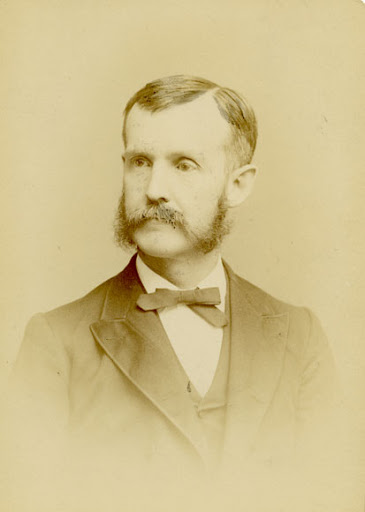
James Russell Miller (20 March 1840 — 2 July 1912) was a popular Christian author, Editorial Superintendent of the Presbyterian Board of Publication, and pastor of several churches in Pennsylvania and Illinois.
Broadcaster:

Comments

0 / 2000 characters
Comments are moderated before appearing.

Be the first to comment!

Joshua

Joshua

Shall we play a game? Ask me about articles, sermons, or theology from our library. I can also help you navigate the site.