Bootstrap
J.R. Miller

Choosing to Do Hard Things

Colossians 1:29
J.R. Miller March, 6 2010 Audio
0 Comments
Choice Puritan Devotional

Sermon Transcript

Auto-generated transcript • May contain errors

100%
CHOOSING TO DO HARD THINGS by
J. R. Miller I labour, struggling
with all his energy which so powerfully works in me. Colossians
1 verse 29 The man who seeks only easy things will never make
much of his life. One who is afraid of hard work
will never achieve anything worthwhile. in an art gallery, before a lovely
masterpiece, a young artist said to Ruskin, Ah, if only I could
put such a dream on canvas!" "'Dream on canvas?' growled the
old master. It will take ten thousand touches
of the brush on the canvas to put your dream there." No doubt,
many beautiful dreams die in the brains and hearts of people,
for lack of effort to make them realities. On the tomb of Joseph
II. of Austria, in the royal cemetery
at Vienna, is this pitiable epitaph, prepared by direction of the
king himself. Here lies a monarch who, with
the best intentions, never carried out a single plan. There are
too many people who try to shirk the hard things. They want to
get along as easily as possible. They have ambition of a certain
sort, but it is ambition to have the victory without the battle. to get the gold without digging
for it. They would like to be learned
and wise, but they do not care to toil in study and burn the
midnight oil, as they must do if they would realize their desire. They wish to have plenty of money,
but they hope to get it from some generous relative as an
inheritance, or to have some wealthy person endow them. They have no thought of working
hard, year after year, toiling and saving as people have to
do, to earn for themselves, with their own hands, the fortune
of their dreams. They may have a certain longing
to be noble and Christlike, with a character that will command
respect and confidence, but they have not the spirit of self-denial,
and of earnest moral purpose, which alone can produce such
a character. They may want to be godly. and
to grow into worthy manhood, but lack that passionate earnestness
which alone will yield vigorous piety and manly virtue, and the
heroic qualities of true Christlikeness. Mere holy dreaming will yield
nothing better than spiritual effeminacy. No religion is worthy
which does not seek to attain the best things, and the best
can be won only by the bravest struggle and the most persistent
striving. In all departments of life, this
indolent, easy-going way of getting on is working its mischief. There is much of it in school
or college. It also abounds in the trades
and professions. A successful businessman says
that the chief reason why so many young men never get advancement
nor make anything worthwhile of their lives is the lack of
thoroughness. They do only what is easy, and
never grapple with anything that is hard. Consequently, they do
not fit themselves for any but the easiest places, and no position
of importance ever can be easily filled. Indolence is the bane
of countless lives. The capacities in them are never
developed for lack of energy. They do not rise because they
have not the courage and persistence to climb. A mark of all noble
character is its desire to do hard things. Easy things do not
satisfy it. It is happiest when it is wrestling
with some task which requires it to do its best. Young people
are fortunate when they are required to do things which it seems to
them they cannot do. It is under such pressure that
they grow into their best. One is usually thought to be
particularly favored who misses difficult experiences and the
enduring of hardships in youth. Until I was fourteen years old,
said a lady in middle life, I never had a disappointment of any kind. It was regarded as remarkably
fortunate that her early life had been so easy, so free from
anxiety or burden. But those who knew the woman
well saw in this very fact the secret of much in her life that
was not beautiful. Her indulged and petted girlhood
was not the best preparation for womanhood. She had not yet
learned to endure, to submit to things that are hard. She
had not grown strong, nor had she acquired self-discipline. Even in her mature womanhood
she was only a spoiled child who chafed when things did not
go to please her. It is not so easy, but it is
better if young people have disappointments, burdens, and responsibilities,
and do not always have their own way. Thus they will be trained
to self-restraint, and taught to submit their wills to God. Of course, not always do people
get the lessons and the character they should get. out of the hard
things of earlier years. Some are not good learners in
life's school. Some grow bitter in disappointment,
and lose the sweetness out of their lives when they have to
endure trial. But, in all that is hard, there
is the possibility of blessing. The goal of noble living is to
gather new virtue and grace from all life's struggles, cares,
and sorrows. It is perilous presumption to
rush into the battle when we have no business in it, when
it is not our battle. Yet, on the other hand, we are
not to be afraid of any struggle or temptation when it lies in
the way of our duty. It is cowardly to shrink from
the battle when we are called into it. When God leads us, he
means to help us. No task which he assigns will
ever prove too hard for us, if we do our best in Christ's name. When we face a new condition,
for which it seems to us that we have neither strength nor
skill, the only question is, is it our duty? If so, there
is no doubt as to what we should do, nor need we have any fear
of failure. hard things become easy when
we meet them with faith and courage. Some people have a habit of skipping
the hard things. It begins in childhood in school. The easy lessons are learned
because they require no great effort, but when a hard one comes
in the course it is given up after a half-hearted trial. The
habit thus allowed to begin in schoolwork easily finds its way
into all the life. The boy does the same thing on
the playground. When the game requires no special
exertion, he goes through it in a credible enough way. but,
when it is hotly contested, and when only by intense struggle
can the victory be won, he drops out. He does not have the courage
or the persistence to make an intense effort. The girl who
lets her school lessons master her, who leaves the hard problems
unsolved and goes on, soon begins to allow other hard things to
master her. the home tasks that are disagreeable,
or that would require unusual effort, she leaves unattempted. It is not long until the habit
of doing only the easy things, and skipping whatever is hard,
pervades all the life. The result is, that nothing brave
or noble is ever accomplished. That person never rises to anything
above the common place. In many ways does this habit
of failing at hard things hurt the life. These difficult things
are put in our way, not to stop us in our course, but to call
out our strength and develop our energy. If we never had any
but easy things to do, things requiring no effort, we would
never become strong. If we timidly give up whenever
we come to something that is hard, we shall never get beyond
the attainments of childhood. If we decline the effort, and
weakly say we are not able to make it, we have lost our opportunity
of acquiring a new measure of strength and ability. We should
never forget that no one ever did anything of great value in
this world without cost. A quaint old proverb says, one
cannot have an omelet without breaking eggs. If we would do
anything really worthwhile, that will be a blessing in the world,
we must put into it not merely easy efforts, language sympathies,
conventional good wishes, and courtesies that cost nothing.
We must put into it thought, time, patience, self-denial,
sleepless nights, exhausting toil. There is a legend of an
artist who had found the secret of a wonderful red which no other
artist could imitate. The secret of his color died
with him. But, after his death, an old
wound was discovered over his heart. This revealed the source
of the matchless hue in his pictures. The legend teaches that no great
achievement can be made. No lofty attainment can be reached. Nothing of much value to the
world can be done, except at the cost of heart's blood. I labor, struggling with all
his energy, which so powerfully works in me. Colossians 1 verse
29.
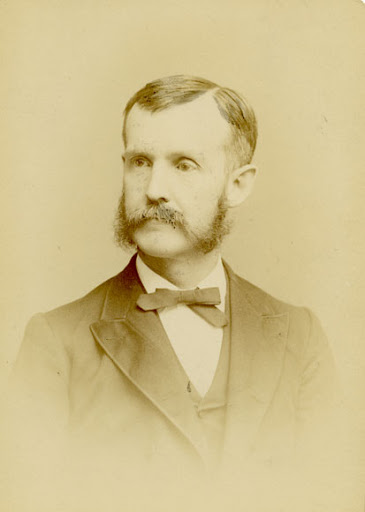
J.R. Miller
About J.R. Miller
James Russell Miller (20 March 1840 — 2 July 1912) was a popular Christian author, Editorial Superintendent of the Presbyterian Board of Publication, and pastor of several churches in Pennsylvania and Illinois.
Broadcaster:

Comments

0 / 2000 characters
Comments are moderated before appearing.

Be the first to comment!

Joshua

Joshua

Shall we play a game? Ask me about articles, sermons, or theology from our library. I can also help you navigate the site.