Bootstrap
J.R. Miller

Our Daily Bread

Matthew 6:11
J.R. Miller March, 6 2010 Audio
0 Comments
Choice Puritan Devotional

Sermon Transcript

Auto-generated transcript • May contain errors

100%
Our Daily Bread by J. R. Miller GIVE US THIS DAY OUR
DAILY BREAD. MATTHEW 6 VERSE 11 We are half-way
through the Lord's Prayer, and come now to the first request
for anything for ourselves. We have learned that God must
always be put first, and that the honoring of His name, the
coming of His kingdom, and the doing of His will are always
to be thought about and sought for before any matter of our
own. Yet it is a great comfort to
know that we may bring our physical needs to God in prayer. Throughout
the scriptures we are taught that nothing which concerns our
life in any way is too small to be of interest to our Heavenly
Father. While the specific prayer here
is for bread, all our physical needs are included. In an exquisite
passage in the same Sermon of Jesus, we are taught that our
Heavenly Father cares for the birds and provides for them,
and clothes the flowers in their gorgeous beauty which lasts for
only a day. Then we are taught that the same
love which thus provides for the birds and the lilies will
much more care for us. Nothing necessary for our life
is too small or too earthly to put into the heart of a prayer. This petition for daily bread,
like all the sayings of Christ, is full of deep meaning. Every
word has its rich suggestions. give us this day our daily bread. We ask God to give us bread. We thus recognize our dependence
on him for it. It is difficult to offer this
petition with real meaning when we have plenty in our hands and
no fear of need. We can conceive of the very poor
with no bread, on the verge of starving, uttering the prayer
and putting their whole heart into it. The bitter sense of
need makes the cry a real one for them. but, for those who
have never felt a pang of actual hunger, and have never been without
a store from which to draw for to-morrow's provision, it is
not easy to realize the sense of dependence which the petition
implies. This is one of the words of Christ,
whose full meaning only experience can teach. Yet it is true, that
whatever abundance may be ours, we are actually dependent upon
God for each day's bread. The story of the forty years
of the miracle of manna in the wilderness, is but a parable
of another miracle, immeasurably greater, the providing of bread
for all earth's millions, for all the days of all the centuries. What we call the laws of nature
are but our father's ordinary ways of working. The regularity
of these laws is but the proof of divine faithfulness. Suppose
that for a single year, or but for a week, God's miracle of
bread should cease from the earth. What would be the consequences?
The unbroken continuity of God's mercy of bread hinders our appreciation
of its greatness and its necessity to us. Give us this day our daily
bread. This prayer implies, also, that
all the bread of the world is God's. The earth is the Lord's,
and the fullness thereof. The bread belongs to Him, and
what we need can become ours only through His gift to us. We may take it, and use it, without
asking him for it, but if we do, we take that to which we
have no right. Even the food is on our table,
ready to be eaten, it is not yet ours until we have asked
God for it. Yet those who pray not, nor even
think of God, seem to be fed, as well as the righteous, and
sometimes more bountifully. God makes his Son to rise on
the evil and the good, and sends rain on the just and the unjust. But there is a difference. Those
who ask God for their bread, get it as his gift, and with
his blessing upon it. while those who take it, without
asking for it, get it and may be fed, but they miss the blessing
of God that makes rich, that gives value to everything we
have. This suggests the true meaning,
and the fitness of the Christian custom, of asking a blessing,
or saying grace before a meal. Give us, this day, our daily
bread. The form of the prayer teaches
the lesson of unselfishness. It is not, give me, but give
us. We cannot come to God for ourselves
alone. We must ask bread for others,
for all, even for our enemies, if we have enemies. Especially
must we think of the needy, the destitute, asking God to give
them bread. If we are sincere, we must be
ready also, so far as we have opportunity, and so far as we
are able, to help to answer our own prayer for others by sharing
our plenty with those who lack. Whoever has the world's goods,
and beholds his brother in need, and shuts up his compassion from
him, how does the love of God abide in him? One of the most
beautiful commentaries on this teaching is in the account of
the way the people of the New Testament Church lived together. After the day of Pentecost, in
the glow of the newborn love of the disciples, those who had
abundance gave to those who were poor, so that there was an equality,
and none lacked. Only thus can any follower of
Christ carry out the teaching of the Master. We must be ready
to share our bread with our brother who lacks Give us this day our
daily bread. There is a limitation in this
petition. In the other form of the prayer,
in Luke, the words vary somewhat. Give us day by day our daily
bread. In Matthew, it is a prayer only
for the one day, with no thought of to-morrow. In Luke, the prayer
takes in other days, but only as they come, one day at a time. In both forms, we are taught
to pray for only the bread of one day. There is a deep lesson
in this teaching. Life is not given to us by the
year or the month, but by single days. Night is the horizon which
bounds our vision. We see not the morrow, and we
are to confine our thought and concern to the little space between
the rising and the setting of the sun. This does not forbid
forethought. The Bible encourages wise and
proper care for the future. But all we are authorized to
ask God is, to give us what is enough for the present day. Even
if in the evening our last crust is eaten, and there is nothing
in store for tomorrow, we need not be afraid, nor think that
God has forgotten us. When the morrow comes, we may
ask for the morrow's own bread, and know that God will hear us
and answer our prayer in the right way. Here again we are
taught that wonderful lesson of living a day at a time, a
lesson which runs through all the Bible. It would save us an
immense amount of worry and anxiety if we could really learn this
lesson. It is trying to carry tomorrow's
burden along with today's burden, which breaks people down. Anybody
can do one day's task in a single day, or endure one day's struggle,
but that is enough for anyone. That is all that God intends
anyone to carry, just one day's burden. Give us this day our
daily bread. There is a special suggestiveness
in the word our. Give us our bread. First it becomes
ours only through God's gift to us. But there is something
else also implied. The bread must be earned by us,
before it is properly ours. It is clearly taught in the scriptures
that every one must work for his own bread. This was the law
of the unfallen state in the garden of Eden, and it is no
less the law in the kingdom of redemption. Of course, this does
not apply to little children who are too young to work, or
to the old who are too feeble, or to the sick who are incapacitated
for work. All such come under God's special
care, and will not be forgotten. But all who are able to work
must do so, or the bread they eat is not rightfully their own. If any will not work, says the
Apostle Paul, neither let him eat. The bread must be earned
also in ways which have the divine approval. If a man steals his
daily bread, it is not his. He has robbed God and robbed
his fellow man, and there is a curse on what he eats. Money
gotten in fraudulent transactions, or by any dishonest means, has
not been righteously earned, and God's blessing cannot be
invoked upon it by any form of prayer. Imagine a gambler, for
example, living on the fruits of his sin, asking God to give
him, with a blessing, the bread on his table. Imagine a saloon-keeper,
who has earned his bread by selling strong drink which has brought
ruin upon lives and homes, asking God to bless his daily bread.
God's bread can become ours with a blessing only when it is earned
in honest ways. While therefore we toil to earn
our bread, we must keep ourselves unspotted from the world. Give
us this day our daily bread. There is yet another limitation
in the petition in the word daily. It means sought for the day,
a daily provision. It is not a prayer, therefore,
for a large supply. We are not authorized to ask
for luxuries. We need not infer that it is
wrong for us to have more than our actual need for the day requires,
but daily bread is all that is promised. Paul says, My God shall
fulfill every need of yours according to his riches in glory. This
assures us of a very abundant provision. Our Father does everything
generously. He is never stingy in caring
for his children. Oft-times he supplies their needs
most abundantly, giving them far more than they need. But
we are taught to ask only for enough, daily bread, and we cannot
claim the promise for more. This prayer seems to forbid extravagance. God's bread never should be wasted. There is a story of Carlyle,
that one day he was seen going into the middle of the street,
to pick up a crust of bread, which he saw lying there in the
dust. Taking it in his hand gently,
as if it had been something very valuable, he brushed off the
dirt, and then carried it to the curb and laid it down, saying,
I was taught by my mother never to waste anything, least of all
bread, the most precious of all God's gifts. This crust of bread
may feed a hungry dog or a little sparrow. Our Lord Himself taught
the same lesson, when, after working His great miracle of
the loaves and feeding thousands, He directed that all the fragments
be gathered up, that nothing would be wasted. The bread we
get as God's gift is sacred, and not a crumb of it should
be wasted, either recklessly or in useless extravagance. We are to limit our desires,
and to ask with confidence for all that we may need for the
one day. Days differ. Some bring their
heavy burdens, their great needs, their keen sorrow, their crosses,
Other days have fewer needs. God knows our days, and He is
better able than we are to measure our real needs for each day. We may safely, therefore, ask
for daily bread, and let Him choose what to give us. He will
never give us too little. It is surely a great comfort
to know that in this world each Christian is thought about, and
cared for, by our Heavenly Father, who loves us with an infinite
and everlasting love. He does not think of us merely
as a vast, uncounted family, but as individuals. He knows
and feeds every bird, and not one of them can fall to the ground
apart from His will. More surely, and with more loving
thought, does he know his own children. He knows our names. Each one of us is personally
dear to him. The very hairs of our head are
all numbered. Not one of us is ever forgotten
by God for a moment. We can be in no place or condition
in which our circumstances are not well known to God. Your Father
knows what you need before you ask Him. This teaching makes
the law of life very simple. We are not to live to get food,
but are to live, first and last, as gods and for God. We have nothing to do directly
with the supplying of our own needs. That is God's matter,
not ours. There are but two things we need
to concern ourselves about. First we should do our duty,
the will of God, as it is made known to us day by day. Then we should trust God for
the supply of our bodily and temporal needs. Those who have
learned to live thus have found the way of peace. Worry is sin,
it dishonors God, for it is bred from doubting His wisdom and
goodness to His children. It hurts our own life, hindering
our spiritual growth, marring the beauty of our character,
and blurring our witness for God to others. If we faithfully
do God's will, as revealed to us, and then trust God perfectly,
the peace of God will guard our hearts and minds in Christ Jesus.
J.R. Miller
About J.R. Miller
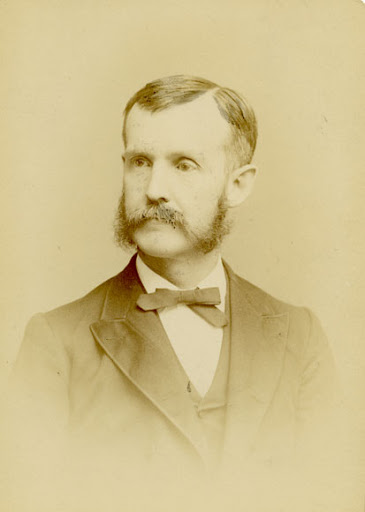
James Russell Miller (20 March 1840 — 2 July 1912) was a popular Christian author, Editorial Superintendent of the Presbyterian Board of Publication, and pastor of several churches in Pennsylvania and Illinois.
Broadcaster:

Comments

0 / 2000 characters
Comments are moderated before appearing.

Be the first to comment!

Joshua

Joshua

Shall we play a game? Ask me about articles, sermons, or theology from our library. I can also help you navigate the site.