Bootstrap
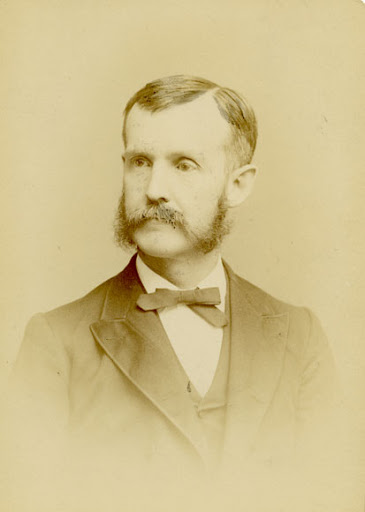
J.R. Miller

A Word About Temper

Ephesians 4:32
J.R. Miller February, 16 2010 Audio
0 Comments
Choice Puritan Devotional

Sermon Transcript

Auto-generated transcript • May contain errors

100%
A Word About Temper by J. R. Miller Be kind and compassionate
to one another, forgiving each other, just as in Christ God
forgave you. Ephesians 4 verse 32 More than half of us are bad-tempered. At least an English social scientist
tells us so. He claims that this is no mere
general statement and no bit of guesswork. He gives us the
figures for it. He arranged to have about two
thousand people put unconsciously under espionage as to their ordinary
temper, and then had careful reports made of the results. The calculations of the returns
has been announced, and is decidedly unflattering to the two thousand
tempers that were thus put to the test. More than half of these
people, to be entirely accurate, fifty-two percent of them, are
set down as bad-tempered in various degrees. The dictionary has been
well near exhausted of adjectives of this order in giving the different
shades of bad temper. Aggressive, angry, bickering,
bitter, capricious, choleric, contentious, crotchety, despotic,
domineering, easily offended, gloomy, grumpy, hasty, huffy,
irritable, morose, obstinate, reproachful, peevish, sulky,
surly, vindictive. These are some of the qualifying
words. There are employed, in all, forty-six
terms which describe a bad temper. We do not like to believe that
the case is quite so serious, that many of us are unamiable
in some offensive degree. It is easier to confess our neighbor's
faults and infirmities than our own. So, therefore, quietly taking
refuge for ourselves among the forty-eight percent of good-tempered
people, we are willing to admit that a great many of the people
we know have, at times, rather ungentle tempers. They are easily
provoked. They fly into a passion on very
slight occasion. They are haughty, domineering,
peevish, fretful, or vindictive. what is even worse, most of them
appear to make no effort to grow out of their infirmities of disposition. The sour fruit does not come
to mellow ripeness in the passing years. The roughness is not polished
off the diamond to reveal its lustrous hidden beauty. The same
petulance, pride, vanity, selfishness, and other disagreeable qualities
are found in the life, year after year. Where there is a struggle
to overcome one's faults and grow out of them, and where the
progress toward better and more beautiful spiritual character
is perceptible, though ever so slow, we should have sympathy. But, where one appears unconscious
of one's blemishes, and manifests no desire to conquer one's faults,
there is little ground for encouragement. Manlike it is to fall into sin. Fiendlike it is to dwell therein. Saintlike it is for sin to grieve. God-like it is for sin to leave. is such a disfigurement of character,
and, besides, works such harm to one's self and to one's neighbors,
that no one should spare any pains or cost to have it cured. The ideal Christian life is one
of unbroken kindliness. It is dominated by love. THE LOVE WHOSE PORTRAIT IS DRAWN
FOR US IN THE IMMORTAL THIRTEENTH CHAPTER OF FIRST CORINTHIANS
LOVE is patient. Love is kind. It does not envy. It does not boast. It is not
proud. It is not rude. It is not self-seeking. It is not angered. It keeps no
record of wrongs. That is the picture of the ideal
Christian life. We have but to turn to the Gospel
pages to find the story of a life in which all this was realized. Jesus never lost his temper. He lived among people who tried
him at every point, some by their dullness, others by their bitter
enmity and persecution, but he never failed in sweetness of
disposition, in patience, in self-denying love. like the flowers
which give out their perfume only when crushed, like the odoriferous
wood which bathes the axe which hues it with fragrance, the life
of Christ yielded only the tenderer, sweeter love to the rough impact
of men's harshness and wrong. That is the pattern on which
we should strive to fashion our life, and our character. every outbreak of violent temper,
every shade of ugliness in disposition, mars the radiant loveliness of
the picture we are seeking to have fashioned in our souls.
Whatever is not loving is unlovely character. There is another phrase,
bad-tempered people are continually hurting others, oft-times their
best and truest friends. Some people are sulky, and one
person's sulkiness casts a chilling shadow over a whole household. others are so sensitive, ever
watching for slights, and offended by the merest trifles, that even
their nearest friends have no freedom of fellowship with them. Others are despotic, and will
brook no kindly suggestion, nor listen to any expression of opinion. others are so quarrelsome that
even the meekest and gentlest person cannot live peaceably
with them. Whatever may be the special characteristic
of the bad temper, it makes only pain and humiliation for the
person's friends. A bad temper usually implies
a sharp tongue. Sometimes, indeed, it makes one
morose and glum. A brother and a sister living
together are said often to have passed months without speaking
to each other, though eating at the same table and sleeping
under the same roof. A man recently died, who for
twelve years, it was said, had never spoken to his wife, though
they continued to dwell together, and three times daily sat down
together at the same table. bad temper, sometimes runs to
sullen silence. Such silence is not golden. Generally, however, a bad-tempered
person has an unbridled tongue, and speaks out his hateful feelings,
and there is no limit to the pain and the harm which angry
and ugly words can produce in gentle hearts. It would be easy
to extend this portrayal of the evils of bad temper, but it will
be more profitable to inquire how a bad-tempered person may
become good-tempered. There is no doubt that this happy
change is possible in any case. There is no temper so abdurately
bad that it cannot be trained into sweetness. The grace of
God can take the most unlovely life, and transform it into the
image of Christ. As in all moral changes, however,
grace does not work independently of human volition and exertion. I labor, struggling with all
his energy which so powerfully works in me. Colossians 1 verse
29 God always works helpfully with those who strive to reach
Christlikeness. We must resist the devil, or
he will not flee from us. We must struggle to obtain the
victory over our own evil habits and dispositions, although it
is only through Christ that we can be conquerors. He will not
make us conquerors unless we enter the battle. We have a share,
and a large and necessary share, in the culture of our own character. The bad-tempered man will never
become good-tempered until he deliberately sets for himself
the task, and enters resolutely and persistently upon its accomplishment. The transformation will never
come of itself, even in a Christian. People do not grow out of ugly
temper into sweet refinement, as a peach ripens from sourness
into lusciousness. Then, the thing to be accomplished
is not the destroying of the temper. Temper is a good quality
in its place. The task is not destruction,
but control. A man is very weak who has a
strong temper, without the power of self-control. Likewise is
he weak who has a weak temper. The truly strong man is he who
is strong in the element of temper, that is, has strong passions
and feelings, capable of great anger, and also has perfect self-control. When Moses failed and broke down
in temper, in self-control, he was not the man to lead the people
into the promised land. Therefore God at once prepared
to relieve him. The task to be set, therefore,
is self-discipline in the gaining of complete mastery over every
feeling and emotion, so as to be able to restrain every impulse
to speak or to act unadvisedly. We represent Christ in this world. people cannot see him, they must
look at us, to see a little of what he is like. Whatever great
work we may do for Christ, if we fail to live out his life
of love, kindness, and patience, we fail in an essential part
of our duty as Christians. Nor can we be greatly useful
in our personal life, while our daily conduct is stained by frequent
outbursts of anger, and other exhibitions of bad temper. In
the old fable, the spider goes about doing mischief wherever
it creeps, while the bee, by its wax and its honey, makes
sweetness and light wherever it flies. We should be bees rather
than spiders, living to turn darkness into light, and to put
a little more sweetness into the life of all who know us.
but, only as our lives shine in the brightness of holy love,
and our hearts and lips distill the sweetness of patience and
gentleness, can we fulfil our mission in this world, as Christ's
true messengers to man. Then there is a need of a higher
standard of character in this regard, than many people seem
to set for themselves. We never rise higher than our
ideals. The perfect beauty of Christ
should ever be envisioned in our hearts as that which we would
attain for ourselves. The honour of our Master's name
should impel us to strive ever toward Christlikeness, in spirit
and in disposition. In striving to overcome our impatience
with others, it will help us to remember that we, and they,
have the common heritage of a sinful nature. The thing in them which
irritates us is, no doubt, balanced by something in us which looks
just as unlovely in their eyes, and just as sorely tries their
forbearance toward us. Very likely, if we think our
neighbours are hard to live peaceably with, they think about the same
of us. And who shall tell in whom lies
the greater degree of fault? Certain it is that a really good-tempered
person can rarely ever be drawn into a quarrel with any one. He is resolutely determined that
he will not be a partner in any unchristian strife. He would
rather suffer wrongfully than offer any retaliation. He has
learned to bear, and to forbear. Then, by his gentle tact, he
is able to conciliate any who are angry. A fable relates that
in the depth of a forest there lived two foxes. One of them
said to the other one day, in the politest of fox-language,
Very well," said the other, but how shall we go about it? They
tried all sorts of ways, but in vain, for both would give
way. At last one fox brought two stones. There, he said, now you say they
are yours, and I'll say they are mine, and we will quarrel
and fight and scratch. Now I'll begin. Those stones
are mine. "'All right,' answered the other
fox. You are welcome to them." "'But we shall never quarrel
at this rate,' replied the first. "'No, indeed, you old simpleton. Don't you know that it takes
two to make a quarrel?' So the foxes gave up trying to quarrel,
and never played at this silly game again. The fable has its
lesson for other creatures besides foxes. If it is possible, as
far as it depends on you, Paul tells us, we should live peaceably
with all men. A wise man says, Every man takes
care that his neighbors shall not cheat him. But a day comes,
when he begins to care that he does not cheat his neighbors.
Then all goes well. So long as a man sees only the
quarrelsome temper of his neighbor, he is not far toward holiness. But when he has learned to watch
and to try to control his own temper, and to weep over his
own infirmities, he is then on the way to Christlikeness, and
will soon be conqueror over his own weakness. Life is too short
to spend even one day of it in bickering and strife. Love is
too sacred to be for ever lacerated and torn by the ugly briars of
sharp temper. Surely we ought to learn to be
loving and patient with others, since God has to show every day
such infinite patience toward us. Is not the very essence of
true love, the spirit that is not easily provoked, that bears
all things? Can we not, then, train our life
to sweeter gentleness? Can we not learn to be touched
even a little roughly, without resenting it? Can we not bear
little injuries and apparent injustices, without flying into
a rage? Can we not have in us something
of the mind of Christ, which will enable us, like Him, to
endure all wrong and injury, and give back no word or look
of bitterness? The way over which we and our
friend walk together is too short to be spent in wrangling.
J.R. Miller
About J.R. Miller
James Russell Miller (20 March 1840 — 2 July 1912) was a popular Christian author, Editorial Superintendent of the Presbyterian Board of Publication, and pastor of several churches in Pennsylvania and Illinois.
Broadcaster:

Comments

0 / 2000 characters
Comments are moderated before appearing.

Be the first to comment!

Joshua

Joshua

Shall we play a game? Ask me about articles, sermons, or theology from our library. I can also help you navigate the site.