Bootstrap
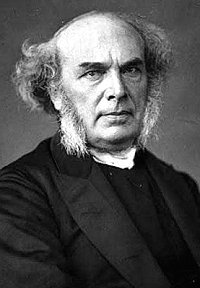
Horatius Bonar

The Church's Widowhood

Luke 18:3
Horatius Bonar October, 25 2007 Audio
0 Comments
An outstanding sermon on the trials and comforts of the Christian life.

Sermon Transcript

Auto-generated transcript • May contain errors

100%
THE CHURCH'S WIDOWHOOD by Horatius
Bonar. And there was a widow in that
city, and she came unto him, saying, Avenge me of my adversary. Luke 18, verse 3. Without entering at length on
an exposition of this parable, in either of its aspects, practical
or prophetical, we may say this much, that it sets before us
under the figure of a widow a feeble and injured widow, the true character
and standing of the Church of God on earth, during the present
age. In numbers she is few, a mere
election, a gathering out, no more. In power she is slender,
in honor she is little esteemed, in alliances she is little courted,
no, shunned. In position, she is unfit to
sway the world's counsels. In political and social influence,
except as the salt of the earth, she is incapable of what man
calls great achievements, seeing she is scattered and divided
among all kingdoms. And that, not like some vast
network of electrical wires encompassing the globe, and capable by its
union of parts to act with simultaneous force upon the nations, but only
like the separate dew-drops, which, though many and pure,
and fitted to cheer the blossom on which they rest, have no power
to turn the rock into a garden, or to make the wilderness blossom
as the rose. That such is the case, no, that
such must be the case, appears from such things as these. First,
the Father's purpose concerning her. That purpose has great things
in store for her, in the ages to come. But, at present, her
lot is to be weakness, poverty, hardship, and the endurance of
wrong. Through much tribulation she
must enter the kingdom. It is not the purpose of God
that she should be numerous, or powerful, or honorable, but,
like her head, disesteemed, rejected, despised, treated oftentimes
as the offscouring of all things. Her success is not to be measured
by the extent to which she has been able to over-awe, or to
attract, or to dazzle the world, to disarm its enmity, or to purchase
its friendship, but simply and only by the manner in which she
has been enabled to fulfill the Father's will, to manifest her
sympathies with the Father's purpose, to be faithful to her
calling and character, to testify for Him whose blood has bought
her, and to be separate from the evil that is in this present
evil world. Secondly, her conformity to her
Lord, He is her pattern, not merely as to character, but as
to the whole course of life. In him she learns what her lot,
on earth, is to be. He, the rejected one, even among
his own, she must be rejected too. He, the hated one, she must
be hated too. Better treatment than he met
with, she is not entitled to expect. nor should she wish to
have. Union with Him in eternal glory
is her hope. Union with Him in suffering is
her experience here. Conformity to Him in holy glory
hereafter is what she looks for. Conformity to Him in shame and
sorrow now is what she knows to be her lot. She feels that
she could not be the true bride of a suffering bridegroom. if
her path below were one of all smiles and sunshine. THIRDLY
HER STANDING BY FAITH It is the world's unbelief that so specially
makes it the world. So it is the Church's faith that
makes her what she is, the Church. All that she can say for herself
is what the Apostle did for himself and the saints of his day. we
have known and believed the love that God has to us. Her connection
with the testimony of God, with Him of whom it speaks, and with
the glory to which it points, is one simply of faith. It was faith in that record which
first drew her out of the world, and which still keeps her separate
from it. As one believing in a kingdom
yet to come, She shakes herself free from the entanglements of
time. She becomes a stranger here,
having no continuing city, but satisfied with the tent of the
desert until she reach the city of habitation. The faith which
realizes the unseen and the eternal displaces both in her vision
and in her heart the things seen and temporal. Fourthly, the condition
of the world out of which she is called. It is an evil world. It lies in wickedness, and her
calling is to come out from it, and, like Noah, to condemn it. All belonging to that world is
evil, and what has she to do with it? Satan is its prince
and god, and what has she to do with him? It crucified her
lord. What can she have to do with
it? Her mission is not to transform the world into the Church, but
to be God's instrument in taking out of it a people for His glory. In such a world, how can she
be other than a stranger? In its cities, how can she be
other than a sojourner? She has nothing in common with
it. All is uncongenial. her prospects. She is an heir
of God, and a joint heir with Christ Jesus. An everlasting
kingdom, an unfading crown, an eternal weight of glory, these
are her prospects. What has she then to do with
a world where all these are unrecognized, no, despised, or disowned? As the Bride of Christ, What
sympathy can there be in herpism with the vanities of the world
so vain as this? It does not yet, indeed, appear
what she shall be. But she knows that, when he shall
appear, she shall be like him, for she shall see him as he is. And having this hope in him,
she purifies herself, even as he is pure. The Church, then,
is thus, of necessity, a widow. Hence, while the Spirit of God
uses various figures to describe her, they all, more or less,
point to some such forlorn and helpless condition. Whether she
is spoken of as a pilgrim, or a stranger, or an orphan, or
a little flock, or a lily among thorns, still the leading thought
is the same. In her orphanage, or strangership,
or widowhood, she still moves before us as the separated, rejected,
lonely one, in the midst of an unfriendly world that far outnumbers
her, and that feels itself strangely distressed and made uncomfortable
in the midst of all the precious and pleasurable things of earth.
having her eye and her heart fixed upon something more glorious,
of which the world knows nothing. It is by acting out her character,
fully and consistently, that she honors God and bears witness
to Christ, and condemns the world and testifies to the glory of
the promised kingdom. It is thus, that she wins the
eye of the heedless whirling, pointing upwards to the incorruptible
crown, and bidding men set their affection on things above, and
seek their treasure and joy in heaven. It is her widowhood which
is her testimony. It is her widow's garments with
which she dare not part. that make known beyond mistake
and yet without a voice what she thinks of the world and the
world's ways, how she disesteems the world and the world's joys,
how thoroughly she has broken off from the world and the world's
companionships, and taken the true measure of its fascinating
gaieties how wide she deems the difference between herself and
the children of time. How steadfastly she has set her
face towards the kingdom! And how completely the King in
his beauty has absorbed her soul, and displaced the poor objects
of admiration or affection with which the world would seek to
win her steps back to itself, and recover her heart to the
dreams of creature-love and creature-beauty! How solemnly does her widow's
cry, avenge me of my adversary! How long, O Lord, how long! Proclaim to the world a truth
which it seems to have forgotten, that its King and Lord is absent,
thus reminding it of the shade which that absence has thrown
over creation, by telling of the blank which it has made in
her own bosom, even though she knows that she is his, and that
he is hers. If the Church forsakes this position,
and forgoes this character, she abandons her calling, she lowers
her testimony, she destroys her usefulness, she becomes unfaithful
to Christ, and, instead of preserving her purity, she becomes the mother
of a spurious race of Christians who are neither Christ's nor
the world's, who think it possible to make the best of both worlds.
in whose features one can find few traces of resemblance to
the great Exemplar, in whose constitution and habits one can
discover none of those elements of power and hardness and endurance
which primitive days exhibited, in whose doings or darings or
sacrifices one can detect nothing of that zeal, self-denial, and
decision which led one to say, I count not my life dear unto
me, that I may finish my course with joy. A widow's proper clothing,
as well as her true ornaments, are her garments. Jewelry, gold
and silver, and precious stones, she has put off. They are the
symbols of mirth and gaiety, and triumph And what has she
to do with these in the absence of her Lord, and in the midst
of a world which disowns him? It is in her widow's garments
that she passes along the world's highway, as one who has little
in common with it, whose sympathies have all gone upwards to one
whom, having not seen, she loves. They speak of an absent husband.
They tell of faithful affection and constancy, as well as of
indifference to all love except that of him whose memory she
cherishes, and whose absence she mourns. They are expressive
of indifference to the attractive scenes and objects of earth,
not merely because of their uncongeniality, but because they cannot be truly
enjoyed if separated from the Beloved One. A widow indeed! is thus described by the Apostle. She who is a widow in deed, and
desolate, trusts in God, and continues in supplications and
prayers, night and day. But a mere widow in name only,
is one who lives in pleasure, and is thus dead while she lives. The true Church of God is the
former. The false Church, the harlot-bride
of Satan, is the latter. for she openly repudiates the
name of widow, while she lays aside the deeds of widowhood,
saying, I sit as a queen, and am no widow, and shall see no
sorrow, decking herself all the while in gold, silver, precious
stones, pearls, fine linen, purple, silk, and scarlet. This contrast
between these two not only shows us the right standing of the
one church, and the false and faithless character of the other,
but it intimates this, that one of the Church's most subtle temptations
will be to lose sight of, if not to disown, her widowhood,
and to live and act and speak as if she were well content with
the world as it is, and had no consciousness of any separation
from the Beloved One. The world loves not the faithful
widow. and would gladly seduce her to
a second marriage, a marriage with itself. Decked in costly
array, it would admire her, and give her its willing fellowship.
But dressed only in the widow's mournful garb, it cannot tolerate
her. Her faithfulness to her lord
condemns it, her seclusion and separation rebuke it, her continuing
in supplication and prayers night and day it cannot tolerate. Her wistful eye, glancing eagerly
upwards as if to see the unseen and greet the absent one, is
a continual reproof. The widow's cry severely disturbs
the world's peace, and ringing nightly through its glittering
halls of pleasure, turns all its music into discord. Nor less
does Satan dislike the widow's deeds and the widow's cries,
for they remind him that his day is short, and that he who
is to bind him in chains and cast him out of his dominions
will soon be here. They torment him before his time. They proclaim the doom of his
harlot spouse, who sits now as queen in that one hour when desolation
shall overwhelm her. They point to the glory of the
now-widowed church in that day when, instead of her attire of
sackcloth, she shall be arrayed in the fine linen, clean and
white. and with her long-parted husband
restored to her embrace, she shall be exalted to the sovereignty
of that very world where she has been treated as the offscouring
of all things. The hostility of the world and
its prince to the Church of God is not new. It is the ancient
feud between the two seeds, which, in successive forms and with
varying intensity, each age has evolved. Compromise or inconsistency
may modify this warfare, but ended it cannot be, except in
the extinction of the one seed or the other. The world hopes
to absorb the Church, and so to terminate the variants. But
this absorption is what the true Church so greatly dreads, for
by it she loses, and her rival gains everything. It is an absorption. the root of which is unbelief,
and the development of which is, at the best, the form of
godliness without its power. Most unweariedly has Satan sought,
age after age, to silence the widowed church's cry, to muffle
her voice, to seduce her into unfaithfulness, and to persuade
her to part with her garments of widowhood. that he has never
wholly succeeded we know, for a remnant, at least, has always
been found, who abode faithful, though sometimes clothed in sack-cloth
in addition to the widow's clothing, and sometimes with that sack-cloth
stained with blood. Yet too frequently has he succeeded
in part, to an extent which may well alarm us, and lead to self-questionings
of the most searching kind. He succeeded in a measure with
the Church of Ephesus, so that her lord was constrained to address
her as one who had left her first love. He succeeded still more
with Sardis, until only a few names were left which had not
defiled their garments. Even more sadly did he succeed
with Laodicea, bringing her into such a condition of evil that
she was on the very edge of entire rejection. elating her with such
thoughts of self-sufficiency and wealth as to make her wholly
lose sight of her estate of lowly widowhood, decking her with the
world's gay attire, and leading her to exchange the widow's cry
for the world's song, I am rich and increased in goods, and have
need of nothing. But the full measure of Satan's
success is only seen in Babylon. the Roman Catholic Church. In
her, seduction has been triumphant, and not a vestige either of the
widow's garments or of the widow's cry can be found in her. The temptation which proved so
unsuccessful in the Lord has succeeded in her, the author
of the world's kingdoms. With these, Satan has bewitched
and beguiled her. For these, she has forsaken her
Lord and espoused herself to the god of this world, who satiates
her to her heart's content with the carnal abundance of his kingdom,
so that she is no longer a widow, but a queen, no longer desolate,
but glorifying herself and living deliciously, no longer poorly
or plainly clothed, but decked in purple and pearls and gold,
no longer crying in her helplessness avenge me of my adversary, but
ruling over the nations, no, giving them to drink of the golden
cup of her uncleanness, no, seducing even the kings of the earth to
pay her tribute and service, intoxicating them with the pleasures
of her unlawful love. Between the state of backsliding
Ephesus and that of apostate Babylon, there is a mighty difference. And yet these churches reveal
but different degrees of the same evil. Ephesus represents
the beginning, Babylon the end, of that downward course, between
which extremities there exist many stages and gradations. But
the type of evil is, to a certain extent, the same in all. In every one of them we see Satan
laying snares for the church. beguiling her out of her widow's
seclusion, making her dissatisfied with her poverty and weakness,
persuading her to put off her widow's garments and conform
to the gay attire of the multitude around. This, then, is one of
the Church's special dangers. Such is Satan's object in assailing
her, such the small beginnings of apostasy, and such the fatal
end. In ways most subtle, by degrees,
quite imperceptible, she is persuaded to leave her first love, and
then, having done that, she is ready for any amount of backsliding. Is it not thus that Satan is
spreading his fascinations for the Church in our day? Gladly
would he draw her out of her seclusion into the gay whirl
of earth. He spares no area to tempt her,
to act inconsistently with the widow's character, and to become
unfaithful to her widow's vow. His object is to bring her down
from her high standing as the Church of God, holy and beloved,
separated unto Christ, and set on high by his redeeming power,
to draw her off from that consecrated ground which her Lord had intended
her to occupy, that she may mingle with the bustling crowds of the
world's highway, or take her place in its assemblies of pleasure
and revelry. In carrying on his seductions,
Satan makes use of various appliances. He begins with objects which
are in themselves lawful. He goes on with those which are
suspicious and questionable, and he ends with those which
are positively sinful and pernicious. He approaches the Church, subtly
and with fair words, as an angel of light. How excellent and noble
is science! How fitted to exalt the soul
and to feed its immortal longings! Most true! Nor ought we ever
to say one word to the disparagement or deprecation of science. But
may it not be too absorbing? May it not displace higher things? May it not lead to a too exclusive
cultivation of the understanding, and so nourish intellectual pride,
and seduce the soul into the mere wisdom of this world? The
Church is to be on her guard. not against science, but against
the way in which science has been used to dazzle or bewilder
the Church's eye, and so withdraw her affection and her gaze away
from the things above. Or again, he comes to her applauding
the world's literature, and exhibiting it to her in all the fascinations
of poetry and romance. Let us not discredit literature.
or treat it all as alike unprofitable, but let us beware of its enchantments. Let us see that even in its lawful
parts it does not come between us and the vision of the eternal
kingdom, or lead us astray with the enticing words of man's wisdom. And as to those parts of it that
appeal to the sentiment or the passions or the lusts of our
nature, which are mere gratifications of our love of pleasure, such
as a novel, or an idle song, or the loose opera, how can we
touch, or taste, or handle, these vanities? What has a heaven-born
soul to do with earthly vanities like these? What has the widowed
spouse of Christ, mourning her Lord's absence and longing for
His return, to do with scenes and sounds such as these, which
feed the flesh, which eat out the very core of faith, which
rekindle fires that should be for ever quenched, and refasten
links that should be for ever broken? Farther, he comes to
her with more direct blandishments of pleasure as his snares. What
sin, what harm is there in the dance, or the theatre, or the
merry party? And how often is Satan at once
responded to, Yes, what sin, what harm in these? May a man
not be a Christian and yet enjoy these? This would we say in reply. In primitive days no man would
have thought of claiming the name of Christian who enjoyed
them. And if a man can think himself a Christian while enjoying
these, he must have misunderstood the character of a follower of
Christ. He must have forgotten the Lord's
own solemn words. If any man will come after me,
let him deny himself and take up his cross and follow me. And
he must have set aside the Apostle's solemn exhortation, Love not
the world, neither the things that are in the world. If any
man loves the world, the love of the Father is not in him. If any says, This is a hard saying,
who can hear it? We answer, Is it harder than
that she who lives in pleasure is dead, while she lives? Is
it harder than that the friendship of the world is enmity to God? Is it harder than that? Come
out and be separate and touch not the unclean thing. Is it
harder than that? You cannot drink the cup of the
Lord and the cup of devils. You cannot be partaker of the
Lord's table and the table of devils. Besides, what congeniality
can one whose characteristic is that of widowhood and orphanage
and strangership find in such scenes as these? Laughter and
reveling are for the whole-hearted and the sorrowless. How can they
suit the widow's garments and the widow's cry? If the Church
of God would mingle in such scenes, she must first renounce her widowhood. For how strange, how spectral,
would the entrance of widowhood in the reality of grief, as well
in the outward garb of mourning, into such haunts of hollow mirth
as the gay world presents. How startling! No, how displeasing
and disturbing would be the somber hue of the widow's clothing in
that blazing hall of midnight, that dazzling mass of artificial
light that shows all things but nothing as they are! Into such
uncongenialities How is it possible for the Church of God to enter?
With incongruities and inconsistencies like these, she can have no sympathy. If she understands her own character
and calling, she must see that she has a peculiar path to pursue,
a path which cannot admit of any such compromise between the
things of heaven and the things of earth. She, like her Lord,
is from above. The world, like its prince, is
from beneath. How can there be an alliance
between parties whose interests, sympathies, hopes, joys, are
so far asunder? How can the Church of God descend
from the high eminence to which she has been lifted up, and tread
again that enchanted ground which she professes to have forsaken
for ever? Can she lose sight of her calling? Can she forget her widowhood?
Can she see no crime in being unfaithful to her absent Lord,
and unjust to the memory of one who has loved her so well? Can she think of imitating, even
in spirit or for a day, the apostate church, Satan's harlot bride,
and saying, I sit as a queen and am no widow, and shall see
no sorrow? Satan, the god of this world,
is doing his utmost in these last days to ensnare the true
Church, to seduce her into worldliness, to draw down her eye from the
heavenly glory, to silence her cry, to induce her to drop her
widow's clothing, And, if not altogether to identify herself
with the world, at least be less peculiar, less singular in her
walk, less solemn in her testimony against the fashion of this world,
the things that perish with the using, the lust of the flesh,
the lust of the eye, and the pride of life. Shall he succeed? Shall his sophistry prevail?
Shall his appeals to all that is best in the natural man be
met with acquiescence on the part of the saints of God? Shall
his arguments and wily flatteries, addressed so skillfully to our
love of natural beauty, wisdom, goodness, truth, be yielded to,
so that we shall give up our distinctiveness as the called
of God and the heirs of his kingdom? Shall he persuade us to be less
strict, less holy, less heavenly, with less of the sorrowing widow
in our deportment, and more of the crowned queen of this world? Shall we resist, or shall we
yield? Shall we hold fast our profession,
or shall we fling it aside? Shall we try to seize a portion
here, or shall we be content to wait in faith until the Lord
returns. Surely this is a question for
this age, a question for the kingdom of God, a question for
every child of the kingdom. It is a question, too, for those
who are still of the earth. Will you cling to the earth?
And what will that earth to which you cling to do for you? It is
a question for those who think it possible to be both lovers
of God and lovers of pleasure. Will you try to reconcile what
is irreconcilable? Is not God enough without the
world? Is not Christ enough without
worldly pleasures? It is a question for the earnest.
Will you not decide? Will you waver? Will you halt? Will you try something less than
an entire surrender of the whole man to God? It is a question
for the Christian. Will you be less than your name
implies? Less than a child of heaven?
Less than an heir of God and a joint heir with Christ? It
is by faith that you stand. It was the belief of God's free
love, as manifested in the cross of His Son, that made you what
you are. And if that faith has any meaning,
it means that you are no longer of the world, that your treasure
is above, that your inheritance is not here, and that you are
waiting, in patient love and hope, amid weariness and buffeting
and trouble, for the grace which is to be brought unto you at
the revelation of Jesus Christ. This concludes The Church's Widowhood
by Horatius Bonar.
Horatius Bonar
About Horatius Bonar
Horatius Bonar (19 December 1808 — 31 July 1889), was a Scottish churchman and poet. He is principally remembered as a prodigious hymnodist. Friends knew him as Horace Bonar.
Broadcaster:

Comments

0 / 2000 characters
Comments are moderated before appearing.

Be the first to comment!

Joshua

Joshua

Shall we play a game? Ask me about articles, sermons, or theology from our library. I can also help you navigate the site.