Bootstrap
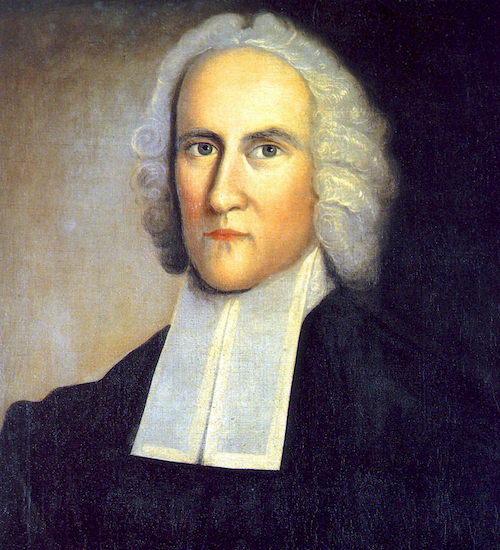
Jonathan Edwards

The Christian Pilgrim

Hebrews 11:13-14
Jonathan Edwards October, 25 2007 Audio
0 Comments
An outstanding summary on the Christian life. Warm, devotional and practical!

Sermon Transcript

Auto-generated transcript • May contain errors

100%
THE CHRISTIAN PILGRIM or THE TRUE CHRISTIAN'S LIFE A JOURNEY TOWARDS HEAVEN
by Jonathan Edwards

They confessed that they were strangers and pilgrims on the earth. People who say such things show that they are looking for a country of their own.

In Hebrews chapter 11, the Apostle sets forth the excellencies of the grace of faith by the glorious effects and happy issue of it in the Saints of the Old Testament. He had spoken in the preceding part of the chapter particularly of Abel, Enoch, Noah, Abraham and Sarah, Isaac and Jacob. Having enumerated those instances, he takes notice that these all died in faith, not having received the promises, but having seen them afar off, were persuaded of them. and embraced them, and confessed that they were strangers."

In these words, the Apostle seems to have a more particular respect to Abraham and Sarah, as appears in Hebrews 11, verse 15, where the Apostle says, And truly, if they had been mindful of that country from which they came out, they might have had opportunity to have returned.

Two things may be observed here. what these saints confessed of themselves, that they were strangers and pilgrims on the earth. Thus we have a particular account concerning Abraham. I am a stranger and a sojourner with you. And it seems to have been the general sense of the patriarchs, by what Jacob says to Pharaoh. And Jacob said to Pharaoh, The days of the years of my pilgrimage are an hundred and thirty years. Few and evil have the days of the years of my life been, and have not attained to the days of the years of my life, of my fathers in the days of their pilgrimage. I am a stranger and a sojourner with you, as all my fathers were.

Secondly, the inference that the Apostle draws from hence, that they sought another country as their home. For they that say such things declare plainly that they seek a country. In confessing that they were strangers, they plainly declared that this is not their country, that this is not the place where they are at home. And in confessing themselves to be pilgrims, they declared plainly that this is not their settled abode, but that they have respect to some other country which they seek, and to which they are travelling.

Section 1 THAT THIS LIFE OUGHT TO BE SO SPENT BY US as to be only a journey or pilgrimage towards Heaven.

Here I would observe, first, that we ought not to rest in the world and its enjoyments, but should desire Heaven. We should seek first the Kingdom of God. We ought, above all things, to desire a heavenly happiness, to be with God and dwell with Jesus Christ.

Though surrounded with outward enjoyments, and settled in families with desirable friends and relations, though we have companions whose society is delightful, and children in whom we see many promising qualifications, though we live by good neighbors and are generally beloved where known, yet we ought not to take our rest in these things as our portion. We should be so far from resting in them that we should desire to leave them all in God's due time.

We ought to possess, enjoy, and use them, with no other view but readily to leave them whenever we are called to it, and to change them willingly and cheerfully for Heaven. A traveller is not in a habit to rest in what he meets with, however comfortable and pleasing, on the road. If he passes through pleasant places, flowery meadows or shady groves, He does not take up his contentment in these things, but only takes a transient view of them as he goes alone. He is not enticed by fine appearances, to put off the thought of proceeding. No, but his journey's end is in his mind. If he meets with comfortable accommodations at an inn, he entertains no thoughts of settling there. He considers that these things are not his own, that he is but a stranger. and when he has refreshed himself or tarried for a night, he is for going forward the next day, and it is pleasant to him to think that so much of the way is already gone.

So should we desire heaven more than the comforts and enjoyments of this life? The Apostle mentions it as an encouraging, comfortable consideration to Christians that they draw near their happiness. Now is our salvation nearer than when we first believed. Our hearts ought to be loose to these things, as that of a man on a journey, that we may as cheerfully part with them whenever God calls.

But this I say, brethren, the time is short. It remains that both they that have wives be as though they had none, and they that weep as though they wept not, and they that rejoice as though they rejoiced not. and they that buy as though they possess not, and they that use the world as not abusing it, for the fashion of this world passes away. These things are only lent to us for a while, to serve a present turn, but we should set our hearts on heaven, as our inheritance for ever.

Secondly, we ought to seek heaven by travelling in the way that leads there. This is the way of holiness. We should choose and desire to travel there in this way and in no other, and part with all those carnal appetites which, as weights, will tend to hinder us. Let us lay aside every weight and the sin which does so easily beset us, and let us run with patience the race set before us.

However pleasant the gratification of any appetite may be, We must lay it aside, if it be a hindrance or a stumbling-block, in the way to Heaven. We should travel on in the way of obedience to all God's commands, even the difficult as well as the easy, denying all our sinful inclinations and interests. The way to Heaven is ascending. We must be content to travel uphill, though it be hard and tiresome. and contrary to the natural bias of our flesh.

We should follow Christ. The path He traveled was the right way to heaven. We should take up our cross and follow Him, in meekness and lowliness of heart, in obedience and charity, diligent to do good, and patient under afflictions. The way to heaven is a heavenly life, an imitation of those who are in heaven. in their holy enjoyments, loving, adoring, serving, and praising God and the Lamb, preferring holiness and conformity to the gospel.

Thirdly, we should travel on this way in a laborious manner. Long journeys are attended with toil and fatigue, especially if through a wilderness. Persons in such a case expect no other than to suffer hardships and weariness. So we should travel in this way of holiness, improving our time and strength, to surmount the difficulties and obstacles that are in the way. The land we have to travel through is a wilderness. There are many mountains, rocks and rough places that we must go over, and therefore there is a necessity that we should lay out our strength.

Fourthly, our whole lives ought to be spent in traveling this road. We ought to begin early. This should be the first concern, when persons become capable of acting. When they first set out in the world, they should set out on this journey. And we ought to travel on with diligence. It ought to be the work of every day. We should often think of our journey's end, and make it our daily work to travel on in the way that leads to it. He who is on a journey is often thinking of the destined place, and it is his daily care and business to get along, and to improve his time to get towards his journey's end. Thus should Heaven be continually in our thoughts, and the immediate entrance or passage to it, namely death, should be present with us.

We ought to persevere in this way as long as we live. Let us run with patience the race that is set before us. Though the road be difficult and toilsome, we must hold out with patience, and be content to endure hardships. Though the journey be long, yet we must not stop short, but hold on until we arrive at the place we seek. Nor should we be discouraged with the length and difficulties of the way, as the children of Israel were, and be for turning back again. all our thought and design should be to press forward until we arrive.

Fifthly, we ought to be continually growing in holiness, and in that respect coming nearer and nearer to heaven. We should be endeavoring to come nearer to heaven in being more heavenly, becoming more and more like the inhabitants of heaven, in respect of holiness and conformity to God, and the knowledge of God and Christ. in clear views of the glory of God, the beauty of Christ, and the excellency of divine things, as we come near to the beatific vision. We should labor to be continually growing in divine love, that this may be an increasing flame in our hearts, until they ascend wholly in this flame, in obedience and a heavenly life, that we may do the will of God on earth as the angels do in heaven. In comfort and spiritual joy, in sensible communion with God and Jesus Christ, our path should be as the shining light that shines more and more to the perfect day.

We ought to be hungering and thirsting after righteousness, after an increase in righteousness, as newborn babes desire the sincere milk of the word that you may grow thereby. The perfection of heaven should be our mark, this one thing I do, forgetting those things which are behind, and reaching forth unto those things that are before, I press toward the mark, for the prize of the high calling of God in Christ Jesus.

Sixthly, all other concerns of life ought to be entirely subordinate to this. When a man is on a journey, all the steps he takes are subordinated to the aim of getting to his journey's end. and if he carries money or provisions with him, it is to supply him in his journey. So we ought wholly to subordinate all our other business and all our temporal enjoyments to this affair of travelling to Heaven. When anything we have becomes a clog and hindrance to us, we should abandon it immediately. The use of our worldly enjoyments and possessions should be with such a view, and in such a manner, as to further us in our way heavenward. Thus we should eat and drink and clothe ourselves, and improve the conversation and enjoyment of our friends. And whatever business we are setting about, whatever design we are engaging in, we should inquire with ourselves whether this business or undertaking will forward us in our way to Heaven. And, if not, we should then quit our design.

Section 2 WHY THE CHRISTIAN'S LIFE IS A JOURNEY OR PILGRIMAGE

First, this world is not our abiding place. Our continuance here is but very short. Man's days on the earth are as a shadow. It was never designed by God that this world should be our home. Neither did God give us these temporal accommodations for that end. If God has given us ample estates, and children, or other pleasant friends, it is with no such design that we should be furnished here as for a settled abode, but with a design that we should use them for the present, and then leave them in a very little time.

When we are called to any secular business, or charged with the care of a family, If we employ our lives to any other purpose than as a journey toward Heaven, all our labor will be lost. If we spend our lives in the pursuit of a temporal happiness, as riches or sensual pleasures, credit and esteem from men, delight in our children, and the prospect of seeing them well brought up and well settled, etc., all these things will be of little significance to us. Death will blow up all our hopes, and will put an end to these enjoyments. The places that have known us will know us no more, and the eye that has seen us shall see us no more. We must be taken away for ever from all those things, and it is uncertain when. It may be soon after we are put into the possession of them. and then where will be all our worldly enjoyments and employments when we are laid in a silent grave?

Secondly, the future world was designed to be our settled and everlasting abode. There it was intended that we should be fixed, and there alone is a lasting habitation and a lasting inheritance. The present state is short and transitory. but our state in the next world is everlasting. And, as we arrive there at first, so we must be without change. Our state in the future world, therefore, being eternal, is of so much greater importance than our state here, that all our concerns in this world should be wholly subordinated to it.

Heaven is that place alone where our highest end and highest good is to be obtained. God has made us for Himself. Of Him and through Him and to Him are all things. Therefore, then do we attain to our highest end when we are brought to God. But that is by being brought to Heaven, for that is God's throne, the place of His special presence. There is but a very imperfect union with God to be had in this present world, a very imperfect knowledge of Him in the midst of much darkness, a very impatient conformity to God, mingled with abundance of estrangement. Here we can serve and glorify God only in an imperfect manner, our service being mingled with sin, which dishonors God.

But when we get to Heaven, we shall be brought to a perfect union with God. and have more clear views of Him. There we shall be fully conformed to God, without any remaining sin, for we shall see Him as He is. There we shall serve God perfectly, and glorify Him in an exalted manner, even to the utmost of the powers and capacity of our nature. Then we shall perfectly give up ourselves to God. Our hearts will be pure and holy offerings. presented in a flame of divine love.

God is the highest good of the reasonable creature, and the enjoyment of Him is the only happiness with which our souls can be satisfied. To go to heaven, fully to enjoy God, is infinitely better than the most pleasant accommodations here. Fathers and mothers, husbands, wives or children, or the company of earthly friends, are but but the enjoyment of God is the substance. These are but scattered beams, but God is the sun. These are but streams, but God is the fountain. These are but drops, but God is the ocean. Therefore it becomes us to spend this life only as a journey towards heaven, as it becomes us to make the seeking of our highest end and proper good the whole work of our lives, to which we should subordinate all other concerns of life. Why should we labor for, or set our hearts on, anything else but that which is our proper end and true happiness?

Fourthly, our present state and all that belongs to it is designed by Him that made all things, to be wholly subservient to the next world. This world was made for a place of preparation for another. Man's mortal life was given him that he might be prepared for his fixed state. And all that God has here given us is given to this purpose. The sun shines, and the rain falls upon us, and the earth yields her increase to us for this end. Civil, ecclesiastical, and family affairs, and all our personal concerns are designed and ordered in subordination to the future world, by the maker and disposer of all things. To this, therefore, they ought to be subordinated by us.

Section 3. INSTRUCTION AFFORDED BY THE CONSIDERATION THAT LIFE IS A JOURNEY OR PILGRIMAGE TOWARD HEAVEN.

First, this doctrine may teach us moderation in our mourning for the loss of such dear friends who, while they lived, improved their lives to right purposes. If they lived a holy life, then their lives were a journey towards heaven. And why should we be immoderate in mourning, when they were at their journey's end? Death, though it appears to us with a frightful aspect, is to them a great blessing. Their end is happy, and better than their beginning. The day of their death is better to them than the day of their birth. While they lived, they desired Heaven, and chose it above this world or any of its enjoyments. For this they earnestly longed, and why should we grieve that they have obtained it?

Now they have arrived at their father's house. They have a thousand times more comfort. Now they have arrived home. In this present world they underwent much labor and toil. It was a wilderness they passed through. There were many difficulties in the way, mountains and rough places. It was laborious and fatiguing to travel the road, and they had many wearisome days and nights. But now they have got to their everlasting rest.

And I heard a voice from heaven saying unto me, right. Blessed are the dead which die in the Lord. From henceforth, yes, says the Spirit, that they may rest from their labors, and their works do follow them. They look back upon the difficulties and sorrows and dangers of life, rejoicing that they have surmounted them all. We are ready to look upon death as their calamity, and to mourn that those who were so dear to us should be in a dark grave, that they are there transformed to corruption and worms, taken away from their dear children and enjoyments, as though they were in awful circumstances. But this is owing to our infirmity. They are now in a happy condition, inconceivably blessed. They do not mourn but rejoice with exceeding joy. Their mouths are filled with joyful songs, and they drink at rivers of pleasure. They find no mixture of grief that they have changed their earthly enjoyments and the company of mortals for heaven. Their life here on earth, though in the best circumstances, was attended with much that was adverse and afflictive. But now there is an end to all adversity. They shall hunger no more, nor thirst any more, neither shall the sun light on them, nor any heat, for the Lamb which is in the midst of the throne shall feed them, and shall lead them unto living fountains of waters, and God shall wipe away all tears from their eyes.

It is true we shall see them no more in this world, yet we ought to consider that we are traveling towards the same place. and why should we break our hearts that they have gotten there before us? We are following after them, and hope, as soon as we get to our journey's end, to be with them again, in better circumstances.

A degree of mourning for near relations when deceased is not inconsistent with Christianity, but very agreeable to it, for as long as we are flesh and blood, we have natural propensities and affections. but we have just reason that our mourning should be mingled with joy.

But I would not have you to be ignorant, brethren, concerning them that are asleep, that you sorrow not, even as others that have no hope, that they should not sorrow as the heathen who had no knowledge of a future happiness. This appears by the following verse. For if we believe that Jesus died and rose again, even so them also which sleep in Jesus will God bring with Him?

Secondly, if our lives ought to be only a journey towards heaven, how ill do they improve their lives that spend them in traveling towards hell? Some men spend their whole lives, from their infancy to their dying day, in going down the broad way to destruction. They not only draw nearer to hell as to time, but they every day grow more ripe for destruction. they are more assimilated to the inhabitants of the infernal world.

While others press forward in the straight and narrow way to life, and laboriously travel up the hill toward Zion, against the inclinations and tendency of the flesh, these run, with a swift foot, down to eternal death. This is the employment of every duty with all wicked men, and the whole day is spent in it. As soon as ever they awake in the morning, they set out anew in the way to hell, and spend every waking moment in it.

They begin in early days. The wicked are estranged from the womb. They go astray as soon as they are born, speaking lies. They hold on it with perseverance. Many of them who live to be old are never weary in it. Though they live to be a hundred years old, they will not cease travelling in the way to hell, until they arrive there.

And all their concerns of life are subordinated to this employment. A wicked man is a servant of sin. His powers and faculties are employed in the service of sin and in fitness for hell. And all his possessions are so used by him as to be subservient to the same purpose. Men spend their time in treasuring up wrath against the day of wrath.

Thus do all unclean persons, who live in lascivious practices in secret, all malicious persons, and all profane persons that neglect the duties of true religion. Thus do all unjust people, and those who are fraudulent and oppressive in their dealings. Thus do all backbiters and revilers, all covetous persons, that set their hearts chiefly on the riches of this world. Thus do tavern-haunters, frequenters of evil company, and many other kinds that might be mentioned.

Thus the bulk of mankind are hastening on in the broad way to destruction, which is, as it were, filled up with the multitude that are going in it with one accord. And they are every day going into hell in this broad way by thousands. multitudes are continually flowing down into the great lake of fire and brimstone, as some mighty river constantly empties its water into the ocean.

Thirdly, hence, when persons are converted, they do but begin their work and set out in the way they have to go. They never until then do anything at that work in which their whole lives ought to be spent. Persons before conversion Never take a step that way. Then does a man first set out on his journey when he is brought home to Christ, and so far is he from having done his work that his care and labor in his Christian work and business is then but begun, in which he must spend the remaining part of his life.

Those persons do ill when they are converted and have obtained a hope of their being in a good condition. do not strive as earnestly as they did before while they were under awakenings. They ought henceforward, as long as they live, to be as earnest and laborious, as watchful and careful as ever. Yes, they should increase more and more. It is no just excuse that now they have obtained conversion. Should not we be as diligent that we may serve and glorify God, as that we ourselves may be happy, and if we have obtained grace, yet we ought to strive as much that we may obtain the other degrees that are before, as we did obtain that small degree that is behind. The Apostle tells us that he forgot what was behind, and reached forth towards what was before.

Yes, those who are converted have now a further reason to strive for grace for they have seen something of its excellency. A man who has once tasted the blessings of Canaan has more reason to press towards it than he did before, and they who are converted should strive to make their calling and election sure. All those who are converted are not sure of it, and those who are sure do not know that they shall be always so. Still seeking and serving God with the utmost diligence is the way to have assurance and to have it maintained.

Section IV An EXHORTATION, so to spend the present life that it may only be a journey towards heaven.

Labor to obtain such a disposition of mind that you may choose heaven for your inheritance and home, and may earnestly long for it, and be willing to change this world and all its enjoyments, for heaven. Labor to have your heart taken up so much about heaven and heavenly enjoyments, as that you may rejoice when God calls you to leave your best earthly friends and comforts for heaven, there to enjoy God and Christ.

Be persuaded to travel in the way that leads to heaven, in holiness, self-denial, mortification, obedience to all the commands of God, following Christ's example, in a way of a heavenly life, or imitation of the saints and angels in heaven. Let it be your daily work, from morning until night, and hold out in it to the end. Let nothing stop or discourage you, or turn you aside from this road, and let all other concerns be subordinated to this.

Consider the reasons that have been mentioned why you should thus spend your life, that this world is not your abiding place, that the future world is to be your everlasting abode, and that the enjoyments and concerns of this world are given entirely in subordination to the next world. And consider further for motive, first, how worthy is heaven, that your life should be wholly spent as a journey towards it. To what better purpose can you spend your life, whether you respect your duty or your interest? What better end can you propose to your journey, than to obtain Heaven? You are placed in this world with a choice given you, that you may travel which way you please, and one way leads to Heaven. Now, can you direct your better course than this way?

All men have some aim or other in living. mainly seek worldly things, they spend their days in such pursuits. But is not Heaven, where is fullness of joy for ever, much more worthy to be sought by you? How can you better employ your strength, use your means, and spend your days, than in traveling the road that leads to the everlasting enjoyment of God, to His glorious presence, to the new Jerusalem, to the heavenly Mount Zion? where all your desires will be filled and no danger of ever losing your happiness.

No man is at home in this present world whether he choose heaven or not. Here he is but a transient person. Where can you choose your home better than in heaven?

Secondly, this is the way to have death comfortable to us, to spend our lives so as to be only a journeying towards heaven is the way to be free from bondage and to have the prospect and forethought of death comfortable. Does the traveller think of his journey's end with fear and terror? Is it terrible to him to think that he has almost got to his journey's end? Were the children of Israel sorry, after forty years' travel in the wilderness, when they had almost got to Canaan? This is the way to be able to part with the world without grief. Does it grieve the traveller, when he has got home, to leave his staff and load of provisions that he had to sustain him by the way? No.

Thirdly, no more of your life will be pleasant to think of, when you come to die, than what has been spent, after this manner. If you have spent none of your life this way, your whole life will be terrible to you, to think of, unless you die under some great delusion. You will see then that all of your life that has been spent otherwise is lost. You will then see the vanity of all other aims that you may have proposed to yourself. The thought of what you here possessed and enjoyed will not be pleasant to you, unless you can think also that you have subordinated them for this purpose.

Fourthly, consider that those who are willing thus to spend their lives as a journey towards may have heaven. Heaven, however high and glorious, is attainable for such poor, worthless creatures as we are. We may attain that glorious region which is the habitation of angels, yes, the dwelling-place of the Son of God, and where the glorious presence of the great Jehovah is. and we may have it freely, without money and without price, if we are but willing to travel the road that leads to it, and bend our course that way, as long as we live, we may have and shall have heaven for our eternal resting-place.

Fifthly, let it be considered that if our lives be not a journey towards heaven, they will be a journey to hell. all mankind, after they have been here a short while, go to either of the two great receptacles of all that depart out of this world. The one is Heaven, where a small number, in comparison, travel, and the other is Hell, where the bulk of mankind throng. And one or the other of these must be the outcome of our course in this world. I shall conclude by giving a few directions. First, labor to get a sense of the vanity of this world on account of the little satisfaction that is to be enjoyed here, its short continuance, and unservableness when we most stand in need of help. On our death-bed. All men that live any considerable time in the world might see enough to convince them of its vanity. if they would but consider. Be persuaded, therefore, to exercise consideration, when you see and hear, from time to time, of the death of others. Labor to turn your thoughts this way. See the vanity of the world in such a glass.

Secondly, labor to be much acquainted with Heaven. If you are not acquainted with You will not be likely to spend your life as a journey there. You will not be sensible of its worth, nor will you long for it. Unless you are much conversant in your mind with a better good, it will be exceedingly difficult to you to have your hearts loose from these things and to use them only in subordination to something else, and to be ready to part with them for the sake of that better good. Labor, therefore, to obtain a realizing sense of a heavenly world, to get a firm belief of its reality, and to be very much conversant with it in your thoughts.

Thirdly, seek heaven only by Jesus Christ. Christ tells us that He is the way, and the truth, and the life. He tells us that He is the door of the sheep. I am the door, by me, if any man enter in, he shall be saved, and go in and out and find pasture. If we therefore would improve our lives as a journey towards heaven, we must seek it by him, and not by our own righteousness, expecting to obtain it for his sake, looking to him, having our dependence on him who has procured it for us by his merit. Expect strength to walk in holiness, the way that leads to Heaven, only from Him.

Fourthly, let Christians help one another in going on this journey. There are many ways whereby Christians might greatly forward one another in their way to Heaven. Let them be exhorted to go this journey, as it were, in company, conversing together, and assisting one another. Company is very desirable in a journey, but in none so much as in this journey. Let them go united and not fall out of the way, which would be to hinder one another. But use all means they can to help each other up the hill. This would ensure a more successful traveling, and a more joyful meeting at their father's house in glory.

This concludes The Christian Pilgrim by Jonathan Edwards.
Jonathan Edwards
About Jonathan Edwards
Jonathan Edwards (October 5, 1703 — March 22, 1758) was a North American revivalist preacher, philosopher, and Congregationalist Protestant theologian.
Broadcaster:

Comments

0 / 2000 characters
Comments are moderated before appearing.

Be the first to comment!

Joshua

Joshua

Shall we play a game? Ask me about articles, sermons, or theology from our library. I can also help you navigate the site.