Bootstrap
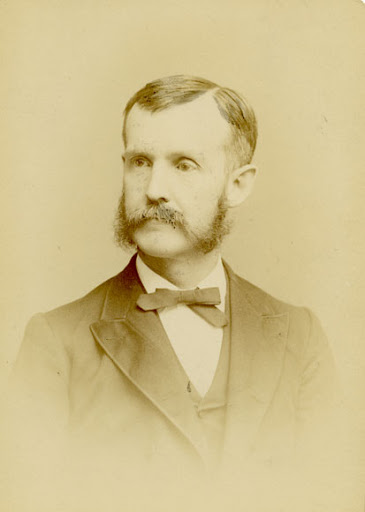
J.R. Miller

A Gentle Heart

Colossians 3:12; Matthew 11:29
J.R. Miller October, 20 2007 Audio
0 Comments
This is the best sermon on Christian gentleness which we have ever read.

The TEXT for the audio can be found here:

https://www.gracegems.org/Miller/gentleness.htm

You will find it most helpful to read the text as you listen to the audio.

Sermon Transcript

Auto-generated transcript • May contain errors

100%
A Gentle Heart by J. R. Miller 1896 Take my yoke upon you and learn
from me, for I am gentle and humble in heart. Matthew 11 verse
29 By the meekness and gentleness of Christ. 2 Corinthians 10 verse
1 The fruit of the Spirit is gentleness. Galatians 5 verse
22 Let your gentleness be evident to all. Philippians 4 verse 5. Be completely humble and gentle. Be patient, bearing with one
another in love. Ephesians 4 verse 2. Therefore,
as God's chosen people, holy and dearly loved, clothe yourselves
with compassion, kindness, humility, gentleness, and patience. Colossians 3 verse 12 We were
gentle among you, like a mother caring for her little children.
Thessalonians 2 verse 7 But you, men of God, flee from all this,
and pursue righteousness, godliness, faith, love, endurance, and gentleness. 1 Timothy 6 verse 11 The Lord's
servant must be gentle towards all. II Timothy 2 verse 24 The
unfading beauty of a gentle and quiet spirit, which is of great
worth in God's sight. I Peter 3 verse 4 Gentleness
is a beautiful quality. It is essential to all true character. Nobody admires un-gentleness
in either man or woman. When a man is harsh, cold, unfeeling,
unkind, crude and rough in his manner, no one speaks of his
fine disposition. When a woman is loud-voiced,
dictatorial, petulant, given to speaking bitter words and
doing unkindly things, no person is ever heard saying of her,
what a lovely disposition she has. She may have many excellent
qualities, and may do much good, but her ungentleness mars the
beauty of her character. No man is truly great who is
not gentle. Your gentleness has made me great. Psalm 18, verse 35. Courage, strength, truth, justice,
righteousness are all essential elements in a manly character.
But if all these be in a man, and gentleness be lacking, the
life is sadly flawed. We might put the word gentleness
into Paul's wonderful sentences, and read them thus. If I speak
with the tongues of men and of angels, but have not gentleness,
I am become sounding brass or a clanging cymbal. And if I have
the gift of prophecy, and know all mysteries and all knowledge,
And if I have all faith, so as to remove mountains, but have
not gentleness, I am nothing. And if I bestow all my goods
to feed the poor, and if I give my body to be burned, but have
not gentleness, it profits me nothing. Christian, even the
Christliest would pray for a new adornment, an added grace of
character, It may well be for gentleness. This is the crown
of all loveliness, the christliest of all christly qualities. The Bible gives us many a glimpse
of gentleness as an attribute of God. We think of the Law of
Moses as a great collection of dry statutes, referring to ceremonial
observances, to forms of worship, and to matters of duty. this
is one of the last places where we would look for anything tender.
Yet he who goes carefully over the chapters which contain these
laws comes upon many a bit of gentleness, like a sweet flower
on a cold mountain crag. We think of Sinai as the seat
of law's sternness. We hear the voice of thundering,
and we see the flashing of lightning. Clouds and darkness and all dreadfulness
surround the mountain. The people are kept far away
because of the fearful holiness of the place. No one thinks of
hearing anything gentle at Sinai. Yet, scarcely even in the New
Testament is there a more powerful unveiling of the love of the
divine heart than we find among the words spoken on that smoking
mountain. I am the Lord, I am the Lord,
the merciful and gracious God. I am slow to anger and rich in
unfailing love and faithfulness. I show this unfailing love to
many thousands by forgiving every kind of sin and rebellion. Exodus 34 verses 6 and 7. There is another revealing of
divine gentleness in the story of Elijah at Horeb A great and
strong wind rent the mountains and broke in pieces the rocks.
But the Lord was not in the wind. After the storm there was an
earthquake with its frightful accompaniments. But the Lord
was not in the earthquake. Then a fire swept by. But the
Lord was not in the fire. After the fire there was heard
a soft whisper, breathing in the air, a still, small voice. a sound of gentle stillness.
And that was God. God is gentle. With all His power,
power that has made all the universe and holds all things in being,
there is no mother in all the world so gentle as God is. Gentleness, being a divine quality,
is one which belongs to the true human character. We are taught
to be perfect as our Father in Heaven is perfect. If we would
be like God, we must be gentle. This world needs nothing more
than it needs gentleness. All human hearts hunger for tenderness. We are made for love, not only
to love, but to be loved. Harshness pains us. Ungentleness
touches our sensitive spirits, as frost touches the flowers.
It stunts the growth of all lovely things. We naturally crave gentleness. It is like a genial summer to
our life. Beneath its warm, nourishing
influence, beautiful things in us grow. Then there always are
many people who have special need of tenderness. We cannot
know what secret burdens many of those about us are carrying,
what hidden griefs burn like fires in the hearts of those
with whom we mingle in our common life. Not all grief wears the
outward garb of mourning. Sunny faces oftentimes veil heavy
hearts. Many people, who make no audible
appeal for sympathy, yet crave tenderness. They certainly need
it, though they ask it not, as they bow beneath their burden.
There is no weakness in such a yearning. We remember how our
Master himself longed for expressions of love when he was passing through
his deepest experiences of suffering, and how bitterly he was disappointed
when his friends failed him. Many a life goes down in the
fierce hard struggle for lack of the blessing of strength which
human tenderness would have brought. Many a man owes his victoriousness
in sorrow or in temptation to the gentleness which came to
him in some helpful form from a thoughtful friend. We know
not who of those we meet any day who need the help which our
gentleness could give. Life is not easy to most people. Its duties are hard, its burdens
are heavy. Life's strain never relaxes. There is no truce in life's battles. This world is not friendly to
noble living. There are countless antagonisms. Heaven can be reached by any
of us only by passing through seried lines of strong enmity. Human help is not always ready
when it would be welcomed. Too often men find indifference
or opposition. where they ought to find love.
Life's rivalries and competitions are sharp and oftentimes deadly. We can never do amiss in showing
gentleness. There is no day when it will
be untimely. There is no place where it will
not find welcome. It will harm no one, and it may
save someone from despair. The touch of a child on a woman's
hand may save a life from self-destruction. It is interesting to think of
the new era of love which Jesus opened. Of course there was gentleness
in the world before he came, there was mother love, there
was friendship, deep, true and tender, there were marital lovers
who were bound together with most sacred ties, there were
hearts even among heathen people in which there was gentleness,
almost beautiful enough for heaven. There were holy places where
affection ministered with angel-tenderness. Yet the world at large was full
of cruelty. The rich oppressed the poor,
the strong crushed the weak, women were slaves and men were
tyrants. There was no hand of love reached
out to help the sick, the lame. the blind, the old, the deformed,
the insane, nor any to care for the widow, the orphan, and the
homeless. Then Jesus came, and for thirty-three
years He went about among men, doing kindly things. He had a
gentle heart, and gentleness flowed out in His speech. He
spoke words which throbbed with tenderness. There was never any
uncertainty about the heartbeat in the words which fell from
the lips of Jesus. They throbbed with sympathy and
tenderness. The people knew always that Jesus
was their friend. His life was full of rich helpfulness. No wrong or cruelty ever made
him ungentle. He scattered kindness wherever
he moved. One day they nailed those gentle
hands to a cross. After that, the people missed
him, for he came no more to their homes. It was a sore loss to
the poor and the sad, and there must have been grief in many
a household. But while the personal ministry
of Jesus was ended by his death, the influence of his life went
on. He had set the world a new example
of love. He had taught lessons of patience
and meekness which no other teacher had ever given. He had imparted
new meaning to human affection. He had made love the law of his
kingdom. As one might drop a handful of
spices into a pot of brackish water and therewith sweeten the
waters, so these teachings of Jesus, fell into the world's
unloving, unkindly life, and at once began to change it into
gentleness. Wherever the Gospel has gone,
these sayings of the great Teacher have been carried, and have fallen
into people's hearts, leaving there their blessings of gentleness. The influence of the death of
Jesus also has wonderfully helped in teaching the great lesson
of gentleness. It was love that died upon the
cross. A heart broke that day on Calvary. A great sorrow always, for the
time at least, softens hearts. A funeral touches, with at least
a momentary tenderness, all who pass by. Loud laughter is subdued
even in the most careless. A noble sacrifice as when a life
is given in the effort to help or to save others, always makes
other hearts a little truer, a little braver, and a little
nobler in their impulses. The influence of the death of
Jesus on this world's life is immeasurable. The cross is like
a great heart of love beating at the center of the world, sending
its pulsings of tenderness into all lands. The life of Jesus
beats in the hearts of His followers, and all who love Him have something
of His gentleness. The love of Jesus kindles love
in every believing heart. That is the lesson set for all
of us in the New Testament. We are taught that we should
love as Jesus loved, that we should be kind as He was kind,
that His meekness, patience, Thoughtfulness, selflessness,
should be reproduced in us. There is need for the lesson
of gentleness in homes. There love's sweetest flowers
should bloom. There we should always carry
our purest and best affections. No matter how heavy the burdens
of the day have been, when we gather home at nightfall, we
should bring only cheer and gentleness. no one, has any right to be ungentle
in his own home. If he finds himself in such a
mood, he should go to his room, until it has vanished. The mother's
life is not easy, however happy she may be. Her hours are long,
and her load of care is never laid down. When one day's tasks
are finished, and she seeks her pillow for rest, she knows that
her eyes will open in the morning, on another day full as the one
that is gone, with children about her continually, tugging at her
dress, climbing up on her knee, bringing their little hurts,
their quarrels, their broken toys, their complaints, their
thousand questions to her. And then, with all the cares
and toils that are hers, and with all the interruptions and
annoyances of the busy days, it is no wonder if sometimes
the strain is almost more than she can endure in quiet patience. Nevertheless, we should all try
to learn the lesson of gentleness in our homes. It is the lesson
that is needed to make the home happiness, a little like heaven. Home is meant to be a place to
grow in. It is a school in which we should
learn love in all its branches. It is not a place for selfishness
or for self-indulgence. It should never be a place where
a man can work off his annoyances after trying to keep polite and
courteous to others all the day. It is not the place for the opening
of doors of heart and lips to let ugly tempers fly out at will. It is not a place where people
can act as they feel, however unchristian their feelings may
be, withdrawing the guards of self-control, relaxing all restraints
and letting their worst tempers have sway. Home is a school in
which there are great life lessons to be learned. It is a place
of self-discipline. All friendship is discipline.
We learn to give up our own way, or, if we do not, we never can
become a true friend. It is well that we get this truth
clearly before us, that life with all its experiences is our
opportunity for learning love. The lesson set for us is, Love
one another. As I have loved you, so you must
love one another. Our one thing to master in this
lesson is love. We are not in this world to get
rich, to gain power, to become learned in the arts and sciences,
to build up a great business, or to do great things in any
other way. We are not here to get along
in our daily work, in our shops, or schools, or homes, or on our
farms. We are not here only to preach
the gospel, to comfort sorrow, to visit the sick, and perform
deeds of charity. All of these, or any of these,
may be among our duties, and they may fill our hands, but,
in all our occupations, the real business of life that which we
are always to strive to do, the work which must go on in all
our experiences, if we grasp life's true meaning at all, is
to learn to love, and to grow loving in disposition and character. We may learn the finest arts,
music, painting, sculpture, poetry, or may master the noblest sciences,
or, by means of reading, study, travel, and conversation with
refined people may attain the best culture, but if in all this
we do not learn love and become more gentle in spirit and action,
we have missed the price of living. If, in the midst of all our duties,
cares, trials, joys, sorrows, we are not day by day growing,
in sweetness, in gentleness, in patience, in meekness, in
selflessness, in thoughtfulness, and in all branches of love,
we are not learning the great lesson set for us by our Master
in this school of life. We should be gentle above all
to those we love the best. There is an inner circle of affection
to which each heart has a right, without robbing others. While
we are to be gentle unto all men, never ungentle to any, there
are those to whom we owe special tenderness. Those within our
own home belong to this sacred inner circle. We must make sure
that our home piety is true and real, that it is of the spirit
and life, and not merely in form. It must be love, love wrought
out in thought, in word, in disposition, in action. It must show itself
not only in patience, forbearance, and self-control, and in sweetness
under provocation, but also in all gentle thoughtfulness, and
in little tender ways in all the family interactions. No amount
of good religious teaching will ever make up for the lack of
affection in parents towards children. A gentleman said the
other day, My mother was a good woman. She insisted on her boys
going to church and Sunday school, and taught us to pray. But I
do not remember that she ever kissed me. She was a woman of
lofty principles, but cold and reserved, lacking in tenderness. It does not matter how much Bible-reading
and prayer and catechism-saying and godly teaching there may
be in a home. If gentleness is lacking, that
is lacking which most of all the children need in the life
of their home. A child must have love. Love is to its life what sunshine
is to plants and flowers. No young life can ever grow to
its best in a home without gentleness. Yet there are parents who forget
this, or fail to realize its importance. There are homes where
the scepter is iron, where affection is repressed, where a child is
never kissed after baby days have passed. A woman of genius
said that until she was eighteen she could not tell time by the
clock. When she was twelve, her father
had tried to teach her how to tell time, but she had failed
to understand him, and feared to let him know that she had
not understood. Yet, she said, that he had never
in her life spoken to her a harsh word. On the other hand, however,
he had never spoken an endearing word to her. and his marble-like
coldness had frozen her heart. After his death she wrote of
him, his heart was pure, but cold. I think there was no other
like it on the earth. I have a letter from a young
girl of eighteen in another city, a stranger, of whose family I
have no personal knowledge. The girl writes to me, not to
complain, but to ask counsel as to her own duty. Hers is a
home where love finds no adequate expression in affectionateness. Both her parents are professing
Christians, but evidently they have trained themselves to repress
whatever tenderness there may be in their nature. This young
girl is hungry for home love, and writes to ask if there is
any way in which she can reach her parents' hearts to find the
treasures of love which she believes are locked away there. I know
they love me, she writes, they would give their lives for me.
But my heart is breaking for expressions of that love. She
is starving for love's daily food. It is to be feared that
there are too many such homes, Christian homes, with prayer
and godly teaching, and with pure, consistent living, but
with no daily bread of lovingness for hungry hearts. I plead for
love's gentleness in homes. Nothing else will take its place.
There may be fine furniture, rich carpets, costly pictures,
a large library of excellent volumes, fine music, and all
luxuries and adornments. And there may be religious forms,
a family altar, good instruction, and consistent Christian living.
But if gentleness is lacking in the family communion, the
lack is one which leaves an irreparable hurt in the lives of the children. There are many people who, when
their loved ones die, wish they could send some words of love
and tenderness to them. which they had never spoken while
their loved ones were close beside them. In too many homes gentleness
is not manifested while the family circle is unbroken, and the heartache
for the privilege of showing kindness, perhaps for the opportunity
of unsaying words and undoing acts which caused pain. We would
better learn the lesson of gentleness in time, and then fill our home
with love while we may. It will not be very long until
our chance of showing love shall have been used up. But home is
not the only place where we should be gentle. If the inner circle
of life's holy place have claim on us for the best that our love
can yield, the common walks and the wider circle also have claim
for our love and gentleness. Our Master manifested Himself
to His own, as He did not to the world. But the world, even
His cruelest enemies, never received anything of ungentleness from
Him. The heart's most sacred revealings
are for the heart's chosen and trusted ones, as the secret of
the Lord is with those who fear Him. But we are to be gentle
unto all men, as our Father sends His reign upon the just and upon
the unjust. What we learn under Holmes' roof
in the close fellowship of household life, we are to live out in our
associations with others. As Moses' face shone when he
came down among the people after being with God in the mount,
so our faces should carry the warmth and glow of tenderness
from love's inner shrine. out into all other places of
ordinary social interaction. What we learn of love's lesson
in our home we should put into practice in our life in the world,
in the midst of its strifes, rivalries, competitions, frictions,
and manifold trials and testings. We must never forget that true
Christianity, in its practical outworking, is love. Some people
think religion is mere orthodoxy of belief, that he who has a
good creed is truly religious. We must remember that the Pharisees
had a good creed and were orthodox, yet we have our Lord's testimony
that their religion did not please God. It lacked love. It was self-righteous and unmerciful. Others think that true religion
It consists in the punctual observance of forms of worship. If they
are always at church on Sundays and other church meetings, and
if only they attend to all the ordinances and follow all the
rules, then they are true Christians. Yet sometimes they are not easy
people to live with. They are censorious, dictatorial,
judges of others, exacting, severe in manner, or harsh in speech. Let no one imagine that any degree
of devotion to the Church and diligence in observing ordinances
will ever pass with God for true religion if one has not love,
is not loving and gentle. The practical outworking of Christianity
is love. A good creed is well, but doctrines
which do not become a life of gentleness in character and disposition,
in speech and in conduct, are not fruitful doctrines. Church
attendance, religious duties, are good and right, but they
are only means to an end, and the end is lovingness. The religious
observances which do not work for us kinder thoughts, diviner
affections, and a sweeter life, are not profiting us. The final
object of all Christian life and worship is to make us more
like Christ, and Christ is love. For the whole law is fulfilled
in one word, even in this, You shall love. The one who loves
another has fulfilled the law. The commandments are all summed
up by this, Love your neighbor as yourself. Those who live the
gentle life of patient, thoughtful, selfless love, make a melody
whose strains are enrapturing. Someone asks almost in disheartenment,
How can we learn this lesson of gentleness? Many of us seem
never to master it. We go on through life, enjoying
the means of grace, and striving more or less earnestly to grow
better. Yet our progress appears to be
very slow. We desire to learn love's lesson,
but it comes out very slowly in our life. We must note, first
of all, that the lesson has to be learned. It does not come
naturally, at least to most people. We find it hard to be gentle
always, and to be so to all kinds of people. Perhaps we can be
gentle on sunny days, but when the harsh north wind blows, we
grow fretful and lose our sweetness. Or we can be gentle without much
effort to some gentle-spirited people, while perhaps we are
almost unbearably ungentle to others. We are gracious and sweet
to those who are gracious to us, but when people are rude
to us, when they treat us unkindly, when they seem unworthy of our
love, it is not so easy to be gentle to them. Yet that is the
lesson which is everywhere taught in the scriptures, and which
the Master has set for us. It is a comfort to us to know
that the lesson has to be learned, and does not come as a gift from
God without any effort. We must learn to be gentle. just
as artists learn to paint lovely pictures. They spend years and
years under masters, and in patient, toilsome effort, before they
can paint pictures which at all realize the lovely visions of
their soul. It is still more difficult to
learn to reproduce visions of love in human life, to be always
patient, gentle, kind. It gives us encouragement as
we are striving to get our lesson, to read the words in which Paul
says that he had learned to be content whatever his condition
was. It adds, too, to the measure
of our encouragement to see from the chronology of the letter
in which we find this bit of autobiography that the Apostle
was well on toward the close of his life when he wrote so
triumphantly of this attainment. We may infer that it was not
easy for him to learn the lesson of contentment, and that he was
quite an old man before he had mastered it. It is probably as
hard to learn to be always gentle as it is to learn to be always
contented. It will take time and careful,
unwearying application. We must set ourselves resolutely
to the task, for the lesson is one that we must not fail to
learn, unless we would fail in growing into Christlikeness.
It is not a matter of small importance. It is not something merely that
is desirable, but not essential. Gentleness is not a mere ornament
of life, which one may have or may not have, as one may or may
not wear jewelry. It is not a mere frill of character,
which adds to its beauty, but is not part of it. Gentleness
is essential in every true Christian life. It is part of its very
warp and woof. Not to be gentle is not to be
like Jesus. Therefore the lesson must be
learned. The golden threads must be woven
into the texture. Nothing less than the gentleness
of Christ himself must be accepted as the pattern. after which we
are to fashion our life and character. Then, every day, some progress
must be made toward the attainment of this lovely ideal. See that
no one day passes in which you do not make yourself a somewhat
better Christian. The motto of an old artist was,
No day without a line. If we set before us the perfect
standard, the gentleness of our and then every day make some
slight advance, though it be but a line, toward the reproducing
of this gentleness in our own life, we shall at last wear the
ornament of a gentle spirit, which is so precious in God's
sight. We must never rest satisfied
with any partial attainment, just so far as we are still ungentle,
rude to anyone, even to a beggar, sharp in speech, haughty in bearing,
unkind in any way to a human being, the lesson of gentleness
is yet imperfectly learned, and we must continue our diligence. We must get control of our temper,
and must master all our moods and feelings. We must train ourselves
to check any faintest risings of irritation, turning it instantly
into an impulse of tenderness. We must school ourselves to be
thoughtful, patient, charitable, and to desire always to do good. The way to acquire any grace
of character is to compel thought, word, and action into one channel,
until the lovely quality has become a permanent part of our
life. There is something else. We never
can learn the lesson ourselves alone. To have gentleness in
one's life, one must have a gentle heart. Mere human gentleness
is not enough. We need more than training and
self-discipline. Our heart must be made new, before
it will yield the life of perfect lovingness. It is full of self
and pride, and hatred and envy. and all undivine qualities. The gentleness which the New
Testament holds up to us as the standard of Christian living
is too high for any mere attainment. We need that God shall work in
us, to help us to produce the loveliness which is in the pattern
Christ. And this divine co-working is
promised. The fruit of the Spirit is gentleness. The Holy Spirit will help us
to learn the lesson, working in our heart and life the sweetness
of love, the gentleness of disposition, and the graciousness of manner,
which will please God. There is a legend of a great
artist. One day he had labored long on
his picture, but was discouraged, for he could not produce on his
canvas the beauty of his soul's vision. He was weary, too, and,
sinking down on a stool by his easel, he fell asleep. While
he slept, an angel came, and taking the brushes which he had
dropped from his tired hands, the angel finished the picture
in a marvelous way. Just so, when we toil and strive
in the name of Christ to learn our lesson of gentleness, and
yet grow disheartened and weary because we learn it so slowly,
Christ Himself comes and puts on our canvas the touches of
beauty which our own unskilled hands cannot produce. Your gentleness
has made me great. Psalm 18 verse 35 This concludes
A Gentle Heart by J. R. Miller
J.R. Miller
About J.R. Miller
James Russell Miller (20 March 1840 — 2 July 1912) was a popular Christian author, Editorial Superintendent of the Presbyterian Board of Publication, and pastor of several churches in Pennsylvania and Illinois.
Broadcaster:

Comments

0 / 2000 characters
Comments are moderated before appearing.

Be the first to comment!

Joshua

Joshua

Shall we play a game? Ask me about articles, sermons, or theology from our library. I can also help you navigate the site.