Bootstrap
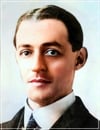
Arthur W. Pink

The Christian's Armor

Ephesians 6
Arthur W. Pink January, 6 2007 Audio
0 Comments
Choice message by Pink!

Sermon Transcript

Auto-generated transcript • May contain errors

100%
The Christian's Armor, Ephesians 6, 10-18 by Arthur W. Pink In the passage which is to be before us, the apostle gathers up the whole previous subject of the epistle into an urgent reminder of the solemn conditions under which the Christian's life is lived. Biographic figure, he shows that the Christian's life is lived on the battlefield. For we are not only pilgrims, but soldiers. We are not only in a foreign country, but in the enemy's land. Though the redemption which Christ has purchased for his people be free and full, yet between the beginning of its application to us and the final consummation of it, there is a terrible and protracted conflict through which we have to pass. This is not merely a figure of speech, but a grim reality. Though salvation is free, yet it is not obtained without great effort. The fight to which God's children are called in this life is one in which Christians themselves receive many sore wounds and thousands of professors are slain.

Now as we shall see in the verses which follow, the apostle warns us that the conflict has to do with more than human foes. The enemies we have to meet are superhuman ones, and therefore in order to successfully fight against them, we need supernatural strength. We must remember that the Christian belongs to the spiritual realm as well as the natural, and so he has spiritual as well as natural foes, and hence he needs spiritual strength as well as physical.

Therefore the Apostle begins here by saying, Finally, my brethren, be strong in the Lord, and in the power of his might. Verse 10. The word finally denotes that the apostle has reached his closing exhortation and the words be strong linked up with what immediately precedes as well as with what now follows. Some of you will remember that the whole of the fifth and the opening verses of the sixth chapters are filled with exhortations. Exhortations that pertain to each aspect of the Christian life. exhortations to regulate him in the home, in business, in the world. Those exhortations are addressed to the husband, wife, child, master, servant, and in order for the Christian to obey them. He needs to be strong in the Lord and in the power of his might.

Thus the call which is given in verse 10 is not only an introduction to what follows, but is also closely related to that which precedes. Finally, my brethren, after all the Christian duties I have set before you in the previous verse, now be strong in the Lord and in the power of His might.

The words be strong means to muster strength for the conflict, and be strong in the Lord signifies we must seek that strength from the only source from which we can obtain it. Note carefully, it is not be strong from the Lord, nor is it be strengthened by the Lord. No, it is be strong in the Lord.

Perhaps you will get the thought if I use this analogy. Just as a farm that is amputated is useless, and just as a branch cut off from the vine withers, so a Christian whose fellowship with the Lord has been broken is in a strengthless, fruitless, useless state. Thus, be strong in the Lord means first of all see to it that you maintain a living, practical relationship to and remain in constant communion with the Lord.

just as my arm must be a part of a member in my body, if it is to be vitalized and fitted to perform its functions, so I must be in real touch with the Lord, in daily communion with Him, in living contact, not in theory, but in actual experience. It is deeply important that we should, ere we proceed, grasp the exhortation found in verse 10, otherwise there will be no strength for the conflict.

Be strong in the Lord and in the power of His might. At first sight there seems to be a needless repetition here, but it is not so. A soldier not only needs strength of body for that carrying of his heavy weapons, for that strain of long marches, and for that actual fighting, but he also needs courage. A powerful giant who is a coward would make no sort of soldier. The two chief things which are needed for one engaged in fighting are strength and courage, or vitality and a brave heart. That is what is in view in verse 10.

The last clause brings in the thought of boldness. Be strong in faith, in hope, in wisdom, in patience, in fortitude, in every Christian grace. To be strong in grace is to be weak in sin. It is vitally essential to remember that we need to have our strength and courage renewed daily. Be strong in the Lord. Seek His strength at the beginning of each day. They that wait upon the Lord shall renew their strength. Isaiah 40 31 God does not impart strength to us wholesale. He will not give me strength Monday morning to last through the week. No. There has to be the renewing of our strength. And that strength has to be drawn from the Lord by the actings of faith appropriating from His fullness.

The enemies we have to contend with cannot be overcome by human wisdom and might. Unless we go forth to the conflict, continually looking to Christ for all needed supplies of grace, deriving all our vitality from Him, we are sure to be defeated. Put on the whole armor of God, that ye may be able to stand against the wiles of the devil. Verse 11.

Our first need is to stir up ourselves to resist temptation by a believing reliance upon God's all-sufficient grace, that is, obtaining from Him the strength which will enable us to go forth and fight against the foe. Our second greatest need is to be well-armed for the conflict into which we must daily enter. This is the relation between verses 10 and 11. Be strong in the Lord and put on the whole armor of God.

First, stir up yourselves to resist temptation, seeking strength at the beginning of the day for the conflict. Then, see to it that you take unto yourselves, put on the whole armor of God. The Christian is engaged in a warfare. There is a fight before him, hence armor is urgently needed. It is impossible for us to stand against the wiles of the devil unless we avail ourselves of the provisions which God has made for enabling us to stand.

Observe, it is called the armor of God. Just as the strength we need comes not from ourselves, but must be supplied by the Lord, so our means of defense lies not in our own powers and faculties, but only as they are quickened by God. It is called the armor of God, because He both provides and bestows it, for we have none of our own. And yet, while this armor is of God's providing and bestowing, we have to put it on. God does not fit it on us. He places it before us, and it is our responsibility, duty, task, to put on the whole armor of God.

I must say that this same figure of the armor is used three times in the epistles of Paul, and I believe we find in them a reference to the Trinity. I think the armor of righteousness, 2 Corinthians 6, 7, looks more particularly unto Christ. the armor of light, Romans 13, 12, more especially to the Holy Spirit, who is the one that immediately illuminates us, and the armor of God unto the Father, who is the provider of it.

Now it is very important that we should recognize that this term armor is a figurative one, a metaphor, and refers not to something which is material or carnal. It is a figurative expression denoting the Christian's graces. The various parts of this armor represent the different spiritual graces which are to protect his varied faculties. And when we are told to put on the armor, it simply means we are to call into exercise and action our graces.

Notice. put on the whole armor of God, that is, avoiding the snares of the devil or to drop the figure. So exercise all the Christian graces that no part of the soul is exposed unto the enemy. Those who wish to approve themselves of being in possession of grace, must see to it that they have all the graces of a saint.

Wherefore take unto you the whole armor of God, that in order that ye may be able to stand against the wiles of the devil. There is no standing against him if we are not armored. or to drop the figure, there is no success in resisting the devil if our graces be not in exercise. On the other hand, there is no failing and falling before him if our graces are healthy and active.

For we wrestle not against flesh and blood, but against principalities, against powers, against the rulers of the darkness of this world, against spiritual wickedness in high places.

Verse 12. The opening four has the force of because. The Apostle is advancing a reason, which virtually amounts to an argument, so as to enforce the exhortation just given. Because we wrestle not against flesh and blood, but against principalities, not against puny human enemies no stronger than ourselves, but against powers and rulers of the darkness of this world. Therefore the panoply of God is essential. That is brought in to emphasize the terribleness of the conflicted before us. It is no imaginary one and no ordinary foes we have to meet, but spiritual, superhuman, invisible ones. Those enemies seek to destroy faith and produce doubt. They seek to destroy hope and produce despair. They seek to destroy humility and produce pride. They seek to destroy peace and produce bitterness and malice. They seek to prevent our enjoyment of heavenly things. Their attack is not upon the body, but upon the soul.

Wherefore, take unto you the whole armor of God, that ye may be able to withstand in the evil day, and having done all, to stand."

Verse 13. The opening, wherefore, means in view of the fact that we wrestle against these powerful, superhuman, invisible foes who hate us with a deadly hatred and are seeking to destroy us. Therefore, appropriate and use the provision which God has made so that we may stand and withstand.

The first clause of verse 13 explains the opening words of verse 11. It says, put on, make use of all proper defenses and weapons for repulsing the attacks. And verse 13 says, take unto you the whole armor of God. We put on by taking it unto us. that is by appropriation, by making it our own, that he may be able to withstand. To withstand is the opposite of yielding, of being tripped up, thrown down by the devil's temptations. It means that we stand our ground, strive against and resist the devil.

that ye may be able to withstand in the evil day, and, having done all, to stand. The stand is the opposite of a slothful sleep or a cowardly flight. We have that illustrated in the case of the apostles. In Gethsemane they did not stand, but lay down and slept at the post of duty. No wonder that a little later they all forsook him and fled.

I want you to notice that we are not here told to advance. We are only ordered to stand. God has not called his people to an aggressive war upon Satan to invade his territory and seek to wrest from him what is his. but he has told us to occupy the ground which he has allotted us.

I want you to see what would have been implied had this verse said, Take unto you the whole armor of God, and advance upon the devil, storm his strongholds, liberate his prisoners. But not so. The Lord has given no charge or commission to the rank and file of His people to engage in what is now called personal work, soul winning, rescuing the perishing. Indeed, He has not. The work of preaching the gospel belongs alone unto his own personally called and divinely equipped servants or ministers.

All such feverish activities of the flesh, as we now behold in the religious world, find no place in the divine exhortation, having done all to stand. This is the third time in these verses the Spirit of God has repeated that word, stand, not advance, not rush hither and thither like a crazy person. Stand, therefore, is all God has told us to do in our conflict with the devil.

Stand, therefore, having your loins girt about with truth. Now that brings before us the first of the seven pieces of the Christian's armor which is mentioned in this passage.

First, let me warn you against the carnalization of this word, thinking of something that is external, visible, or tangible. The figure of the girdle is taken from a well-known custom in Oriental countries where the people all wear long flowing outer garments reaching to the feet which would impede their actions when walking, walking, or fighting. The first thing a person does there when about to be active is to gird up around his waist that outer garment which trails to the ground.

When the garment is not girded and hangs down, it indicates the person is at rest. To gird up is therefore the opposite of sloth and ease, following the line of least resistance. Be girded about with the girdle of truth. I believe there is a double reference or meaning here in the word truth.

But first of all, I want to take up what it is that we need to gird. The breastplate is for the heart, the helmet for the head. What then is the girdle for? In that, from which the figure is borrowed, the reference is to the waist or loins. But what does that metaphor denote? Plainly, the center or mainspring of all our activities. And what is that? Obviously, it is the mind.

The mind is the mainspring of action. First, the thought, and then the carrying out of it. 1 Peter 1.13 helps us here. Bird up the loins of your mind. Let your loins be girt about with truth. It is not so much our embracing the truth as the truth embracing us. Thus the spiritual reference is to the holding in and regulation of the thoughts of the mind.

The mind girded up means a mind which is disciplined, the opposite of one where the thoughts are allowed to run loose and wild. Again, the loins are the place of strength. So is the mind. If we allow our thoughts and imaginations to run wild, we will have no communion with God and no power against Satan. If our thoughts are not brought into captivity in obedience to Christ, the devil will soon gain a hold over us.

having your loins girt about with truth. I think the word truth has reference in the first place to the word of God. Thy word is truth. John 17, 17. That is what must regulate the mind, control the thoughts, subdue the imaginations. There must be a knowledge of faith in, love for, subjection to God's word. Stand, therefore, having your loins, your mind, girt about with truth.

Now that suggests to us the characteristic quality of the adversary against whom we are called upon to arm. Satan is a liar, and we can only meet him with the truth. Satan prevails over ignorance by means of guile or deceit, but he has no power over those whose minds are regulated by the truth of God. If ye continue in my word, then are ye my disciples indeed. And ye shall know the truth, and the truth shall make you free. John 8, 31 and 32. Free from the toils, the power, the deceptions of Satan.

I think the word truth here has a second meaning. Take for example Psalm 51, 6. God desireth truth in the inward parts. Truth there signifies reality, sincerity. Truth is the opposite of hypocrisy, pretense, unreality. That is why the girdle of truth comes first. Because it it be lacking, everything else is vain and useless. The strength of every grace lies in the sincerity of it.

In 1 Timothy 1, 5, we read of faith unsanged, which means true, genuine, real faith, in contrast from a faith which is only theoretical, notional, lifeless, inoperative, a faith which utterly withers before the fires of testing. Grace be with all them that love our Lord Jesus Christ in sincerity. Ephesians 6 24. That is another discriminating verse, distinguishing between a real and false love, a true and faithless love. There are thousands of Protestants who have a similar love for Christ as Romanists have for His Mother Mary. It is merely a natural love, a fleshly sentiment, a carnal emotion. But genuine spiritual love for Him strives to please Him. It is an intensely practical thing, a principle of holy obedience. Oh, how we need to examine our graces and test them by scripture to see whether our faith and love be genuine.

We repeat that reality and sincerity is the strength of every Christian grace. That is why the girdle of truth comes first in the different pieces of armor. The girdle of truth corresponding to the military belt of the warrior signifies then the mind being regulated by the word of God and guarded by a real sincerity. And this alone will protect us against Satan's temptations unto slackness of guile and hypocrisy. Only as this is put on by us shall we be able to stand against the wiles of the devil. To stand is to so resist him that he does not throw us down. To put on the girdle of truth means applying the word to the first movements of our minds. This is where Eve failed. She had received the word, but not in the love of it. Instead of resisting the devil, she parlayed with him. Instead of the truth bridling her imaginations and desire, she cast it from her. How different with Christ! When Satan approached him, he was girded with the girdle of truth. His thoughts were regulated by the word, and there was an absolute sincerity.

God word. The second part or piece of the Christian's armor is mentioned in verse 14, and having on the breastplate of righteousness. First of all, notice the connecting and, which intimates that there is a very close relation between the mind being girded with truth and the heart protected with the breastplate of righteousness. All of these seven pieces of armor are not so connected, but the and Here, between the first two, denotes that they are inseparably united.

Now obviously, the best plate of righteousness is that protection which we need for the heart. This verse is closely parallel to Proverbs 4, 23. Keep thine heart with all diligence, understanding by the heart the affections and conscience.

as there was a double reference in the word truth first to the word of God and second to the sincerity of spirit so I believe there is a double reference here in the breastplate of righteousness I think it refers both to that righteousness which Christ wrought out for us and that righteousness which the Spirit works in us. Both the righteousness which is imputed and the righteousness which is imparted, which is what we need if we are to withstand the attacks of Satan.

We might compare 1 Thessalonians 5.8. Let us who are of the day be sober, putting on the breastplate of faith and love. I have been quite impressed of late in noting how frequently that word sober occurs in the epistles, either in its substantive or verbal form. Soberness is that which should characterize and identify the people of God. It is the opposite of that superficial slightiness which is one of the outstanding marks of worldlings today. It is the opposite of levity and also of that feverish restlessness of the flesh by which so many are intoxicated religiously and every other way.

But let us, who are of the day, be sober, putting on the breastplate of faith and love. Here, of course, it has the secondary meaning of what is in view in Ephesians 6, 14. It is the practical righteousness, like what we find in Revelation 19, 8.

This second piece of armor, as I have said, is inseparably connected with the girdle of truth, for sincerity of mind and holiness of heart must go together. It is in vain we pretend to the former, if the latter be lacking. Where there is genuine sincerity of mind, there will be and is holiness of heart. To put on the breastplate of righteousness means to maintain the power of holiness over our affections and conscience.

A verse that helps us to understand this is Acts 24, 16. Herein do I exercise myself to have always a conscience void of offense toward God and men. There you have an illustration of a man taking unto himself, putting on the breastplate of righteousness. Paul exercised himself to maintain a good conscience, both Godward and manward, and that requires daily diligence and persistent effort.

Now the best plate of righteousness is for withstanding Satan's temptations unto unholiness. The girdle of truth is to meet Satan's evil suggestions, to defile the mind. The breastplate of righteousness is needed to foil his efforts, to corrupt the affections, or defile the conscience. Where there is a conscience which reproaches us, then we soon fall victim to other attacks of the devil.

Passing on to the third piece of armor, and your feet shod with the preparation of the gospel of peace, verse 15. This is perhaps the most difficult of the seven pieces of armor to understand and define. And yet, if we hold fast the first thought that the Holy Spirit is using a figure of speech here, that the references to that which is internal rather than external, spiritual rather than material, and also that he is following a logical order, there should not be much difficulty in ascertaining what is meant by sandals of peace.

Just as the girdle of truth has to do with the mind, the breastplate of righteousness with the heart, so the shoes for the feet are a figure of that which concerns the will. At first sight, that may sound far-fetched, and yet, if we will think for a moment, it should be obvious that what the feet are to the body, the will is to the soul. The feet carry the body from place to place, and the will is that which directs the activities of the soul. What the will decides, that is what we do.

Now the world is to be regulated by the peace of the gospel. What is meant by that? This. In becoming reconciled to God and in having goodwill to our fellows, the gospel is the means or instrument that God uses. We are told in Psalm 110.3, Thy people shall be willing in the day of thy power. That means far more than they shall be ready to hearken to and believe the glad tidings of the gospel.

There is brought over into the gospel substantially everything which was contained in both the moral and ceremonial law. The gospel is not only a message of good news, but a divine commandment and rule of conduct. For the time has come that judgment must, not shall, now, not in the future. begin at the house of God. And if ye first begin at us, what shall the end be of them that obey not the gospel of God?" 1 Peter 4.17.

Yes, the gospel is a rule to submit unto, a divine fiat which demands obedience. your professed subjection unto the gospel of Christ, 2 Corinthians 9.13. Those words are absolutely meaningless today in nine circles out of ten throughout Christendom, for the gospel does not signify anything to them except glad tidings. there is nothing to be in subjection to. This is partly what I have in mind when saying there is carried over into and embodied in the gospel the substance of everything which was found in the law.

Let me put it in another form. All the exhortations contained in the New Testament epistles are nothing more than explanations and applications of the Ten Commandments. The gospel requires us to deny ourselves, take up the cross daily, and follow Christ in the path of unreserved obedience to God, your feet shod with the preparation of the gospel of peace, signifies with alacrity and readiness respond to God's will.

The peace of the gospel comes from walking in subjection to its terms and by fulfilling the duties which it prescribes. Just so far as we are obedient to it, we experimentally enjoy its peace. Thus, this third piece of armor is for fortifying the will against Satan's temptations unto self-will and disobedience, and this by subjection to the gospel.

Just as the feet are the members which convey the body from place to place, so the will directs the soul, and just as the feet must be adequately shod, if we are to walk properly and comfortably, so the will must be brought into subjection unto the revealed will of God, if we are to enjoy His peace.

Let there be that complete surrender daily, the dedicating of ourselves to God, and then we will be impervious unto Satan's attacks and temptations to disobedience, just as the girdle of truth is to protect us from Satan's efforts to fill the imaginations

Just as the breastplate of righteousness is God's provision to protect us from Satan's efforts to corrupt our hearts and produce that which is unholy, so having our feet shod with the preparation of the gospel of peace means the will being brought into subjection to God, and that protects us from Satan's temptations unto disobedience.

You will notice when we come to the fourth piece of armor, the AND is lacking. The first three were joined together, and that which is denoted by those figurative terms is inseparably linked together. The mind, the heart, the will. There you have the complete inner man.

above all, taking the shield of faith, wherewith ye shall be able to quench all the fiery darts of the wicked." Verse 16. I think the words, above all, have a double force. First, literally understanding them as a preposition of a place, meaning, overall, shielding as a canopy, protecting the mind, heart, and will. There must be faith in exercise if those three parts of our inner being are to be guarded.

Second, above all, may be taken adverbially, signifying chiefly, preeminently, supremely. It is an essential thing that you should take the shield of faith. For Hebrews 11 6 tells us, but without faith it is impossible to please Him. Yes, even if there were sincerity, love, and a pliable will, yet without faith we could not please Him. Therefore, above all, take unto you the shield of faith.

Faith is all in all in resisting temptations. We must be fully persuaded of the divine inspiration of the scriptures if we are to be awed by their precepts and cheered by their encouragements. We will never heed properly the divine warnings or consolations unless we have explicit confidence in their divine authorship.

The whole victory is here ascribed to faith above all. It is not by the blessed plate, helmet, or sword, but by the shield of faith that we are enabled to quench all the fiery darts of the wicked. It seems to be a general principle in the Spirit's arrangement of things in Scripture to put the most vital one in the center. We have seven pieces of armor, and the shield of faith is the fourth. So in Hebrews 6, 4 through 6, we have five things mentioned, and in the middle is made partakers of the Holy Spirit.

Faith is the life of all the graces. If faith be not in exercise, love, hope, patience cannot be. Here we find faith is likened unto a shield because it is intended for the defense of the whole man. The shield of the soldier is something he grips and raises or lowers as it is needed. It is for the protection of his entire person.

Now the figure which the Holy Spirit uses here in connection with Satan's attacks is taken from one of the devices of the ancients in their warfare, namely the use of darts, which had been dipped in tar and set on fire in order to blind their foes. That is what lies behind the metaphor of Quench, all the fiery darts of the wicked. What is in view is Satan's efforts to prevent our looking up.

The attacks of the devil are likened to fiery darts, first because of the wrath with which he shoots them. There is intense hatred in Satan against the child of God. Again, the very essence of his temptations is to inflame the passions and distress the conscience. He aims to enkindle covetousness, to excite worldly ambition, to ignite our lust. In James 3.6 we read The tongue is set on fire of hell. That means the devil's fiery darts have affected it.

The third reason why his temptations are likened unto fiery darts is because of the end to which they lead. If not quenched, should Satan's temptations be followed out to the end, they would land us in the lake of fire. The figure of darts denotes that his temptations are swift Noiseless. Dangerous.

Now taking the shield of faith means appropriating the word and acting on it. The shield is to protect the whole person, wherever the attack be made, whether on spirit or soul or body, and there is that in the word which is exactly suited unto each, but faith must lay hold of and employ it.

Now, in order to use the shield of faith effectually, the word of Christ needs to dwell in us richly. Colossians 3, 16. We must have right to hand a word which is pertinent for the particular temptation presented. For example, if tempted unto covetousness, I must use, lay not up for yourselves treasure on earth. when solicited by evil companions. If sinners entice thee, consent thou not. If tempted to harshness, be kindly affectioned one to another. It is because the details of Scripture have so little place in our meditations that Satan trips us so frequently.

Above all, taking the shield of faith, wherewith ye shall be able to quench all the fiery darts of the wicked. Like most of the other terms used, faith here also has a double signification. The faith which is to be our shield is both an objective and a subjective one. It has reference first to the word of God without the authority of which is ever binding upon me. It points secondly to my confidence in that word, the heart going out in trustful expectation to the author of it and counting upon its efficacy to repulse the devil.

and take the helmet of salvation, verse 17. This is the fifth piece of the Christian's armor. First of all, we may note the link between the fourth and fifth pieces, denoted by the word and. For this helps us to define what the helmet of salvation is. It is linked with faith. Hebrews 11.1 tells us, faith is the substance of things hoped for. And if we compare 1 Thessalonians 5.8, we get a confirmation of that thought. But let us who are of the day be sober, putting on the breastplate of faith and love, and for a helmet, The hope of salvation. Here in this epistle then, we have hope directly connected with the helmet. Incidentally, this verse is one of many in the New Testament which puts salvation in the future rather than in the past. Hope always looks forward, having to do with things to come. As Romans 8 25 tells us, If we hope for that we see not, then do we with patience wait for it.

Now faith and hope are inseparable. They are one in birth, one in decay. If faith languish, hope is listless. By the helmet of salvation, then, I understand the heart's expectation of the good things promised, a well-grounded assurance that God will make good to His people those things which His Word presents for future accomplishments. We may link up with this 1st John 3.3. Scriptural hope purifies. It delivers from discontent and despair. It comforts the heart in the interval of waiting.

Satan is unable to get a Christian to commit many of the grosser sins which are common in the world, so he attacks along other lines. Often he seeks to cast a cloud of gloom over the soul, or produce anxiety about the future. Despondency is one of his favorite weapons. For he knows well that the joy of the Lord is our strength. Nehemiah 8.10. Hence his frequent efforts to dampen our spirits. To repulse these, we are to take the helmet of salvation. That is, we are to exercise hope, anticipate the blissful future, look forward unto the eternal rest awaiting us, look away from earth to heaven.

And the sword of the Spirit, which is the Word of God. Verse 17. God has provided his people with an offensive weapon, as well as defensive ones. At first sight, that may seem to clash with what we said about Christians not being called upon to be aggressive against Satan, seeking to invade his territory and wrest it from him. But this verse does not clash to the slightest degree.

2 Corinthians 7-1 gives us the thought Having therefore these promises, dearly beloved, let us cleanse ourselves from all filthiness of the flesh and spirit. That is the active, aggressive side of the Christian's warfare. We are not only to resist our lusts, but to subdue them.

It is significant to note how late the 3rd of the Spirit is mentioned in this list. Some have thought that it should have come first, but it is not mentioned until the 6th. Why? I believe there is a two-fold reason. First, because all the other graces that have been mentioned are necessary in order to make a right use of the word. If there is not a sincere mind and a holy heart, we shall only handle the word dishonestly. If there is not practical righteousness, then we shall only be handling the Word theoretically. If there is not faith and hope, we shall only misuse it. All the Christian graces that are figuratively contemplated under the other pieces of armor must be in exercise before we can profitably handle the Word of God.

Second, it teaches us that even when the Christian has attained unto the highest point possible in this life, he still needs the Word. Even when he has upon him the girdle of truth, the breastplate of righteousness, his feet shod with the shoes of the preparation of the gospel of peace, and has taken unto himself the shield of faith and the helmet of salvation, He still needs the Word.

The Word of God is here called the Sword of the Spirit because He is the Author, the Interpreter, the Applier of it. He is the only one that can give it power over us. We can handle the word, meditate upon it, pray over it, and it has no effect upon us whatsoever unless the spirit applies his sword. If you think of this verse in the light of Christ's temptation, you will find that he used that sword for self-defense in repulsing the assaults of the devil. He was not aggressively attacking him. And blessed too is it to mark that as the dependent man. He used that weapon in the power of the Spirit. See Matthew 4.1, Luke 4.14.

The last piece of armor is given in verse 18. praying always with all prayer and supplication in the Spirit, and watching thereunto with all perseverance and supplication for all saints. Prayer is that which alone gives us the necessary strength to use the other pieces of armor. After the Christian has taken unto himself those six pieces, before he is thoroughly furnished to go forth unto battle and fitted for victory, he needs the help of his General. For this, the Apostle bids us to pray always, With all supplication of the Spirit, we are to fight upon our knees. Only prayer can keep alive the different spiritual graces which are figured by the various pieces of armor. Praying always, in every season, in times of joy as well as sorrow, in days of adversity as well as prosperity. Not only so, but watching thereunto with all perseverance. That is one of the essential elements in prevailing prayer. Persistency. Watch yourself that you do not let up, become slack or discouraged. Keep on.

The 18th verse is as though the Apostle said, forget not to seek unto the God of this armor and make humble supplication for his assistance. For only he who has given us these arms can enable us to make a successful use of them. Some have called it the all-verse. Praying always with all prayer, with all perseverance and supplication for all saints. Think not only of yourself, but also of your fellow soldiers who are engaged in the same conflict.

Question. What does the twelfth verse mean? Answer. It does not refer to the sphere or place where the wrestling itself is done, but emphasizes the fact that the foes which attack the Christian are superhuman. We are not to interpret that voice by the language of Earth's geography. It does not say For we wrestle in high places against principalities and powers. No, the high places are connected with those who attack the Christian and not with the place where the wrestling is done.
Arthur W. Pink
About Arthur W. Pink
Arthur Walkington Pink (1856-1952) was an English Bible teacher who sparked a renewed interest in the exposition of the doctrines of Grace otherwise known as "Calvinism" or "Reformed Theology" in the twentieth century.
Broadcaster:

Comments

0 / 2000 characters
Comments are moderated before appearing.

Be the first to comment!

Joshua

Joshua

Shall we play a game? Ask me about articles, sermons, or theology from our library. I can also help you navigate the site.