Bootstrap
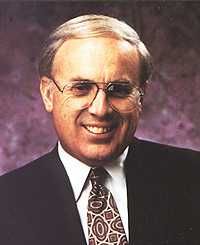
John MacArthur

Questions & Answers #12

Proverbs 1; Romans 12
John MacArthur January, 1 2006 Video & Audio
0 Comments
Questions & Answers with MacArthur, Duncan and Sproul

Sermon Transcript

Auto-generated transcript • May contain errors

100%
To everyone, in your personal
devotions or any other time, what are you reading? Let's go
down the panel, R.C., starting with you. Am I reading? Yes. The Bible? What else? Steeler stats. Well, I read those too, and they
could be considered my devotions, I guess. But, you know, I agree
with C.S. Lewis that I don't understand
the difference between studying the Bible and devotions. I'm always reading deeply in
what I'm preaching on. I'm preaching through Mark in
the morning at St. Andrews and Romans Sunday night,
and so that's basically where I'm focusing my attention right
now. I'm reading through commentaries on Ephesians, Psalm 89, and the
book of Numbers. I'm preaching through Ephesians
on Sunday mornings. I've been through the third book
of the Psalter, the last psalm of which is Psalm 89, and about
to start a series on Wednesday nights on the book of Numbers.
I've been reading commentaries. I've been reviewing a book that
I've probably read four times, Jim Packer's A Quest for Godliness,
and I've been struck by how spot on his expressions of how the
Puritans speak to our current situation are in that book. It's a compendium. It's a collection
of essays and chapters that he's written over the years on the
Puritans. And I've been blurbing some quotations. I have been
outlining David Wells' four volumes, from No Place to Truth, to God
in the Wasteland, to Losing Our Virtue, to Above All Earthly
Powers, and have been forwarding that to David because he is going
to produce sort of no place for truth for dummies. If you know
those volumes, they're not easy reading. They're brilliant, but
they're not easy reading. And Eerdmans has agreed to publish
a short summary volume, which will be aimed at ordinary mortals
like us. And any way that I can encourage
David in that, I want to do. So those are some of the things
I've been reading. And I would like to turn that into a video
documentary with you and David. Yes, John. Yeah, like these gentlemen,
whatever I'm preaching on is where the bulk of the reading
is, but I always enjoy reading biography. I'm reading in Dallimore
on Whitefield. I'm trying to get through Marsden
on Jonathan Edwards, which is no easy task. And I've been reading,
as I've mentioned before, a little bit about Scottish history, particularly
the Covenanters and things that I talked about last night. I'm
also working my way on a daily basis through Isaac Watt's hymns
on the Psalms and all the rest of the hymns. Somebody gave me
an original edition of that, first edition, and then they
gave me a modern edition of it so I don't have to tear into
the old one, but I've really enjoyed thinking through the
Psalms from a poetic perspective. Isn't it great reading through
the Puritans though and stuff? Some of the stuff like Jeremiah
Burroughs, gospel worship, boy, I think the church desperately
needs to then. It's not hard reading, is it?
SPROUL JR.: : They need to read dead people. SPROUL JR.: : Right. You're right. SPROUL JR.: : Ken? Well, I'm presently preaching
during our 8 o'clock service, well, no, at our 11 o'clock service,
I'm preaching through the Book of Ecclesiastes. On Wednesdays,
I'm teaching at 12 noon through the Book of Romans, and in the
evening, I'm teaching through Revelation. And we just concluded
a six-week course at our academy where I taught the doctrine of
God. So most recently, my reading
has been occupied with, I love J.I. Packer's Knowing God. at
least once a year probably since 1977. And this time, actually
in the last two years, I've read it about three times. And it's
been very helpful, very helpful in light of what you preached
earlier, R.C., about being known or knowing one another. And so
that's been very helpful. And just the reading in the preparation
for those studies. Dennis Johnson's Triumph of the
Lamb is a dummy-down version of Greg Beal's very extensive
commentary on the book of Revelation, but it's been very helpful. R.C.,
did Ken draw an unfortunate chair selection over there? Look at
how much lower that one is. Doesn't that…does Ken need to
move over here? Move over here, would you, Ken? Let's just bother him. John just
doesn't want to be alone. I don't want to be alone. Help
him out. Why is all the water over here? Just be glad it isn't chicken.
It would be gone. That's much better. What would
you say to a friend who claims to be a sincere Christian, yet
seldom attends church? I would say I don't think he
understands the meaning of the word sincere or the meaning of
the word Christian, because attending church is not an option for somebody
who's been purchased by the blood of Christ. It's a command that
we are never to forsake the assembling together of the saints. Now,
I think it's possible for a season for a season, a short season,
for a new Christian not to understand what the church is and what their
involvement in the church. You know, when Ligon talked about
the invisible church, Augustine, who was the one who first really
developed that concept, made the observation that the invisible
church exists substantially inside of the visible church. Notice
substantially, not exclusively, because he allowed for the possibility
of the thief on the cross who comes to faith before he dies
and never has the opportunity to join a visible church, or
somebody in a concentration camp somewhere on the gulag where
there's no opportunity for a visible church. But that would be extraordinary
circumstances. If you want to find the invisible
church of Christ, you've got to find it inside the visible
church. R.C., it's probably important
to note as well in light of the fact that some folks in the audience
may have read or will read George Barna's book, Revolution, that
there has been, in evangelicalism of late, more than one voice
suggesting that it's not necessarily wrong to attend a local church. I mean, that's literally a quote.
It's not necessarily wrong to be a member of a local church
and to attend, but that the real revolutionaries of our generation
are those who are out on the golf course on Sunday morning
and doing other revolutionary things other than gathering with
the people of God. And that's so alien, as you've already indicated,
to the spirit of the New Testament, which is saying to us everywhere,
don't forsake the assembling of yourself together for the
worship of God. SPROUL JR.: : It seems like the
most successful pastor in America today is Pastor Petick. He's the minister of the Church
of the Inner Springs. Well, I would add one more category,
one more group of people that might be in between churches,
and that's those, because I think we've seen over the last several
years the rise of weak churches, so much so that we question the
legitimacy of whether or not that local congregation has the
right to be called a church, in light of what's being preached
and what's being taught. Now, what we're discovering,
especially through the White Horse Inn, is a group of people
that have grown up in churches where they now, because of other
sources, maybe listening to John MacArthur or Alistair Begg or
R.C. Sproul on the radio, they've
come to understand the gospel more clearly. And now they are
challenged in terms of the place where they have been worshiping
over the years. And so they're sort of in a quandary
as to where to go and what to do with these doctrines. And
again, as R.C. pointed out, that might lead
them in a season, for a season to be sort of in between places. But that's again, it's an extraordinary
circumstance, but the person that for the long haul seeks
to find justification in not being in the church, one has
to question the sincerity of their profession or their understanding
of both their claim to faith and of the church itself. Just
a footnote on that too, Ken, that's a really good observation.
If you happen to live in Laodicea or Sardis or Pergamum or Thyatira,
you only had one option, and there wasn't another church on
your island that you could go to, and blessed are those who
have remained faithful in those churches. there are going to
be times, and we hear this so much, people writing us, help
me find a church. I can't find a church. I can't
find a church that teaches the Word of God. I'm starving. I'm
hungry. We always tell people find the
best option where at least Christ is exalted and the gospel is
clear and make a commitment and be what those people in those
seven churches had to be when the church had defected so seriously
that it even went out of existence at some point, put out of existence
by the Lord of the church himself. and remain faithful and keep
your garments clean in that place if that's the best option that
you have. Well, Ligon said it too that there's no such thing
as a perfect church. Jim Kennedy says if you find
a perfect church, please don't join it. You'll ruin it. Ligon,
this question says, Dr. Duncan said the church makes
disciples. Isn't it the family first, I'm
assuming, which makes disciples, with the church's responsibility
second? Well, I'm not sure I would want
to set those things in opposition since they are both appointed
means whereby God matures us. And God's intention in the Scripture
clearly is for the family to be what the Puritans would have
called a nursery of piety where godliness is cultivated. But
it does seem that there is a special locus in the local church for
the cultivation of Christian disciples. So the family obviously
has a significant role in the formation of Christian principles
and commitments and habits and such. But the congregation itself,
because of the specific vows that we take to one another in
the congregation, is vitally important for the kind of accountability
that is required in the Christian life. When people join, most
Presbyterian churches have five vows that have been used for
a couple of hundred years at least in Presbyterian circles. One, to join the church. You
say that you acknowledge yourself to be a sinner in the sight of
God. justly deserving His displeasure and without hope except through
His sovereign mercy. Two, that you acknowledge the
Lord Jesus Christ, you believe the Lord Jesus Christ to be the
Son of God and Savior of sinners and that you receive and rest
on Him alone for salvation as He is offered in the gospel.
Three, that you will endeavor to live by the grace of the Holy
Spirit as becomes a follower of the Lord Jesus Christ. Fourth,
that you will support the church in its worship and work to the
best of your ability. And fifth, that you will submit
yourself to the government and discipline of the church. And
especially those latter two questions, point to the horizontal responsibilities
that Christians have in encouraging one another in the faith. We
talked today about how...I mean, it is encouraging for me to be
with Ken, with R.C., with John, with other faithful ministers,
just to remind ourselves that we're not alone, that we're going
to stay the course. And it's the same for Christians.
It hurts the church. when Christians don't assemble
together, when all the body is not there. Ken was speaking about
this eloquently today. We need one another desperately.
And it's an enormous encouragement for me to look out in the congregation
and see people who could be doing other things, but they're there. And that's a commitment that
blesses me and blesses the whole congregation. So that's the unique
aspect of the local church's contribution to the formation
of Christian discipleship. Are people whose theology differs
from what Scripture teaches but firmly claim Christ is Lord and
Savior Christians and part of the church? Now, the examples
that they give are devout Roman Catholics and what they call
free will Armenians who deny the sovereignty of God. Are they
part of the church? And are they sincere Christians? Well, if a devout Roman Catholic
is devoted to Christ as their Lord and Savior, then they're
part of the church. But if they're devoted to the
teaching of the Roman Catholic Church, they're not part of the
church. Because I don't even like to call the Roman Catholic
community a church, because once you condemn the gospel, an essential
truth of the Christian faith, I think you cease to be a Christian
institution, even if you have other affirmations that are true. If you deny an essential, if
you would deny the deity of Christ, which Rome doesn't, or if you
denied the Trinity, you know, I think those are essential truths.
But the gospel, you can't deny the gospel. You can't anathematize
the biblical gospel and still be a Christian communion. You asked the second group about
the Arminians who deny the sovereignty of God. Well, I would say an
Arminian who denied the sovereignty of God would not be a Christian.
I don't think he'd be an Arminian either, because classical Arminianism
doesn't deny the sovereignty of God. We don't think they have
a correct understanding of all that is involved in affirming
the sovereignty of God. I've never met a professing Arminian,
John, who said to me they didn't believe in the sovereignty of
God. I don't think they understand the sovereignty of God, but to
the degree that they do understand it, they certainly seek to embrace
it. Isn't that your experience? And
I think that shows up in prayer. You know, they pray for people's
salvation, and they pray passionately for people's salvation. I mean,
why, if it depends upon the person, are they praying to God? And
if God can't answer, the person has to answer. It seems futile.
But I think in their heart of hearts, they know a better theology
than they confess. I used to pray when I was in
seminary with a good friend of mine who was an Arminian, and
when we would pray, he would start praying, Lord, you know,
bring so-and-so to yourself, save so-and-so. And I'd stop
him right there and I'd say, You can't pray like that. What
are you asking God to do, you know, intrude on that guy's freedom
or something? He would pray like a Calvinist
every day. I mean, it was amazing. I think one of the distinctions
that R.C. makes is a very important one,
and that is especially as it relates to someone in the Roman
Catholic Church. Is it possible, and I think maybe
that's another way to ask the question, is it possible for
a genuine believer to be in the Roman Catholic Church? And that
is possible in that what they believe in their heart is different
from what they are able to express with their mouth, and it's contrary
to what the church formally holds to. And I think we need to make
that distinction because what we're seeing is a rise in inclusivism,
where people are being taught that whatever, or this sort of
pluralism, that as long as you are faithful and devout in whatever
it is you believe in, then you would be saved. And you'd be
surprised, there are some leading evangelicals that are starting
to speak in those terms. And there is a difference there.
A person is saved essentially by what they believe. And for
a number of reasons, what they proclaim, and especially what
they do in evangelism, might be contrary to what they actually
believe. So, I think we do need to make
that distinction. Now, having said that, since
R.C. did talk about friends, I want
to make a clarification because I have a lot of good friends
who are doctors and R.C. made a mistake this afternoon
when he presented me as a doctor. I'm not. Now, I have some good
friends who are and I don't hold that against them. But having being good friends
with a doctor is very much like, you know, being, you know, having,
living in a chicken coop for twenty years. That doesn't make
you a chicken. So, I just want to be clear on that. I'm not
misrepresenting, and I don't want… SPROUL JR.: : Well, in
a real sense of the word, I consider you a doctor of the church, and
I know you've refused the… conferring the degree that I've been given. If somebody lived in a chicken
coop for 20 years, can we give them a category at least? I mean,
there's something just not right about that. They can be chicken
brain, but they may not be chickens. Don't get John going on chicken
brain. I just don't like any subjects basically touching on
the subject of chicken. John, this is not profound, but
Grace Community Church was built on a piece of property originally
that was all chicken coops. And for the first six years of
my ministry there, we had our bookstore and our Sunday school
in chicken coops. Now this explains your almost
mystical experience at the Shepherd's Conference. I was so comfortable.
I felt so welcomed. It all is clear to me now. I'm glad you didn't go from chicken
coops to chicken feathers. I'm going to summarize this question.
The person is asking about church discipline. Someone in their
church has been disciplined. They want to speak to the person
and tell them to repent and come back. Others in the church are
saying, do not speak to them, do not have anything to do with
them. So can we just talk about church discipline and what we
should do in those cases? Follow the guidance of their
elders. If the elders say don't speak to them, don't speak to
them. Well, I think the thing about church discipline is sin
is always messy. And so there's never a case of
church discipline that's clean cut. By the time you get into
most cases of church discipline, the especially tricky and difficult
ones, there are so many fuzzy edges around the stories, the
sides, the elders of the church have had to wade into something
that they knew that when they got into this, no matter how
hard they tried to act as Christians, to show kindness, to be just,
that they were going to be characterized by being wrong or mean or whatever
else. I think it's real important to
follow the lead of your elders. If you're in a Bible-believing,
Christ-exalting church where the elders honestly want to practice
discipline as it's set forth in the New Testament, just follow
their lead in how to respond to a given person. I think that,
you know, there's nothing more ghastly that can happen to you
than to be excommunicated from the body of Christ. But in that
act of excommunication, you're cut off from membership in the
body of Christ. You're cut off from the sacraments
in the body of Christ. But that doesn't mean you're
to be shunned. I don't think shunning is part of the biblical
doctrine of discipline. We don't shun pagan associates
that we know. What happens when you excommunicate
somebody is that you regard them now as an unbeliever. You don't
have Christian fellowship with them. That doesn't mean that
you don't speak to them or that you can't be civil and be a good
neighbor to them. The old Baptist covenants, church
covenants, would often dictate that in the case of the church
excommunicating a member in a local Baptist congregation, that they
would now no longer consider this person a brother, but would
now consider them a friend. And I think that's a beautiful
way of viewing the sanctity of the local church and of membership
in it, and at the same time a desire that that friend would be won
back to the Lord. Yeah, we face this a lot through
the years, and what we tell our people is, you're not to have
a meal with someone, you know, the Bible's pretty clear about
that, and there's no socialization which would embrace them and
somehow minimize the reality. But, two things. One, you be
with them for the purpose of lovingly calling them to repentance
without embroiling yourself in everything. You go, if you do
meet with them, if you see them, you treat them with love and
grace and in a gracious way encourage them to repent. But it is key,
Jesus makes it very clear in Matthew's Gospel, to treat them
like a tax collector and a publican. And the way, hopefully, we treat
those people is to go and pursue them, to draw them to the truth. And I think we have to treat
these people who have gone through all of the steps of discipline
and are now out as unbelievers, for that's the only conclusion
we can make. And so we go to them the way
we would go to an unbeliever with a broken heart and a concern
and an affection and a love to draw them to Christ as if they
were unbelievers. The mission that we would have
to unbelievers then becomes the mission that we have to them.
R.C. Sproul, Jr. Yeah, and I think it would be
helpful to go to the elders and get clarity on what they mean
so that you are, number one, respecting the office of elders
and you're being clear on what the order of the church is in
that regard. Because I think sometimes, Arce,
I think you nailed it, people assume that excommunication means
shunning. They think of Brandit, you know,
remember the old television show Brandit where it comes on with
the guy being stripped of his bars and then people, you know,
they turn their back on him. And if you, again, follow the
language of the New Testament, Jesus did anything but shun the
tax collectors. That's where he showed up. In
our church what we do, if it comes to public announcement,
which is tell the church, that's pretty clear. The church is the
church. So at a Lord's table I would
stand up, mention the name, the category of sin without the details,
and I would say, I'm telling the church so that the church
can go pursue this person to call them from their sin back
to faithfulness in Christ. If the person does not come,
we have a period of time that may vary from situation to situation,
they don't come back. I come back a final time and
say they will not respond to the loving call of the church
We, therefore, remove them from fellowship, and they are to be
treated as unconverted people, and you need to go to them as
you would to one who did not know Christ at all. But I make
that very clear when I say that to the whole church. Unless there's
some mitigating circumstance, that's, I think, the purpose
of telling the church. so that there's a level of accountability.
We had a situation at the Shepherd's Conference. I told the pastors,
I think on Wednesday, that we were going to do a discipline
on Sunday in the communion service, which is where we do that. By
the time we got to the Sunday, this was to be that step where
we tell the whole church the man who was being unfaithful
to his wife had come to the pastors and said, please don't do that.
I want to reconsider the sin situation. I want to meet with
the pastor that I know best. I want to see if we can't resolve
this and get back together with my wife. So when Sunday came,
we didn't do that. Some of the people were wondering
why, but I'm not going to get up and say we were going to discipline
somebody, but they repented. That stops the process at that
point, and that person is embraced, and I think that's, you know,
as often as they do that, we will embrace them again and start
the work all over again. SPROUL JR.: : And even if we
go the final step of excommunication, we are to regard that person
as an unbeliever, but that doesn't mean that they are unbelievers. Because in the visible church,
you know, the reason we can't, the invisible church is invisible
because we can't read the hearts of people. And if they've refused
to repent after godly discipline They are to be regarded as unbeliever,
and part of that is that if they are true believers, that last
step of discipline will help awaken them. Now, we said you
don't finally fall, but we can radically fall into sin as true
believers. So it's not that they are necessarily
unbelievers, but we are to regard them as so. Yeah, you have that
with the situation in 1 Corinthians 5 where the guy is turned over
to Satan for the destruction of the flesh, but not the damnation
of his soul. Well, and in that same vein,
in 2 Corinthians, this is why I think this discussion is very
helpful, so that people don't think that excommunication or
church discipline is something that people enjoy doing and it's
cruel, it's actually an act of love. And Paul warns the church,
the Corinthian church in 2 Corinthians, that since there has been genuine
repentance, you have to be careful to exercise genuine love towards
that brother, and here's the reason that he gives. He says,
unless you give an opportunity unto Satan, because we're not
unaware of his devices, so not handling something as delicate
and as important as discipline in the right way gives an opportunity
for Satan to breed a bunch of confusion in the body of Christ.
This subject doesn't get talked about openly very often. I think
those are all extremely helpful insights into that question.
Dr. MacArthur, this is for you. In
reference to your admonition to avoid the influence of unholy
teaching, is there not a healthy way to study philosophy staying
strong in one's convictions. Yeah, I think, and you know,
I would have said it if I had thought of it at the time. I
think you can learn to discern error when you study it as error.
I think what is really What is really evil and corrosive is
when you are being taught error as if it is truth by formidable
people that, in a case of an educational environment, you
can't deal with. I think we want to be discerning, so teaching
error as error is something we do, exposing error as error. I think it's a corruptive thing,
and there are exceptions to this. There are people who have survived
the most wretched, liberal environments by the grace of God. That doesn't
say anything about the environment making any contribution. That
says something about the grace of God in that situation and
His purpose for that individual. But as much as is possible If
I am exposed to error, let me be exposed to that error in the
hands of someone who really knows the truth so it is exposed for
what it is. And particularly with young believers
and students who are enamored by the elevated faculties that
they are under and unable to cope with them and unable to
deal with their skill in the years of their study, I think
it's dangerous and sometimes even deadly to overexpose people
to lies being taught as if they are true and the truth being
consistently demeaned. That's the kind of thing I think
we have to be very careful of. SPROUL JR. You know, John, the
Bible says, Beware of vain philosophy, but you can't beware of something
you're not aware of. And I was blessed by being a
philosophy major in college, but I learned philosophy in many
cases godless philosophy, but in many cases godly philosophy
with people like Augustine and so on, from a godly Christian
professor of philosophy. And that made all the difference
in the world on how, because every time we would study these
pagans, we always had the Christian critique added to it. So it was
very, very helpful. But when I went to seminary,
in one of those places like you talked about today. I mean, if
one percent of what I read was edifying, I was blessed. If it hadn't been for one professor,
there wouldn't have been any percent. And then when I went
to graduate school, And it was just the opposite. Every single
minute of my study was worthwhile. It was a total contrast from
what I had experienced in seminary. Seminary, it was the chicken
coop. I think it's also important to
pay attention to the counsel and the estimation of older,
wiser brothers. If you're a young person thinking
about a college major or graduate school, I think there can be
very smart people that lack theological discernment, and those people
are ripe for a fall in the hands of the wrong kind of education.
And so you want someone who knows you, who can honestly give you
counsel as to what course of study you are prepared to pursue. You can think of even a person
like J. Gresham Machen, who went through
a tremendous soul struggle under the influence of the German liberals
in the early 20th century, and it was very frankly his mother
who continued to write to him and engage him on basic evangelical
biblical Christian doctrine that was used of the Lord to keep
him from going over the edge because he was hearing some of
the finest liberal scholars in the world lecture. And that is
a dangerous environment for a person to be in who lacks the kind of
discernment and experience with that sort of thing. So listening
to the counsel of pastors and others who know you well is important.
SPROUL JR.: : One of the biggest problems we've faced in evangelical
seminaries in the last 50 years is that 50 years ago, evangelical
seminaries didn't get much respect. And so people started, well,
we've got to answer these liberals. So we have to have first-rate
scholarship, and we have to have a respectable faculty. So let's
make sure that our Christian evangelical professors have their
degrees from Harvard and Union and Yale. And you get these warm-hearted
evangelical professors who had no idea how much they had been
influenced by the godly professors in their graduate programs. I
mean, that killed more than one evangelical seminary, this fierce
desire for respect. You know, I was just going to
add that I talked to a guy who graduated from one of the most
prominent evangelical seminaries who said, I've been a pastor
for a year. I'm getting out. I really have
said everything I think I believe. you can't… Stop talking about
students for a minute. Talk about pastors. To get ready
for Sunday, every Sunday of my life, really it would do me no
good at all to hack my way through critical analysis of every text
and somebody's weird, wacky theory on every single issue. I've got
to be into that pulpit with such tremendous conviction and confidence
and assurance about the Word of God itself that if it's important
for a student, it's even more important for a pastor not to
just wind around all this critical stuff that is out there and available. That's why you need to be very
selective of the commentaries that you read when you're preparing
sermons. So you don't get shot down at every paragraph, and
by the time you get to the pulpit, you've got very little left that
you can really be confident about. Lig, this question is for you.
What is the role of women in leadership? And they give the
example of pastor, elder, deacon. What is the Reform view? I would say not just the Reform
view, but the Bible's view is that the function of the eldership,
not just the title or the status, but the function of the eldership
for teaching and ruling in the church is reserved not just for
men, but for qualified men. And there's a difference. They're
fine, godly men that do not bear the qualities for the office
of the eldership, and that the apostle Paul is crystal clear
about that. He speaks to it on more than
one occasion, and he speaks to it in a cross-cultural context.
It would be very easy to say, well, Paul was just drawing on
his Jewish experience, but it is when he's writing to Timothy,
in a cross-cultural setting, in a setting in Greco-Roman culture
where if there was ever an opportunity to make a break from something
that was culturally relative in the function of the church,
that was it. And it's in that context that Paul says, I do
not permit a woman to teach. And so with regard to the leadership
of the church, God has called qualified men to serve in the
elder capacity in the local church. Now, good Christians differ on
the involvement of women in diaconal ministry in the church. And there
is, of course, a significant role for women in the mentoring
of women in the congregation, in the mentoring of the young
people of the congregation, And in working alongside of the deacons,
whatever you think of the diagonal issues in 1 Timothy 3, it's clear
in 1 Timothy 5 that there are godly women working alongside
the deacons in the mercy ministry of the church. And, of course,
there are also appropriate places and ways that a godly Christian
woman can come along and be a tremendous encouragement even to a Christian
minister, such as the case with Priscilla and Aquila and Apollos,
where they were able to take him aside in such a way that
did not demean the office of the church or the role relationships
that God has established in the home and in the church. and Priscilla
was able to be a blessing to Apollos. There was a quote on
some website just in the last couple of nights by Johnny Erickson
Tada, and I have gone back to that more times than one. Ken
quoted a remark from Johnny that clearly had worked its way deep
into his heart, and yet there would be no one more honoring
of the teaching office of the church and of the male leadership
in the teaching office of the church than Johnny Erickson Tata.
And so what you will find is, I think when you look across
the church, you show me a woman who is godly, intelligent, consecrated,
committed to the ministry of the church, She is not interested
in taking that office of the church. She's interested in exercising
the gifts that God has given to her, in fulfilling the role
that God has given to her, and supporting the godly activity
of men in the church as much as possible. The fact of the
matter is, if men figure out that women will do a job for
them, they will let them. And so, women, if you want to
have a congregation full of little boys for you to take care of,
you go ahead and take leadership in these areas. But if you want
to have men who will do their jobs, who will take their responsibilities,
who will shepherd your souls, who will rise up and call you
blessed, you don't just allow them to fulfill those God-given
roles. You exalt in their fulfilling
those God-given roles. Can you just reference your book
on this subject? Susan Hunt and I have just done
a book called Women's Ministry in the Local Church, designed
to help with a whole range of practical issues in cultivating
godly biblical ministry of women in the local congregation. How
long should someone visit a church without officially joining the
church body? Is official membership biblical? What do you mean by official?
That's just their wording. That's their wording, yeah. Yeah,
I think you need to belong. I mean, you can make a case in
the New Testament for the fact that they knew from the very
beginning how many people there were because they were counting
names. They knew who they were. The count goes on in the book
of Acts up into maybe as many as 20,000 or so. When people
moved from place to place, there were letters sent with those
people to commend them to another congregation. Really, the New
Testament doesn't know anything about a freewheeling, floating
Christian who looks at the church page on Saturday like he looks
at the movie page to decide which church he wants to go to on Sunday
because of who's playing there. That is completely foreign to
the New Testament. As Ligon laid out in those five
commitments, that's the only kind of connection to the church
anybody has. You should never be a spectator
at a church for any period of time, only by sheer necessity
of trying to make a decision, and it should be the shortest
possible amount of time, even if later on you decide to change
that decision. Better that than that you just
kind of float around endlessly without ever landing anywhere
and making those kinds of commitments to assemble with God's people,
stimulating one another to love and good works, to worship in
the assembly of those whom you should love, because whoever
loves Christ loves whom Christ loves, John says. You are drawn
to that fellowship, and I would say, you know, don't make it
some interminable thing until you find that quote-unquote nearly
perfect church. Go there and and sometimes you
will have to change because there will be massive disappointments
that maybe Cross a line for you, but better that you should make
the commitment Yeah, I think sometimes people can use that
transitional period as a season to get lazy. And each case obviously
stands on its own merit, but there can be a variety of reasons
why people are hesitant or what's making them wait a long time
may be what seems like a long time before they make an actual
decision. We just had a situation in our
church where a couple, had been visiting with us, and it was
coming up on a year. But when they first came to me and expressed
possible interest in membership, I directed them to some other
churches because of some theological concerns. And they had come out
of a church where They did believe in the baptism of infants. And
so we wanted to make sure that if you make this transition,
this is the teaching of our congregation. And we're not talking about,
you know, musical chairs here. where you'll be a part of the
church for six months and then decide, well, no, I got a better
offer somewhere else. We're assuming this is a lifetime
commitment or until the Lord changes your circumstances. So
they did think through it a long time. We had several meetings
with them, and then they visited for extended periods at other
congregations, and then they just came back recently and made
a commitment that this is the place they want to associate.
There can be a number of reasons that would cause people to be
somewhat, on the surface it might look like they're dragging their
feet, but I think there can be some viable reasons. You know,
about every so often I realize in a church our size we collect
the fringe people, and they can just kind of sit there. And so
periodically I preach a really, really strong message on what
church membership is and the fact that there is no option.
It was some number of years ago now that the first time I did
this, and I didn't really know how many were out there. And
I said, if you want to do what's right before God, and you're
coming to this church, and you want to be a part of it, I want
you to come to the front. And in that Sunday morning, 1,400
people came. And I realized, I think I hit
a nerve here. I think, and a lot of them I
knew and fairly well. And so I realize that that's
part of the fabric of how people behave in this society. And this has to be addressed.
And so whenever I do it now, the numbers are much lower because
they know it's coming, and they don't necessarily want to be
embarrassed with the mob. So, you know, I think it's something
that you must address. And it's not self-serving. It's
just right. You know, they say chickens can
predict an earthquake. Did you know that? I did not. I'm just trying to
figure out what I'm going to do with that information. And your church
is on the chicken coop. What do you think is the greatest
threat to the church in America? There's a lot of competition.
I'm going to begin with, I think many Americans assume Or they
look at Christianity in consumeristic, capitalistic American terms. So they look at the preamble
to the Declaration of Independence that all men are created equal
and endowed by their creator with certain inalienable rights,
and among these are life, liberty, and the pursuit of happiness.
And they think that the Bible is just another way of pursuing
those goals. That's one of the biggest challenges
that I see, one of the biggest threats that I see in American
Christianity. They are looking at Christianity
in capitalistic, consumeristic, individualistic terms. And you
really see it contrasted against Christianity in other parts of
the world. Anybody else want to comment on that? Well, I think
it's the terrible decline in biblical literacy, the decline
in biblical preaching, expositional preaching, theology and doctrine,
so that everything is watered down to such an insipid level.
You have people thinking they're Christians who don't know enough
gospel to even be saved. You've got Christians trying
to live a Christian life without the the means of grace without
the appropriate understanding of the depth of the Word of God,
that you've got the dumbing down, the minimalization, the marginalizing
of theology so that you produce just a massive kind of weakness,
an unwillingness to be definitive, to battle for the truth. to engage
error, to make things clear. These are serious, serious things
because the Word of God is the source, the only source we have
for salvation, sanctification, the hope of glory contained there. And when the Bible is minimized,
pushed aside, its value depreciated, when you have people in ministry
who don't know how to handle the Word of God, then this has
implications all over everywhere. And then when you put largely
out in the Christian media the people who are the best at communicating
everything but doctrine and theology, and make that the face of Christianity,
and the success of it becomes a seduction in itself, and people
think it must be right because they're everywhere, you have
a huge problem. Well, I'll end with a very conceptual
question. May I do that? I'm not even really
sure about it. Why do people like to sit in
the front of the bus but in the back of the church? It just has to do with where
they're trying to go, and how much in a hurry they get there. I think the biggest threat to
the church today, John, is the eclipse of God the Father, that
the church functions without a biblical concept of the character
of God. And that's in liberalism, it's
in this phony evangelicalism that we're talking about. I think
the church has to find out who God is. It's the foundation of
everything. We're out of time. I want to
say good night to everyone, and we thank you. R.C., can you close
us in prayer tonight, and we will be dismissed. Thank you,
and we'll see you in the morning after R.C. prays. R.C. Sproul,
Jr. All right, let's pray. Our Father and our God, we thank
you that when you saved us as individual persons, you did not
allow us to continue to live in isolation, but you set us
in a body that body that belongs to Jesus
because He bought it, He paid for it, He ransomed it, and because
He gave Himself for it. And so we love the church because
we love Him. And we pray, O God, that we may
not add blemishes to the bride, we may be helping the bride to
conform to the image of her groom. Dismiss us tonight with Your
blessing. Give us sweet and restful sleep. Bring us back safely in
the morning, and we may continue our study of the bride of Christ. In Jesus' name we pray. Amen.
Broadcaster:

Comments

0 / 2000 characters
Comments are moderated before appearing.

Be the first to comment!

Joshua

Joshua

Shall we play a game? Ask me about articles, sermons, or theology from our library. I can also help you navigate the site.