Bootstrap
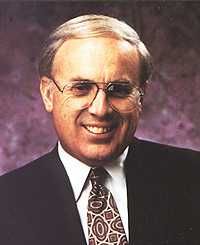
John MacArthur

Questions & Answers #31

Proverbs 1; Proverbs 2
John MacArthur March, 4 2005 Audio
0 Comments
Shepherd's Conference
Question and Answer session with John MacArthur and others.

Puritans Spurgeon Edwards Pink Ryle Devotional meditation prayer Christ trials Scripture

Sermon Transcript

Auto-generated transcript • May contain errors

100%
Welcome to the 2005 Shepherds
Conference, General Session number 7, Keynote Panel, Questions and
Answers. The question is worded this way,
could you give a word of encouragement and wisdom for those who are
seeking to be true to God's Word and to preach the doctrine of
God's sovereignty in salvation? I think you have to understand
that when you go to a church that hasn't been taught these
things, they have never been given any reason to believe them.
They have followed their shepherds. They have followed their spiritual
leaders. They are where they are because that's where they've
been brought. That's where they've been led. That's what they've
been taught. And when you realize that this is their definition
of Christianity, this is not their definition of something
arbitrary. This is not their definition of something negotiable.
This is their set of convictions and when you invade those convictions,
with something that appears to them to be diametrically opposed
to or off-center from what they have always been taught, which
is held by them as a sacred trust, they're not going to just immediately
accept that. Particularly if you're new, the
response is going to be, you know, why would we believe you?
You haven't proven anything to us yet. So, I think you need
a huge dose of patience And remember how our Lord struggled to teach
some of the simplest truths to the blockhead disciples who kept
misunderstanding the essential things that He was telling them
all along. So I think you don't want to strive, you want to be
patient, Paul says, very, very patient. And in my judgment,
I think it's really good if you can teach and avoid unnecessary
buzzwords that people put up red flags when they hear. One
other comment I would make is, teach these doctrines initially
in your ongoing ministry of the Word of God as they flow out
of the text before you all of a sudden get a huge club and
systematize these things and hammer it on the heads of people
who really will not understand how it is that they could have
been wrong all this time. So it's important to be patient.
It's important to let the text do the teaching. and let it flow
out of the text so that they have to battle the text in order
to preserve the things that they've misunderstood. I would just offer
that our only credibility as preachers is our commitment to
the Word of God. And so, expository preaching
is really where this has to be rooted. We are not to land in
order to convince persons of what we believe. Our task is
to teach and preach the Word of God so that the congregation
as an entirety is brought under the authority of God's Word. And so, if you arrive at a new
church and take as your first assignment to set down all the
things you believe, frankly, with the whole issues of God's
sovereignty and soteriology just among them, That's probably not
a good exercise of your pastoral calling in the first place. Go
to the text of Scripture in a comprehensive ministry of preaching the Word
and I think you have to keep going back to the fact that this
is what God is saying to His church in the entirety of the
big picture. The second thing I would offer
is go to the big picture. Help people to see God's purpose
to save a people to His glory by the atonement of His Son and
tie all that together so that they know what animates you is
love of the gospel. and the absolute pleasure in
seeing our redeeming Lord calling a people unto Himself. And I
think that's very healthy. The third thing I would say,
just as a matter of pastoral ethics, Augustine, the greatest
of the early church fathers, when he talked about Christian
teaching, said that there are three loves that must animate
the Christian teacher. A love of God, a love of the
truth, and a love of the people who are to be taught. And I'm
paraphrasing Augustine here, but basically you cannot teach
what you do not love. You cannot teach well what you
do not love. And you cannot teach faithfully
those whom you do not love. And it is not as if we are as
pastors and as preachers just out to convince persons so that
they would believe as we believe. It is because we love them as
God's flock and we would desire for them to see what Scripture
teaches and to embrace it because it's God's truth. And so we have
to love the people we're teaching, and it is not a loving act to
be overly ambitious and, as Dr. MacArthur has said, short of
patience. We need to love them into the truth, knowing that
it's God's truth, it's God's glory that they know the truth,
and it is for the sake of the fact that we love the church,
we love those to whom we are preaching, that we long for them
to see what God would show them in His Word. The only thing I
would add is that on March 17th is the day every year in America
where those who are not Irish become Irish wannabes. And on
March 18th in the state of Florida signals the opening of spring
gobbler season, which is my favorite time to hunt. There's nothing
more extraordinary than being in the woods before sunup, finding
where the gobblers are roosting and calling, making the calls
and imitating the hen at the beginning of mating season and
see if you can entice the gobbler to act against His nature, because
the gobbler is used to calling the hens to Him, wherein gobbler
season we try to trick them into coming to us. And the analogy,
I would hope, is easy, that we are by nature semi-Pelagians
at best. And for somebody to embrace the
doctrines of grace, they have to act against that nature that
is so ingrown and sadly is not cured by conversion. Also, we have to understand that
people who have been born and reared in the United States have
been taught from before they went to first grade a pagan humanistic
view of the human will that believes that the human will is unaffected
by the fall and no longer in bondage to sin. and in need of
the divine intrusion of grace to convert them or to bring them
to the things of Christ. So, we need to know that and
understand that people see in the doctrine of election a shadow
on the integrity of God. It seems at first blush that
God is not fair, and also they see this as demeaning to individual
freedom and humanity, and those barriers are there. Listening
to John was like listening to John Calvin. who went over backwards
to say that these doctrines are to be treated with great care,
great care. And yet at the same time, they
are to be treated. They're not to be ignored. And
I agree with what's been said that the best strategy is to
let the text of Scripture speak, because most people who come
to the doctrines of grace have already been convinced that the
Bible is the Word of God. And they're only going to change
their theology and break their love lines that tie them to their
traditions when they are persuaded that this is the unvarnished
Word of God. John, when you came to Grace
Community Church in 1969, obviously you began to teach through the
text of Scripture. That was your approach and it hasn't changed,
you know, in thirty-six years. Did you find this topic to be
a difficult challenge here? I mean, where we are today as
Grace Community Church, it's not a controversial issue. Was
it when you came? Well, when I came, the church
was basically founded by a Methodist. I mean, a classic historic Arminian
pastor who loved his people, endeared himself to his people,
was a sweet and gracious shepherd and died suddenly of a heart
attack. So, he left under the most affectionate
circumstances. They lost their beloved pastor.
They were...he was succeeded by another person whose theology
wasn't much different, who came out of a Baptist background.
Again, a man who endeared himself to the people and also died of
a heart attack. So, I... SPROUL JR.: : There's a moral
here somewhere. Well, the moral of that story
is, get us a young one, we've got two widows on our hands.
That's the moral of that story. But...and they did, that was
my only qualification. But I came, there was a minimalist
doctrinal statement, the essential doctrinal statement of this church
was in essentials unity, in non-essentials patience or something and in
everything else, I don't know what. But the unity, I don't
even remember, but in non-essentials was huge. They had no real commitment
to essentials. It wouldn't have really mattered
what I said. It seemed to me it initially
was more definitive than what they were used to hearing anyway.
But I came here understanding the doctrines of grace. People
have asked me through the years, have I changed? No. But I certainly
have been refined in my understanding. It's clearer, it's deeper, it's
wider. And the great thing about it
is My theology hasn't changed in all these years, but I have
dragged that theology through every text of Scripture for thirty-six
years and it has never failed to stand the test of the text. And as we began in the early
years, we began in Ephesians and I just said, I want to open
up Ephesians and see what it says. Well you don't get very
far, do you? Before you're predestined. I mean, you can start out, we're
blessed with all the spiritual blessings and the heavenlies
in Christ. Now how did we get those wonderful blessings? We
were predestined to get those. And they loved the word from
the get-go, from the beginning, and R.C.' 's exactly right. You really want to do one thing.
You want to bring your people, if they're not already there,
to a conscious submission to the authority of the Word of
God. as their general conviction and then they are bound to respond
to whatever it is that it teaches. So through the years it has grown
and developed and been nurtured, these great doctrines, but they
have stood the test of long-term exposition and exegesis. And
so our people will die on that hill, not because I believe that,
not because I give a convincing argument for that, but because
over the long haul those things stood the test of the Scripture.
I was in Geneva and what struck me, you know, when all the whole
Calvin thing and I've been there a few times, what struck me was
those constant expositions of the text in that little auditorium
next door to the cathedral where day after day after day after
day the great realities that are articulated in the institutes
were tested against the text of Scripture and ever and always
stood the test. I've said this before, you really
have no business offering yourself as a theologian if you haven't
been an exegete or if you haven't sat at the feet of somebody who
is so that you've run that test. And I really think that faithful
exposition of the Scripture will land you in these doctrines full
force with both feet. And that is the testimony of
thirty-six years. In fact, when you guys invited
me to come next year to Louisville and you said you want me to talk
on what thirty-six years have taught me. That's one of the
things they've taught me, that the great doctrines of the Reformation
in thirty-six years of exposition week after week after week have
stood the test. The Apostle Paul is such a wonderful
example of what Dr. Mohler was saying, that at the
same time that we're teaching them the truth, Paul says in
1 Thessalonians 2 that he not only gave them the gospel, the
data, the truth, but he gave them his very life. So people
were going away saying he not only taught us truth, but he
loved us dearly. That was his example even with
the people in Ephesus, as he recounted his ministry with them
in Acts 20, that for a period of three years, night and day,
he admonished them, he taught them, but he says he did it with
tears. So that's certainly the balance to that, that they have
a pastor who's faithful to the word, but a pastor who actually
loves his people. There's another twist on that
question, and that is what your advice would be for an assistant
pastor. There are many assistant pastors here. Your advice for
an assistant pastor who is serving in a church where the senior
pastor holds to an Arminian theology. I think Al ought to answer this
one, given that he may have had some experience with this area. The problem is that this lands
in so many intersections of ethics and doctrine and church order
and all the rest. First of all, I'm not sure what
the role of an associate pastor is, so I might as well just offend
everybody right up front. I haven't found that particular
title in the epistles, although I am aware that it's found in
many churches. I assume that means that one is called...I don't mean to make light, I just
want to say I think we need to get right down to basic biblical
ecclesiology, which means I assume that this is not an administrative
officer of the church, someone who is basically an administrator,
but rather someone who is an elder, a teaching elder of the
church. And here you have a church that
evidently is called teaching elders with incommensurate convictions.
That's not a small problem, not when it comes to the the actual
identity and integrity and shape of the gospel. And so from the
very beginning, it needs the diagnosis of a problem of a church
that obviously doesn't know what to look for in the teaching elders
of the church. And so it also raises the issue
that I'm assuming that they have called a pastor. who is invested
with congregational authority, and thus I think this is something
that must be devoted to tremendous prayer. And without making light
of this at all, and please hear me carefully, not as a way of
avoiding dealing with the issue, but as a way of preparing one's
heart to deal with it rightly. And I think first there needs
to be a very honest conversation between the pastor and this assistant
or associate pastor. And then it needs to be something
that eventually is adjudicated by the church in terms of where
you're going to go, because if indeed you see it, you see this
role in the church as a teaching role, you need to be very, very
careful that you teach the truth without compromise. You have
to maintain your integrity, but there's also the integrity of
the call and the integrity of the relationship in the church.
And so I think you just have to go to that pastor, first of
all, and with great integrity of heart and firmness of conviction,
and hopefully with the love and respect that you have in that
relationship, lay this out so that you have a mutual understanding
of how you are going to relate to each other and how the teaching
ministry of the church is not to be weakened but strengthened
in this way, and then you have to obviously Implicit in this
question, I think, is basically how do you convince a senior
minister of reformed conviction if he is not disposed in that
direction? You know, of all the questions
I could conceive of being asked in this context, that is one
that is so context-specific that I think almost anything that
one can say as a programmatic answer could be really dangerous.
Instead, I think I need to speak at the doctrinal and the ethical
level to make sure you have a clear understanding of of the role
to which you have been called and the role of the pastor and
the expectation of the church. I guess the problem I have in
the big picture is how in the world a church can head in more
than one direction simultaneously on an issue as essential and
central as the gospel. I just can't imagine that what
I talked about last night from 1 Corinthians 1, I can't imagine
that that represents the one mind and the one judgment that
was Paul's concern for the Corinthians. So there appear to be a host
of prior questions before we can get to that question. I've
tried to do two things here, and that is say enough and not
say too much, and I'm not sure which I've done, so I'm going
to stop. I was invited several years ago
to do a debate on television with a Roman Catholic scholar
and priest on the doctrine of justification. And when the host
asked me to do that, I said, I'll do it on one condition.
And he said, what's that? that I debate somebody that really
holds the Roman Catholic view and is not a crypto-Protestant.
And so, they lined up the thing and
we started having the discussion, and I could tell very soon into
the discussion that I was not dealing with an Orthodox Roman
Catholic. And during the break, the man
confessed to me that he did affirm the doctrine of justification
by faith alone." And I said, well, are you going to say that
or am I? Because that's the end of the
debate, you know, it's over. And he said, well, I can't. I said, why not? He said, because
my bishop may be watching. Now, I think nothing has hurt
the sheep in our churches more in the 20th century, coming into
the 21st century, than ministers who have not been faithful to
their own church's confession. I had a roommate in college who
came to me before his ordination trials after going to a liberal
seminary, and he said, R.C., should I go with the resurrection
of Christ or not? And I said, well, what do you
believe? He says, well, I've come to the place where I no longer
believe. I said, well, then you need to say that when you're
before the church's tribunal. Well, when he went up there and
they asked him, he crossed his fingers and affirmed his view
of resurrection. That kind of disingenuous testimony
is epidemic in the church. And I would want to know what
are the doctrinal standards of that church. If the senior minister
is in a church that confesses the sovereignty of God, and the
assistant minister is being faithful to the confession and the senior
minister is not, that's one set of problems. On the other hand,
if that denomination or that church has doctrinal standards
that are Arminian, and that's the stand they have taken, and
the assistant minister is a Trojan horse here because he's come
to the conviction of the doctrines of grace, I think he's morally
obligated to leave and to go to a situation where he's in
tune with the confessional standards of the church rather than think
that he's the one who's been set apart to be dishonest in
his calling for the goodness of the sake of the gospel. So,
that's the ethical part that I think you were getting at.
I would find that middle ground there because I think what we're
talking about here may not be coming from churches that have
any confessional. They don't have any heritage.
They don't maybe have any denomination. The first thing a church must
do, an independent church, is hammer out a very carefully crafted,
well-thought-out doctrinal statement that is thorough and extensive,
foundational, affirmed and accepted by that church and held up as
the standard. This is what I was saying is
the problem in this independent movement. Doctrine is the last
thing anybody talks about. It's the last thing. What they
do is they get...it's all about style. Some guy pastors the church
and he's winsome and he goes on doing his thing and everybody,
you know, likes it and they go down a certain path. And all
of a sudden somebody comes in who's doctrinally precise, who
has some convictions about these things. He wants to serve in
a church, maybe he's gone away to school, learned these things,
come back and now things don't look the same. He doesn't know
whether to disrupt. He feels the pastor's not treating
the Scripture fairly. There is no confession to appeal
to. There's nothing but a... superficial
or a very limited doctrinal statement to appeal to, that's one of the
reasons why in lieu of a confession for an independent church like
ours, we have a very, very extensive doctrinal statement which establishes
the foundation for the integrity of all our ministry here. And
if that does exist in your church, somebody's out of line. If it
doesn't exist, then you can guarantee that for the rest of the life
of that church, somebody's going to be out of line. So what's
wrong with pulling together the people who have spiritual responsibility
in that church and giving...you know, I'd take the pastor out
of the pulpit for six months with the staff people or the
elders around him and tell them to come back when you know that
you can stand behind a doctrinal confession that establishes the
foundation of this church. Until you can do that, I'm not
sure we can put this church in your trust. and personal integrity
to uphold that doctrinal statement. And without that... JOHN, Well,
once you have that doctrinal statement, that then becomes the test. That
becomes the screener. And I know, I'll tell you what
R.C.' 's coming from is when you put in motion all of that,
I mean with the PCA or you go back to the roots of the SBC
which were very Calvinistic and very Reformed, and then you keep
asking the question, how did this church get here? Right? Because these guys come in and
they are deceptive and they are not faithful to that confession
that was hammered out and established there and they begin to lead
that church astray. I mean, it does come back. I
mean, even as a president of a college, the first thing I
did when I got to the college was I looked at a doctrinal statement
that was about that long and I said, this thing's got to be
a minimum of ten to twelve pages or we'll never protect this institution.
John, on the way out, my session asked me to draw up on the airplane
a confessional standard beyond the Westminster Confession, which
is our confessional standard at St. Andrews, but we're independent.
And they said, we need to have spelled out point by point the
essential theological profile of any pastor that ever serves
in this church from now on, the non-negotiables. And so I did
that, and I said, just remember that there's no confession that's
ever been written that somebody can't cross their fingers and
lie about. That's the scourge of the church.
But the tighter you make it, the better chance you have of
having your church survive more than fifty years. That's right,
exactly. I mean, some of you guys that
are in churches out there, you need to go back and you need
to go to work on a serious doctrinal statement. And if in that process
it becomes clear to you that what you know to be true is not
ever going to be the consensus of that group of people. Now
you need to find a place where that consensus is going to be
at least open to the biblical research process. Let's bridge
from the idea of being true to your doctrinal confession in
a local church to the idea of how to keep an institution, an
educational institution, adhering closely to the doctrinal confession. You're involved in educational
institutions. How do you ensure the future
faithfulness of those institutions? Seminaries do change. Colleges
do change. The first thing you do is you
inoculate the board and the president from institutional president's
disease. And that disease exactly is what?
That disease is this, that one of the hardest things in the
world to do is to raise money for education. And so, when we
put that responsibility on presidents and officers in the institutions,
They try to build a broad base of support. And in order to do
that, first thing they do is broaden their confession to appeal
to a wider group. Second thing they do is to earn
academic respectability. They make sure that they get
professors who have credible degrees from credible institutions,
99 percent of which are pagan. And so then you get your accreditation
based upon the credentials of your professors, and your professors
have already departed. from the standards, for example,
with which Harvard, Yale, and Princeton were all founded. And
it doesn't take long until the institution's gone. If you want
to find the world's greatest expert on dealing with that problem,
he's sitting right next to you. In fact, this very morning, this
man shaved him. I appreciate that. I was waiting
to find out whether I was the disease or the cure. I'm humbled by that. I just have
to say the diagnosis is exactly correct because, number one,
I want to say in answer to the question, there is no sufficient
answer. In other words, there is no sure-fire
thing because our understanding of total depravity, original
sin, is that this is a perpetual issue. There's no one-time cure.
There can be a one-time correction, and it's good so long as you
will keep it. But, you know, I had to come into a situation
and basically tear the institution completely apart. Now, what we
had was a confession of faith. In fact, we had a robust, orthodox,
comprehensive confession of faith. And the institution had a faculty
that was glad to sign it so long as they didn't have to believe
it. And they did all sign it as a matter of contractual obligation.
The founder of our school, James P. Boyce, said that it must be
signed. He was taught at Princeton by Samuel Miller, who wrote one
of the greatest works on confessionalism in American life. And he said,
every professor must sign it ex animo, without hesitation
or mental reservation. Well, what I'm telling you is
not just a matter of personal interpretation, but a public
argument. Those on the other side made the public argument
that especially in a postmodern day where the author is dead
and the text is to be deconstructed, everyone has a right to do this.
By the way, a little footnote, you can use this. I got into
a situation where I was in a debate with some of the faculty we had
to get rid of. And on my first day as president
in chapel, in opening convocation, I gave an address entitled, Don't
Just Do Something, Stand There. And it was on the nature of a
confessional institution. I went through our confession
of faith. I went through its background. I went through its regulative
authority and what it means. And I basically said, this is
where we're going. This is who we are. This is what we believe.
If you're with me, you can go with me. If not, you're not staying
with us. So I had a delegation of the
faculty come and see me. Well, by God's grace, there are
certain events that illustrate the problem. I had a delegation
of the senior faculty demand to see me. I was braced for this.
And they did come and see me, and they basically laid out the
whole case. I was being hermeneutically naive,
arrogant, totalitarian, patriarchal, you know the whole drill, which
is to say right. And at the end of it all, But one spokesman for the group
said, well, the text means whatever we say it means. We have an individual
right of interpretation. The text is indeterminate. Certainly
you are familiar with postmodern. You've read Jacques Derrida and
others. You're familiar that the text is a dead thing and
it means whatever life we put into it. And I didn't know what
to do other than to say, you're fired. Well, I meant it, but as a 33-year-old,
I kind of saw the words going out and going into the ether. But I couldn't accomplish it
right then. And that is because the faculty
had a contract. This faculty member said, you
can't fire me, I have a contract. And I said, oh, but the text
is indeterminate. The author is dead. And so it
means whatever I say it means, and the way I read it, you're
fired. And he wasn't fired, not that day, because the contract
does mean something. Even Richard Dawkins, a radical
evolutionist at Oxford, says there are no postmodernists at
33,000 feet. The faculty members may be postmodernist
about Shakespeare or Scripture, but not about their contracts.
We did clean house, but we had to do it according to principles,
due process. But don't let anyone tell you
it can't be done. But it could only be done with an institution
that had a clear confession of faith and had a board of trustees
supported by churches who said, we will demand that this thing
be made right. And I could not have done this
had the prayers and efforts of Southern Baptists and their churches
not been so invested in this that a board of trustees stood
behind me. Now, on the other side of it, what do we learn?
Well, number one, we learn that a confession that had been adopted
in 1858 was absolutely right, but it wasn't enough. It was
a derivation of the Westminster Confession, but that isn't enough
because issues the Westminster divines never had to consider
are abroad today. Open theism, moral revisionism. All kinds of new heresies that
have emerged. So we are adding to our regulative
documents for faculty all the time. Because you can't just
say, the questions have been answered, this is where we stand.
Someone's going to ask a new question next year. Something
new is going to come up. So it requires perpetual vigilance
in observing the issues where orthodoxy is on the line. And
it requires a president of an institution who isn't going to
be willing to broaden the constituency, as Dr. Sproul said, which is
such a temptation. After all, it's a lot easier
to raise money that way. But you know what? The Lord saw us
through such a cataclysmic fight that I really don't have to worry
about that temptation anymore. Everyone knows who we are. Everyone
knows where we stand. And I want to tell you, the Lord
has raised up support on the other side of that. And what
we have to make sure is that we do not become poor stewards
of what has been so hard won and we just have to continue
to watch it. The other thing is you can't assume that a faculty
signing a document one time on hiring is going to be where that
signature indicated 10 years hence. It requires an ongoing
supervision, observation, and accountability. And if you're
not willing to do that, you've given up the ship before it leaves
port and it will lead to disaster. I think the bottom line in all
this is that in the evangelical world, all you have to do is
look around us and see that we've lost much more than we've retained.
There are far more institutions lost without any visible human
hope of recovery than have been retained. And so our natural
inclination, which is a right inclination in many cases, is
to start something new. But don't assume just because
you start something new, it won't fall into the same old patterns
and problems. So where there is an opportunity
of reformation, reform, where there is no possibility of Reformation,
start something new, but start it right and put in the mechanisms
as God will give you those mechanisms to keep it right and then realize
that only the sovereignty of God over time will ensure that
the institution remains true. ANSWERER 2 Master's Seminary
is celebrating its twentieth year of ministry here. John,
what's been the key to keep the seminary on track? JOHN MACARTHUR
It's really about leadership and the conviction of the leadership
as to the doctrinal and biblical parameters and standards. It's
all about that. Everything is about theology.
Everything is about the foundation, about establishing what we believe
are the non-negotiables and firmly so. And as Al said, and this
is really, people, this is one of the great stories of the church's
history in the modern time. And there just are not a lot
of Al Mohlers running around the world and God knew where
he needed to be. I mean, our little deal here
was easy. I mean, we sort of started that
and we started it with a complex doctrinal statement and we're
very careful in our faculty selection. We don't have tenure in any of
our institutions. Everybody signs a one-year contract
and is evaluated at the end of that year. If there's any move
from any of these convictions, they have no leverage whatsoever. We have it written into the bylaws
and of course it would have to be defended in the future, but
it's there that whoever is the head of the Master's College
and Seminary will always be a student and a teacher or preacher of
the Word of God, never someone from another discipline. So...and
there's some other language about that he would be known for public
ministry over a period of time, faithful to the text of Scripture
and to sound doctrine and things like that. We have...I'm sort of like Al
now. Our school is somewhat self-screening
because I'm known and, you know, they're not lining up to come
teach. You know what I'm saying? They're just not. We're not getting
a lot of people who want to come and associate with me. Those
who do, do because I'm there. Those who might think they'd
want to come, don't want to come because I'm there. So, I'm sort
of the screening element. That's the way it is. But I...you
know, we don't have any hope that somehow the future is locked
in. The school was started in 1927, it's never moved. But when I came there, you're
talking about a school that was basically supported by the far
right of the Baptists and when I came, the whole Bible department
had to be replaced. Now you're talking about fundamentalist
Baptists who were redactionists. Yeah, the college, not the seminary,
the college, but the college is the mother institution to
the seminary. How does that happen in that kind of environment?
I sat down with the first Bible professor and he told me he was
studying at Emanuel College at the University of Toronto and
he had bought into redactionism. And I said, well, that's the
end of that. We had another Bible faculty member who was headed
for ETS to do a paper that basically denied the doctrine of total
depravity. Well, he never went to ETS, never read the paper
and never taught again because...I mean, is that autocratic? But
it's not because of one man's will, it's because of the character
of the conviction of all those people who are responsible before
God for the care and the support and the direction of that institution.
And again, if you're doing this in a school, it amazes me how
utterly absent this kind of sense of conviction and stewardship
is in churches and churches are stupid enough to just hand themselves
over to the next Yehu who comes down the pike and can preach
two good sugar stick sermons with no clue what his theology
is, if there is any. Wowed, you know, by his illustrations
and whatever. I mean, the thing is so far from
where it needs to be and, you know, churches make the worst...the
most important decision most of the time without the essential
leader. the man who really knows the
Word of God. He leaves and then they're all
there trying to figure out the direction again if they had strong,
established doctrinal foundations that were affirmed and adhered
to. That's...I don't want to bang this thing too hard, but
that's the problem in the independent movement, all this willy-nilly
entrepreneurial stuff flying out all over the place. What
happens when the entrepreneur leaves? What does that group
of people do? What do they do when the guy who started the
deal goes? They don't know what to do. Where do you go find another
entrepreneur? He's got a different bag of tricks.
There's no common ground. So it's chaotic, and that's why
it's essential to set that doctrinal foundation in any church or institution. You've mentioned postmodernism,
Dr. Mohler, and its view of truth. What has changed in the world's
view of truth that we would call it now postmodernism? You also
made reference to their incessant desire to deconstruct the text,
even deconstruct the author of the text. What is meant by all
that? What's the postmodern view of
truth today? I haven't a clue. I've written
a lot about this, and I'd refer you to the website for a lot
of articles and material on this. But let me just say that, first
of all, postmodernism isn't any one thing, but if it is one thing,
it's one thing in a mood more than in a school of thought.
And the idea is, in their understanding of historiography of human thought
in the pre-modern age, everyone was a literalist, believed in
propositional truth, words had determinative, univocal meaning,
and now we have to move into the Enlightenment age where everything's
a matter of perspective and The only way to achieve assurance
is to create a foundation for thought on the basis of scientific
objectivity, and then to move from there in a linear progression
of thought so that you actually build some kind of system of
truth. And now we're in the postmodern age because not only is the premodern
totally naive, but the modernist experiment has supposedly failed.
Now we are in a position where we're without foundations altogether
and so we're just in a position where there's no propositional
truth. Propositions are nothing more than statements embedded
in a narrative. The narrative has meaning in a cultural linguistic
system of which we're all a part. It's a language game like Wittgenstein
suggested in which The claims to truth are simply the rules
of grammar in a conversation we're having with each other,
and we'll call it truth, but actually it's just a way of creating
meaning. Walter Tewitt Anderson talks about three umpires, and
this may make it clear. There's a premodern umpire, a
modern umpire, and a postmodern umpire. They're having a discussion
as to what they're doing in the modern... Let's go to the premodern
umpire. He says, I call them as they
are. There's a box. If the ball goes through the
box, it's a strike. If it's outside the box, it's
a ball. Objective truth. The Enlightenment
modernist umpire comes along and says, that is hopelessly
naive. Everything's a matter of perspective. It's all a matter
of where the observer standing and how can you know after all
that you're seeing the box rightly? So it's nothing. And it's a,
I call it as I see it. That's all there is to it. You
call it as it is. I can just call it as I see it.
And the postmodern umpire comes along and says, you're both hopelessly
naive. It ain't nothing until I call it. And that's pretty
much the way postmodernists think. Every truth claim is to them
a disguised claim to power and authority that is to be deconstructed
in order to liberate oppressed persons everywhere from totalitarian
and oppressive claims of truth. Now, there can be, and I will
say this and I mean it just as straightforward as I say it,
there can be no reconciliation between the faith once for all
delivered to the saints and the postmodern worldview. Because
the understanding of truth... The understanding of truth that
underlies the postmodernist project is the denial of the very fact
that there could be a truth that is always, for all time, in all
places true, or that it can be expressed linguistically in the
form of propositions. But as you'll notice, the postmodernists
have to use propositions in order to argue against propositional
truth. They have to write something that they think can communicate
meaning, even though they say every text has to be deconstructed.
Postmodernism is an intellectual charade by sophisticated liars. And they lie to themselves and
they'll lie to each other. And it's usually about sex. That's
right. That's right. Because it really
has to do with giving an intellectual cover for lifestyle and sin choices. And when it comes right down
to it, The claims to truth they most resent are the claims of
truth of the Christian faith that diagnose the human predicament,
point to one answer, the way, the truth, and the life, and
indicate that the one true and living God makes total claim
upon every part of our lives, including our morality, our sex
life, and all the rest. That's simply too much for the
postmodernists to take, and the rest of it is all a dance. The good news is that not only
are there no post-moderns at 33,000 feet, there aren't any
at sea level either on street corners. People are selectively
relativists, but you can't survive on this planet for 24 hours as
a relativist because you can't believe that there's a car coming
and not a car coming at the same time in the same relationship
and survive. The thing that scares me the
most about this is how people in supposedly evangelical and
even Reformed institutions, the new gig is this, that God is
not only not bound by the law of non-contradiction, but the
true contradictions, not paradoxes, not apparent contradictions,
but true contradictions can be and are reconciled in the mind
of God. Now, you get somebody teaching
that, and then you ask them, do you believe in the inerrancy
of Scripture? And they say, well, of course, but you have to understand
that they at the same time could believe there are a host of contradictions
in the Bible, but contradictions aren't errors, because God has
them in His own mind. They're the ones that start a
new hermeneutic of metanarrative and stories and all of that sort
of thing, and they'll use classical jargon, orthodox language, while
at the same time not believing the classical content. And what
Al was saying is that really the heart and soul of postmodernism
is reducing truth to preference. You know, listen to the feminists
say that a woman has a right to her own body. What that means
is I prefer to do what I want without anybody calling me to
some standard outside of myself. It has its roots in existential
thought. Jean-Paul Sartre, for example, in his view of humanity
and human freedom and subjectivity said, that if there's a God out
there before whom I'm accountable, I can't truly be free. Because
unless I'm autonomous, I'm not really free. And so, Sartre says,
for morality to be possible, you have to deny the existence
of God. A Dutch Jesuit philosopher by
the name of Luypen responded to Sartre and said, Sartre says
that the denial of God makes morality possible. Lipan said,
Sartre's morality makes the denial of the existence of God necessary. And that's why it does come down
to sex and behavior. People cannot stand normative
standards by which their personal behavior will be judged. That's
the motivation behind all of this. MACARTHUR I think Paul
Johnson's book, The Intellectuals, if you want a condensed look
at how we got where we are. Do you agree with that, Al? And
that thing is just...you go through all the names in the flow of
philosophy that have brought us the culture we have today
and you will see it is literally dripping with sexual perversion
and activity and they were all looking for a way to avoid any
kind of culpability or responsibility to any authority outside themselves
in order that they could live in an immoral way. If you haven't
read The Intellectuals by Paul Johnson, it's really, really
helpful. It'll pull a lot of things together
for you. Don't look for Bible verses in there. It's not a Christian
book, it's a history. So there's this need to deconstruct
the author's intent of the text because that's considered oppressive
to their lifestyle. And one of their catchphrases
and statements is, truth is made, not found, because they want
the truth to be what they want it to be so they can live the
way they want to live. A question has been asked about the Charismatic
Movement and any changes that have occurred in the last several
years. John, you wrote a book, Charismatic Chaos, several years
ago. Have there been changes in that
movement since that time? I don't think foundationally
there has been a significant change. I've thought a number
of times about whether I need to go back and wrote the Charismatics
in the late seventies, came back and wrote Charismatic Chaos,
which sort of updated it. There are new fads that come
and go, but I think substantially It is still based upon the same
misunderstandings that were laid out originally. It is a low view
of Scripture in which you have essentially visions, revelations
from God, words of knowledge, words of wisdom. You have extra-biblical
revelation which carries, I think, maybe more authority than the
Scripture itself. You have an utter absence of
an honest and consistent hermeneutic in approaching the interpretation
of the Scripture. so that the Bible is the clay
toy for every preacher to twist and turn and mold and shape in
any old way he wants. I think it is an aberrant view
of miracles. It is an aberrant view of spiritual authority.
It is an aberrant view of the Holy Spirit and His ministry. I think all of those elements
of it are still there and, you know, it's pretty hard to just
keep chasing the fads. I mean, you could write a book
on the Toronto blessing and, you know, barking like dogs and
roaring like lions and, you know, by the time you got the book
out, they'd be baaing like sheep, you know. So, you just...you
just can't keep up with it. So, I think there are...there
are some foundational elements in the movement that that don't
change and they are formidable issues that have to do with the
role that Scripture plays, the role of a proper biblical interpretation. And if you let those go, then
everything is up for grabs. The misunderstanding of the baptism
of the Holy Spirit, I mean, they're so far away from any understanding
of the doctrines of grace. I think the thing that grieves
me about it is that it parades itself as if it represents the
power of God. When it...talk about clouds without
water, talk about trees without fruit, doubly dead, rootless,
plucked up. I was watching the Benny Hinn
deal, seven million people came to a healing meeting. Why do
you think seven million people in a third world impoverished
country would show Well, of course, they're going to get healed of
all their aches and pains. And they're not going to get healed.
We know that. They know that. The people that put the deal
on know that. To me, the charlatanism in it is just beyond...I mean,
how do you get yourself to a point where you make such massive false
promises? And how do you deal with your
conscience? How do you stand up there? and
say I represent Jesus and look into the face of these tragic
people, to me it's utterly unconscionable to say you represent Jesus Christ
and you're going to deliver these people from illnesses and deliver
them into prosperity and solve all the problems of their life
if they come to you or if they send you their money. So I think
the underlying issues there are always going to be there. And
so, I mean, I've given up trying to chase the latest fad because
it's basically the underlying stuff. And what you have is all
the theology is wrong. It's all messed up. And there's
no real, honest submitting to the Word of God and rightly dividing
of the Word of God. It's an endless problem to try
to chase down all the misrepresentations. We take a stand against mysticism. Give us a definition of mysticism. What are we standing against
when we say that? There are different kinds of mysticism historically.
There is a strand of genuine mysticism, I think, in Christianity,
the kind of thing that Paul experienced, the kind of thing that Jonathan
Edwards experienced, the mystic sweet communion that we have
in worship, that sort of thing. But when you put that suffix
on there, the "-ism," then you have to go back to the Gnostic
movement early on, which self-consciously took the position by which They
rejected the concept that the revelation of God could come
in rational categories, propositional truth, as Al was saying, or even
through empirical perception, but rather the best way to truth
is to bypass the normal epistemological way in which we come to truth
through the mind and through the senses and have this direct
pipeline to God through some kind of spiritual ecstasy. and
which now what we can't discern the difference between this inner
light and indigestion, but nevertheless we see this as the source of
all truth. And so you have this Gnostic
thing that's been revived in the New Age type of thinking.
The other form of mysticism that you find in the Eastern world
is we talk, for example, about communio, the communion of saints
and communion with God through prayer. That's the highest level
of contemplation in classic Christianity. But for the Eastern mystic, you
go beyond communio to unio, where you become one with God. The kind of thing that this fellow
Crouch, he says, if you're indwelt by the Holy Spirit, you are as
much the incarnation of God as Jesus Christ was. How in the
world that goes down in the Christian community and people still support
that is beyond me. a basic understanding of truth
coming in the form of either paradox or unknowable, irrational
content. And so the mystical tradition
in the church has traditionally been a tradition of devotion
and contemplation that is not centered in, for instance, the
words of Scripture, but rather in this mysterious experience
of a mystical union whereby truth is supposedly conveyed from the
divine mind to ours, and presumably, I guess, back and forth in the
unio, that is not propositional in form and is not inscripturated
in form. And that's where we have to come
back and say, there is mystery, but the mystery is the revealed
mystery. It's not merely naked mystery. It is instead the truth
of God's Word in which, as Paul said, the veil has been removed.
Now, we are finite, and our minds cannot comprehend the infinite. But by the miracle of revelation,
we can know the revelation that the infinite mind of God has
given to us, and we're fully accountable for that in its form
of proposition and truth and doctrine and teaching. And so
the correct mode of Christian devotion should be to come into
submission to God's revealed Word, not to enter into some
extra-scriptural experience wrapped up in mystery that ends up being
really a form of self-contemplation more than anything else. In the
East, you have this apophatic theology and the iconography
and all the rest. And this is, again, where the
Reformers really come in. and cut right through all of
this and point to the doctrine of Scripture as the one rescue
from all of these forms of various mysticisms and paganisms influencing
the church and all the rest. Meditate upon Scripture and not
Scripture as some kind of launching pad for a mystical experience
to which the words are merely bridges to your own meaning.
But rather, the words of Scripture as the revealed message, the
propositions, the truth in which you come and you pray that the
Lord would apply these to your life. That's a very different
mode of discipline. And is there mystery? Of course
there is. But it's the revealed mystery, not the naked mystery
in which you simply throw yourself back in almost kind of a neo-orthodox
mode and say, we can't know but we can feel. I'm not the guy
asking the questions, but what do you think about listening
for the voice of God? You're going to wait a long time
before you hear it. I just wanted to make sure we
made that point. Except where it's heard right
here. That's where we hear the voice of God. That's right. Here's
what you have to do. In all this postmodern, all this
charismatic, all this Pentecostal stuff, you have to hold on to
this thing for all you're worth. Because if you want to know the
power of God, it's in the Word of God. You want to know the
truth of God, it's in the Word of God. If you want a light for
your feet, here it is. The last sermon that Martin Luther
ever preached when he went to Isle of Wynn, his hometown, before
he was stricken and died, he stood up there in the pulpit
and he preached the sermon on the gospel and the Pope's junk. He said, since the gospel's been
rediscovered, he said, all the power that you need for your
life is here. But people are still running
to Trier because they have the trousers of Saint Joseph there,
and all the rest of what he called the Pope's junk. But we want
power, power, wonder-working power. Well, God has invested
this with the power, and that's where it's to be found. And that's
what Luther was saying. We ignore the power that's right
there in the gospel and try to find something else, like the
pants of Joseph. A lot of people listen for the
voice of God. It's big stuff. Or looking for
a peace in their heart, or a prompting, or an open door. There's a whole
list of kind of mystical signs, so to speak, of finding God's
will. And ultimately, that is making our experience, our epistemological
source, as you said, Dr. And those on the Wood, Hay, and
Straw network that you referenced, thus take the Word of God and
rerun that through the grid of their experience and they pick
and choose from the Word of God what agrees with their experience.
If our final epistemological source is revelation, we take
our experience, we take our logic, we run it through the grid of
Scripture. And sometimes that means then we have to conclude
our logic is wrong. or we've misinterpreted our experiences
because of what the Bible says. One question is for you, Dr.
Mohler. In your pursuit of knowledge and excellence and understanding
God's Word, how do you practically fight the battles that take place
in your own heart, particularly with pride? How do you stay humble
before the Lord? I have a wife. I mean that honestly, the most
godly woman, but one who knows me and loves me, and is devoted
to the calling God has given me, and is a great reality check,
you know, and on camera and off camera, she's still there, you
know, when I'm in the pulpit and when I'm not. And I have...
You have wives that expect you to live out then what you're
preaching, is that what you're saying? I think so. And she has
that odd, quaint idea. And she also makes sure that
I am tethered to everyday life. And then we have a 12-year-old
son and a 15-year-old daughter, and they are co-conspirators
in this reality thing. And the only one that isn't in
on this is the beagle who thinks I'm God. Just to make sure, I always have
a friend. You know, in reality, I think this is where, and when
we end up talking about some people who mean a lot to us,
and, you know, I find continual exhortation, grounding, and things,
and encouragement from Luther. Luther was a real man. He lived
in a real time. He loved his wife. He loved his children.
He loved a meal. He loved his students. And, you
know, one of the reasons Luther's so accessible to us is that it
seems like he never had an unarticulated thought. You know, everything's
just out there, even his table talk. And, you know, I think
that if we live life that way before our own families, and
the Lord has given me a core of godly men who surround me,
and they know me, they're with me in making decisions, they're
with me in good times and bad, and, you know, you can't hide
from that reality and that accountability. And so, you know, I would say
this, that pride is a constant temptation. The minute we don't
think it is, we'll be proud of not being proud. And so it's always
there looking around us, but all it takes is one pratfall,
you know, or one misspoken word when you look at a congregation
that's just trying to know whether they should laugh or cry. Or
just one little thing like that, and all you have to do is catch
the eye of your wife or of your teenage daughter. and you all
of a sudden realize, I am dust. I'm a clay pot. God even uses
me to do this. And if those close to you can
find delight in that, there's God's glory in that. And, you
know, I think the most dangerous thing is to be isolated. The
isolated self can very quickly become either a deflated or an
inflated self, all out of proportion to reality. We need to be surrounded
by godly people who find joy in what God is doing in and through
us as we find joy in what God is doing in and through them
in mutual accountability. And I would say this, there's
no individual I know who can achieve fighting that issue alone. There's another question that
comes up in a context like this. It is on the more personal side
of things also. There are men here who serve
full-time on staff of churches. There are laymen here who serve
faithfully. Staff elders, non-staff elders,
dedicated deacons and men in the church, especially when they
come into an environment like this and they're reminded once
again just how deep and intense their love for God's Word is.
The question comes up, it has already this week, how do you
know when you're called by God into ministry? to serve Him full
time. What is the call of God for ministry?
You ready for that? I'll take a stab at it and then
turn it over to you. I'll say this, somewhere in my own background,
growing up in normative evangelicalism, I picked up the most perverse
understandings about the will of God and the call of the ministry.
I don't know where I got this, but I just really kind of picked
up that that somehow God's will is this incredible mystery that
is hidden from us in order that we would have to spend the rest
of our lives trying to dig it out in order to discover what
awful place the Lord would send us, or what incredible thing
He would ask us to do against our wishes. If we believe in
the sovereignty of God and we believe in the work of the Holy
Spirit, do we not believe that God would be at work in our lives
to call us to desire what He would have us to desire? in order
to do what he would have us to do. I have to deal as a seminary
president and college president with this all the time, as I'm
sure R.C. and John do as well. And, you know, you find a young
man who says, oh, I want to preach. Well, the Apostle Paul says to
Timothy, it's a good thing to desire to be a bishop. That's
not the end. There are objective issues at stake. But first of
all, that's not a bad thing. The question is, is that a rightful
desire? Is that an authentic desire that
is indicative of a larger call? You know, in my own life, I thought
I was headed into a very different direction. And then sitting there,
loving the things of God, finding my entire body, mind, and soul
more directed at the Word of God than anything else. Listening
to the preacher preach as an 18-year-old, I would fantasize
about doing that myself. And I would think I would have
done that slightly differently. I would go with this. I know
that could be arrogant, pretentiousness, or whatever. I started thinking
about this. And it was literally driving home from school one
day as a first-year college student that it struck me. I wonder if
this is what a call to ministry looks like. I mean, I can't get
this off my mind and my heart. Now, it could be a misapprehended
call. An individual could fail to meet
the objective criteriology set down in Scripture. If so, it's
not a call to ministry. But let's assume that God to
His glory would give a desire in the heart. I've never had
a student come to the seminary who said, I hate this. I hate
every minute of it. I don't want to preach. I hate
crowds. I don't love the church. No, what draws persons to the
ministry? A love for the church, a love to see the glory of God
shown in the congregation, a love for the peoples of the world,
a love first of all for the Word of God and for the study of the
Word of God and for the teaching of the Word of God. And then
there are objective criteria set down in Scripture. Let's
deal with those. And then there needs to be a
congregational recognition that yes, this is a man whom God has
called. We see the gifts, we see the
witness, we see the life, we see the fruit. And then there
needs to be ongoing accountability. of the stewardship of that call.
But generally speaking, I believe that most of the men who ask
me about a call to ministry have been called. And in most cases,
I can tell you where they are right now as I've had in-depth
conversations with them. Obviously, this needs to be tested
by Scripture and tested by the church. But thanks be to God,
God is calling out an incredible generation. Let me tell you this,
I had a pastor ask me the other day, a pastor who was retiring,
asked me, what in the world is going on? Every young preacher
I meet is more conservative than I am. God is doing something in this
generation. Look at this crowd. Look, as the Apostle Paul said,
it's by God's grace any of us got called to this. We are clay
pots. But God chooses the weak things
of the world to shame the strong. And that's pretty much the essence
of our call. R.C., didn't you really want to be the shortstop
for the Pittsburgh Pirates? Yes, until they signed Dick Grote. And then they wanted me to become
a second baseman. Really? Right, I know. And they
had just signed Bill Mazeroski. How was I doing? I didn't have
any other choice. I'm just trying to set him up,
that's all. I mean, I don't know what I could add to what Al said.
That's exactly right. I think you went directly to
the passage of most clear indication, and that is if a man desires
the office, he desires a noble work. But you stop him at that
point and you march him through the criteria that are established
that have to do primarily with character. The one skill is didaktikos,
which is an ability to teach. And that's what sets him apart.
And then you remember that there was, in the case of Timothy,
the laying on of hands of the presbytery which was then the
affirmation of the leadership of the church that he had demonstrated
this giftedness and this character and therefore the church affirms
the desire. Again, I hate to beat this drum, but this goes
back to this whole entrepreneurial thing where you have all these
loose people running around sort of identifying themselves as
self-made ministers. This is continuing to be a part
of the issue. I think the affirmation of the
leadership of the church is critical, both in the congregation and
represented by the leaders of the church to affirm the giftedness
of the man. But I think it comes from the
passion, the desire of the heart. I've told so many young men,
if you can do something else, do it. Do it because there will
be a lot of days you wish you had. Just...if you can't do anything
else, come here. follow the ministry. SPROUL JR.:
: I read recently, John, that 16,000 pastors every year in
America leave the ministry for one reason or another. A lot
of it is over moral issues, but they're also because men are
so vastly discouraged and beaten down in the pastorate. And one of the things, if I can
give a practical suggestion to every person here who's in ministry,
is that when they leave this conference, they go home. and
they write down, instead of a to-do list, a to-don't-do list. Because one of the things that's
killing our pastors is that they're having to meet the expectations
of the local church, that they be counselors, administrators,
CEOs, everything but teachers or preachers. And what the primary
task of the pastor is to feed the sheep through preaching and
teaching. And that ought to consume 90%
of your time. And you need to really take a
hard look with your boards and everything about what am I doing
that somebody else could be doing just as well as I am because
this is not my passion, this is not my training, this is not
my vocation. My vocation is to feed the sheep
and I can't be feeding the sheep if I'm doing all these other
things that are distractions and cause men to be burned out
and frustrated. and discouraged. So, I think
you've got to keep your eye on what the task of the minister
is. That's Acts 6, to give ourselves continually to prayer and the
ministry of the Word, and let somebody else wait on tables.
Broadcaster:

Comments

0 / 2000 characters
Comments are moderated before appearing.

Be the first to comment!

Joshua

Joshua

Shall we play a game? Ask me about articles, sermons, or theology from our library. I can also help you navigate the site.