Bootstrap
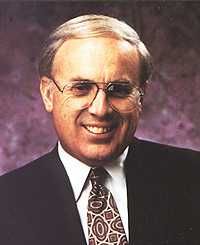
John MacArthur

Questions & Answers #33

Proverbs 1; Proverbs 2
John MacArthur March, 6 2004 Audio
0 Comments
Shepherd's Conference
Question and Answer session with John MacArthur and others.

Puritans Spurgeon Edwards Pink Ryle Devotional meditation prayer Christ trials Scripture

Sermon Transcript

Auto-generated transcript • May contain errors

100%
Welcome to the 2004 Shepherds
Conference General Session Number 10 Questions and Answers with
John MacArthur Well, we have a few things to do this morning
to wrap up some wonderful, important things. And I...you know, I almost
hate to say anything, I don't want to try to gild the lily
that we just heard from Al Mohler. Wasn't that the final word? I
don't know what could be said in addition to that. And it's...Al
said to me this morning, he said, Well I had prepared to speak
on the sovereignty of God. But last night it was done. So sometime in the middle of
the night, the Lord gave Him the right word for us, didn't
He, on the final note on the sufficiency of Scripture. But
maybe for about twenty minutes or so, if there are some pertinent
questions that you think all of us might enjoy having the
answer to that are not readily available in the footnotes of
the MacArthur Study Bible. which takes up more of the page
than the Bible itself, as R.C. reminded us. But if you do have
a question or two, something left unsaid or unclear at the
end of all of this, I would be amazed if many of you could even
process your mind to the point of a question because you have
been on overload for such a long time. But if you do, you can
pop up to the mics and we maybe have time for three or four questions
if you'd like to do that. And I need to say this because
I may not have the opportunity to say it, just to ask a quick
question. How many of you are coming tomorrow? We're going
to be here with us in worship in the morning. Put your hands
up. Oh boy. Okay, Dan, you've got to figure
a plan. That's good. We want you. We want to invite
all of you. That's really the culmination, but that's going
to be interesting. You know, when we go to preach
in the churches in Russia, you know, the little saying used
to be, ìThereís no carpet in a Russian church.î And we say
that because you can never see the ground because the aisles
were filled, the sides were filled. There were people in the early
years when I was going there, of course, where they would throw
the windows open even in the cold and they would stand outside
and hear through the windows. So we may have a little bit of
that tomorrow. We may have people...well like
it used to be in the early years of Grace Church where we'd fill
up the platform with people and all of that. But we'll have a
glorious culmination to the conference tomorrow. We're so thrilled that
you're going to be here to join with our people in that time
of worship. All right, just time for a few questions. Well we'll
go quickly if we can. Yes, on the left. I need a monitor
here, guys, so I can hear this. Maybe just some practical wisdom
for some of those pastors who are maybe the sole elder in our
churches, pastor, teachers that don't have, or maybe in the process
of training lay elders, but don't have that to avoid authoritarian
leadership, but also avoid giving too much power to congregation.
Yeah, I think if you're the only shepherd there, the thing that
you want to do is exactly what you've indicated and that is
train men around you. And that's what I did here. When
I came here, I started a Saturday morning Bible study, and this
is jumping to the practical, we don't need to talk about the
philosophical, but I started a Saturday morning Bible study
which was a couple of hours. And I invited certain men that
I thought had the kind of gifts and potential that could develop
into real spiritual leadership, and also threw it open to anybody
because I didn't want to leave somebody out that I didn't know.
And that was where the formative work was done in raising elders. It was every week, we prayed
together. Mostly I took them through systematic theology and
I really poured out my heart to them. I just kind of unburdened
my soul to them about my vision for the church, Christ's vision
for the church. And I made sure that in pouring
my life into them, they understood what the important issues were,
the doctrinal issues and all of those kinds of things. developing
a high view of God, developing a clear understanding of the
desire for God to have holiness in His church, seeing an exalted
view of Christ, the priority of worship, the necessity of
church discipline, dealing with...dealing with those kinds of emphases
by going through theology. At the same time, just kind of
sharing the issues of that week with them so that I could get
their counsel. and not treading on the roles
of leadership that you give them. As that began to develop, I began
to give those people responsibility. And if you're going to delegate
responsibility to someone, and you have to if you're going to
develop leadership, that's the only place leadership develops
is when it's given responsibility. And if you second-guess them
all the time, they'll never develop. You have to give them the freedom
to fail, to make a wrong decision. If it's very serious, you can
get into the mix, obviously. But giving them enough opportunity
to make wrong choices is the only way you'll ever give them
the opportunity to make right ones because a good leader is
somebody who makes good second decisions. And the way you learn
to make good second ones and make them fast is because you
feel the pain of making bad first ones. So they have to have the
freedom to fail or they'll never develop. So little by little
you just give them responsibility and let them work through the
process. And your controlling factor in that, I think, is the
force of the truth. in the pulpit, in the private
sector, you know, from house to house and publicly, as Acts
20 says, and in that meeting where you just keep taking them
back to the truth. I've never tried to exert authority
beyond the pages of Scripture. I've never wanted to confuse
them about what pastoral authority was. So always letting them have
the leadership in areas apart from teaching of the Word of
God. And it's a process, but it's
a necessary process to build up leadership in the church.
In fact, I think that's the best place to train your own staff
rather than importing them, although that too is okay. I think if
people keep stealing pastors from other churches, obviously
all we're doing is moving people around and we're never training
any more. So the raw material in your church
is where you want to look first. Okay? My question relates to
the order of salvation, and Hodge and Rodmacher place faith before
the new birth or regeneration in their books. And my question
is, is the order of salvation the point of departure between
free grace and lordship salvation? Because if faith is in any way
a work that's initiated by man, then you could understand their
attempt to limit it to intellectual persuasion. Yeah, I understand
the ordis salutis, I understand that at the same time, however,
that that is an accommodation to the human mind. That isÖthat
is likeÖthat is like in some sense an artificial formula. because the regenerating, the
mysterious regenerating, saving, converting work of God in the
human soul is one mighty work. I'm just as comfortable using
the term regeneration to explain the whole as I am using it to
explain any part of it. I'm just as comfortable using
the term justification to explain the whole as I am a part. I'm
just as comfortable to use the word conversion to explain the
whole as I am the part. I think that kind of accommodation
can perhaps over-define Now what you heard R.C. say,
and this is the more classic Reform view, is that regeneration
occurs...occurs prior to faith. I think the work of the Spirit
of God occurs prior to faith. I think a dead person has to
be given life to respond. I think a blind person has to
be given sight. A deaf person has to be given
hearing. I think there is a...there is an initial work of the Holy
Spirit that is an awakening of the dead heart, at the same time
the work of convicting that dead heart. But I think in the truest
sense, when you see the use of the word regeneration, or new
birth, you can't just limit it to that. Do you know what I'm
saying? It is a concept that describes the whole. Now as to whether or not And this
is sort of the ground out of which the no lordship doctrine
rises. I'm not necessarily sure. I think
with people like Rodmucker, you have...you have sort of Arminianism
everywhere, everywhere. And I think...I think lordship
is attached...I've never been able to track it back to that.
Lordship is is attached to an accommodation that is very pragmatic. It's very pragmatic. I don't
think that everybody who believes in no lordship salvation would
necessarily think that God wasn't involved, that this was some
human act of faith. I don't think you could necessarily
make that conclusion. But the no lordship seems to me to be
backing into a theology to explain people who have made a profession
of faith in Christ but never demonstrated any fruit. And if
you read the early literature by Zane Hodges, you notice in
one of the books it was dedicated to a certain individual. And
in talking to people who were involved with him at the seminary
at Dallas in those days, they said, They were convinced that
the dedication to that individual really sort of gave away the
whole thing because that was a guy that he had personally
supposedly led to Christ and discipled who completely and
totally defected from the faith and he was so stirred by that
experience that he wanted to find some way to get him in the
fold. So I think there could be a lot of reasons why people
come up with a no Lordship view that don't necessarily track
back to that. Dr. MacArthur, my question is
about a message written by Chuck Swindoll entitled, An Open Letter
Concerning the Number One Secret Problem in Your Church, which
suggests that one out of every two people, that's 50% of the
people sitting in our pews are looking at and or could be addicted
to internet pornography. A study done by Focus on the
Family suggests 18% of born-again Christians have admitted visiting
a porn site. The unseen sin by Nick Wittenhall
states forty one percent of students at Christian colleges have intentionally
visited porn sites and that thirty three percent of pastors have
intentionally visited porn sites. If you could please explain the
secret and hidden nature of this sin and what you believe needs
to be done to address it. Well apparently it's not secret. You know, I'm not very...I'm
not very convinced by statistics. I just...I don't...I don't like
those kind of statistical approaches because I don't know who they're
talking to. I don't know who these people are that they're
talking to. You know, we understand that
though we are redeemed, we are...we still have the remaining flesh.
It's a problem. I don't use a computer. I have
never in my entire life seen a porn site on the Internet. But then again, I've never seen
anything on the Internet that somebody...that somebody didn't
print up and hand to me. And I'll tell you, that's one
of the reasons I don't even...I don't want to get into that at
all because I hear you can even inadvertently have that stuff
come up. I know at the Master's College
we have very sophisticated systems in place to prevent And we have
to constantly update that because they proliferate all the time
and we have some services outside our organization that do that
for us. And we have a tracking system
in which we track the patterns of the students to make sure
that they do that, not because we're trying to play a gestapo
in their lives, but we're trying to prevent them getting hooked
on something that can become addictive. I remember before
there was ever an Internet, just to give you a bigger perspective,
I remember before there was ever that, I had a funeral...well
I had...I visited the hospital just before he died and we were
in the hospital, a seventy...I think it was a seventy-six year old man.
This would have been twenty years ago. And I was praying with him
in his bed and talking to him about going to heaven and he
began to weep and I said, ìWell, you know, whatís wrong with you?î
And he said, ìI just have to confess to you that Iíve never
been able to get victory over pornography.î This isÖthis is
20Öprobably 25 years ago. That was a bit discouraging to
me. Seventy-six years old. You know, when youíre young,
you think this will go away. This man had created some kind of
a habit in his life and here he was seventy-six years old
on his deathbed and didn't have the ability to get beyond it.
So it's a very, very, very seductive and deadly issue. I'm not convinced,
however, that just preaching against that is going to change
anything. Obviously it's a problem, people
know it's a problem. I think confronting them with
the glories of Christ and the honor of God and the standard
of holiness and raising your expectation for what godly living
is, is the way you go after those things. It's about spiritual
maturity. And the reason it's a problem in so many churches,
and I'll answer the statistical issue this way, is because churches
are filled with unconverted people and immature people. And carnal,
we would say, they are still carnal, like in 1 Corinthians
chapter 3. What Al was saying today, you know, if you follow
the rich man model, you're going to have that kind of stuff. You're
going to have that because it's only as you grow in your love
for Christ and in your love for the truth that you move away
from those things to holy things and set your affections on things
above. So I don't like those statistics. It's the same as
those silly divorce statistics and when you go back to see who
they're asking this of, it's... It's people who have...are under
the banner of being a Christian but by an understanding of the
biblical gospel wouldn't be Christians. So I think those are...you know,
when they say more Christians get divorced than non-Christians,
that's absurd. It depends on what you mean by
a Christian. Who are you asking this to? We
tracked that back to find out that the group that was involved
in that was perhaps predominantly non-Christians. but would say
they were Christians. You have some pretty frightening
statistics about that. There's a guy in England named
Barrett, Al was telling us about it, who has put out all kinds
of statistics about Christians in the world and he's used this
to define a Christian, somebody who's heard of Christ. Now that's
about the most extreme I've ever heard. But there are those kinds
of problems. To say that is not to say it's
not an issue, but it's like any other sin issue. It's like any
other sin. And this is what we've said so
often in talking to our own congregation and certainly in my own heart
and in the life of the church. If you don't win the battle on
the inside, you'll lose it on the outside. It's got to be won
on the inside. And less conceives in the heart,
James one. And so the heart has to be set
toward Christ. OK. Over here. What counsel would you give?
What resources would you recommend to assist? Women who wish to
be found faithful to fulfill their God given command to. Call
younger women to their senses concerning that which is good,
specifically those outlined in Titus chapter 2 without violating
the clear command not to teach doctrine. Well, they could teach
doctrine. I don't have a problem with that
at all. It's just teaching men or teaching the collective church.
We have a ministry here, a rather extensive ministry. In fact,
I think there's an ad for this week in...isn't it the Titus
2 ministry? We have a Titus 2 ministry here
where older women teach the younger women. We have Bible studies
all over the place going on where the older women are teaching
the younger women to be lovers of their husband and their children,
keepers at home and all of that. You know, everything is doctrine,
everything is doctrine. We've made some kind of strange
word, some kind of isolated word out of doctrine. Everything is
doctrine, it's just teaching. Everything you teach is teaching. So...and how could you ever teach
anything if you weren't teaching doctrine? I mean, you're teaching
the truth of the Word of God that constitutes doctrine. So
yeah, I think getting your older women mobilized to do that specifically
is really, really important. In the busy world in which we
live, that could easily be missed. And that is a direct mandate
of Scripture. That's not an option. The older
women are to teach the younger women. And so that's what we
do here in the church. And that program is available.
If you want more information, you can ask our guys and they'll
give it to you. Okay? Dr. MacArthur, my question is this,
by saying I am Calvinist or Arminian, is that the same as saying I
am of Paul or I am of Apollos? If so, why or why not? You don't
mean that Apollos was an Arminian, that's not the comparison you're
making. No, no, no, that's not my reference, no. I'm just saying, by saying I
am of Calvin or saying I am of Arminian, is that the same? No,
it's not the same thing at all because what you had with those
names was personality cults, not theology. That's very different. To say I'm of Paul or I'm of
Apollos or I'm of Peter wouldn't be a difference in doctrine.
It would be an attachment to a personality. That was the...that
was the evidence of carnality. It was the divisions over favorites,
you know, sort of heroes rather than theological issues. And
I mean, R.C. comes out of his, you know, theological
background. He uses those labels. I don't
use those labels when I preach as much, but that's the world
in which he lives and he's talking about two very different theologies
that cannot both be right. Is that not so? And with regard
to Peter, Paul, Apollos, they would agree on the theology.
These are competing views that can't both be right. And I think
still in the end of the day, as far as our people are concerned,
it's not nearly as helpful to speak to them in terms of the
historical roots of these views as it is to speak to them in
biblical terms. So I don't know that publicly I've very often,
perhaps when pressed in a Q&A, even said that I was a Calvinist.
because everybody has a strange caricature of what that is. Everybody's
got their own view, so it's much better to just open the Word
of God and teach what you teach and let it fall where it falls. But I think what you've got...and
the reason Calvinism and Arminianism have gained the ascendancy they
have is because they are the logical systems, if you infer
the premise. And R.C. was right when he said,
The premise is your view of man and sin. That's where the whole
thing starts. You either believe in the total
inability of man or you believe man has some ability to change
his own life by making a good decision. And those are very
different. Dr. MacArthur, my question involves
around baptism. From my understanding of Puritan
church history, when a new convert came into the fold, they would
examine the person for a year and call them a professor. before
they acknowledge that their faith was genuine and in this day and
age. I see a lot of churches that
baptize people and converts prematurely. I was wondering if you could
address some methods that we as pastors could employ to examine
people. You know, I'm sorry, but this
will have to be the last question. I'm so sorry for the rest of
you there, but let me let me say this. You can study church
history, you'll find times when they baptize them immediately.
You'll find times...I've found times as long as three years
before they baptize them, sometimes one year and anything in between.
I understand that. I understand the waiting period
and all I can tell you is where we are on the issue here. If
someone comes to embrace Christ as they do every Lord's Day,
we have our prayer room open and you'll see how we do that
on Sunday morning if you haven't seen it before. They come in the prayer
room, the gospel will be presented, people will be prayed with and
given the opportunity to embrace the truth of Christ and all of
that. We would not baptize that person immediately simply because
baptism is such a significant thing, that there needs to be
something beyond the moment for that to settle in their heart,
the reality of that to settle and for the manifestation of
some fruit. Now you have, however, on the
Day of Pentecost, people being saved and baptized on the spot. So you can defend that biblically.
You can sort of build the context a little bit and understand that
if they were willing to do that in Jerusalem at that time, that
signified a very strong and genuine act. Whereas in the more comfortable
and accommodating environment that we have here, unlike the
public environment there which was hostile, there may be a necessary
time for us to see the validity of that. But we don't want to
set up an artificial amount of time. We at that point say you
need to be baptized and here's what you need to do, you need
to go to the baptism class which gives them the opportunity then,
we have that class every Lord's Day, every Lord's Day morning
at noon, and they can go to that class And at that particular
point, that's a very good indicator if in the next week or so they're
there and they're instructed about that and then they're scheduled
for our regular Sunday nights we have on Sunday nights baptism.
We don't see any value in prolonging it anything beyond that, but
it's a little abrupt to do it immediately. as a pattern because
you may have people responding to the gospel with a...with a
less than fully adequate understanding of it that need a little more
help. I was preaching in a church conference not long ago and people...I
preached a message that was evangelistic and people came forward in a
classic sort of invitation way and they said, ìIf you want to
be saved, come forward.î Well they went right to the front
of the church, right out the side door and back in the water
within ten minutes. to be baptized. And there were
a couple of people who it was obvious when they asked them
a question, weren't really sure what in the world was going on.
So I think you need to just be judicious and careful and the
safest way to do it is not to force them to that immediately,
but to provide that option immediately and see how they follow it through
with clear instruction as to what the Word of God calls for. Well listen, I wish we had more
time and maybe next year when you all come back and bring somebody
else and we figure out where we're going to put you all. We
are going to do some work on that. We're working through some
things to even get more seating in here. But I hope when you come back
again next year, God has enabled you to see some fruit in your
own heart and your own life and your own ministry from what we've
heard this week. This has been really a very,
very unusual time. I've been in these since we started
them. And it just seemed like God had His hand on this conference
in marvelous, marvelous ways. And obviously I don't know everything
that's going on, but the collective conversation between all of you
over these last days is staggering. The relationships, the friendships,
the input, the dialogue, that's all part of all of it. Our church
has been so blessed, our people so thrilled and so exhilarated
to have hosted You that you just can't know how thrilled and blessed
they really are. So they will send you away, believe
me, with their prayers. And if you stayed in a home,
you probably have a lifetime family that you can call friends
in the future. So we look forward to the Lord's
Day finale, but for sort of signing off in the conference, just thank
you so much for coming. We're so honored that you would
come. We want to continue to be a resource. The Shepherds
Fellowship will be a resource. The church is available. Our
staff is available. We're here to serve you any way
that we can. And we want this to be ongoing.
We don't need any And we don't need any denominational connections,
we're connected at the hip, aren't we, through the Scripture and
the Word and we're just here to serve You any way that we
can. So just know how grateful we are for the opportunity that
we've had to be with You. Dan is going to come and say
a few words at this point and I'll see you again on the Lord's
Day tomorrow. That concludes this recording.
If you would like to order more audio recordings, please visit
our webpage at www.shepherdsconference.org or call the Shepherds Conference
office at 818-909-5530.
Broadcaster:

Comments

0 / 2000 characters
Comments are moderated before appearing.

Be the first to comment!

Joshua

Joshua

Shall we play a game? Ask me about articles, sermons, or theology from our library. I can also help you navigate the site.