Bootstrap
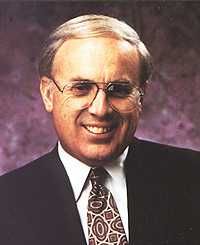
John MacArthur

Questions & Answers #35

Proverbs 1; Proverbs 2
John MacArthur March, 7 2003 Audio
0 Comments
Shepherd's Conference
Question and Answer session with John MacArthur and others.

Sermon Transcript

Auto-generated transcript • May contain errors

100%
We have just a few things that I want
to mention to you in the question and answer session this morning,
and I don't want to take a lot of time for this, but there are
some things that we need to do other than answer questions that
I think will be helpful. On the Larry King program after
9-11 and the question Larry King asked me was a very… one of the
questions he asked me was just kind of an off-the-wall question
and he said this, what about a two-year-old baby crushed at
the bottom of the World Trade Center? That was a great concern
to him. The conversation went from there.
I gave him an answer. The answer I gave in a soundbite
environment was, instant heaven, instant heaven. And he never
really pursued the question any further than that. Now, off the
air, we had quite a discussion about it, and he told me that
his Mormon wife had told him not to worry about babies that
die like that, because they're all with God. And he said, that
makes me feel better to know that. Well, I was kind of amazed
that the simple word of his wife and a two-word comment by me
was enough to satisfy him. on that issue. And I went away
from that thinking there has to be, I suppose at some point
in time in the life of every person, that question, what happens
to babies that die? Either as you look at the world
around you or as you experience it in your own life. Millions
of little ones die every year, either before they're born or
at their birth or soon after. And the question is a compelling
question I sat on a panel one time with some pastors at a large
conference and the question was asked, what happens to babies
that die? And there were five of us and
the first four said, we're not sure. And I was hard pressed
to say what I said because I didn't want to seem like a know-it-all,
but I said, I just think as a pastor I can't get away with that. Too
many people come to me with expectation that I'm going to bring the Word
of God to bear upon that most trying of human experiences.
So, out of that, I decided to write a book called Safe in the
Arms of God, Truth from Heaven about the Death of a Child. And
I really wanted to have that book ready for you, to give to
you, because you're the shepherds who have to deal with the people
who have this situation to face, whether it's a miscarriage, or
whether it's a stillbirth, or whether it's a child that dies,
or whether it's some kind of mentally disabled a person who
never ever comes to any level of maturity or adulthood. What
do we say to these people? This is not a small problem.
And so I hurried to get the book written, but it's not going to
be published until I think July or something like that. And so
I said to Thomas Nelson, could you just give us a sort of a
sort of a hurry up copy Without the final editing, necessarily,
I'm willing to stick my neck out on that. There'll be some
things that we'll alter, not major things, and put it in some
kind of a cover and get it to us for the Shepherds' Conference. And further, would you be willing
to give it for nothing? And of course, if you do that,
I might sign a contract for something else, you know. No, they are so gracious. So
here it is. It came, and it's a little book,
just this size, Safe in the Arms of God. And there's going to be one for
all of you when you exit. But if you exit now, you won't
get it. You have to wait until I tell you to go. And you know what I want? I want
to provide a tool for you. I know what we're going to do
here. We want to stockpile this. I mean, we want to have a supply
of these on hand to distribute to those people in our congregation
who go through this. And there are many, there are
many personal testimonies. I asked people in our church
congregation who have gone through the death of a child very, very
recently, within literally weeks of when I put this all together.
to share their heart, and their testimonies are here in this
little book. So this is the kind of thing
you want to have on hand, and I thought if we get them to you
now, you can read through it in these days or maybe on the
way home, and when the book then becomes available, you'll know
what it is and how it can be some use to you. And I would
just say this, too, in the future, those of you who become a part
of the fellowship, the Shepherds Fellowship, and it's not a denomination,
it's just a fellowship, we would like to be able to do this for
you in the future when things come out, sort of preempt their
publication and make some things like this available to you so
you get ahead of the game a little bit. And we'll do anything like
that we can to be of help to you. Well, the time is really
set aside, at least for another thirty-five or so minutes for
you to ask some questions, and then I want to make some very
important announcements and introduce somebody to you as we wind up
the session this morning. The mics are there, and I would
just encourage you to find your way to a microphone, and Feel
free to pose your question. I think we're probably going
to not be able to get through all the questions again this
morning, but again tomorrow morning we'll have a little more prolonged
time for this. All right, we'll start whoever's
ready. Are we ready on the left over
here? You're right. Give me your name, please. First and then
the question. My name is Bob St. John from Anniston Bible
Church, Anniston, Alabama. And we want to thank you, Dr.
MacArthur. We thank the Lord for this conference,
what it has meant in our ministry and the life of our church. Thank
you. My question is that would you explain, in your message
you had referenced several times this trans-dispensationalized
idea, and who are its proponents? And does this kind of inclusivism
mean that someone has abandoned the gospel? Yes, the question
about… I did make reference to the phrase trans-dispensationalism
almost sort of throwing it away. At the same time, I know it provoked
some discussion and thought it is a term that, to my knowledge,
has only been used by one person, and that person is Tony Evans
in a book entitled Totally Saved. That book came out, I think,
in the year 2002. It was published by Moody Press. It is a book that endeavors to
give a very, very simple and basic understanding of salvation. At the end of the book, there
is a chapter in which the question comes up about people who have
never heard the gospel, and in that section, Tony writes
that people who never hear the gospel, if they will accept whatever
light they have, God will acknowledge that as
sufficient for their salvation. That in itself is a… I mean,
that is a departure from historic Christian gospel. We would say
that if someone lives up to the light they have, then the Lord,
who is not limited in His capacity to deliver the truth, will bring
the full light, and that no one could ever be
saved apart from Christ. This is more of the kind of thing
that Tony Campolo says, that people are being saved by Jesus
who don't even know there is a Jesus. This is that wider mercy
view, as it's called. This is also under what has been
termed natural theology, that natural theology will lead someone
to God and if the person doesn't have access to the gospel, then
God's not going to hold them responsible for what they don't
know. And that's essentially the argument of this book, that
in the world there are going to be people who never hear the
gospel. and they are not going to reject
the light they have. They're going to accept the light
they have, and God will count that as sufficient to save them.
And then comes the interesting comment that He does this by
trans-dispensationalizing them. That is, treating them as if
they were living in another dispensation. Obviously, there's no biblical
defense for that, and none is attempted in the book. None. There isn't even a verse to defend
that. Furthermore, living up to natural
human light, apart from the revelation of the true and living God, wouldn't
save anybody in any dispensation. But it is a very strange thing,
and to this degree, to the degree that He gives salvation
to those who have never heard the gospel. It's a departure
from what we believe the Scripture teaches. And this is part of
a pretty big movement. Carlton Pearson came up with
a form of this view. You know, he's the charismatic
preacher in Tulsa. He came up with this idea which
really reaches almost to universalism where very few people are going
to go to hell. All over the planet, people are
doing the best they can to live up to whatever information they
have, and God counts that as enough. And it was a curiosity
to me that Oral Roberts University could see the error of that,
put him off their board and made his church off limits to students.
So this is a serious issue. There was a radio interview that
followed that book that's available. You can get the transcript of
that radio interview. in which the host was interviewing
Tony Evans and said to him, you're saying if a Hindu looks up and
says, I know you're up there somewhere, I don't know who you
are, but I'd really like to know you, God will count that as sufficient
for salvation. And the answer to that was yes.
So this is a strange and serious departure from the gospel. It is part...while I haven't
heard the phrase dispensate...or the term dispense...transdispensationalism
anywhere, this is a part of a bigger trend. I did two messages on
this called, No Gospel, No Salvation. So if you want treatment of that,
you could get those two tapes, No Gospel, No Salvation. Natural
theology is enough to damn you, it's not enough to save you.
So that's, and you know, when you, you sort of shake in your
boots when you realize that this doesn't cause a horrific outcry
everywhere. It just sort of slides in under
the radar and nobody wants to make much of it. So that's why
I say, you know, there's a reason, men, why, you know, I come to
a meeting like this passionate about protecting the gospel.
There's a reason Al comes with that same ringing theme in his
heart. I mean, we're, We're out there,
we're hearing, we're reading, we're being exposed to this.
And this is the frightening reality of our time, is that the gospel
is definitely under siege, it's under assault, and it doesn't
seem that people even care. People who should care. So, anyway,
next question. My name is Gamaliel Novello and
I come from Mexico City. I'm a Shepherd in Mexico and
a student of the Biblical Institute in Mexico. I thank the Lord and
you all that we are in this seminar. My question is about Romans 8.
Apostle Paul teaches that there is no condemnation for those
who are in Jesus Christ. And then he explains the life
in the spirit and he assures us that we have the victory in
Christ. And in verse 29, he shows us
that his purpose is to make us according to the image of his
Son. And my question is, what could you share with us about
how this verse has changed your life to have a personal holiness in
this world that is completely contaminated by sin? The question our brother is asking
is related to, I think, one of the issues that always is thrown
against the doctrine of eternal security, and that is if we are
all secure, no condemnation is ever against us in Christ. There
is no one who can bring any charge against God's elect. There is
no one who can condemn us. Does this not contribute to sin? And that is the... that is the
oldest sort of logical argument against the doctrine of security,
that if we are saved and if nothing can ever alter that, nothing
can ever change that, doesn't that give us license? And of
course, Paul answers that in the sixth chapter of Romans.
When having identified this reality of grace, he Coming down to the
end of chapter 5, he says, ìAs sin reigned in death, even so
grace might reign through righteousness to eternal life through Jesus
Christ our Lord. Where sin increased, grace abounded
all the more.î The immediate response in chapter 6 of his
sort of hypothetical adversary is, ìWhat shall we say then?
Are we to continue in sin that grace might increase? May genoita,
may it never ever be.î And the answer to that is this. You will not continue in sin
because you have been transformed. You will not. And the reason
you will not is not because you have some threat on the outside,
but because you have a new life principle on the inside. It's really a moot argument.
To say, well, if a person's a Christian and they know they're secure
forever and that nothing can ever change that, then they're
free to sin. And Paul's answer is, you can't
do that because you're a new creation. You used to yield your
members as instruments of unrighteousness and sin. Now you yield your members
as instruments of righteousness. This is 1 John chapter 3, verses
4 through 10. No one who abides in him sins.
He cannot sin. His seed remains in him. So it's a silly argument, and
Paul says, look, you've been buried with Him through baptism
into death. You now walk in newness of life.
You're a new creation. You are different. Your old self,
verse 6, was crucified with Him, the body of sin done away with. That we should no longer be slaves
to sin. We have died, we are freed from
sin. The language of death is the
language of finality, isn't it? And that's why Paul likes to
use that. Whatever was true in the past is dead. There's a finality
to that. And John, in his wonderful black
and white approach, says that whoever is born of God doesn't
continue in sin. In fact, all of the tests of
1 John that have to do with behavior evidence the same reality. If
any man is in Christ, he is a new creation, old things are gone,
new things have come. And the core of that newness
is the righteous disposition, the nature of the believer on
the other side of regeneration. Dramatically changed so that
there is no longer that unbroken pattern of sin, there is however
a pattern of righteousness interrupted by sin. And I like to say it
this way, but to that sin there is a righteous reaction. In other words, what do you mean
when you say someone who's a Christian continues...does not continue
in sin? Of course we sin. John is talking
about unbroken patterns of sin. He's talking about habitual sin
without a break. When you become a believer, that
is not the case. The pattern of your life is not
habitual sin, present tense practicing is the verb in 1 John, but rather
the pattern of your life is righteous. And when sin does occur, I believe
that a true Christian has a righteous reaction to that sin, so that
there's a sense in which Righteousness even prevails in those times
of sin. That's what you find in Paul
in Romans 7, right? He's not denying sin, but he demonstrates
a righteous reaction to sin by saying, when I look at myself
and I see my sin, the sin that is in me that is in my flesh,
it operates according to a principle or a law that is different than
the Law that's in my heart. I love the Law of God. I do the
things I don't want to do. I don't do the things I do want
to do. That's evidence of that righteous pattern. So the pattern
of righteousness is that you do righteous deeds, you are obedient
to the truth of God, there's a flow of righteousness in your
life, a desire to be obedient and even when sin, of course,
in your flesh is present there, there is to that sin a righteous
response. That's what produces conviction.
So, the question, in a sense, is a silly question, that if
grace is grace and if salvation is forever, then we're all going
to run out and commit sin everywhere. And Paul's answer to that is,
you can't. Not don't, but you can't, because
you are a new creation. Okay? Greetings, Dr. MacArthur. James Byron, missionary church
planter to Mannheim, Germany, with Global Outreach Mission.
My question is, could you give us your thoughts on the use of
paraphrased versions of the Bible in many writings today and in
church services, almost to the exclusion of, you know, the literal
translation. Yeah. James, that's a very, very
important question. I am cranking up on this one. Now I'm going to say something
and I'm just going to say it because I want you to know how
serious. I believe anything other than a literal translation of
the Bible is a serious breach serious breach of God's intention
for how we handle His Word. I think it's a violation. Now
there are some that are worse than others, but I believe that
we need to remember that a translation is a translation. Any time you
open a Bible and it says, a translation for our times, a translation
for modern times, a translation for people to understand, you
have a problem. Modern times has no right to
determine what God said. Translation is translation. Interpretation
is interpretation. Paraphrase is paraphrase. But
when you blend those, you have very serious issues. And we would
say, perhaps, that the NIV is maybe the least troublesome of
dynamic equivalency translations, but it's the old slippery slope
issue again. I mean, it just goes from there
and watch where the NIV has gone, from the NIV now to the TNIV
and who knows where else it's going to go. Because once you
have taken the step to say, we have the right to change the original text so that
people can understand it better, you have just stepped away from
what is the Word of God. That is why I always land on
the NAS, the New King James, or the New ESV, which is also
formal equivalency and an excellent translation as such. But I… this
thing has… this is running amok. It's running amok. There are
people in churches, as you were saying, all over the place who
have never heard the Word of God read. Never heard it read. People are reading the message
to them, or the living Bible, or whatever else, variations
of that. I would commend for you, if you
really want to dig into this, there's one book that is absolutely
the best thing ever written on this. I mean, it is a slam-dunk
book. I don't know what else could
be said. It is a book called The Word of God in English and
it is written by Leland Rykin and it is published by Crossway.
I would tell you, you will read that book and you will never
again wonder about translation. And you will also never again
use a dynamic equivalency because you will be in fear of divine
judgment. I mean, that book...that book
is absolutely the best thing. It's not just the best available.
I don't know how you could write a better one. Leland Rykin has
done his work and he has given all of us a tremendous tool to
deal with the issues of translation. I believe we are bound by God
to let God say what He said. And so, that's why we land on
what's called formal equivalency, word-by-word translation, the
only variables being the family of manuscripts that are used.
Okay? But read that book, get that
book. I don't even know, do we have them here? Do we have a
lot of them? Yeah, well don't just get the
book, read the book. In fact, if you have a choice,
stand in the bookstore and read it and don't get it. Hi John, my name is Frank Splendorio
and I had a question regarding, I heard your answer yesterday
to the question posed about the plurality of elders. Sure. And
I understand that plurality of elders does not necessarily equal,
you know, an egalitarian model. There are strengths and weaknesses
and gifts that are different to the body, but My question
is, in the contemporary congregation, as you know, they have the notion
or the title of senior pastor. How is that? How can a church
that believes in the model of biblical, the plurality of elders,
how do they harmonize or justify even the title of senior pastor
in light of that teaching? Well, I would answer that by
saying, you know, the title is really immaterial. It's a way
to designate someone's role. I mean, it could be a title that
means you're the oldest guy around. It also could be a title to signify
that you have the longest term ministry there. It's another
way to identify someone as the leading teacher in the church.
I mean, you can pick any title you want. Senior pastor is better for me
than bishop. or cardinal, or pope, or king,
or emperor, or anything else. I mean, I think it's a sort of
modest and mild way to designate a man who is recognized as the
chief spokesman in some ways. But again, you don't want to
get caught up in titles. Personally, I've always been known as Pastor
Teacher. That doesn't identify me as anything
other than what I do. I would rather be identified
by what I do than by some official title. So the people here call
me John. And I'm the pastor teacher, that's
the way I'm designated here. There are many other pastor teachers
as well. I'm just the pastor teacher named John and I do most
of it in the public services. So you can save yourself some
grief by toning down the titles, but I think at the end of the
day, It's helpful to be able to designate and identify roles
that people play, and I think it isn't so important that we
judge a ministry on those titles as we judge the ministry on how
it functions. Yeah, I guess my question isn't...
I'm not so much hung up on the terminology as I just think the
practical outworkings that the title implies. For example, my
friends' church, their pastoral staff all become interims once
a new senior pastor steps in, whether or not, you know, he's
going to hire, you know, keep them on staff. I mean, would
that be the church at the same time? That's an old deal. It
used to be in just sort of a... I don't know, it wasn't biblical,
but that was the old thing. Years and years ago, I remember
my dad's era, if a new pastor came to a church, everybody on
the staff put in their resignation on the basis that the guy wanted
to pick his own team. In the first place, you know,
musical churches is pretty appalling to me as a general principle. There may be a place for it,
but just the idea that people are just migrating all over everywhere
is foreign to my understanding of the church, which is a place
where you go and nurture and build your leadership from within.
For somebody, whoever comes to this church after they, you know,
carry me out, I really don't think they're all going to resign.
I mean, our people wouldn't...that would be absolutely bizarre because
they've all grown up out of this fellowship. This is their life,
their church. That would be devastating to
the congregation. So that's an old model that I
think is not a biblical model. What we need to be doing in our
churches, and you all know this, is raising up men underneath
us to carry on ministry, to carry on leadership, to step into the
pulpit. Eric and I were talking about
that yesterday. He had a man in his church who was there,
I think, twenty years at least. Sinclair was a member of your
church as you ministered to him in Glasgow and when Eric stepped
aside in ministry, Sinclair Ferguson, who's not a bad guy to come in
for you, became the pastor of St. George's Tron Church in Glasgow,
having been shepherded and pastored under Eric's ministry as well
as being a formidable theologian on his own, and I think that
is the ideal situation. It's not always going to happen.
I understand that. But, you know, whatever kind
of professionalism or whatever kind of non-biblical formats
we can get out of the church and work on a more biblical basis,
the better off we are. Hi, Pastor John. My name is Dave
Richard from Potter Valley. Two questions, really. First
of all, how can we, as the body of Christ, minister to grace
and pray for you consistently? What would be the most primary
prayer that you would request for us to pray and lift you up?
Secondly, in regards to the church, the women's role in the current
church and how the men are becoming effeminate and turning that role
over to the women. Thank you, Dave, and I appreciate
your desire to pray for us. You know, just think about what
it is that you need in your life and what you would desire as
a pastor and just put that in your prayers for me. You know,
I'm no different than any of you are. I suppose I am what
I am in reference to ministry for no reason other than the
Holy Spirit giftedness. God's providential, sovereign
placement, and at the end of the day, the power of the truth.
So I deal with the same issues that everybody deals with. As
a man, I am, in all honesty, sort of always in a state of
perpetual surprise that all of this happens. You know, I sometimes
will say to Patricia, you know, I'm waiting to go on a Sunday
when nobody comes. You know, I just… it's amazing
to me. I mean, I look out over this
from the first day we began on Wednesday and I'm just sort of
shaking my head and saying, why are they here? Why is this happening?
So, I think that there's a… that there's a real… a real sense
in which whatever it is that you look at in your life and
you know that you need the strength and the power and the wisdom
of God for, mine would be exactly the same. There wouldn't be any
different… any difference. I just appreciate your prayers
along all those lines. The personal aspects, time, preparation,
clarity of mind, spiritual issues in my own life,
wisdom in dealing with people, strength, endurance, all of those
things, And I think praying for the men
who are around me and the men and women who are a part of this
church, of course, all of those things. With regard to the women's
role, I think I...you know, we can get sort of a reputation
for being narrow and I don't think it's true. I'm not saying
just we, but all of us. Because we live in this, you know, this
wacky, egalitarian, feminist world. And if we stand where
we stand, that there are people who would condemn us because
we somehow have limited women. I don't want to limit them at
all. I mean, our church wants women to do everything that everything
that God has designed for them to do. There are women who are
wonderful leaders who can lead women and children. There are
women who are wonderful teachers who teach women and children.
We just stop where the Bible says to stop. And the Scripture
says, I permit not a woman to teach or take authority over
a man. So that's where we are. I haven't had a lot of trouble
exegeting that. And yet a great host of the women
that published the good news, and it was Aquila and Priscilla
who instructed Apollos more perfectly in the way. And I'm sure both
of them, including Priscilla, had some things to say that Apollos
needed to know as an Old Testament expert about the New Testament
gospel. We want the women to express
all of the spirit giftedness that God has granted to them
individually and collectively in the life of our church. But
the limits are so crystal clear, I mean it can't be any more clear.
Jesus chose twelve Apostles, none of them was a woman. Well
that has to say something. There are sixty-six books in
the Bible, none written by a woman...a woman...none. There's no woman
in the Old Testament in ongoing ministry of any kind. There were
some women who spoke for God in a prophetic moment, Deborah
and Huldah, and in the New Testament there was at least an occasion
or so when the daughters of Philip said something on behalf of God.
But it's very, very clear. And elders following apostles
have to be one woman men. I don't know how much more clear
that could be. leaders of their own household.
So I think that the Scripture is clear on that, and that is
not to bury women into some subordinate position without value. That's
the whole issue of 1 Timothy chapter 2 where the Apostle Paul
says, while I don't permit women to teach, a woman is saved, delivered
in childbearing. You know, that's an interesting
thought. How in the world is a woman saved in childbearing?
I was in Romania some years ago and we were preaching, there
must have been about a thousand pastors in Bucharest. And I was having a great time
teaching them all week long and they were doing question and
answer. And their wives had come to be with them for this conference
and I had never been to Romania. And it was question and answer
time and this guy says, ìWhat does 1 Timothy 2, 14 mean that
a woman is saved in childbearing?î And so, you know, I don't know
what's going on in their background, so I just launched into it. I
said, well I'll tell you what it doesn't mean. It doesn't mean that women
are going to go to heaven because they have babies. And it just got dead silent.
And they were sitting on wooden chairs and they started creaking. And the moderator looked over
at me like, you know, you just stepped in something here. But I went ahead, you know, waxing
eloquent on, you know, the fact that we're being saved in childbearing
simply means that a woman is delivered from second-class status
by the singular privilege of bearing children and bringing
them into the world. And then that verse says, verse
15, continuing in faith and love and sanctity with self-restraint. A woman who has children and
lives a righteous and godly life brings to bear upon her children
immense spiritual influence. So that's how it works in our
house. That's how it works in our house.
I'm the teacher, I'm the preacher. But Patricia has borne the influence,
her godly living, her godly love and care. for her children has
drawn them to her heart in very, very unique ways. They don't
want to breach my theology, and that has some containing effect
on your children as they grow up. But they also don't want
to wound the faithfulness of their mother. And her legacy
is not gained by getting a briefcase and a suit and going to work. It's by investing in the children. So I said all that in Romania
and the place got really agitated because I found out later that
they believed that you could lose your salvation and one of
the ways that a woman would lose her eternal salvation would be
if she did anything to prevent a pregnancy. And that's why they all had 9,
10, 11, 12, 13 children. And if you were a pastor with
just a few children, there was serious doubt about whether you
were qualified because you had a rebellious wife. So somebody
would have to check on your wife to see if there was some condition
that she had and she couldn't have babies. So, well anyway,
you can imagine the deal. I go through this, take about
20 minutes, details in the exegesis, the Greek, and I come out with
this whole deal. And here are these women sitting
there with a dozen kids. And you could just see them look
at their husband and say, you had to be wrong about that verse? Anyway. Hey Dave, can we pick you up
tomorrow? Because we're out of time. I hope they've moved on from
that. Hey, as we close today, I want to do a couple of things.
This is supposed to end at 11.30, ten more minutes? Just a couple of things. I want
to mention to you, because the guys have asked me to do this
and I'm happy to do it, there's a little brochure available and
this is something we're excited about. You know, I told you,
I've gotten this sort of movement deal going in my head and the
guys are really cranking up that into reality. We want to start
an expositors institute, and they call it a finishing school
for preachers. I'll tell you what it is, five days, you come here
and we put the finishing touches on your expositional skills.
Intense, five days, four full days, 8 o'clock in the morning
until 4 o'clock in the afternoon, and then some personal time with
me, some time to evaluate your preaching. And we just want to...we
just want to help you with that. We'll provide everything. I mean,
they've got a thing set up where we'll provide a place for you
to stay, rental cars, the whole deal. There's a brochure, if
you'd like to come for that week, you can get it. It's called the
Expositors Institute. It would just take that one week
out of your life and you can read about it. They pick those
up at the Shepherd's Fellowship table. Is that right, Dan? Out
on the patio, if you're interested in coming out for a week. And
it would be...what are we thinking? Twenty, twenty-five guys in a
group, no more than that, so it's personal touch kind of thing
with us and Steve Lawson is going to help us on this and some of
our own men. So if you're interested in that.
Also, we are launching next year at the Master's Seminary a D-Min
in Expository Preaching. Those of you who have wanted
to get a Doctor of Ministries, we're going to have that. in
expository preaching and there is some information on that at
the Master's Seminary booth. Many have asked us about this
through the years. It's a modular program, I think you come a couple
of weeks a year and you do some work on your own and the emphasis
is expository preaching. So there is the Institute, for
those of you who would like to come for a week and go through
that program, there is also the DMIN program which is a little
more demanding but can be done, Rick Holland who has his doctorate
from Louisville Seminary, the tremendous program they have
there in expository preaching is sort of recasting that in
our environment and it's going to be available to you. As we
close, I want a dear and precious friend of mine to come and lead
us in a closing prayer and maybe give a word of testimony before
he comes. His name is Kevin Malone, you may recognize that name if
you are a baseball fan at all. Kevin was the general manager
of the Montreal Expos for a number of years. Then he was part of
the general management staff at Baltimore and then came out
here to be the general manager of the Los Angeles Dodgers. I
had known Kevin before all of this because he was a part of
our church years ago, he and Marilyn and their family. But the Lord brought him back
here. gave him a few years with the Dodgers and then just in
the last, well less than a year, God brought him into my office
one day and he came in and it was pretty obvious his heart
was really kind of broken and he was...he was there just saying
to me, ìI want to come and help you. I want to do whatever I
can do to help you.î Iíve had enough of the world and enough
of all of that stuff where he had given such a great and clear
testimony for Christ. But he felt like the Lord was
directing him toward the kingdom and so we put our claws in him
and said we're not letting go. And Kevin has become the vice
president for development at the Master's College and in just
the six or seven months he's been there, it's been absolutely
incredible what's happened. But I'd like him to come and
just give just a brief word of testimony and then lead us in
a word of prayer. Would you do that, Kevin? And don't forget
when you go to pick up the little book as well. Well, it is an honor and a privilege
to come up on this platform where I spend every Sunday morning
and Sunday night listening to my pastor and special friend,
John, teach the word and break down the truth. In April of 2001,
I did resign under media pressure and ownership pressure with the
Dodgers. as the general manager. I had
reached the pinnacle of the professional sports world. If you ask many
people in baseball, they would say the ultimate goal would be
to be a general manager of the Dodgers or the Yankees. And the
Lord, through His grace and mercy, had provided me that opportunity.
So I had experienced the very best that the world has to offer. And by the world's standards,
I was a huge success. But I felt there was a lack of
significance in my life. And as you know, the world's
gauge for success is a deceptive lie. It's an illusion that eventually
leads to disillusionment. The world's barometer used to
determine success is tainted, it's wrong, it's inaccurate,
and it's unreliable. And the world's success causes
us to evaluate things from a temporal and selfish perspective. It's unreliable. The world says,
how does it benefit me And what do I get out of it? That becomes
your mindset. Even as a believer, we can be
deceived into thinking that as long as I include Jesus into
the equation and keep him somehow connected to my desires, my motives,
my goals, and objectives, it's fine. I experienced that. The questions are, what are the
motives of your heart, my heart? And I used my relationship with
Jesus Christ to justify my selfish objectives. I wanted God's blessings
on my decisions. I wanted my will to be His will. But the correct way, as you men
know, and ladies, to evaluate success is by God's standards
and principles, not the world's. And I praise God that He is faithful
and truly does answer prayer. My sincere and diligent prayer
while being the general manager, vice president of the Dodgers,
was to be a better husband, a better father, to be a frontline warrior
for him, to be a man after his own heart, to be deeper in love
with him, to go to the next level in my relationship with him.
And you know what? God did answer that prayer. He
is faithful. He does answer prayer, but not
in the way I had expected, but in the perfect way, his way.
He provided me the opportunity to receive my prayer request,
not through success, but through failure. He turned my world upside
down so that I could truly appreciate what I was praying for. The Lord
allowed my pride and my career to be crushed. But what a blessing. See, the world helps to create
a wrong and improper level of expectations. Even as Christians,
the world is effective in prying into our lives and helping us
create these incorrect expectations. And with the world's expectations
come what we perceive as failures, what in turn lead us to being
discouraged, frustrated, and disappointed. I want to be an
encouragement to each of you because I know you're an encouragement
to me. What a blessing it is to be with
so many men and women of God. So how do you measure and evaluate
success? By using God's evaluation measures,
we realize that we are exactly where we are because of God's
design and sovereignty. And that was a real struggle
with me while I was with the Dodgers. I really couldn't understand
how God could use me unless we won the world championship. Boy, I had a lot to learn, didn't
I? But I wasn't focusing on God's plan and what he was doing in
my life, but I was sure it wasn't about finishing in second. See,
I get discouraged, and I think we all do, when we take our eyes
off Jesus, when we lean on our own understanding, when we focus
on self. After a year of getting reconnected with my family and
trying to figure out what God wanted for me, he graciously
provided me the opportunity to serve him at the Master's College,
where I've been for about getting close to nine months. He opened
the door of opportunity after closing a potential career, broadcasting
career at ESPN, Fox. I did some of that and or another
job, GM job in baseball. But what a blessing it is to
be using my talents, my skills and my abilities to help the
Masters College. I had the privilege of telling
people about the blessed school that we have, the special students
and the very talented faculty. Also about IBEX. the college's
Bible extension program in Israel, where we have 25 students studying
the Bible in the land of the Bible. I had the privilege of
visiting IBEX last October, and what a blessing. I now read and
study the scriptures in a totally different perspective, and I
pray that I can take my family over there in the next couple
months. We'll see what happens in Iraq. But in dying to self
and seeking to be a servant for his glory, I've been blessed
abundantly. Sharing the story and the message of what God is
doing at the Master's College is special. It consistently provides
me the opportunity to share the gospel as well as telling others
about what the school is doing. It really is a special privilege
to be a part of the Master's College. I've experienced the
emptiness and the shallowness of worldly success. I've been
to the top of one of the world's best mountains and I didn't really
enjoy the view. It was all a lie and had no true
value or eternal significance. And now I can focus daily on
the cause of Christ and furthering the kingdom. I am committed to
the Master's College. I believe in what the college
stands for. I feel very blessed to work for a school that is
dedicated to the truth, to stand confidently for the word of God. I am so encouraged by seeing
the lives of students impacted and then in turn their lives
impacting others for the kingdom's sake. Our students are making
a real difference in our community and in the world. As I close,
before I pray, I just want to finish quickly. I ask you to
please pray for the Master's College. As John has mentioned,
this church We're becoming a lone ranger, so to speak, as far as
in Christian colleges, in standing up for the truth, for the word
of God. So we covet and need your prayers.
We ask that you consider allowing us at the Master's College to
serve you and help you in some way. Let us serve you, please.
We also pray that the Lord will encourage you to send your kids,
the kids in your churches, the kids in your Christian schools,
to the Master's College. Please allow us the privilege,
the challenge, and the responsibility of teaching your young people.
Your kids would be a real blessing to us. As I close, I'm now experiencing
true success, God's success, by serving our Lord and Savior
at the Master's College. I'm enjoying the blessings of
a life committed to the cause of Christ. I now am privileged
to be dedicated to a life with a focus on eternity. True success
is being in the Lord's work. It's being a minister of the
good news, as most of you are. Please don't allow the world's
expectations to influence your focus as it did mine. Each of
you that is committed and dedicated to the cause of Christ is a true
success. God bless each of you. Do you
mind if we bow, and I ask the Lord's blessing on our lunch? Most gracious and merciful and
loving Father, we thank you for who you are. We praise you, Father. Lord, we ask your blessing on
our food today. We please ask and pray that you
bless our fellowship and our time with our brothers and sisters
here in Jesus Christ. Lord, thank you for this week
of encouragement at the Shepherds Conference. We thank you for
the word, Lord. I just love the word so much as everyone here
does, and we just thank you for the truth that we can stand and
hold on to, Lord, in the midst of a dark world that we live
in. Lord, we seek to know you with all our hearts, and we just
want to praise you and thank you and love you. Please bless
us this day. Again, we praise you and thank
you in the name of our Lord and Savior, Jesus Christ. Amen. That
concludes this recording. If you would like to order more
audio recordings, please visit our web page at www.shepherdsconference.org
or call the Shepherds Conference office at 818-909-5530.
Broadcaster:

Comments

0 / 2000 characters
Comments are moderated before appearing.

Be the first to comment!

Joshua

Joshua

Shall we play a game? Ask me about articles, sermons, or theology from our library. I can also help you navigate the site.