Bootstrap
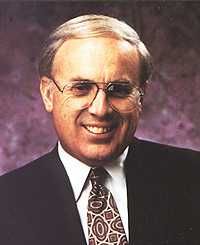
John MacArthur

Questions & Answers #39

Proverbs 1; Proverbs 2
John MacArthur March, 9 2002 Audio
0 Comments
Shepherd's Conference
Question and Answer session with John MacArthur and others.

Sermon Transcript

Auto-generated transcript • May contain errors

100%
Welcome to the 2002 Shepherds
Conference. kind of rest and absorb everything,
and we are really looking forward to our worship tomorrow morning. What you will enjoy with us tomorrow
morning is just a typical Lord's Day here at Grace Church tomorrow,
with the exception that we have our Vesper communion service.
We always have a Sunday night service and preaching of the
Word, and of course baptism as well goes on. But during the
Shepherds' Conference we crank back and have that special communion
service we found through the years, the opportunity to come
to grips with our own hearts at the end of this session is
very important. And also we do it in the afternoon,
so some of you can make your move back in the direction of
home, in case you need to be there at the beginning of the
week. But we're going to have a great time. We hope you'll
enjoy the time to reflect and interact and fellowship a little
bit this afternoon. So we'll go for 35-40 minutes and then
we'll free you up to be on your way. And I would just encourage
you, if you have any kind of questions at all, don't hesitate
to write me a letter. I'm more than anxious and eager
to answer your questions. I have wonderful guys around
me and we'll call all the resources we need together to get you the
help we think you need and if we can be of any assistance to
you in that way, please do not hesitate to let us know. Okay, on the right or your left?
My name is Ken Raymond, and I pastor at Stratford Park Bible Chapel
in Champaign, Illinois. My question has to do with Sunday
School curriculum or VBS curriculum. Last year, our VBS director bought
David C. Cook material for VBS, and I
was teaching some of it, so I had a chance to review the material. The framework for the week was
taken from 1 Timothy, in which case Paul says, don't let anyone
look down on you because of your youth. And that was taught to
the kids without any context given or any qualifications. And then the framework for the
week was, but rather be an example in speech, life, love, faith,
and purity, which was OK. The lesson, though, for the first
one, which was speech, They took an Old Testament example and
the basic message was that out of your heart, you should govern
your speech, which I thought was a little odd. And the verse
that they used for the memory verse for that day was Matthew
12 and 34, which is out of the overflow of the heart, the mouths
will speak. Of course, they forgot the brood of viper part at the
beginning. And so, I mean, it was talking totally out of context
to teach the exact opposite thing that the verse was teaching.
And when I pointed these things out to the group, the VBS director,
of course, was appalled. And she thought she could trust
David C. Cook. And I was angry. And I get angry
all the time because I have to rewrite half the curriculum that
we ever buy. And I get frustrated because I don't
know how I could write a letter or I could stop buying it. But
I don't think we're the only church that uses this material. And
so I don't know, I guess my question is, you know, do you want to
take on another cause? But you know what I'm saying?
I just like your comments on it because I think that we, how
do we as an evangelical, conservative evangelical community hold these
really support organizations that are supposed to be providing
sound material for us, how do we hold them accountable? It
would be a simple thing, I would think, for David C. Cook to have
someone with some theological training looking at the material
before it goes out. And I understand completely your
dilemma, because it's essentially across the board the problem,
unless you're in a denominational environment in which you just
sort of imbibe whatever the denomination sends down the pipe. That's not
any guarantee that it's going to be what it should be. This
is a major problem. You know, the dumbing down of
biblical truth is occurring at the adult level. One can only
imagine how much dumbing down is occurring at that level. It's
almost like you can get away with anything at that level.
So I think the only way you can hold those people accountable
is to stop purchasing the material and let them know that that's
what you're doing and why you're doing that. Then you're left with a
dilemma. What are you going to use? And I understand that dilemma
because we're in the same situation. We cannot, as a church, with
the immensity of our children's programs here and everything
else, we cannot literally produce everything we use here. So I'm
not really personally up, as I've often said, I've never been
to Sunday school at this church, so I'm always preaching when
that's going on. But when it comes to our adult
curriculum, that's all done by the teachers and the leaders
in the various fellowship group areas. When it gets down into
the junior high and high school, that also is done by our pastors
and leaders, but when it gets down to the junior level and
below, It is a real challenge to find good material. We have
been in the process for many, many years of writing our own
curriculum, and at this point, I'm not prepared to tell you
exactly where that is. But the problem is, even after
you've written all your own curriculum and you've got a design situation
and written all the thing, then what you have to do is develop
all the things that go with that, like illustrative material, project
things for the kids. It's a huge undertaking. But
I think the only way, and you may want to embark upon that,
you may want to talk to the people in our children's division and
see what help they could give you, what experience they've
had. They certainly would be more than happy to do that for
you. But the only message that you can send to the publisher
is to say this is... It's not adequate material, we
will no longer use this material. And they do understand that message. If enough people protest, if
you're just one voice among many, it probably isn't going to have
an effect. I do understand the issue. That's one of the reasons
I wrote a book called A Faith to Grow On. I don't know if you've
seen that book. It's a theology book for kids. And it amazed
me because it was so well received by people. It's basically a little
A theology for kids that has some activities injected into
it. You might want to look at that.
At least that's one thing you could use somewhere along the
line, but it is a dilemma and all of us face it. If anybody can help this gentleman,
because you know about some good curriculum, it would be well
for you to tell him. Our people may know more than
I do. You could talk to our children's people as well. Thank you. Well,
Dr. MacArthur, first I want to thank
you for your patience and graciousness in signing our books and Bibles. I was a little disappointed last
night when you signed my Bible. I was hoping it would be something
like, to my dearest friend, Ron, who has impacted my ministry
all... Well, bring it back and I'll
write that in, you know. See you after the session. Here's
my question. My name is Ron Curtin. What advice
would you give to elders who are committed to the biblical
model for the church, who are working with a senior pastor
who is committed to the purpose-driven church model? One I might say
who advised against my being here. There's only one way that the
Bible presents to deal with someone who is not in conformity to the Scripture.
I don't care what the issue is. And that is confrontation. I
think the only thing you can do in a situation like that,
and the thing that is right to do, is to go to that person. And to go in private, not to
speak about that, what you perceive as a failure, in public, but
to go to that person and to lay out the concerns. And if this
is something that a group of you affirm and believe, then
I think that you all need to go and address that issue. And
you need to address it in a biblical fashion. That is to say, you
need to make clear from the Word of God where you see the problem.
I, some years ago, read the book, The Purpose Driven Church, and
obviously, you know, there are things in there that are helpful,
you know, having your church clean and helping people find
a place to park and having good lighting and a good PA system
and all of that kind of thing. But I wrote a review of that
book. It is, to me, well, you would
know how I feel because of all the things that we've been saying
this week, but the underlying The problem with that is a theology
problem. They don't understand who is
sovereign in salvation. They think the sinner is sovereign
in salvation. And that if, as it says in the book, in one
paragraph, where the author of the book says, if I can find
a person's felt need, I can lead anyone to Christ. That is not what I understand
to be biblical theology. I can't lead anyone to Christ.
In fact, I can't lead anyone to Christ. I can only present
the gospel. The idea, somehow, that's Charles
Finney, that's our Minion So I think there's some underlying
theology there. You have a man-centered situation.
What drives that whole thing is what drove Finney. It is the
idea that the sinner commands his own eternal destiny. It's
in his hands. And so whatever means we can
find to cause him to act in his own sovereign will toward Christ
is what we have to use. And so I think you've You've
got to go to the undergirding theology of those kinds of things.
And even though I think for the most part people get into that
because of ambition, personal ambition, a desire to have more
people, bigger numbers, I think they get into it somewhat from
the personal side, driven by that desire for being big. that is accommodated by an aberrant
view of God or an inadequate view of God. And so I think you
have to go with that approach. Now, if there is an affirmation
that salvation is a work of God through the Word, 1 Peter 1,
23 to 25, then you have to ask the question, if you know that's
true and that's what the Scripture says, then how can you explain
this inconsistency? I think you have to bring a weighty
discussion to this matter. And then, based upon how your
church is structured and what authority your elders have and
who can make changes, you have to
determine where you go from there depending upon the response. Yes, Dr. McArthur. Micah Young
from Roanoke, Virginia. I'm not here to answer questions,
but you did mention about the children's curriculum. I know
Dr. John Piper at Bethlehem Baptist Church. They have a full philosophy
of children's ministry that is totally God-centered, and I think
they even have curriculum from K through 6. I mean, it's pretty
extensive, so check into that at their website. Bethlehem Baptist
Church in St. Paul, Minnesota. My question
relates to biblical eldership. We are in the process of transitioning
to that, and mine is from the practical side, and it is this.
I've observed that you have staff pastors here who are not elders,
and then you also have lay elders who are not full-time staff,
at least paid. I'm just wondering, based on
just trying to relate doctrine and practice, what your rationale
for that is in relation to the doctrine, and then also how they
interact and just how they're organized for ministry. Very
good, thank you, Michael. Well, simply with regard to somebody
who might be an assistant pastor, an intern on our pastoral staff
who is not an elder, that would simply be a matter of maturity. That would in every case be a
seminary student or somebody who had graduated from the seminary
who was beginning pastoral ministry but had not yet been had not
yet reached the point of maturity and gone through our ordination
process. So they would be a sort of elders
in training and preparation and all we would be waiting for would
be the maturing. I mean, we assume that an elder
has a level of maturity and also the recognition of the people
that they would willingly submit to his life and leadership. With regard to those that actually
are elders, The way we determine who an elder is, is simply someone
who fits the qualifications of 1 Timothy 3 and Titus chapter
1 without regard for where their compensation comes from. I mean,
the Apostle Paul himself said, I have a right to pay but I don't
have to take it. In 1 Corinthians he said, you know, whoever preaches
the gospel should live of the gospel. And you don't muzzle
the ox while he treads. And so I have a right to pay,
but he determined not to make his ministry chargeable to anyone.
He said to the Thessalonians, I work night and day with my
hands so I don't have to charge you for anything. There are...
I think there are some... there's some space there with
regard to compensation. It is conceivable that I could
say to the church, I don't have any financial needs and I want
to continue to be the pastor, but I don't want to be paid for
this. So if you're just talking about where the compensation
comes from, the assumption is that most of those who pastor
are going to be paid, because whoever is working hard in the
Word and doctrine should receive double time, double pay, double
support. But what we've learned through
the years is that God has given us in this large congregation
elders who are not in need of that compensation, but who, by
the definition of the Scripture, fit the qualifications of 1 Timothy
3 and Titus 1 and are skilled teachers and shepherds. Some
of them are missionaries. Some of them, for example, work
in the Grace to You ministry. Some of them are professors in
the seminary. Some of them are involved at
the Master's College as professors and leaders of the college. Others
of them are out in the business world somewhere. But They are,
I'm certain, like elders in the early church were. They were
people in the community who had demonstrated the qualifications
of spiritual leadership and were skilled at handling the Word
of God. They weren't all going to be compensated by the church
immediately. So it is not a compensation issue
for us. It's a matter of giftedness and
calling and being set apart and having the congregation recognize
that. Also, it's important, I think, to understand Now we don't make
any distinction at that elder level between the staff and the
elders as to lines of authority. In other words, staff elders
don't have authority over lay elders in ministry and lay elders
don't have authority over staff elders in ministry. All we do
is mutually minister. Now we acknowledge, however,
that there are leaders among leaders and leaders over leaders,
just by the nature of people's giftedness. If you brought three
or four elders into a room, one of them might clearly and distinctively
be recognized as the leader. They would all be faithful and
yet one is the leader. This is true in the church. I'm
an elder, I'm no different than the other elder, I have no personal
authority whatsoever, but it is recognized that God has set
me apart uniquely as the primary teacher. And nobody has a problem
with that any more apparently than the Apostles, all twelve
of them, equally Apostles, equally gifted by the Savior Himself
to cast out demons and do miracles, equally honored when they are
promised, and we'll talk about this a little tomorrow morning,
that they will reign on twelve thrones, you know, over the twelve
tribes of Israel. They are equal in that sense.
But they all recognized that they had a leader, and the leader
was Peter. And Peter is the spokesman. It's
also interesting in the list of the Twelve Apostles, there
are three groups of four. Peter, James and John and Andrew,
group one. Group two is Philip and those
that are under him, and then group three, names that we're
not… we know, but we're not as familiar with the people. I just
did a series on that, I'm doing a book on it now. But it's interesting
to me that the three groups are always the same. Every time there's
a list of the Apostles, Matthew, Mark, Luke and Acts. The list
always has those same three groups. Peter is always at the head.
The heads of each group is always the same. The names are always
in the same group. Group one, group two, group three.
They have decreasing information in the New Testament about them
personally and decreasing intimacy with Jesus Christ. You have these
four that are close and three that are even closer to Jesus.
They're all Apostles, they all have the same gifts, they all
have the same responsibility, they all ultimately receive the
same honor in the restitution, the kingdom. But at the same
time, it is clear there were leaders among the leaders and
there was a leader over everybody, Peter. And I think that's how
it is, and that's a matter of giftedness. So we have lay leaders
that are strong leaders and exercise in some cases more leadership
in some areas than even staff pastors do. by virtue of their
giftedness. But it's never for us a matter
of compensation and where that comes from. So what we're looking
at is gifted men, biblically qualified, who want to give their
lives to the shepherding of the sheep and who… the one… the one
activity that they do, everything else is character, the one thing
they do is didactikos, they are skilled teachers without regard
for… and obviously exemplary leaders who can take oversight,
who can refute heretics' error and lead the congregation toward
the truth. That's how we view them, if they
qualify for that and have demonstrated maturity and are recognized by
the congregation. Really in the final end, it's
the congregation that affirms them. Every year, we just went
through it, we post the names of all the elders, including
myself and everybody else, all over the church. They have a
month. If the people of the church know anybody that shouldn't be
an elder, they need to go to that person. If there's an issue there,
they need to resolve that issue. And from there, we would...we
would work if they couldn't resolve it at that point, then it would
go with two or three witnesses. If they couldn't resolve it, then
the church leadership would get involved. And if we felt there
was a disqualification, that the people felt that this person
was not qualified, they need to address that issue. So we
are all up to the scrutiny of the congregation who in the end,
on a Sunday night in our...in the month of February. January
or February, stands up and affirms, we submit to these men. So, in the end, these are the
men whom the congregation says they believe exhibit the ministry
that elders should exhibit and can willingly submit to. Does
that help? Can I give you perspective? Every
year. Every year. And you know, it
isn't that we... We want the people to vote on
us. We just want them publicly to affirm that submission. And
if they can't do that with somebody, then we need to know that. Usually
we would know that long before. And an elder here is an elder
for life. He's an elder until he is disqualified. And by the
goodness and grace of God, that has not happened through the
years for us. I'm Dr. MacArthur. My name is
Todd Cheney. I pastor a church up in Rio Vista,
California, and I'm also an alumni of the Master's Seminary, class
of 1998. And my question is in regarding just young men in ministry. Many years ago, it was somewhat
of a reputation of Master Seminary men to take a church and, in
a set of consequences, divide the church. Some men have been
beat up by their church. Some men have been run from their
church. And I would just like you to comment on that and give
us your, just your fatherly advice to us, as I've only been in my
pastorate for two years, and I've had very good friends, just
even in the last year, get run from their church, getting beat
up, and just wanting to avoid youthful mistakes. Well, I appreciate
that, Todd, and I would say this. Just always keep in mind what
we learned last night. God uses broken vessels, and
I really do think that some of that is in the purpose of God
to break the man of God, to put him through the crucible
of suffering that happened here. You know, I wasn't here very
long at Grace Church until… I mean, I was here weeks at Grace Church,
and it was like euphoria, you know, and everything was going,
everyone was excited, and they didn't know me very well, but
I… Somebody came to me and said, you know, we have a family in
our church. He's an elder. He's involved
in leadership of the church, teaching a large Sunday school
class. His family is here, a very large extended family. They have
a daughter who wants to get married. She wants to marry a divorced,
unconverted guy from Las Vegas. I don't know if he's in the casino
business or what. And they said, you know, we want you to do that
because this is an important family in the church. I said, I can't
do that. Absolutely, I can't do that.
I can't marry somebody who says they're a believer to an unbeliever
in the church. And I said, I won't do that.
I mean, there was nowhere for me to go on that one. So I said,
I can't do it. I have to be obedient to the
word of God. Do we all agree? And you know,
the men said, well, and at that time, I think some of the elders,
certainly a number of them, weren't elders at all. They should never
have been in the position of leadership. that wasn't really
elders, it was kind of a board. But anyway, I said, I can't do
that. And I remember somebody said,
well, OK, we understand that. What we need to do is just have
it at the church. That'll pacify them and bring
in some outside guy to do it. And I said, well, whose church
is this? Whose church is this? They said, well, it's the Lord's
church. I said, so how do you think the
Lord would feel about that? Ah, we can't do that. We can't do
that. And you know what? That was Waterloo, right there.
And that family left the church. Their extended family left the
church. Other people left the church. Some other people left
the church. We had unconverted people in the choir who left
the church. And it was a blow-up. And there
wasn't any way out. There was not any way out. If
I had compromised on that thing, I would have sent a message to
them that I could never recover from. The rest of my life I could
never recover from. So it depends, Todd, if it's
that kind of an issue. You go to the mat, and then if
you survive, you survive. And I like what Mark Devers said
to that lady at that dinner, you've met your match. I think
you just can't let carnal people entrenched in a church ruin that
church forever and just keep running people out and running
people out and running people out. That's why church discipline
is so important, it's not just a minor detail. At the same time, you've got
to embrace the pain and say, hey Lord, you're teaching me
something that's really painful, and say good. I encourage young guys to be
like Ezekiel, you know, you've got a hard head and I've got
a harder one. I think that's a good word, isn't it? I mean,
I get wary of these same carnal people just running these guys
out. You know, you may have to reinvent
the church. And you know, it's related almost
every time to power. Entrenched people get in a church
and they have this definition of themselves that is related
to the position they hold in the church. And in reality it
may be just nothing, but to them it's their little turf, it's
their little power thing. And they'll survive bad preaching,
but you tamper with their turf. And it can be a real war. So I just think, I would add
to that though, don't restructure the church at the beginning. Earn the right to do that. Just
teach the truth. I just came here, I taught the
truth. This church had so many boards and committees and leadership
spread all over everywhere, dear people, well-intentioned people
wanting to help and being involved and it was chaotic and there
were people who shouldn't be in leadership. All of that, and
I just said, I'm not going to go in there and blow their church
up. They're going to say, Who do you think you are? We've been doing
this thing for a few years before you got here, especially if you're
young. And that was exactly what Timothy
was fighting, because he was a young guy dropped in an Ephesian
church that could actually say, Well, who do you think you are?
Do you know who our founding pastor was? Paul? We know a thing or two. And that's
why it was so hard for him. He bailed, you know, toward the
end. That's why Paul wrote 2 Timothy. Be strong. You can't quit. Stir
up the gift. Don't be ashamed. Suffer hardship. So I think as you go into the
church, earn the right. If you've got a heretic, you've
got to deal with it. If you've got a heresy, you've got to deal
with it. If you've got open sin, you've got to deal with it. If
you're talking about structure, leave it alone. Just teach the
Word of God. God has proven that He can work
through any structure. You say, well, I believe in elders.
Well, fine, so does God. But be patient, because the people
might not. And you can't force-feed that.
And if they've been in a congregational environment where they vote on
everything and you take away their power, Sad to say, many people
in churches, their definition of Christianity is what they
do in the church, not who they are or what they believe. So
just, who cares? I mean, just be very, very patient. And I know here, it was probably
in the seventh year before the people began to understand what
the church really ought to be structurally. But in the meantime,
they were growing to love the Word and to love me so that when
it came time to talk about that, the trust was there. Okay? Hi, my name is David. I serve
the Lord in Mexico. Thank you for your ministry.
Brothers, my question is kind of long, so I framed it in context.
In recent years, while Mexico is a country plagued with ambiguity
and vagueness, it permeates even the church. most churches. In recent years, a book came
on the five languages of love by Chapman and some like that. And missionaries, not from this
seminary, from other seminaries, are pushing it. And pastors are
allowing it to be taught, even to their leadership. It teaches
love for oneself, for being loved, and seeking to be loved as the
definition of God's love. And it is my purpose to answer
this book in teaching because on one and one, people do not
listen. In spite of this, the pastors
remain idle, silent, And it's leading the church directly to
a man-centered, ego-boosting, God-dishonoring theology. And
that hurts me. And I know it hurts God and you,
brothers. So Jude says, content earnestly,
Titus teaches, those empty talkers and deceivers must be silenced. The answer I'm preparing has
an objective, to clearly present God's truth and principles to
his glory and show the error this man stands in front of God
in Scripture, what would have real bearing on this issue, and
how would you go about this issue that is attacking the pillar
and support of truth, God's Church? Well, that's so wonderful. That's
so... I commend you, my brother. And there's only one way to deal
with that stuff, and that is head on. Unambiguously. Straight at it. It is that kind
of folly, that kind of substitute for biblical truth that continues
to cripple and weaken the church. And I want to be gracious. I want… one well-known charismatic
The pastor introduced me one time as John MacArthur, the man
who is much nicer in person than he is in his books. And you want
to always have the grace of Christ and the gentleness and meekness
of Christ. But boy, when it comes to the truth, you are unambiguous
and you take it head on. This is critical. Every time in church history
there was a notable correction in the drift of the church, it
was because somebody went to battle. I'm amazed in some ways that
anybody believes all that psychological tripe. Even leaders. Yeah, of
course. But that's because they are absent
sound theology. And they are already man-centered
and self-promoting and all of this. But you need to tackle
the issue head on, and you can do it biblically. I mean, there's
a… the whole concept of self-love is foreign to Scripture. And
somebody who's concerned about loving himself demonstrates spiritual
immaturity at the most obvious level. Because spiritual maturity
is tantamount to self-deprecation. The more mature a person is,
the more they see their wretchedness. That is absolutely leading people
down the path of permanent immaturity. It does dishonor the Lord. I've
taken on battles on fronts. I've written books that are intended
to be unambiguous. And it's not popular, but I have
to do that because I have to earnestly contend for the faith.
And if I could, I would stop the mouths of those people. I
can't do that except the only way I can stop their mouths is
to put my the book out, or my message, or the understanding
of the Word of God in people, which in effect stops them from
having that influence. I mean, we did that with the
gospel according to Jesus when that whole non-Lordship thing
was running rampant. And talk about being vilified. I was because I was stepping
on, you know, I was stepping on the faculty of the, you know,
the biggest seminary The same book, the same missionaries that
are pushing it come from that mess. Yeah. And, you know, I
stepped on their air hose and cut off their oxygen with that
because of what they were teaching. But in the end, you know, that
isn't the issue. I went out to lunch with one
of the primary people there and he said, I don't like your book.
And I said, why? And he said, well, because it's
divisive. I said, well, can I ask you a question? I said, is it
true? I don't care whether it's divisive
or not, it's not an issue. I just care if it's true. So that to me is the issue. Truth
is the issue. Truth has to drive us, compel
us. You know, that's silly stuff. I read one of those, I think
it was one by him, and it was about how to introduce love into
your marriage, and he was telling the husband to go buy a teddy
bear. Was that in that one book? Go
buy a teddy bear and take it home and freeze it. No, not this
book. There's another one of the Chapman's
books on that. Freeze the teddy bear, wrap it
in tinfoil, and stick it in the back of the freezer. Put a little
love note in there. And when your wife goes back
there, you know, to warm up the old lasagna for your dinner,
And you're on the way home and she's had a busy day. She'll
reach back there and she'll grab what she thinks is the old lasagna.
She'll take off the tinfoil and there's this teddy bear with
a love note. And when you get home, rockets,
right? Yes. You know, let me tell you
something. That's dangerous because if you
have a bad marriage, she could hit you with that frozen teddy
bear. Yes. Thank you. Thank you very
much. I mean, talk about trivial. Which way are we going? This
way? Okay. We'll try to do this fast. That'll be all. Don't let
anybody else get up there. We'll never get it done. David Garza
from San Jose, California. Today's New International Version
has taken a gender-neutral, gender-accurate approach in its translation.
I was wondering if you could comment on that. Well, you know, this
is called the TNIV, the new NIV. It was five years ago that World
Magazine exposed the fact that the World Bible Society and Zondervan
were going to produce in America the gender-neutral Bible that
they've been selling over in England for a long time. World
Magazine exposed all that, and actually Zondervan came out with
a statement. They actually signed some kind
of an affidavit promising they would not do it. and then went
right about in a clandestine fashion over the same five years
to continue the work and have now released it and said, well,
we changed our mind about what we said. And they are putting
out this, it's really a feminist approach to the Bible. They're
just reacting to the political environment. You know, I think
Doug Wilson gave us the bottom line. You know, Zonovan is owned
by Rupert Murdoch. Rupert Murdoch. He owns Fox Television. He owns The Simpsons. Doug Wilson says in his book,
whoever sold the Bible to Rupert Murdoch ought to be taken out
and flogged. You know, when the Bible, the
Bible is entrusted to the church. You know what? We don't have
any control over it. All these publishers get You know, they
just keep translating and making Bibles, and who sits in judgment
on them? The Bible is the trust of the
church, and yet it's almost willy-nilly, one translation after another,
after another, after another, reflecting now, and some of them
are certainly good and better than others, but now reflecting
the biases of our time. And you look down the road, fifteen
years from now, is the whole of the evangelical community
going to be using a gender-neutral Bible? I don't think the Lord will allow
that to happen, so I think he's right. But there are going to
be a lot of people who are confused. You know, it's really too bad
we have too many translations. But I just think it's deception
to say you're not going to do something and all the while have
the intention to do it and keep the process going. And I don't
believe that's the way the Lord works. And it's a grief to me. Of course,
I believe you just take the Bible for what it says. And the English
language uses masculine pronouns, and we understand that. I'm not
stupid, I understand that. When it says, if any man be in
Christ, it includes ladies. It's not incomprehensible. So
I think it's a tragic thing. And, you know, you just wonder
down the road where this all ends. But again, I think the bottom
line problem is the trust of the Bible is in the hands of
the church, but it's been taken out of the hands of the church,
and it's in the hands of publishers. Some of them aren't even believers.
So the publishers like to publish Bibles because they are tremendous
income producers in a very competitive business. By the way, just a footnote,
if you want to go back five years ago to World Magazine, you can get
all of the stuff on that that was there, and I think it was
Wayne Grudem who gave some good answers as to what is legitimate
in considering gender issues in the translation of the Bible.
I'd just like to preface it by stating that I do adhere to the
doctrines of grace, and in fact it was a tape that I heard you
speak. He spoke on, based on 2 Timothy
chapter 1 and Titus 1, of an inner Trinitarian love gift where
the Father gives the Son to redeem people before times eternal. And in turn, Christ gives himself
and redeemed people back. I have two questions. First,
is this belief the same as a covenantalist's covenant of redemption? And secondly,
and more importantly, if God planned slash purposed redemption
before times eternal, did he plan sin either passively or
actively? Well, the answer to the second
question is, sin fit into the plan, and semantics are important. James says that God is not the
author of… First Corinthians says He's not the author of confusion,
and sin is confusion. James 1 tells us that God is
not the author of sin. He's not the source of sin at
all. In fact, James says he's the
father of lights and everything that comes down from him is good
and perfect. You don't have to create sin.
Sin is simply the absence of righteousness. So God did not
create sin. Even passively and allowing it
to take place? No, not, well, I just don't want
to say God created sin. I don't care what the adverb
is. He just didn't create sin. Did
He allow for it? Of course. Then you have the
issue of theodicy. Why did God allow sin? The answer
to the question is very simple. If God had not allowed for sin,
God would never have been able to display elements of His attributes,
which He has every right to manifest for His own glory. God could
not, without sin, ever display His wrath. And what if, Romans
9 says, God, willing to display His wrath, endured vessels fitted
unto destruction? Are you going to question God's
right to put His glory on display before the angels and His glory
on display before humanity? If God wanted to display His
full glory, then He had to display the elements of His glory that
are connected with His wrath and judgment and vengeance and
all of that. God never would have been able to put on display
all of the elements of His grace. No mercy, no grace, no compassion,
no sympathy could ever be manifest if there were no sin. And so
ultimately the answer to everything is God will be glorified in His
universe. And essential to that glorification
in its fullness is the full representation of all of His attributes, which
means that there must be sin in order for God to demonstrate
the fullness of His glory. And so that is why He has endured
those vessels, passive, fitted for destruction, while He Himself
has prepared active vessels for glory. Does that help? I agree with you. I just was
kind of looking for a specific word, which can get us in trouble,
of course, to, you know, how does sin fit into his plan? The best way to say that is,
nobody creates sin. It is the absence of righteousness. Did God allow for it? Obviously,
since the Lamb was slain from before the foundation of the
world, And since God is outside, above, and beyond time, and lives
in one eternal reality, the allowance for sin fits in to the divine
purpose, and I think Romans 9 is the key. That's why He endured
the vessels fitted under wrath, to display His glory. Okay? Would your inter-Unitarian love
gift be the same as the covenantalist's? I realize you're not covenant,
but would it be the same? Is there one eternal redemptive
purpose? Yes. Is ultimately the church
and Israel brought together to consummate the final bride of
Christ? Yes. The New Jerusalem is a bridal
city that involves the church and all of the redeemed of all
the ages past. Therefore, in the end, they all
become the bride of Christ in that bridal city. When I talk
about covenants, I limit myself to those covenants which are
expressly stated as covenants in Scripture. You can deduce
that there is a covenant, if you want, and say something is
a covenant. I'm safer if I just stick with what the Bible says
is a covenant. In my study Bible, there's a
note somewhere in there in which I detail the specific covenants
of Scripture. You have them, the Noahic covenant. in which God made a promise which
He calls a covenant, never to destroy the world again by water.
That's a promise. Then you have the covenants that
follow that that are more familiar to us. The Abrahamic covenant
comes next in Genesis in which God pledges that He is going
to take out of the loins of Abraham a nation, and by that nation
is going to bless all nations, and whoever blesses them is going
to be blessed, and they're going to be like the sands of the sea, and that's
Israel. And they're going to have a land, and they're going
to have an inheritance, and they're going to have blessing, and all
of that. And then God presents a Davidic covenant, and That
is a covenant that there will be a King who will come, the
final King, the Messiah and Israel will have a Kingdom and He will
rule over them and they will rule over the world and all of
that. There is the priestly covenant that there would be a priesthood
given to Israel by which they can have an intermediary with
God. Those are specifically stated as covenants in Scripture. In
the Bible, there is no covenant of grace, as stated. There is
no covenant of works, as stated. Those are in the Westminster
Confession, I think. There are three covenants that
covenant theologians often mention that in some ways legitimately
express something of what God is doing. But as to specifically
named covenants, I'm on much safer ground. I'm the same way
when it comes to… I take Patrick Fairbairn's view of types. I
think the only thing that is a type, an Old Testament type,
is what the New Testament says is a type. so that you just don't
get beyond the clarity of Scripture. So let me take it one step further.
So you have these various covenants in the Old Testament. You have
the Mosaic Covenant or the Sinaitic Covenant, which is the law of
God. There are in those covenants no saving elements, nothing in
the Noahic Covenant provides for the forgiveness of sin. Nothing
in the Abrahamic covenant, nothing in the Davidic covenant, nothing
in the priestly covenant, nothing in the Mosaic covenant. Nothing
in there for the forgiveness of sin. So what you've got is,
God is going to destroy the world but it won't be by water. God's
going to bless, God's going to give you a king and a kingdom.
Now in order to get all that, in order to avoid judgment and
get all that blessing, keep this law. Right? Here it is, Mosaic law. All the Mosaic Law does is what?
Condemn us. So this is the dilemma. There
has to be another covenant. And even though we have an intermediary
of priests, they cannot offer a final atonement. So there has
to be another covenant. And there is where Ezekiel comes
into it, Ezekiel 37, and that's where Jeremiah 31 comes in and
God says, here's another covenant, give me another covenant. This
is the covenant of forgiveness. And so in the end, the covenant
that saves is the New Covenant. It was ratified when Jesus died
on the cross. It was in operation from Adam
on. And the first evidence of New
Covenant application occurred in Genesis 3 when Adam and Eve
sinned, and immediately they made for themselves Big leaves. Leaves to cover themselves. And
you have there a really magnificent picture of a human effort to
cover shame and sin and guilt. And you remember that God comes
in. And the first death takes place. God Himself kills an animal. Innocent animal. Perfect animal. And God takes the skin and covers
Adam and Eve. There God is saying, somebody
else is going to die to provide an adequate covering. That is
the first symbol of the New Covenant reality that ultimately is finally
ratified in Christ. But the death of Christ was the
true covering of Adam. Jesus on the cross bore Adam's
sin in His own body. He bore Eve's sin in His own
body. And so I'd like to look at those issues in biblical terms
and in biblical flow rather than to create a covenant of works
or a covenant of grace or whatever the other covenant, Westminster
Confession, talks about. I don't know why I can't think
of it. But that's the way I would approach it. But in the end,
there is only one redeemed people from Adam to the last one, who
are all embraced in the final bride in the New Jerusalem. Okay? Just quickly as we can, the next…
Hi, Pastor John. Chris Pandolfi from Long Island,
New York. I have a question from every book of the Bible that
you have commentaries on, and I know we don't have time, so
you can send me up. But what I really wanted to say
was this. Pastor John, you're a man that teaches the truth
and lives the truth. And I read a wonderful and beautiful
story of how this was demonstrated in your life. And I wonder if
you'd comment on it. I read the book with Justice
for All by John Perkins. And apparently, at one time,
you went down in the South with this black preacher. And you
preached. And you were even thrown in prison for it. And I find
this amazing, because this when they still had separate balconies,
and a lot of churches in the South were segregated in that
sense. And I want you to comment on that, because I think it's
a great demonstration of your standing for the truth of the
gospel and living it out. And at the same time, we're all
plagued by Harold Camping, and I was wondering if you'd expose
some of his errors, and how would you define him biblically, or
how would you categorize him biblically, I should say. OK.
I'm going to try to do this real quick. John Perkins is a precious
friend and has been through the years and started a ministry
down in Mendenhall, Mississippi. Went back to Mendenhall from
Southern California, really came to Christ through the ministry
of my dad. Went down there and planted a church down there among
the black people in Mendenhall at the very, very height of the
beginning of the civil rights issues. And he asked me if I
would come down, and I was just a seminary student in those days,
or a little after that, if I'd come down and preach. And John's
brother had been killed by a mob, like a Ku Klux Klan mob. But
John had a tender heart, a very tender heart. And anyway, he
asked if I would come down and if I would preach all over Mississippi
in black high schools. play basketball with the guys
and just...so I took a team of guys down there. And we did music,
sang and played guitar and had a lot of fun and we went everywhere
preaching the gospel. This was just around the time
when all this foment of civil rights was happening and so we
were seeing people come to Christ. Some of the students who came
to Christ down there went to the Master's College and actually
graduated and now back in ministry. One of them, Dolphus Weary, runs
that ministry today. So we had a wonderful impact
down there. I was going down there just, you know, I think
I went down for a period of six years in intervals. And one time
I preached in this high school and the tension was so great. We were driving down a dirt road
leaving this high school after a great time with the guys and,
you know, it was the heat of the night sheriff coming up behind
us and pulled us over and hauled us into jail and threatened to
whip us and basically took all our money. We took all the money
we had. That was the fine, I guess. We were called, you know, white
niggers, that's what they called us. And there were all kinds
of threats made. It was pretty sad, really, to
see. There was a local pastor in Mendenhall, the First Baptist
Church. who had a custodian in his church that he really loved,
who was a black fellow, and he had a personal Bible study going
with him, right at this time. And he just grew to love this
guy, and they were sharing the Word together, and the church
told him to stop any personal contact with him. And he wouldn't
do it, so his insurance was canceled, and he couldn't buy groceries,
and he couldn't get gas in town. It was really amazing. It shouldn't have happened, but
he had a nervous breakdown. The pressure was so great, took him
to Jackson, Mississippi, put him in the hospital. About the
third day he was there, he dove out of the second story window and
killed himself. He was a pastor. So you're talking about some
heat. And those were volatile years. You know, I've always
been the same. I just preach the gospel and
let what happens. But those were wonderful years
for us. I happened to be in Jackson. in a meeting, private meeting
with John Perkins and myself and Charles Evers, the brother
of Medgar Evers, the first martyr of civil rights deal. I'm sitting
in there talking to Charles, hulking guy, turned out to be
the first black mayor in the South, Fayetteville, Mississippi,
later on. And we're sitting there talking,
and all of a sudden this phone call comes, whammo, and everything
starts to explode, because at that very moment Martin Luther
King had been assassinated. They packed me up and took me
to that motel where he was shot in Memphis. They wanted to see
what was going on. They took me in that room from
where James Earl Ray shot him when he stood on the toilet and
shot the gun out the window, and I stood on that toilet and
looked at that view. I saw the blood spots there.
So I was right in the middle. I just happened to be there at
that moment. Of course, all kinds of things
happened, but we kept going down there and preaching the Word
of God and trying to help John and raise some money for him
and help train some of the students down there. So, I mean, I counted
it a joy to just have kind of been there and to try to be some
kind of encouragement through those days. I don't think that's
something you need to parade around. If John hadn't said that,
probably nobody would have known it in his book. You know, to
me, it's even condescending to say we need to accept black people. That is condescending. What are
you talking about? In Christ, there isn't any black
or white, there isn't any bond or free. I mean, I don't... Well, what am I going to say about
Harold Camping? You know, he predicted the end of the, he
predicted the second coming. And he wrote a whole book. Right? And he predicted the second
coming and he was wrong. And he says the church age is
over now. His latest thing. You know, you have to own your
own radio station to get on to say those kind of things. Okay,
real quick. Pastor MacArthur, my name is
Jose Carlos Angeles from Mexico City, and I have two questions
for you. One is from our first Q&A session. I was wondering, with all respect
and with a humble heart, where or how can I submit my application
to meet your single daughter? Well, Carlos, I have had so many,
we have a website. Get on it. Okay, what's next? Thank you.
She came to me the other night, and I'm telling you, she said,
what are you doing? She said, all these guys are
handing me pieces of paper here, you know. Okay, let's talk about
the Bible. I was studying through Gospels,
and of course I believe that the Word of God is perfect. It has no errors. But sometimes
you talk with some guys that begin to question about the inerrance
of the Bible, and they bring passages like… parallel passages
in the Gospels that talk about the same thing, but they give
different details, and in some cases they are… They say, Jesus
said this, and in another case it says, the Pharisees were who
said that, and how can we respond to them? That's a good question,
and the answer to the question is, generally speaking, there's
no error in the Bible. So generally speaking, the accurate
understanding is the sum of all the parts. In other words, They
are all picking out different elements of the conversation
or the action. And if you put it all together,
you get the total picture. If you get a harmony of the gospels,
it will usually do that for you. Also, you keep in mind that the
writer is reflecting on a conversation and in his retrospect on the
conversation within the inspiration of the Holy Spirit, the words
may be in a different order. There may be a more complete
statement or a less complete statement, but the exact same
issue is conveyed. So that indicates the human element
in the work of God in inspiration. But to answer your question in
a general sense, I can't go beyond that. You have to take every…
every one of those problems individually and Look to see how they can
readily be resolved. And I don't know how well you
do in English, but I would commend to you a book by Gleason Archer
called Biblical Difficulties. Isn't that the name of it? There are a number of books,
you can find them in the bookstore, that help you to deal with all
those biblical difficulties and they will show you how readily
they can be resolved. Okay? Thank you. Con mucho gusto. My
name is Dave Horine. I'm from Peru, Indiana. I just
had a question about what your take is. I graduated from Pensacola
Christian College, and what is your take on the whole textual
debate as far as that goes? My take on it is that most people
who get involved in it haven't got any idea what they're talking
about. If you want to read a good book on it, get James White's
book on the King James Controversy. It is the most lucid, the most
clear, and the most helpful. And He will take you through
piece by piece in a comprehensible way to understand the difference
between what's called the received text, the minority text, the
majority text, and all of that stuff. But most people get lost
in that. They get very emotional about
the King James only. You know, and I understand that
you can love the King James translation, but to understand the nuances,
the elements of what is called lower criticism, you need to
be exposed to some detail, and I commend to you James White's
book on the King James controversy as being the best treatment of
all of that. Okay? Hi, my name is Pedro Chung. I'm a physician in Orange County.
My question is this. Is the Bible explicitly clear
that God instills an eternal soul during fertilization? And if that is the case, as men
here in this sanctuary, how should we counsel our couples about
birth control pills when the current low-dose estrogen birth
control pill prevents implantation anywhere between 2 and 20 percent
of the time. And as I, as a physician prescribing
birth control pills, am I, in a sense, assisting in abortion?
Well, only you, I suppose, would know the difference between preventing
conception and aborting conception. conception has occurred, anything
after that aborts that conception. I'm not sure that I'm prepared
to say what medication goes into effect after conception
has occurred as to what prevents it, but I think that is the distinction. Insofar as preventing conception,
People ask me all the time, what do you think about birth control?
Look, the best way to understand that, first of all, is the Bible
doesn't say anything except be fruitful and multiply and children
are a heritage from the Lord, etc. So we know that God has
given us that privilege and that mandate. As to how frequently
and how many of those children, there's nothing in Scripture
about that. Therefore, we can conclude that God has left the
discretion to us as believers before Him to determine what
is wise and frugal in regard… what is wise and frugal in regard
to planning, given our varying situations. And I think that…
it's always seemed to me that if God wanted women to have nonstop
babies, He could have made them so that they would. But God has
designed a woman so that there is a limited time each month
when she is capable of conceiving. And therefore, God Himself designed
sex without procreation, right? That is by divine design. I mean, even in the Old Testament
it says, wasn't it, Jacob was sporting with his wife? That's
the old language. It works for me. Jacob was sporting with his wife,
Isphoene, and the idea was that there's just a pleasure involved
in that. God never intended that every sexual event would result
in conception. And therefore, by God limiting
that time, God has then made the decision a decision of the
discretion of the individual. So if God puts that decision
in our hands to make that decision, then I think there is the privilege
of making it either over and over and over and over, or at
some point, permanently. I don't have a problem with a
couple coming to the place where they say, we don't want to have
any more children, so we will do something that permanently
will will prevent that from happening. That is just part of exercising
your own discretion before God as to what He would have you
to do. And that's the best way I've felt through the years to
answer that. I did a series on abortion in
which I talked about some of the nuances of of conception
and all of that. If you want any further information,
the two-part series I did on abortion would be helpful. And
let me mention one other thing I didn't say to you. I don't
think we're going to have time for any more questions. I'm sorry,
guys. Thank you for waiting. Let me just say this. I did two
tapes on what happens to babies that die. Because gentlemen,
I was in a pastor's conference with four well-known preachers
and a question was asked, what happens to babies that die? All
these men were pastors and when they got to me, all three men
had said, we don't know. And it came to me and I was a little
embarrassed because I think the Bible tells us what happens to
babies that die. As a pastor, what am I going
to say when that happens all the time in my congregation? And it speaks to the issue, when
I was just at the Council on National Policy speaking to these
government people and people involved in government lobby
groups and all this stuff, I brought that material and I said, you
know, you people are off the charts worried about abortion.
Well I want you to know what God does about those aborted
babies. This is a big issue. God could
stop abortion if He wanted to. And the compelling question for
me is what happens to all these babies, right? Not that they're
killed, but what happens after they die? And I think we need
to deal with that. So those two series would be
of help to you. Thank you.
Broadcaster:

Comments

0 / 2000 characters
Comments are moderated before appearing.

Be the first to comment!

Joshua

Joshua

Shall we play a game? Ask me about articles, sermons, or theology from our library. I can also help you navigate the site.