Bootstrap
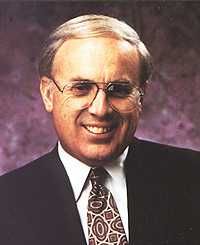
John MacArthur

Questions & Answers #44

Proverbs 1; Psalm 1
John MacArthur January, 1 2000 Video & Audio
0 Comments
Question and Answer session with MacArthur, Sproul and Mohler

MacArthur Spurgeon Pink Edwards Sproul Mohler

Sermon Transcript

Auto-generated transcript • May contain errors

100%
So several questions have been
submitted. There's no way we can get to all of them. We tried
to categorize them and take duplicate questions and only ask them once,
of course. So we'll start with an easy one
to the men this afternoon, just to get them rolling, and that
is, would you give an overview of the doctrines of grace? That is a phrase that's used,
the doctrines of grace. What doctrines does that phrase
refer to, and what do they mean? I suppose that that refers to
the central affirmations of the Protestant Reformation, the first
of which is Sola Fide, the doctrine of justification by faith alone,
where Luther in his response to the diatribe of Erasmus in
his book on De Servo Arbitrium responded that unless you understand
the Augustinian doctrine of sola gratia, you haven't really grasped
sola fide. because the underlying theme
for the gospel by which we are saved by grace through faith
is that even the faith that is the instrument by which we are
linked to Christ and receive the benefits of His atonement
and the imputation of His righteousness is based upon this prior a gift
of grace that is given to us. And so when the Calvinists speak
of the five points, total depravity, unconditional election, limited
atonement, and so on, those are usually seen as a summary of
the so-called doctrines of grace because the idea in each of those
is that because we, our depravity, so vitiates any moral strength
within us that in his debate with Pelagius, Augustine taught
the moral inability of fallen man. that even the offer of the
gospel cannot be responded to unless grace first intervenes
and changes the disposition of the heart of the person who hears
it. So that historically in the order of salvation from Augustine
through Luther, Calvin, and Edwards, the idea was that regeneration
precedes faith. Whereas today in America, in
evangelicalism today, the order is reversed, and the idea is
faith causes regeneration or must precede regeneration. It's
a necessary condition for the Holy Spirit to change you, where
the classic Augustinian position would be that left to themselves,
apart from the intrusion of the Holy Spirit monergistically in
our souls, nobody would ever say yes to the gospel. And so
the doctrines of grace basically are based on the premise that
salvation is of the Lord from beginning to end. Now, the Roman Catholics also
say they believe in God's grace. What's the difference between
their perspective that we're saved by grace and what you've
just articulated? Well, the Roman Catholic position
is that we're saved by Christ, by faith, and by grace. All three
of those are necessary conditions for salvation. At the Council
of Trent, however, it made it very clear that not one of those
is a sufficient condition. for salvation. That's why you
have the solas of the Reformation. For Rome, it's always faith plus
something else, faith plus works. It's grace plus merit. It's Christ plus inherent righteousness
within us. And so though both sides believe
in Christ, faith, and grace, what's missing in Rome is that
watershed word alone. I've been in correspondence with essentially the gatekeepers of
Mormon theology at BYU, In particular, Dr. Robert Millett, who is appointed
by the apostles, the Mormon apostles, to articulate and propagate the
Mormon faith. And their latest effort, and
his latest letter to me, which I received I think a few weeks
ago, you probably saw it, Kerry, is a plea for me to understand
that they believe in salvation by grace. They believe that it is all of
grace, and that there wouldn't be any salvation if God didn't
graciously provide that. That sounds awfully good. It
sounds very good. And, you know, what they're trying
to do, of course, is mainstream themselves and get the evangelical
sort of the… I should say ignorant consensus to just embrace this,
but as I begin to press it a little more, of course they have a different
God, a Unitarian God. They have a different Christ,
a created creature. And when you get down to salvation
by grace, I wrote back a rather extensive letter. I got back
another plea to please understand this, a big thick paper. When
it's all said and done, what they're saying is, God is gracious
to let us work our way to heaven. He didn't have to do that. But it's a huge trap door for
many people who won't go beyond that. So sola gratia, back to
the reason all the solas are there, sola scriptura, nothing
but the Scripture, etc., is crucial. Before Dr. Mohler comments on
that, just a request from the panel here to not use the flashes
on the photos of the cameras, if you don't mind. It becomes
a little bit like a lightning storm from our perspective. So
if you need to take a picture, make sure you do that without
the flash. I'm sure Dr. Sproul would appreciate that
very much here on the stage. Thanks so much. Dr. Mohler. I
just want to make one comment about the phrase, the doctrines
of grace. I think that one misconstrual
of Reformed theology is to believe that these alone are the doctrines
of grace. Every single doctrine that is a biblical doctrine is
a doctrine of grace. The knowledge of God's wrath
is a gift of grace to us, and so we need to be very clear that
when we speak of the doctrines of grace, we're kind of telescoping
in on soteriology, we recognize that not only is salvation all
of grace, revelation itself is a gift of God's grace. The late
Dr. Carl Henry, who died just before
Christmas, defined revelation as God's gracious forfeiture
of His personal privacy so that His creatures might know Him.
There's grace in that. There's grace in every aspect
of true doctrine. And so I understand the shorthand
of calling them the doctrines of grace, but we need to make
clear it's grace in the beginning, grace in the middle, and grace
in the end, and it's a comprehensive understanding that reorients
the structure of theology itself along the first principle that
all is of grace, even the beginning point of the knowledge of God.
SPROUL JR.: : And the beneficiary, of course, are you all. It's
grace to you. Did we pick the right title?
That works. Wonderful. I take a lot from
him. You understand that. There's a companion question
to that, and it is this, does one need to believe them to be
saved? I don't think so. But if you persist in the denial
of them, your soul may be in jeopardy, seriously. But When
I became a Christian, somebody told me about Jesus. I didn't
have the first word of theology. I had never read the Bible at
all. But what I knew, I was overwhelmed
by a sense of guilt. I knew I was guilty before a
holy God. And I got down on my knees before
my bed, and I said, Jesus, you know, save me. It was, Lord,
have mercy. It was, Father, forgive me. like
the publican in the temple who couldn't even raise his head.
And the publican in the temple who didn't raise his head, Lord,
be merciful to me, a sinner, did not have to wait until he
understood the doctrines of grace before he went home justified.
Again, you're not saved by correct doctrine, and you can get in
big trouble with incorrect doctrine, but believing the right creed
is not the same as putting your personal trust in Christ and
in Christ alone for your salvation. Just before Christmas I wrote
an article and got in a great deal of trouble, and some media
folks really didn't appreciate it, dealing with the question,
can a Christian deny the virgin birth? I carefully phrased the
question, and I answered it in the negative. You can't possibly
deny the virgin birth and confess the Christ of Scripture. That's
an impossibility. But I realized there are persons
who have come to faith in Christ who do not yet know of the virgin
birth. That's a matter of coming to know the fullness of who Jesus
is. There are persons who hear the proclamation of God's Word
and are regenerated by the power of God, and the Holy Spirit opens
their eyes that they can understand, and they respond in such a way
that they receive the grace of God. They confess Christ. My
argument is it's an altogether different thing to be ignorant
of a biblical doctrine and yet, on the other hand, to deny it.
But what we're really dealing with here, I think, is not so
much, do you have to believe in these things to be saved?
That would be an incredible addition to the presentation of salvation
in the New Testament, and would in itself make fiducia something
other than what it is. But to deny the doctrines of
grace is, I think, to assault the gospel itself. And then that
raises the question, if that isn't the gospel, then what is?
And then you've got huge problems. But as I hear the question, I
think it's not as I hear it so much just about the ignorance
of these doctrines, but the deliberate, intentional rejection of them,
and I take that with grave seriousness, although I recognize there are
many true believers in the Lord Jesus Christ who do not understand
and would not articulate their understanding of salvation in
this way, but we have to pray that the convicting power of
God's Word would call them to an understanding, again, that
all knowledge of God and all God's dealing towards us and
all that we know about God is grace. People ask me all the
time if Roman Catholic people can be saved, and I said, yeah,
I believe so, and I believe there are probably hundreds of thousands
of people in the Roman church who are in a regenerate state,
in a state of grace. I say to them, if you are in
that condition, you need to leave and leave immediately for the
welfare of your soul. And I also would say this, but
if they understand the Tridentine doctrine of justification, the
official teaching of the Roman Catholic Church on justification
and believe that, then they can't be saved because they would have
to be trusting in their own inherent righteousness rather than the
imputed righteousness of Christ, and that would disqualify them
because the object of faith is not Christ but themselves. But thanks be to God, there are
millions of people in the Roman Catholic Church that don't know
Roman Catholic theology. It's just like, you know, in
Presbyterian churches, we actually have Arminians in our churches. They sneak in there somehow. If I might offer one further
thought about that, it is certainly true of those committed to Reformed
theology that we may find ourselves inconsistent in our application
of what we know to be true, the outworking of God's truth from
one doctrine to the next. It's also true that there are
very few consistent Arminians, and most of the people we meet
in evangelicalism at large are very inconsistent. They all pray
like Calvinists. even if they don't preach like
Calvinists. In other words, there's usually
a place at which there is at least, at the very essence of
what they understand when they pray, a knowledge that God is
sovereign. And ultimately, salvation is going to be all His work.
or it's not going to happen. And I think that's a place to
begin this conversation, because there certainly are some five-point
Arminians. There are some 55-point Arminians. I've met a few of
them. But there are very few people who can genuinely be consistent,
and so I think there are some good places to pick up a conversation
here. Now, some have said that you
really can't affirm just one or two or three of those doctrines
when referring to the five points, but they really all go together.
If you're going to affirm them, you affirm them all. Would you
agree with that? Well, I would just say as soon as you affirm
that God is sovereign in everything and everything is by grace, that's
where you have to go. Otherwise, you're saying that
God is not sovereign in some of those elements. acrostic tool of the T for total
depravity, which really translates to the moral inability concept
of Augustine. If you understand T and embrace
T, There's no way off that train.
You can't deny any of the other five. I used to teach at college,
and I would labor the T with my students in the class. And
when I was done with the T, I would say, how many of you affirm this?
And I had 30 kids in the class, and they all raised their hands.
And so on the left-hand side of the blackboard, I wrote the
number 30. And then I underlined it and asked to the janitor,
please do not erase. And so we went to you, unconditional
election. And it was like we started with
30 little Indians, and it was 29, 28, 27 little Indians. The further we went down and
saw the implications of total moral inability, the more they
had to retract their initial affirmation. Now I hear people
tell me all the time they're four-point Calvinists, and I
say, well, we call those Arminians. Although I have to say that I've
had many conversations with people who identify themselves as four-point
Calvinists, and the one in which they demur, of course, is definite
atonement, or particular redemption, or what we call limited atonement,
which of course is the easiest one, I think, to affirm. But every time I hear somebody
say that, I make the assumption that if they really believe the
other four, they just don't understand this doctrine. And so let's take
some time to unpack it, and if I ask them what they really believe
about God's intent in the cross, did God intend from all eternity
to save every person in the world? I mean, it's rare that a person
will say to me, well, no, they don't believe that. He knew from
all eternity that not everybody was going to be saved, and He
didn't sovereignly decree that all would be saved. If He did,
everybody would be saved. And so did Jesus fail on the
cross to fulfill the task that the Father again will know? We
wouldn't want to say that. Well, I said, well, then how
can you… They just didn't understand the doctrine. Once they saw the
implications of it, then they said, well, I guess I really
am a five-point. But again, to be a Calvinist,
as Al's already said, It's not a matter of arithmetic. Adding
1, 2, 5, I wrote a book called Grace Unknown, really as something
to help our elders and laypeople to understand the essence of
Reformed theology, and I labored the point that the five points
or five points of historic controversy But if you embrace every one
of the five points, you still don't have the Reformed faith,
because Reformed theology embraces Catholic doctrines as well as
those five points, and even justifications by faith alone is not in the
five points. So there's a lot more to Reformed theology than
those five particular distinctives. Along those lines is a question. about the doctrine of God's foreknowledge. Could you comment on your understanding
of that doctrine, and is there a difference between foreordained
and foreknown? So I guess in a general sense,
explain what that means, God's foreknowledge, and is there a
difference between those two terms? I don't think there's any difference.
I think you can come at that from the text standpoint that
Foreknowledge is a predetermination to establish a relationship with.
You have a statement in Amos, Israel only have I known. You
have John 10, my sheep hear my voice and I know them. Cain knew
his wife and she bore a child. Mary was with child and Joseph
had not known her. We even talk about that kind
of knowledge. You know, we use the phrase carnal
knowledge or whatever. We understand that there is a
metaphoric use of the word no that speaks of intimacy. And
I think that's the way that's intended. It's a predetermined
relationship. It's essentially the same as
to predestine or to predetermine or to preordain, as opposed to
God looking down, as you've often heard, some corridor and seeing
what's going to happen, and based upon the knowledge that comes
to Him through some anticipated empirical experience or reality,
some virtual reality, He then reacts and says, based upon what
I know is going to happen, this is what I'm going to do. I think
it's not that at all. I mean, that would undo the entire
reality of God as sovereign, and that would make man completely
sovereign and capable of doing whatever he's he wants to do,
which we've already talked about, flies in the face of moral capability. So foreknowledge is simply God's
predetermination to establish a relationship with a person,
as I see it, the way it's used in the text. I would only add
to that in full agreement that we come to these questions from
an anthropological frame of reference. Given the way we live, given
the operation of our finite minds, knowledge and will are separate
issues for us, because we could will something to take place
that doesn't take place. I think it's very dangerous in
dealing with God to separate knowledge and will, because the
Scripture, I would argue, makes no such separation in that sense.
And so to foreknow or to foreordain is basically the same thing in
His perfect knowledge of Himself and His own will and all things
created. So I would just be very reluctant
to draw an etymological distinction there that is too sharp when
it has to do with the operations of the infinite divine mind.
I would agree with both of these things with one just additional
technical point. The two words, however, still
can be distinguished. When we talk about foreknowledge,
we're thinking about what God knows before it happens, and
when we're talking about His ordination, we're talking about
what He decrees. But at the same time, where we
all come together is we believe the reason why He knows everything
that's going to come to pass is because He's ordained everything
that's going to come to pass. And I quite agree with Al here
that the You can distinguish between the mind of God and the
will of God, but you can't separate them. I mean, I agree with Edwards
that what will is is the mind choosing. And so, but again,
the majority report among evangelicals with respect to election and
predestination is the prescient view, the idea that what all
election means is that God looks down at time. He knows who's
going to say yes to the gospel and who's going to say no to
the gospel. And on the base of what he knows beforehand, he
says, okay, everybody that I see down there that's going to say
yes, I'm going to choose. and everybody that says, no,
I'm going to pass over. And there's nothing of God's
ordaining and enabling the elect to say yes. And so in the final
analysis, the sovereign one in our salvation is man, not God. But I'm going to talk about that
tonight. I'm going to talk about Romans 9. And… The only problem with
that… I'm in full agreement. The only problem with trying
to make the argument which you held up as one commonly made
is that it still leaves God as the One who willed the world
in which He foreknew those limited circumstances. So there's no
getting behind. I understand that. That's what
I'm saying. You know, when we hear that argument, which was
well-articulated by Dr. Sproul, we need to come back
and say, well, you know, still, unless God is shocked at some
point in this process, He's still responsible for the creation,
the actualization of this world in which these foreseen issues
would take place, and these foreseen persons would come to faith in
Christ. If you start with the actual God of the Bible, infinite
in all of His perfections, you by definition can't get behind
that God in order to ask a question. And once you get that down, this
is where we are. SPROUL JR.: : Let me climb further on that
tree. That's wonderful. When I teach in the seminary on the doctrine
of God, which is one of the things I always teach is systematic
theology, I mean theology proper, I say when people ask me, What
is the distinctive aspect of Reformed theology, I said, with
respect to the doctrine of God? I'll say, I'm going to sound
neo-orthodox to you for a minute, like I went to school at the
feet of Barth or Brunner, and I said, but please be careful.
On the one hand, it's like Fiddler on the Roof, on the one hand,
There's absolutely nothing distinctive in Reformed theology about our
doctrine of God. All the classic creeds affirm
that God is infinite, eternal, simple, omniscient, omnipotent,
and all the rest of the attributes, and there's nothing novel to
Reformation creedal statements about the doctrine of God. I
said, now on the other hand, if you asked me what I thought
was the most distinctive aspect of Reformed theology, I would
say it's our doctrine of God. And they'll say, wait a minute.
You just said there was nothing distinctive about it. I said,
well, here's where the distinctive is. That once we start with the
Reformation doctrine of God, which every other Christian shares,
we keep that all the way through our theology. we don't get off
of that train, because our understanding of God determines our understanding
of justification, determines our understanding of sin, determines
our understanding of Christology. It conditions our understanding
of soteriology, because all of the issues that we encounter
with the so-called doctrines of grace always end up back had
a discussion about the character of God. It's not a mistake that
open theism that Clark Pinnock, you know, first espoused. I was
so grateful that Clark said that he was actively searching to
create a doctrine of God somewhere between the finite God of process
theology, and the orthodox view of God. See, he was trying to
create what he called free will theism, and he self-consciously
said at the beginning, in order to do that, he had to depart
from Catholic, not Calvinistic, but Catholic orthodoxy with respect
to our doctrine of God, and that's where we've come in open theism. I think openness shouldn't shock
us. I think it's where Arminianism
ultimately goes in trying to rescue God from some indictment
that He's somehow responsible for what's going on in the world.
And if you start out with the fact that God looks down and
sees things and reacts to that, then you wind up where Al has
wound up with the statement he made, which is so good. So God
created a world in which that's the way it would be, and now
you've still got a problem, so you've got to back up yet and
redefine God. So you have to reinvent God as
this person who's anything but sovereign, who's trying to sort
stuff out just like we are and make the best out of the mess
that occurs. Sproul, Jr. Pacing up and down the corridors of
heaven, wringing his hands, hoping that everything's going to come
out all right. If that's what God is and who God is, I'm going
to sleep in tomorrow morning. But I think it's important to
say that openness theology is a logical extension of an Arminian
view of God that just keeps trying to rescue God from people who
don't think things are the way they should be, and somehow God
has invaded the human world and robbed us of our autonomy. And
we don't want God to be the bad guy, so let's just make Him virtually
impotent and ignorant. And, you know, what level of
idolatry is that? I mean, that's pretty basic idolatry.
It does seem that people tend to pick the attributes of God
that they want to affirm, whether they're affirming God's love
but not His omnipotence or affirming His omnipotence but not His perfect
love and some sort of motivation to protect God, which is what
it sounds like you're saying there, John. I suppose there
could be that alternate motivation of pride. You alluded to that,
too, in the sense of trying to keep some of our autonomy. Is
that what you meant by that? Well, I think there's… you know,
that's the primary, you know, wretchedness of the human heart
is self-will and pride. And I think what I was saying
the other day is anybody who comes up with a view of God that's
never been held in the past has a level of audacity that I can't
even comprehend. I mean, really, we might let
you put a different spin on history. You might tolerate your revisionist
history book on some event in history, but for you to stand
up in your little time and space in the universe and say that
historic, as he puts it, Catholic or universal church understanding
of the doctrine of God is wrong, and you've arrived to straighten
us out. I mean, the level of audacity is beyond belief. I mean, I've said that to our
people. If I ever say something you've never heard before, yank
me out of the pulpit. I see that as a… that that might be the
epitome of human pride. In trying to save human pride,
you become so proud that you'll tell God… you'll tell people
who God really is in spite of the way God has revealed Himself.
Sproul, Jr. In a sort of non-theological,
simple, personal way, when I talk to my friends, I'll say to them,
you're a Christian, yes. You have friends or relatives
that aren't Christians, right? And I said, are you a Christian? And your friend isn't. because
you're better than that person. Now, I've never had an Arminian
look me in the eye and say, well, yeah, that's why I'm a Christian,
because I'm better. I said, are you a Christian and
your buddy isn't a Christian because you're smarter than they
are? Well, no, because they know if they say yes, I'm going to
say, well, where'd you get your intelligence in the first place? You've got
a greater gift of intelligence. You know, when God was passing
out brains, your buddy thought he said trains, and he missed
his. And that's not, you know, and I'll say, well, let me ask
you this. Is there a right response to the gospel that God commands? Does God command all men everywhere
to repent and to embrace Christ? Yes. I said, now, your neighbor
over here has rejected that command and has disobeyed God. Has he
done something wrong? He said, yes. I said, but you've
done the right thing. So ultimately the reason why
you're in the kingdom and that guy isn't in the kingdom is because
of your virtue as distinguished from his vice. Well, I don't
want to… I say, I know you don't want to say that. You'd rather
cut your tongue out before you say that, but this is what we
say, the felicitous inconsistency of Arminianism. This is what
they have to say if they really believe that in the final analysis
the thing that gets them in the kingdom is their right choice,
which was the good thing to do, rather than the bad choice that
the reprobate made. And I'm saying to you what you
need to be saying the rest of your life is thank God I said
yes, not thank me that I said yes. Could you comment on how we are
to recognize a false teacher? What makes a false teacher a
false teacher? Usually by the hairdo. Seriously, if he's got a bouffant,
you run for your life. And a funny suit with a gold
patch on it. I've just been going through
all of that, 2 Peter 2, Jude, 1, 2, 3 John. You know, the essential tests,
they're all essentially doctrinal tests, and you go back to the
doctrines of grace, of course. You go back to sort of the drivetrain
of of our faith, a Trinitarian God, an understanding of the
doctrine of sin and the helplessness of man. the incarnation, the
perfect life of Christ, substitutionary death, bodily resurrection, the
perfect understanding of the God-man, all man and all God
at the same time, and sort of the incredible incarnation reality,
salvation by grace alone through faith alone imputed righteousness.
I think that just the drivetrain of those doctrines of grace that
we're talking about are what mark the the true teacher. And John points out repeatedly
that they start with an assault on Christ. There's either an
assault on the humanity of Christ or an assault on the deity of
Christ. And Paul talks about if anybody preaches another gospel,
which would include perhaps some aberration regarding Christ or
some addition of works to grace. I think any And anybody who tampers
with that is for certain a false prophet. I mean it would be categorically
in the place of a damning lie, a hypocritical liar, as Paul
writing to Timothy calls him, hypocritical liar, somebody who
is espousing doctrines of demons at that particular point. There
are a lot of ways people can be false and hypocritical and
driven by money and pride and power and all of that, but at
the core of it is some aberration of the gospel. and the elements
that are necessary to the gospel. Sproul, Jr. Because we all have
false ideas invading our thinking. We have to lay that on the table
right away. The question or not is whether
those false concepts that invade our thinking are of the essence
of true Christianity. You know, I had a teacher that
said there are three kinds of people in the world, those that
can count and those that can't. No, that was somebody else. They
said that in terms of theological systems, There are three great
generic systems of theological thought throughout history. The
first one is sheer Pelagianism, all of Pelagius versus Augustine,
and its resurrection of Socinianism in the 16th century, and the
liberalism of the 19th century, neoliberalism of the 20th century.
Those doctrines are so far removed from the core of biblical orthodoxy
that we would regard Pelagianism in its pure sense as not only
sub-Christian but anti-Christian. and false, you know, demonic
doctrine. Then the second group would be
the semi-Pelagians. You know, Pelagius' cousin, Semi,
who lived in Antioch. He sought a middle position between
Augustine and Pelagius. And that's where Arminianism
comes in and other branches of Christendom. And then Augustinianism
would be the third group. And I would say, historically,
that there's been great disagreement between semi-Pelagians and Augustinians,
Arminians and Calvinists, if you will, and so on, but that
there's still intermural debates among true Christians. I don't think that if you embrace
Arminianism that you've necessarily stepped out of the faith and
into apostasy. I think the errors can be And
a consistent Arminianism such as open theism, you know, I think
does take you outside the fold. I would put open theism within
Pelagianism more than semi-Pelagianism, but those are the generic things. I think we ought to be very careful
when using words that are of extreme importance, especially
to us. Liberals don't believe in heresy.
They don't even believe it's possible because there is no
such thing as orthodoxy. But when we use the word heresy,
we ought to be very clear in identifying a heresy as that
which is in direct violation of the integrity of the gospel,
that which violates the church's orthodox understanding of the
person and work of Christ. Now, there are aberrant teachings
on any number of issues, but we ought not to call them heresies.
I think another distinction is made in Scripture between, and
I go back to what we were talking about earlier, ignorance and
willful denial, and also a distinction can be made between a willful
false teaching and an unintentional false teaching. And I appreciate
what R.C. said about her own frailty. In
Acts chapter 18, when you come across Apollos, it is mentioned
that he was instructed in the way of the Lord, and being fervent
in spirit, he was speaking and teaching accurately the things
concerning Jesus, being acquainted only with the baptism of John.
And then later we are told that Priscilla and Aquila heard him.
They took him aside and explained to him the way of God more accurately.
And that's a great model right out of the book of Acts for correcting
an inadequate teaching. Apollos obviously did not mean
to misconstrue the issue of baptism. And so I think in terms of our
responsibility for the church of the Lord Jesus Christ, we
need to identify heresy where it exists, and without compromise,
name it for what it is. We need to expose false teachers
who willfully and intentionally are attacking the very foundation
of the gospel itself. Yeah, and Paulos did what, you
know, the best of his knowledge until Priscilla and Aquila told
him to baptize babies. I was just reading this book
of Acts. But the third category I would
mention, before losing complete control, is the one who does
need to be more instructed, and folks, that's true of all of
us. That's why I think a teacher's accountability needs to be to
the church of the Lord Jesus Christ, and we need to be mutually
accountable to each other. I appreciate what Dr. MacArthur
said. We need to listen to each other. the best intended among
us. We are finite, frail creatures.
We may say something we do not even mean to say, imply something
we do not even mean to imply, and then again we may mean something
and have to be confronted with the fact that that isn't… that
isn't biblically sustainable and biblically right, and there's
grace in that. But we're back to the doctrines
of grace. I do think that there are both… self-deceived and non-self-deceived
false teachers. I think there are false teachers
who are so deceived by the enemy that they buy into what it is
they say. And then I think there are those
false teachers who don't believe anything they say. They have
just fabricated it as a way to make money, get power, move through
the world to whatever ambitious fulfillment they want. And They are ultimately, of course,
the most seriously deceived because they have put themselves in the
position of the greatest eternal jeopardy possible. But I do think
there are many, many of the most dominating media false teachers know they're false teachers.
They are not self-deceived. They know the scam is on and
they're milking it for everything they can get out of it. It actually
touches on the next part of that question, and it was this, can
false teachers or do false teachers know they are false teachers?
So you're saying that it's possible that they can be deceived and
not know that, but most of what you're running into, especially
in the media, they know very well what they're doing. Yeah,
I mean, I have no way of knowing the mind of a person. But there
are those people who are false teachers because they've been
taught falsely, and they've perpetuated what they've been taught as if
it were truth. There are those people who, against the backdrop
of incessant truth pressed upon them, continue to teach lies
and deception without the fear of God in their lives at all,
who know what they're doing. I mean, I think back in the early
days of the charismatic movement, my dad was preaching in Hollywood. He had a church there, and there
was a little boy preacher named Marjo Gortner. And little Marjo
was a media darling. I mean, the guy was on all the
news film deals. He used to show in theaters.
He was in the newspapers. He could preach up a storm at
the age of eight. And, eventually, they made a
movie about him. You probably saw the movie called Morjo, where
he's sitting in his hotel room throwing money in the air, raised
in a Christian environment, exposed to all of the Christian truth. It was a joke to him. It was
a mockery to him. It was a scam from start to finish. And, I mean, you have the… that's
the Elmer Gantry approach. Sinclair Lewis saw that one,
and he dies a, you know, a drunken alcoholic in a third-rate clinic
somewhere outside Rome, and Sinclair Lewis did, you know, basically
a victim of his own skepticism toward truth and toward God.
But I think that the world is full of those who are very intentional,
ambitious liars, and they know it. They are hypocritical liars.
That's what they're called in 1 Timothy 4. And I think we need
to face the fact that the New Testament is very clear about
warning about these intentional false teachers. Last night preaching
from Acts 20, I mentioned Paul's characterization of these men
as savage wolves preying upon God's people. Second Peter and
Jude deal with this, and in Jude we read that these men also by
dreaming defile the flesh, reject authority, revile angelic majesties. They revile the things they do
not understand and the things which they do not know by instinct,
like unreasoning animals. By these things they are destroyed.
It goes on and on. These are those who intentionally
prey upon the church, and let's face it, this is not just a first
century reality. We're witnessing this in our
own times, and I think we need to be very straightforward. There
is the category of the charlatan. And then I think we as human
beings have an enormous capacity to deceive ourselves, and I think
there are many people who, just because of a desire for assorted
gain or popularity or whatever, have deceived themselves on these
things. But the intention is articulated or not to harm the
church of God. Yeah, and Jude makes the statement
that they crept in unnoticed. I mean, this is intentional.
This is the savage wolf who comes in, hopefully under the radar.
He says later on in the epistle that they are hidden reefs in
your love feast. They're below the surface. They're
under, but they tear up the hull of the ship. I see intentionality
in all of that. They're, you know, they're clouds
without water. They stir up like the foam on
the surf. They are after you with lascivious
intentions. They're greedy, you know, and
he goes on to talk about those the influences of these kinds
of people being so devastating and disastrous, and ultimately
denying the Lord that bought them. That's where it all comes
down to. I mean, so they have some knowledge of what the whole
thing is about. These people today that are these media false
teachers, I don't see these people as poor, deceived souls in general. They're in an environment where
they're exposed to the truth constantly. They're not in some
third world country coming out of animism or something where
they haven't got anything to connect with. I mean this is very intentional
and destructive kind of things, and of course I see also the
lack of any integrity in their lives about what they teach by
the blatant materialism in which they engulf themselves, which
would be the sort of the outward manifestation of the driving
motive behind all this. And for the most part, these
guys that you see out there, they have to know that they're
frauds. They have to know it. And yet,
on the other hand, the depths to which we can deceive ourselves
is unbelievable. There's a common thing that I
see on television. There's one particular televangelist
who will have a season of prayer, and he has the Word of Knowledge.
And he'll say, right now in… there's somebody in the southwestern
United States who's, as we're praying, is being healed of a
goiter. Thank you, Lord. That goiter is vanishing right
this second. There's a woman with leukemia
in the northeast, perhaps Boston, and that leukemia has just gone
into remission. Thank you, Jesus. And the thing that amazes me
as I see this time after time after time is that God supernaturally
reveals the specific disease and the general area of the country, but never gives the name and
address. And in that case, the miracle can never be verified
or falsified. Now how long can you keep doing
this and really continue to believe that you're getting supernatural
information? How can you really… I mean, how
can you deceive yourself to that degree? But there's a whole theology
out there that says that such is possible. And if you close
your eyes right now and just let your mind wander, see how
many diseases you can think of, and how many parts of America
you can think of. You have the gift now. I mean it's silly. It really
is silly, but it sells like crazy, and pretty soon that person has
to know that I was on one of those programs while that very
thing was going on, and immediately after I got off the program,
I went back into the makeup room where they were taking my makeup
off, and I'm sitting like in a barber chair, and they're taking
my makeup off, and one of the hosts that was involved in this,
it was a woman, I won't mention her name, to protect the guilty. She came in, and she was furious
at her secretary who was there in the room, and she's really
giving it what for because she failed to get her appointment
for the doctor that afternoon because she says, my back is
killing me, and you let that slip through the thing. And I
said, well, why don't you go back out there and get the word? It's more like Barnum and Bailey,
you know, PTT Barnum. It is. I will tell you about
a situation that happened here a couple of months ago. The pastor, Jack Hayford, who's
here at the church on the way, and Jack and I have had fellowship
through the years, and I appreciate his love for Christ, but his
son-in-law, Scott Bauer, was has been pastor of the church
on the way for about four years. And there was, in a certain week
at the church, just a couple of months ago, a prophet came
to town, and a prophet laid hands on him and announced to the church
that Scott would be receiving some gifts for miracles, signs,
and wonders, and healings, and would take this to the ends of
the world. This, I think, was, if I remember correctly, was
on a Wednesday night. And that same night, he had a brain aneurysm
and died. And he was 42, 43 years old. Immediately after the prophecy,
he collapsed in the church and died. And I went to the funeral. Now, it's a sad, tragic thing. He was loved by his people. But I mean, if I'm sitting there,
I'm saying so much for prophecy. And then I'm asking the question,
what do they do with a prophet who doesn't tell the truth? You
know, I mean, it just seems to go right on by. And I think there
is another side of it. I'm just kind of backing up what
R.C. said. I think if you keep saying it long enough and saying
it long enough, you figure a way to make it real. And I think
that's more the part of the people and people who are in that than
the people who perpetrate that kind of thing. I think there
are good people. These people, of course, love the Lord and
believe the gospel and all that. But if I were in a situation
like that, I mean, I guess my analytical mind and whatever,
if somebody says, this is a word from the Lord and the very opposite
happened instantaneously on the spot, I would tend to cancel
the whole operation. But it's amazing how But that's
not what happened, and some people actually said to me that the
prophecy was so strong the devil killed him. Now there's a frightening way
to live. John, during the sixties when
the Charismatic Movement hit the main line, I was teaching
college, and all of my Presbyterian students had become Charismatics,
and I didn't know what happened. and they would come down to my
house and we would pray together and we literally had prayer meetings
that would go all night, you know, for eight, 10 hours. And
I thought to myself, these are people who are the most devout
group of Christians I've ever met. And so I prayed with them
to receive the gift of tongues. And I got it, all right. And
then I was slain in the spirit by Catherine Coleman, of all
people. She made a lot of hay out of that on national radio.
So I was in the charismatic movement for a year or two, and I probably
heard a hundred prophecies that were time-specific, not like
the studied ambiguities of the Oracle of Delphi. Specific things
that would happen to specific people in a specific time. And like, it was O for a hundred.
not one of these things came to pass. And I finally just said,
wait a minute. I can't stay with this. I said,
because the one thing that I'm positive of is this. If I want to know the leading
of the Holy Ghost, here's where it is. not laying hands on my
car so I won't run out of gas because I'm gonna drive for 500
miles. I mean, it became that frivolous. And I have said ever
since then, if you want somebody to, and you ask them to pray
for you, and you can trust that they will, ask a charismatic.
But sooner or later, you're gonna have to make a decision between
these internal neo-gnostic impulses that you have, or the Word of
God. God wants us to live by this. I mean, and there was a point
where I just grabbed the Bible, and I held it to my chest, and
I said, you know, I believe that the Spirit works, per verbum
and cum verba, and never sin anywhere. with the Word, through
the Word, and never against the Word. I had so many people tell
me that they were justifying their sin because the Spirit
told them to do it. And I warned them how perilously
close they were coming to the unforgivable sin. And I said,
that's tragic. But again, to those who were
at the thing last night, this is what people want. They want
power. And this is where New Age invades the church with the
promise of being able to manipulate your environment to visualize
world peas, P-E-A-S, you know, and have it happen. The only
place that really works, sorry if I'm lying, Peter, is on the
golf course when you stop and you see that pond between you
and the green, and the last thought that goes in your mind before
you swing is, don't hit it in the water. What happens, John? You hit it
in the water. Oh, that's that one that is a
believer's baptism Bible. We do have concerns about extreme
ecumenism. The question is asked by some
of these men here, how can we determine with whom we share
the pulpit? Based on everything you've said
about now false teachers, we don't want to go to some extreme.
There are intramural debates. Understanding that, again, how
can we determine with whom we share the pulpit in our church? Someone else. Good. Well, I would center first of
all on the gospel, and I guess this raises the whole question
of what the pulpit's about and how it should be shared in the
first place. the pastor, the elder bishop
of the church, I think ought to take this with an incredible
sense of stewardship, that no one should be in that pulpit
who would not declare the truth of the gospel, a biblical message
perfectly consistent with God's revelation, and would consider
that a stewardship a preacher who would be afraid lest he speak
wrongly and would rather die than preach that which is not
true." And now that's, when you think about it, pretty restrictive
right there out of what passes for Christianity in America.
I'm not sure that there is any laminated card you can put in
your wallet that says this list and not that list. I think it
is a situation in which the bar ought to be so high in the pulpit
of your church, remembering that this is someone speaking to the
people who are under your charge, that you would not do anything
to have them led astray. And, you know, I'm not sure that
just gets at the whole ecumenical issue. It's a deeper issue than
that, because generally when people mean ecumenical, they're
talking about institutional, denominational, and other lines.
You know, frankly, there are a lot of Baptists I wouldn't
have in a Baptist pulpit. At least they call themselves
Baptists, and so that's not the issue. The issue is fidelity
to the truth, the consensus fidelium, the faith once for all delivered
to the saints. I would just add to that because
obviously we have people preach here like yourselves, and it
is fidelity to the gospel, to the core of the gospel, to the
absolute, unequivocal essentials of the gospel. There's another
component as well to me, and that is this high view of God
and Scripture. Nothing to me is more upsetting
than a low view of God and triviality in dealing with the text, playing
fast and loose. with the Word of God. You know,
we labor very diligently in our ministry here to give our people
a high view of God. Psalm 138, too, He's exalted
His Word even to His name. And so here is God, and here
is His Word, and whoever it is that occupies this pulpit needs
to be consumed with the honor of God and the honor of His Word.
so that there's not any kind of shallow or superficial or
surfeited approach to the sacred things of the text. That's not
to say we can't enjoy it. I mean, we're having a great
time, and God has given us laughter like a medicine, the Bible says,
and we love it, and we have that to share in the joys of these
days together, and that should be in the life of our church.
I hope our church is just loaded with joy. My dad used to say,
don't ever use humor in the pulpit, and I used to always think he
was wrong, and finally he got the picture. that it was a great
place to use humor. I'm not saying it needs to be
stiff, but I am saying there needs to be a treatment of the
Word of God that's elevated and lofty, and you need to have somebody
who knows what they're talking about when they talk about the
Word of God. So we set the standard as high as we can, and yet on
doctrines that are not essential to salvation, there has to be
some room. I find, frankly, very… I mean,
these guys come from different backgrounds than I do. All three
of us do, and yet you can sense that we love each other. We love
the truths that matter. We love the Word of God from
front to back. we understand. And as R.C. said,
I know there are errors in my theology. I'm not under any illusions.
I know that. And I said that one time, and
somebody said, well, why don't you change them? And my response was, I
just don't know where they are. I know they're there, but I don't
know where they are. You show me where they are, I'll
change them. I mean, that's not a problem, but… Stop. Stop the music. I think I've told you this in
front of yourself, but I've said it behind your back probably
a hundred times. I said, you know, I love to listen
to John MacArthur preach, and I said, I'll tell you about John
MacArthur. When I hear him preach, I know he's been in the text.
I mean, it's obvious that he has worked on the text, and he's
just not just having a pretext to take off on. And I said, I
can tell you something else about John MacArthur. If John and I
ever disagree, on even a minor point or a minuscule point of
Scripture where I think he's wrong and he thinks I'm wrong,
here's what I know about John MacArthur is that if I can go
to the text and show John MacArthur that his understanding of the
text is incorrect, that he'll change his view in a heartbeat
because he would rather be accurate, you know, to the Word of God
than to have his ego massaged. I mean, and I've never met anybody
more open to correction in righteousness with respect to the text of Scripture
than this man. And I hope he feels the same
way about me, that if he could show me where I'm wrong. Because
I believe the book. You know, we laugh about, we
have different understandings of what the book says, but if
I have a misunderstanding of the book, I want to correct it
immediately. Not next week, but today. But you don't have to listen
to a preacher for very long to know whether or not he spent
time in the text, do you? I mean, the text is the corrective.
If your life is in the text, week in and week out, and man,
I would say this to you, you are so underestimated. You know,
the traveling guy with ten suits and ten sermons, he doesn't even
know what it's all about. You know, he's got his bag of
tricks, his sugar sticks. He yanks them out, pops them
out, gets the crowd to clap. That isn't even close to what
you do, slugging it out week after week after week. I'm getting
the number three tonight. No, I know better than that.
You've been pastoring now for how many years? How many years? Six years. But six down, twenty-nine to go,
right? I've recycled those ten sermons, you know, a lot. Oh,
well, we were talking to Al at lunch a couple of weeks ago,
or somewhere, and said, We're talking about the short stay
of pastors in churches, and somebody asked you why. Why do pastors
stay such a brief time in churches? What did you say? I said they
have two years' worth. And after 104 sermons, they're
out, and so they have to move on. And that's an unfortunate
reality that we see. And there's just no discipline
in that. There's no love for the Word.
There's an abdication of the pastor's responsibility. And,
you know, again, a man's either going to see that pulpit that
used to be up here and is now down there. There you go. I want one of those. A man ought to see that pulpit
as the greatest test of his life every time he stands into it.
And someone who sees it as less than that, forbid entry. There
is the test. You know, and even in Al's case,
we all sort of marvel that… I don't know if it's every single day
that you write an article, or how many times a week? Five days
a week. Five days a week. coming out with insightful things
drawn out of the Scripture and constantly preaching. You know,
it's not hard to pick those kind of people. There's not a lot
of them, but when we think about people to preach here, inevitably
Inevitably, it's those kind of people who have a lifetime involvement
in the text of Scripture, because everything's tested all the time
by the text. That's what I told those Russian
pastors. I said, you know, you sit there and criticize John
Calvin. You know, don't criticize him until you've spent your entire
life exegeting everything in the Old and the New Testament,
testing your doctrine against everything that's written on
the pages of Holy Writ. And so that's what we look for. Another related issue to that,
of course, is the difficulty sometimes of being invited to
speak at an event where the assortment of people there is so confusing
and convoluted that you know they're trying to pull your niche
in. They're trying to get the whole evangelical pie, and so
they've got somebody from every section. That's hard for me. It's not necessarily true that
I affirm all the rest, but I have the sense that in some secondary
fashion I'm putting my stamp of approval on it, and I find
there are some of those kinds of situations where I just can't
go. I just say, I'm sorry, I can't be there. I think it would send
confusing signals, and it would establish some kind of affirmation
would be outside the realm that I'd like to affirm. So those
decisions are made frequently. The panel has asked this question,
can you comment on the method of determining from Scripture
and in Scripture what is strictly cultural in the New Testament
and what is for today? The common examples are things
like the head covering in 1 Corinthians, women in the ministry is on the
list here. You can comment on that, 1 Timothy. But how do you go about determining
what is something that is cultural and what is still for today?
SPROUL JR.: : First thing you do is you go out and you buy
a book called Knowing Scripture because it has a whole chapter
on principle and custom and how you deal with it, because there's
a biblical principle that addresses that decision, and that's whatever
is not of faith is sin. Now, obviously, you admit at
the first that there are certain things that are customs. You know, when Jesus tells the
people on the… sends out the seventy throughout the villages
of Israel, you know, not to wear shoes. This is not a universal
mandate, cross-cultural mandate for shoeless evangelism in every
generation, obviously. There are certain things that
are clearly customs tied to the culture of the time, and there
are other things that are clearly principal that transcend time. But What you have to do, there
are times when it's not immediately apparent to determine what is
principle and what is custom, and I say this principle. is
the burden of proof is always on the one who says it's custom
rather than principle, because the principle applies that if
I'm going to err, I'd rather err on the side of being over
scrupulous of treating something that was a local custom as if
it were a transcendent principle rather than ever being guilty
of taking a transcultural principle of Almighty God and reducing
it to a first century custom. And, you know, you take that
business about the covering, the head covering. I use that
as the illustration in there, and I'm a voice crying in the
wilderness because if you go and get ten commentaries on 1
Corinthians, you'll find ten commentators that will put the
point out that in Corinth, which was a seaport city, a sin city,
the sailors coming there, a big red light district, and that
the sign of the prostitute was the uncovered head. And so Paul obviously gave this
mandate to the Corinthian community for the women to keep their heads
covered so as not to scandalize the community. And there is a
case where this New Testament scholar studies the zips and
laban, the life situation in which the letter was written,
and says, aha, this must be why Paul told the women to cover
their hair. I said, now there's an exegetical
principle here, and the principle I would like to suggest to biblical
scholars is that when the apostle Paul gives a reason for instructions
that he imposes upon the church. You never, never, never, never,
never substitute a different one. And Paul in this case doesn't
say to the Corinthian community, have the ladies cover their heads
because the prostitutes are walking around with their bare head.
And in fact, he appeals to creation. And if anything transcends local
customs and boundaries, it's creation ordinances. So I said
those are certain things you look at. Now you take the whole
question of covering your head. The reason he gives this for
the woman who covers her glory and shows her submission to her
husband, and you can say it covers some texts that are covered by
a veil or whatever. So the question is, well, is
the submission of the wife to the husband, is that cultural?
first century only. A lot of people think so. And
so they would say the fact that the woman is to be submissive
is a custom, and you show that submissiveness by the custom
of the hair covening, and the customary hair covening is a
veil. or the hair, however you translate the text. Then the
next possibility is, well, no, the submissiveness of the wife
to the husband is transcultural. It's a principal matter, but
it varies from culture to culture how you display that willing
submission, and in the first century the way it was was with
the woman cutting her hair. My mentor John Gershner believed
that the submission was principial, the hair covering was customary,
and so that's that. Or you can go the whole hog and
say it's all principial, that submissiveness is principial,
head covering is principal, and it should be with a veil, not
with a kerchief, a babushka, or a hat like Hedda Hopper. I would say It doesn't matter
what the woman covers her head in. I think that what type of
covering is customary, but I think the head covering is transcendental
and principial, and I'm probably the only guy left that teaches
that. Yeah, and I would add to those
comments, which are very helpful. God has given the woman a covering,
and that's another consideration. It's a creative covering in her
hair being her glory. But I hear this talked about
generically a lot, but nobody ever goes anywhere but 1 Corinthians
11 and 1 Timothy 2. I mean, I never hear anybody
bring up anything else. except those two things. I really
don't think you're asking a broad, sweeping, difficult issue here. It does come down to creation
clearly in 1 Timothy 2. I mean, there's not any debate
there. And there are creative elements
to the 1 Corinthians thing which would lead us to conclude that
God has given women… I remember reading a medical report one
time that says women's hair grows faster than men's generally.
which I felt was very interesting. This wasn't written in any defense
of that text. It was some deal, I don't know, showed up, somebody
sent to me. But I just don't think it's a big issue. You've
got the clear abrogation of ceremonial law from the Old Testament and
the New Testament, which deals with a lot of the issues there.
So I think you work your way through these passages. They're
not that ubiquitous. I mean, they're not all over
the place everywhere, and where you come to these passages, you
deal with them individually, and I don't think that there's
a lot of mystery about doing that. You might comment further then
on that passage in 1 Timothy 2. You're obviously saying that
that's not something that's a custom, that that's something that goes
all the way back to creation. Go ahead and summarize what that
passage is saying about the role of women in the church when it
comes to church leadership. Well, I permit not a woman to teach or to take
authority over a man. That's not vague. There's nothing
obscure about that statement, and it fits perfectly with the
fact that You have sixty-six books in the Bible, none written
by a woman. You have twelve apostles, none of whom is a woman. You
have elders or pastors in a church who have to be a one-woman man,
according to the text of Scripture. spiritual leadership is male
from front to back. There are women who on occasion
spoke for God, Deborah, Huldah. No woman in the Old Testament
had an ongoing prophetic ministry. No woman in the New Testament
had an ongoing apostolic, prophetic, or teaching ministry. Quilla
and Priscilla, we know, in a personal, private way, you know, helping
Apollos, this was commented upon earlier. So, it all comes together
in the simple statement, I permit not a woman to teach or take
authority over a man. If she has anything to… if she wants
to know anything, let her go home and ask her husband. I think
that's in the due constitution of the church when it gathers
together. And the rest of the passage flows down, she shall
be saved through childbearing. That, of course, has troubled
a lot of people because there are a lot of, you know, approaches
to that text. I think you have to find the
context which delivers to you the reason why He says that.
She shall be saved from what? From whatever stigma of second-class
status you might draw from the creative order, and whatever
stigma you would draw from the fact that she was deceived and
Adam was not. In other words, that seems to
be the turning point in the text, to reinforce how much a woman
needs to be under a man. When she got out from under a
man, she got deceived by the enemy and led the whole race
into sin. and she shall be saved seems to me to work well toward
the idea that having been stuck, as it were, with the stigma of
an independent act which sends the whole race catapulting into
sin, she is delivered from that if she, being godly, raises a
generation of godly children. So, you know, the husband is
the teacher, but the wife is the influencer, the godly influencer
in the family. I think God's balance is perfect. I always think preaching in Bucharest
in Romania to about a thousand pastors and their wives in a
Romanian church, and they were asking me a question. Somebody
asked the question about, what does it mean to be saved through
childbearing? And I gave essentially this answer, it sure doesn't
mean you're going to get to heaven because you have babies. And the place
went dead silent, just absolutely dead silent. And the moderator
leaned over and whispered to me, that's what they believe. that they believe you can lose
your salvation, and the way a woman can lose her salvation is if
she does anything to prevent having a baby, becoming pregnant.
And so all these pastors have anywhere from 9 to 15 children.
And so, you know, I'm completely ignorant. And so I said, well,
I probably need to then explain it even more so they understand
it, and I'll help them. And so I went through this detailed
explanation, trying to work my way carefully through the And
afterwards, he said, you know, you could just see those women
looking at their husbands and saying, you know, of all the
Bible verses that you had to get wrong… I would just offer this. People often ask me, how did
you come to where you are theologically? And of course, no man knows even
his own mind and heart as well as he would like, but there's
certainly a process of coming to know biblical truth that I
can trace in my own life, and I trace a lot of it to the exercise
of becoming a theologian and dealing with historical theology.
Certainly, the Scripture and the convicting power of Scripture
and the authority of Scripture is the first issue, but the Lord
used in my life several things to help draw my attention to
the crucial issues where truth and untruth were discerned from
each other. You're going to come, and you're
either going to stand with Arius or with Athanasius. You're going
to be with Augustine or with Pelagius, with Calvin or Satellito. You're going to be with Gloria
Steinem or the Apostle Paul. That's just about how clear it
comes to be. And when you understand that
this issue is not incidental, we're talking about principial
and custom issues, I want to step back a little bit further
from that and come at this with a perspective that asks, what
is at stake here in terms of God's glory? And what we have
in Scripture is a revelation that God created men and women
in His image. Male and female, created He them. There is God's glory in the gender
distinctions between men and women. Now, once you start in
Genesis 1 with that distinction being an important signal of
God's glory in creation, then you are departing from the postmodern
feminist mindset And you are locked into a certain hermeneutical
understanding that you will expect from Genesis 1 onward a pattern
revealed of how the distinctions between men and women are going
to bring glory to God in the right relating of these genders
to each other before God. men and women. And so we should
expect after Genesis 1 and Genesis 2 that we will come to 1 Corinthians
11 and 1 Timothy 2 and any number of other passages. How can we
be surprised? Gender doesn't become important
all of a sudden when you get in the New Testament age. It's
important all along in Deuteronomy you have the repeated injunctions
that a man ought not to even dress like a woman nor a woman
to dress like a man because it robs God of His glory in the
difference He made between male and female. And we come across,
and of course you have similar warnings, we have 1 Corinthians
not only 11, but you've got 1 through 10 that gets before that, to
make very clear that one of the inherent issues of sinful rebellion
in the human heart is to rebel against the distinctions that
God has put here in making us male and female. And so let's
go to 1 Corinthians 11, let's go to 1 Timothy 2, and let's
understand that God here is being specific about how He intends
His glory to be displayed. And in the teaching, an authoritative
responsibility in the church, God's glory is in a man doing
it. And I think a part of the reason why, I do not mean to
psychologize the text, but I think a part of the reason why we see
this is because God calls men to be men. And God calls men
to take this responsibility. And being slovenly, sinful creatures
that we are, we wouldn't do it if God didn't tell us to do it.
And it's our responsibility to do it. And for a woman to usurp
that authority violates not only the direct order of God's Word,
but also the order of creation, and instead subverts God's glory
that is demonstrated in a man taking this responsibility in
the church and in the home. And thus, we have to have a hermeneutic
that doesn't get to gender just where gender is mentioned. And
I understand some English professors are going to be upset I used
the word gender rather than sexes, but I promise you in the media
it's harder to use the word sex and make clear you're talking
about male and female. And so I'm just going to use the word
gender. But it's a part of God's glory, brothers. If it is, then
we must rejoice in it and find our place in it and find our
place under God's authority in Scripture. Well, I want to thank the panel
for their willingness to give us their time this afternoon
and great questions and great answers for all of us. And I
think it's appropriate that we thank them for their time with
us this afternoon. It's fun. Thank you. We've got some time then before
dinner and then to enjoy dinner before the evening service. I
don't know if there are any final comments about the conference,
but we'll see you then after dinner at the session.
Broadcaster:

Comments

0 / 2000 characters
Comments are moderated before appearing.

Be the first to comment!

Joshua

Joshua

Shall we play a game? Ask me about articles, sermons, or theology from our library. I can also help you navigate the site.