Bootstrap
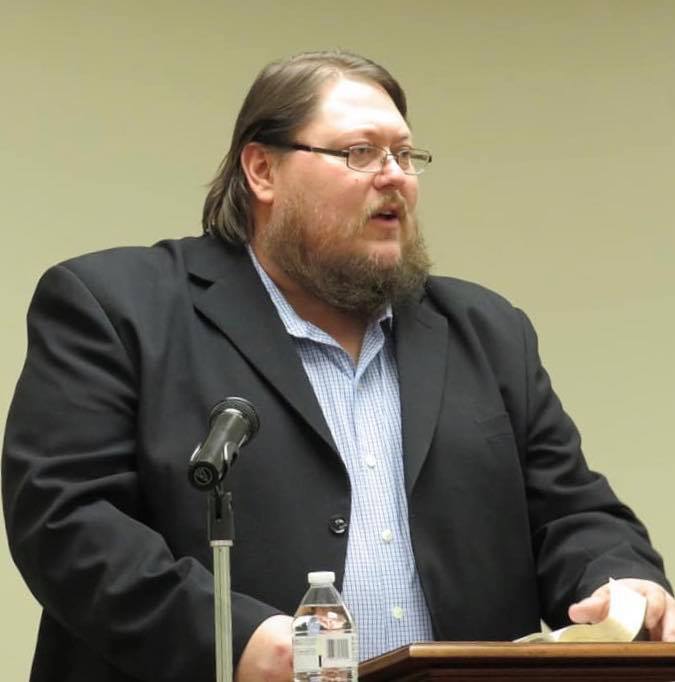
Mikal Smith

Sovereignty in Sin and Evil Pt 1

Mikal Smith April, 12 2020 Audio
0 Comments
God's absolute predestination and providence including sin and evil

Sermon Transcript

Auto-generated transcript • May contain errors

100%
Well, good morning, everybody.
Sorry, we're a little bit behind this morning. That was mostly
my fault. It's a nice, cloudy, rainy morning here
in Joplin. And I actually, to be honest
with you, I overslept a little bit and I had to get up and kind
of get my stuff together this morning. So we're running a little bit
past the time we normally start. We are still in the stay at home
thing going on here with the COVID-19. And so we're not meeting
at our meeting house. And just to update on that, we'll
probably still be doing this until we have some better news
about things going on. We're trying to be respectful.
The church has decided to not meet together. Not because the
government has any control over us, but because we are an autonomous church and we can
choose to do what we want to do. And for the safety of our
members and everybody, we are choosing to be respectful to
the government's wishes. and want to honor that as the
Lord has asked us to do in so much as we can be at peace with
all men and to follow after what we should do with our leaders. But they do not control the church
and we do not meet or not meet at their wishes. So that being
the case, due to the safety of this issue with the COVID, we've
decided to not have meetings together especially for our elderly
members who come and we want to be mindful of that. Anyway,
I was really thinking a lot this week about what I wanted to talk
about and even this morning trying to decide where I wanted to go
with some study uh you know we're in a series a long series matter
of fact it's almost been it it's been a year i think since we
started our series on the church and uh we've taken breaks here
and there throughout the study and we uh Now that we're kind of separated
and not meeting together, the study on the church is for our
church. And so because of that, I think
I'm going to postpone the next section of our study until we're
able to meet again. A couple of our brethren don't
have Facebook, so they're not able to watch this program. And
so I want to be mindful of those things to the church as we're
going through this study. And it's a study that's building
upon itself, line upon line, precept upon precept. subject
upon subject, we're going through systematically the study of the
church. And so I wanted to wait until we're able to meet again
before I move on to that next section in our study. So I thought
about just doing some other studies while we're here at the house
and doing things through video. Like I said last week I said
there is a couple of There's a couple of things that our church
and me particularly that I preach and I teach that That isn't quite
as popular with a lot of the crowd That's out there our church
isn't really doesn't really care what everybody
else is doing. We look to the word of God to
be our rule of faith and we try to learn from what the scriptures
say. All of us has been influenced
in our life as we've grown up, as we've been taught in other
places, as we've heard teachers and preachers throughout the
years, as we've read books, as we've watched TV, listened to
things on radio. We're always being influenced
by the things that we hear and see. And a lot of times we let
that influence influence our understanding of God's word.
And we really shouldn't do that. We should let God's word dictate
to us what we should believe about the things of God, about
the things of salvation. We don't preach to preach popular
things to gain a crowd. Our church is very small. We
don't have a lot of people come. We've had a lot of people come
and go. And our hearts truly grieve whenever we see people
come for a while and they leave. And a lot of times it's over
doctrinal issues. Sometimes it's over other issues
that to me is of non-importance. Sometimes it's over disciplinary
actions. But whenever someone goes, it
is hard for us. But again, we're not in this
to be popular. Our goal is not to build a mega
church. Our goal is to be and our desire
is to be faithful to Christ, faithful to his word. to preach
and teach the gospel of Jesus Christ unfettered, not for applause,
not for notoriety. If I never am heard of ever again
from anybody else, if I've never, you know, never have another
sermon downloaded or watched or whatever is of no significance. What is most important And this
should be the thought of every Christian. Of most importance
is faithfulness to God's Word, to God, to Christ, faithfulness
to Him. We can be faithful to a church,
and we definitely want to do that. I encourage all of our
members to be faithful to church. Be faithful to the assembly that
God has brought you in by providence, has blessed you with. But again,
our faithfulness should be to Christ. primarily. We're to be
faithful to our spouses. We're to be faithful to our families.
We're to be faithful to our jobs, to the government. We're supposed
to be faithful people. But whenever we're faithful to
Christ, when we're faithful to God, to the Word of God, I think
a lot of all those other things will fall into place. But whenever you begin to be
faithful to the Word of God, a lot of times your world is
going to be turned upside down. The things you thought were right
are going to be shown to be wrong. The things that you thought were
true are going to be shown to be untrue. a long way in my understanding
of the Word of God and have realized that I have not known as much
as I thought I knew. And I've at many times had to
go back and apologize and to rehash things in my understanding
and in my teaching because I've taught from a presupposition,
something that I thought was true just because I heard it
all my life or I've read it or I just thought it to be true,
but God's word corrected me on that. And so we come to the place
where when we see things in scripture that tell us something different
than what our tradition holds, Do we follow with tradition to
keep going with the flow and not be unpopular or do we Chance
losing everything that we've we've known You know, do we do
we have to part with family? Do we have to part with churches?
Do we have to part with friends because of our stance on God's
Word? you know Jesus said that that
He didn't that that if you're a disciple of his that people
are going to hate you. He said that he didn't bring us into this
life to make us comfortable with everything that's going on. And
with everybody that's out there. Matter of fact, he said that
even though as people that hated him, they're going to hate us.
Whenever we have truth that we are telling somebody who does
not believe that truth, to them that truth is an affront, it
is an offense. And they're going to be upset
about that. But if we truly love people, we're going to give them
that truth. You know, he said in his word that that there's
going to be dividing fathers and sons, mothers and daughters,
brothers and sisters. I mean, there's the truth is
going to come and it's going to divide. And so we don't want
to be divisive in the way that we present the truth. But we
do want to hold to the truth because As I said we want to
be faithful to God's Word and sometimes as I and all this that
I'm saying is to get to this is sometimes whenever we Hold
to teachings that doesn't go with the norm of what most modern
churches are teaching We're often looked at as you know fringe
cult, whatever But I found that a lot of times whenever you're
studying God's Word and It's not going to line up with everything
that the modern Christian establishment holds to. And the reason for
that is because, just think about it, the modern Christian establishment
is a broad road. And there are many that's on
there. And they have absolutely no resistance. They have no people being offended
by what is being said. Matter of fact, there's people
coming in groves. Matter of fact, you can take what's being said
in one church and go to another church of a different complete
denomination, and everybody's just fine with that. Or you can
go across the street to another denomination or to another religion,
and everybody is just fine with that. Why? Because the message
is so watered down or the message is so generic that nobody is
offended by that. And now I'm not saying that everybody
that says something that's, you know, dividing, divisive, is
correct. But I will say this, that a lot
of times whenever you hold to the word of God and you preach
what the Word of God teaches, as the Spirit of God teaches
you, you're going to come against a lot of opposition, even among
those who profess to be Christian. I mentioned last week that there
are some things that we teach at our church that is not a very
popular topic. I thought we would talk a little
bit about some of those today. One of those is our understanding
of what the Bible teaches about God's sovereignty. and sin and
evil. This has definitely been one
area in which I've encountered some opposition, even by some
very close friends, preacher friends and other brothers and
sisters in Christ. You know, the whole issue of
God's sovereignty and sin and evil and how did sin and evil
come into the world? You know, all that comes, excuse
me, under the heading, or people like to put it under the heading
of God being the author of sin. Is God the author of sin? And
I'm gonna get to that as we go along. I'll address that more
specifically. But I wanted to more importantly
just start off with, and I think everything that we learn in God's
word ought to come with God being the central figure there, Christ
particularly. What does the Bible say about
God? And then we can begin to branch
out as far as how it pertains to everything else. We need to
first learn what is the revelation of who God is? What is the revelation
of how God does things? And then that right there, whenever
we understand what does the Bible say about God, Then we can open
that up to other topics on sin, evil, salvation, church, all
these things. We can learn that. But first
and foremost, we need to know who God is and what does the
Bible say about God. If the Bible says something about
God, we don't need to make a theology that tries to save God from that
teaching. And I think that's a lot of what
happens in this whole God being the author of sin thing, is men
have made up theologies have made up doctrines, have made
up confessions and creeds to try to protect God from something
that they feel that people might think about God. Instead of just
preaching and teaching what the Bible says about God And in doing
so let the revelation of God be what it is God is who he is
and that's where I wanted to start this morning and if matter
of fact if you want to uh, go ahead and turn to uh, uh exodus,
uh, I wanted to start there but God is who He is. We don't need
a theology book, a systematic theology book, to tell us who
and how God works. Men that make those books, they
make those books under their presuppositions. If we go to
God's Word and just let God's Word tell us about things, let
that truth become your freedom. Are you able to say that God
is sovereign over all things? Well, if he is, what does the
Bible say about his sovereignty over all things? You know, I
know a lot of people that claim that God is sovereign, but yet
when it comes to their salvation, you're sovereign. God can't save
you unless you let him, unless you ask him, unless you do this
or do that. Then God is not sovereign. And
the reason that you believe those things is because you don't understand
the biblical teaching of God's sovereignty. Does the Bible teach
whosoever? Does the Bible teach, come all
ye who are weary and heavy laden? Absolutely it does. But you also
have to understand from this perspective of God, who God is
and what God has said about himself and his salvation. Who are the
whosoevers and why do they come? Why do they understand themselves
to be weary and heavy laden? Why are they coming to Christ?
Who are those whosoevers? See, the Bible tells us those
things. If we go a little bit deeper than surface Christianity,
when we go a little bit deeper than ABCs and 123s, the church
bulletin, the daily devotions that's found in most little books
beside your toilet, We find that the scripture is very replete
in describing not only God, but also His salvation and who it's
for. Well, it's no different in God
and His connection with sin and evil. We have to dig a little
bit further than confessions and creeds. We have to go a little
bit further than just our mental thought and assent to, oh, well,
God, oh, He's holy, so He obviously can't have anything to do with
sin and evil. See, that's the part of being
sovereign. Sovereign means that He controls
Everything, everything is under his control. Not just a few things,
not just everything that's happening, he keeps it in play, he keeps
it in check. He overrides it if he wants to
override it, or he lets it go if he wants to let it go. No,
he is in control of all things. Sovereignty doesn't mean that
God is the master and then he lets you do whatever you want,
but if you get out of line, then he gets all over you. Sovereignty
is God being in control and over all things. And the Bible teaches
these things, and so if we understand who God is, we can understand
all these underlying things that seem to be contradictory to this
very fact that God controls all things. the destinies of every
man. God controls every sin, every
evil, every good work, everything that goes on. God is in control
of that. And nothing escapes Him. Nothing
is past Him. Nothing is beyond Him. And listen,
and because of all that doesn't make God to be a sinner. It doesn't make God to be unrighteous
or unholy or full of iniquity or anything to that degree. Now,
In Exodus chapter three, let me turn over there. I've got
my verses up on my computer screen here beside me, but I wanna actually
turn. In Exodus chapter three, we find
God reveals himself to Moses here in Exodus chapter three
and verse 13. Exodus chapter three and verse
13, You'll notice In my in my title for the message
there it's God's sovereignty and sin and evil In Exodus chapter 13 God reveals
himself To to Moses, unlike he did in times past with Abraham,
Isaac, and Jacob. God revealed himself to Moses
in a different way. Matter of fact, God made it very
clear to Moses that he is revealing himself in a way that he had
not revealed. In the past, he had revealed
himself to to Abraham, Isaac, and Jacob as almighty, as all
these other names that he give to them, but he had never disclosed
himself in such a way as he does here. And I've taught this at
our church quite frequently and have mentioned this in several
different sermons under several different titles and topics,
but it still remains the same. In Exodus chapter three, And
in verse 13, it says this, and Moses said unto God, behold,
when I come unto the children of Israel and shall say unto
them, the God of your fathers hath sent me unto you, and they
shall say to me, what is his name? What shall I say unto them?
And God said unto Moses, I am that I am. And he said, thus
shalt thou say unto the children of Israel, I am hath sent me
unto you. Now, God reveals himself here
to Moses as I am, that I am. We've talked about this quite
a bit, as I said. What does that mean? When God
says I am, that I am, that doesn't sound like a name, you know?
When someone asks me what's my name, I say Mike, okay? That's a proper name. Whenever
someone tells me their name, it may be, you know, Bill, Denny
Parks. Welcome, Denny. Denny's name
is Denny. Norman's name is Norman. Lori's
name is Lori. We see, we have these proper
names, but here, when Moses asked God, well, who do I need to tell
them sent me to do all this stuff that you've told me to do? God said, well, here's my name.
Tell it to them this way. I am that I am. What was they getting at? What
was Moses getting at here? See, God was telling Moses that
he needed to go to Pharaoh and he needed to tell Pharaoh to
release his people. He was telling Moses to go down
to the people and get them ready because God was gonna deliver
them out of Egypt. And so Moses here was getting
a little antsy because, well, hey, here you are speaking to
me out of this bush, but hey, nobody else is gonna believe
me. If I go down and tell them the things that you're wanting
to do here with this people Then you know, I think they want to
they're gonna want to know who's in charge and who's making the
call here because they're surely not gonna listen to me and so
God gave God gave Hello, Debbie glad you're with us God gave
Moses the name I am that I am and Think about that name. That name is in the perpetual
present. It isn't the I was that I was
or the I will be that I will be in the future. It is I am
that I am. He is self-existent. He is always
present. He's omnipresent, but he's always
present. He is who he is. This word here
means that he is self-existent, that nothing, Nothing can control
Him. Nothing outside of Him dictates
to Him anything that He is who He is. Nothing makes Him what
He is. He is self-existent. He is God. And that's what it
means to be God. To be God means that there is
no outward influence that makes Him choose anything or do anything. This is where this comes in handy
whenever you look at the fact that a lot of people think that
salvation comes, that God will save you if you do something.
God is responding to you doing something, that he's left something
in your hands. He's given something into your
control and that he will, put off his sovereignty and allow
you to make that decision, and whatever you choose, then he'll
go by that. That's not sovereignty. That's
not being God. That is not who I am that I am.
I am that I am means that whatever I do, I do. It doesn't matter
what anybody else thinks. It doesn't matter what anybody
else says. Nobody else influences God. God has a purpose. He has a will, and that will
is an eternal will. And that will cannot be changed
by man's thoughts, by man's actions, by man's sin, by man's evil. It can't be changed by anything.
God has determined before all things were ever created that
he is going to do something. He's going to glorify himself. And he chose before the foundation
of the world that he was going to glorify himself in the redemption
of a people for himself out of sin and that he would make those
people a people unto himself. And he did that before the foundation
of the world. Now, I don't have time to go
into all that. There's lots of teaching that
you can see from us on election and predestination. But the fact
remains is God determined before the foundation of the world to
glorify himself in the sending of Christ to be a redeemer for
people that God had chosen for himself. And so out of sin, God
was gonna save these people. And so the purpose of God before
the foundation of the world is that there would be a lamb slain,
okay? Before the foundation of the
world, we can find that in several places in the scripture that
God had determined that Christ in the everlasting covenant,
Christ had promised to be our surety. And so this was something
that was in the purpose and the will of God before the foundation
of the world. And God being who he was, determined
that with no one else's say-so. God didn't ask our permission,
hey, is it all right for me to be your God? Is it all right
for me to be your creator? Is it okay for me to have a redeemer? Is it okay for me to save you?
See, God didn't ask those questions because God, before the foundation
of the world, had a purpose and a will that cannot be changed,
that cannot be thwarted. He didn't look down the corridor
of time and see, hey, this happened and that's happening. Okay, well,
now I'm gonna have to do this and do that. The Bible says that
God is of one mind and who can turn him. He isn't seeing multiple
things and having to readjust all his purpose and plan to make
that work so that people might have their precious little free
will. God is who He is. God, known unto God, is all His
works, the end from the beginning. Everything from the very end
until the very beginning, God knew those things and they were
determined by God. They were purposed by God. That
was his plan. Nothing has come into being and
nothing has happened or transpired from the beginning all the way
until the end that God has not, not only foresaw, but the reason
that he foresaw it is because he predetermined it. He foresaw
it because He knew that this would take place because He is
who He is. He is a God that cannot lie.
He is a God that cannot lie. If He sees it, if He determines
it, it will take place. And so God didn't look down the
corridor of time to see who is gonna choose Him because the
Bible says, Hey, who can be his counselor? Who can give God knowledge? Nobody can give God knowledge.
God knows what he knows because it's his purpose and will. That's
the reason that God knows what's going to happen in the future,
not because he looked down the corridor of time and saw it,
but because he's seen it. That's because God is who he
is. He is self-existent. and he is
the one that has determined all things whatsoever shall happen. And there's not one molecule
of anything that is ever gonna take place in this world, whether
it be good or bad, that God has not, before the foundation of
the world, purposed that in his plan, okay, in his purpose, in
his work. Everything that's gonna transpire
is because God is who he is. I am that I am. God said unto
Moses, I am that I am. That means that I will do whatever
I will do. You can't change it. You can't
change it. Look in Exodus chapter four. Well, before you turn there,
go on to verse 15, because I want you to see something here before
we move on. In verse 15, And God said, moreover
unto Moses, for those that just joined us, just see a few other
people joined us, Exodus chapter three, verses 14 and 15. We're
talking about God's sovereignty and sin and evil. I've preached
about this before. You can find it on Sermon Audio.
I've preached about this before in times past. Also, there's
a message on our website, God's providence over sin and evil,
something to that effect. But anyway, I've preached on
this before, but some questions has arisen as of late about some
of my thoughts on these things by some brothers, especially
as it pertains to God being the author of sin. And so hopefully
for the next couple weeks We're kind of gonna look at that and
I want to go from what the Bible says I'm not gonna I don't want
to go out to the confer the confessions and the creeds and I don't want
to go into theology books, we're just gonna stick with God's Word
and Reference those things and let that be our guide and direction. So anyway, Exodus chapter 3 verse
14 15 for y'all just showed up and Verse 15, and God said moreover
unto Moses, thus shalt thou say unto the children of Israel,
the Lord God of your fathers, the God of Abraham, the God of
Isaac, the God of Jacob, hath sent me unto you. This is my
name forever. Now remember, the name forever
was I am that I am. The self-existent God, the sovereign
God, he will do what he wants to do. He is who he is, nothing
can change him. Okay, God is who he is. Whatever
God does, he does because he can do it, because he's God.
Also, whatever God does, He does because He's God and can do it
because He's God. Now keep that in mind. I want
you to keep that in mind, especially as we get further along in this
study as it pertains to God and the author of sin. Whatever God
does, He does, and because God is holy, whatever He does is
holy. Whatever God does and says and
whatever God puts into effect, He does, and He cannot be challenged
by it. He cannot be held to account
by it, because He is God. I am that I am. I will do what
I will do. Now, to you, brethren, and to
me, God has given us law. And He said, no, you can't do
anything that you want to do. However, I am God. I can do whatever
I want. I am that I am. There is no unrighteousness
in me. There's unrighteousness in you
because you transgress my law, who I give. I'm the lawgiver.
I'm God. I give the law. And so you as
my creation must attain to that law. And if you
don't attain to that law, then you've transgressed, you've sinned
against me. The Bible says all have sinned
and come short of the glory of God. That there is none righteous,
no, not one. Every one of us who have been
created and is of Adam has the nature that cannot keep God's
law. There's none of us, not one.
And so God has created us and has known before the foundation
of the world that no one was going to keep the law, but he
gave us the law anyway, didn't he? He gave us the law anyway,
even though he knew that no one from Adam all the way to the
end was not going to keep that law because there was a purpose. There was a purpose in not only
making man to be redeemed, but also making a law that man could
not keep. There was a purpose in that.
Matter of fact, if you'll look, Just to stop where we're at right
here, well, I'm getting kind of ahead of myself. Romans chapter
five. I've got off on a rabbit trail,
I might as well hunt this one down and just kill it real quick.
Romans chapter five. Why did God send the law in?
Why is there a law? Romans chapter five, and look
with me at verse 12. It says, wherefore, as by one
man sin entered into the world, and death by sin, and so death
passed upon all men, because that all have sinned, for all
have sinned. Okay, so that's a statement of fact, right? By
one man, sin entered into the world. And we also know that
death, physical death came because of sin. Sin brought in death. Okay? So, as by one man, sin
entered into the world, and death by sin. And so death passed upon
all men, for that all have sinned. For until the law, sin was in
the world, but sin is not imputed where there is no law. Nevertheless,
death reigned from Adam to Moses, even over them that had not sinned
after the similitude of Adam's transgression. who is the figure
of him that was to come. But not as the offense, so also
is the free gift, for through the offense of one, many be dead,
much more the grace of God, for the gift by grace, which is by
one man, Jesus Christ, hath abounded unto many. And not as it was
by one that sinned, so is the gift, for the judgment was by
one to condemnation, But the free gift is of many offenses
under justification. For if by one man's offense death
reigned by one, much more they which receive abundance of grace
and of the gift of righteousness shall reign in life by one Jesus
Christ. Therefore, as by the offense
of one judgment came upon all men to condemnation, even so
by the righteousness of one the free gift came upon all men under
justification of life. For as by one man's disobedience
many were made sinners, So by the obedience of one shall many
be made righteous. And here it is, verse 20. Moreover,
the law entered that the offense might abound, but where sin abounded,
grace did much more abound. Now, we see here, tucked away
in a little verse at the end of a long discussion about justification
and about how sin entered into the world, we see that the law
came in so that the offense might abound. That's a truth of Scripture. that the law came in so that
the offense might abound. What does that mean? It means
that the law is given so that the offense might be seen, that
it might be manifested. The law came in. What does the
Bible teach us about the law? What is it called? It's called
our schoolmaster. What was it teaching us? It was
teaching us that we cannot keep the law. The law was there to
show us of our inability The law was there to show us of our
downfall. It was there to show us of our
need for Christ. It was a schoolmaster pressing
us to Christ, showing us Christ and our need for Him. So the
law never was intended to be our justification. The law was
never intended to be kept by any man. The law was given that
the offense might abound so that we might see. The more we try
to keep the law, the more we see we can't keep the law. And
so in trying to keep the law, we fail and fail and fail and
fail and fail. And what does that show us? There's
no hope for us. There's no hope in our nature
to keep God's law and to be saved. The only hope is Christ Jesus.
So the law was given for a purpose, and that purpose was to show
our sinfulness, to show who we are. The law was given to us
and came in so that the offense might abound. Okay, so that is
a truth of scripture. That is one of the purposes for
the law. The purpose of the law is to
show our inability to keep the law. It's to show that we are
in need of redemption, of salvation. The law is there that the offense
might abound. Now, we find that that will be
very useful in our study in the next week or so, but remember
that God is who he is. Back to Exodus chapter three
for those that just came in. God is who he is. I am that I
am. I will do what I will do. Nothing changes me. Nothing tells
me what I can do, okay? I'm trying to drive that home
so that we might understand the magnitude of God's sovereignty. I am that I am is the sovereignty
of God. The sovereignty of God means
that he does what he wants to do. He is who he is. No one is
above him. Nobody controls him. Nobody can
contradict him. Nobody and anything can stop
what he's doing. That's what it means to be sovereign.
and I am that I am encapsulates sovereignty. That's what sovereignty
is all about, is God being who he is and doing what he does.
And so that's why I was saying, it doesn't matter what we think
God to be or not to be, he is who he is. And if God does something,
no matter how much you think it's right or wrong or what kind
of light you think it puts God in, he is who he is. We're the clay. He's the potter.
He can make us however he wants to make us. And he can do with
us whatever he wants to do with us. And we don't have any ability
to say yay or nay to him. That's what it means to be sovereign.
I am that I am. You're not gonna make me who
I am. You're not gonna stop me from being who I am. And you're
not gonna tell me what I should be. That's sovereignty. That's part of being sovereign.
And so that's the magnitude. Now look very closely with me
at verse 15, and this is why Sovereign Grace Baptist Church,
that's why me, that's why many that's on here right now that
are watching, that's why there's several churches all over this
country that are preaching this very thing this morning about
the sovereignty of God, why we believe in an absolute sovereign
God, and why do we preach it. God said moreover unto Moses,
thus shalt thou say unto the children of Israel, the Lord
God of your fathers, the God of Abraham, the God of Isaac,
the God of Jacob, hath sent me unto you. This is my name forever,
and this is my memorial unto all generations. God's name forever is I am that
I am. And what did he say there? And
this is my memorial. What does that mean? What is
a memorial? Why does somebody put a memorial? We put tombstones. Whenever we bury somebody, we
put a tombstone there as a memorial to them. What is that there for?
To remind us. It's a reminder It's to remind
us that this person lived. This person lived from this date
until this date. Or there may be an inscription
on there that was something good about you or whatever. You know,
it's a reminder, okay, for generations to come. Why did God give the
Passover? The Passover was a memorial,
right? He gave the Passover as a memorial
to Egypt, why? To remind them of their deliverance
from Egypt. and God's protection of them
and the deliverance out of Egypt. That was as a memorial to God. What is Christ in the New Testament
given as a memorial of him? It's not Christmas and it's not
Easter, okay? What did Christ give as a memorial?
He gave two memorials to remember him. He give baptism and he give
the Lord's supper. The two ordinances of the local
church is the memorial that we have to remember Christ by, okay? So what do we do in baptism? One of the things that baptism
does is remind us and show forth our union with Christ and our
death, burial, and resurrection with him in his work of redemption. But we also see in the Lord's
Supper that we are remembering the same thing, his death, burial,
and resurrection. And so he has given that to us
as a perpetual memorial, okay? So a memorial is something that
is to remind us of or to keep us in view of for every generation. And that's what God said, his
name, I am that I am, is to be a memorial unto all generations. I want to be known in every generation
as the sovereign God. I want to be known as the God
who no one controls, no one can say what I do, no one is influencing
me, no one has control over me, there is no other gods. That's what this is all about.
That's what sovereignty is all about. And as soon as God relinquishes
that to you, so that you might make the choice to determine
what his destiny of all things is, then God ceases to be who
he is, and he becomes what you want him to be. See, that's what Romans chapter
one was all about, that men has made God into their own image.
men has taken God and has suppressed the truth of who God is, and
they've made him into their own liking. They've fashioned God
into a God that they like and can control and they want to
be. And I will say that even among
some sovereign grace preachers and teachers, they've taken God
and they've made God into a mold that fits their creeds and confessions
and their traditions. let god be who god and i say
let god be i i hate when people use that phrase and there i use
it myself we can't let god do anything God is who he is, and
we must acknowledge that. We must say, yes, God, whoever
you are, you're worthy to be worshiped no matter what this
Bible says you do and what you are. We're gonna worship you
because you are holy and righteous and deserving of all worship. And so that's what God is saying
here. He says, I am that I am. I'm sovereign over all things.
I am God, and there is none beside me. There is nobody beside me. Nobody can tell me what to do.
Nobody is my counselor. I'm not going to somebody and
asking them their permission. I'm not doing any of that. I'm
God, and I'm making the choices. I'm making the decisions here,
okay? And so, and I know a lot of people
are going to say, well, then that means we're all robots.
And that means that there really isn't no responsibility and accountability
and all that kind of stuff. Brethren, quit listening to traditions
of man. Quit listening to the philosophies
of religion. The Bible, nowhere in it, nowhere
in it has anything to do with the freedom of man and their
will. God is in control of all things. Now, with God saying
that as a memorial to all generations, he wants to be known as sovereign
in every generation. That's why we preach him. So
knowing that, that nothing moves God, nothing causes God to do
what he does. And everything that God does
is righteous. Let's look at some things that
the Bible says that God did, and then let's apply that mentality. Is God righteous? I say amen. He's righteous, isn't he? Is
God holy? Absolutely. He is holy. Isaiah,
whenever Isaiah saw Jesus on the throne, He said that there
were cherubim there singing, holy, holy, holy is the Lord
of hosts. The whole earth is filled with
his glory. When John saw Christ in Revelation,
what did he see? He saw those ones around the throne crying,
holy, holy, holy. He is holy, God is holy. There
is no doubt about it, God is holy. And listen, God cannot
sin. God cannot sin. Ever can God
sin. So, with that being the case,
those are truths of Scripture, and God being who He is and can
do what He can do, and nobody can stay His hand, nobody can
say, why are you doing that? Let's read some things that the
Bible says that God does, and let that be a determination on
how we view sin and evil. Is sin and evil here and being
controlled by Satan, by us, or is it being controlled by God?
If the Bible determines that it's God, then we shouldn't have
any reservations preaching that, teaching that, standing on that. Now look with me, if you would,
Exodus chapter four. Very familiar verses to all of
us, I'm sure. Exodus chapter four. Exodus chapter four. And I want
you to look at verse 21. Exodus chapter four and verse
21. And if you're watching along, I encourage you to get your Bible
out and turn with us in this so that you can see this for
yourself. Exodus chapter four and verse
21. It says, and the Lord said unto Moses, When thou goest to
return into Egypt, see that thou do all those wonders before Pharaoh,
which I have put in thine hand. But I will harden his heart that
he shall not let the people go. All right, so here we see in
scripture that God, I am that I am, has told Moses to go and
perform some miracles in front of Pharaoh. and to tell him to
let his people go. But God beforehand, before he
ever gets to Pharaoh, before anything is ever done in front
of Pharaoh, and in scripture before Pharaoh did anything within
himself, God told Moses to go and do these wonders before Pharaoh
But he said, you're gonna go do these, but I will harden his
heart that he should not let the people go. God hardened Pharaoh's
heart for a purpose. What was that purpose? That he
shall not let the people go. What was God's command that he
give to Moses to tell to Pharaoh? Let my people go. If Pharaoh
says no, because the prophet of God just came and told Pharaoh,
let God's people go, and Pharaoh says no, is that not sin? Is that not disobedience? I'm sorry, guys. I've had a hair on my glasses
ever since I started. It's been driving me nuts. Now, let's not jump to conclusions
and run off. Let's deal with that question.
When God here tells Moses that he, God, is gonna harden Pharaoh's
heart, make Pharaoh's heart where he would rebel against God and
sin, who is in control of that? Is that not sin? Maybe I'm wrong. Is Pharaoh not turning loose
of God's people when God told him to? Is that not sin? I think it is. I think it is
sin. But God said he would do the hardening of Pharaoh's heart.
Look at verse 22. Oh, I'm sorry. Look at... Let's see, chapter six, verse
one. Exodus chapter six, verse one.
Then the Lord said unto Moses, now shalt thou see what I will
do to, what I will do. God said, now you'll see what
I will do to Pharaoh. For with a strong hand shall
he let them go, and with a strong hand shall he drive them out
of this land. And God spake unto Moses and
said unto him, I am Pharaoh. The Lord. All right. So God has
said, okay, I'm going to harden Pharaoh's heart where he's not
going to let them go. But then with a strong hand,
he's going to let them go at the end of God's purpose. Okay. And what did God do? He reminded
Moses, I am the Lord. I am the Lord. Remember, I am that I am. Whatever I say is going to happen.
Whatever I have purpose is going to happen. And so we see here
that, um, Exodus chapter 6 in verse 1 we
see and let me keep on reading down it says and God spake unto
Moses and said unto him I am the Lord and I appeared unto
Abraham unto Isaac and unto Jacob by the name of God Almighty but
by my name Jehovah was I not known to them and And I have
also established my covenant with them to give them the land
of Canaan, the land of their pilgrimage, wherein they were
strangers." So here we see that God equates his name Jehovah
with I Am. I am is Jehovah, Jehovah is I
am, okay? And so he solidifies the fact
that all this working with Pharaoh is his purpose, and it's all,
in case anybody doubts, under his control. And he's God, and
no one can say anything otherwise. And nobody's gonna do anything
otherwise, okay? It might look like it, But it's
not. God is who he is. Look at chapter
7 and verse 1. And the Lord said unto Moses,
See, I have made thee a god to Pharaoh, and Aaron thy brother
shall be thy prophet. Thou shalt speak all that I command
thee, and Aaron thy brother shall speak unto Pharaoh, that he send
the children of Israel out of his hand." Here it is again,
verse three. And I will harden Pharaoh's heart
and multiply my signs and my wonders in the land of Egypt.
So God is telling Moses what his purpose is. Your purpose
is going to go in to tell Pharaoh this, I'm going to harden his
heart so that he won't let him go, and then you're going to
perform all these wonders, and there's going to be a set of
wonders. I'm going to multiply my signs
and my wonders in the land of Egypt. He's going to multiply
the signs and wonders in Egypt. So he has a purpose in doing
all that. So all those, and side note, COVID-19, God has a purpose
in pestilence. God has a purpose in those things. God has a purpose in sending
and judging nations and bringing calamity and bringing things
such as this upon nations. He has the right to do that because
he is God. He will do what he will do. Listen,
this didn't come out of Wuhan by some chance. God did this
for a purpose. It was in God's purpose. Anyway,
back to our story here. He says, and I will harden Pharaoh's
heart and multiply my signs and my wonders in the land of Egypt,
but Pharaoh shall not hearken unto you. Now, how did God know
that Pharaoh was not gonna hearken unto Moses? Well, because God
had already determined to harden his heart. God had determined
to harden his heart so that Pharaoh would not do that. And that's
exactly what was gonna happen. He says, but Pharaoh shall not
hearken unto you that I may lay my hand upon Egypt. Are you following
what I'm saying here? Are you following what God's
word is teaching us? He's saying that you're gonna
go in and tell them to let my people go, and I'm gonna multiply
signs and wonders in the land of Egypt, but I'm gonna harden
Pharaoh's heart so that he won't listen to you, so that I can
lay my hand upon Egypt. He is going to judge Egypt because
of Pharaoh's hard heart that God hardened. Now, is that sin
on God's part? Did God sin in doing that? Is
God unrighteous in doing that? I've not ever heard one preacher
in any preacher that I've ever heard, whether it's an Arminian
preacher or whether it's a Sovereign Grace preacher, ever say that
God is unrighteous in doing that. I've never heard one person preaching
on these passages that has ever said that God sinned or caused
somebody to sin whenever they did that. But what happened here?
God hardened Pharaoh's heart so that he would sin. Who sinned? Pharaoh sinned, but God is the
one who hardened his heart so that he would sin. Why? Because
the sin of Pharaoh was in the purpose of God that he might
lay his hand upon Egypt and bring forth mine armies and my people,
the children of Israel, out of the land of Egypt by great judgments.
God's purpose was to bring those people in deliverance out. Now, let's go back. How did Israel
get there in Egypt? Well, we go all the way back
to the story of Joseph, right? Joseph was sold into slavery
by his brothers, was beaten and thrown into a pit, and then sold
into slavery, and then came up through the ranks and actually
was made a leader in all of Egypt. Why? So that God's people, Israel,
could be brought in and sheltered and grow into a mighty nation.
And then out of that, God delivered them, okay? Now, the Bible even
says, on a side note, that Joseph being beat by his brothers, cast
into that pit, and sold into slavery was an evil thing. But
God said, what you meant for evil, God meant for good. I think we'll get to that verse
later, but that just kinda goes along with our story here. That's
how Israel got into Egypt, and for 400 years, have been and
of course the pharaoh that is in charge now began to have great
hatred towards them then slavery or the slavery that had taken
place and the making them do all the work with making the
bricks and all this kind of stuff uh was going on and so god had
these people that was in there but under this time period these
people grew from a small family into a mighty great nation That
was all God's purpose. See, God sent them down into
Egypt so that they might grow into this mighty nation, and
then out of that, he would bring that people out. But what was
part of that purpose? Well, part of that purpose was
Pharaoh disobeying God, God bringing judgment upon Egypt, and then
God bringing those people out. It says, and the Egyptians shall
know that I am the Lord when I stretch forth my hand upon
Egypt and bring out the children of Israel among them. And so
here, God had a purpose to show himself as the Lord over the
Egyptians. And the way he was gonna do that
is by hardening Pharaoh's heart so that Pharaoh would disobey
God and God would bring that judgment. Look if you would over
to verse 13 there in chapter 7. It says, and he hardened Pharaoh's
heart Well, I'm sorry, let's go back up to verse 10. And Moses
and Aaron went in unto Pharaoh, and they did so as the Lord had
commanded. And Aaron cast down his rod before
Pharaoh and before his servants, and it became a serpent. Then
Pharaoh also called the wise men and the sorcerers, now the
magicians of Egypt. They also did in like manner
with their enchantments, for they cast down every man his
rod, and they became serpents. But Aaron's rod swallowed up
their rods. Verse 13, And he hardened Pharaoh's
heart, that he hearkened not unto them, as the Lord had said. Now, a lot of people are gonna
say, yeah, it wasn't God that hardened Pharaoh's heart, it
was Pharaoh that hardened his own heart, and God just allowed
that to happen as Pharaoh did that. That's not what this Bible
said. This Bible said, before Pharaoh even was confronted,
this Bible said that God, the sovereign God, who had purposed
a purpose said, I'm going to send you to Pharaoh. You're going
to do some things in front of Pharaoh and tell Pharaoh to let
my people go. But I, God, I am that I am, is
going to harden his heart so that he won't let you go. Because
after I multiply these signs and wonders among Egypt, then
I'm going to deliver with a strong hand my people out of this place. And that is going to be a sign
to Egypt that I am the Lord. And here we see that after this
all transpired, just as God had said, that he hardened Pharaoh's
heart, that he hearkened not unto him. And there's where the
people say, well, there you go. Pharaoh hardened his own heart.
It said, and he hardened Pharaoh's heart, and Pharaoh hardened that
himself. Rather, that says the Lord hardened
Pharaoh's heart, just as the Lord had said. How did the Lord
say it? Well, beforehand, he said, I
was going to do that. Look at verse 14. And the Lord said unto
Moses, Pharaoh's heart is hardened. He refuses to let the people
go. Get thee unto Pharaoh in the
morning. Lo, he goeth out into the water, and thou shalt stand
by the river's bank. Against he come, and the rod
which was turned to a serpent shalt thou take in thy hand.
And thou shalt say unto him, The Lord God of the Hebrews has
sent me unto thee, saying, Let my people go, that they may serve
me in the wilderness. And behold, hitherto thou wouldst
not hear. Thus saith the Lord, In this
thou shalt know that I am the Lord. Behold, I will smite with
the rod that is in mine hand upon the waters which are in
the river, and they shall be turned to blood. and the fish
that is in the river shall die, and the river shall stink, and
the Egyptians shall loathe to drink of the water of the river. And the Lord spake unto Moses,
saying to Aaron, take thy rod and stretch out thine hand upon
the waters of Egypt, upon their streams, upon their rivers, and
upon their ponds, and upon all their pools of water, that they
may become blood, and that there may be blood throughout all the
land of Egypt, both in vessels of wood and in vessels of stone. Now let's just pause right here. God in Egypt is turning all the
water to where it's not drinkable. God's doing that. For those who
don't believe that God can bring calamity upon a nation or upon
a society, upon a community, listen, God has the right to
do that because he is God. Verse 20, And Moses and Aaron
did so. And the Lord commanded, and he
lifted up the rod, smote the waters that were in the river
in the sight of Pharaoh and in the sight of his servants. And
all the waters that were in the river were turned to blood. And
the fish that was in the river died, and the river stank, and
the Egyptians could not drink of the water of the river. And
there was blood throughout all the land of Egypt. And the magicians
of Egypt did so with their enchantments, and Pharaoh's heart was hardened."
Oh, there you go. Well, this time it didn't say
God hardened Pharaoh's heart. It said, and Pharaoh's heart
was hardened. Neither did he hearken unto them.
But look, brethren, at verse 22 at the very end, as the Lord
had said. Again, Pharaoh's heart was hardened
for a second time, but it was hardened as the Lord had said.
Every one of these plagues, every one of these signs and wonders
that God was going to multiply in his purpose that he had purposed
Every one of those, God was gonna harden Pharaoh's heart. So whether
Pharaoh hardened his heart or whether God hardened his heart,
the case comes down to the reason Pharaoh's heart was hardened
was because of God hardening his heart. Verse 23. And Pharaoh turned and went to
his house, neither did he set his heart to this also. And all
the Egyptians digged round about the river for water to drink,
for they could not drink of the water of the river. And seven
days were fulfilled after that the Lord had smitten the river."
Look at chapter eight and go down to verse 12. And Moses and Aaron went out
from Pharaoh, and Moses cried unto the Lord because of the
frogs which he had brought against Pharaoh. And the Lord did according
to the word of Moses, and the frogs died out of the houses,
out of the village, and out of the fields. And they gathered
them together upon heaps, and the land stank. But when Pharaoh
saw that there was respite, he hardened his heart and hearkened
not unto them. as the Lord had said." So yes,
again, the Bible says that Pharaoh hardened his heart, but he hardened
it as the Lord had said. And the Lord said that it was
gonna be God who would cause Pharaoh's heart to be hardened.
Now, this is the God that is the I Am, remember that. He is
the I Am. He is the one who is controlling
all things. He is the one that has no counselor.
He is the one that nobody influences him. he does what he does in
the armies of the heaven and who can stay his hand. He has
done this. We can't deny this. The scripture
is clearly saying that God has caused a man to harden in his
heart so that he would rebel and disobey and not listen to
what God said and do what God had commanded him to do. And
so, in that, God's purpose was being fulfilled. Can we honestly
say, from scripture, that God accomplishes His purpose and
has, yea, purposed that sin would happen? Absolutely, He is. If so, then none of this would
be going on. God would not be saying this.
God would be giving us other stuff. I didn't want Pharaoh
to do that. I told Pharaoh to do this, but
he didn't do it. And I wanted him to do it, but he rebelled
against me. And you know, that's not what he said. He said, I
am the one who is causing this to take place. Look down at verse
19 there in chapter eight. It says, then the magician said
unto Pharaoh, this is the finger of God. And Pharaoh's heart was
hardened and he hearkened not unto them as the Lord had said. So again, Pharaoh's heart was
hardened once again, as the Lord had said. Look down at verse
32. or 31. And the Lord did according
to the word of Moses, and he removed the swarms of flies from
Pharaoh, from his servants and from his people, there remained
not one. And Pharaoh hardened his heart
at this time also, neither would he let the people go. Now this time it didn't say as
the Lord had said, but can it be anything else? I mean, we've
already seen several instances where Pharaoh's heart was hardened,
and the Bible clearly says that it was hardened because God hardened
it. Now, even though it didn't say it in this verse, it doesn't
make it any different. It still goes back to the very
beginning before Pharaoh was even confronted again, that God
said he was going to harden Pharaoh's heart. Now, look at Exodus chapter
14, if you will. Exodus chapter 14. Again, we're
looking at verses here that has given us the teaching of scripture
of who God is and how God is related to, as the sovereign,
related to sin and evil. Is God in control and has God
purposed, predestined, that sin and evil would take place? That's
what we're dealing with. Exodus chapter 14, look with
me if you would at verse 17. And I behold, I will harden the
hearts of the Egyptians and they shall follow them and I will
get me honor upon Pharaoh and upon all his host, upon his chariots
and upon his horsemen. So here we see that even after
Pharaoh let God, or God didn't harden Pharaoh's heart, and Pharaoh
let the people go, and then as they began to leave, what did
God do again? He hardened Pharaoh's heart. I will harden the hearts of the
Egyptians. So now not only was it just Pharaoh,
but it was all the Egyptians. And so what did they do? They
started out after the Israelites that had left out and started
to get away. And here we have the Red Sea
account, right? They came and crossed the water, and what happened? Pharaoh's army followed, and
once they got in the midst of the Red Sea, God closed it and
killed every one of the Egyptians that followed. That was God's
purpose, to kill all those Egyptians. God's purpose was to kill all
those Egyptians. And how did God accomplish the
purpose? Now, again, I'm open for correction,
brethren, but listen to what this says. Listen to the words
of God, not the words of men. What did the words of God say?
Behold, I will harden the hearts of the Egyptians and they shall
follow them. He hardened their hearts so that
they would follow the Israelites. And he says, and I will get me
honor upon Pharaoh. God received honor from hardening
Pharaoh and the Egyptians. How did he receive? He received
honor in sin. He received honor in rebellion
against him. I thought God hated sin and couldn't
look upon sin. I thought God could not do anything and have
anything to do with sin. Well, we do know that God hates
sin and He can't look upon it, but that doesn't mean that He
can't purpose it. that doesn't mean that he cannot
do these things. Why? Because he is the I am. I am that I am. I will do what
I will do. And whatever I do is holy because
I'm holy. See, God is intrinsically holy.
God isn't just, he doesn't act holy, he is holy. He doesn't
just act righteous, he is righteous. So that means that Because God
is who he is, everything he does is that. If God is holy, so everything
he does is holy. If God is righteous, then that
means everything he does is righteous. Why? Because he is a righteous
one. Everything he does is holy because he is a holy one. That
means all of his actions are holy. Now to you, it might not
be. It might be unholy, but to God,
whatever he does is holy. And for God, to harden Pharaoh's
heart was not unrighteous, and it was not unholy, and it was
not sin, because we know that God cannot sin. And he wasn't
tempted to do it, because God can't be tempted to sin. But
what does it say here? I will get honor upon Pharaoh
and upon all his hosts, upon his chariots and upon his horsemen.
And the Egyptians shall know that I know, that wasn't that
God's purpose from the very beginning when he told Moses that, hey,
I'm gonna get honored from this, that they might know that I'm
the Lord. They're gonna know that I'm the Lord. How are they
gonna know that? Well, I'm gonna harden Pharaoh's
heart. He's not gonna listen to you
through several plagues that I'm gonna plague this whole nation
with. And in plaguing that whole entire
nation, I'm gonna continue to harden his heart so he might
continue to rebel against me. But at the end of all this, I'm
gonna save my people out of this. They'll know that I am God in
my grace and mercy in redeeming them. But these other people,
they're also gonna understand that I am God and they're gonna
honor me as God and know that I am God in my destruction of
them in their sin. Now, did they sin? Yes. Did God
judge them of that sin? Yes. But again, who hardened
their heart to get them to that point? It was God. Is God unrighteous in doing that,
brethren? The comment section has gotten
pretty quiet. The likes and loves don't seem to be coming much
on this. I hope you're thinking about this. I hope that you're
contemplating what is being said by scripture. Don't take my word
for it. Study it out for yourself. Let
God be who he is. There I said it again, let God.
God is who he is. Look with me if you would now.
What time is it? If you are hanging in there with
me, I'm gonna keep on a trucking a little bit longer if you don't
mind. Joshua chapter 11. Turn if you would over to Joshua
chapter 11. So we've seen in the account of Pharaoh that God
had a purpose, and that he brought that purpose
about through the sin of Pharaoh, and that God was the cause of
Pharaoh's hard heart. Turn with me, if you would, to
Joshua chapter 11. And look with me, if you would. I'm gonna start here in verse
15. It says, as the Lord commanded
Moses his servants, so did Moses command Joshua, and so did Joshua. He left nothing undone of all
that the Lord commanded Moses. So Joshua took all that land,
the hills, and all the south country, and all the land of
Goshen, and the valley and the plain, and the mountain of Israel,
and the valley of the Sein. even from the Mount Halak, that
goeth up to Seir, even unto Belgad, and the valley of Lebanon, under
Mount Hermon, and all their kings he took, and smote them, and
slew them." Okay? So let's just stop right there.
This isn't really what I was getting to, but just stopping
there. God commanded. Remember, he just
did everything that God commanded. that God commanded Moses and
Moses commanded Joshua, they went into these nations, unsuspecting
nations, a land that they had from however long it was that
they were dispersed from Babylon. They had all these lands, living
there, people living there, living their lives, just here and there,
doing whatever they do, farming, whatever their culture was, doing
whatever they did. And then here comes another nation
into their land, and God commands them to go in and kill everybody
that's in there. Was God unrighteous in commanding
that? Now, before anybody gets thinking
that I'm condoning stuff that the Muslims do and things like
that, I'm not, okay? But I'm saying that we have the
account here that whole groups and nations and civilizations
of people were killed because God commanded that so that his
people would be able to reside in this land. Said Joshua, made
war a long time with all those kings. There was not a city that
made peace with the children of Israel, save the Hivites,
the inhabitants of Gibeon, all other they took in battle. For
it was of the Lord to harden their hearts that they should
come against Israel in battle, that he might destroy them utterly
and that they might have no favor but that he might destroy them
as the Lord commanded Moses. So here we see in Joshua 11 and
verse 20, that God hardened the hearts of all these nations to
come and do battle against Israel so that they might be destroyed. I don't know about you, brethren,
but it seems to me that God is in control of everything, including
sin, including hard hearts, including rebellion, and that God does
these things. And he does them because he is
who he is. He is sovereign. That's what
it means to be sovereign. It says, and at that time came
Joshua and cut off the Anakims from the mountains of Hebron
and Debreer from Anab. I don't know, I'm probably missing,
I'm not announcing there. I'm not saying these, pronouncing
these correctly. And from all the mountains of
Judah and from all the mountains of Israel, Joshua destroyed them
utterly with their cities. There was none of the Anakims
left in the land of the children of Israel, only in Gaza, in Gath,
and in Ashdod there remained. So Joshua took the whole land
according to all that the Lord said unto Moses, and Joshua gave
it for an inheritance unto Israel, according to their divisions
by their tribes, and the land rested from war. So here we see another example
of God hardening the hearts of people to rebel and to sin against
God and so that God might receive glory through their destruction. Now, look with me if you would
at 1 Samuel. 1 Samuel chapter 16, 1 Samuel
16. Again, for those who have just
kind of joined in, I'm seeing there's more joining in here.
We are talking about the sovereignty of God and his relation to sin
and evil. And we've already established
that God is sovereign over all things, that he has given his
name to Moses, I am that I am, meaning that he will be who he
will be, that he does what he does, that nobody can tell him
what to do or nobody can keep him from doing what he wants
to do. And anyway, so we've seen that God is sovereign and that's
the memorial that he wants to be known in every generation.
But we're also going through scripture and what we're seeing
is, does the Bible teach that God has a purpose and is God
controlling sin and evil? And that's what we want to know.
We don't believe that the Bible teaches anywhere that sin and
evil comes out of nowhere, that it's getting by on God, that
slipping up on Him or anything, that God is perfectly in control
of all these things. As a matter of fact, every sin
Every work of evil is only being done at God's will, that God
has determined before the foundation of the world these things would
happen. Look at 1 Samuel chapter 16 with me, if you would, and
I'm going to read see, verse 11. And Samuel said
unto Jesse, Are here all thy children? And he said, There
remaineth yet the youngest, and behold, he keepeth the sheep.
And Samuel said unto Jesse, Send and fetch him, for we will not
sit down till he come hither. And he sent and brought him in.
Now he was ready and with all of a beautiful countenance and
goodly to look to. And the Lord said, arise, anoint
him, for this is he. Then Samuel took the horn of
oil and anointed him in the midst of his brethren. And the spirit
of the Lord came upon David from that day forward. So Samuel rose
up and went to Ramah. But the Spirit of the Lord departed
from Saul, and an evil spirit from the Lord troubled him. And Saul's servants said unto
him, Behold, now an evil spirit from God troubleth thee. Let our Lord now command thy
servants which are before thee to seek out a man who is a cunning
player on a harp and it shall come to pass when the evil spirit
from God is upon thee that he shall play with his hand and
thou shalt be well. So here we see that God has sent
an evil spirit to trouble Saul. God did that. That was not Satan. It wasn't the devil that did
it. Oh, the devil is oppressing poor Saul and sent an evil spirit
to oppress Saul. No, it says that the Lord did.
The Lord troubled him. The Lord sent the evil spirit
to trouble Saul and to cause him discomfort. And so that is
from the Lord's hand. The Lord did that. A lot of people
want to put a lot of that stuff on the devil or Satan, whatever
you want to call him, but that is from the Lord. Does the Lord
do those things? Well, we would have to say yes.
Yes, the Lord does those things. 1 Kings chapter 22, if you would. 1 Kings. 1 Kings 22, and we're gonna start reading in... I'm going to start reading in
verse 20. And the Lord said, Who shall
persuade Ahab that he may go up and fall at Ramoth Gilead? And one said on this manner and
another said on that matter. And there came forth a spirit
and stood before the Lord and said, I will persuade him. And the Lord said unto him, Wherewith? And he said, I will go forth,
and I will be a lying spirit in the mouth of all his prophets. And he said, Thou shalt persuade
him, and prevail also, go forth and do so. Now therefore, behold,
the Lord hath put a lying spirit in the mouth of all these, thy
prophets, and the Lord hath spoken evil concerning thee. So again, we have an example
given to us by God's word that God is controlling these evil
actions and these evil things. He is controlling the lying spirit
in the mouths of these prophets. God controls that. We know that's
to be a fact in the New Testament. We find that the Bible says that
there are false prophets who are being false prophets, are
falsely preaching and teaching so that they might go to the
condemnation that they were ordained for. They were ordained for that
very thing. And so here we see this, here's
an example of this in the Old Testament. Here are false prophets,
lying prophets, lying spirits that the Lord has sent out to
be in these prophets to speak lies. And he has done this and
the Bible says the Lord did it. Now someone can come back here
and say, well, wait a minute. It says in verse 21, there came
forth a spirit and stood before the Lord and said, I will persuade
him. So that spirit volunteered to do that. Well, that spirit
didn't go and do it on his own. That spirit came before the Lord.
Why? Because he ain't going nowhere without the Lord's permission.
That spirit could not go and become that lying spirit in the
mouths of those prophets against God's will, against God's purpose,
against God saying go. And we find that to be exactly
what is transpired here in the passage. And the Lord said unto
him, wherewith? And he said, I will go and I
will be a lying spirit in the mouth of all his prophets. And
he said, thou shalt persuade him and prevail also. He said,
so not only are thou, you're gonna go, you're gonna persuade
him and prevail. Go forth and do it. Why? Because that was God's purpose.
God purposed that to happen. So again, let's backtrack. Our
mentality of who God is determines how we look at all the things
in Scripture. If our mentality is that God
is sovereign over all things, and that God is holy, God is
righteous, God is just, God is sinless, then everything that
he does is holy, righteous, just, sinless. And here, him sending
a spirit, a lying spirit, into prophets so that they might lie
and say evil things concerning him, then that is not sin on
God's part. That is not evil on God's part.
That is not evil and unrighteousness on God's part. So that even though
that God purposed, willed, and by providence brought about this
sinful thing, that does not make God sinful. But God definitely
was the one who controlled it, and God was the one who purposed
it. God brought it about. You can't say that it was just
some by free will radical people out there doing this thing. You
can't say that God turned it into good. You can't say that
God permitted it. God purposed it. God, if God
permits it, I've heard that argument that, well, God doesn't, God
isn't the author of sin and God isn't the, uh, uh, uh, because
God cannot sin, you know, God hates sin, so he's not the author
of sin, but he permits sin. Listen, brethren, that is the
weakest argument that I think I've ever heard about the whole
issue of God's sovereignty over sin. If God permits something
to happen, then that means that whatever he's permitting to happen
is in accordance to his will. If it's in accordance to his
will, then that means it's in accordance to his purpose. So
if he purposed it and he willed it, and now we see that he is
actively in providence bringing it about, that means God is in
control of it all. God is sovereign over it. He's just not permitting it as
in some passive guy saying, well, I don't want it to happen, but
I guess I'll let it happen. No, that's not what happened
here. God is permitting it. Why? Because it fits his purpose. It fits his will. He wills that
this take place. Can he will that and still hate
that? Absolutely. Why? Because he's
holy. He's righteous. He's justice.
And we don't have any place to say anything otherwise. But we have to deal with these
scriptures. We have to do them. I'm sorry I've been bothered
by my hair. It keeps falling down in my face. I didn't fix
my hair this morning. We're so wrapped up in what men
say. What does God's word say about
these things? So here we see that God sent
a lying spirit so that it has spoken evil. Let's go to Psalm
chapter 105. Psalm 105. Psalm 105. Look at
verse 23. It says, Israel also came into
Egypt and Jacob sojourned in the land of Ham. And he increased
his people greatly and made them stronger than their enemies. And everyone will probably say,
amen, that's wonderful. That's awesome. Man, God looked
after his people. And so we glorify God because
of what God did for his people. But look at verse 25. He turned
their heart to hate his people to deal subtly with his servants.
He sent Moses, his servant, and Aaron, whom he had chosen. They
showed his signs and wonders among them in the land of Ham.
He sent darkness and made it dark, and they rebelled not against
his word. He turned their waters into blood
and slew their fish. Their land brought forth frogs
in abundance and in the chambers of their kings. He spake, and
there came diverse sorts of flies and lice in all their coats.
And he gave them hail for rain and flaming fire in their land.
He smoked their vines also, and their fig trees, and break the
trees of their coasts. And he spake, and the locusts
came, and the caterpillars, and that without number, and did
eat up all the herbs in the land, and devoured the fruit of their
ground. He smoked also all the firstborn in their land, the
chief of all their strength. He brought them forth also with
silver and gold, and there was not one feeble person among their
tribes. Egypt was glad when they departed,
for the fear of them fell upon them. He spread a cloud for covering
and fire to give light in the night. The people asked, and
he brought quails and satisfied them with the bread of heaven.
He opened the rock, and the waters gushed out. They ran in the dry
places like a river. He redeemed his holy promise
for he remembered his holy promise, and Abraham his servant. And
he brought forth his people with joy, and his chosen with the
gladness, and gave with the hands the lands of the heathen. And
they inherited the labor of thy people, that they might observe
his statutes, keep his law." And here it is, praise ye the
Lord. Now, again, this is a recount of what we looked at in Exodus,
but what did he say here in verse 25? He turned their heart to
hate this people. Okay, he turned the heart of
the Egyptians to hate Israel. He turned and hardened Pharaoh's
heart and then turned them against him and then said, get out of
here, and they went. And what did God do, man? He blessed them. He showed them abundance. What
do we see here? God glorifying himself in the
righteous judgment over Pharaoh and Egypt, but also the blessing. Is that not what we learn in
Romans chapter nine? Are we not seeing in Romans chapter
nine being played out there in Exodus? In Romans chapter nine,
it says, Where do I wanna start here?
I wanna start in verse nine. For this is the word of promise.
At this time will I come and Sarah shall have a son. And not
only this, but when Rebecca also had conceived by one, even by
our father Isaac, for the children not yet born, neither having
done any good or evil, that the purpose of God according to election
might stand, not of works, but of him that calls. See, the purpose
of God is according to election. So everything that God has purpose
is according to election. God making the choice. God choosing. I am that I am. I will do what
I will do. It's my will. It's my purpose.
I'm on a purpose to do what I have to do. And he said here, to not of works, but of him that
calleth. It was said unto her, the elder
shall serve the younger. As it is written, Jacob have
I loved, but Esau have I hated. So God appeals to what he said
in Malachi. The proof of his love for his
people is that he chose them and not the rest. What shall
we say then? Is there unrighteous with God?
Was it unrighteous for God to choose some and not to choose
others? God forbid, there is no unrighteous in God. For he
saith unto most, now he's going back to these accounts that we
talked about and in God's sovereign, how God revealed his sovereignty
to Moses and to Israel and to Egypt. God revealed His sovereignty
to both those who were being judged and those who were receiving
redemption. God showed forth His glory, showed
forth His righteousness, showed forth His justice. God showed
forth His sovereignty and who He is to both parties. And here
we see God appealing to that account whenever He's talking
about salvation as far as the elect and the non-elect. He says
then to Moses, I will have mercy on whom I will have mercy. I
am that I am. I will be who I will be. I will
show mercy on whom I will show mercy. I will have compassion
on whom I, I will have compassion on who I want to have compassion
on. I'm not obligated to have mercy on anybody. I'm not obligated
to have compassion on anybody. But what does the Bible tell
us? We should have mercy. We should show compassion to
one another. But for God, God being I am that I am, being God,
the sovereign over all things, he is not obligated to follow
those same things. Why? Because the law doesn't
pertain to God. The law was given so that the
offense might abound. He says, for he saith in the
most, I will have mercy on whom I will have mercy, and I will
have compassion on whom I will have compassion. So then it is
not of him that willeth, okay, doesn't have nothing to do with
those who will, It's not of him that runneth,
but of God that showeth mercy. For all you out there that believe
that salvation comes by your own free will, get into the word
of God and see what does the word of God say about that. For
the scripture saith unto Pharaoh, even for this same purpose have
I raised thee up that I might show my power and that my name
might be declared throughout the earth. Now remember the account
that we just talked about. all those verses that we just
read in the Old Testament, declaring God's sovereignty and sin and
evil. And what is God saying right
here? These are God's words, okay? Don't look at it as Paul's
words. These are God's words. God said that his purpose in
hardening Pharaoh's heart, that he would sin against God is so
that God could show his power in Pharaoh. and that His name,
God's name, might be declared throughout all the earth. That was God's purpose. God's
name being declared throughout all the earth, how was that gonna
transpire? Well, God determined before the
foundation of the world in His divine wisdom and in His divine
purpose to will that sin take place so that the accomplishment
of His overall purpose would be done. Therefore he hath mercy
on whom he will have mercy, and whom he will he hardeneth." He
didn't show mercy to Pharaoh. He hardened Pharaoh because he
had a purpose in the sin of Pharaoh. Now, some will say, and verse
19 brings it out, thou wilt say unto me, well, why does he find
fault? Then Pharaoh has a right to go
before God and say, well, how do you find fault in me if you're
the one that made me to do this? If you're the one that hardened
my heart, then I'm not at fault, you are. See, that's the nature
of man. That's the nature of Adam. The
nature of Adam is always to lay blame somewhere else and not
to owe up to who we are. Isn't that what Adam did at the
very beginning? Whenever God confronted Adam about his transgression,
what did he do? It was the woman you gave me. We're always looking to put off
the blame. It's not me. I don't deserve
this. That's self-righteousness. That's
antithetical. Antithetical to God. Self-righteousness
is antithetical. Why? Because God is righteous
and He alone is righteous. Anybody who thinks that they
can be righteous in any way is being antithetical to God. Anyone who thinks they can be
self-righteous is deluded and deceived because man is not righteous. There's none righteous, no not
one. And so God sent the law in so
that the offense might abound to show us that. But some are gonna say, well,
if he did, then how can he find fault with us? And what does
the Bible say? Thou will say then unto me, why
dost thou find fault? For who has resisted his will? See, even the objector here,
this hypothetical objector that Paul is using, even he realizes
who can resist God's will. No one can resist God's will.
But what does he say? Nay, but O man, who art thou
that replyest against God? Shall the thing formed say to
him that formed it, why hast thou made me thus? Again, he's
appealing back to Moses and to Pharaoh. Pharaoh, we can't say
that Pharaoh had a right to look at God and say, well, hey, you
heard my heart, it was your fault. God is sovereign and he did what
he did according to his purpose and by his will, he did it. And
those things transpired according to his will because he had a
purpose in all of it. Shall a thing form, say to him
that formed it, why hast thou made me thus? Hath not the potter
power over the clay of the same lump to make one vessel unto
honor and another unto dishonor? For what if God, willing to show
his wrath and to make his power known, endured with much longsuffering
the vessels of wrath fitted to destruction, for what purpose? That he might make known the
riches of his glory on the vessels of mercy which he had aforeprepared
unto glory. So here we see, brethren, that
it is a biblical truth that God has made some vessels for wrath,
and some vessels for glory. Now back to our discussion back
here in Psalms and the Old Testament where we see God's sovereignty
over sin and over evil. We see that God had vessels of
wrath, that was Pharaoh and the Egyptians, and God had vessels
of mercy and glory, that was the children of Israel. And for
God to make his name known throughout all the land, as he said there, He had vessels of wrath that
he prepared beforehand to do the bidding that he had designed,
the purpose that he had designed, so that the children of Israel,
or the vessels of mercy, might receive that mercy, yes, but
also to know that he is God in that aspect. So we see God working
His, glorifying Himself to both sides, those who are the non-elect
and those who are the elect. And in sin and evil, God brings
that purpose about. So God, yes, is in control of
sin and evil. He is the one who did it. He
brought it about by His providence. Look with me if you would at
Proverbs chapter 16 and verse four. Proverbs chapter 16. It says, the Lord hath made all
things for himself, yea even the wicked for the day of evil
the lord hath made all things for himself yea even the wicked
he made the wicked he made the wicked and it says that he made
the wicked for himself And he made the wicked for himself for
the day of evil. And so just like Pharaoh, isn't
that what we just learned about Pharaoh? That God hardened Pharaoh's
heart. Pharaoh didn't just out of nowhere
just decide to harden his heart. God actively hardened Pharaoh's
heart to bring forth his purpose. And so the sin of Pharaoh was
brought about by God's doing for his purpose. And so we see as in Romans, as
Romans says, so that it would be vessels of wrath, vessels
of mercies to show forth God's glory to them. And so we see
here, we see that he is made the wicked for that day of evil,
that vessel of wrath. He is made for his purpose. He
made Pharaoh and raised him up, why? For the day of evil. What
was that day of evil? Well, that day of evil was the
day that he rebelled against God. All those times that he
rebelled against God during those plagues and wouldn't let God's
people go so that his heart was hardened and that it showed forth
God's glory in all of that. There was a day of evil that
God had determined that good old Pharaoh, and I say good old
Pharaoh in quotes, was gonna do. Was it Pharaoh that sinned? Absolutely. Pharaoh was the one
who sinned, but God was in control of all of that. His sin was God's
purpose. It was God's will that he sinned.
That was his purpose that he told Moses. And we see here that
he hath made all things for himself, even the wicked. So, do we have
a biblical place to stand to say that sin and evil is for
God's purpose? Well, absolutely we do. Proverbs
16.4 says that. And that doesn't contradict the
other passages of scripture that says that God hates sin. That
doesn't contradict those things. Both of those are equally true.
God hates sin, but it also says that God has created these things
for his purpose. and that he hates sin and the
fact that he does judge it. Not anybody is going to get by
with sin and evil that God is not going to judge. And we're
told that even though that God has purposed it, willed it, and
by providence brings it about for his glory, and that man,
yes, man does it. God's not a sinner. God can't
sin. God has the right, because he is the I Am, has the right
to judge those people for that sin, because the potter has the
power over the clay, to make that clay a vessel of wrath. Or as it says here, to make them
the wicked for the day of evil. The Bible clearly teaches that
to us, brethren. And we need to let go of man's
philosophies. We need to let go of man's traditions.
We need to let go of the confessions of faith and all these writers
and theologians that keep trying to make God into something that
the Bible claims that he isn't. The Bible says that he is, I
am that I am. I will do what I will do. I can
be what I, I can do anything that I want. I can, I can, no
one's influencing me. And no one can tell me what I
can and can't do. And everything that I do is holy
because I am holy. And so we see that here God has
made, so now we have a category in our theology by the word of
God that God creates and made the wicked. for the
day of evil. So there is a wicked that is
made and that wicked is made for the day of evil. And it is
for God, because it says here, the Lord hath made all things
for himself. He made it for himself. Why? To show forth his purpose and
glory. Or I should say to fulfill his
purpose and to show forth his glory. But it says here that
the Lord has made even the wicked for the day of evil. While you're there in Proverbs,
turn over to chapter 20. Here's another truth that the
Bible teaches. It says, man's goings are of
the Lord. How can a man then understand
his own way? Here the Bible says that man's
goings or man's actions are of the Lord. Now again, there's
all those, you're saying that we're robots, we're saying we're
puppets or whatever. Right here it says, man's goings
are of the Lord. I'm not saying that, God says
it. God has given you the account of his own, who he is and what
he does and how he does it. And it says, man's going are
of the Lord. How can a man then understand
his ways? Look at chapter 21 and verse
one. The king's heart is in the hand of the Lord as the rivers
of water. He turneth it whithersoever he
will. So the heart of the king is in
the Lord's hands and he turns it where he wants to. Okay, was
David a king? David was a king. How did God turn David's heart? Did David sin with Bathsheba? Absolutely, he did. Did God purpose
that for a reason? Absolutely, he did. Because it
says right here, the king's heart is in the hand of the Lord and
he turneth it whether so ever he wills. Now, do we have other
accounts that teach this same thing? Well, yeah, we do. Yeah,
we do. We have the account of Bimelech. In the scriptures, when Abraham
and when Sarah had been taken in with Abimelech, and Abimelech
was gonna lay with Sarah, but yet he didn't. Whenever God confronted
him, God said that he kept him from sinning. It was God who
kept Abimelech from sinning. God turned his heart to keep
from sinning. Okay, so we have an example that
God can turn the heart to keep somebody from sinning. We have
an example of Pharaoh, who also was a king, who God hardened
his heart so that he would sin. And so that brings true what
Proverbs 21 says here. The king's heart is in the hand
of the Lord. He turneth it whether so ever he will. And I would
say not just the king, but anybody's heart. We know that as well.
It's not just the king. But here we see two examples
where this is made true, both to sin and to not sin. God turns the heart. So that,
in and of itself, lays credence to what God said in Proverbs
20, verse 24. Man's goings are of the Lord. He turns their heart one way
or the other way. Now, call it what you want to
do. If you want to call it being a robot, call it being a puppet, call
it what you will. I don't care about those types
of things or those arguments. To me, I think those arguments
are dumb. And I also think that the whole issue with this, we
gotta keep sovereignty and responsibility balanced out, that's all because
theologians have told you that. That's all because people have
written creeds and confessions telling you that you gotta keep
it that way. All we gotta do is listen to
what does the Bible say. The Bible here says that man's
goings are of the Lord, that he turns the heart and we've
seen example of two kings one's heart was turned to uh sin one's
heart was turned to not sin god did that and so it is to show
forth his power and his glory Isaiah chapter 45. I know this
is long brethren, but there's still people that's tuned in
and watching and I'll keep on going But I will probably cut
this off here just here in probably about five or ten minutes In
Isaiah chapter 63 in verse 7 and we are going to continue this
by the way for those that are watching This is just kind of
really basically an introduction to some of the other stuff that
I'm going to be talking about in the next couple weeks as it
pertains to God being the author of sin and Adam and all these
things and again doing this as request by some brothers that have asked
me about this because there are many on Facebook and many that
I've met in person that have heard me talk about these things.
And I think they have a wrong understanding of scripture when
it comes to these things. And I think that some of them
even may have a wrong understanding of what I'm teaching as well. And so I'm trying to make that
more More clear, but this this study will continue probably
the next for the next couple of weeks at least And everything
but let's look at a couple more verses in Isaiah Isaiah verse
chapter 45 Isaiah 45 Isaiah 45 and I'm going to start reading in
verse 5. It says, I am the Lord and there
is none else. There is no God beside me. Now,
we began this whole thing, and I know this has been long for
those who've been watching from the beginning. For one, thank you.
Second of all, for those that have just come in, if you go
back to the first of this, you'll find out, we started in Exodus
where God has revealed his name and character to Moses to be
a memorial to every generation, to be a reminder to every generation,
and that was that God was sovereign. that God is who he is. I am that
I am. And we mentioned this verse actually
in passing, but here's the actual verse. I am the Lord and there
is none else. There is no God beside me. Nobody
else is beside the Lord. He is the only God, okay? And that God has revealed himself
in scripture. And there is no interpretation
of that by man. God has made his own interpretation
of that. we just have to say what God
says about himself. And we must preach what God preaches
or teaches about himself and not get all caught up in all
these theologians and things. And I'm going to probably say
that another hundred times in the course of all this, because
I firmly believe that. Verse six, or excuse me, I girded
thee though thou hast not known me, that thou may know from the
rising of the sun and from the west that there is none beside
me. I am the Lord and there is none else. I form the light and
create darkness. So God here creates light and
creates darkness. I make peace and create evil. I, the Lord, do all these things. So here again, we see scripture
teaches that God forms light and he creates darkness. He makes
peace and creates evil, and he is the one that does all these
things. In the look of this verse, we
see that The Bible says that God is light, that in Him is
no darkness. But just because in God there
is no darkness does not mean that God has not created darkness.
We have to go with what the Bible says. It says, I form the light
and I create darkness. God did those things. We know
that the Bible says that He is the Prince of Peace. But just
because He is the Prince of Peace doesn't mean that He doesn't
create evil either. just because he himself is not
evil, just because he himself is holy doesn't mean that he
cannot create evil. If God can create a vessel of
dishonor, then God, and if God, as we just read in our passages
just a second ago, that God made the wicked, He created the wicked
for the day of evil. If God can do these things, then
that means that God can do these things and still not be evil,
and still not be sin, still not be darkness, still not be evil. He does these things because,
as He said here, He is the Lord and there's none beside Him.
If anything is gonna be made and created, He does it. Nobody
creates it themselves. And if anything is gonna happen
in this lifetime, as we just read, the man's goings are not
of his own ways, that God is the one who does that, that He
turns the heart wherever He so wills. And so that is what should dictate
to us what we believe about God, not John Gill. I love John Gill. I listen and read, listen to,
I read John Gill every so often. And it doesn't negate the fact
that down through history, there have been people that have held
to certain things. And I don't throw all the baby out with the
bathwater when it comes to those confessions and creeds. But brethren,
because the 1644 people said something, doesn't mean that
I have to believe that. Because the 1689 people said
that they believed that, doesn't mean I have to believe that.
Because John Gill said it, because C.H. Spurgeon said it, because
John Calvin or anybody else says something, doesn't mean that
we should have to believe that. Because those men are in error,
just like I can be in error, just like you can be in error.
We talked about that before. All of us, when we come to God's
word, are not infallible. We are fallible people. And that's
why we need God's word. And so, yeah, in the 1644 and
the 1689, whenever it accords with God's word, amen, brother,
I believe that. But whenever it don't, I'm not
gonna hold to it because they said it or because there was
a history of people holding to that. There is a history of people
holding to the Catholic tradition. That doesn't mean that we ought
to keep it because there was 1,200 years of people doing it.
Just like in the Baptists, and listen, I'm a Baptist, just like,
you know, I don't have any qualms saying that, but listen, I don't
hold a thing just because Baptists held to it, okay? Baptists don't
mean, isn't the be all end all of what the word of God says. If it accords with the word of
God, then hey, let's follow that and believe it. But if it doesn't,
then let's do away with it. And a lot of men, got off into
tradition so much. But anyway, we see here that
God has made these things and has caused these things for himself. Isaiah six years in Isaiah turn
to chapter 63 This is one that was actually kind of perplexing
to me and actually one of the original verses that got me into
studying these several years ago back whenever I used to believe
that you know opposite of what I believe now, but This is one
of the verses that actually kind of got me to thinking about some
of these things Isaiah chapter 63 and I'm gonna start reading in verse... I'll tell you what, if you'll
bear with me, I'm gonna start in verse one so you can kind
of get the gist of what's going on. It says, who is this that
cometh from Edom with dyed garments from Bozrah? This that is glorious
in his apparel, traveling in the greatness of his strength.
I that speak in righteousness, mighty to save. Wherefore art
thou red in thine apparel and thy garments, like him that treadeth
in the wine vat. Now there's a spiritual application
to this stuff that is awesome, and one day I'll probably come
back and preach on these things, but as it pertains to Christ
himself, but this is awesome stuff. But in its historical
aspect, let's see what's going on here. It says, I have trodden
the winepress alone, and of the people there was none with me,
for I will tread them in mine anger, and trample them in my
fury, and their blood shall be sprinkled upon my garments, and
I will stain all my raiment. For the day of vengeance is in
mine heart, and the year of my redeemed is come. And I looked,
and there was none to help, and I wondered that there was none
to uphold. Therefore mine own arm brought
salvation unto me, and my fury it upheld me. And I will tread
down the people in mine anger, and make them drunk in my fury,
and I will bring down their strength to the earth. I will mention
the loving kindness of the Lord, and the praises of the Lord,
according to all that the Lord hath bestowed on us, and the
great goodness towards the house of Israel. Notice that the goodness
was towards the house of Israel, spiritually speaking, that's
talking about his elect people, not just a nation, ethnic group.
And the greatness towards the house of Israel, which he hath
bestowed on them according to his mercies and according to
the multitude of his loving kindness. Remember, he said, I will have
mercy on whom I will have mercy. I will have compassion on whom
I have compassion. In God's sovereignty, he chooses
who he gives that to and who he doesn't give that to. And
again, we see the Bible is backing that up in other places. For
he said, surely they are my people, children that will not lie. So
he was their savior. In all their affliction, he was
afflicted. And the angel of his presence
saved them. in his love and in his pity he
redeemed them and he bare them and carried them all the days
of old." Ain't you glad that Christ bare us and carried us
all the days of old? That's not just talking about
all the days since I've been born. Although he did, even before
I was quickened and converted in all my rebellion and sinfulness
before that, he carried me. He bore me and carried me during
all those times. But it's not talking about that.
He's talking about his people as a whole. He bore them and
carried them all the days of old from the ancient of day,
the Bible calls him the ancient of days, before time, before
all of things, Christ has carried us and has bore us as his people
before the foundation of the world. That's one of the reasons
why I believe in eternal justification. But they rebelled and vexed his
Holy Spirit. Therefore, he was turned to be
their enemy and he fought against them. Then he remembered the
days of old, Moses and his people saying, where is he that brought
them up out of the sea with the shepherd of his flock? Where
is he that put his Holy Spirit within them, that led them by
the right hand of Moses with his glorious arm, dividing the
water before them to make himself an everlasting name? that led
them through the deep, as a horse in the wilderness, that they
should not stumble. As a beast goeth down into the
valley, the Spirit of the Lord caused him to rest. So didst
thou lead thy people to make thyself a glorious name." So
see, all this redemption that Christ did, or that God did with
the children of Israel, was to bring glory to his name. Verse 15, look down from heaven
and behold from the habitation of thy holiness and of thy glory,
where is thy zeal and thy strength, the sounding of thy bows and
of thy mercies toward me, Are they restrained? Doubtless thou
art our Father. Though Abraham be ignorant of
us, the Israel acknowledge us not. Thou, O Lord, art our Father,
our Redeemer. Thy name is forever. everlasting, and here it is,
verse 17. O Lord, why hast thou made us to err from thy ways,
and hardened our heart from thy fear? Return for thy servants'
sake the tribes of thine inheritance. The people of thy holiness have
possessed it, but a little while our adversaries have trodden
down the sanctuary. We are thine, thou never barest
rule over them. They were not called by thy name. Now here, there's a lot to be
said about this passage and what it means, not only historically,
but as it pertains to the spiritual aspect of it. But what I wanted
to show you here is here the people are crying out to God,
and they have acknowledged that it is God that has made them
to err from their ways. Now, I didn't say that. God said
that through the mouth of Isaiah. He said, oh Lord, why hast thou
made us to err from thy ways and harden our heart from thy
fear? So, I don't know about you, brethren. I'm a simpleton and I know I'm
not very, you know, I'm not an educated guy, but whenever I
read that, What my heart tells me, as the Holy Spirit has given
me light to understand, is that the Lord made them to err from
their ways and harden their hearts from fearing Him. And He did
that for a purpose, because if we read all the rest of these
things, and as we read right here before, so that they would
glory in His name, a lot of these things happen for the glory of
God. I mean, I don't know how else
to take these things. I mean, they acknowledged that it was
God who caused them to err. Was God sinful in doing that?
No. Was God unholy in doing that? No. Was God unrighteous in doing
that? No. Why? Because it was serving
his purpose. It was good to God for that to
happen. Why? Because it was God's purpose
being brought out. So out of something that is sinful
and evil can be something that is looked on as good. God can
look on that and say, hey, I can say that's good because it's
fulfilling my purpose. Even though I hate the sin, I
hate sin, but that sin is fulfilling my
purpose to both those who are the elect and to those who are
the non-elect. It's fulfilling my purpose. I Tell you what brethren, let's
look at two or three more verses before we start If you have to
cut out I understand you can always pick it up later look
with me if you would at Jeremiah chapter 10 Jeremiah chapter 10 In verse 23, the Bible gives
this fact about man. It says, oh Lord, I know that
the way of man is not in himself. It is not in man that walketh
to direct his steps. Now that goes back to what we
looked at a while ago, that is not in man. I'll have to look
back here, I don't wanna misquote it again. in Proverbs 20, 24, I'm sorry. Proverbs 20, 24, man's goings
are of the Lord. How can a man then understand
his own ways? Well, this is saying basically
the same thing. I know that the way of man is
not in himself. It is not in man that walketh to direct his
steps. We also know, and another one
that is in scripture, and I didn't put it in my notes, but in... Oh man, this verse is eluding
me. Proverbs, it's in Proverbs. It says, a man's heart devises
his way, but the Lord directeth his steps. Somebody might be able to correct
me on what the passage is. I think it's in Proverbs. But
it says that a man's heart devises his ways, but the Lord directs
his steps. That yes, in man's heart, Decide,
you know, I want to do this or I want to do that. But it's God
who is turning that heart, as the scripture we read said, turning
in his heart to go where he wants him to go so that his purpose
would be fulfilled. Well, this is what this is saying
here in Jeremiah 10, 23. I know that the way of man is
not in himself. It is not in man that walketh
to direct his steps. God directs his steps. Okay? There's a way that seems right
under man. But God is the one who directs the steps. God is
the one who moves us. He sets our boundaries and our
habitations. He sets us where we live and
who we're married to, who we're born to, who we are around and
our influence. He does all those things and
he sets those boundaries to make us and become who we are and
what we are. He does all those things. And if he can do that
for everything, He can do that, including our sin and evil. Lamentations, if you would, Isaiah,
Jeremiah, Lamentations. If I was a little more studious
preacher, I probably would have organized these, not in chapter
or in books going in order, but in subject matter. Lamentations chapter 3 and again,
this is another Revelation of God It's a revelation of who God
is and what he does Look with me if you would down to verse
31. It says for the Lord will not
cast off forever But though he caused grief So God causes grief. So here we have a place in scripture
where in our understanding of who God is and what God does,
God causes grief, okay? Has there been a lot of grief
going on in the world here these last month or so? Absolutely
there has been. Who causes that grief? For though he cause grief, yet
will he have compassion according to the multitude of his mercies."
And so there again, someone will say, well, there you go. Well,
yeah, he might cause grief, but then he's going to turn around
and make it all good for everybody. Well, no, if you remember, he
will have mercy on whom he has mercy, and he will have compassion
on whom he will have compassion. He doesn't have the obligation
to do that to everybody. but praise the Lord that there
are some that he does give mercy to, that he does have compassion
upon. But yet the fact of the matter
is that he causes them to grieve. Look at verse 33. For he doth
not afflict willingly, nor grieve the children of men, For he doth not afflict willingly
nor grieve the children of men, to crush under his feet all the
prisoners of the earth, to turn aside the right of a man before
the face of the Most High, to subvert a man in his cause, the
Lord approveth not. Okay, now he doesn't say that
he doesn't afflict willingly, he said, oh, it isn't my will
to afflict them, I have to afflict them, okay? Now, what that's
saying is, if you break out these chapter verse, distinctions here
and read it in a paragraph form as it was written. It says, for
he doth not afflict willingly nor grieve the children of men
to crush under his feet all the prisoners of the earth. So it's
not his will to grieve the children of men, all of them, or to crush
under his feet all the prisoners of the earth. Okay, it's not
his will that all of them experience this, but those that he does
choose to experience those things. So God brings the grief. He brings the willingness. But let's continue on. He says, Who is he that saith, and it
cometh to pass when the Lord commanded it not? Now let's just
pause right here just for a minute, brethren. The Bible says, who
is he that saith, and it cometh to pass, when the Lord commanded
it not? So if anything happens, and if
we wanna just get as literal as we can get, anything that's
said, okay? Because he says, he that saith,
and it cometh to pass, when the Lord commanded it not. Okay? The Lord commands everything. So anything that is said that
comes out of the mouth of man, God has commanded it, right?
Is that not what that says? Is that not what that means?
Who is he that saith, and it cometh to pass, when the Lord
commandeth it not? Okay, so that, again, that is
an attribute of God that we see that comes under his sovereignty.
Nothing comes out of the mouth of man or spoken by the mouth
of man that the Lord has not commanded it. Now, we can also
see that this pertains to actions as well. I mean, because if speech
doesn't come out of the mouth unless God has commanded it to
come out, then surely actions doesn't happen without God commanding
it as well. Look at verse 38. Out of the
mouth of the Most High proceedeth not evil and good. Okay, so God,
Out of the mouth of God does it not come evil and good? It's
a rhetorical yes. Out of the mouth of God comes
both evil and good. Okay, God has declared, God has
purposed, God has willed that evil and good both exist to accomplish
that overall purpose in his glory. Look at verse 39. Wherefore doth
a living man complain, a man for the punishment of his sins?
Let us search and try our ways and turn again to the Lord. Let
us lift up our heart with our hands unto God in the heavens.
We have transgressed and have rebelled. Thou hast not pardoned. I'll stop that verse there. But there again we see, we can't
say to God, why have you made us this way? out of the mouth
of God proceeds not evil and good, and that nothing comes
that he has not commanded it, but yet we have sinned. We have sinned. And the last one that we'll look
at this morning, before we end the video here, is in Amos. Look, if you would, in Amos.
Oh, wait, Howard posted something here, Job 2.10. But he said unto
her, Thou speakest as one of the foolish women speaketh. What,
shall we receive good at the hand of God, and shall we not
receive evil in all this? Did not Job sin with his lips?
Amen, brother. Amen. Job knew that he can receive
good and evil at the hand of God. And whenever he made that
proclamation, he wasn't sinning when he said it. And so it's
not a sin for us. And thanks for bringing that
up, brother. That in and of itself is the
purpose for this whole entire study. Is some say that we sin
whenever we make God out to be the author of sin or the one
who created or the one who purposed or willed. If we preach that
God wills or purposed sin and evil to take place, then we're
making God to be the author of sin. And again, I was going to
get into this later, but while we're at this point, God the
author of sin is a theological phrase that people have made
up. You can't find that. Nowhere in scripture does it
say God is not the author of sin, okay? Man has taken theological,
systematic studies that they have made of themselves to make
that phrase say what it says. But that phrase is not found
in scripture. It's only found in the writings
of theologians. The Bible says that God is not
the author of chaos, but It doesn't say anything about
sin. And again, it all depends on
what you pour into the phrase, God the author of sin. What does
that mean? What does that mean? What if
you're trying to say that God is not the author of sin? What
do you mean by that? If you're saying that God is
not the one who sinned, okay, I agree with that. I agree with
that. If you're saying that God did
not force someone against their nature to sin, I agree with that
also. No man sins against their nature. However, they do have the nature
to sin. And God gave that as well. And we'll get to that in
other studies. But anyway, thanks, Brother Howard, for putting that
up there. I'm gonna deal with the whole phrase, God the author
of sin, and that in the next week or two. But let's look here
in Amos, because I've gone way, way, way long. Amos chapter three and verse six. And this will pretty much get
me out of the Old Testament. And there's probably a whole
lot more in the Old Testament that I didn't come across. Amos chapter 3, and look if you
would at verse 6, it says, Okay, so here we see, shall there
be evil in a city and the Lord hath not done it. Now, I've heard
all the arguments and things going back and forth on this.
Some people say that that's actual evil, evil as it pertains to
like moral evil. And there are some that say that
this is talking about calamity, that the Greek word here is calamity. And that God, if there's any
calamity that happens in a city, then God has not done it, okay? neither here nor there. We've
already determined in the beginning of our study here that the Bible
teaches that God hardened Pharaoh's heart so that he committed a
moral evil, okay? We also learned that God brings
pestilence and so that there is a calamity that takes place. So again, I believe that whether
it's moral evil or whether it's natural evil or whatever you
want to call it, the weather, tornadoes, hurricanes, volcanoes,
earthquakes, COVID-19, all this stuff, locusts, I mean, right
now there's locust plagues going on over there in the Middle East.
There's all kinds of stuff that's going on. Has not the Lord done
that, commanded that? But think about that more than
that, because a lot of times what we do is, well, yeah, he has
power to send the locusts. But think about what happens
when he sent the locusts. The locusts devoured everything.
And can you imagine being overrun with locusts, flies. Man, we were sitting out on our
porch the other day, and there was these little bitty gnats
that just kind of come in a cloud, and they just kept hovering in
front of my face. And after about five or 10 minutes, I had my
fill of it. Man, I was going back in the house because I was
tired of all those little... Can you imagine being plagued
with flies where flies was everywhere in everything? Okay, God sends
that. Okay, the sending of that, okay,
we understand God does that, but think about the effect of
that upon people. That is bringing us to a place
where, of uncomfort, of, I mean, just, I mean, the tornado that
came through Joplin here and destroyed a third of our town,
killed people, destroyed lives, destroyed homes, destroyed businesses,
some which have never came back. The Lord did that. It had an
effect upon people. And he had the right to do that.
We are told by the scripture that he does that. So whether
it's a calamity or whether it's a moral evil, the Bible says
that God is controlling all those. He is sovereign in that. He turns
the heart and he has in his storehouse the winds and the rain. And he
sends it whenever he wants to send it. So our God is sovereign. He is who he is. I am that I
am. And that is to be the memorial
to all generations. Should we preach God's sovereignty
in all things? Should we preach God's sovereignty
in our families? Should we preach God's sovereignty
in our finances? God's sovereignty in our church? God's sovereignty in salvation? God's sovereignty in all things?
and everything. God's sovereign over government.
Listen, it doesn't matter if it's Trump or Clinton, Hillary
Clinton, or whoever it is, it doesn't matter what the governments
of this world do and say. Listen, this kingdom is not our
kingdom. Our kingdom is not of this world.
But the kingdoms of this world, He's in control of. He's sovereign
over all this, and not one thing's happening that He hasn't purposed
and willed to take place. COVID is happening because God
purposed and willed it. Trump is in power right now because
at this point in time, he is purposed for that to take place.
While sometimes we might not like certain things, I didn't
like Obama being president, but I had to live with the realization
that God put him there. I had to live with the realization
that God had a purpose of putting him there for a specific reason.
And that it didn't matter whether he was in control or anybody
else was in control. God is sovereign over all things
and everything is working to his appointed end. And brethren,
listen, I don't know about you. but I'm looking forward to his
appointed end. I am looking forward to whenever
this sin and evil is done. I'm looking forward to whenever
Christ comes again and that we go to be with him and that we
spend forever. without sin, without evil. But listen, all that was given
to man, all that sin and evil was given that to man so that
we might know our plight, that we might know that we have fallen
short of God's glory and are in need of a Redeemer. You're
in need of a Redeemer today, brethren. You are in need of
Christ and we are to look only to Christ. If we look at our
law-keeping, if we look at any of the works that we do, even
our repentance and faith and all those things, if we look
to those things, listen, we're looking in the wrong direction.
We're going back to that self-righteousness. We need a Savior. And that's
what this whole thing, from beginning to end, from Adam until the last
person before Christ comes again, We are given this plight so that
we might look to God. And those who have been given
spiritual ears and eyes and a new heart, they will see that and
they will come to Christ and they will know Him and look to
Him. And so all of this, even our sin and evil, is to point
us to the Lord Jesus Christ. And while yes, in and of itself,
the sin in and of itself is horrible, And we don't condone that, and
we're not going out and saying, well, sin that grace might abound,
even though the Bible says that the law came in so that sin might
abound, that the transgression might come in. Even though the
Bible says that, we don't tell people, well, go out and sin
that grace might abound. But we take what the facts of the
Bible say, and we say, look, the Bible says that this is who
we are, this is what we are, and that there's only one remedy
for that, and that is the Lord Jesus Christ. And so it crowds
us, it points us, it directs us to Jesus. And so even in the
teaching of God's sovereignty over sin and evil, it crowds
us to the Lord Jesus Christ. He's made both vessels of honor
and dishonor. Why? So that the purpose of election
might stand, so that Christ might be glorified in the saving of
his people. And so anyway, well, that's all
I got, brethren. I thank all you that have been on here and
I've seen that there's been comments and I kind of get distracted
if I look at the comments too much. So if I didn't respond
to anything that you put on there, I'll try to do that when I get
off here. I appreciate everybody that's been watching and I'm
glad that you tuned in this morning. And it looks like we'll probably
be doing this next few weeks and we'll be studying on the
same topic and going further in it the next few weeks. as
we get together as the Lord wills and everything. But we continue
to pray for all you guys out there in the midst of all this
craziness that's happening and everything. But let's continue
to remember our leaders and remember our churches all over the place
that are having to kind of do things different. But we wanna
remember those. But let's have a word of prayer
before I close off the video and ask the Lord to bless Bless
the country and bless our churches. Heavenly Father, we come to you
and we thank you so much for the Lord Jesus Christ and we
thank you, Father, for who you are. Lord, we come and are able
to even pray because of Jesus and his blood that has given
us claim to come before the throne of God and to make our petitions
known and to even have communication and communion with you. So we're
thankful for Christ. And Father, we come this morning
and we're thankful because we have an opportunity to preach
and minister the Word of God, even though it may not be the
norm. It's not the way that you've
prescribed for us to come. At least we can be able to put
the Word of God out there. And we look forward to the day
that we're able to gather again together in the congregation
and the assembly. Father, Lord, we pray right now
for our country and for this world as you are taking us through
this time of pestilence and disease. Lord, we're in virus. Father,
we pray for the people that's involved. Lord, we know that
you're in control of every bit of it. And we know that you have
a purpose in all of it. And we know that because of our
sinfulness, we deserve anything that comes upon us by your righteous
judgment. And so, Father, Lord, we ask
that in your kindness and your mercy, Lord, that you will relieve
this world from this, that you will cause repentance in the
heart of your people. and that through this, Lord,
that you might bring others of your sheep into the fold. Lord,
we thank you for the word of God being preached. And as I've
mentioned in times past already, Lord, you causing this COVID
to come upon us has caused preachers who are true preachers of the
gospel of Jesus Christ, who hardly ever get heard to flood the internet
and how they're being able to be heard and the message of true
salvation is being preached. The sovereignty of God is being
preached like it's never been preached before because of this
calamity that you've brought upon our world. And so we look
to that as something good. that it's been your purpose,
and we're thankful for that. But Father, Lord, we pray that
you might gather us again in your congregations across this
world. And Lord, we pray for the people
of our church, and we ask, Lord, that you'd be with them in safety.
We lift up Sister Louetta again this morning, Lord. We pray for
her. And we ask, Lord, that you would strengthen her and her
health as she recovers from her hip surgery. And we ask, Lord,
that you'll be with the nurses and the caretakers involved,
that they might give good care to her. If that be your will,
Lord, we pray that she have a speedy recovery so that she might be
able to meet with us again when the time comes. We pray for Brother
Ed, wherever he's at, and for Sister Beth, and for all the
members of our church that have been here before, Lord, and have
gone on to other places, Lord, we lift them up to you. We pray
for all the churches, Lord, that you'll be with their pastors,
that you might continue to help them as they minister to the
people however they can during this time, Lord, and that you
might strengthen them. Lord, we pray for all those watching
today that you've edified them and that you've given them encouragement
through the Word of God, that you've maybe even taught them
something new. Lord, I know that I can't teach
them anything, but I pray that your Holy Spirit has been with
us in this teaching today and that it might bring others to
know and understand the things of God. And Lord, we pray that
you would be glorified in all that we do and all that we preach
and what we say. Lord, our heart's desire is to
be pleasing to you, to preach the truth, to hold to the truth,
and to perpetuate that truth to all generations. And so, Father,
Lord, I pray that you would keep us faithful to do that. We ask, Lord, that you'd be with
us this week, that you might minister in and through us to
those that we're around. And may Christ be glorified.
And it's in Jesus' name that we pray these things. Amen. All
right, brethren, we appreciate you being here, and may God bless
you.

Comments

0 / 2000 characters
Comments are moderated before appearing.

Be the first to comment!

Joshua

Joshua

Shall we play a game? Ask me about articles, sermons, or theology from our library. I can also help you navigate the site.