Bootstrap
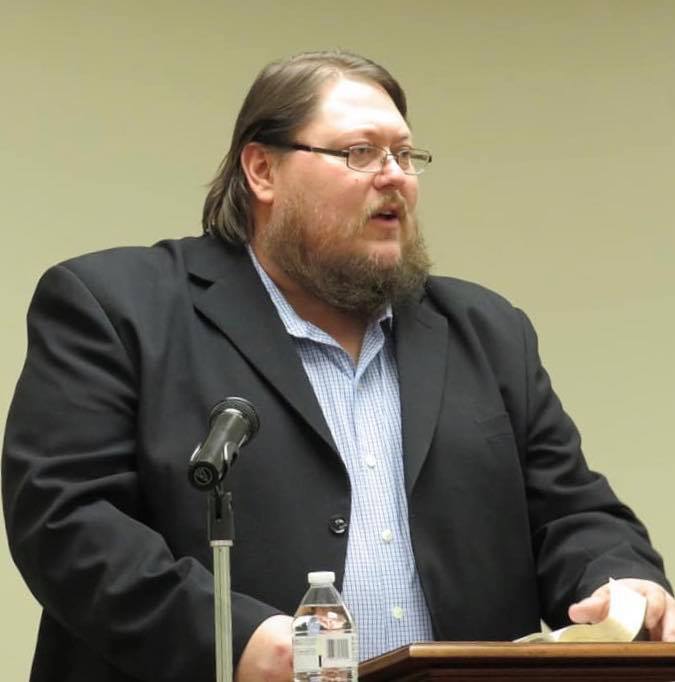
Mikal Smith

Nature of the Church pt 6

Mikal Smith February, 24 2019 Audio
0 Comments
The Study of the Church

Sermon Transcript

Auto-generated transcript • May contain errors

100%
Alright, turn with me this morning,
if you would, over to the Book of Acts. Over to the Book of Acts, Chapter 2, continuing our study on Ekklesia,
the biblical use, the biblical definition of Ekklesia, and an
overall study of the Church particularly right now, the study of the word
Ekklesia, and we're looking at the nature of the church. That's the portion that we're
in now, the nature of the church, and we've determined now over
the last several weeks through etymology, the study of the actual
word Ekklesia, we've learned that the term itself, as it is
etymologically given to us is a term that means not just called
out, as a lot of the lexicons and creeds and confessions and
people and churches everywhere point out, but it is a called
out gathered assembly called to conduct business. That was
kind of the understanding of the word ecclesia. So it's not
just a call out, okay, but it is actually calling out calling
together and that group that comes together comes together
for a specific purpose of conducting the business of the city or in
the case of the Lord's Ecclesia, conducting the business of the
kingdom. And so we've seen through the
etymology that the term or the nature of the church is a local
and visible assembly. We also learned through history
that that was how it was understood also. So we looked at several
places by men, not just Baptists, but other men throughout history,
not even just Christians, that other people said that the term
ecclesia had a meaning that was different than just an assembly
or other than just a calling out, but it was a specific called
out group of people that came together to conduct that business.
And so we've seen that historically and etymologically that the term
or the nature of Ecclesia is local and visible. And last week
we began to dive in to see does the Bible teach us that or should
we believe something else? Again, we don't believe things
because of words, because words have meanings that change over
the course of time as we have seen, and particularly this,
word has changed over time. But we also have seen that we
cannot trust men, just because faithful men write confessions
doesn't mean that they're infallible. They are all fallible, as much
as I love, and we read the 1644 Baptist Confession of Faith,
and we've seen that those men understood the nature of the
ecclesia, is a local visible assembly. However, just because
they write that, I shouldn't believe it, because they wrote
it. But I'm glad they believed it, because that's what the Bible
teaches. And so they were being faithful to that. Now, if they
would write something in their confession contrary to the word
of God, I would have to disagree with them. Just like the many
things in the 1689 Confession of Faith that Baptists wrote,
I disagree with. I think the Bible doesn't teach
that. And so just because a group of Baptists believed that at
one time doesn't make it true. So our rule of faith is not in
the theologians of time or the creeds and confessions of churches,
but our rule of faith is the word of God. So I think every
one of us as Christians, we need to just be prepared to believe
the Bible, and if it contradicts your favorite preacher or contradicts
your favorite time of history, theologian or whatever, you know,
let God be true and let every man be a liar. And if that puts
you in a class all to yourself and nobody else stands with you,
so be it, but that's all we can do. We can just believe what
the word of God says. And so what we're doing now is
we are looking at every place in the scriptures where the word
Ekklesia is found. And we are seeing that the overwhelming
evidence in God's word The way that God used the word is for
a local gathered congregation and not a universal invisible
or a universal visible church. It is a local visible church. Now, we learned last week that
this word is used 115 times. If you got your papers that I
passed out from last week, you'll see there 115 times in the New
Testament, 112 times. The King James translators translated
that term, ecclesia, as church or churches. Three times it was
translated assembly. Christ used it 22 times. Luke
used it 24 times. Paul used that term 64 times
if you count Hebrews. James used it once and John used
it four times. And so we see that this term
was used throughout the New Testament. It wasn't just in the Gospels. It wasn't just in Acts, but it
was recognized by all the apostles. It was recognized by all the
writers of the New Testament, pretty much. And so we looked
last week at a couple of things. We started off, and the backdrop
for this study has always been Matthew 16, 18, where Jesus said
on this rock, I will build my church. And we've seen that that
term sometimes lends itself to be a term of universal and visible. However, whenever we look at
all of scripture and we see that that's not the intent of that
word, we gotta go back and say, well, what was Jesus meaning?
And we've seen that that term in Matthew 16, 18, Jesus was
using in its institutional way. It was saying that on this rock
I will build my kind of church, or my kind of ecclesia, because
if you remember, This is the first time that the word ekklesia
is used in scripture, okay? And if you remember, up until
that time, ekklesia was understood by those people of that day as
a called out, gathered congregation of people that comes out of the
citizenry of that city, and they were there to perform the business
functions of that city. And within that group that was
called out, They had a hierarchy, if you want to call it that way.
I hate to use that term because it isn't really a hierarchy,
but I guess the best term to use would be roles. They had
offices, and each one of those offices had roles. Everybody
had a role within that ecclesia. And that was what was understood.
But now Jesus, using that term for the first time in scripture,
says that I will build my ekklesia, as opposed to the Greek ekklesia,
okay? And so now he's using the term
ekklesia, so I'm gonna build my kind of congregation, okay? I'm building my institution called
the church, an ekklesia. But it's not gonna be like the
ekklesia of the Greek state, it's gonna be patterned after
my choosing, okay? It's gonna have to do with my
kingdom. Kingdom is not of this world, okay? But it's my kingdom. And within that kingdom, I will
have officers. I will have roles within that
congregation. And that congregation will be
given specific things that they will be able to do and to carry
out. And it's gonna be there that
I will place my witness, my gospel, my ordinances. It's gonna be
there that all the service of worship will be conducted. towards
me, that is going to be my acceptable place of worship. And I know people are going to
run to all these other verses that, you know, we're not going
to worship here, worship there, worship here, worship there.
No, we're not going to be confined into walls where, you know, in
the Old Testament where they were saying that they had to
go to the tabernacle and then the priest had to do that stuff.
No, it was going to be now, the whole congregation was going
to be involved in the worship. The priests weren't gonna be
doing all the worship for them. They were gonna be doing all
the worship together. And that veil had come down. They were now able to come into
the Holy of Holies. They were now able to approach
unto God through Christ Jesus, that there were no more barriers
there. There is no hierarchy there,
okay? The pastor of the church is not
a priest, okay? I can't absolve your sins, I
can't forgive you, I can't say that you're a member, I can't
do nothing. That has to do with the congregation,
okay? That has to do with the congregation
that says, yes, that person shows forth signs of faith. Yes, that
person shows forth everything that the Bible requires
to be a part of the local congregation. And administer baptism, administer
the Lord's Supper, Those things are all part of the church's
business and not a particular individual's business. And so
we see Christ is building his ekklesia. And so if we take that
term etymologically, and we take that term historically as local
and visible, and now we look into Scripture and see that everywhere
we're finding in Scripture, it's holy true. It's a local and visible
assembly. It's not a universal thing. then
we have to submit to what the Bible says. And so we looked
at that, we've seen that his church in its institutional form,
and then Matthew 18, we see that Jesus gave instruction for discipline
and correction within the church, and that was a local thing. And
then we looked in Acts chapter two, and we looked at the context
starting in Acts chapter one, and as it flows through to Acts
chapter two, Verse 47, where it says, and the Lord added to
the church daily, such as should be saved, we found that that
term is not talking about added to the church universal, as so
many people claim that that term means, but it's adding to the
local church. He added to the local church
daily, such as should be saved. Not that coming and being a part
of the church saves you legally, But there is something that coming
and being a part of the local church does save you from, right?
Whenever we look at that, there is a salvation that we experience
on a daily basis. Whenever we study God's word
and we follow God's word, that saves us from a lot of things.
It saves us from a lot of heartache. It saves us from a lot of sinfulness.
Whenever we obey what the scriptures tell us to obey. Whenever you
come into the Lord's church, That saves you from the disobedience
of worshiping and serving God outside of the way that he has
prescribed for his service and worship to be done. And so, outside
of that, we're not saying that people are lost, or not elect,
or not saved, or not converted. That's not what we're saying,
and I've tried to make that a point, and almost every message is to
make that very clear. Just because somebody is not
a part of the church does not mean that they're not saved,
okay? They can be saved and not be
in the church. That is very, very clear. Just
as in the Ecclesia of the Greek times, they could be a citizen
of the town, but not be a member of the Ecclesia, okay? So we
see that in Matthew 18, he gave instruction for the local church,
and then in Matthew chapter two, We find that that church was
already in existence because we found that there was 120 in
that upper room. And as you follow the flow of
the context, it doesn't change. The people that came back from
the mountain where Jesus ascended and gave the Great Commission
and spoke to the church, everybody that was there was part of the
church, that church in Jerusalem. And it already existed. That
was the church that in Matthew 18, Jesus told those men If somebody
has fault, go to that person, try to correct him. If he don't
listen, take someone with you. And if they don't listen to you
too, then bring them back before the church. That was the church
that was already in existence before Pentecost, before Jesus'
ascension. And that church is who met Jesus
in the mountain. And that church was the one who
left from that mountain, as we've seen in Acts chapter one, and
went to that upper room. And there they abided in that
upper room. and they chose Matthias as the
church, as the apostle to replace Judas, but they chose him as
the church. And as they were in that upper
room, as they continued in the upper room with prayer, as the
Lord had instructed for them to wait, the Holy Spirit fell
upon them in that upper room, whose names and numbers were
120, and they began to speak in tongues, flame of fire, as
a fire came upon their heads, all that kind of stuff that went
on in the upper room, and all these people began to see that,
began to hear that, that were in this, wherever they were at
there, that they could hear this, but this multitude heard these
people, and whenever they did so, they began to say, hey, what's
going on? What is all this about? And Peter
stood up in the middle of them, preached the gospel message,
and at the end of that, there were people who were pricked
in their hearts, who received the word gladly, and the Bible
said those who received the word gladly were baptized and the
same day were added unto them, those ones who were in the upper
room, the 120 that were meeting together, accompanying together
ever since the baptism of John, who Christ had called out, who
were gathered together for worship and who Christ was giving instruction
to, every one of those who were in that upper room, there was
3,000 souls added to them that day. And so that church, grew
from 120 to 3,120, basically, that day. And so we
see that there is no need to think of that as a universal
thing. But that was, in its context, a local visible assembly. And
that's kind of where we left off last week, is in Acts chapter
2, verse 47. Now, the next place we find Ecclesia
is over in Acts chapter 5, verse 11. So if you want to turn there.
Acts chapter five. And let's start in verse one. It says, but a certain man named
Ananias with Sapphira, his wife, sold the possession and kept
back part of the price, his wife also being privy to it, and bought
a certain part and laid it at the apostles' feet. But Peter
said, Ananias, why hath Satan filled thine heart to lie to
the Holy Ghost and to keep back part of the price of the land?
Whilst it remained, was it not thine own? And after it was sold,
was it not in thine own power? Why hast thou conceived this
thing in thine heart? Thou hast not lied unto men,
but unto God. And Ananias, hearing these words,
fell down and gave up the ghost. And great fear came upon all
them that heard these things. And the young man arose, wound
him up, and carried him out, and buried him. And it was about
the space of three hours after when his wife, not knowing what
was done, came in. And Peter answered unto her,
tell me whether ye sold the land for so much? And she said, yea,
for so much. Then Peter said unto her, how
is it that ye have agreed together to tempt the Spirit of the Lord?
Behold, the feet of them which had buried thine husband are
at the door, and shall carry thee out. Then fell she down
straightway at the feet, and yielded up the ghost, and the
young men came in and found her dead, and carrying her forth,
buried her by her husband." And here it is. And great fear came
upon all the church, and upon as many as heard these things.
Okay, so What was going on here? Well, they were taking up money
for the church there at Jerusalem and was dispersing these things
to help out those who were particularly beginning to be persecuted during
this time period. If you remember, Saul of Tarsus
was coming and beginning to breathe out threats against the church
of Jerusalem and was imprisoning some of the Christians that was
in the church. And here we see that during the
taking up of money, Ananias and Sapphira had come and had pledged
that, you know, hey, we give all of our possessions away and
this is how much money, but they weren't. They lied about how
much they were given. They really had made a lot more
money than that, but they said that's all they made. Now, just
a side note, okay, what they did, as far as keeping some of
the money and not giving it all, there was nothing wrong with
that. That wasn't why God killed them. God killed them because
they made it look like they'd give everything that they had
when they really didn't. They lied to the Holy Spirit,
as it says here. They lied to the apostles, but
the apostles said, you know, you only lied to God is who you
lied to, okay? So they were full within their
right, according to the New Testament here, to have kept back whatever
amount of money they wanted to keep back and give what they
were led to give, but they just should have been honest with
what they were saying about it, okay? So I know a lot there,
I've heard preachers, at least I've heard preachers that have
taken this and preached on, there you go, you better give your
tithe, or you're gonna, you know, God killed people in the New
Testament for not giving their tithe, or not being honest with
their tithe, not giving as much as they should have given on
their tithe, That is not what this teaches whatsoever, okay? That is not what that teaches.
They lied. They were trying to make themselves
look like they were doing more than they actually were, okay?
And so they were being dishonest about that. However, the fact
remains is that great fear came upon all the church. Who is it
that the fear came upon? It was all those who were in
the church of Jerusalem. They seen this. I mean, here
Ananias and Spyridon coming and was giving money. to the church
for the church's use to use that and everything, but yet they
were dishonest about their giving and God struck them dead. I mean,
boom. And I mean, that would be just
like today. I mean, say today, you know, I came in and said,
you know, we were taking up some funds for a preacher or something
that was gonna come through or a missionary or whatever we were
doing. And I come and said, you know,
here, I sold my, you know, my old expedition sitting in our
yard out there. I sold our expedition for $5,000, but I really sold it for $8,000.
I'm just going to donate the whole thing to the church. But I only brought $5,000, and
I really made $8,000 off of it or so. Well, that would be dishonest. I'm making you guys think that
I'm giving up everything and doing all that I can, going to
the ends for the Lord. But I wasn't. I was keeping some
of that back. for myself, which is my right
to do. And the Bible says that he loves a cheerful giver and
that whatever the Lord has put in our heart to give, to give,
do that. But I was lying about it. And if he would kill me today,
I'm sure all of you would be pretty fearful. You know, I know
I will be if that would happen. But it's talking about the church
at Jerusalem here and great fear came upon all the church And
upon as many as heard these things." This was before the dispersion,
so we know that the gospel had not been dispersed all the way
out into Antioch, into Ephesus, and all the other surrounding
regions, Samaria, and all like that. It was still localized
in Jerusalem. And so even if you wanted to
put universal and visible there, it wouldn't fit the context because
at this point in time, the other churches didn't exist. They were
only the Church of Jerusalem. So we see that that is speaking
of that local church in Jerusalem. Look, if you would, over to Acts
chapter seven. As I mentioned last week, some of these are
gonna go really fast. There isn't a whole lot of discussion and
exegesis stuff that really needs to be going on, and a lot of
it's gonna be heavy. But I just want, I physically wanted everybody
just like how I did, go through every verse and see, wow. This
is how I also come with the whole thing about wine and alcohol
and everything. This is how the Lord changed
my whole understanding about that, is I went to every verse
where those terms were used. And whenever I got to the end
of that, I thought, I've got to change my whole outlook and
viewpoint of everything on that. And so I think a lot of times
whenever we see all of the proof in Scripture, especially when
it's so overwhelming, that it does us good. Acts chapter 7, look down if you would with me.
Now this is the account of Stephen, the deacon Stephen, who is martyred
for the faith. And if you look here, verse 36 says, he brought them
out after that he had shown wonders and signs in the land of Egypt
and in the Red Sea and in the wilderness 40 years. That is
what Moses which said unto the children of Israel, prophets
shall the Lord your God raise up unto you of your brethren
like unto me, him shall ye hear. This is he that was in the church
in the wilderness which the angel which spake to him in Mount Sinai,
and with our fathers who received the lively oracles to give to
us." Okay, so here now we see Stephen speaking of a church
in the wilderness, okay. And so this is where a lot of
times people will say, aha, see there, the Old Testament saints
weren't in the New Testament church, but yet the Bible says
that they were still called the church, okay. Now, this term
Ekklesia is used here, that the term Ekklesia, that he was in
the Ekklesia in the wilderness with the angel, okay? And if
you go back to the Hebrew, you'll find that the word is Hazal,
and that word means congregation. If you go to the Greek Septuagint,
where that word Ekklesia, is found, and they use that term
in the Old Testament, where it's translated ekklesia in Greek,
you'll find that in every place that that's found, it's referring
to a congregation of people, a gathered assembly. But even
here, the church in the wilderness, Israel, was a gathered assembly.
Okay, it still is a assembly gathered for God out of other
people. So the term Ecclesia there, just
because it's talking about something in the Old Testament, is not
talking about the Ecclesia of the New Testament, okay? The
Ecclesia of the New Testament is something that Jesus said
that he would build, and that he had begun at the first of
the preaching of the gospel. Well, the first of the preaching
of the gospel was with John the Baptist. It wasn't with the Old
Testament saints. Yes, the gospel was preached
in types and foreshadows and was veiled in the Old Testament,
but it wasn't fully known and understood, and the New Testament
church is not in the Old Testament, okay? There is a difference in
that, and so whenever he speaks of the church in the wilderness,
that term is ekklesia again. Again, because of people's misunderstanding
with the English word church, If you remove that and use that
Greek word, ekklesia, and you know, we've already looked at
etymology and the history of ekklesia, and now we're seeing
every place is talking about a local assembly, it means congregation,
then we apply that term here, it still means the same thing.
This was he that was in the congregation. the wilderness. As a matter of
fact, Tyndale translated it that way. The Bishop's Bible translated
it that way. All the previous Bibles before
the King James, except for the the Geneva Bible, translated
it such. Translated it congregations.
And even in this passage right here, it is congregations. And if you want to check me on
that, you can get your Phones or tablets out and get your electronic
Bibles and pull that up and you'll see pull up the the older Bibles
and you'll see it's congregation that it uses so We shouldn't
have any other reason to think it was the same thing. However
Just the fact that the Israelites in the Old Testament was gathered
together in a congregation So it still doesn't change the fact
that it was a speaking of a congregation there a gathered group of people. Turn with me, if you would, to
Acts chapter 8. So, as we went through chapter
7, that was the Stephen that was talking about the congregation
in the wilderness, and he goes on with his dialogue there, and
at the end of that, we find that Stephen was stoned. They picked
up stones, and they stoned him to death, right? And the Bible
says that at the end there, and they stoned Stephen, calling
upon God, saying, Lord Jesus received my spirit. And he kneeled
down and cried with a loud voice, Lord, lay not this sin to their
charge. And when he had said this, he fell asleep. And in
verse one of chapter eight, it says, and Saul was consenting
unto his death. And at that time, there was a
great persecution against the church, which was at Jerusalem,
and they all were scattered abroad throughout the regions of Judea
and Samaria, except the apostles." Okay, so here again, the term
ekklesia is used, but it's used and it specifies the church at
Jerusalem. Okay, so Paul here was persecuting
who? The church at Jerusalem. And
I don't know how many times in discussions about the church
or discussions about Paul and his work and all that stuff,
Have I come across people who says that Paul was persecuting
the church as a universal invisible? Wherever the church was found,
Paul was going, hey, he was going to other towns. He was on the
way to Damascus to get the church there. So it's talking about
the people, because they were scattered everywhere. And so
they still were called the church, even though they weren't in Jerusalem.
Well, here it says that he was gathering and was persecuting
the church. Jerusalem and the church that
was at Jerusalem scattered and the church at Jerusalem went
to Samaria and to Judea except for the Apostles. The Apostles
stayed back but the church at Jerusalem scattered across the
countryside all over the place and Paul was going after the
church at Jerusalem wherever they scattered to. He was going
to get them. That would be like today, someone announces on the
internet, I have something against Sovereign Grace Baptist Church
of Joplin, and I'm gonna kill every one of them. And we hear
about that, and so we decide, hey, we probably oughta not meet
here for the next several weeks, so hey, let's all scatter, and
Beth and Mike goes down to northwest Arkansas, and Mindy goes to Tennessee,
Louetta, she goes up to her sons up in Ohio, and we head out to
Oklahoma somewhere, and we all scatter. And whoever that was
that made that deal hunts us all down. They go to Ohio, they
go to Tennessee, they go to Northwest Arkansas, they go to Ohio, and
they persecute the church at Joplin. It still doesn't negate
the fact that it's the church, the congregation at Joplin, that
he was after. See, we may be the church at Joplin when we're
gathered together, But if he's coming after us as we're scattered,
he's coming after the church, the congregation that meets at
Joplin. It's still a local visible thing. It's not a universal thing.
And so whenever Paul was on his way to Damascus, he was on his
way to Damascus to gather those Christians who was at Jerusalem
that scattered to Damascus. No reason to think any otherwise
the church would have to be a universal invisible thing. that he was
after the church in it, because it specifically tells us here.
I mean, it's clear and plain. He was persecuting the church
at Jerusalem, who up to this point, we know there was 120,
there was 3,000, and then just not too many days after that,
I think the Bible also claims that there was another 5,000
that was even added to that. So roughly, you know, 8,000 people
that scattered. So the church of Jerusalem was
a very large church that when scattered all over the place,
you start going to get them, they could be all over the place. So we see that he's talking about
the church at Jerusalem. So the term church here means
a specific local visible assembly, the one at Jerusalem, right?
Look at verse 3. As for Saul, he made havoc of
the church, entering into every house and hailing men and women,
committed them to prison. Okay, now, again, I've heard
people say, see there, into every house. He didn't go into the
congregation whenever they were meeting, wherever they were at,
he went into every house. So that tells us that the church
is scattered in everywhere. No, well, let's not, let's not
deny the context of that verse. The church, he wreaked havoc
of the church, which church? Well, the one that was just told
to us in the first verse, the church of Jerusalem. I mean,
let's not skip the context, folks. A lot of people want to press
their ideas into the scriptures instead of letting the scriptures
dictate to us what it's saying. That's called, whenever you take
your ideas or your traditions and you press them and try to
make the scriptures say what you want them to say, that's
called eisegesis. But whenever you let the Bible
tell you what to believe and think, then that's called exegesis.
We're expounding what the Bible says, not pressing and trying
to make it say what we want it to say. It tells us which church
he was persecuting, the church at Jerusalem. So if he's wreaking
havoc, on the church, then he's wreaking havoc on the church
at Jerusalem. The context bears that out. We
shouldn't think anything different. Look with me if you would over
chapter nine, Acts chapter nine. Starting verse 27. But Barnabas
took him and brought him to the apostles and declared unto him,
to them how he had seen the Lord in the way and that he had spoken
to him and how he had preached boldly at Damascus in the name
of Jesus. And he was with them coming in
and going out at Jerusalem. And he spake boldly in the name
of the Lord Jesus and disputed against the Grecians, but they
went about to slay him, which when the brethren knew, they
brought him down to Caesarea and sent him forth to Tarsus.
Then had the churches rest throughout all Judea and Galilee and Samaria,
and were edified in walking in the fear of the Lord and in comfort
of the Holy Ghost were multiplied." Okay, and so here we're talking
about Paul after his conversion, and the word gets out, all of
a sudden now the churches, and it uses the term in the plural.
It uses the word churches. then had the churches rest. So
it meant all these churches, there was the churches in Judea,
the churches in Galilee, the churches in Samaria, were all
glad to hear that Paul was no longer coming after and killing
people, okay? But if you'll notice here at
this point in time, now they had the churches in Judea. the
church of Jerusalem scattered and they went to wherever they
were, those people began to meet and gathered in and became churches
wherever they began to meet. And so they now have rest because
Paul was no longer persecuting the churches. But if you'll notice
here, if the church is a universal invisible thing, why didn't the
Holy Spirit rise, then have the church rest throughout all Judea
and Galilee and Samaria and were edified. If the church is a universal
invisible thing, or even if it's a universal visible thing, you
still would say then the church, singular, because a universal
visible church is still a singular church. See, the church at Rome
considers every church that is Catholic to be the church of
Rome. They don't consider the Catholic
Church here in Joplin, they don't consider that to be the Church
of Joplin, they consider that to be the Church of Rome in Joplin. Singular. And if you're talking
about a universal invisible body, there's one body, as they all
say, then that's a singular thing. Then why did the Holy Spirit
use the plural? Because the Holy Spirit knows
that churches Ekklesia is a local visible thing. And they, if there's
many, are plural. There's a church in Judea, a
church in Samaria, a church in Galilee. There are multiple churches,
and so he used the term Ekklesia in the plural and not the singular. And so here, the term, and the
fact that it was used in its plural form, shows that the church
was not a universal visible thing, invisible thing, but a local
visible thing. particular churches, specific
churches. So again, it's a singular thing,
not a multiple or worldwide, invisible, universal organization. Look at chapter 11, if you would.
Acts chapter 11. Verse 19. Now they which were scattered
abroad upon the persecution that arose about Stephen traveled
as far as Phineas and Cyprus and Antioch, preaching the word
to none but unto the Jews only. And some of them were men of
Cyprus and Cyrene, which when they were come to Antioch, spake
unto the Grecians, preaching the Lord Jesus. And the hand
of the Lord was with them, and a great number believed and turned
to the Lord. then tidings of these things
came unto the ears of the church which was in Jerusalem." Okay,
so here the term ekklesi is used, and again, it is talking of a
specific church. Whenever the word about the Jews
beginning to believe among the Grecians, that word got back
to the Jerusalem church, and look what it says there. The
church which was in Jerusalem, and they, the church which was
in Jerusalem, sent forth Barnabas that he should go as far as Antioch,
who when he came and had seen the grace of God was glad and
exhorted them all that with purpose of heart they would cleave unto
the Lord. And he was a good man full of
the Holy Ghost and of faith, and much people was added unto
the Lord. Okay, and then he found and brought
him unto Antioch, and it came to pass that a whole year, here
it is, they assembled themselves with the church, and taught the
people, and the disciples were called Christians first in Antioch. So here we see that Saul and
Barnabas met with those believers in Antioch, and they called them
the church. They assembled themselves with
the church, in Antioch. Again, notice they assembled,
they weren't scattered, they weren't invisible, universal,
they were assembled together. And it speaks of the specific
place, they were the ones at Antioch. So again, the term ekklesia
here is used as a local invisible assembly, not a universal invisible
church. Look at verse 26. And when he
had found him, he brought him unto Antioch, and it came to
pass that a whole year they assembled themselves with the church. So we see in verse 12, the church
which was in Jerusalem. In verse 26, the church which
was in Antioch, identified as separate Ecclesiastes. individual, independent of each
other, ecclesiastes. But granted, what did they do?
What did the Church of Jerusalem do? They sent forth Barnabas
down to check, to see whether or not these people were in order,
to see whether or not they were following the doctrines of Christ,
the dictates of Christ for the New Testament Church, to make
sure that everything was there. Look, if you would, at chapter
12, verse one. Now about that time, Herod the
king stretched forth his hands to vex certain of the church. And he killed James, the brother
of John, with a sword. And because he saw it pleased
the Jews, he proceeded further to take Peter also. Then were
the days of unleavened bread. When they had apprehended him,
he put him in prison and delivered him to the four, quarter Indians
of soldiers to keep him, intending after Easter to bring him forth
to the people. Peter therefore was kept in prison,
but prayer was made without ceasing of the church unto God for him."
Now, who's that talking about? Let's talk about the church of
Jerusalem, because if you remember at the dispersion, it said everybody
scattered from Jerusalem except the apostles. We just read. In verse 22 of
chapter 11, that there was, then tidings of things came into the
ears of the church, which was in Jerusalem. So those who were
still a part of the church of Jerusalem, that were still in
Jerusalem, the apostles particularly, were there. And who was the one
that Herod stretched forth his hands to vex? That church at
Jerusalem. where Peter and where James were
members of. So again, we see that this is
speaking of a local visible assembly. See, a lot of times we study,
and I'm guilty of this as well, we study a segment of scripture.
But we got to remember, especially here in Acts, The Book of Acts
is a history of what happened at the beginning of the church,
okay? The Acts of the Apostles, the
Acts of the First Church, this was Luke's account of what was
going on whenever the church had been instituted by Christ
and began to be his witness after he ascended. And so this history
is giving a log of all the things that was going on. And so whenever
we read through this, sometimes we might miss, if we just go
and take a segment and look at just a segment, we might miss
something, just like here. If we look and see, oh, it's
talking about James, it's talking about Peter, but if we think
church means a universal invisible thing, well, the context that
we've read, if you've been reading through the scriptures in a systematic
way and in a contextual way, you will find that, remember,
Peter and James were part of the church at Jerusalem from
the beginning and after the dispersion was still in Jerusalem. So if Herod is throwing out threats
to the church, it was the church of Jerusalem because that's where
James and Peter were. It's not talking about the church
in Antioch, it's not talking about the church in Samaria or
Judea, it was talking about the church in Jerusalem. So a lot
of times, brethren, our misconceptions of things and our errors can
be cleared up if we just read God's word and read it in its
context and study those things. And that's why I've said, ever
since I've been here, every word counts. Even the small, tiny
words have meaning. The Holy Spirit just doesn't
throw things out there willy-nilly for us, that everything is ordered
by God. All scripture is given by inspiration. Okay, Paul didn't think of what
he wanted to say. Luke didn't think of what he
wanted to say. No, they wrote what the Holy Spirit told them
to say because they wanted it said in a certain way. And he
had this said in certain ways so that we would understand these
things as the Holy Spirit gave us understanding of it. So we
really need to read these things and a lot of times we'll find
that the truth is in the details there. look if you would now
at chapter 12 and verse 5 it said Peter therefore was kept
in prison but prayer was made without ceasing of the church
unto God for him okay well it's not talking about the church
everywhere universal invisible it's talking about the church
there the one that he was being the shepherd over if you remember back whenever
Jesus was speaking to to Peter after he reinstated him, after
he denied the Lord, and he said, feed my sheep, feed my sheep,
feed my sheep, okay? Peter was the one who the Lord
had given, even though the apostles were the foundation that was
laid first within the church, and all of them had that apostolic
authority, Peter was the one whom the Lord had called among
them to be the one to feed the sheep. And so Peter here, being that
pastor or being that preacher of the sheep, the church that
he ministered to was the one who was praying for him. They
knew what was going on. See, if I got arrested, now of course
with the internet today and everybody being able to text each other,
with information that's touching your fingers, it's kind of easy
for us to do. But I mean, you just think, you
know, if today I would come and someone would arrest me, drag
me out of the services today, you guys would all know that.
You'd probably begin to pray for me and everything. But Coita may not know that. All the other Christians in the
world may not know that, and they're not gonna be praying
for that. So if you take this to be a universal invisible church,
then everybody in the world began to pray that was a Christian
that was the elect of God began to pray for Peter. But it's not,
it was the church that is in the context that we've been looking
at. The church that was in Jerusalem that Herod was stretching out
his hands to Vex, it was the church that sent Paul and Barnabas
and Saul down to Antioch to check things out, it was the church
in Jerusalem. Look at chapter 13. Acts chapter 13. Now there was in the church that
was at Antioch certain prophets and teachers as Barnabas and
Simeon, that was called Niger, and Lucius of Cyrene, and Manan,
which had been brought up with Herod, the tetrarch, and Saul. Okay, so here we see the term
ekklesia is used in conjunction with a specific local visible
assembly, the church at Antioch. Acts chapter 14. to the verse 23 and when they had ordained them
elders in every church okay every church why didn't they just say
when they ordained them elders in the church because it was
talking about a specific church why because ecclesia is a local
visible congregation it isn't a universal invisible anything
it's a local invisible congregation so there had to be a delineation
of what church. And when they had organized them
elders in every church and had prayed with fasting, they commended
them to the Lord on whom they believed. And after they had passed through
Pisidia, they came to Pamphylia. And when they had preached the
word in Perga, they went down to Adalia. and then sailed to
Antioch from whence they had been recommended to the grace
of God for the work which they fulfilled. And when they were
come and had gathered the church together, they gathered the church
together. So again, not only do we see
it's talking about a specific church, the church at Antioch,
but it says that they were gathered together. Again, local visible
assembly, meaning a gathered assembly, a congregation of people.
The church isn't a church unless it's a gathered assembly. It's
a gathered assembly. They rehearsed all that God had
done with them, and how he had opened the door of faith unto
the Gentiles, and there they abode long time with the disciples. Okay, so we see here again, the
term ecclesia is used, and it is specifically used in a local,
visible way. Look in verse chapter 15 down
to verse, we'll start at verse one just to get our context,
continue our context. And certain men which came down
from Judea taught the brethren and said, except you be circumcised
after the manner of Moses, you cannot be saved. When therefore
Paul and Barnabas had no small dissension and disputation with
him, they determined that Paul and Barnabas and certain other
men should go unto Jerusalem unto the apostles and elders
about this question. And being brought on their way
by the church, they passed through Phineas and Samaria, declaring
the conversion of the Gentiles, and they caused great joy unto
all the brethren. So they were brought on their
way by the church. What church are they talking
about? Well, the church in Antioch again. What had happened? They were
in there, chapter 14, they were down at Antioch, and they were
preaching at Antioch, and they abode a long time with the disciples. And while they were there with
the disciples during that time, there was some men who came down
from Judea that taught you still had to be circumcised. They were
Judaizers that had come in, saying you still had to be circumcised
of Moses if you were gonna be saved. And it caused such a dissension
among those in Antioch that the people in Antioch said, well,
I tell you what, why don't you go back to Jerusalem? Why? Why
go back to Jerusalem? Is Jerusalem a hierarchy? Is
she the mother church that we all have to go? No, why did they
go back to Antioch? Well, for one reason, that was
the first church. That was the church that Jesus
began. And that was the, place where Jesus himself had instructed
those people and specifically the apostles. And those apostles
were laid in the church first and declared the doctrine of
Christ to give and to teach the church. And so what were they
doing? They were saying, hey, this doesn't
sound right to us. This is confusing to us. Hey,
why don't we reach out to those in Jerusalem? If anybody would
know whether or not that that was the truth, those who actually
heard it from the lips of the Lord would know that. And so
let's ask. So here we find that there's
no reason or nothing that hinders one church reaching out to another
church for advice or for help. They're still independent of
each other, completely independent. The Antioch was not under the
authority of the Jerusalem church. But yet they reached out to the
Jerusalem church for help. They reached out for them for
advice, for instruction, and sometimes churches may need to
do that. There may, and I've seen where that's had to be done
in some churches. They've reached out, there's
been some sort of a split or turmoil that's happened, and
they've reached out to another New Testament church and asked
them for help. You know, come in and can you talk to us about
some things? Can you give us counsel on a
few things? And they come in, they talk to
the church. and have godly men do that. I myself have went to
other pastors, other churches, and asked for wisdom and guidance
on certain things, and I'm not sure of it. But that doesn't
mean that they're our authority, that they have rule over us,
or that they're any different than us. We're a church all together.
So here we see that they sent Paul and Barnabas. It was the
Antioch church. So again, this term church in
verse three is a term of a local visible assembly. Now look at
verse four. And when they were come to Jerusalem,
they were received of the church and of the apostles and elders,
and they declared all things that God had done with them.
Now, this is a wonderful verse to explain. I don't know, there
may be, there's a few very clear verses in the word of God, but
this right here would definitely, definitely, if church was a universal,
invisible thing, are not the apostles and elders part of that
universal invisible body, if that were true? But yet it singles
the apostles and the elders out from the church. It says, and
they were come to Jerusalem, and they were received of the
church. What church? The church at Jerusalem.
Well, how do you know that, preacher? Because it says, and of the apostles.
And we just learned in context that the church at Jerusalem
was scattered except for the apostles. The apostles were still
in Jerusalem with a Jerusalem church. The majority of that
church being scattered and dispersed, but yet they were still there,
and they were received. Now, you say, well, wait a minute,
I thought that verse said that they all left except the apostles. That's true, but we also learned
since that time that Paul was converted, and if you remember,
the Bible said, and great relief, great rest came upon all the
churches. People began to come back to
Jerusalem. See, we gotta study the Word.
If you take them in segments, you're gonna miss some of the
things. But here we see, they were received
of the church and of the apostles and elders, and they declared
all things that God had done with them Not just to the apostles,
not just to the elders, but also to the whole church. The elders
and the apostles being part of that church, but them being the
leadership within that church. That would be if somebody came
and said, you know, hey, you know, they came and they talked
with me and then they came and talked with you guys. They said,
well, we came and we talked and was received by the pastor and
of the church. Well, does that mean I'm not
in the church? No, I'm still part of the church, but I have
the office of pastor. And so I receive them as the
pastor and you receive them and we all receive them as the church.
It doesn't change the fact that church here is speaking of a
local visible assembly in Jerusalem. And if any place that you could
have used a universal way of thinking It would have been here,
they could have just said, and they were received of the church.
Because the apostles and elders would have been part of that
universal invisible conglomeration. But it didn't. It specified the
church, the gathered assembled people. Look if you would down to verse
22. Then pleased that the apostles
and elders with the whole church to send chosen men of their own
company to Antioch with Paul and Barnabas, namely Judas, surnamed
Barsabbas, and Silas, chief men among the brethren. And they
wrote letters by them after this manner. The apostles and elders
and brethren send greeting unto the brethren, which are the Gentiles
in Antioch and Syria and Cilicia, For as much as we have heard
that certain men went out from us, have troubled you with words
subverting your soul, saying you must be circumcised and keep
the law, to whom we gave no such commandment. It seemed good unto
us being assembled with one accord to send chosen men unto you with
our beloved Barnabas and Paul, men that have hazarded their
lives for the name of our Lord Jesus Christ. We have sent therefore
Judas and Silas who shall also tell you the same things by mouth,
for it seemed good to the Holy Ghost and to us to lay upon you
no greater burden than these necessary things. And then it
goes on and tells them about what, but if you'll see here,
after the church of Antioch sent Paul and Barnabas back to Jerusalem,
to the church of Jerusalem to consult with the Jerusalem church,
they had their consultation from chapter four, or verse four on
down, Then it says, it pleased the apostles and elders with
the whole church. You see that the decision wasn't
just the apostles, it wasn't just the elders, it was the whole
church. Apostles and elders included,
but it was the whole church that decided to send chosen men of
their own company to Antioch, to the church at Antioch. And then they wrote, sending
letters for those men, saying, hey, we've sent these guys to
you. They come under our authority. They come bearing our blessing. They come in our name, the name
of the Church of Jerusalem, to bear witness to you these things. And so they went under the leadership
of the church, sending them out with their name, and with the
blessing of that church. If you want to say ordination,
it was ordination. But they went under the blessing
and the sending of that local church to another church. And when they went to that church,
they began to explain to them everything that they knew from
that church and to tell them the details of what was talked
about at that church. But notice, if you would, that
they were sent by the church in Jerusalem, it's a local visible
assembly, to another local visible assembly, the church in Antioch. In verse 25, we see, it seemed
good unto us being assembled with one accord See, the decision
wasn't made in private, it wasn't made in a hierarchy, it wasn't
made among the ruling elders. A lot of Reformed churches today,
even among Baptists, Reformed Baptists, they believe in this
ruling eldership, okay? Where they go in, they make all
the decisions, and they come back and they're representing
the church in all their decision-making, and then they come back and they
explain to the church what decisions that they've made, and then the
church votes on it. Now, here they all talked about it together.
I come from the Southern Baptist. We had a committee for everything
in Southern Baptist. I mean, we had party committees.
We had Vacation Bible School committees. We had witnessing
committees. We had Sunday School committees.
We had a committee for everything. We had, they called it the Nominating
Committee, who every year would nominate and find the teachers
to fit all the segregated groups that we had established within
our church? Oh, we gotta find teachers. Well,
God forbid that we all get together under one teacher that God has
given the gift of teaching and called to teach. We have to find
somebody who is a suitable, faithful person to the church to hold
this class, you know? And what we ended up doing And
I don't mean to get off on a tangent, but to show you how they were
in one accord in the New Testament. They were together. They did
everything as a congregation. That's the whole term, ecclesiae.
A called out gathered assembly called out to conduct business. And it wasn't that just this
part conducted the business and the rest of them just waited
for them to tell them what to do. Or it wasn't this one man
who told them how they needed to do it. No, it was the whole
congregation compose that governing body. So that's why all these
committees, that's why we as Baptists, we deny conventions
and boards and all that kind of stuff. We don't believe in
those things. Because the church is a universal, invisible body? Nope, it's a local, visible gathering
assembly conducting the business of the kingdom. You are conducting
the business of the kingdom as much as I can. And so we see
here that they've come together to do that. And it's not the
hierarchy doing that. And we would nominate these teachers
just based on, well, that person's at our church every Sunday. And
they're pretty good with kids. You want to see if they want
to do this? Yeah. So whenever we'd go and ask them, most of
the time, people would say, yeah, I guess. That's fine. Out of
embarrassment, I don't want to say no. And everybody would think
I don't want to help out. So a lot of times, there are
people teaching classes out of guilt. or out of derision, you know,
hey, nobody else is going to do this, so I need to do this.
Somebody's got to do it. I taught a class because nobody
else would take the class. That class exists. God forbid
that we turn it into a class with somebody else, you know,
or follow the scriptures and everybody be together. But, you
know, so with all these man-made things, and it's all because
of our misconception stuff, But if you look here, it says, it
seemed good unto us being assembled with one accord to send chosen
men unto you with our beloved Barnabas and Paul. Chosen men,
to send chosen men. These men were chosen. Well,
who were they chosen by? Were they chosen by the elders?
No, the ones who assembled together. But if you look in verse 28,
who else was part of that? For it seemed good to the Holy
Ghost, and to us. See, brethren, a lot of times
churches go from one extreme, like I just talked about, about
all these, you know, making plans and doing all this and adding
things that don't need to be added. They go to the other extreme. They cut the Holy Spirit out
of it. Well, we're just going to make the decision because
we're the authority. We're the church authority. Your church
came out of our church, so we have the authority to tell you
what you need to do. No, the Holy Spirit is in all of it.
If the Holy Spirit ain't in all of it, then it's not worth anything.
The Holy Spirit has to be there. And we believe that that's how
the Holy Spirit works. It isn't us just choosing somebody
out of nowhere, it's the Holy Spirit putting within them the
heart that gives them that gift and draws them to that, but the
church also recognizes that and draws them to that. I tell you what, this probably
is a good place to stop. She did not kind of make me look
at my time. It's been an hour. So let's pause there. It's 1128. Let's just pause right there,
and we'll take a break. We'll come back and look at a
few more verses before we eat lunch.

Comments

0 / 2000 characters
Comments are moderated before appearing.

Be the first to comment!

Joshua

Joshua

Shall we play a game? Ask me about articles, sermons, or theology from our library. I can also help you navigate the site.