Bootstrap
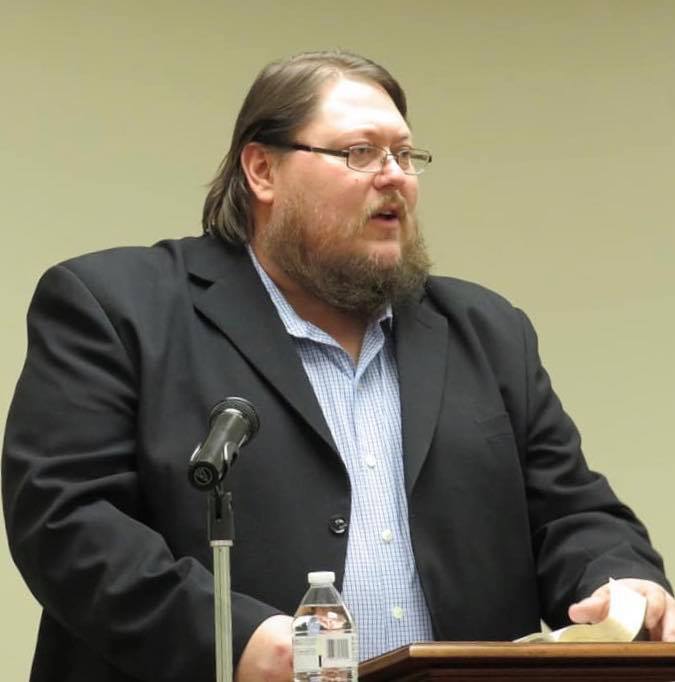
Mikal Smith

Nature of the Church pt 7

Mikal Smith February, 24 2019 Audio
0 Comments
The Study of the Church

Sermon Transcript

Auto-generated transcript • May contain errors

100%
Before we had the break, and
we've seen that Paul and Barnabas were sent from the Antioch church
to the Jerusalem church. And Jerusalem church conferred
with them and sent back Paul and Barnabas along with Barsabbas
and Silas back to the Antioch church. But we've seen in all
cases that the term ecclesia was referring to a specific congregation. church in Antioch, church in
Jerusalem. Look with me now, if you would,
at Acts chapter 15, and we'll look down at verse 36. It said, and some days after Paul
said unto Barnabas, let us go again and visit our brethren
in every city where we have preached the word of the Lord and see
how they do. And Barnabas determined to take
with them John, whose surname was Mark. But Paul thought not
good to take him with them, who departed from them from Pamphylia
and went not with them to the work. And the contention was
so sharp between them that they departed asunder, one from the
other. And so Barnabas took Mark and
sailed them to Cyprus. And Paul chose Silas and departed,
being recommended by the brethren unto the grace of God. and when
he went through Syria and Cilicia, confirming the churches. So here we see ekklesia is used,
but it's used in its plural form, meaning churches, confirming
the churches. Again, if there was an opportunity
for a universal and visible thing to be used, it would have been
here, confirming the church, wherever he went. But he didn't
say that because he knew the Holy Spirit had him write, Luke,
write churches because churches were local congregations, not
a universal body. And so he used the plural because
he went from city to city everywhere that he had preached already
to the brethren. Now, the brethren, whenever you
look at the term brethren, that refers to the people of God,
right? But it says whenever he went
to the brethren, he went to the brethren where? In churches.
The brethren were found in churches. See, that's why I was saying
our understanding nowadays, we're letting our feelings, our experiences,
our emotions of today dictate to us what the Word of God says,
instead of letting the Word of God dictate to us what it says
to our emotions and our feelings and our experiences. Back whenever
the church began with Jesus and with the Great Commission, the
understanding was you're made a disciple, you're baptized,
and you're added to the church, the local visible assembly, wherever
that may be, who discipled you and baptized you, you met with
them. And you met with them for the
doctrine and for the ordinances and for the worship of God. That
was the understood, that was the norm. Well, that's how it
is. I mean, if you're a Christian,
you are baptized and you join the church. It isn't this, well,
you just kind of willy-nilly, I'll get baptized if I want to
get baptized, or I'll join a church if I want to join a church, or
I'll join any organization that I want to join. No, it was understood
that those who discipled you with the gospel baptized you,
and those who baptized you, then you met with them as they instructed
the doctrine of Christ and taught you all things whatsoever Christ
commanded. That's the normal understanding. And so the brethren,
it was normal for them to meet in the church. And so that's
why Paul said, let's go back to all the brethren, excuse me, let's go back to all
them who we have preached to And it says, and being commended
by the brethren unto the grace of God, he went through Syria
and Cilicia confirming the churches. So the term brethren was used,
but the term churches was also used. The term churches delineating
the fact that they were individual congregations in these places,
in Syria and Cilicia. All right, look with me if you
would in Acts chapter 16, Acts chapter 16 and verse five. Well, let's go back. Let's just
start in verse one so we can get the context. Then came he
to Derbe and Lystra, and behold, a certain disciple was there
named Timotheus, the son of a certain woman, which was a Jewess, and
believed, but his father was a Greek, which was well reported
of by the brethren that were at Lystra and Iconium. So there
were brethren there in Lystra and Iconium, Him would Paul have
to go forth with him, and took and circumcised him because of
the Jews which were in those quarters, for they knew all that
his father was a Greek. And as they went through the
cities, they delivered them the decrees for to keep that were
ordained of the apostles and elders which were at Jerusalem."
Okay, so what did they do? Paul and Silas here met up with
Timothy, And it says that they went through the cities and delivered
them the decrees for to keep that were ordained. So the brethren
that were gathered there in that town, in Alistair and Iconium,
they went through and they give them the decrees that were given
to the church in Jerusalem. See, this is showing you that
every church was taught the same doctrine, the same order. That's
why we talk about faith and order. You know, we fellowship with
those who are of like faith and order, or like faith and practice,
those who are following after. And that is what's been passed
down and perpetuated from generation to generation, is that every
time that there's been disciples made and wherever they're at,
gathered into a church, they are taught what that first church
was taught. The foundation was laid there.
And that's why Jesus said, you will be my witnesses in Jerusalem.
and Judea and Samaria and all the other most parts of the world.
But what were you going to be the witness of? You're going
to teach them all things whatsoever I have commanded you. Now, that's
saying the same thing right here, right? What were they teaching?
What was Paul and Silas? Was Paul and Silas teaching them
something different than what they were teaching in Jerusalem?
Nope. Teaching them the same thing.
I've also heard that too. That there was one thing that
was being preached to the Greek churches and another thing that
was being preached to the Jew churches. No, it was the same
thing. This was Greek. Timothy was Greek, part Greek,
part Jew, but he was among the Greeks from Lystra and Iconium. And those brethren that believed
upon the Lord through there from the times that they'd been through
preaching the gospel, Now we're gathering together, and as they
gathered together, they were delivered the decrees or the
doctrine that was given to the apostles. Look at verse five. And so were the churches established
in the faith and increased in number daily. Now, here again
is where, remember whenever I said back in Acts chapter two, I said
if they added to them daily such as should be saved, okay? Or they added to them, 3,000
souls were added to them. And then the Lord added to the
church daily, such as should be saved. Well, where do I get
the scriptural foundation or the scriptural backing to say
that that's talking about the local church? Or where do I get
the backing to say that that wasn't talking about quickening? Well, here we find in Acts chapter
17, and so the churches were established in the faith or the
doctrine, okay? and increased in number daily. The church increased in numbers
daily. But if you'll notice there, it
says church is plural. Again, if there was any place
that they could have used a term for universal visible, if it's
talking about people being born again or baptized by the spirit,
into the spirit, with the spirit, whatever term you want to put
on it about being born again or whatever, and that being added
to the church, it would have been here, but it didn't say
church. He didn't say, and so was the church established in
the faith and increased in numbers daily. It said churches. And it was the churches that
increased in numbers daily. And so were the churches established
in faith and increased in number daily. Now, I don't, I'll be
honest with you, I don't know whether that means that there
were multiple churches that increased, or within the church, the numbers
increased. The members of the church at
Iconium or Lystra, or whether there were multiple churches
that began to, but either way, it still lends itself for a local
visible congregation, not a universal invisible anything. and of course the Holy Spirit
made it plural so we would know that for a fact. It says that
when they had gone out throughout Phrygia and the region of Galatia
and were forbidden of the Holy Ghost to preach the word, the
Holy Ghost didn't want them to preach the gospel in Asia? Well,
I thought the Holy Ghost wanted you to preach everywhere. Well,
what about the people in Asia? Are they gonna die and go to
hell because nobody preached to them? Maybe so, don't know, but yes,
The Lord doesn't necessarily always want the gospel preached
to certain people. And they were come to Mycenae,
and they say to go to Bithynia, but the Spirit suffered them
not. So the Spirit didn't want them to go there either. And
they passing by Messiah came down to Troas. And a vision appeared
to Paul in the night. There stood a man of Macedonia
and prayed him, saying, come over into Macedonia and help
us. All right, we'll stop there.
We won't go into all that discussion about Paul going to Macedonia. But we see here that this was,
they were going back around to the individual churches. So ecclesia
was used, again, speaking of local congregations and not a
universal body. Look, if you would, at chapter
18. Chapter 18. It said, and when he had landed
at Caesarea and gone up and saluted the church, he went down to Antioch. And after he'd spent some time
there, he departed and went all over the country of Galatia and
Phrygia and order strengthening all the disciples. Okay, so here
we see that he landed at Caesarea and he went up and saluted the
church at Caesarea. Again, a local congregation,
not a universal body. Again, it could have said he
went to greet all the church in the region, but he didn't.
He said he went to the church in Caesarea, then he went down
to Antioch. Well, isn't the church in Antioch
too? Yeah, there is a church in Antioch. But he didn't consider
the church at Antioch the church in Caesarea. And after he had
spent some time there, he departed and went all over the country
of Galatia and Phrygia in order strengthening all the disciples. He didn't say strengthening all
the church. He said the disciples. If at any point that you wanted
to press a universal and visible church, right there, he could
have said, strengthening all the church. But he didn't, why? Because the churches are individual,
local, visible. So he said, he went to the church
at Caesarea. He went down to the church in
Antioch. And after that time, he spent some time, he departed
and all of the country of Galatia and Persia. And now we learn
later in the scriptures that there were more than one church
in Galatia, okay? Turn with me, if you would, over
to Galatians chapter one. Galatians chapter one, look with
me if you would, verse one. Look, second Corinthians, Galatians,
Ephesians. Galatians chapter one, Paul,
an apostle, not of man, neither by man, but by Jesus Christ and
God the Father who raised him from the dead, and all the brethren
which are with me, now we're gonna come to this verse later,
but I want to point out to you, since we're talking about Galatia
back in the other one, it said, and all the brethren which are
with me unto the churches of Galatia. He didn't say unto the
church of Galatia, because church is a gathered congregation. And
there were more than one in Galatia. So he said churches. Now, if
it was a universal, invisible group of people, he would say
unto the church of Galatia. I'm writing this to all you guys,
but know what? He was writing this letter to be given to the
individual churches in Galatia. So this letter wasn't meant for
the whole body, as in a universal body everywhere, every place. It was intended for the church
at Galatia. Now, he does go on to give credence
to this letter and say that it's also profitable to everybody
else because he says, grace be unto you and peace from God,
our Father, Lord Jesus Christ, who gave himself for our sins
and he might deliver to him be glory forever, amen. Where is
it that it goes on to say that? I'll have to look it back up.
But there's another place in Galatia, now I'm talking ahead,
I can't think of it. It talks about this being for everybody,
not just those in Galatia. But anyway, we see here that
the churches were plural. So when we go back to Acts chapter
18, we see that there in verse 22, that after he spent some time
there, he departed and went all over the country of Galatia and
Phrygia in order strengthening all the disciples. There were
many disciples in that area and there were multiple churches
there. And we'll see that that is a local invisible thing. It's
not a universal invisible thing. Chapter 19, now this is where,
This is where we find the King James and it's the translation, you remember
that paper that I gave you where King James told them that they
had to translate the word ecclesia, not as congregation, but follow
after their forefathers and the ecclesiastical writings of the
fathers. He told them not to translate
ecclesia as congregation, but to translate it as the father
said. And so they translated it church
and not congregation. But whenever it wasn't, and they
said to do that whenever it was speaking of the ecclesiastical
things, but yet whenever we come to chapter 19, we find they use
the term assembly in the place as it should be, and they use
assembly or congregation for ecclesia, and they translate
it correctly. Look in chapter 19 and verse
32. Matter of fact, let's just back
up, because I want you to see the context of what's going on
here. It says, let's go back to verse
10. It says, and this continued by
the space of two years, so that all that which dwelt in Asia
heard the word of the Lord Jesus, both Jews and Greeks, and God
brought special miracles by the hands of Paul, so that from his
body were brought unto the sick handkerchiefs of aprons, and
the diseases departed from them, and the evil spirits went out
of them. You notice it was taken to Paul. You notice in all of
the scriptures that all the healing that was done was done by the
apostles. It wasn't done by just everybody
in the church. It was done by the apostles.
Every account that we have of someone being healed, supernaturally
being healed, by being touched or whatever, it was by an apostle,
whether it was Paul, whether it was Peter, they were healed
from an apostle. But it says, they took them their
handkerchiefs and aprons, and you see this kind of gibberish
on TV now, where these televangelists are selling for love offerings,
are selling these little handkerchiefs, that they send out, or these
little headscarves, or little bottles of water that they've
blessed, or they're sending out whatever kind of artifact that
they can send out, that they've touched, that they've prayed
over, that they've blessed, or whatever. All that is is the
Protestant form of Catholicism and the relics that the Catholics
have. It's no different. But anyway,
it says, and the diseases departed from them, and evil spirits went
out of them. Then certain of the vagabond Jews, exorcists,
took upon them to call over them which had evil spirits, the name
of the Lord Jesus, saying, we adjure you by Jesus whom Paul
preached. And there were seven sons of
one Scevia, a Jew and a chief of the priests, which did so.
And the evil spirit answered and said, Jesus I know and Paul
I know, but who are ye? And the man in whom the evil
spirit was leaped on them and overcame them and prevailed against
them so that they fled out of that house naked and wounded.
And this was known to all the Jews and Greeks also dwelling
at Ephesus and fear fell on them all and the name of the Lord
Jesus was magnified. And many that believed came and
confessed and showed their deeds Many of them also which used
curious arts brought their books together and burned them before
all men, and they counted the price of them and found it 50,000
pieces of silver. Side note, you notice that it
was the people themselves when they repented that came and burned
their books. It wasn't the church that went out and took their
books and burned them. Okay, the Catholics went out and took
books away and burned them, took the people's stuff away and did
it. Now, the church don't do that. We don't call for people
to do that. People do that when they repent.
They turn from their idols and they come to God. And that's
what happened here. They turned from their sorcery,
their witchcraft, their whatever, and they burned it themselves.
They wanted to get rid of it. They wanted to get it out. So
we don't go on crusades. The whole crusade was a pagan
thing. It was from a pagan church. The
United States in history, puts up the Crusades as some glorious
thing. To some, the Christians led the
Crusades, and that's what the liberals, whenever we're talking
against the Christian church, always bring up, well, you guys
had the Crusades. No, the Christians never had
the Crusades. The Catholics had the Crusades, but the Christians
never did. Verse 20, so mightily grew the word of God and prevailed.
After these things were ended, Paul purposed in the spirit,
when he had passed through Macedonia and Achaia, to go to Jerusalem,
saying, after I have been there, I must also see Rome. So he sent
into Macedonia two of them that ministered unto him, Timotheus
and Erastus, but he himself stayed in Asia for a season. At the
same time, there arose no small stir about that way. For a certain
man named Demetrius, a silversmith, which made silver shrines for
Diana," Diana was the god of the Ephesians, okay, made silver
shrines for Diana, brought no small gain under the craftsmen.
Okay, so they made money off these items that they made. A
lot of what televangelists do today, they make money off of
the things of God, supposedly. You know, they sell religion.
The Catholics do the same thing, they sell religion. Verse 25, whom he called together
with the workmen of like occupation and said, sirs, Ye know that
by this craft we have our wealth. Okay, so what's happening here?
Paul's preaching Christ in these areas, and people are turning
from these idols. And in doing so, it's hitting
the idol-making market. And so now the idol-making market,
they're not concerned about the God. They're not concerned about
the devotion and religion. They're concerned about the wealth
that they're losing because their idol-making profits are going
down. He said, ye know that by this
craft we have our wealth. Moreover, ye see and hear that
not alone at Ephesus, but almost throughout all Asia, this Paul
hath persuaded and turned away much people, saying that there
be no gods which are made with hands. so that not only this,
our craft is in danger to be said it not, but also that the
temple of the great goddess Diana should be despised and her magnificence
should be destroyed, whom all Asia and the world worship."
Now, don't get it wrong, they're not really there for the religion,
but that's what they were known for. Ephesus was the centerpiece. Everybody looked to Ephesus because
of this great God, Diana, and they all were famous throughout
all of Asia because of their great idol, Diana, that was set
up there, and the temple to her. And people came from everywhere
to this temple to worship at the feet of Diana, this idol.
And what happens whenever you travel to a city? Well, what happens when we travel
to cities? We buy a room. We go eat. We buy gas. We trade. We bring business to
that town, to that location. And so the Temple of Diana not
only was a place of status among all of Asia for them, the Ephesians,
but it was also a place of making money. They were making money
off of this. And it brought wealth into them
personally and the town collectively. And so if Paul's preaching this
and people begin to believe this, that's gonna hurt the economy.
If Christ is preached here and people follow Christ in the United
States, why do we not have it? People will say, well, that's
gonna hurt our economy. It won't, but it will. They think
it will. So they weren't worried about the worship of God. They
were worried about the wealth. They were worried about their
status. Verse 28, and when they heard these sayings, they were
full of wrath and cried out saying, great is Diana of the Ephesians. And the whole city was filled
with confusion. And having caught Gaius and Aristarchus,
men of Macedonia, Paul's companions in travel, they rushed with one
accord into the theater. Okay, so these people, They gathered
together the friends of Paul, and they took him with the other
people into the theater. And when Paul would have entered
in unto the people, the disciples suffered him not. And certain
of the chief of Asia, which were his friends, sent unto him, desiring
him that he would not adventure himself into the theater. Okay,
y'all know what I'm talking about when I say theater, right? We're
not talking about the movie house down here, but the theater that
we're talking about here is back then, they would have a, like
an arena type place that they would go and that's where they
would have plays and games and things like that, it was the
theater. The Colosseum over in Rome would be considered like
a theater, okay? Some therefore cried one thing
and some another, For, here it is, verse 32, the ekklesia was
confused. But you'll notice there they
translated that instead of church, they translated it, the assembly
was confused. See, they actually followed the
Greek there and made ekklesia what it actually is in English,
assembly or congregation. For the assembly was confused
and the more part knew not wherefore they were come together." Notice
they were come together, the assembly that had come together
in the theater. It's talking about a local and
visible thing, and they used the correct term, ecclesia, to
describe this gathering of people from out among the rest of the
town into the theater with the chief of Asia there, also who
was there, the whole of the city, which was filled with confusion,
and having caught Gaius and the rest of Paul's companions, they
rushed with one accord into the theater." Okay, so we see that
they're gathering into the theater, they're assembling together,
and the chief of Asia, which was the man in charge there,
stood up and says, and they drew Alexander out of the multitude,
and the Jews putting him forward, and Alexander beckoned with the
hand and would have made his defense under the people. But
when they knew that he was a Jew, all with one voice about the
space of two hours cried out, great is Diana of the Ephesians.
And when the town clerk had appeased the people, he said, you men
of Ephesus, what man is there that knoweth not how that the
city of Ephesus "'is a worshiper of the great goddess Diana "'and
of the image which fell down from Jupiter. "'Seeing then that
these things cannot be spoken against, "'ye ought to be quiet
and do nothing rashly. "'For ye have brought hither
these men "'which are neither robbers of churches.'" Now that
word there, if you'll notice in your list there that I give
you, verse 37 isn't found. there. That word churches there
in verse 37 is an ecclesia. That word there is synoge or
synagogue. Robbers of synagogues. It wasn't
robbers of churches. But yet the King James translators
translated it churches. Why? because King James said
that anything that had to do with ecclesiastical things, that
they were to translate that not as ecclesia, or congregation,
or assembly, but they were to translate that as churches. Now, verse 37, that word churches
there is not ecclesia, but yet they translated it churches. Why? Because Paul and Barnabas,
Paul and all of his friends, they considered robbers of churches
or synagogues. What were they doing? They were
going from place to place and they were finding the Jews that
were in these synagogues wherever everything was at and they were
preaching Jesus. And those people were believing and coming out
of the synagogues. And now they're coming and preaching to the Greeks.
And now we're afraid they're gonna start pulling us out of
our temples to our great God, Diana. Look what they did to
the Jews. They robbed the Jews out of the
synagogues, which they call churches, wrongly, but they pulled them
out of there. And now they're coming after
us and our temple to Diana. And they're gonna start persuading
people and bring them out of that. That's what they were talking
about. "'For ye have brought hither
these men, "'which are neither robbers of churches, "'nor yet
blasphemers of your goddess. "'Wherefore, if Demetrius and
the craftsmen "'which are with him have a matter against any
man, "'the law is open, and there are deputies. "'Let them implead
one another.'" So here we see the ecclesia that is gathered
in the theater, the Greek ecclesia that's gathered in the theater.
They are gathered. local, visible, they have officers with certain roles. The law is
open, they have a command to follow, business to attend or
keep, let them and plead one another. But if ye inquire anything
concerning other matters, it should be determined in a look
at verse 39, here it is again, a lawful ecclesia. Now, what's the difference there? Well, go all the way back to
verse 28. When they heard these sayings,
they were full of wrath and cried out, saying, Great is Diana of
the Ephesians. And the whole city was filled
with confusion. And having caught Gaius and Artaxerxes,
men of Macedonia, Paul's companions, and traveled they rushed with
one accord into the theater. So the whole city went into the
theater. They were in assembly. They were gathered together and
they assembled. But it wasn't until later that
this Demetrius, wherefore if Demetrius and the craftsmen which
are with him have a matter against any man, The law is open and there are
deputies. Let them plead one another. This is what the clerk's
guy is saying. But if you inquire anything concerning
other matters, it shall be determined in a lawful ecclesia. See, this is just a gathering
of the town. The town don't have the right to do the business
of the town. The ecclesia has been given the right, the lawful
assembly. So see, it uses the term Ekklesia,
when it means the gathered assembly, that is proper, but it doesn't
use that term whenever it talks of the synagogue. It doesn't
use that term whenever it's talking about just a mass of people.
So you see here that the King James Translators, that even
though they refused to use congregation where Ekklesia was used, in the
place where it did mean assembly, they used assembly when it meant
just a group of people gathered. But yet then they go back and
use ecclesia whenever it comes to verse 40 where it says, or
excuse me, 39, a lawful assembly. If you remember whenever we were
going through the etymology and through the historical stuff
on the word ecclesia, what did we find? That in every place
that we looked in etymology, That term meant a called out,
gathered assembly, congregated assembly that was called together
to do business, conduct the business of the town. And then the historians
all said that it was a lawful assembly. It had been given specific
things to rule by, and by that, that's how they governed. That's
how we are, brother. All things whatsoever Christ
has commanded us is what has been given to us, and that's
what we govern by. That's what we teach. That's the doctrine
we teach. That's what we preach. That's how we exercise the ministry. That's how we conduct the ordinances
according to the lawful dictates of Christ. Verse 40, for we are in danger
to be called in question for this day's uproar, there being
no cause whereby we may give an account of this concourse.
So see, they're saying, listen, We don't have the right to make
any decisions here on what should be done. We're not the ekklesia.
Yes, we're the citizens of this town, but we're not the ekklesia.
The ekklesia is the one who's been given the right to govern
over the city's affairs lawfully. It has to be done lawfully. See,
that's what we're talking about when it comes to the church.
We're not saying that people are unsaved if they don't attend
a New Testament church, what we're saying is they are not
following the lawful assembling order of Christ. Christ has ordered
us to follow his prescription for worship, for ministry, for
the ordinances, for baptism, for the Lord's Supper, for preaching,
for ordaining, for gathering, for ministry together, for discipline,
He has given that to the church, and it's there where the lawful
acting of these things take place. That's why we don't believe in
these free-range Christians that are
out there with their own ministries, doing their own things, because
nowhere in Scripture was that ever done. You can't show me
one place in Scripture where there was a single man doing
ministry apart from the local church. People bring up Stephen
going down to the eunuch. Stephen, if you go in the context,
you'll find, and we're gonna eventually do that, but Stephen
was sent from Jerusalem. He was a man ordained from Jerusalem
and sent by the Holy Spirit, yes, but also by the Jerusalem
church to go out and to preach these things. And we find later
that Stephen found himself, I think it was in Caesarea, and there,
instead of being deacon, he was called the evangelist, so somewhere,
Between that, he became the evangelist Stephen. So yes, Stephen was an ordained
minister from the Jerusalem church. You don't see these, you know,
on your own, making your own ministry and doing your own thing
type of people. Everything, everywhere, my friend
J.C. Fulton said this, and I think
he's right on this, it's harsh to some people, but I think it's
right on this. The Christian doesn't know any life except
there is no life other than church life to the Christian. You can't find that in the Bible
anywhere. I mean, everything revolves around in the church
or through the church. And that's just how Christ has
ordained things to be ever since he began that at his ministry,
that we are to believe, be baptized and added to the church. And
within the church, we are to edify one another. In the church,
we are to preach and minister the gospel to one another. In
the church, we are to send out men to preach the gospel to others.
In the church, we are to observe the ordinances or the symbols
that Christ give us and to remember him by, which is baptism and
the Lord's Supper. So we find a lot of things there
in that. It says in verse 41, And when
he had thus spoken, he dismissed the, verse 41, the assembly. He dismissed the assembly. Now,
in all those deals, those was a local visible group of people. All right, we'll stop right there.
We'll pick up with chapter 20, Lord willing, next week. But
as we've seen so far, there hasn't been one instance where the term
Ekklesia has been used in an invisible, universal way. Anybody got any questions or
comments or anybody got a song that you'd like to sing? Ken,
have you thought of a song? Another song? Let's bow and have a word of
prayer and we'll be dismissed. Gracious Heavenly Father, again
we come.

Comments

0 / 2000 characters
Comments are moderated before appearing.

Be the first to comment!

Joshua

Joshua

Shall we play a game? Ask me about articles, sermons, or theology from our library. I can also help you navigate the site.