Sovereign Grace conference, Sovereign Grace Church, Jackson, Mo.
Sermon Transcript
Auto-generated transcript • May contain errors
100%
Is there a button to turn on,
or is it already on with this thing? It's running. Oh, OK. Oh, yeah. There, I saw it. Well,
I'm going to try to preach over top of the hamburgers and hot
dogs and stuff we had this afternoon. If you turn to your Bibles to
the 20th chapter of Joshua, Joshua chapter 20. We'll read the first six verses
of Joshua chapter 20. The Lord also spake unto Joshua,
saying, speak to the children of Israel, saying, appoint out
for you cities of refuge, whereof I spoke unto you by the hand
of Moses, that the slayer that killeth any person unawares and
unwittingly may flee thither, and they shall be your refuge
from the avenger of blood. And when he that doth flee unto
one of these cities, shall stand at the entering of the gate of
the city, and shall declare his cause in the ears of the elders
of that city, they shall take him into the city unto them,
and give him a place that he may dwell among them. And if
the avenger of blood pursue after him, then they shall not deliver
the slayer up into his hand, because he smote his neighbor
unwittingly and hated him not before time. And he shall dwell
in that city until he stand before the congregation for judgment
and until the death of the high priest that shall be in those
days. Then shall the slayer return
and come unto his own city, unto his own house, unto the city
from which he fled." Now, the laws concerning the cities of
refuge, there are at least four references. A couple of them
in Deuteronomy, one in Numbers, and here in Joshua. Cities of
refuge. And the laws concerning the cities
of refuge served both civil and spiritual purposes. And it's
important to distinguish between them. And the scriptures give
us enough information to make the distinction. The civil purpose
of the cities of refuge can be found in Numbers chapter 35,
verse 12, and they shall be unto you cities for refuge from the
avenger. or as we were reading here in
Joshua, the avenger of blood, that the manslayer die not until
he stand before the congregation in judgment. Now in the days
of the old covenant, and this wasn't the result of
the old covenant, it's just the way things were done back then,
generally crimes against persons were avenged by the clan, tribe,
or family that that person came from. And it was not really as
much a system of justice as it was a system of vengeance. Now
we learn, you know, the Lord said, vengeance is mine, thus
saith the Lord, I will repay. Nonetheless, if you killed someone,
then the people of that clan or family or whatever, somebody
would be appointed, maybe several somebodies, to hunt you down
and avenge the death of their family member. Now, the cities of refuge were
given to distinguish between murder and what in our day we
would probably call involuntary manslaughter. People do get killed by accident.
There was no intent. There was no hatred. I think
in one of the cases in Deuteronomy where it talks about the cities
of refuge, it gives the example if somebody's out cutting wood
and the axe head flies off and hits some guy and kills him.
Well, there wasn't any intent to do harm. There was no hatred
that motivated. It was an accident. The thing
is, when it's not so much a justice system as a vengeance system,
the family doesn't care that you did not intend to kill them.
It's just blood for blood. That's it. And so, God, in order
to, prevent the Jews from acting
quite so vicious as the Gentile nations around them, instituted
this, the cities of refuge. And if a person killed another
man, and yet he believed that it was done without intent, he
could run to the city's refuge. Now, when he got there, Right
there at the gate, he would present his case. He would tell them
why he's there and that he accounts himself to be innocent of murder
because, yes, he killed this man but had no intention to.
And so they would accept him into that city, protect him. The Avenger of Blood was not
allowed to come in. But they were allowed to stay there until
two things happened. First of all, there was a trial
to stand before the assembly. You see, that's justice, not
vengeance. Now, justice may issue in vengeance, but you've got
to do justice first. And so they would have a trial
to determine whether this killing had been murder, premeditated,
hate-inspired murder, or it had been an accident. Now, if in
the trial it was determined, no, this was not accidental.
This was on purpose. With malice of forethought, this
man killed this man. What did they do then? They turned
him over to the avenger of blood. Then it was time for vengeance.
But if they determined, yeah, this was accidental, this man,
There was innocence in his heart, at least he had no intention. He will not be turned over to
the Avenger of Blood. However, he cannot leave the
city until the high priest dies. Now that seems kind of strange.
What's a high priest got to do with all this? The high priest issue really
had nothing to do with the civil purpose of the law. The civil
purpose of the law was simply in the fact that there was a
place for the man to take refuge until such time as a trial could
be held. And then when it was determined
that he had acted in innocence, then at least he was protected
from vengeance. But there is a spiritual significance
to him being free. to leave the city of refuge once
the high priest, whoever was in office as high priest, once
he died, the man could go free. Now, to understand the spiritual
significance of the cities of refuge and why innocent killers,
manslayers, as they, innocent killers, not murderers, but they
still were man killers, A spiritual significance of these cities
of refuge and the high priest and all this, it's founded on
the requirement that all bloodshed be repaid by the shedding of
the blood of the man who first shed blood. And notice it's all,
it says here in Numbers 35, moreover, you shall take no satisfaction
for the life of a murderer, which is guilty of death. but he shall
surely be put to death. Now there's a little bit of the
civil aspect of this mixed in there, but it's saying if a guy,
if he's a murderer, there can be no payment made, which will
set him free. Now this was to say that at least
for the sake of this crime, there will be no distinction made between
the rich and the poor. The rich cannot buy themselves
out of this. A murderer was to be put to death,
period. Nothing could be given in exchange
for another man's life. And the only thing that would
answer for the shedding of blood was more bloodshed, the shedding
of the blood of the guilty man. They could not imprison him for
life. There was no attempt at rehabilitation. And I'm not saying
this is the way things ought to be in our day. I'm not making
a political statement here. I'm just saying, this is how
it was. The only punishment for murder. He shall surely be put to death. And then it says, now notice
this, you shall take no satisfaction for him that has fled to the
city of his refuge. that he should come again to
dwell in the land until the death of the priest. Now this payment, this satisfaction,
is the essence of an atonement, is what it's speaking of. It's
a payment made to put away the offense. And it's saying that
the man who's in the city, he's fled to the city of refuge, but
you can't even take a payment for him to set him free, to go
back home. Now he'll be safe, but he won't
be free. Now ponder that a minute. He'll
be safe, but he won't be free. And then verse 33, so ye shall
not pollute the land wherein ye are, for blood, it defileth
the land. And the land cannot be cleansed
of the blood that is shed therein, but by the blood of him that
shed it." Now notice this, in that last verse, verse 33 of
Numbers 35, no distinction is made between
the murderer and the man who killed without intent. That is so far as The fact that
the shedding of human blood brought defilement on the land. Now, whatever else we may gain
from the scriptures about the nature of man, it's this man
is unique among God's creatures. You kill a cow. Well, there may
be some protesters upset at you, but you're not going to get a
visit. from the officials, the police. And when you stand before
God, they're not gonna say, you killed a cow. So you must be
punished, why? Cows were not made in the image
of God. When Noah was brought out of
the ark, God said, now, if one man kills another man, then by
man's hand, the killer is to be killed. because he has killed
God's image bearer. That's why murder is probably
the worst crime imaginable, at least to a sane people. And even
though they may not admit that there's such a thing as a God,
instinctively, people know a human being is unique. And taking the
life of a human being is a serious matter. And if it is not justified, there is no remedy. That's the message God was pointing
out here. Now, whether this blood was shed
on purpose or not, it's the blood of a man. and it can only be
answered by the blood of another man or the land is polluted. And the Lord went on to say,
defile not therefore the land which he shall inhabit wherein
I dwell, for I the Lord dwell among the children of Israel.
Now, why was it so important that that land not be defiled?
God lived there. Now, there were many things that
were wrong and sinful. But I don't hear of them being
described as defiling the land. But the shedding of human blood
defiled the land unless it was properly answered. Whether the bloodshed was accidental
or premeditated, it polluted the land and could not be atoned
for it except by the blood of the killer. Murderers were put
to death even if they had fled to the city of refuge. There
was no refuge for the murderer. But it's important to note that
the bloodshed committed by the accidental killer also polluted
the land. Thus, he was not free to leave
the city of refuge until the death of the high priest. Now,
the death of the high priest served no purpose within the
framework of civil justice. I mean, you know, it didn't change
any facts so far as relationships between human beings was concerned. But it did point to the death
of our great high priest, the Lord Jesus, by whose death our
atonement was made with regard to our sin. While the distinction
between murder and involuntary manslaughter was important for
the civil purpose of the law, it was irrelevant to the spiritual
significance of the law. Now the notable points of the
law concerning the cities of refuge, and I Now, I hope this
isn't boring to you, but you gotta, it's kind of like setting
up the stage so you can put on the play, because the play won't
make any sense if you don't have the scenery there. The notable
points of the law concerning the cities of refuge. First of
all, the sin. There was only one sin for which
the cities of refuge were provided, and that is, or one crime, and
that's bloodshed. Adultery was wrong, but there
was no cities of refuge for adultery. Just as bloodshed, why? It defiled
the land wherein the Lord dwell. Bloodshed. And this was with reference to
bloodshed of any kind. But under the law of God, one
state of mind is not the issue. In man's law, it is. They even
have a word for it, mens rea. state of mind. A person's state
of mind while committing a crime is significant to his guilt. Not under God's law. Bloodshed
is sin, so there must be some atonement for it, regardless
of the intent of the one who committed it. And with regard
to you and me, what this shows us is our state of mind about
our sin is irrelevant to our guilt. and to the need for atonement. We may be aware of some of the
sins we have committed. We're unaware of a vast multitude
of them we never committed. We weren't thinking while we
were doing a sin, I hate God and I'm doing this because I
hate God. No, we just did it. We weren't thinking, I want to
dethrone God because I want to be king. We weren't consciously
thinking that. Doesn't matter. Doesn't matter. It defiles us. Now the cities
of refuge picture Christ, but they picture him in a way that
old covenant believers would have perceived him. A place of safety. but not a
place of freedom. Consider this, Old Covenant believers
looked to Christ, maybe not under that name, but you understand
what I mean. They had promises. They had types and pictures of
what was to come, and an old a believer in old covenant times
was believing the same thing as you and me, it's just the
light wasn't as bright as you and I have it. There has never
been salvation by any other name than the name of our God. We
call him the Lord Jesus Christ because that's his last revelation
of himself. But whether it be the seed of
the woman, the seed of Abraham, seed of Jacob, whatever, by whatever
he's known, it's the same person. And salvation has always been
through faith in him and through some understanding that he stands
as the substitute for God's people. But under the old covenant, old
covenant believers, For instance, Joseph and Mary, I suppose they
were believers and they were safe, but they
weren't free. They could not, spiritually speaking,
go home. They could not participate in
or enjoy the fullness of the blessings represented by the
whole promised land. It was not open to them. Look in Galatians chapter three,
verse 23. In Galatians, the book of Galatians,
Paul makes similar arguments, not from the the idea of the
cities of refuge, but nonetheless from the state in which old covenant
believers existed. Galatians three and verse 23,
but before faith came, we were kept. Now this word here does
not mean kept as, um, for safekeeping. This means locked
up. We were locked up under the law.
Shut up until the faith which should afterward be revealed. Now Paul here in the book of
Galatians when he says we, he's talking about we Jews because
he distinguishes between Jews and Gentiles in this book. He's
saying we. Now understand this, Gentiles
never were under the Old Covenant. Never. And that's why, you know,
it's a fault to try to bring believers under the law of the
Old Covenant. It's not that we've got an argument
with that law. It's just that covenant was made
with the natural descendants of Abraham, Isaac, and Jacob.
It formed them into a nation. and gave them both privileges
and responsibilities, which were for a certain period of time. And that time ended with the
arrival of Christ and him fulfilling the work that God gave him to
do. The old covenant faded away. The new covenant came in full
brightness, the full revelation of what God had been planning
since before the world began. However, these Jews, They had
the most information about what was to come, but they were still locked up.
They were locked up. Believing Old Covenant people,
they were safe. And when they died, they went
to be with Christ, but in this life, they were still bound up. Now, Paul then says, beginning
in chapter four, verse one, now I say that an heir, here's another
example of the same principle. An heir, as long as he is a child,
differeth nothing from a servant, though he be Lord of all. Let's
just say, you know, you're a young fella and your dad, he's wealthy. Let's just say, you know, your
dad's a king of England, And you're just a young boy in a
house. And someday you're going to have
the throne, you know, everything. But you know what? When you're
a kid, you get treated like a kid. They don't bow to you. You may
be the heir of the entire royal treasury, but you can't spend
it. In fact, there are people in
charge of you. You are king to be. But the key
issue is to be. These things aren't open to you.
He's under tutors and governors until the time appointed of the
father. Now, back then, being an heir
and receiving the inheritance, it did not necessarily mean the
person had died. A father could pass the household
on down if he wanted to. So even so, we, when we were
children, what's he talking about? He was talking about the believing
Jews in Old Covenant days. We were children. We were in
bondage under the elements of the world. Believers, so they're
safe. But Old Covenant believers, they
were in bondage yet. Now, God did all this for a reason.
know the Jews are kind of a microcosm of the history of the world and
God's elect people. Just as there is a remnant according
to the election of grace among the Jews there is a remnant according
to the election of grace all over the world. Now, look over at Hebrews chapter
6. Let's start reading at verse
16. For men verily swear by the greater,
and an oath for confirmation is to them an end of all strife. Wherein God, willing more abundantly
to show unto the heirs of promise the immutability of his counsel,
confirmed it by an oath. I'm not an expert in Greek, I
know a little bit about it, but from what I've read, you know,
all the apostles wrote in what's called Koine Greek, means common
Greek. You know how English is pretty much known all over the
world? It was that way with Greek back then. And, you know, they
call it the Langua Franca, which means the money language. If
you wanted to do commerce back then, you better know Greek,
because that was the language everybody was using for commerce.
But even though they're all using the same language, everybody
has different ways of talking. And you even have evidence of
levels of what we might call education. That is, how educated
were these men in their use of the language? They say Hebrews
is written in very educated Greek. Whoever wrote this was an educated
person. And we don't know for certain
who wrote it. They're educated, and sometimes it comes off, you
know, you gotta work at understanding what's being said. But it's saying
that God, being the sort of God he is, and wanting to assure
the heirs of promise, to give them assurance of it, he not
only promised it, he swore to it by an oath. Now, swearing
is the language of liars. Because we are liars, we require
the people to swear by something greater than themselves. I mean, that's why if we weren't
liars, we wouldn't require oaths, would we? You swear to tell the
truth, the whole truth, and nothing but the truth, so help you God.
Well, if anybody's got any fear of God at all and makes, swears
that oath, they're not gonna be real quick about telling a
lie or even coloring the truth because they have said as much
as God is my witness. And they've called the integrity
of God into account for the truth of what they say. Well, God being
willing to, assurance to us liars that His Word is trustworthy,
He swore an oath." What condescension. God should have said, look, I
promised you if that's not good enough for you, tough. Oh, what
sweetness that He would speak to us in the language we understand,
the language of an oath. That by two immutable things,
his promise and his oath, in which it is impossible for God
to lie. I like it. It doesn't say in
which God will not lie. It says it's impossible for him
to lie. Why is it impossible for God to lie? Well, we might
say, you know, because he is truth. No question there. It's
totally against his nature. No question about that. But you
know, there's an even more fundamental reason that God can't lie. Truth
is determined by what God says. God doesn't say something is
so because it's so. Something is so because God said
it's so. In the beginning, God created
the heavens and the earth, and the earth was without form and
void, and darkness was on the face of the deep, and God saw
that there was some light down there, and He said, look, light.
No. He said, let there be light,
and there was light. If you had a conversation with
God, And he said, you know, the sun rises in the West. You might
say, no, it doesn't. It rises in the East. You wait
till tomorrow morning. God can't lie because if he says
it, that becomes the truth the moment he says it. All right. He said. It's impossible for God to lie.
We might have strong consolation who have fled for refuge to lay
hold upon the hope set before us. Now there's that word, refuge. Now who's the book of Hebrews
written to? Hebrews, Jews. I realize it's open to us, but
you know, if you're going to be allowed to read someone else's
letter, You better read it from the perspective of the one to
whom it was sent, if you really want to understand it. This is
written to Jews. They were being tempted to go
back to the old covenant. And so the writer is speaking
to them in some old covenant language. He said, we fled for
refuge in the promises of God. Things
not yet fulfilled. We saw Christ. Henry used to
say, you know, picture and prophecy and promise. And they fled for
refuge there. And they were safe, but they
weren't free. Now, it's a little bit difficult,
this particular phrase, to try to translate it smoothly into
English. That's probably the hardest job
translators have, to take what's written in one language translate
it into another language and make it flow the way we would
expect it to be said in our language. But let me put it more like a
paraphrase than a translation. He speaks of we who have fled
for refuge may have strong encouragement to seize the hope set before
us. Now imagine yourself a Jew. described as we who fled for
refuge. And that's what they did. He
said, but by the promise of God, we have strong encouragement
to seize the hope set before us. Now, what is that hope? The high priest has died. They could leave the city of
refuge, the place of safety but no freedom. The place of safety,
but bondage. When the high priest died, the
gates swung out. You may go. The whole land is
before you. You may go back home. You may
go back to your family. Now why Was he free to go? Well, what really held him in
bondage? Actually, the law didn't say he can't leave the city of
refuge. It just says if he leaves the
city of refuge and the avenger of blood finds him and kills
him, there is no crime in the avenger of the blood. Why can
we leave the city? Our high priest has died. There
is no longer an avenger of blood out there for us. Now you think
about that a minute. Now we flee to Christ for refuge
for many things. In times of trouble, we flee
to him for refuge. We're not taking away that, but
that's not what the cities of refuge are picturing. Times of
trouble, times of need, all of these things, we flee to him
for refuge. But so far as a refuge is concerned, we no longer have
need of a refuge. from the avenger of blood. The
high priest has died. The avenger is satisfied. And
you and I, we've been blessed with all spiritual blessings
in the heavenly places. The whole land is before us to
walk about freely. Now, does this take anything
away from Christ? No, because the city of refuge
is not the only picture of Christ in this story. The other picture
of Christ is the high priest. It's the two of them bound together
that gives us the whole picture. Christ in the Old Testament,
Christ in the Old Covenant, promise, picture, prophecy, shadowy, safety,
but not freedom. But then he dies. Who's the avenger
of blood? God. He's satisfied. He's not out there looking for
us anymore in that state. He is our father. and we are
called to go home and enjoy our Father's house. We have strong encouragement
to seize the hope set before us, this hope of full assurance
of the fullness of the blessings of God in Christ. Nothing will
be withheld from us All of our sin, willful, unwillful, accidental,
on purpose, whatever, all of it has been avenged. And there
is no avenger of blood seeking us. Oh, with what freedom you
and I can walk through this life. We don't even have to fear death.
because death for us is not a messenger of the avenger of blood. It's
the call from our father to come home. Sickness, loss, trial. It's not like these things don't
trouble us and bring us to tears, but we don't ever have to be
afraid of them. They are not sent to harm us. Our high priest, Now remember,
it says that the only way the land can be purified from his
defilement is by shedding the blood of the killer. In the city of refuge, the high
priest died, and his blood is counted as ours. Pause on that a minute. when
his blood was shed. And of course, blood shed just
means the life of a creature is in the blood. You shed the
blood, the life is gone. So death. His death is attributed
to us. And the avenger of blood says,
he's dead. It's been avenged. I'm going
home. I'm satisfied. And Jesus Christ,
our high priest, he shed his blood. And if we're in him, if
by grace through faith we are in Christ, no one in heaven is
seeking our blood and we are free. Heavenly Father, bless
this message. We thank you for both the safety
and the freedom we have in our Lord, for he has come and done
all that you sent him to do and all that is necessary for us
to be assured that all your promises will indeed come to pass. Lord,
we can say these words, but we don't even know the fullness
of the promises. We don't know the fullness of
the blessings. Yet we do know. that we shall
receive them, we shall experience them, and we are safe and we
are free by the work of the Son, in whose name we pray. The just for the unjust. Thank you, Joe. Thank you very
much.
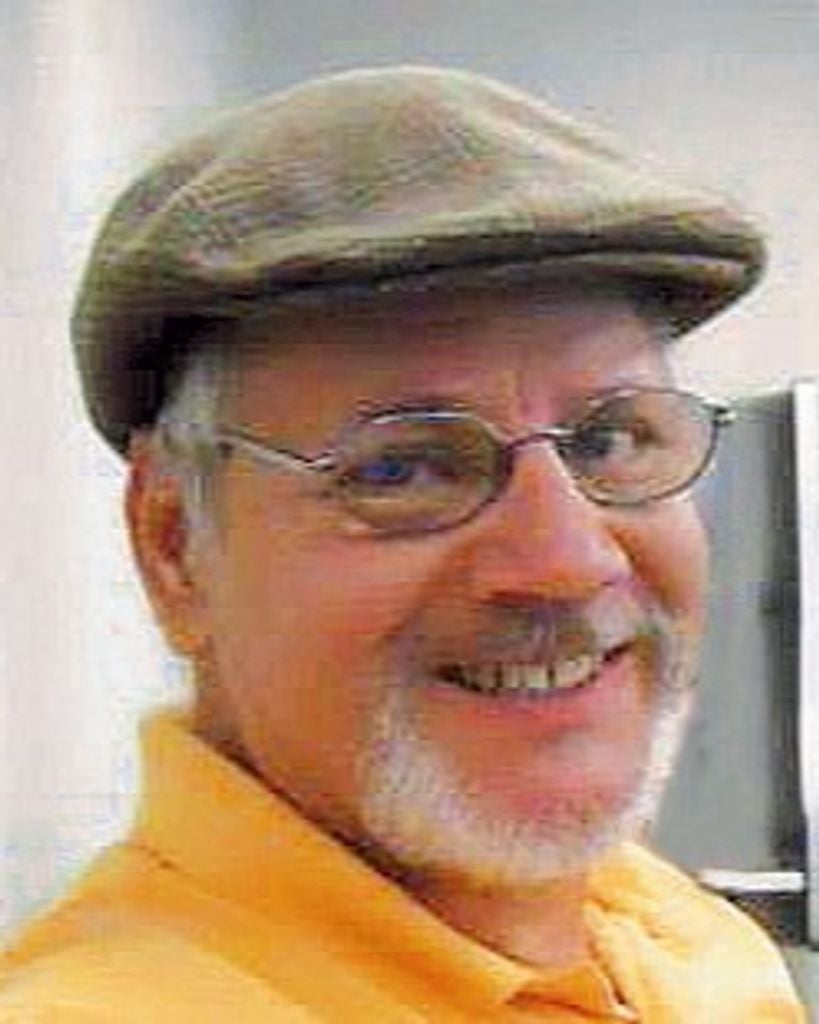
About Joe Terrell
Joe Terrell (February 28, 1955 — April 22, 2024) was pastor of Grace Community Church in Rock Valley, IA.
Comments
Your comment has been submitted and is awaiting moderation. Once approved, it will appear on this page.
Be the first to comment!